1 Kings 19:14
And he said, I have been very jealous for the LORD God of hosts: because the children of Israel have forsaken thy covenant, thrown down thine altars, and slain thy prophets with the sword; and I, even I only, am left; and they seek my life, to take it away.
Translations
And he said, I have been very jealous for the LORD God of hosts: because the children of Israel have forsaken your covenant, thrown down your altars, and slain your prophets with the sword; and I, even I only, am left; and they seek my life, to take it away.
And he said, I have been very jealous for the LORD God of hosts: because the children of Israel have forsaken thy covenant, thrown down thine altars, and slain thy prophets with the sword; and I, even I only, am left; and they seek my life, to take it away.
And he said, I have been very jealous for the Lord God of hosts: because the children of Israel have forsaken thy covenant, thrown down thine altars, and slain thy prophets with the sword; and I, even I only, am left; and they seek my life, to take it away.
And he said, I have been very jealous for the LORD God of hosts: because the children of Israel have forsaken thy covenant, thrown down thy altars, and slain thy prophets with the sword; and I, I only, am left; and they seek my life, to take it away.
And he said, I have been very jealous for the LORD, the God of hosts; for the children of Israel have forsaken thy covenant, thrown down thine altars, and slain thy prophets with the sword; and I, even I only, am left; and they seek my life, to take it away.
And he said, I have been very jealous for Jehovah, the God of hosts; for the children of Israel have forsaken thy covenant, thrown down thine altars, and slain thy prophets with the sword; and I, even I only, am left; and they seek my life, to take it away.
And he saith, 'I have been very zealous for Jehovah, God of Hosts; for the sons of Israel have forsaken Thy covenant, Thine altars they have thrown down, and Thy prophets they have slain by the sword, and I am left, I, by myself, and they seek my life — to take it.'
And he said, I have been very jealous for Jehovah the God of hosts; for the children of Israel have forsaken thy covenant, thrown down thine altars, and slain thy prophets with the sword; and I am left, I alone, and they seek my life, to take it away.
And he said—Very jealous, have I been, for Yahweh, God of hosts, because the sons of Israel have forsaken thy covenant, thine altars, have they thrown down, thy prophets also, have they slain with the sword,—and, I alone, am left, and they rove sought my life, to take it.
Berean Standard Bible, Majority Standard Bible
“ I have been very zealous for the LORD, the God of Hosts,” he replied, “ but the Israelites have forsaken Your covenant, torn down Your altars, and killed Your prophets with the sword. I am the only one left, and they are seeking my life as well.”
He said, “ I have been very jealous for the LORD, the God of Armies; for the children of Israel have forsaken your covenant, thrown down your altars, and killed your prophets with the sword. I, even I only, am left; and they seek my life, to take it away.”
And he said, I have been burning for the honour of the Lord, the God of armies; for the children of Israel have not kept your agreement; they have had your altars broken down, and have put your prophets to death with the sword: till I, even I, am the only one living; and now they are attempting to take away my life.
And he answered, I haue bene very ielous for the Lord God of hostes, because the children of Israel haue forsaken thy couenant, cast downe thine altars, and slayne thy Prophets with the sworde, and I onely am left, and they seeke my life to take it away.
Douay-Rheims (Challoner revision)
With zeal have I been zealous for the Lord God of hosts: because the children of Israel have forsaken thy covenant: they have destroyed thy altars, they have slain thy prophets with the sword, and I alone am left, and they seek my life to take it away.
Pictures
Cross-references 20 of 25
- 1 Kings 19:18
Yet I have left me seven thousand in Israel, all the knees which have not bowed unto Baal, and every mouth which hath not kissed him.
God answers Elijah’s belief that he alone remained faithful by naming seven thousand.
- 1 Kings 18:4
For it was so, when Jezebel cut off the prophets of the LORD, that Obadiah took an hundred prophets, and hid them by fifty in a cave, and fed them with bread and water.)
Jezebel had the Lord’s prophets killed, while Obadiah hid and fed a hundred.
- Romans 11:4
But what saith the answer of God unto him? I have reserved to myself seven thousand men, who have not bowed the knee to the image of Baal.
God’s answer to Elijah shows that he preserved a faithful remnant.
- 1 Kings 19:4
But he himself went a day’s journey into the wilderness, and came and sat down under a juniper tree: and he requested for himself that he might die; and said, It is enough; now, O LORD, take away my life; for I am not better than my fathers.
same flight where he prayed to die
- 1 Kings 19:10
And he said, I have been very jealous for the LORD God of hosts: for the children of Israel have forsaken thy covenant, thrown down thine altars, and slain thy prophets with the sword; and I, even I only, am left; and they seek my life, to take it away.
Elijah describes Israel’s apostasy and the threat to his life.
- 2 Kings 2:11
And it came to pass, as they still went on, and talked, that, behold, there appeared a chariot of fire, and horses of fire, and parted them both asunder; and Elijah went up by a whirlwind into heaven.
Elijah is taken up by God rather than left to perish after his discouragement.
- 1 Kings 18:22
Then said Elijah unto the people, I, even I only, remain a prophet of the LORD; but Baal’s prophets are four hundred and fifty men.
Elijah says he alone remains a prophet of the Lord.
- James 5:17
Elias was a man subject to like passions as we are, and he prayed earnestly that it might not rain: and it rained not on the earth by the space of three years and six months.
Elijah’s account shows a prophet sharing ordinary human frailty.
- 1 Kings 19:2-3
Then Jezebel sent a messenger unto Elijah, saying, So let the gods do to me, and more also, if I make not thy life as the life of one of them by to morrow about this time.
Jezebel’s threat leads Elijah to flee.
- 1 Kings 17
And Elijah the Tishbite, who was of the inhabitants of Gilead, said unto Ahab, As the LORD God of Israel liveth, before whom I stand, there shall not be dew nor rain these years, but according to my word.
Elijah’s God-directed ministry contrasts with his later wilderness flight.
- 1 Kings 19:8
And he arose, and did eat and drink, and went in the strength of that meat forty days and forty nights unto Horeb the mount of God.
Elijah travels to Horeb in the strength of food given by the angel.
- Malachi 4:5-6
Behold, I will send you Elijah the prophet before the coming of the great and dreadful day of the LORD:
Promises Elijah’s work before the day of the Lord.
- 1 Kings 18:13
Was it not told my lord what I did when Jezebel slew the prophets of the LORD, how I hid an hundred men of the LORD’s prophets by fifty in a cave, and fed them with bread and water?
shows a hundred other prophets in Elijah's day
- Matthew 17:11
And Jesus answered and said unto them, Elias truly shall first come, and restore all things.
Elijah is associated with restoring all things.
- 1 Kings 19:9
And he came thither unto a cave, and lodged there; and, behold, the word of the LORD came to him, and he said unto him, What doest thou here, Elijah?
The Lord asks Elijah what he is doing there before Elijah voices his complaint.
- 1 Kings 18:40
And Elijah said unto them, Take the prophets of Baal; let not one of them escape. And they took them: and Elijah brought them down to the brook Kishon, and slew them there.
same prophet's victory before discouragement
- Luke 1:17
And he shall go before him in the spirit and power of Elias, to turn the hearts of the fathers to the children, and the disobedient to the wisdom of the just; to make ready a people prepared for the Lord.
John is described as coming in Elijah’s spirit and power.
- 1 Kings 18:36-38
And it came to pass at the time of the offering of the evening sacrifice, that Elijah the prophet came near, and said, LORD God of Abraham, Isaac, and of Israel, let it be known this day that thou art God in Israel, and that I am thy servant, and that I have done all these things at thy word.
God answered Elijah’s appeal by sending fire from heaven.
- 1 Kings 19:3
And when he saw that, he arose, and went for his life, and came to Beer-sheba, which belongeth to Judah, and left his servant there.
The same word is listed as meaning life.
- 2 Kings 2:12
And Elisha saw it, and he cried, My father, my father, the chariot of Israel, and the horsemen thereof. And he saw him no more: and he took hold of his own clothes, and rent them in two pieces.
Elisha calls Elijah “my father” as Elijah is taken from earth.
Commentary
Each commentary is drawn from primary sources: the writings of Ellen G. White and Adventist pioneers and periodicals. Each commentary is separate. Its own words are not a quotation; follow the references to read the source passages.
Ellen G. White
16 sources
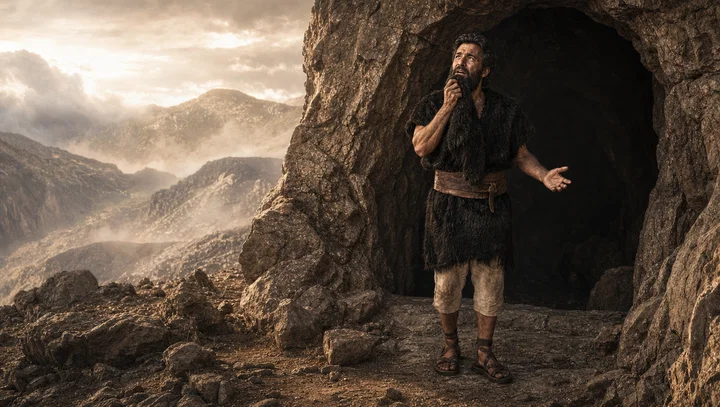
In the cave at Horeb God asked Elijah what he was doing there, and this was his answer in weariness and discouragement during his flight from Jezebel's threat, a journey he had taken without the divine command that had sent him to Cherith and Sarepta and Samaria.PK 167.2PK 167.1RH Oct 7, 1873 He declared his jealous zeal for the Lord God of hosts by charging that Israel had forsaken God's covenant, thrown down His altars, and slain His prophets with the sword.Lt 62, 1900, par. 3–6Lt 62, 1900, par. 11–16PK 169.2 He added that he alone was left and they sought his life to take it away, believing himself the only faithful one remaining and in mortal danger from the persecution.PK 189.110MR 384.2Ms 79, 1886, par. 23 His count was mistaken, for God had preserved seven thousand in Israel who had not bowed to Baal.PK 189.1Lt 62, 1900, par. 11–16Ms 79, 1886, par. 23 The history teaches that even a faithful prophet can yield to despondency and unbelief after great victories, yet God in mercy does not forsake His discouraged servant, and His people must trust wholly in the Lord and remain in the way of duty rather than flee from fear.PK 167.2ED 151.1–23T 291.3–292.1RH Oct 7, 1873ST Nov 17, 1909
Elijah's Complaint at Horeb
The words are Elijah's answer when God asks him what he is doing there, in the cave at Horeb during his retreat and flight from Jezebel's threat, weary and discouraged.PK 167.2PK 167.1RH Oct 7, 1873 A mighty angel met him there to inquire about his needs and to make clear God's purpose for Israel.PK 167.1 His long journey into the wilderness was not commanded like his sendings to the brook Cherith and to the widow of Sarepta and to Samaria with a message to Ahab.RH Oct 7, 1873
He declares his jealous zeal for the Lord God of hosts by charging that the children of Israel have forsaken God's covenant, thrown down His altars, and slain His prophets with the sword.Lt 62, 1900, par. 3–6Lt 62, 1900, par. 11–16PK 169.23T 291.3–292.1RH Oct 7, 1873 He adds that he, even he only, is left and they seek his life to take it away, believing he alone remained faithful and had escaped Jezebel's persecution while his life was in danger.PK 189.110MR 384.2PK 167.2PK 169.23T 291.3–292.1 His words express fear, a sense of isolation, and the severity of the persecution against God's faithful prophets.10MR 384.2PK 167.23T 291.3–292.1
The complaint follows his failure of faith after standing alone for God on Mount Carmel against idolatry and seeing rain return after three and a half years of famine and watching for repentance.ED 151.1–2ST Nov 17, 1909 He had hoped the display of God's power over Baal's prophets would bring reform and testified to showers of blessing waiting for Israel.Lt 62, 1900, par. 3–6ST Nov 17, 1909 But Jezebel's threat left him deeply discouraged, fearful, and lacking confidence, so in weariness and weakness he fled and, alone in the desert, prayed to die, which cut short the work he had begun.Lt 62, 1900, par. 3–6ED 151.1–2RH Oct 7, 1873ST Nov 17, 1909 His claim to be the only one on the Lord's side was mistaken and his count was incomplete, for God told him and showed him that He had preserved seven thousand in Israel who had not bowed to or worshiped Baal.PK 189.1Lt 62, 1900, par. 11–16Ms 79, 1886, par. 23WAJP 2.1–2PK 189.2
Correction and Lessons for Faith
God answered the complaint by showing that wrongdoers would not always escape punishment and directing Elijah to appoint three persons to carry out judgment against idolatrous Israel.Lt 62, 1900, par. 11–16 Because fear and discouragement had cut short the work he had begun, God bade him anoint another to be prophet in his stead, so that work he was not to complete.Lt 62, 1900, par. 11–16ED 151.1–2ST Nov 17, 1909 That failure of faith cut short his life-work after faithful warning against national idolatry and three years and a half of watching for repentance during famine.ED 151.1–2ST Nov 17, 1909
The history teaches that God's people may face difficulty, trials, and discouragement, yet each person must trust wholly and quietly in the Lord rather than human wisdom.PK 167.23T 291.3–292.1RH Oct 7, 187313MR 362.1Ms 6, 1889, par. 57 Quiet trust and firm reliance, with patient and prayerful confidence, will always find God a present help in time of need and allow His power to be displayed.3T 291.3–292.1RH Oct 7, 187313MR 362.1Ms 6, 1889, par. 57 They are to remain in the way of duty and keep to their duty, and not let fear discourage them, for God is their defense and they are to wait for Him to display His power.PK 167.213MR 362.1Ms 6, 1889, par. 57 Elijah needed that whole trust in God before he could continue his work for those led into Baal worship.PK 167.2
Others should not take over burdens God means the tried one to bear or come between God and those He is testing.Ms 6, 1889, par. 57
The episode shows that even a faithful prophet can become despondent and in weariness and weakness yield to human weakness and error and let go of faith.ED 151.1–23T 291.3–292.1ST Nov 17, 1909 Even once yielding brings shame and loss, for sin can bring only shame and loss and unbelief means failure.ST Nov 17, 1909 Yet God meets His servant in need, having marked his heart-service and faithful service, and in mercy did not leave him to perish in discouragement and solitude in the wilderness.ED 151.1–23T 291.3–292.1ST Nov 17, 1909 He honored him by giving him ascent with God's angels to the presence of His glory instead of descent to the tomb, so that he did not die in the wilderness.ED 151.1–2ST Nov 17, 1909 His mercy reaches to the deepest depths, and faith lifts up the repenting soul to share the adoption of the sons of God.ST Nov 17, 1909
Elijah's claim that he alone remained and his sense of being alone did not mean that no faithful people were left, for God had preserved seven thousand in Israel who had not bowed to or worshiped Baal.Lt 62, 1900, par. 11–16Ms 79, 1886, par. 23WAJP 2.1–2PK 189.2 His count was incomplete.PK 189.2 This serves as a pattern for the remnant of faithful Israelites preserved by God's grace.WAJP 2.1–2 The verse warns against trying to count God's faithful people and calls for tender sympathy and concern for the salvation of the lost.PK 189.2
Sources
Pioneers and periodicals
46 sources
Elijah pleads his jealous zeal for the Lord God of hosts, charging Israel with forsaking the covenant, throwing down His altars and slaying His prophets, while he alone is left and they seek his life.ST Aug 24, 1904RH Nov 7, 1912 He speaks this complaint a second time at the cave on Horeb, the mount of God, after his victory on Carmel when Jezebel threatened his life and he fled in fear and discouragement.ST May 13, 1908ST May 2, 1906RH Nov 17, 1859 His claim to be left alone overlooks other faithful people and cannot reliably measure God's people, for his belief was mistaken and God corrected him by revealing seven thousand in Israel who had not worshiped Baal.ST Aug 24, 1904RH Nov 30, 1869RH Feb 21, 1865RH Dec 24, 1861ST Aug 24, 1904 God answered him not through wind, earthquake and fire but through a still small voice, gently reproving him and setting him to work to return by the wilderness of Damascus to anoint Hazael and Jehu and anoint another to be prophet in his stead.ST Sep 7, 1904ST Aug 19, 1889RH Jun 3, 1873ST May 2, 1906 The complaint was recorded for the encouragement of those who feel lonely when God's work appears failing, teaching them they are not alone and that the best remedy for undue sorrow is to forget personal sorrows in carrying forward God's work, while Jezebel's overthrow of the altars and slaying of the prophets makes her a fitting figure for the Papal system and its persecution of Christ's faithful people.ST Aug 19, 1889RH Jun 17, 1862RH Oct 5, 1905
Words and Historical Setting
1 Kings 12 to 22 records about eighty years of the history of the two separate kingdoms of Judah and Israel, from the revolt of the ten tribes to the death of Jehoshaphat, comprising the histories of the reigns of several kings both of Judah and Israel, and within it stands the extraordinary ministry of the prophet Elijah.RH May 25, 1916 The complaint belongs to the account of Elijah's flight after Jezebel threatened to kill him following the events at Carmel, recording his fear and discouragement as he tells God that Israel has abandoned the covenant, destroyed His altars, and killed His prophets, while he alone remains and his enemies seek to kill him.ST May 13, 1908ST May 2, 1906 That fear followed his great victory at Carmel when he looked away from God. The Lord sent an angel to comfort him, then met him at the mount, where the wind, earthquake, and fire were not the Lord's voice, but the still small voice gave Elijah instruction about his future work.ST May 2, 1906
The complaint is made at the cave on Horeb, the mount of God, where Elijah listened to the Lord's still small voice and then received clear, audible instructions about his work.RH Nov 17, 1859ST Sep 8, 1898 There he received a celestial vision.RH Nov 17, 1859ST Sep 8, 1898 It comes during his journey after receiving food from an angel, showing that God sustained Elijah for the journey and that Elijah was filled with the Spirit even while fleeing.RH Sep 25, 1913 That flight from Jezebel and experience at Mount Horeb occurred about ten years before his ascension, with Elisha serving and studying with him during the intervening years.ST
The word rendered soul elsewhere is here translated life, for Elijah says his life is threatened, showing that nephesh can mean a person's life.ST Jun 6, 1878 Elijah's forty-day fast stands as an Old Testament parallel to the forty-day fast of Jesus at the beginning of His work, standing alongside the forty-day fast of Moses.ST Jul 30, 1894 Both Moses and Elijah fasted at Mount Sinai, and for all that is known Jesus may have gone to Mount Sinai to be tempted.ST Jul 30, 1894
Elijah's Zeal and Complaint
Elijah's answer at Horeb declares jealous zeal for the Lord God of hosts and charges Israel with forsaking the covenant, throwing down His altars, and slaying His prophets, while saying he alone is left and they seek his life.ST Aug 24, 1904RH Nov 7, 1912ST Sep 7, 1904 It is his explanation of fear and discouragement after efforts to reform Israel appeared fruitless, feeling isolated after faithfulness while Israel had abandoned God.ST Aug 24, 1904RH Aug 7, 1860 The lament reflects persecution of the Lord's prophets under Ahab and Jezebel and the spread of Baal worship, with fear following the great victory at Carmel when he looked away from God.RH Nov 7, 1912RH Aug 7, 1860 Those deeds of leading into idolatry and slaying the prophets make Jezebel's course the picture of idolatrous abomination and persecution, and the surrounding account joins the distress to God's quiet encouragement through a still, small voice rather than only through dramatic display.ST Sep 7, 1904RH Aug 7, 1860
The saying is a repetition of the complaint he had already made, insisting he has remained zealous and devoted to the God of hosts while Israel has abandoned the covenant, destroyed the altars, and killed the prophets, with his own life threatened.ST Aug 24, 1904ST Aug 24, 1904ST Aug 24, 1904 His claim to be alone overlooks other faithful people, including Obadiah himself and the prophets hidden by Obadiah, reflecting a tendency to judge all fellow Israelites as wholly unfaithful.ST Aug 24, 1904ST Aug 24, 1904 That judging of his brethren contributes to his discouragement and flight.ST Aug 24, 1904ST Aug 24, 1904 He feels alone as a faithful messenger facing death while Israel has turned from God, as when standing before Ahab on Carmel he seemed to have no human support.RH Dec 3, 1901ST Jul 1, 1880 In that parallel, people blame God's commandment-keeping messenger for trouble caused by their own disobedience and seek to remove him rather than turn back to God.RH Dec 3, 1901
At Horeb he prolongs grief that is natural and right until it borders on selfishness, indulging personal sorrow and disappointment rather than looking to God's broader plans.ST Aug 19, 1889 The best remedy for such undue sorrow is to find other employment for the mind, forgetting personal sorrows and disappointments in carrying forward God's work.ST Aug 19, 1889 His long journey into the wilderness was not commanded like his sendings to the brook Cherith and to the widow of Sarepta and to Samaria with a message to Ahab, but was his answer in the cave when asked what he is doing there, mourning out the bitterness of his soul.RH Oct 7, 1873 The answer God then gives shows that quiet trust and firm reliance will always find God a present help in time of need, for God aroused and strengthened him for the journey to Horeb and then set him to work by commissioning him to go and anoint Hazael and Jehu.RH Oct 7, 1873ST Aug 19, 1889
After three and a half years watching for repentance during famine, standing alone for God on Carmel where through faith idolatry was cast down, and praying for rain that the Lord answered, he yielded to human weakness and weariness.ST Nov 17, 1909ST May 20, 1913RH Jun 3, 1873 Though devoted and earnest, mighty under God to slay the prophets of Baal when Israel should have done it themselves and mighty in prayer, even this great prophet became overcome and discouraged, fled before Jezebel's threats, hid from her, and alone in the desert prayed that he might die, feeling alone in worship of the true God and left to be killed.ST Nov 17, 1909ST May 20, 1913RH Jun 3, 1873ST Aug 7, 1901 His sense of being alone was mistaken, but it shows how deeply discouraged he had become after victory, and his unbelief meant failure that cut short his life-work, so that the work he had begun he was not to complete but was to anoint another to be prophet in his stead.ST Nov 17, 1909RH Jun 3, 1873ST Aug 7, 1901 Yet his work was not yet done and he must honor God longer on earth before heavenly rest, so God blended reproof with encouragement, bade him return by the wilderness of Damascus, told him of seven thousand knees that had not bowed to Baal, and met him to renew his courage; and Elijah then obeyed at once without hesitancy, doubt, or delay, trusting the mighty God of Israel to sustain him in duty though Jezebel sought his life.ST Nov 17, 1909RH Jun 3, 1873ST Aug 7, 1901 God had marked the heart-service of His servant and in mercy did not leave him to perish in discouragement and solitude, but gave him ascent with God's angels to the presence of His glory instead of descent to the tomb, warning that even once yielding brings shame and loss and unbelief means failure, yet mercy reaches the deepest depths and faith lifts the repenting soul to share the adoption of the sons of God.ST Nov 17, 1909ST May 20, 1913
His discouragement distorted his view, leading him in feeling alone to accuse Israel and to think God's cause was lost, while his claim that he alone remained was mistaken, for God showed him seven thousand in Israel who had not worshiped Baal.ST Aug 7, 1901 A discouraged person's perspective cannot reliably measure God's people or the prospects of His work.
God's Answer and Remnant
Elijah's conviction that he alone was left faithful was mistaken, yet it was accurate as far as human sight could tell, for the true church then seemed overcome by widespread apostasy to Baal.RH Nov 30, 1869RH Feb 21, 1865RH Dec 24, 1861 God corrected the error and gave renewed courage for the commission by revealing that seven thousand in Israel had not bowed to Baal nor joined the apostasy.RH Nov 30, 1869RH Feb 21, 1865RH Dec 24, 1861 Discouragement had distorted his view and made him think God's cause was lost, and a discouraged person's perspective cannot reliably measure God's people or the prospects of His work.ST Oct 1, 1894 The complaint was preserved for the encouragement of those who feel lonely and let doubts press in, to show that even now a thousand foes are being defeated here by one child of God and there by another, and to warn against assuming no other faithful people remain.ST Oct 1, 1894RH Oct 5, 1905
The backsliding in the days of 1 Kings 16-19 was real apostasy of the church of that time, but it was not utter apostasy from which there is no recovery. Even then God had a faithful remnant who responded to the call of His prophet, and those who come out of such apostasy are the remnant, the pattern Paul points to as the remnant according to the election of grace.
God did not answer by wind, earthquake, and fire, for those were not the Lord's voice, but by a still small voice, showing His work is not always shown through dramatic displays but can come quietly.ST Sep 7, 1904ST May 2, 1906ST Aug 8, 1906 Standing in the mouth of the cave Elijah listened to that quiet reassurance and received clear, audible, positive instruction about his work and future service and a new commission sending him back.ST May 2, 1906ST Aug 8, 1906 That speaking Voice before the time of Christ was the Lord Jesus Christ, the Voice of the eternal Father who spoke the words the prophets uttered.ST Jul 16, 1902
God in mercy aroused him and strengthened him for the journey to Horeb and then set him to work instead of leaving him in personal sorrow and disappointment, for the best remedy for undue sorrow is to find other employment for the mind in carrying forward God's work.ST Aug 19, 1889RH Jun 3, 1873 He was bidden to return by the wilderness of Damascus to anoint Hazael and Jehu and to anoint another to be prophet in his stead, because his work was not yet done and he must honor God longer on earth before entering heavenly rest.ST Nov 17, 1909ST Aug 19, 1889RH Jun 3, 1873 He then obeyed at once with no hesitancy, doubt, or delay, going forward trusting the mighty God of Israel to sustain him in the path of duty though Jezebel sought his life.RH Jun 3, 1873 His unbelief in fleeing had meant failure and had cut short his life-work so that the work he had begun he was not to complete, warning that even once yielding brings shame and loss and that sin can bring only shame and loss.ST Nov 17, 1909
Through this encounter God gently reproved Elijah at Horeb when the prophet had failed in duty, blending reproof with encouragement.RH Oct 7, 1873ST Jul 6, 1915RH Jun 3, 1873 His long journey into the wilderness had not been commanded like his sendings to the brook Cherith and to the widow of Sarepta and to Samaria with a message to Ahab.RH Oct 7, 1873 There Elijah learned that God was not merely a severe judge but a loving Father, and the answer God gave shows that quiet trust and firm reliance will always find God a present help in time of need.RH Oct 7, 1873ST Jul 6, 1915
The angel of God found him alone and discouraged under a bush in the desert as a messenger of deliverance.RH Aug 7, 1916RH Mar 30, 1916 That angel first baked a cake to feed the hungry man before speaking a word to his discouraged heart, showing that deliverance comes by meeting physical need and then bringing comfort.RH Aug 7, 1916RH Mar 30, 1916 God in mercy did not leave His servant to perish in discouragement and solitude in the wilderness but marked his heart-service and reached to the deepest depths.ST Nov 17, 1909ST May 20, 1913 Though devoted and earnest, mighty under God to slay the prophets of Baal when Israel should have done it themselves and mighty in prayer for rain that the Lord answered, even this great prophet had become overcome by weariness, yet God translated him and gave him ascent with God's angels to the presence of His glory instead of descent to the tomb.ST Nov 17, 1909ST May 20, 1913 Faith lifts the repenting soul to share the adoption of the sons of God.ST Nov 17, 1909
The cave setting shows that solitude with God allows a person to examine and account for his life as the near Judgment is faced when conscience is honestly faced.ST Oct 16, 1884 Rest in that solitude is a means of gaining strength for renewed duty, not an end in itself.ST Oct 16, 1884
Jezebel as Prophetic Figure
Elijah's lament that Israel had forsaken the covenant, thrown down the altars, slain the prophets, and left him alone with his life threatened reflects the persecution of the Lord's prophets under Ahab and Jezebel and the spread of Baal worship in Israel.RH Nov 7, 1912RH Aug 7, 1860ST Jan 15, 1880 Ahab established Baal worship and other idolatry in Samaria with Jezebel stirring him to do evil, while she supported Baal's prophets, overthrew the Lord's altars, led Ahab and Israel into idolatry, and slew the Lord's prophets.RH Aug 7, 1860ST Jan 15, 1880ST May 15, 1901 Because Jezebel had killed the Lord's prophets and overthrown their altars, Elijah believed he was the only one in Israel who had not worshiped Baal.ST May 15, 1901
These deeds of idolatry and killing the prophets make Jezebel a fitting figure for the Papal system and its abominations and persecution of Christ's faithful people.RH Jun 17, 1862ST Jan 15, 1880 She was the queen who killed the prophets and led Israel into idolatry, and that history explains the figurative name Jezebel used in Revelation and condemned in the message to Thyatira.RH Aug 7, 1860RH Feb 12, 1857RH Oct 16, 1856ST Jan 15, 1880 The account of the prophets being slain helps explain the comparison with the persecution suffered by Christ's church during the Papal era under that persecuting and idolatrous power.RH Jun 17, 1862RH Oct 16, 1856
Links to Other Scripture
God preserved a faithful people even when Elijah believed he alone remained, and this preservation applies to the survival of Sabbath-keeping Christians through periods when their observance was suppressed.RH May 11, 1869 Elijah thought that Israel had forsaken the covenant and sought his life and that he only was left, but he was mistaken, for God had reserved seven thousand who had not worshiped Baal, so faithful Sabbath observers may likewise exist in many places without being widely known.RH May 11, 1869 His sense of standing alone illustrates the position of God's servants when they rebuke powerful people, for when he stood before Ahab on Carmel he seemed to have no human support.ST Jul 1, 1880RH Apr 7, 1863 Such work may be carried out by few, and at the peril of life.ST Jul 1, 1880RH Apr 7, 1863
His circumstances were not peculiarly favorable, since he believed he alone was left as a worshiper of Jehovah while his own life was sought, yet as one of the greatest workers the Lord ever had he kept working for God despite isolation and deadly opposition with the spirit of labor in him.ST May 20, 1913RH Aug 5, 1873 Though devoted and earnest, mighty under God to slay the prophets of Baal when Israel should have done it themselves and mighty in prayer for rain that the Lord answered, even this great prophet became overcome by weariness and discouraged, yet God translated him.ST May 20, 1913RH Aug 5, 1873 The experience at Horeb also belongs with the extraordinary signs God gives His servants to support them in their human weakness.ST Aug 7, 1901 The language of jealous zeal for the Lord describes a zeal joined with refusing to remain silent until the righteousness of Zion is made visible.
Encouragement and Present Application
The complaint of being left entirely alone after standing alone against Ahab and all his hosts was recorded by the Holy Spirit for the encouragement of those who feel lonely and permit doubts to press in upon them.RH Oct 5, 1905 It does not mean Elijah was truly alone, for the Lord assured him that seven thousand others were fighting that same battle and conquering.RH Oct 5, 1905 It means that today also, despite fears of loneliness, a thousand foes are being defeated here by one child of God and there by another.RH Oct 5, 1905
Faithful people may feel isolated when God's work appears to be failing, while Israel has forsaken God and sought the life of His messenger. God may allow this feeling to loosen reliance on human support and to teach wholly trusting in Him. They are not alone, for as in Elijah's day God has many faithful people who have not worshiped Baal.
The mistaken belief that he alone remained faithful warns against assuming that no other faithful people remain.ST Oct 1, 1894 It also warns against feeling alone and overwhelmed under human persecution despite labor and the signs of God's power through His servant, for God had seven thousand in Israel who had not bowed to Baal.ST Apr 28, 1914 Elijah had to learn patience, and learned it alone with God.ST Apr 28, 1914
In discouragement at Horeb he prolonged grief that is natural and right until it bordered on selfishness, indulging personal sorrow and disappointment rather than looking to the broader plans of God.ST Aug 19, 1889 God's mercy met him by arousing him and strengthening him for his journey and then setting him to work by commissioning him to go and anoint Hazael and Jehu.ST Aug 19, 1889 The best remedy for such undue sorrow is to find other employment for the mind, and it is a blessed privilege to forget personal sorrows and disappointments in carrying forward God's work.ST Aug 19, 1889
The parallel with Elijah when he felt alone as a faithful messenger facing death while Israel had turned from God explains present experience.RH Dec 3, 1901 People may blame God's commandment-keeping messenger for the trouble caused by their own disobedience.RH Dec 3, 1901 They may seek to remove him rather than turn back to God.RH Dec 3, 1901
His anguish amid widespread unfaithfulness and danger, feeling alone and believing his life was sought, applies to a soul crying out in distress.ST Jul 19, 1905 It is the cry when storms of hate, lust, passion, lawlessness, and crime seem to overwhelm the world.ST Jul 19, 1905 The same cry is raised when they seem to overwhelm the nation or the professed church.ST Jul 19, 1905
His fleeing weary and disheartened from the hate of Jezebel to the mount of God shows the use of mountains.ST Sep 10, 1902 Mountains are places of communion with the Maker.ST Sep 10, 1902 There men learn man's littleness and God's strength and are fitted with God's strength for their work.ST Sep 10, 1902
After faithful warning against national idolatry and three years and a half of watching for repentance during famine, and after standing alone for God on Carmel where through power of faith idolatry was cast down and the blessed rain testified to showers of blessing waiting for Israel, he yielded to human weakness and error and let go of faith.ST Nov 17, 1909 In weakness and weariness he fled before the threats of Jezebel and, alone in the desert, prayed that he might die, feeling alone and left to be killed, and the work he had begun he was not to complete, for God bade him anoint another to be prophet in his stead.ST Nov 17, 1909 His unbelief meant failure, for sin can bring only shame and loss, and even once yielding brings shame and loss.ST Nov 17, 1909 Yet God had marked the heart-service of His servant and in mercy did not leave him to perish in discouragement and solitude in the wilderness, but gave him ascent with God's angels to the presence of His glory instead of descent to the tomb, for God's mercy reaches to the deepest depths and faith lifts up the repenting soul to share the adoption of the sons of God.ST Nov 17, 1909
Sources