1 Samuel 1:10
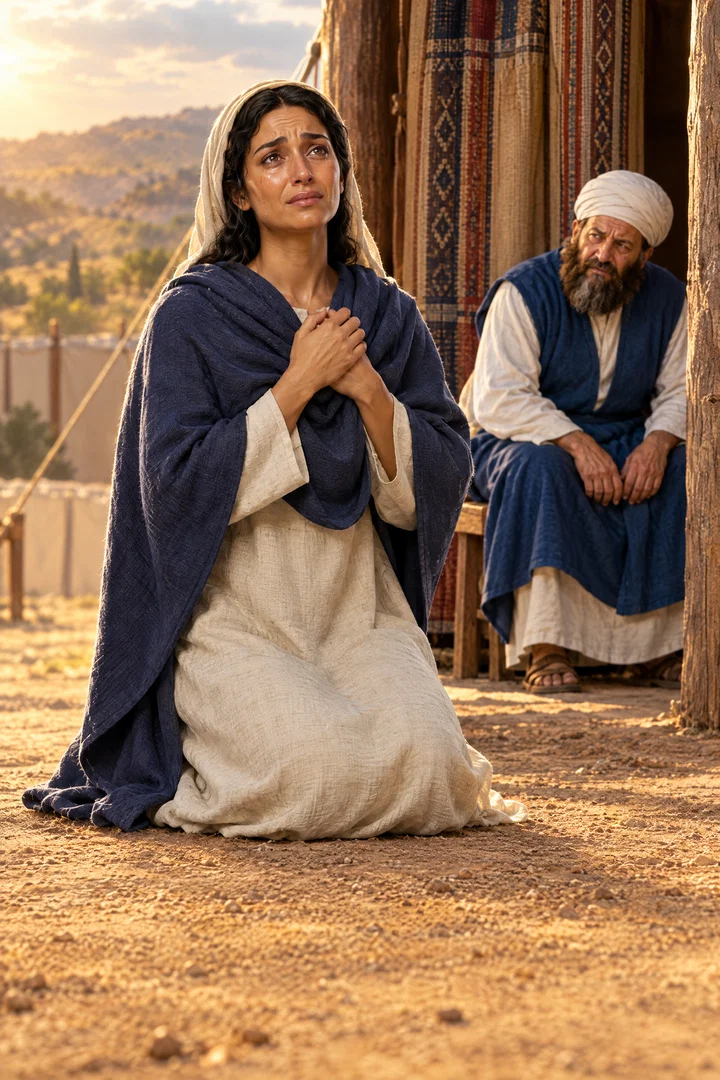
And she was in bitterness of soul, and prayed unto the LORD, and wept sore.
Translations
And she was in bitterness of soul, and prayed to the LORD, and wept sore.
King James Version, Revised Version
And she was in bitterness of soul, and prayed unto the LORD, and wept sore.
And she was in bitterness of soul, and prayed unto the Lord, and wept sore.
And she was in bitterness of soul, and prayed to the LORD, and wept bitterly.
And she was in bitterness of soul, and prayed unto Jehovah, and wept sore.
And she is bitter in soul, and prayeth unto Jehovah, and weepeth greatly,
and she was in bitterness of soul, and prayed to Jehovah, and wept much.
and, she being in bitterness of soul, prayed unto Yahweh, and, wept sore.
Berean Standard Bible, Majority Standard Bible
In her bitter distress, Hannah prayed to the LORD and wept with many tears.
She was in bitterness of soul, and prayed to the LORD, weeping bitterly.
And with grief in her soul, weeping bitterly, she made her prayer to the Lord.
And she was troubled in her minde, and prayed vnto the Lord, and wept sore:
Douay-Rheims (Challoner revision)
As Anna had her heart full of grief, she prayed to the Lord, shedding many tears,
Pictures



Cross-references
- 1 Samuel 1:20
Wherefore it came to pass, when the time was come about after Hannah had conceived, that she bare a son, and called his name Samuel, saying, Because I have asked him of the LORD.
Hannah’s prayer is followed by Samuel’s birth, the child she asked of God.
- 1 Samuel 1:27-28
For this child I prayed; and the LORD hath given me my petition which I asked of him:
Her prayer is answered, and she dedicates Samuel to the Lord.
- 1 Samuel 1:15
And Hannah answered and said, No, my lord, I am a woman of a sorrowful spirit: I have drunk neither wine nor strong drink, but have poured out my soul before the LORD.
Hannah pours out her sorrowful soul before the Lord.
- 1 Samuel 2:1
And Hannah prayed, and said, My heart rejoiceth in the LORD, mine horn is exalted in the LORD: my mouth is enlarged over mine enemies; because I rejoice in thy salvation.
Hannah later rejoices in God’s salvation.
- 1 Samuel 1:18
And she said, Let thine handmaid find grace in thy sight. So the woman went her way, and did eat, and her countenance was no more sad.
Hannah’s distress gives way to trust.
- Psalms 65:2
O thou that hearest prayer, unto thee shall all flesh come.
God hears prayer.
- 1 Samuel 3:1
And the child Samuel ministered unto the LORD before Eli. And the word of the LORD was precious in those days; there was no open vision.
Samuel, whom Hannah raised, is called by God as a child.
- Nehemiah 1:4
And it came to pass, when I heard these words, that I sat down and wept, and mourned certain days, and fasted, and prayed before the God of heaven,
Both describe someone weeping and praying to God.
- Joshua 24:26
And Joshua wrote these words in the book of the law of God, and took a great stone, and set it up there under an oak, that was by the sanctuary of the LORD.
The sanctuary of the Lord was at Shiloh.
- 2 Kings 20:5
Turn again, and tell Hezekiah the captain of my people, Thus saith the LORD, the God of David thy father, I have heard thy prayer, I have seen thy tears: behold, I will heal thee: on the third day thou shalt go up unto the house of the LORD.
God hears Hezekiah’s prayer and sees his tears.
Commentary
Each commentary is drawn from primary sources: the writings of Ellen G. White and Adventist pioneers and periodicals. Each commentary is separate. Its own words are not a quotation; follow the references to read the source passages.
Ellen G. White
4 sources
Hannah's bitterness of soul came from being childless while being repeatedly taunted by her husband Elkanah's other wife.PP 569.3–4 She prayed to the Lord in deep anguish and sorrow and wept bitterly.PP 569.3–4PP 570.1–3TSSW 109.4–5 She offered this prayer at the tabernacle.PP 569.3–4 She poured out her grief to God silently.PP 570.1–3
She asked God to remove her reproach and give her a son, whom she vowed to dedicate to His service, pleading for a son whom she would dedicate to God's service.PP 569.3–4PP 570.1–3 Her earnest appeal made in anguish was not drunken speech.PP 570.1–3 Her faithfulness, firmness and self-denial stand in contrast to Eli's indulgence and neglect as a father.ST Nov 10, 1881 Her prayerful, patient and persevering faithfulness is an example needed in the church, the Sabbath school and society.TSSW 109.4–5
Sources
Pioneers and periodicals
19 sources
Hannah went to the Lord's house at Shiloh and in bitter distress wept sore as she prayed for a son to take away her reproach of childlessness, and her prayer was answered when Samuel was born, whose name means asked of God.ST Nov 25, 1908ST Apr 8, 1913ST Apr 8, 1913RH Jul 10, 1860RH Sep 2, 1852 The soul in bitterness of soul means the sorrowing person herself, the seat of human feeling, and does not establish an immaterial or immortal nature.ST Dec 14, 1882 She uttered no reproach under taunting and grief, found her husband's comfort vain, and cast upon God a burden she could share with no earthly friend.ST Nov 25, 1908ST Apr 8, 1913RH Jul 10, 1860 Her prayer was earnest and heartfelt, silent in her heart with only her lips moving, showing that simple, patient, trusting communion with God is open to all without status or eloquent speech, even when audible prayer is impossible, and that leaving trouble in His hands moves Him to act.ST Nov 25, 1908RH Jul 10, 1860ST Feb 14, 1884 She vowed to nurture and train the son for God from birth, and God openly answered by giving Samuel and raising him up as a prophet while still a child, making Hannah an example of godly womanhood and of a mother's work of teaching early obedience so children will hear and heed the Lord's voice.ST Nov 25, 1908ST Apr 8, 1913RH Feb 27, 1908ST Sep 9, 1880ST Apr 2, 1912
Setting Words and Sorrow
The verse belongs to the account of Samuel's birth, in which Hannah prayed for a child and her prayer was answered when Samuel was born, his name meaning asked of God.ST Apr 8, 1913ST Apr 8, 1913 The setting is Shiloh, where the Lord's house or tabernacle was called the Sanctuary, a sacred place pitched at Shiloh.RH Sep 2, 1852 There at the tabernacle Hannah prayed to the Lord for a son in deep sorrow and bitter weeping.ST Apr 8, 1913ST Feb 14, 1884
The word soul here means a person in the experience of deep sorrow, the seat of human feelings, with Hannah bitterly distressed.ST Dec 14, 1882 It does not establish an immaterial or immortal nature.ST Dec 14, 1882
Hannah prayed to the Lord in bitterness of soul, deep distress and intense sorrow, weeping sore and bitterly before Him.ST Apr 8, 1913RH Jul 10, 1860RH Sep 11, 1913RH Jul 27, 1916RH Jan 12, 1860 Under taunting and grief she uttered no reproach and found her husband's comfort vain.ST Nov 25, 1908 She cast upon God a burden she could share with no earthly friend, pleading that He would take away her reproach of childlessness.ST Nov 25, 1908 Her tears and earnest prayer were heartfelt, silent in her heart with only her lips moving, an example of patient faith waiting upon God.RH Jul 10, 1860RH Jul 27, 1916RH Jan 12, 1860 Her distress afterward gave way from fretting to perfect trust as she left her trouble in the Lord's hands for Him to act and grant her desire.RH Sep 11, 1913
The passage shows fasting joined with affliction and prayer, as abstinence from food or at least from pleasant food.ST Apr 15, 1880RH Jul 4, 1871 That fasting was joined with mourning or humiliation in a time of affliction.ST Apr 15, 1880RH Jul 4, 1871
Prayer Offered and Answered
Hannah's prayer was earnest and heartfelt, offered in deep distress with sore weeping before the Lord, an example of prayer joined to tears and deep feeling.RH Jul 10, 1860RH Sep 11, 1913RH Jul 27, 1916RH Jan 12, 1860 She prayed silently in her heart with only her lips moving, unseen by others, casting upon God a burden she could share with no earthly friend.ST Nov 25, 1908RH Jul 27, 1916RH Jan 12, 1860 That silent communion shows that God may be sought when audible prayer is not possible, including in moments of danger or temptation, and that seeking His help in any setting reduces the risk of going astray.ST Feb 14, 1884RH Jul 27, 1916 It shows that a simple person has access to God without status, special holiness, or eloquent speech, that patient faith waits upon Him, and that leaving trouble in His hands in perfect trust leads Him to act and grant the desire.RH Sep 11, 1913RH Jan 12, 1860
She pleaded that He would take away her reproach of childlessness and grant her a son to nurture and train for Him.ST Nov 25, 1908 She made a solemn vow to dedicate the child to God even from birth.ST Nov 25, 1908 She afterward brought Samuel to God's altar as an offering of love, faith, and hope, and rejoiced in God's salvation.RH Jul 10, 1860RH Jan 12, 1860
Her private prayer was seen by God and openly answered in the gift of Samuel, whose name means asked of God.ST Nov 25, 1908ST Apr 8, 1913ST Apr 8, 1913RH Jul 27, 1916 He was born in answer to prayer for a child, and was raised up as a prophet while still a child at a time when Israel needed a true prophet.RH Dec 7, 1905ST Apr 2, 1912 This shows that actual prayer brings the blessing that is needed, reaches the heart of the Infinite, sustains and advances God's work, and brings results from God.RH Dec 7, 1905 Faithful prayer offered unseen by others may bring many souls to salvation and will be honored openly at the judgment, when the praying faithful shine in God's kingdom.RH Apr 12, 1860
Example for Mothers and Believers
The verse belongs to the record of God's use of women and the place He gives them. Hannah in her sorrow stands as a woman serving God, a woman of prayer, and a mother of godly character.RH Jun 2, 1903 Her faithfulness, firmness, and self-denial stand in contrast to Eli's indulgence and neglect as a father.ST Nov 10, 1881
She belonged with Elkanah to a godly home whose atmosphere produced Samuel.ST Sep 9, 1880 Her devotion as a mother led to Samuel being raised up as a prophet while still a child.ST Apr 2, 1912 Her story shows a mother's work of teaching and commanding obedience from the earliest years.RH Feb 27, 1908 So Samuel as a young child in Eli's house stood by his master at the first call, and the Lord spoke to him.RH Feb 27, 1908 Children taught obedience when young are much more likely to hear and heed the voice of the Lord.RH Feb 27, 1908
Sources