1 Samuel 1:9
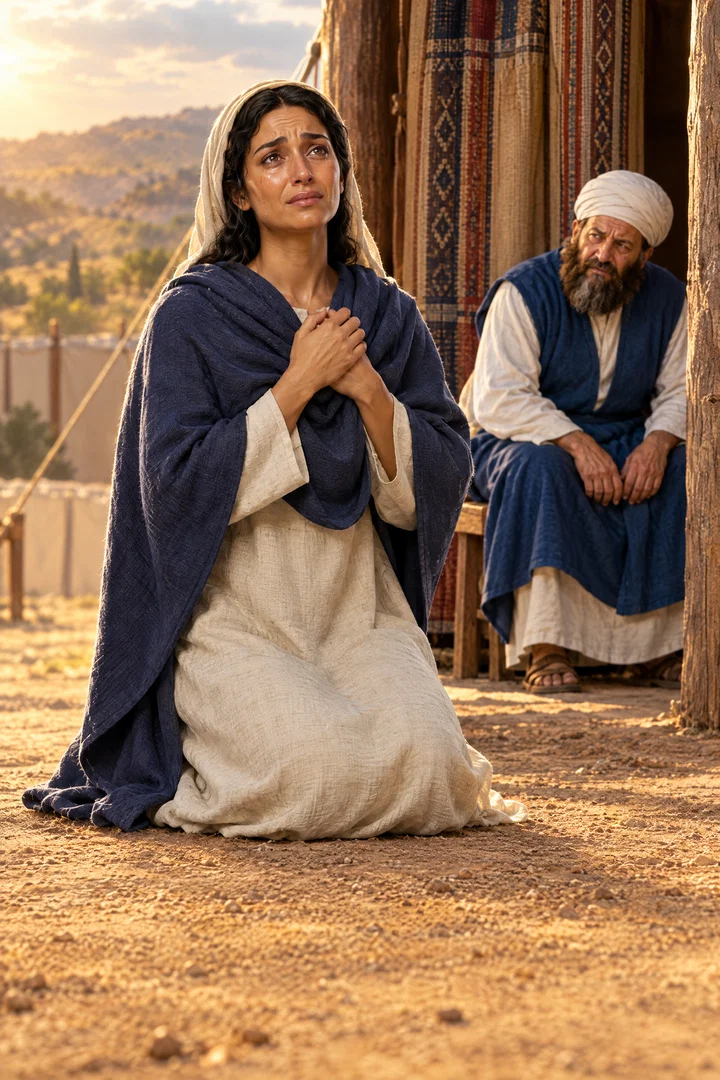
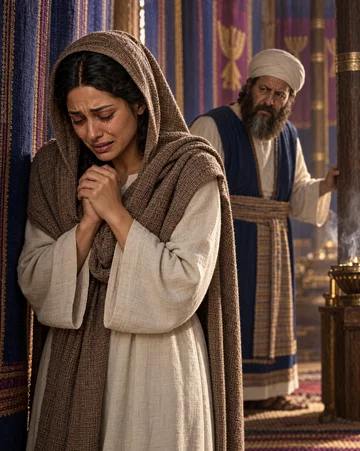
So Hannah rose up after they had eaten in Shiloh, and after they had drunk. Now Eli the priest sat upon a seat by a post of the temple of the LORD.
Translations
So Hannah rose up after they had eaten in Shiloh, and after they had drunk. Now Eli the priest sat on a seat by a post of the temple of the LORD.
So Hannah rose up after they had eaten in Shiloh, and after they had drunk. Now Eli the priest sat upon a seat by a post of the temple of the LORD.
So Hannah rose up after they had eaten in Shiloh, and after they had drunk. Now Eli the priest sat upon a seat by a post of the temple of the Lord.
So Hannah rose after they had eaten in Shiloh, and after they had drank. Now Eli the priest sat upon a seat by a post of the temple of the LORD.
So Hannah rose up after they had eaten in Shiloh, and after they had drunk. Now Eli the priest sat upon his seat by the door post of the temple of the LORD.
So Hannah rose up after they had eaten in Shiloh, and after they had drunk. Now Eli the priest was sitting upon his seat by the door-post of the temple of Jehovah.
And Hannah riseth after eating in Shiloh, and after drinking, and Eli the priest is sitting on the throne by the side-post of the temple of Jehovah.
And Hannah rose up after they had eaten in Shiloh, and after they had drunk; ( now Eli the priest sat upon the seat by the door-post of the temple of Jehovah;)
And Hannah rose up, after she had eaten in Shiloh, and after she had drunk,—and, Eli the priest, was sitting upon his chair, by the door-post of the temple of Yahweh;
Berean Standard Bible, Majority Standard Bible
So after they had finished eating and drinking in Shiloh, Hannah stood up. Now Eli the priest was sitting on a chair by the doorpost of the temple of the LORD.
So Hannah rose up after they had finished eating and drinking in Shiloh. Now Eli the priest was sitting on his seat by the doorpost of the LORD’s temple.
So after they had taken food and wine in the guest room, Hannah got up. Now Eli the priest was seated by the pillars of the doorway of the Temple of the Lord.
So Hannah rose vp after that they had eaten and drunke in Shiloh (and Eli the Priest sate vpon a stoole by one of the postes of the Temple of the Lord)
Douay-Rheims (Challoner revision)
So Anna arose after she had eaten and drunk in Silo: And Heli the priest sitting upon a stool, before the door of the temple of the Lord:
Pictures

Cross-references
- Joshua 18:1
And the whole congregation of the children of Israel assembled together at Shiloh, and set up the tabernacle of the congregation there. And the land was subdued before them.
The tabernacle was set up at Shiloh.
- 1 Samuel 3:1
And the child Samuel ministered unto the LORD before Eli. And the word of the LORD was precious in those days; there was no open vision.
Samuel served before the Lord at Shiloh’s tabernacle.
- Jeremiah 7:12
But go ye now unto my place which was in Shiloh, where I set my name at the first, and see what I did to it for the wickedness of my people Israel.
Refers to Shiloh as the place where God first set his name.
- 1 Samuel 4:4
So the people sent to Shiloh, that they might bring from thence the ark of the covenant of the LORD of hosts, which dwelleth between the cherubims: and the two sons of Eli, Hophni and Phinehas, were there with the ark of the covenant of God.
Locates the Lord’s tabernacle at Shiloh.
- Psalms 78:60
So that he forsook the tabernacle of Shiloh, the tent which he placed among men;
Both texts identify the sanctuary at Shiloh as the tabernacle.
- 1 Kings 14:2
And Jeroboam said to his wife, Arise, I pray thee, and disguise thyself, that thou be not known to be the wife of Jeroboam; and get thee to Shiloh: behold, there is Ahijah the prophet, which told me that I should be king over this people.
Both texts place events at Shiloh.
- 1 Samuel 2:1-11
And Hannah prayed, and said, My heart rejoiceth in the LORD, mine horn is exalted in the LORD: my mouth is enlarged over mine enemies; because I rejoice in thy salvation.
Hannah’s prayer and praise follow her plea at Shiloh.
- 1 Samuel 2:12-17
Now the sons of Eli were sons of Belial; they knew not the LORD.
Hophni and Phinehas are presented as ruined by the atmosphere of Eli’s house.
- 1 Samuel 3:3
And ere the lamp of God went out in the temple of the LORD, where the ark of God was, and Samuel was laid down to sleep;
Names the temple of the Lord where Samuel served.
- 1 Samuel 1:24
And when she had weaned him, she took him up with her, with three bullocks, and one ephah of flour, and a bottle of wine, and brought him unto the house of the LORD in Shiloh: and the child was young.
Hannah brings Samuel to the house of the Lord at Shiloh.
- Joshua 18:8-10
And the men arose, and went away: and Joshua charged them that went to describe the land, saying, Go and walk through the land, and describe it, and come again to me, that I may here cast lots for you before the LORD in Shiloh.
The land was apportioned by lot at Shiloh.
- 1 Samuel 4:11
And the ark of God was taken; and the two sons of Eli, Hophni and Phinehas, were slain.
The ark was taken from Shiloh by the Philistines.
- 1 Samuel 1:20
Wherefore it came to pass, when the time was come about after Hannah had conceived, that she bare a son, and called his name Samuel, saying, Because I have asked him of the LORD.
Hannah’s household is linked with Samuel’s birth and upbringing.
- 1 Samuel 2:22-25
Now Eli was very old, and heard all that his sons did unto all Israel; and how they lay with the women that assembled at the door of the tabernacle of the congregation.
Eli’s sons’ wrongdoing and his response are described.
- 1 Samuel 2:29
Wherefore kick ye at my sacrifice and at mine offering, which I have commanded in my habitation; and honourest thy sons above me, to make yourselves fat with the chiefest of all the offerings of Israel my people?
Eli is rebuked for honoring his sons above God.
- 1 Samuel 3:15
And Samuel lay until the morning, and opened the doors of the house of the LORD. And Samuel feared to shew Eli the vision.
Describes Samuel serving in the house of the Lord.
Commentary
Each commentary is drawn from primary sources: the writings of Ellen G. White and Adventist pioneers and periodicals. Each commentary is separate. Its own words are not a quotation; follow the references to read the source passages.
Ellen G. White
3 sources
The setting is Shiloh at the family feast held after the thank-offerings, a solemn but joyful custom that followed the sacrifice.PP 569.3–4 Elkanah gave Hannah a double portion as a sign of his affection, yet Peninnah's taunts over Hannah's childlessness turned the occasion into sorrow for her.PP 569.3–4 The eating and drinking is the family finishing that feast, after which Hannah's grief drove her to rise, leave the feast, and seek God.PP 569.3–4
Eli is seated by a post of the temple at Shiloh in his office as priest.Lt 120, 1897, par. 7–9ST Nov 10, 1881 That sacred office throws into relief his failure to restrain his sons.Lt 120, 1897, par. 7–9ST Nov 10, 1881 His conduct as a father stands in contrast to Hannah's firmness and self-denial.ST Nov 10, 1881
Sources
Pioneers and periodicals
12 sources
Hannah got up after the family meal at Shiloh and went to pray for a son at the doorway of the tabernacle, which is called the temple of the Lord though it was the curtained sanctuary and not a permanent building.ST Apr 8, 1913RH Jan 6, 1853RH Mar 1, 1870RH Mar 28, 1854ST Feb 14, 1884 Eli the priest was sitting in his place by the entrance in his priestly office at the time, while his sons Hophni and Phinehas were corrupting the worship by greed and heathen practices.ST Nov 10, 1881ST Sep 29, 1898 Her silent pleading shows that prayer need not be heard aloud to be heard and answered, and teaches constant silent communion with God in every place and in danger or temptation.ST Feb 14, 1884 Her devoted motherhood and firm self-denying training of Samuel in early obedience stands in contrast to Eli, who though kind and benevolent lacked strength to restrain his own sons, and her home prepared Samuel to become a prophet for Israel.ST Nov 10, 1881RH Feb 27, 1908ST Sep 9, 1880ST Apr 2, 1912
Historical Setting and Wording
1 Samuel 1:9 belongs to the account of Samuel's birth, when Hannah's prayer was answered and she was given the son she had asked of God.ST Apr 8, 1913 It belongs to the history of Israel between the judges and the kings, when people did what seemed right to them. Shiloh had been a central place for Israel during the conquest of Canaan and remained significant afterward, with the wilderness tabernacle set up there and the land divided by lot there, and it was the place of Eli's priestly service and Samuel's early service.RH Mar 28, 1854ST Sep 29, 1898 The setting at Shiloh was marked by Eli's sons, Hophni and Phinehas, serving as corrupt priests whose greedy extortions made the people despise God's service and who had brought heathen practices into worship.
The first chapters of 1 Samuel record a noted backsliding of the church of Israel in the days of Samuel, meaning an apostasy from which recovery was possible, with the people restored again through the ministrations of Samuel the prophet. The verse stands at a time when Israel as a people had been brought low by their transgressions and subjection to the Philistines.ST Apr 2, 1912 The curtained sanctuary at Shiloh is called the temple of the Lord and the house of the Lord, showing that temple could refer to the tabernacle, God's dwelling place, also known as the Lord's tabernacle, the sanctuary of the Lord, and the house of God, even though it was not a permanent temple.RH Jan 6, 1853RH Mar 1, 1870RH Mar 28, 1854RH Sep 2, 1852 The rising after eating and drinking is an example of ancient fasting practices associated with affliction or mourning and prayer, when such seasons involved abstaining from food or at least from pleasant food.RH Jul 4, 1871
Hannah, Eli, and Samuel
The verse displays the beautiful motherhood and mother spirit of Hannah in her devotion as a mother.ST Apr 2, 1912 It sets her praying at the gate of the tabernacle for a son, and her prayer proves the efficacy of silent prayer, that prayer does not need to be audible to be heard and answered.ST Feb 14, 1884 It teaches the habit of silently communing with God under all circumstances, especially in moments of danger or temptation when audible prayer is hardly possible, in the midst of the busy throng, on the crowded street, in the car, or wherever a person may be.ST Feb 14, 1884 Those who pray in this way greatly reduce their liability to going astray.ST Feb 14, 1884
Hannah taught Samuel obedience from very early childhood, so that when still a small child living in Eli's house he was at his master's side at the first call, and it was a grand privilege for the child to have the Lord speak to him.RH Feb 27, 1908 Children taught obedience when young are much more likely to hear and heed the voice of the Lord than those not so taught, and it is the duty of parents to expect obedience, with the mother responsible to command it.RH Feb 27, 1908 Her devotion as a mother is joined to Samuel being raised from childhood as a prophet for Israel.ST Apr 2, 1912
The verse places Hannah at Shiloh after the meal and places Eli seated near the temple in his role and priestly service as priest, where Samuel also rendered early service.ST Nov 10, 1881ST Sep 9, 1880ST Sep 29, 1898 It connects the godly atmosphere of Elkanah and Hannah's home with the raising of Samuel and contrasts it with Eli's household, whose corrupt atmosphere ruined Hophni and Phinehas.ST Sep 9, 1880 It presents Eli as kind and benevolent but lacking strength of character. That sacred priestly office is contrasted with his failure to restrain his sons, and his conduct as a father is contrasted with Hannah's firmness and self-denial.ST Nov 10, 1881
Sources