1 Samuel 14:3
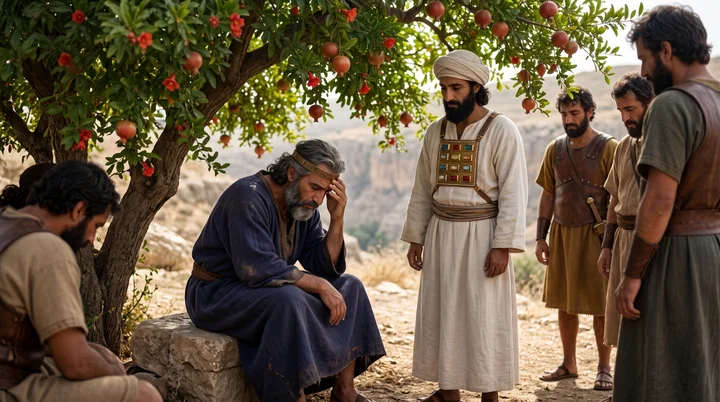
And Ahiah, the son of Ahitub, I-chabod’s brother, the son of Phinehas, the son of Eli, the LORD’s priest in Shiloh, wearing an ephod. And the people knew not that Jonathan was gone.
Translations
And Ahiah, the son of Ahitub, Ichabod’s brother, the son of Phinehas, the son of Eli, the LORD’s priest in Shiloh, wearing an ephod. And the people knew not that Jonathan was gone.
And Ahiah, the son of Ahitub, I-chabod’s brother, the son of Phinehas, the son of Eli, the LORD’s priest in Shiloh, wearing an ephod. And the people knew not that Jonathan was gone.
and Ahiah, the son of Ahitub, Ichabod’s brother, the son of Phinehas, the son of Eli, the Lord’s priest in Shiloh, wearing an ephod. And the people knew not that Jonathan was gone.
And Ahiah, the son of Ahitub, I-chabod's brother, the son of Phinehas, the son of Eli, the LORD'S priest in Shiloh, wearing an ephod. And the people knew not that Jonathan was gone.
and Ahijah, the son of Ahitub, Ichabod’s brother, the son of Phinehas, the son of Eli, the priest of the LORD in Shiloh, wearing an ephod. And the people knew not that Jonathan was gone.
and Ahijah, the son of Ahitub, Ichabod’s brother, the son of Phinehas, the son of Eli, the priest of Jehovah in Shiloh, wearing an ephod. And the people knew not that Jonathan was gone.
and Ahiah, son of Ahitub, brother of I-Chabod, son of Phinehas son of Eli priest of Jehovah in Shiloh, bearing an ephod; and the people knew not that Jonathan hath gone.
( And Ahijah the son of Ahitub, Ichabod's brother, the son of Phinehas, the son of Eli, Jehovah's priest in Shiloh, wore the ephod.) And the people did not know that Jonathan was gone.
and, Ahijah, son of Ahitub, brother of Ichabod, son of Phinehas, son of Eli, was priest of Yahweh in Shiloh, wearing an ephod,—and, the people, knew not that Jonathan had departed.
Berean Standard Bible, Majority Standard Bible
including Ahijah, who was wearing an ephod. He was the son of Ichabod’s brother Ahitub son of Phinehas, the son of Eli the priest of the LORD in Shiloh. But the troops did not know that Jonathan had left.
including Ahijah the son of Ahitub, Ichabod’s brother, the son of Phinehas, the son of Eli the priest of the LORD in Shiloh, wearing an ephod. The people didn’t know that Jonathan was gone.
And Ahijah, the son of Ahitub, brother of Ichabod, the son of Phinehas, the son of Eli, the priest of the Lord in Shiloh, who had the ephod. And the people had no idea that Jonathan had gone.
And Ahiah the sonne of Ahitub, Ichabods brother, the sonne of Phinehas, the sonne of Eli, was the Lordes Priest in Shiloh, and ware an Ephod: and the people knewe not that Ionathan was gone.
Douay-Rheims (Challoner revision)
And Achias the son of Achitob brother to Ichabod the son of Phinees, the son of Heli the priest of the Lord in Silo, wore the ephod. And the people knew not whither Jonathan was gone.
Pictures
Cross-references
- 1 Samuel 14:16-20
And the watchmen of Saul in Gibeah of Benjamin looked; and, behold, the multitude melted away, and they went on beating down one another.
Saul learns of the battle and discovers Jonathan is missing.
- 1 Samuel 4:10-11
And the Philistines fought, and Israel was smitten, and they fled every man into his tent: and there was a very great slaughter; for there fell of Israel thirty thousand footmen.
Israel is defeated, and the ark is taken after Hophni and Phinehas bring it into battle.
- 1 Samuel 14:45
And the people said unto Saul, Shall Jonathan die, who hath wrought this great salvation in Israel? God forbid: as the LORD liveth, there shall not one hair of his head fall to the ground; for he hath wrought with God this day. So the people rescued Jonathan, that he died not.
The people spare Jonathan, whom God used to deliver Israel.
- 1 Samuel 14:13-15
And Jonathan climbed up upon his hands and upon his feet, and his armourbearer after him: and they fell before Jonathan; and his armourbearer slew after him.
Jonathan’s attack begins the Philistine rout.
Commentary
Each commentary is drawn from primary sources: the writings of Ellen G. White and Adventist pioneers and periodicals. Each commentary is separate. Its own words are not a quotation; follow the references to read the source passages.
Ellen G. White
4 sources
Ahiah, the son of Ahitub and brother of Ichabod, was the grandson of Phinehas and great-grandson of Eli, serving as the Lord's priest at Shiloh and wearing an ephod while stationed with the Israelite force, so both the priest and the ark form part of the setting for Jonathan's attack on the Philistines.PP 623.1–21SP 358.2–359.2ST Aug 10, 1882 The declaration that the people did not know Jonathan was gone means his assault on the Philistine camp and garrison began in secret, without the knowledge of the army.PP 623.1–21SP 358.2–359.2SG4 70.1–71.1ST Aug 10, 1882
Saul and his men became aware of what Jonathan had done only after the battle was already underway, when Jonathan and his armor-bearer were found to be absent and reported missing.1SP 358.2–359.2SG4 70.1–71.1 Once he learned they were missing, Saul ordered the ark to be brought forward and directed the priest to inquire of God, but the increasing tumult of the battle cut the inquiry short.1SP 358.2–359.2
Saul called for the ark and its attending priests, including Ahiah, although he knew the history of Israel's defeat when Hophni and Phinehas had carried the ark into battle, and he did so in hope of reviving the courage of the people and reinforcing his own authority.ST Aug 10, 1882
Sources
Pioneers and periodicals
9 sources
The verse names Ahiah, son of Ahitub, Ichabod's brother, son of Phinehas, son of Eli, as the Lord's priest in Shiloh, and notes that he was wearing an ephod.ST Aug 10, 1882ST Mar 10, 1909 At the same moment Jonathan had slipped away, and the people did not know he was gone.ST Aug 10, 1882ST Sep 20, 1883ST Mar 10, 1909RH Nov 12, 1901 What is introduced is Jonathan with his armor-bearer going up against the Philistine garrison at Michmash.RH Dec 30, 1915
The noted victory over the Philistines was gained from Gibeah of Benjamin, where Saul dwelt after he was anointed king, within an hour's walk from Jerusalem.ST Oct 27, 1898 The verse belongs to the account of Jonathan's remarkable victory, deliverance of Israel, and exploit in routing the Philistines.ST Sep 20, 1883ST Mar 12, 1885 The same account exposes Saul's growing rashness, including his rash decree that endangered Jonathan's life.ST Sep 20, 1883
Saul knew Israel's history of defeat after Hophni and Phinehas brought the ark into battle, yet he chose to summon the ark and its attendant priests, including Ahiah, hoping to restore the people's courage and strengthen his own authority.ST Aug 10, 1882 The attack thus introduced was a victory God gave against overwhelming odds.RH Dec 30, 1915 Jonathan and his armor-bearer driving a trained army to flight teaches that God brings victory through the weak, and that His battles are not won by earthly might or by the greater number.ST Jul 21, 1909
The verse belongs to Israel's triumphs under the leadership of Jonathan, the man of valor, presenting his actions as a triumph through faith in God's power.ST Mar 10, 1909ST Apr 14, 1909 His exploit in routing the Philistines is an example of the courage needed to stand apart and live consistently as a Christian.ST Mar 12, 1885 His going against the Philistines in a national crisis with only his armor-bearer, braving what appeared as certain death, shows that such personal effort is acceptable service.RH Nov 12, 1901 Christians do not now have to fight literal Philistines as Jonathan did but have a greater work, to fight with God's help against wrong habits that put millions on beds of illness and against prevailing indifference to God's claims upon humanity physically and spiritually, and when mightily stirred in regard to duty they will work as effectively as Jonathan did.RH Nov 12, 1901
Sources