1 Samuel 8:6
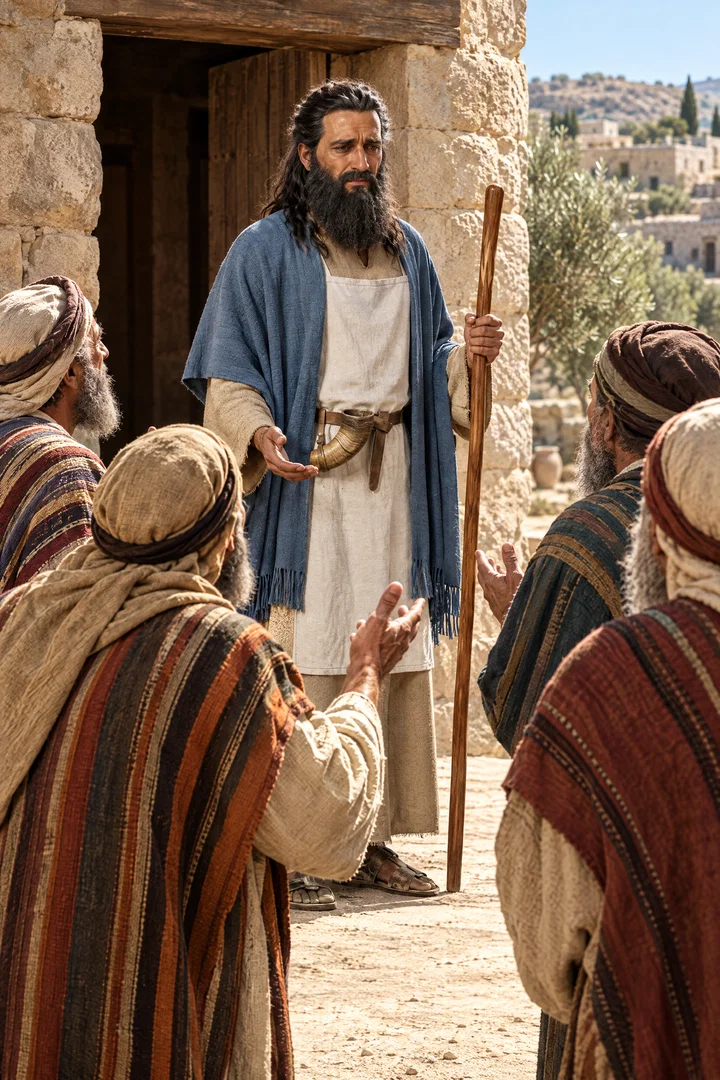
But the thing displeased Samuel, when they said, Give us a king to judge us. And Samuel prayed unto the LORD.
Translations
But the thing displeased Samuel, when they said, Give us a king to judge us. And Samuel prayed to the LORD.
But the thing displeased Samuel, when they said, Give us a king to judge us. And Samuel prayed unto the LORD.
But the thing displeased Samuel, when they said, Give us a king to judge us. And Samuel prayed unto the Lord.
But the thing displeased Samuel, when they said, Give us a king to judge us: and Samuel prayed to the LORD.
But the thing displeased Samuel; when they said, Give us a king to judge us. And Samuel prayed unto the LORD.
But the thing displeased Samuel, when they said, Give us a king to judge us. And Samuel prayed unto Jehovah.
And the thing is evil in the eyes of Samuel, when they have said, 'Give to us a king to judge us;' and Samuel prayeth unto Jehovah.
And the thing displeased Samuel, when they said, Give us a king to judge us. And Samuel prayed to Jehovah.
But the thing was displeasing in the eyes of Samuel, when they said, Give unto us a king to judge us. So Samuel prayed unto Yahweh.
Berean Standard Bible, Majority Standard Bible
But when they said, “ Give us a king to judge us,” their demand was displeasing in the sight of Samuel; so he prayed to the LORD.
But the thing displeased Samuel when they said, “ Give us a king to judge us.”Samuel prayed to the LORD.
But Samuel was not pleased when they said to him, Give us a king to be our judge. And Samuel made prayer to the Lord.
But the thing displeased Samuel, when they said, Giue vs a King to iudge vs: and Samuel prayed vnto the Lord.
Douay-Rheims (Challoner revision)
And the word was displeasing in the eyes of Samuel, that they should say: Give us a king, to judge us. And Samuel prayed to the Lord.
Pictures
Cross-references 20 of 23
- 1 Samuel 8:11-20
And he said, This will be the manner of the king that shall reign over you: He will take your sons, and appoint them for himself, for his chariots, and to be his horsemen; and some shall run before his chariots.
Samuel warns of a king’s oppressive rule, but the people persist in demanding one.
- Hosea 13:11
I gave thee a king in mine anger, and took him away in my wrath.
God gave Israel a king in anger.
- Deuteronomy 17:14-20
When thou art come unto the land which the LORD thy God giveth thee, and shalt possess it, and shalt dwell therein, and shalt say, I will set a king over me, like as all the nations that are about me;
God’s law sets limits on Israel’s desire for a king.
- John 19:15
But they cried out, Away with him, away with him, crucify him. Pilate saith unto them, Shall I crucify your King? The chief priests answered, We have no king but Cæsar.
Their declaration of loyalty to Caesar echoes Israel’s rejection of God as King.
- 1 Samuel 12:17-19
Is it not wheat harvest to day? I will call unto the LORD, and he shall send thunder and rain; that ye may perceive and see that your wickedness is great, which ye have done in the sight of the LORD, in asking you a king.
The people’s demand for a king is condemned as wickedness and acknowledged as sin.
- 1 Samuel 8:19-20
Nevertheless the people refused to obey the voice of Samuel; and they said, Nay; but we will have a king over us;
Israel insists on having a king like other nations.
- 1 Samuel 12:13
Now therefore behold the king whom ye have chosen, and whom ye have desired! and, behold, the LORD hath set a king over you.
Samuel identifies Saul as the king Israel chose and desired.
- 1 Samuel 10:1
Then Samuel took a vial of oil, and poured it upon his head, and kissed him, and said, Is it not because the LORD hath anointed thee to be captain over his inheritance?
Saul is anointed as Israel’s first king.
- 1 Samuel 7:15
And Samuel judged Israel all the days of his life.
Samuel had judged Israel throughout his life.
- Judges 17:6
In those days there was no king in Israel, but every man did that which was right in his own eyes.
Also links the absence of a king with disorder.
- 1 Samuel 10:9
And it was so, that when he had turned his back to go from Samuel, God gave him another heart: and all those signs came to pass that day.
continues the same history of the king given
- 1 Samuel 15:11
It repenteth me that I have set up Saul to be king: for he is turned back from following me, and hath not performed my commandments. And it grieved Samuel; and he cried unto the LORD all night.
Samuel's grief over Saul recalls the people's demand for a king.
- Psalms 106:15
And he gave them their request; but sent leanness into their soul.
God grants their demand for a king, but sends leanness with it.
- John 6:15
When Jesus therefore perceived that they would come and take him by force, to make him a king, he departed again into a mountain himself alone.
Both show kingship rejected without willing, fit subjects.
- Judges 21:25
In those days there was no king in Israel: every man did that which was right in his own eyes.
Describes the disorder associated with Israel having no king.
- 1 Samuel 12:23
Moreover as for me, God forbid that I should sin against the LORD in ceasing to pray for you: but I will teach you the good and the right way:
Samuel continues praying for the people and teaching them the right way.
- Psalms 97:1
The LORD reigneth; let the earth rejoice; let the multitude of isles be glad thereof.
sets demand for human king against the Lord's reign
- Ezekiel 21:26-27
Thus saith the Lord GOD; Remove the diadem, and take off the crown: this shall not be the same: exalt him that is low, and abase him that is high.
Israel’s rejection of God’s kingship leads to the overturning of its monarchy.
- 1 Samuel 12:3-5
Behold, here I am: witness against me before the LORD, and before his anointed: whose ox have I taken? or whose ass have I taken? or whom have I defrauded? whom have I oppressed? or of whose hand have I received any bribe to blind mine eyes therewith? and I will restore it you.
Samuel’s public record answers the claim that his leadership warranted rejection.
- Acts 13:20
And after that he gave unto them judges about the space of four hundred and fifty years, until Samuel the prophet.
Cited as evidence that Israel was governed by judges.
Commentary
Each commentary is drawn from primary sources: the writings of Ellen G. White and Adventist pioneers and periodicals. Each commentary is separate. Its own words are not a quotation; follow the references to read the source passages.
Ellen G. White
28 sources
When the elders asked for a king to judge them, Samuel was displeased, distressed and deeply wounded in soul, and he kept his hurt to himself and took the matter to the Lord in prayer to seek counsel from Him.Ms 40a, 1890, par. 24–29Ms 53, 1890, par. 26–31Ms 40, 1890, par. 10–15PP 604.2ST Jul 13, 1882 Their demand was not a rejection of Samuel the man but a rejection of God that He should not reign over them, though He was already their King who had appointed their judges and settled their difficulties.Ms 40a, 1890, par. 24–29Ms 40, 1890, par. 10–15Lt 12a, 1888, par. 9–11 They wanted a king like all the nations in order to be like them and to be guided by visible human power they could see rather than by the divine, invisible power and theocracy that had led them until then.Ms 40a, 1890, par. 24–29Ms 53, 1890, par. 26–31Ms 40, 1890, par. 10–156T 249.4–250.2Lt 12a, 1888, par. 9–11 The Lord had plainly told them through Samuel that a king was not the right and best way, but He permitted them to have their own way and granted the desire of their unsanctified hearts while warning them of the trouble and consequences that would come.Ms 40a, 1890, par. 24–29Ms 40, 1890, par. 10–15Lt 12a, 1888, par. 9–11 Israel's course revealed too much confidence in self and in men and human judgment instead of trust in the Lord God of Israel as Ruler, and its history is written for the admonition of God's people upon whom the ends of the world are come, lest the same folly be repeated today.HL 283.2STBk 113.2LSEGW 323.1–2Ms 61, 1890, par. 18STA 113.1
Samuel's Grief and Prayer
The elders' words, give us a king to judge us, displeased Samuel, distressed him, grieved him, and deeply wounded him in distress of soul.Ms 40a, 1890, par. 24–29Ms 53, 1890, par. 26–31Ms 40, 1890, par. 10–151SP 353.2SG4 65.4 The displeasure arose when Israel demanded a king to judge them like all the nations.Ms 40a, 1890, par. 24–29Ms 53, 1890, par. 26–31Ms 40, 1890, par. 10–15PP 604.21SP 353.2
He understood the demand as a censure upon his own leadership and a direct effort to set him aside and discard him before God had released him.Ms 53, 1890, par. 26–31PP 604.2ST Jul 13, 1882 The people themselves said they found no fault with his administration, pointing only to his age and to the untrustworthiness of his sons.ST Jul 13, 1882
He made no reproach and did not reveal his feelings, but kept his hurt to himself.PP 604.2ST Jul 13, 1882 He acted so because he feared a bitter exchange could do great harm.ST Jul 13, 1882
Instead he took the matter to the Lord in prayer and sought counsel from Him.Ms 40a, 1890, par. 24–29Ms 53, 1890, par. 26–31Ms 40, 1890, par. 10–15PP 604.2STBk 113.2 In answer God directed him to listen to the voice of the people and let their voice decide.Ms 40a, 1890, par. 24–29Ms 53, 1890, par. 26–31PP 604.2STBk 113.2ST2 6.1
Rejecting God for King
The demand was not a rejection of Samuel the man but a rejection of God that He should not reign over them, though the Lord had appointed the judges over His people and was already their King who supported them and settled their difficulties.Ms 40a, 1890, par. 24–29Ms 40, 1890, par. 10–15Lt 12a, 1888, par. 9–11Lt 139, 1898, par. 12–16 God told Samuel that the rejection was ultimately of Himself, not of Samuel, and instructed him to grant the request while warning the people of the consequences that would follow.Lt 12a, 1888, par. 9–11 Their act continued the rebellion carried on since the day God brought them up out of Egypt, wherein they forsook Him and served other gods.Ms 40a, 1890, par. 24–29Ms 40, 1890, par. 10–15 It was the same rebellion that left their fathers' dead bodies in the wilderness.Ms 40a, 1890, par. 24–29
The demand reflected a lack of faith in God's care and a rebellious departure from God as Israel's special leader and Ruler, instead of trusting God to choose rulers and guide them through His prophets whose government He had given.1SP 353.2SG4 65.4HL 283.2 The people wanted a king like all the nations in order to be like them, to be recognized by the world, to be esteemed great in the eyes of surrounding nations, and to make a great display of external prosperity and royal glory.Ms 40a, 1890, par. 24–29Ms 53, 1890, par. 26–31Ms 40, 1890, par. 10–151SP 353.26T 249.4–250.2 This rejected God's design for them to serve as His distinct people and example to the nations.RH Jul 23, 1901 Their demand grew as they adopted their neighbors' customs, lost reverence for God, and envied the display of heathen kings, while tribal jealousy and internal conflict weakened them against enemies and led them to believe only a strong central government could secure their standing among other nations.PP 603.3
They wanted reformed religion and rule, worldly plans and worldly policy, and to be guided by visible human power they could see rather than by the divine, invisible power and theocracy that had led and guided them until then and had given them victory in battle.Ms 40a, 1890, par. 24–29Ms 53, 1890, par. 26–316T 249.4–250.2Ms 169, 1899, par. 24Ms 159, 1899, par. 13 Spiritually blind to the fact that God's word was reaching them through Samuel, they wanted divine power and rule visibly embodied in a man, instead of trusting God's unseen guidance and deliverance.Lt 12a, 1888, par. 9–11 Their minds were bent on following their own judgment and casting aside God's judgment, weary of the rule of those who kept before them God's will, God's ways, and God's honor.Ms 40a, 1890, par. 24–29 They coveted the influence of men and dishonored God by failing to appreciate His sufficiency, and Satan worked on their hearts until they were bewitched to follow his counsel even in the face of the prophet's solemn protest.Ms 40a, 1890, par. 24–296T 249.4–250.2
The demand reflected desire to be free of God's rule as their divine Sovereign, to leave first love and exchange God's management, rule, jurisdiction, blessing and safety for unsanctified human judgment, laying plans that had not entered into the mind of God and separating His work from His leading and control.Ms 53, 1890, par. 26–31PP 603.3 When the heart is estranged from God, pride and self-love and ambition can find excuses to override His instructions, even at the expense of His cause.ST Jul 13, 1882 They wanted their own way rather than seeking God's counsel about the kind of ruler they needed, valuing royal appearance, courage, and military ability above godliness and justice.PP 636.1 God knew an earthly king could claim the honor due to Him, exalt himself, and lead the people into sin, and by his decisions harm the innocent and favor the unworthy unless he trusted God for wisdom.SG4 65.4
The Lord had plainly told them through Samuel that a king was not the right way and the best way, but He permitted them to have their own way and granted the desire of their unsanctified hearts, who imagined that a king would bring the most glory to themselves as a nation.Ms 40a, 1890, par. 24–29Ms 40, 1890, par. 10–15 He instructed Samuel to grant the request while warning them of the trouble their choice would bring.Lt 12a, 1888, par. 9–11RH Jul 23, 1901 If judges were untrue to their trust and showed unsanctified hearts trusting finite wisdom, it was the people's privilege to set things in order, but not to throw off the authority of the God of heaven.Ms 40a, 1890, par. 24–29 The demand was a sin whose history is written for the admonition of God's people upon whom the ends of the world are come, calling them not to repeat Israel's course of desiring worldly plans and worldly policy.Ms 61, 1890, par. 19–20
The warning was fulfilled when they received a king, for God gave them a king who reflected their own character so they could learn from the consequences and return to allegiance to Him.RH Jul 23, 1901Lt 139, 1898, par. 12–16PP 636.1 The king they demanded later proved unable to guide them confidently in battle or inspire their trust in God.SG4 79.2–80.2 They and their king failed to follow God's commands fully, relied on human wisdom, and dishonored God, so He no longer supported them.Lt 139, 1898, par. 12–16 The contrast between Saul's rule and Samuel's faithful leadership made the mistake plain, for the people had wanted to be like the surrounding nations.PP 663.1–2 Making their own choice to depend on men was the great weakness that made Israel weak, and its end was seen in the destruction of Jerusalem and the dispersion of the nation.6T 249.4–250.2Ms 169, 1899, par. 24Ms 159, 1899, par. 13
Warning Against Worldly Trust
Israel's course in demanding a king revealed self-confidence and lack of humility, a turning from trust in the Lord God of Israel as Ruler of His people to confidence in self and in men and in human judgment and human rule.HL 283.2Ms 61, 1890, par. 18STA 113.14MR 69.2Ms 40, 1890, par. 7–9 That history of folly and sin in Samuel's day is written for the admonition of God's people upon whom the ends of the world are come, as a warning lest they repeat those errors.Ms 61, 1890, par. 19–204MR 69.2 The same folly of relying on human rule, on people, and on one's own judgment rather than trusting God will be repeated among God's people today unless there is greater humility, less confidence in self, and more trust in the Lord.HL 283.2STBk 113.2LSEGW 323.1–2Ms 61, 1890, par. 18STA 113.1 It warns them to be humble, to distrust their own judgment, and to depend on the Lord through prayer.STBk 113.2ST2 6.1
God's people must not follow worldlings and must not depend on men for strength and influence, heeding the voice of God instead.6T 249.4–250.2 They must not set God aside as insufficient by resorting to worldly men for recognition and influence in order to do a great work, dishonoring Him by failing to appreciate His sufficiency and choosing to be guided by visible human power rather than by the divine, invisible power that had led them and given them victory in battle.6T 249.4–250.2 That leaving of first love exchanges God's management, rule, jurisdiction, blessing and safety for unsanctified human judgment and worldly policy, laying plans that have not entered into the mind of God and separating His work from His leading and control through spiritual blindness.Ms 53, 1890, par. 26–31 Renouncing the divine theocracy in order to be like the other nations takes one out of the hands of God and puts one under worldly, fashionable influence in an effort to raise oneself, which instead lowers influence, reveals inability to comprehend spiritual things, and imperils the work of God.Lt 9, 1901, par. 23–24
Standing the test requires divine power combined with human effort, leaning no longer on men or on human judgment but making God the trust.LSEGW 323.1–2Ms 61, 1890, par. 18 Those who do this will talk less and pray much more, showing meekness of spirit, caution in plans and movements, revealed dependence on God, and the mind of Christ.STBk 113.2LSEGW 323.1–2Ms 61, 1890, par. 18ST2 6.1 That trust is further evidenced by love, Christian politeness and courtesy, great caution, a firm platform of solid uncontaminated principle, and the mind of Christ.Ms 40, 1890, par. 7–9 Human ability and wisdom are only derived from God, for God has underived wisdom, He is infinite while man is finite and erring, and He is the Fountain of light and life and glory.Ms 40, 1890, par. 7–9 Minds and talents are given only in trust on trial to prove whether men will work in His way and do His will and not put confidence in themselves alone, and no confidence can be put in human ability unless divine power cooperates with the human through men who are teachable, humble, unselfish, and sanctified.Ms 40, 1890, par. 7–9
The church will make shipwreck amid the perils of the last days like a vessel sunk by one leak unless the holy Captain of salvation serves not only as Captain but Pilot.Ms 40, 1890, par. 7–9 Every man in sacred office must inquire at every step if it is the way of the Lord, look constantly to Jesus for guidance, and maintain principle at any cost.Ms 40, 1890, par. 7–9 For it is not what finite men can do but what God can do through finite men who are teachable, humble, unselfish, and sanctified, and if they do not stand the test with too much self-confidence, self-sufficiency, pride of heart and self-esteem without giving glory to God, they are false to His kingdom.Ms 40, 1890, par. 7–9
Sources
Pioneers and periodicals
56 sources
The elders came to Samuel at Ramah when he was old and his sons were perverting judgment at Beersheba, and asked for a king to judge them, which displeased him and drove him to prayer to the Lord.RH Mar 16, 1916ST May 31, 1899ST Apr 17, 1901ST Mar 31, 1909ST Oct 24, 1895
Their demand was a rejection not of Samuel only but of God himself, that he should no longer reign over them.RH Mar 25, 1875ST Jun 23, 1914RH Dec 24, 1903
It sprang from weariness of dependence on heavenly direction and a proud desire to be judged and governed like all the surrounding nations.ST Jul 22, 1889RH Mar 25, 1875RH Jun 29, 1916ST Sep 5, 1895
Though it was outside his plan, God answered by telling Samuel to hearken to their voice yet protest solemnly beforehand and show them the manner and dangers of the king who would reign.RH Mar 25, 1875ST Jun 23, 1914ST Apr 17, 1901ST Sep 4, 1893
The choice began their decline from self-government under divine law to rule by men under human law, bringing oppression and wars, and it stands as a warning not to trust in man and make flesh an arm but to trust in God alone as King.ST Apr 17, 1901ST Oct 10, 1895RH Jun 29, 1916ST Apr 17, 1901
Words and Historical Setting
The thing that displeased Samuel was the elders saying, Give us a king to judge us, and he answered it by bringing the matter to the Lord in prayer.RH Mar 16, 1916ST May 31, 1899ST Mar 31, 1909ST Oct 17, 1916RH Mar 30, 1916 Their demand was a rejection of government by judges and an insistence on taking government into human hands, choosing another ruler in place of God.RH Mar 16, 1916ST May 31, 1899ST Mar 31, 1909ST Oct 17, 1916 It meant losing the conditions that require faith in looking to God alone as King, though the ideal theocracy with God directing the nation's affairs had been set before them with warning of the consequences before the request was granted.ST May 31, 1899ST Mar 31, 1909ST Oct 17, 1916 The disorder under the judges did not come from God's system of government, for the trouble was the people's lack of self-government, and their need was a change in themselves and not a change in system.RH May 26, 1904 God had intended Israel to become a great nation living immediately under His government and knit together by faith in Him, but their troubled experience under the later judges made a strong union seem necessary for deliverance, so after his first reluctance Samuel yielded as ordered.RH Mar 30, 1916
All the elders gathered to Samuel at Ramah when Samuel was old, saying, Make us a king to judge us like all the nations.ST Apr 17, 1901ST Oct 24, 1895 His two sons assisted him in the work of judge at Beersheba, but they did not follow his ways, taking bribes and perverting judgment and their office.ST Apr 17, 1901ST Oct 24, 1895 For this alleged reason and for other causes the people demanded a king, which displeased Samuel and moved him to seek guidance from the Lord.ST Apr 17, 1901ST Oct 24, 1895 That seeking led to his meeting with Saul, his instructions to him, and the public choosing of Saul, of the tribe of Benjamin, as king, marking a new era in the government of Israel.ST Oct 24, 1895
The people said they found no fault with Samuel's administration but pointed to his age and his sons' untrustworthiness as reason for their demand.ST Jul 13, 1882 Samuel was deeply wounded because he saw the request as a censure of his leadership and a direct effort to set him aside.ST Jul 13, 1882ST Oct 19, 1888 He kept his hurt to himself and made no reproaches, because he feared that a bitter exchange could do great harm.ST Jul 13, 1882 He was well qualified to serve them as ruler, and Israel later saw, by comparing his faithful leadership with Saul's, that choosing a king so as to be like the surrounding nations had been a mistake.ST Oct 19, 1888
The demand arose amid oppression by the remaining nations of Canaan and the belief that a warrior king could lead them in battle.ST Jul 22, 1889 Their troubled experience under the later judges made a strong union seem necessary for deliverance from their troubles.RH Mar 30, 1916 It was tied also to their desire to be like the surrounding nations, a prideful impulse that could lead God's people into apostasy.ST Jul 22, 1889 The demand came after about 450 years under judges with Jehovah as Supreme Ruler, before the monarchy began under Saul and was followed by David.RH Mar 11, 1858 At that time the Lord gave laws and regulations for the whole people, and judges, prophets, and priests served under His direction, with Jehovah as Israel's King.RH Mar 11, 1858ST Oct 10, 1895ST Apr 29, 1903 In that theocracy all the people formed both the Church and the State, and religious and civil duties were carried out by different groups, but neither group ruled the other.ST Apr 29, 1903
Samuel was displeased specifically when the elders demanded a king, not merely when they complained about his sons' corrupt judging.ST Apr 16, 1885ST Apr 16, 1885 Their demand was an extreme response to a real grievance, and Samuel knew the consequences of the remedy they proposed.ST Apr 16, 1885ST Apr 16, 1885 Though their dissatisfaction arose in part from his sons' misconduct, they overlooked Samuel's faithful character and the evidence that God had recognized him, and rejected him because of his sons.ST Apr 16, 1885 In this they repeated Israel's pattern of forsaking God, for the demand was a rejection of God's rule.ST Apr 16, 1885
Rejection of God as King
The demand was a rejection not of Samuel but of God, that he should not reign over them, and God himself regarded it as rejection of his rule.RH Mar 25, 1875ST May 31, 1899ST Apr 17, 1901ST Jan 2, 1912RH Mar 11, 1858 Israel had been God's chosen people ruled directly by God himself while other nations formed themselves into kingdoms with kings from among men, and after about 450 years under judges with Jehovah as Supreme Ruler the elders gathered to Samuel asking for a king to judge them like all the nations.RH Mar 25, 1875RH Mar 11, 1858ST Oct 10, 1895 This demand marked the first formal step in Israel's rejection of God as their king and a step away from the theocracy toward ruin of the kingdom, for Jehovah was Israel's King and its judges, prophets, and priests served under his direction.ST Jun 23, 1914RH Dec 24, 1903ST Oct 10, 1895 In choosing Saul the people committed apostasy by rejecting God as their king, establishing an earthly kingdom outside God's plan while the kingdom of Israel still continued under the old covenant.ST Jun 23, 1914ST Jan 2, 1912 The Lord told Samuel to listen to the voice of the people yet protest solemnly and show them beforehand the manner of the king that would reign over them, giving merciful instruction to guard them under unrighteous rule, yet giving them a king in his anger and taking him away in his wrath.RH Mar 25, 1875ST Apr 17, 1901 The kingdom so granted began under Saul of Benjamin and was afterward established under David whom God chose as leader.RH Mar 11, 1858
The demand was only an outward sign of inward apostasy, for the people had already become like all the nations at heart and it was natural that they be governed like all the nations.ST Aug 4, 1881ST Apr 17, 1901 They would not govern themselves by the law of God, so they had to have some human authority they recognized to give them a law by which, if they would not govern themselves, they could be governed.ST Apr 17, 1901 Their demand was complete rejection of God and his law for an earthly king and an earthly law, open rebellion against the God of heaven and opposition to his expressed will from desire to imitate the surrounding nations.ST Aug 4, 1881ST Apr 17, 1901 God had intended Israel to be a distinct people set apart for him, though he reserved the right to appoint a king if they insisted on having one.ST Aug 4, 1881 Their demand showed apostasy and separation from God, as the church likewise sins when pride and ambition lead it to seek worldly customs and distinction instead of remaining a peculiar people.ST Aug 4, 1881
Israel grew weary of heavenly direction and no longer wanted God as King, being dissatisfied with dependence upon him and crying for a human king to judge them instead.RH Jun 29, 1916ST Sep 5, 1895ST Feb 27, 1901 They cut short the kindred fellowship and watchful heavenly protection that had brought them safely into Canaan and would have been extended without end, looking to a human king instead of to God for protection and guidance.RH Jun 29, 1916ST Feb 27, 1901 They forsook God as their king because they did not want to be a peculiar people, God's example to the world, and instead patterned after nations that had long since lost the memory of God.ST Feb 27, 1901 Their discontent with God as divine Ruler came after centuries of contact with surrounding heathen nations, whose cruel and despotic rulers and terrible consequences of living without God's favor should have served as warning and object lesson but did not.RH Jun 11, 1901 God gave them their own choice but warned them of the dangers, proving the relation between God and man is reciprocal, that he does not force his reign over unwilling people but wants only willing, loving service, and that his kingdom rests on the consent of the governed.ST Sep 5, 1895 In forbearance he yielded to their cries and permitted three kings in succession, each ruling forty years, making one hundred and twenty years in all, yet this did not awaken gratitude but resulted in continued lack of peace, unity, and righteousness, and with their king came oppression and long and bloody wars, showing that death is the salary for disloyalty for all who follow Satan's way.ST Feb 27, 1901RH Jun 11, 1901
In demanding a king the people rejected government by judges and set aside Samuel's faithful administration, demanding to be led by an earthly king instead of the divinely chosen Messenger.ST Oct 19, 1888ST May 31, 1899RH Jun 29, 1916 Samuel was well qualified to serve them as ruler, and Israel later saw by comparing his faithful leadership with Saul's that choosing a king so they could be like the surrounding nations had been a mistake.ST Oct 19, 1888 Samuel brought the matter to the Lord in prayer, and God let them have their way in anger.ST May 31, 1899 Saul was made king because of that demand, so that Samuel's administration was set aside and Saul's kingship was raised on the ruins of that rejected administration.ST Oct 31, 1895 Samuel's grief over Saul's downfall proves his good spirit, for he was not a mere politician actuated by desire for worldly honors who would rejoice to see the fall of his successor, but he grieved to see the once humble young man whom he had anointed king by command of the Lord, and whom the Lord had signally blessed and honored, recklessly throwing away his own bright prospects and those of his family.ST Oct 31, 1895
Choosing another ruler in place of God meant that Israel would lose the conditions requiring faith in looking to God alone as their King, a lesson drawn from Samuel being displeased when Israel asked for a king to rule them and responding by praying to the Lord.RH Mar 16, 1916ST Mar 31, 1909 The demand saying, Give us a king to judge us, was backsliding after about two generations of faithfulness, following heathen customs mixed with persecution and partial reforms.ST Jan 30, 1896 It stands as a warning example written for learning and admonition in the end time, paralleling the Christian church in its backsliding, persecution, division, partial reforms, following heathen customs, and departing from the Lord, when by consent of a backslidden church Constantine usurped the place of Christ.ST Jan 30, 1896
Likeness to Other Nations
Israel asked for a king to judge and govern them like all the surrounding nations, from a prideful impulse and an anxious desire to be like them.ST Jul 22, 1889RH Mar 25, 1875ST Apr 17, 1901 The elders gathered to Samuel and made that demand amid oppression by the remaining nations of Canaan and the belief that a warrior king could lead them in battle, while other nations formed themselves into kingdoms with kings from among men though Israel had been ruled directly by God himself.ST Jul 22, 1889RH Mar 25, 1875ST Apr 17, 1901 The thing displeased Samuel and he prayed unto the Lord, because the demand opposed God's expressed will and marked rejection of God as King that He should not reign over them, even though they still acknowledged Him as their invisible King.ST Aug 4, 1881RH Mar 25, 1875ST Apr 17, 1901 The demand was only an outward sign of inward apostasy, for the people had already become like the nations at heart so that it was natural and necessary that they be governed like them, and because they would not govern themselves by the law of God they had to have some human authority they recognized to give them a law by which they could be governed.ST Apr 17, 1901 It was complete rejection of God and His law for an earthly king and an earthly law, open rebellion against heaven, yet God did not leave them to walk blindly but told Samuel to hearken to the voice of the people and protest solemnly and show them beforehand the manner of the king that would reign over them, and He granted them a king in anger.RH Mar 25, 1875ST Apr 17, 1901 Their insistence showed apostasy and separation from God, and they got their way and became like the surrounding nations and even worse; the church likewise sins when pride and ambition lead it to seek worldly customs and distinction instead of remaining a peculiar people.ST Aug 4, 1881
God had intended Israel to be a distinct, peculiar people set apart for Him, knit together by faith and living immediately under His government as His example to the nations.ST Aug 4, 1881RH Jul 23, 1901RH Mar 30, 1916ST Feb 27, 1901 They proved unworthy by disregarding His commands and falling into evil ways and fast losing their national and religious life, and their troubled experience under the later judges made a strong union seem necessary for deliverance, though He reserved the right to appoint a king if they insisted.ST Aug 4, 1881RH Mar 30, 1916 In demanding a king they rejected that distinct place, for dissatisfied with dependence upon God they cried for a king and looked to him instead of to God for protection and guidance, and because they did not want to be a peculiar people they patterned after nations that had long since lost the memory of God.ST Feb 27, 1901 God in answer ordered Samuel to accede to their wishes, so after his first reluctance he yielded and anointed Saul as king, and He warned them through Samuel of the trouble their choice would bring.RH Jul 23, 1901RH Mar 30, 1916 That warning was fulfilled when they received a king, for with their king came oppression and long and bloody wars, showing that death is the salary of disloyalty.RH Jul 23, 1901ST Feb 27, 1901
The desire to be like the nations led Israel away from worship of the true God to false gods, and God's judgment left them forsaken as both church and nation and led to ruin.RH Jul 22, 1902ST Jul 29, 1897 The demand marked the people's entry into national politics which they were not meant to manage, for God was to direct the nation while people and priests obeyed and carried out His instructions.ST Jul 29, 1897 In rejecting God as true King who ruled by speaking through a prophet, they demanded a human king to judge them and lead them and fight for them so they could be like the heathen nations, and the same course was afterward followed by the great republic that had been providentially separated from other nations.RH Jul 22, 1902RH Jun 29, 1916 Though solemnly warned, that demand started Israel down a road to ruin that ended in destruction of Jerusalem and captivity in Babylon, proving that the human king expected to fight their battles could only lead to utter ruin and that human defense is weakness, failure and loss.RH Jun 29, 1916 The lesson is not to trust in man and make flesh an arm with a heart departing from the Lord, but to fight by submission and suffering and love by giving life not taking it, and to trust and glory in nothing but God and the cross of Christ, for Israel destroyed itself but its help is in God its King.RH Jun 29, 1916
The demand arose from pride and willfulness and deprived the people of greater blessings than they could gain by having their way.ST Jul 22, 1889 The earlier rule of Abimelech had ended disastrously and no further effort to establish a king had been made until this demand.ST Jul 22, 1889 The episode warns that insisting on things God is not ready to give can shut people off from influences that would bring far greater spiritual benefit.ST Jul 22, 1889
God's Answer and Kingship
When Samuel carried the displeasing demand to the Lord in prayer, the Lord told him to hearken to the voice of the people yet to protest solemnly to them and show them beforehand the manner of the king that would reign over them.RH Mar 25, 1875ST Apr 17, 1901ST Oct 17, 1916 He did not leave them to walk blindly into their choice but warned them of the trouble, dangers and consequences before their request was granted, mercifully giving instruction to guard them under unrighteous rule.ST Apr 17, 1901ST Sep 4, 1893ST Sep 5, 1895ST Oct 17, 1916RH Jun 29, 1916 That warning proves the relation between God and man is reciprocal, for he does not force his reign over an unwilling people but wants only willing, loving service, and his kingdom rests on the consent of the governed.ST Sep 5, 1895 Though solemnly warned, the people were started down a road to ruin that would end in the destruction of Jerusalem and captivity in Babylon.RH Jun 29, 1916
The demand was not the Lord's will and was outside his plan, yet because they insisted he yielded and granted it.RH Mar 25, 1875ST Jun 23, 1914 He gave them a king in his anger and took him away in his wrath, giving them Saul as a man of their own choice and only afterward choosing David to be leader over his people.RH Mar 25, 1875RH Nov 21, 1854 It was a concession rather than his original plan, exactly parallel to his permission for man to eat flesh, and he allowed them to reject his kingship while the kingdom of Israel continued under the old covenant.ST Jun 23, 1914RH Oct 28, 1873RH Feb 19, 1901 Both permissions were followed by punishment, with man's days growing gradually shorter after flesh eating was allowed.RH Oct 28, 1873
The request did not end the theocracy or change its founding principles.RH May 27, 1909ST Jun 30, 1909 Although the people departed from their proper relation to God as their rightful king, ruler and lawgiver, he continued to regard them as his people and to work for and through them, and the Lord still chose Israel's kings.RH May 27, 1909ST Jun 30, 1909 Saul was only a civil ruler who could not administer government on moral grounds, while behind his rule another relation remained: the priests still ministered between God and the people, the ten commandments were not Saul's law but God's law, and the glory manifested over the ark of the testament was God's glory, not Saul's, for Jehovah remained a moral governor as well as king.RH Apr 15, 1873 Judging the character and position of the one rejected by that of the one chosen in his stead leads to false conclusions, as when the Jews rejected Christ and chose a murderer in his stead, and the theocracy ended nationally only when they rejected Christ as their rightful King.RH May 27, 1909RH Apr 15, 1873
The demand marks the foundation of the monarchy and the beginning of the choosing of Saul as king.ST Apr 15, 1913ST Feb 13, 1901RH Mar 25, 1875 Saul, a Benjaminite, was chosen as the first king and specially prepared, but his acts of rebellion soon displeased the Lord, who rejected him as king, and Saul later died in battle.ST Apr 28, 1914 The kingdom was given under Saul and established under David.RH Mar 25, 1875 God in forbearance permitted the nation to have three kings in succession, each ruling for forty years, making one hundred and twenty years in all, even after centuries of contact with surrounding heathen nations whose cruel and despotic rulers and terrible consequences of living without God's favor should have served as warning and object lesson.RH Jun 11, 1901 Even this forbearance did not awaken gratitude to God, but resulted instead in continued lack of peace, unity and righteousness.RH Jun 11, 1901 After Saul's leadership led to a decree that nearly cost Jonathan his life, the people had reason to regret their own decision and see the lasting danger and sorrow their choice could bring.ST Aug 17, 1882 David's kingdom was, in some respects, a type of God's everlasting kingdom, which will be established under Jesus Christ, the seed of David, when Christ returns in glory.RH Mar 25, 1875
Government and Human Force
Israel had been ruled directly by God himself while the other nations formed themselves into kingdoms with kings from among men to reign over them.RH Mar 25, 1875 The ideal theocracy was God directing the nation's affairs while people and priests obeyed and carried out his instructions.ST Jul 29, 1897ST Oct 17, 1916 In that government before the monarchy the Lord gave laws and regulations for the whole people, all the people formed both church and state, and religious and civil duties were carried out by different groups with neither ruling the other.ST Oct 17, 1916ST Apr 29, 1903 The demand for a king was dissatisfaction with the Lord's rule and a desire to take government into human hands, and the people were warned of the consequences before their request was granted.RH Mar 25, 1875ST Oct 17, 1916
God chose to govern through judges appointed from time to time and empowered by heaven rather than establish a royal family, because absolute royal power puts rulers in danger of pride and tyranny.ST Sep 20, 1883 The disorder under the judges did not come from God's system of government but from the people's lack of self-government.RH May 26, 1904 Because they would not govern themselves by God's law they concluded a different system would solve the trouble, when their need was a change in themselves and not a change in system.RH May 26, 1904
The demand was bound up with complete departure from theocracy, which is self-government by aid of the divine law, to monarchy, which is government of men by fellow men under human law.ST Apr 17, 1901ST Apr 17, 1901 It follows first doubt and questioning, then positive unbelief, then failure in self-government under the divine law, then utter rejection of that law as the rule of life, then open idolatry in some form.ST Apr 17, 1901 They would not govern themselves by the law of God, so they had to have some human authority they recognized to give them a law by which, if they would not govern themselves, they could be governed.ST Apr 17, 1901 The choice of an earthly king naturally and necessarily brings the use of force to compel performance of what the governor conceives to be duty, so that even the most conscientious rulers become persecutors while trying to enforce what seems to them plain moral duty.ST Apr 17, 1901 That apostasy against God's plan of government led to the perversion of God's idea of government in later ages.ST Apr 17, 1901RH Aug 20, 1901
The episode proves the relation between God and man is reciprocal and his kingdom rests on the consent of the governed.ST Sep 5, 1895 He does not force his reign over unwilling people but wants only willing, loving service, giving them their own choice while warning them of the dangers.ST Sep 5, 1895 The request for another king is an example of seeking human civil power instead of relying on the supreme power of God and of entering national politics they were not meant to manage.ST Jul 29, 1897ST Jul 30, 1894 It was an earthly, fleshly hope laid by human planning to supplement God's promise, grouped with Abraham's effort through Hagar and with man's side of the covenant at Sinai to do God's will in human strength.ST Apr 11, 1900 It teaches the great lesson that the flesh profiteth nothing and that all salvation by human works is utterly hopeless.ST Apr 11, 1900
Consequences in Israel's History
The asking for a king began Israel's decline into apostasy, for it rejected God as King even while still acknowledging Him as invisible King, and at His direction the request was granted.ST Oct 10, 1895 It was a step away from the theocracy, under which judges, prophets and priests had served under Jehovah's direction, and toward the ruin of the kingdom.ST Oct 10, 1895 From that time the nation had forsaken God and only a few remained loyal.RH Oct 8, 1908
Dissatisfied with dependence on God, the people cried for a king and looked to him instead of to God for protection and guidance, because they did not want to be a peculiar people and God's example to the world but patterned themselves after nations that had long lost the memory of God.ST Feb 27, 1901 They were solemnly warned through Samuel of the trouble their choice would bring, yet the warning was fulfilled when they received a king.RH Jul 23, 1901RH Jun 29, 1916 With their king came oppression and long and bloody wars, showing that death is the salary of disloyalty for all who follow Satan's way.ST Feb 27, 1901 Even centuries of contact with surrounding heathen nations, whose cruel and despotic rulers and terrible consequences of living without God's favor should have served as warning and object lesson, did not deter them, and God let them have the desire of their heart.RH Jun 11, 1901 His forbearance in permitting three kings in succession, each ruling forty years for one hundred and twenty years in all, did not awaken gratitude but resulted in continued lack of peace, unity and righteousness.RH Jun 11, 1901
Though solemnly warned, that demand for a human king to judge and lead and fight so as to be like the heathen nations started Israel down a road to ruin that ended in destruction of Jerusalem and captivity in Babylon, proving that the human king expected to fight their battles could only lead to utter ruin and that human defense is weakness, failure and loss.RH Jun 29, 1916 The turn from God's leadership to a visible leader did not hold confidence, for God gave Saul, a tall king chosen for what human sight admired, yet Saul and his army feared Goliath, whereas when following God Israel had defeated the Anakim, a race of giants, showing the weakness that follows being out of communion with God.ST Oct 13, 1881
The demand marks a new era in Israel's government.ST Oct 24, 1895 Samuel was old and his two sons assisted him as judge at Beersheba but did not follow his ways, taking bribes and perverting their office, and for this alleged reason and for other causes the people demanded a king to judge them, which displeased Samuel and moved him to seek guidance from the Lord.ST Oct 24, 1895 That prayer led to his meeting with Saul, his instructions to him, and the public choosing of Saul of the tribe of Benjamin as king.ST Oct 24, 1895
Warnings and Present Application
The demand stands as a warning example written for learning and admonition in the end time.ST Jan 30, 1896 It was backsliding after about two generations of faithfulness, following heathen customs, mixed with persecution and partial reforms.ST Jan 30, 1896 It parallels the Christian church in its backsliding, persecution, division, partial reforms, following heathen customs, and departing from the Lord, when by consent of a backslidden church Constantine usurped the place of Christ.ST Jan 30, 1896
As Israel in asking for a king to judge her wished to become like the nations around her, she did so to her own undoing.RH Jul 22, 1902 So the great republic, which had been providentially separated from other nations and staked on founding principles of republican simplicity, is following the same course.RH Jul 22, 1902 It is leaving providential isolation, peace, and elevation of strength to launch upon the troublous sea of international strife and imperialism. The outward forms remain while the spirit runs out, with republican simplicity waning and a military spirit gaining ground. This rejection of founding principles for likeness to other nations drives toward intermingling in the complications of the powers and points to involvement in the great battles of the last days.RH Jul 22, 1902
The warning applies because popular opinion can defy God's judgment.ST Sep 9, 1889 When a people seek relief through political change, they are in danger of eventually surrendering self-government and choosing a king.ST Sep 9, 1889ST Nov 22, 1910 The church likewise sins when pride and ambition lead it to seek worldly customs and distinction instead of remaining a peculiar people set apart for God.ST Aug 4, 1881 The same ambition appears when longing for worldly power and display leads Christians to imitate worldly customs and surrounding nations.ST Aug 4, 1881ST Jul 13, 1882 When the heart is estranged from God, pride and self-love can find excuses to override His instructions, even at the expense of His cause.ST Jul 13, 1882
The request came as the people chose to rely on human rule and warfare rather than fully trusting God to fight for them.RH Oct 2, 1900 God granted their request as He grants the requests of warriors in the present day.RH Oct 2, 1900 Their insistence on what God had not granted illustrates the danger of persisting in a request against His will, since He may allow people to have what they demand and it may bring disaster.ST Jul 22, 1889RH Jan 29, 1914 Such willfulness arose from pride and deprived the people of greater blessings than they could gain by having their way.ST Jul 22, 1889 Insisting on things God is not ready to give can shut people off from influences that would bring far greater spiritual benefit.ST Jul 22, 1889 The earlier rule of Abimelech had ended disastrously, and no further effort to establish a king had been made until this demand.ST Jul 22, 1889
Israel, the church of God, in demanding a human king to judge and lead and fight for them so they could be like the heathen nations, rejected God as its true King who ruled by speaking through a prophet.RH Jun 29, 1916 Though solemnly warned by God, that demand started Israel down a road to ruin that ended in the destruction of Jerusalem and captivity in Babylon.RH Jun 29, 1916 It proves that the human king expected to fight their battles could only lead them to utter ruin, and that human defense is weakness, failure and loss.RH Jun 29, 1916 The lesson is not to trust in man and make flesh an arm with a heart departing from the Lord.RH Jun 29, 1916 It is to fight by submission and suffering and love by giving life not taking it, and to trust and glory in nothing but God and the cross of Christ, for Israel destroyed itself but its help is in God its King.RH Jun 29, 1916
Sources