2 Chronicles 25:14
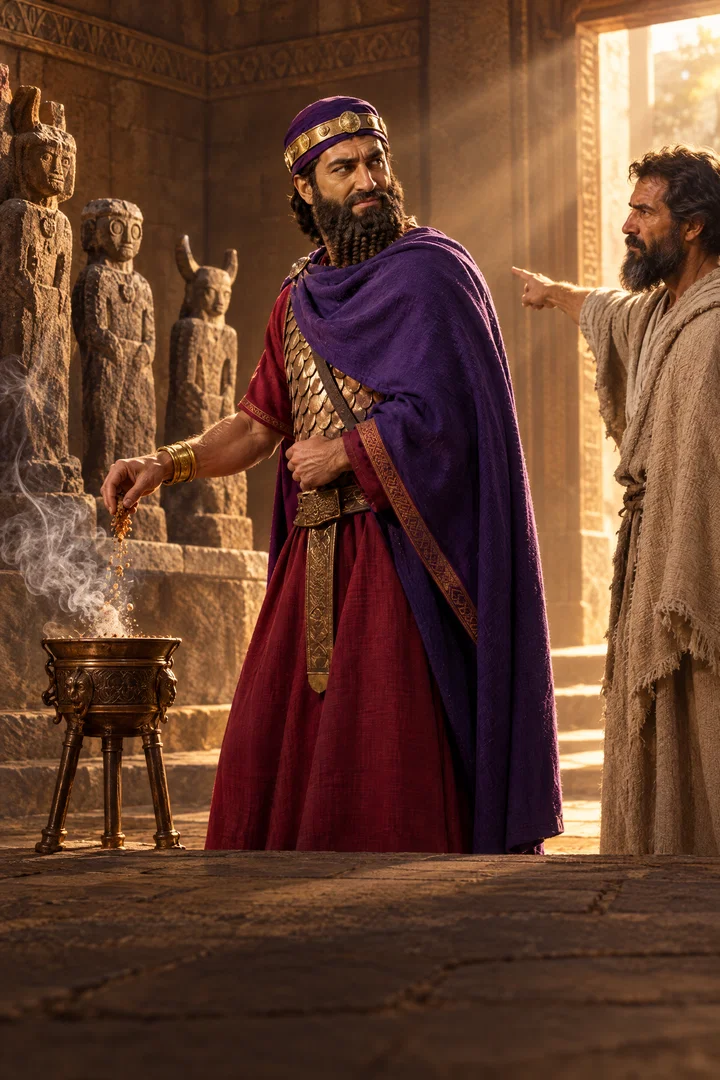
Now it came to pass, after that Amaziah was come from the slaughter of the Edomites, that he brought the gods of the children of Seir, and set them up to be his gods, and bowed down himself before them, and burned incense unto them.
Translations
Now it came to pass, after that Amaziah was come from the slaughter of the Edomites, that he brought the gods of the children of Seir, and set them up to be his gods, and bowed down himself before them, and burned incense to them.
King James Version, KJV Cambridge Paragraph Bible, Revised Version, American Standard Version
Now it came to pass, after that Amaziah was come from the slaughter of the Edomites, that he brought the gods of the children of Seir, and set them up to be his gods, and bowed down himself before them, and burned incense unto them.
Now it came to pass, after that Amaziah had come from the slaughter of the Edomites, that he brought the gods of the children of Seir, and set them up to be his gods, and bowed himself before them, and burned incense to them.
And it cometh to pass, after the coming in of Amaziah from smiting the Edomites, that he bringeth in the gods of the sons of Seir, and establisheth them to him for gods, and before them doth bow himself, and to them he maketh perfume.
And it came to pass after Amaziah was come from the slaughter of the Edomites, that he brought the gods of the children of Seir, and set them up to be his gods, and bowed himself down before them, and burned incense to them.
And so it was, after Amaziah came in from smiting the Edomites, that he brought in the gods of the sons of Seir, and set them up for himself, as gods,—and, before them, used he to bow himself down, and, unto them, used he to burn a perfume.
Berean Standard Bible, Majority Standard Bible
When Amaziah returned from the slaughter of the Edomites, he brought back the gods of the Seirites, set them up as his own gods, bowed before them, and burned sacrifices to them.
Now after Amaziah had come from the slaughter of the Edomites, he brought the gods of the children of Seir, and set them up to be his gods, and bowed down himself before them and burned incense to them.
Now when Amaziah came back from the destruction of the Edomites, he took the gods of the children of Seir and made them his gods, worshipping them and burning offerings before them.
Now after that Amaziah was come from the slaughter of the Edomites, he brought the gods of the children of Seir, and set them vp to be his gods, and worshipped them, and burned incense vnto them.
Douay-Rheims (Challoner revision)
But Amasias after he had slain the Edomites, set up the gods of the children of Seir, which he had brought thence, to be his gods, and adored them, and burnt incense to them.
Pictures
Cross-references
- 2 Chronicles 25:7-9
But there came a man of God to him, saying, O king, let not the army of Israel go with thee; for the LORD is not with Israel, to wit, with all the children of Ephraim.
The prophet counsels Amaziah not to take Israel’s army, and says God can replace the money he spent.
- 2 Samuel 8:14
And he put garrisons in Edom; throughout all Edom put he garrisons, and all they of Edom became David’s servants. And the LORD preserved David whithersoever he went.
Both texts record Israel’s subjugation of Edom.
- Genesis 25:23
And the LORD said unto her, Two nations are in thy womb, and two manner of people shall be separated from thy bowels; and the one people shall be stronger than the other people; and the elder shall serve the younger.
The Lord announces the two peoples descended from Jacob and Esau, including Edom.
- 2 Kings 14:9
And Jehoash the king of Israel sent to Amaziah king of Judah, saying, The thistle that was in Lebanon sent to the cedar that was in Lebanon, saying, Give thy daughter to my son to wife: and there passed by a wild beast that was in Lebanon, and trode down the thistle.
The parallel account includes the thistle’s message to the cedar.
Commentary
Each commentary is drawn from primary sources: the writings of Ellen G. White and Adventist pioneers and periodicals. Each commentary is separate. Its own words are not a quotation; follow the references to read the source passages.
Pioneers and periodicals
9 sources
After coming from the slaughter and defeat of the Edomites, Amaziah brought the gods of the children of Seir, set them up to be his gods, and bowed down before them and burned incense to them.ST May 7, 1912ST Jan 11, 1899ST May 30, 1911ST Jan 11, 1899 He was an unstable and disloyal king of Judah, and this act was a departing from God.ST May 7, 1912ST Jul 4, 1911 It was foolish and blind idolatry, a failure to recognize the worthlessness of these gods, for they had no power to save, deliver, or elevate even their own Edomite worshipers.ST Jan 11, 1899ST May 30, 1911ST Jan 15, 1902 His victory over the people who worshiped those gods did not keep him from turning to them. Although Israel subdued Edom in Amaziah's time, Israel could not exert moral influence on Esau's descendants.ST Oct 1, 1902
His history teaches the lesson of abandoning a wrong course rather than continuing because money has already been invested, for God gave Amaziah victory after he followed the prophet's counsel, showing God's blessing is worth more than earthly riches.ST Jul 8, 1889 A prophet rebuked Amaziah for seeking these gods.ST Jan 11, 1899 His response to reproof shows he accepted the prophet's testimony only when it pleased him, making his course a warning against following one's own counsel instead of accepting the Lord's prophetic counsel.ST Jan 11, 1899RH Aug 10, 1916 Departing from God brings strife and captivity and great loss, and things might have been so different for Amaziah if he had remembered God.ST May 7, 1912
The verse reveals a principle that repeats itself in individual as well as national life, of turning after victory from the principles that brought success to the religion of the defeated enemy.ST May 30, 1911 It is applied as a warning against a nation that, after overcoming Spain, pays homage to the religious power blamed for Spain's oppression.ST Jan 11, 1899 It is applied as a warning against contemporary papal diplomacy and the growing union of church and state, presented as a threat to religious liberty.ST Jan 11, 1899
Sources