2 Corinthians 3:13
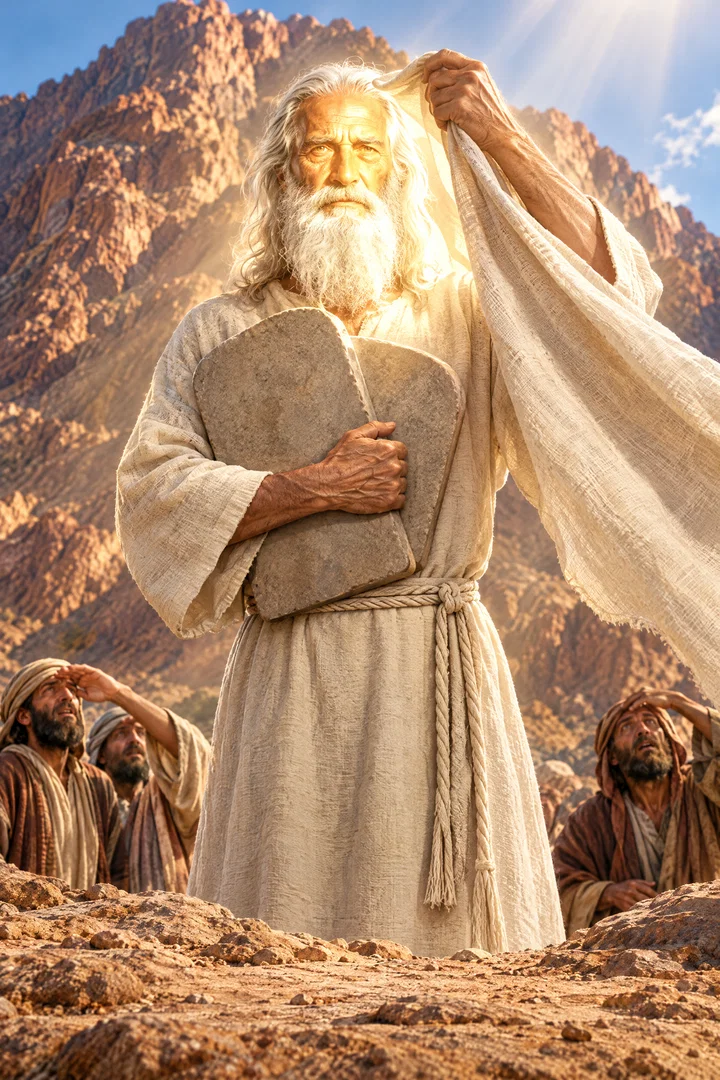
And not as Moses, which put a vail over his face, that the children of Israel could not stedfastly look to the end of that which is abolished:
Translations
And not as Moses, which put a veil over his face, that the children of Israel could not steadfastly look to the end of that which is abolished:
And not as Moses, which put a vail over his face, that the children of Israel could not stedfastly look to the end of that which is abolished:
and not as Moses, which put a vail over his face, that the children of Israel could not stedfastly look to the end of that which is abolished:
And not as Moses, who put a vail over his face, that the children of Israel could not steadfastly look to the end of that which is abolished:
Revised Version, American Standard Version
and are not as Moses, who put a veil upon his face, that the children of Israel should not look stedfastly on the end of that which was passing away:
and [are] not as Moses, who was putting a vail upon his own face, for the sons of Israel not stedfastly to look to the end of that which is being made useless,
and not according as Moses put a veil on his own face, so that the children of Israel should not fix their eyes on the end of that annulled.
And are not just like Moses, [who] kept putting a veil upon his face, so that the sons of Israel should not look steadily unto the end of that which was to be done away.
Berean Standard Bible, Majority Standard Bible
We are not like Moses, who would put a veil over his face to keep the Israelites from gazing at the end of what was fading away.
and not as Moses, who put a veil on his face so that the children of Israel wouldn’ t look steadfastly on the end of that which was passing away.
And are not like Moses, who put a veil on his face, so that the children of Israel might not see clearly to the end of the present order of things:
And we are not as Moses, which put a vaile vpon his face, that the children of Israel should not looke vnto the ende of that which should be abolished.
Douay-Rheims (Challoner revision)
And not as Moses put a veil upon his face, that the children of Israel might not steadfastly look on the face of that which is made void.
Pictures
Cross-references 20 of 56
- Exodus 34:33-35
And till Moses had done speaking with them, he put a vail on his face.
Moses veiled his shining face after speaking with Israel.
- 2 Corinthians 3:7
But if the ministration of death, written and engraven in stones, was glorious, so that the children of Israel could not stedfastly behold the face of Moses for the glory of his countenance; which glory was to be done away:
Moses’ veiled face reflects the temporary glory of the ministration of death.
- Jeremiah 31:33
But this shall be the covenant that I will make with the house of Israel; After those days, saith the LORD, I will put my law in their inward parts, and write it in their hearts; and will be their God, and they shall be my people.
The new covenant promises God’s law written in people’s hearts.
- Hebrews 8:10
For this is the covenant that I will make with the house of Israel after those days, saith the Lord; I will put my laws into their mind, and write them in their hearts: and I will be to them a God, and they shall be to me a people:
The new covenant contrasts with the old covenant, with God’s law written in the heart.
- 2 Corinthians 3:18
But we all, with open face beholding as in a glass the glory of the Lord, are changed into the same image from glory to glory, even as by the Spirit of the Lord.
Unveiled beholding of the Lord’s glory transforms believers into his image.
- Colossians 2:14
Blotting out the handwriting of ordinances that was against us, which was contrary to us, and took it out of the way, nailing it to his cross;
The ordinances nailed to the cross are the temporary law Moses describes as abolished.
- 2 Corinthians 3:3
Forasmuch as ye are manifestly declared to be the epistle of Christ ministered by us, written not with ink, but with the Spirit of the living God; not in tables of stone, but in fleshy tables of the heart.
The Spirit writes God’s law on hearts rather than stone tablets.
- 2 Corinthians 4:6
For God, who commanded the light to shine out of darkness, hath shined in our hearts, to give the light of the knowledge of the glory of God in the face of Jesus Christ.
God shines the knowledge of his glory in Christ into hearts.
- Exodus 33:18-19
And he said, I beseech thee, shew me thy glory.
Moses asks to see God’s glory, revealed as His goodness and character.
- 2 Corinthians 3:6
Who also hath made us able ministers of the new testament; not of the letter, but of the spirit: for the letter killeth, but the spirit giveth life.
Contrasts the life-giving ministry of the Spirit with the ministry of death.
- Exodus 19:3-8
And Moses went up unto God, and the LORD called unto him out of the mountain, saying, Thus shalt thou say to the house of Jacob, and tell the children of Israel;
Israel agrees to the covenant and its conditions at Sinai.
- Exodus 31:18
And he gave unto Moses, when he had made an end of communing with him upon mount Sinai, two tables of testimony, tables of stone, written with the finger of God.
Identifies the law written by God on stone tablets.
- Hebrews 8:6
But now hath he obtained a more excellent ministry, by how much also he is the mediator of a better covenant, which was established upon better promises.
The gospel covenant is better than the former ministry and rests on better promises.
- Exodus 34:29
And it came to pass, when Moses came down from mount Sinai with the two tables of testimony in Moses’ hand, when he came down from the mount, that Moses wist not that the skin of his face shone while he talked with him.
Moses’ face shone as he came down from the mountain, and he veiled it.
- 2 Corinthians 3:9
For if the ministration of condemnation be glory, much more doth the ministration of righteousness exceed in glory.
Contrasts the ministration of condemnation with the more glorious ministration of righteousness.
- 2 Corinthians 3:17
Now the Lord is that Spirit: and where the Spirit of the Lord is, there is liberty.
The Spirit’s ministry brings liberty rather than bondage and condemnation.
- Exodus 20:1-17
And God spake all these words, saying,
The commandments written on stone are given here in full.
- Hebrews 8:13
In that he saith, A new covenant, he hath made the first old. Now that which decayeth and waxeth old is ready to vanish away.
Both describe the former covenant as passing away.
- Romans 10:4
For Christ is the end of the law for righteousness to every one that believeth.
Christ is the end of the law, clarifying the end of what was veiled.
- Ephesians 2:15
Having abolished in his flesh the enmity, even the law of commandments contained in ordinances; for to make in himself of twain one new man, so making peace;
Both speak of what was abolished: the law of commandments contained in ordinances.
Commentary
Each commentary is drawn from primary sources: the writings of Ellen G. White and Adventist pioneers and periodicals. Each commentary is separate. Its own words are not a quotation; follow the references to read the source passages.
Ellen G. White
28 sources
Moses covered his shining face because rebellious Israel could not bear to look steadily at its passing brightness.PP 330.2–4Ms 58, 1900, par. 56–60Ms 58, 1900, par. 9–13 That brightness was fading, unlike the glory of God seen in Jesus Christ which remains so that all who look may live.Lt 52, 1908, par. 9–12Ms 58, 1900, par. 56–60 What came to an end was not the ten commandments but the divinely appointed system of typical sacrifices and ceremonies that foreshadowed Christ's death and lost their meaning when type met antitype.Ms 58, 1900, par. 33–36RH Apr 22, 19028RED 27.2–28.1 The veil also stands for stubborn unbelief that hides Christ as the fulfillment of those types and as the righteousness of the law, blinding both Jews who reject Him and Christians who claim the moral law was done away.Lt 52, 1908, par. 9–12Ms 58, 1900, par. 33–36RH Apr 22, 1902 That veil is removed only when the heart turns to the Lord in repentance for breaking His law and faith in Christ, and ministers of the new covenant therefore speak with open plainness.Lt 52, 1908, par. 9–12RH Apr 22, 1902Ms 58, 1900, par. 37–38
Moses's Veil and Glory
Moses put a veil over his shining face after speaking with Israel because the transgressing people were afraid to approach him and could not endure the glory reflected upon it, being pained to look steadily at it while their thoughts and affections were under Satan's control.PP 330.2–4Ms 58, 1900, par. 56–60Ms 58, 1900, par. 9–13Ms 11, 1896, par. 1–4 The glory displayed on his face was transient and passing away, in contrast to the glory of God displayed in the face of Jesus Christ, which ever remains so that all who look may live and have that glory reflected upon them, with Christ as righteousness shedding light and brightness and glory and joy into the law.Lt 52, 1908, par. 9–12Ms 58, 1900, par. 56–60
The brightness on Moses came both from the sacred, exalted glory of God's law proclaimed from Sinai and from the glory of the gospel revealed through Christ, the heavenly light streaming from Calvary and the plan of salvation with Christ's sacrifice prefigured by all the types and symbols shown to Moses on the mount, which God designed to impress Israel with the character of His law and the glory of the gospel.PP 330.2–4 That divine illumination symbolized the glory of the dispensation of which Moses was the visible mediator as representative of the one true Intercessor, illustrating the blessings to be received by God's commandment-keeping people through the mediation of Christ, where closer communion with God and clearer knowledge of His requirements conforms them more fully to the divine image and makes them partakers of the divine nature.PP 330.2–4
Moses himself saw to the end of that which was to be abolished, understanding that the types and ceremonies and typical sacrifices pointing to Christ would meet antitype when Jesus came and died as man's sacrifice, and at the giving of the law he saw the wilderness Angel as the offering for sin and foundation of the types, with the type reaching its antitype and the full significance of the offerings unfolded to him as the righteousness of Christ in the law and the plan of salvation in Christ as propitiation for transgression, whose perfection of character is placed in man's behalf and who took the curse of the law upon Himself.ST Aug 25, 1887Ms 58, 1900, par. 9–1310MR 329.3–4 That seeing to the end proved the system to be done away was glorious because Christ was revealed in it as the sin-pardoning Saviour.Ms 58, 1900, par. 9–13 The sacrificial system was a beautiful but intricate and dim foretaste of Christ's full, greater glory as its great sacrifice and reality, while the ministration of righteousness which remains much more exceeds it in glory.ST Aug 25, 1887Ms 58, 1900, par. 9–13
Moses veiling his countenance was a type of Christ veiling His divinity with humanity when He came to earth, because men in their sinful state could not have endured the glory of His presence with the brightness of heaven nor given Him access to them, so He humbled Himself and was made in the likeness of sinful flesh to reach the fallen race and lift them up.PP 330.2–4 In the same way the glory of Christ's ascension was veiled from human sight, so the disciples could not see the brightness of the heavenly escort or the gates of heaven opening to welcome Him.ST Jan 4, 18836RED 92.1–3ST May 15, 1907ST Oct 24, 1878 Mortal eyes could not have endured its contrast with earthly life, and they were spared the full splendor of His welcome lest they lose sight of the character of Christ they were to imitate, remember, and follow in continuing their earthly work.ST May 15, 1907ST Oct 24, 1878
What Was Abolished
What was abolished and brought to an end at Christ's death was the typical system, the divinely appointed sacrificial offerings and typical ceremonies of the Jewish religion, which had only prefigured the death of the Son of God.Ms 58, 1900, par. 33–36RH Apr 22, 19028RED 27.2–28.1Ms 58, 1900, par. 37–38Ms 40, 1903, par. 20 In that death type met antitype, so the offerings ceased, lost significance, and became meaningless and valueless, and must soon altogether cease because what they shadowed had come to pass.Ms 58, 1900, par. 33–36RH Apr 22, 19028RED 27.2–28.1Ms 58, 1900, par. 37–38Ms 40, 1903, par. 20
That sacrificial system pointed to Christ as its great sacrifice and reality, the wilderness Angel revealed at the giving of the law as the offering for sin and the foundation of the types.ST Aug 25, 18878RED 27.2–28.1Ms 40, 1903, par. 20 The light of the gospel sheds its glory upon the Jewish religion by giving a new significance to its ancient rites once their meaning as fulfilled in Christ the one great offering for the sin of the world is clearly understood.8RED 27.2–28.1Ms 40, 1903, par. 20 What was abolished did not include the ten commandments, for the moral law was never a type or shadow, was not nailed to the cross, and remains to be kept in letter and in spirit.Ms 58, 1900, par. 33–36RH Apr 22, 19028RED 27.2–28.1Ms 58, 1900, par. 37–3810MR 329.3–4
The moral law existed before man was created and will continue as long as heaven and earth remain, unchangeable because it is God's character and the foundation and standard of His government.Ms 58, 1900, par. 33–36Ms 58, 1900, par. 37–3810MR 329.3–4 Its transgression made Christ's death essential to save man while maintaining its dignity, and man can keep it only through Jesus Christ, whose mission exalts the law.Ms 58, 1900, par. 33–36Ms 58, 1900, par. 37–3810MR 329.3–4 His perfection of character is placed in man's behalf, having taken the curse of the law upon Himself as propitiation for transgression.Ms 58, 1900, par. 37–38Ms 58, 1900, par. 9–13 Paul wrote to the Corinthian church to settle minds about the gospel against trouble and dissension caused by Judaizing teachers who continually presented the virtues of the law and ceremonies, exalting them above the gospel.10MR 328.1 They condemned Paul because he did not urge keeping the ceremonies that typified Christ and were of no value since His death.10MR 328.1
Many believing Jews were slow to discern to the end of that which was abolished by the Son of God, with the veil still over their eyes keeping them from recognizing it.ST Apr 23, 1885AC1 31.3SLP 42.28RED 5.3–6.2ST Jun 12, 1879 Even though His death broke down the middle wall of partition between Jew and Gentile and opened the full privileges of the gospel to the Gentiles, they could not clearly see that the old order had come to an end.ST Apr 23, 1885SLP 42.28RED 5.3–6.2ST Jun 12, 1879 Discerning the end keeps full faith in the God of Abraham, Isaac, and Jacob and in Jewish privileges yet broadens faith to know the time has come for God's purpose in spreading the gospel to other nations.AC1 31.3 So true believers throughout the world may worship God in Spirit and in truth and not alone in temples made with hands.AC1 31.3
Veil Removed in Christ
Unlike Moses who veiled his face so Israel could not keep looking to the end of a passing glory, ministers of the new covenant use great plainness of speech and do not veil the truth.Lt 52, 1908, par. 9–12Ms 58, 1900, par. 33–36 The end that had been veiled from view is Christ Himself as the righteousness of the law and the fulfillment of the sacrifices and offerings.Lt 52, 1908, par. 9–12Ms 58, 1900, par. 33–36 The veil therefore also stands for the blindness that keeps minds from seeing the significance of the Old Testament.Lt 52, 1908, par. 9–12Ms 58, 1900, par. 33–36
That veil is stubborn unbelief resting upon mind and heart.RH Apr 22, 1902Ms 58, 1900, par. 37–38 It blinded the Jews who refused Christ as Messiah and as the righteousness of the law, so that they could not see the meaning of sacrifices and offerings and their ceremonies became meaningless.Ms 58, 1900, par. 33–36RH Apr 22, 1902Ms 58, 1900, par. 37–38 It likewise blinds many in the Christian world who do not see to the end of what was done away but claim the moral law was done away, through pride, bigotry, love of sin, and carnal hearts at war with God and not subject to His law.Ms 58, 1900, par. 33–36RH Apr 22, 1902Ms 58, 1900, par. 37–38
The veil is taken away only in Christ when the heart turns to the Lord and accepts Him, bringing the believer into harmony with the rule of His government.Lt 52, 1908, par. 9–12RH Apr 22, 1902Ms 58, 1900, par. 37–38 Under the heavenly illumination of the Holy Spirit at Pentecost that veil was removed from the disciples' understanding, though it had rested upon them hiding the meaning of the Scriptures Christ had explained.3SP 266.17RED 6.1AC1 6.1ST Nov 7, 1878 Then the Scriptures stood forth in their minds with vivid luster and loveliness as clear and powerful truth, and the purpose of Christ's mission and the nature of His kingdom were comprehended with perfect clearness.3SP 266.17RED 6.1AC1 6.1
When Christ died the veil was removed for Stephen, who discerned that the abolished system had reached its end.RH Feb 23, 1911 During the forty days after His resurrection Jesus instructed the disciples about His future office and work as a High Priest who can be touched with the feeling of their infirmities, and breathed on them the quickening influence of the Holy Spirit that opened their understanding so they could see the end of what was abolished.Ms 40, 1903, par. 20 As they saw Christ as the one great offering for the sin of the world they understood more clearly the meaning of the sacrificial offerings which, having met their antitype in His death on the cross, were no longer of value.Ms 40, 1903, par. 20
Sympathy with the world's customs and practices also acts as a veil hiding the Lord's glory.6T 146.1Ms 11, 1896, par. 1–4 Believers must keep the eyes fixed on God and turn away from the things of the world, leaving behind whatever comes between them and Him so they may become Christlike and be ready to see His face.6T 146.1Ms 11, 1896, par. 1–4 Seeing to the end requires genuine repentance toward God for transgression of His holy law and genuine faith in Christ whose mission is to exalt God's law and make obedience possible through His righteousness.RH Apr 22, 1902Ms 58, 1900, par. 37–38 Christ our Righteousness sheds light and brightness and glory and joy into the law of God, while those who claim Christ as Saviour while despising the law will at last be rejected by Him as unknown.RH Apr 22, 1902Ms 58, 1900, par. 37–38Ms 58, 1900, par. 56–60
Sources
Pioneers and periodicals
120 sources
Moses coming down from Sinai with the tablets had a shining face from being with God that Israel could not look at steadily because it was passing away, so he put a veil over his face while speaking to them.ST Jun 12, 1879ST Jan 17, 1884ST Jun 5, 1879ST Mar 26, 1894RH Dec 3, 1914 That veil covered his face alone and never covered the law itself, for what faded and was abolished was the reflected radiance and the ministration of death and condemnation through Moses, not the Ten Commandments written on stone.RH Feb 17, 1852RH Dec 12, 1854RH Apr 8, 1873RH Oct 21, 1851ST Jan 24, 1906 The same law once ministered outwardly on stones unto condemnation without power to forgive is now ministered by the Spirit written in the heart unto pardon and transformation, and the former glory is surpassed and done away by the far greater glory of Christ's ministry as High Priest in the heavenly sanctuary.ST Jun 12, 1879RH Jun 14, 1864ST Oct 23, 1884RH Dec 12, 1854ST Mar 26, 1894 The veil stands for unbelief and blindness that keeps minds from seeing to the end which is righteousness and life in Christ, and it remains until the heart turns to the Lord, when it is taken away and the believer beholds with open face and is changed from glory to glory.ST Jun 19, 1907RH Oct 21, 1851ST Mar 26, 1894ST Oct 28, 1897ST Feb 13, 1901 Those who held otherwise taught that what was written on stone including the Ten Commandments and the Sabbath was abolished, but the weight of the teaching holds that God's moral law and Sabbath remain and the verse gives no warrant for transgressing them.ST May 20, 1897RH Dec 23, 1851RH Mar 8, 1906RH Sep 16, 1852RH Jul 8, 1852
Words and Historical Setting
The verse looks back to Exodus 34, when Moses came down from the mount after forty days and nights communing with the Lord with the stone tablets of testimony in his hands and his face shining with glory caught from God's presence, so that guilty Israel, fresh from national apostasy in the erection and worship of the golden calf and conscious of still lying under divine displeasure, could not endure or look steadily at him, and he covered his face with a veil while speaking to them.ST Jun 5, 1879ST Mar 26, 1894RH Dec 3, 1914AUST May 31, 1920ST Oct 16, 1884 That radiance on his countenance was heavenly light streaming no less from Calvary than from the law of God, which would have filled them with joy had they been steadfast in obedience, for had they been true to God the righteousness of God through His Son would have been put upon them, to which the law would witness.ST Mar 26, 1894 The passing glory described is that radiance after meeting with God on Sinai, set within the contrast between the ministration of death and condemnation and the ministration of the Spirit and righteousness under which God writes His law on hearts by His power.ST Jul 14, 1914 It was not Moses himself but the splendour flooding the person and face of the Hebrew mediator at the close of his forty days conference with Deity that was so bright uncovered eyes could not gaze steadfastly upon one from whom they had been so long separated.AUST May 31, 1920
The veil was drawn over Moses' face alone to hide the glory of his countenance, and it was never hung over the law itself.RH Dec 12, 1854RH Apr 8, 1873ST Jan 24, 1906RH Jan 13, 1852RH Jun 25, 1861 The stone tablets he held in his hand were never veiled, and the Israelites could still look at the commandments while they could not keep looking at the glory of his face.RH Apr 8, 1873RH Jun 25, 1861RH Oct 21, 1873RH Apr 29, 1862 That glory belonged to the service Moses performed and represented the glory of his ministry and of the typical system, not the Ten Commandments written and engraven by the finger of God.RH Dec 12, 1854RH Jan 13, 1852RH Jun 25, 1861RH Oct 21, 1873 A law and the ministration of a law are essentially different, for a law is the constitution necessary for government while the ministry is the ordained powers carrying its laws into execution.RH Jan 13, 1852
Israel could not bear the intense brightness or look steadily at its glory or understand its significance, and something was designedly hidden from them because they were not prepared to comprehend the greatness of what was typified by their institutions.ST Jun 12, 1879ST Jan 17, 1884ST Jun 19, 1907 The veil illustrates the limited understanding associated with the law written only on stone, which by itself can have no converting power, give no promise of forgiveness, and bring only condemnation and death.ST Jun 12, 1879ST Oct 23, 1884 Without turning to the Lord people remain in a service of the letter rather than receiving the life of the Spirit, with minds blinded and hearts veiled by unbelief.ST Jun 19, 1907ST Mar 26, 1894RH Dec 3, 1914 The glory they could not steadfastly look to the end of was passing away, belonging to the temporary glory of the ministration of condemnation rather than to God's abiding law.RH Feb 17, 1852RH Sep 6, 1864ST Mar 10, 1881
The veil hid the vanishing of the glory so Israel would not continuously watch it fade away, veiling not the glory itself but its fading and thus presenting that glory as temporary in keeping with what was being abolished.RH Feb 3, 1910ST Sep 16, 1930 That unbelief and lack of faith caused by sin kept the people from recognizing the Saviour as the only way to victory over sin, whereas with the veil removed believers approach the Lord face to face through faith, receive the inspiration of His lasting glory, and are transformed increasingly into His divine image.ST Sep 16, 1930
The word rendered abolished means to come to an end or pass away, the same Greek word rendered make void in Romans 3:31 and done away in 2 Corinthians 3:11.ST Jan 17, 1884RH Aug 29, 1854RH May 3, 1860 In Romans 3:31 faith is said to establish rather than void the law, denying that the gospel makes God's law useless, and the sacred moral law there refused to be made void is the law that made the death of God's only Son necessary for pardon.ST Jan 17, 1884RH Aug 29, 1854RH May 3, 1860 The veil cannot be the Decalogue, because the veil was over Moses' face while the tables were in his hand to make God's will manifest, and because the Decalogue contains no ordinances of the kind Christ abolished.ST Jan 17, 1884 By itself the verse's phrase that which is abolished leaves its object unspecified and does not name what is abolished.ST Mar 10, 1881
The Greek word translated veil in the verse is also used in verses 14-16 for that same veil remaining untaken away in the reading of the Old Testament and upon the heart until turned to the Lord, when it is done away in Christ.ST Mar 26, 1894RH Dec 3, 1914RH Jul 20, 1876 Moses in the comparison represents the old covenant, acting as mediator and first priest and minister through whom that ministration came, in contrast with Christ's priesthood.ST Oct 23, 1884ST Jun 5, 1879ST Oct 16, 1884RH Apr 29, 1862 Because he was the minister through whom it came, its glory was represented as hidden behind the veil, while under the new covenant apostles serve as able ministers with the law written in fleshly tables of the heart by the Spirit, past sin forgiven by the blood of the covenant, enmity removed, and the reconciled beholding God's glory in the face of Jesus Christ with open unveiled face and changed from glory to glory.ST Oct 23, 1884RH Apr 29, 1862
The verse confirms Moses as author of Exodus, matching the plain statement of Jesus to the same effect, endorsing Exodus as trustworthy and showing the New Testament gospel is built on the foundation of the books of Moses.ST Oct 21, 1930
What Was Abolished
The chapter as a whole does not teach that God's law, the Ten Commandments written on stone, the moral law, the fourth commandment, or the Sabbath was abolished.ST May 20, 1897RH Dec 23, 1851RH Jul 8, 1852RH Dec 12, 1854RH Feb 17, 1852 Phrases such as is abolished are selectively quoted from it to suggest that God's commandments are abolished, but the selective quotation distorts its meaning and the surrounding scripture must be read as it stands.ST May 20, 1897RH Dec 23, 1851RH Jul 8, 1852 The verse cannot be used by itself to prove that the Ten Commandments were abolished, because it belongs to Paul's explanation of what is abolished and must be read with the surrounding verses which distinguish what is done away from what remains.ST May 20, 1897RH Jul 8, 1852RH Dec 12, 1854RH Feb 17, 1852ST Jan 24, 1906 The chapter presents two ministrations, the ministry carried on by Moses and later ministers of the Old Testament and the ministry carried on by the apostles and later ministers of the New Testament, and the thing done away is not the law engraved on stone but its appendages which were set aside when the ordinances of the Jewish church gave way to those of the Christian church.RH Dec 12, 1854RH Feb 17, 1852ST Jan 24, 1906 The change under the new covenant is a change of ministration while the fundamental law of God's government remains unchanged, giving no warrant for transgressing that law.RH Dec 12, 1854RH Feb 17, 1852ST Jan 24, 1906
What was abolished was the glory on Moses' face and what it illustrated, the temporary radiance reflected on his countenance after meeting with God, not the commandments themselves.RH Feb 17, 1852RH Apr 8, 1873RH Oct 21, 1851RH Jun 25, 1861RH Oct 21, 1873 The veil Moses put over his face covered the glory shining from his face, not the stone tablets of the law which he held in his hand and which were never veiled.RH Apr 8, 1873RH Jun 25, 1861RH Oct 21, 1873RH Jul 14, 1868 Israel could not keep looking steadily toward the end of that glory because it was passing away, and the veil kept them from looking steadily at the glory of his countenance which represented the glory of his ministry.RH Feb 17, 1852RH Apr 8, 1873RH Jun 25, 1861 That glory belonged to Moses as minister and to the ministration of condemnation, not to the law written on the stone tables, and the verse does not say that the Ten Commandments were abolished.RH Feb 17, 1852RH Oct 21, 1851RH Oct 21, 1873RH Jul 14, 1868 The glory that was abolished was the glory of Moses' countenance representing the glory of the typical system, and the veil over his face pictured the temporary character of that ministration.RH Oct 21, 1851RH Jun 25, 1861RH Oct 21, 1873
What was abolished was the ministration, meaning the act, service, or work of the minister beginning with Moses and his successors, not the words written and engraven in stones.RH Nov 2, 1911RH Jan 1851RH Jan 13, 1852ST Aug 23, 1877RH Jul 1, 1862 A law and the ministration of a law are essentially different, for a law is the constitution necessary for the government of the people while the ministry is the ordained powers to carry its laws into execution.RH Jan 1851RH Jan 13, 1852 The chapter compares the ministration of the first covenant by the Levitical priesthood with the more excellent ministry of Christ under the second covenant, with one glory that was done away giving place to another with greater glory, and the change was in the ministration while the law itself was neither changed nor abolished.RH Nov 2, 1911RH Jan 1851RH Jan 13, 1852 The first covenant was the mutual agreement between God and Israel of which the Ten Commandments written on stone were only the terms and not the covenant itself, and to say the verse means the law was done away in Christ would mean Christ destroyed the law.RH Jan 1851RH Jan 13, 1852ST Aug 23, 1877 God's law remains the same under the present ministration as under the former one, and the commands against adultery, murder, theft, falsehood, idolatry and profanity remain binding on Christians.RH Nov 2, 1911ST Aug 23, 1877RH Jul 1, 1862
That ministration is the ministration of death or condemnation, the dealing out of the death-penalties demanded by the law engraven on stone.RH Feb 17, 1852RH Oct 21, 1851AUST May 31, 1920RH Oct 7, 1851 As diakonia means ministering, service, and serving out like dealing out provisions, it was the Sinai writ engraven on the slabs ministered in the dealing out of its demanded penalties, not the law itself but the splendour that flooded the person and face of the Hebrew mediator when he came from the mountain after talking with God at the close of his forty days conference with Deity.RH Feb 17, 1852AUST May 31, 1920 It exposed sin and condemned sinners, convinced of sin, condemned the transgressor and enforced temporal death with temporal punishment such as stoning by human hands in order to prevent and restrain transgression, yet could not take away sins nor give life and immortality.RH Feb 17, 1852RH Oct 21, 1851RH Oct 7, 1851 The justice of God appeared in the condemnation and death of transgressors, while mercy and justice shine in the ministration of the Spirit which postpones speedy execution of the penalty and brings mercy, pardon, and life to the penitent who repent and become reconciled to God.RH Apr 16, 1861RH Oct 7, 1851 The law on stones still condemns sinners and shows them guilty, but in this dispensation the minister points the guilty sinner to Christ as a source of pardon, so the present ministration of that law is more glorious than the typical service and exceeds it in glory.RH Feb 17, 1852RH Apr 16, 1861 This restraining ministration ended within the seventieth week and gave place to the better ministration of the Spirit that gives life, with that which was written and engraven in stones now by the Spirit of the living God written in the fleshly tables of the heart.RH Oct 21, 1851RH Apr 16, 1861RH Oct 7, 1851
That ministration is the Mosaic administration and dispensation with its ordinances, services, Levitical priesthood, earthly tabernacle, typical system, and sacrifices and offerings in figure using animal blood, which stood until Christ came to open a better way.RH Jun 14, 1864RH Apr 7, 1851RH Sep 2, 1852RH Aug 27, 1857RH Jul 8, 1852 The old covenant addressed transgression of the commandments through atonement in figure using animal blood that could not make real atonement, while the new covenant addresses transgression of those same commandments by providing an atonement that takes away real guilt.RH Jun 14, 1864RH Sep 2, 1852RH Aug 27, 1857 The service or ministration of that law through the Levitical priesthood in the earthly tabernacle was begun when Moses brought down the tables of stone and was not to abide, and though glorious it was brought to an end and superseded by the more glorious ministry of the new covenant.RH Sep 2, 1852RH Aug 27, 1857RH Jul 8, 1852 The same laws written on stone are written on the heart in the new covenant, no longer entrusted to man's keeping but in their proper place in the ark of His testament in the temple of the tabernacle of His testimony, where Christ ministers as mediator and High Priest in the true and heavenly sanctuary before the ark of God offering forgiveness through a better sacrifice and sprinkling His blood before the ark.RH Sep 2, 1852RH Aug 27, 1857RH Jul 8, 1852 Moses' veil kept the Israelites from clearly seeing the end and purpose of a dispensation intended to be abolished, and denoted that when that ministration with its glory should be succeeded by Christ's ministration that can give life and pardon through His blood, Israel would not understand the change.RH Apr 7, 1851RH Feb 17, 1852RH Jul 8, 1852
In an opposing use the verse is presented as proof that what was written on stone, the first covenant, the whole code including the Ten Commandments and the Sabbath, or the Ten Commandments as the old covenant, was abolished in Christ and ceased to be binding to give place to the law of faith.RH Mar 8, 1906RH Sep 16, 1852RH Jul 8, 1852RH Mar 1, 1864RH Oct 6, 1859 In that argument the law written on stone is identified with what was abolished and with the ministration of death or condemnation, contrasting its outward commands with the new covenant's work in the heart.RH Mar 8, 1906RH Sep 16, 1852RH Mar 1, 1864 The claim is treated as concerning the precepts written and engraved on stones rather than the Sabbath specifically, yet is used to argue that the whole law of Moses and the moral law including the Sabbath were done away with, an inference challenged by the continuing authority of the law discussed in James 2.RH Sep 16, 1852RH Jul 8, 1852RH Oct 6, 1859 That conclusion is rejected on the ground that the Bible uses covenant in different senses, and the Sinaitic covenant was an agreement with Israel with promises and conditions rather than the commandments themselves.RH Mar 8, 1906RH Apr 16, 1861 The Ten Commandments were God's covenant commanded for many generations, while it was the broken agreement whose conditions the people failed to keep that could not bring reward and required a better covenant embracing forgiveness.RH Mar 1, 1864RH Apr 16, 1861
In a further opposing application the veil of verses 13-15 is said to be a confusing veil that blinds those who read the Old Testament and keep the Ten Commandments, destroying their Christian experience and making their influence dangerous.RH Oct 17, 1912 Against the teaching of two separate laws, the verse is also used to distinguish the temporary law of Moses, which is what was abolished, from the enduring law of God, which remains with greater glory.RH Aug 5, 1851RH Aug 5, 1851 The law written and engraven in stones means the law God wrote on two tables of stone, showing that the law is God's one law given to Israel through Moses, which runs against teaching two separate laws.RH Aug 5, 1851RH Aug 5, 1851
Two Ministrations Compared
Paul's comparison in the chapter concerns two ministrations of the same Ten Commandments and the same law.RH Jun 14, 1864RH Dec 12, 1854RH Nov 25, 1852 Under the former dispensation the ministration was of death because the law had been transgressed and brought real guilt, and transgression was addressed through atonement in figure by animal blood that could not make real atonement.RH Jun 14, 1864RH Nov 25, 1852 Under the new covenant the ministration is of the Spirit, addressing transgression of those same commandments by an atonement that takes away real guilt.RH Jun 14, 1864RH Nov 25, 1852 The two ministrations are compared rather than made opposites, belonging to one plan of salvation from the same divine source unfolding with increasing light and glory.RH Jan 20, 1874ST Jul 23, 1874
Under the old ministration the law was written only outwardly on stones and deposited in the ark, which by itself could have no converting power, give no promise of forgiveness, and bring only condemnation and death.ST Jun 12, 1879ST Oct 23, 1884ST Jul 3, 1907ST Mar 26, 1894 Under the new ministration that same law is written by the Spirit of God in the fleshly tables of the heart and mind, past sin is forgiven by the blood of the covenant, the carnal enmity to the law is removed, and the reconciled are at peace with God.ST Jun 12, 1879ST Oct 23, 1884RH Apr 7, 1851RH Aug 27, 1857 They behold the glory of God in the face of Jesus Christ with open unveiled face and are changed into the same image of the Lord from glory to glory.ST Jun 12, 1879ST Oct 23, 1884 The work of the gospel minister is to present Christ Jesus so that the Spirit writes the law in the heart, and the one who receives it is made free from the law of sin and death and becomes a child of God.ST Jul 3, 1907ST Mar 26, 1894
The glory of condemnation gives place to the greater glory of righteousness by faith, and the former glory and dispensation is surpassed, eclipsed, and done away by the excelling glory of Christ's gospel dispensation and the Spirit's ministry.ST Mar 26, 1894RH Dec 16, 1873 There is no obscurity about the gospel, for all types and shadows and the veiled glories connected with them have passed away and clear plainness of speech is in order.ST Jan 17, 1884 The gospel has a glory not found under the law, with the old and new dispensations set forth as types and antitypes and carnal and spiritual things.ST Jan 17, 1884RH Jan 1851 Something was designedly hidden from those not prepared to comprehend the greatness typified by their institutions.ST Jan 17, 1884
Christ's more glorious ministration is that of High Priest in the heavenly sanctuary before the ark of God, where with open face He is beheld as merciful and faithful High Priest standing before the ark containing God's holy law and sprinkling His blood upon the mercy seat to bring pardon, life, righteousness, and salvation.RH Sep 2, 1852RH Jul 8, 1852RH Jul 8, 1852 The law of God written by His finger, the Ten Commandments, remains in its proper place in the ark of His testament in the temple of the tabernacle of His testimony, no longer entrusted to man's keeping.RH Sep 2, 1852 The first covenant's repeated offerings and sacrifices pointed to Christ as the great sin-offering, and His one sacrifice establishes the second covenant without need of repetition, so that returning to the first covenant's ordinances would be inconsistent with His better ministry.RH Aug 27, 1857RH Sep 4, 1856 That better ministry gives life and pardon through His blood sprinkled before the ark in the heavenly tabernacle, not because the condemning law was done away but because pardoning blood has been offered for guilty man.RH Jul 8, 1852RH Jul 8, 1852
Under the former typical service willful transgressors were put to temporal death by human hands such as stoning to restrain transgression, and that ministration of death and condemnation could only show men as sinners condemned to death.RH Oct 7, 1851RH Jul 8, 1852ST Nov 16, 1876 Temporal death never was the full and final penalty, for the penalty for transgressing God's holy law was and still is eternal death, and the wages of sin is still death because sin is still transgression of the Ten Commandments.ST Nov 16, 1876RH Oct 21, 1851 Under the gospel the sword of justice is stayed from speedy execution, mercy gives the transgressor time to repent and live, and the minister points the guilty sinner, including the Sabbath-breaker, to Christ as the source of pardon.RH Oct 7, 1851RH May 2, 1854 God Himself now executes the death sentence instead of entrusting it to sinful men, since only He who is without sin can first cast the stone.ST Nov 16, 1876RH Apr 12, 1864
Meaning of the Veil
The veil stands for unbelief, spiritual blindness and separation from God that keeps people from looking steadfastly to the end, which is justification, righteousness and life.ST Jun 19, 1907ST Oct 28, 1897ST Feb 13, 1901ST Jan 16, 1907ST Aug 23, 1910 Without turning to the Lord people remain in a service of the letter rather than receiving the life of the Spirit, with the law written outwardly on stone bringing condemnation to those who do not receive its righteousness in their hearts.ST Jun 19, 1907ST Oct 28, 1897ST Jan 16, 1907 The glory of condemnation is what fades away before the greater glory of righteousness, and the verse does not teach that the Old Testament or God's law is abolished.ST Jun 19, 1907ST Feb 13, 1901 That blindness is continued in rejection of Christ as Son of God and Lord of the Sabbath, in rejection of the Sabbath of Jehovah as tradition of man and turning to pagan Sunday as an institution of God, and in regarding the old ministration of death as still binding in that form rather than seeing it give way to righteousness received by faith and written in the heart.ST Oct 28, 1897ST Jul 2, 1894 Whoever turns from man to the Lord has the veil taken away, loves the law, and has the law as spoken from Sinai, glorious yet condemning, succeeded by the greater glory that justifies and writes it in fleshly tables of the heart by faith.ST Jan 16, 1907ST Aug 23, 1910
To unbelieving Israel clinging to sin the shining of Moses' face, which was the outshining of God's righteousness and the light of Sinai and Calvary within him, the Lord our Righteousness shining out from his heart after converse with God, appeared as the glory of condemnation exposing sin.ST May 12, 1909ST Jan 14, 1897ST Nov 21, 1911 They therefore desired it veiled and would not look beyond condemnation to the greater glory of justification, while Moses who believed saw in that same glory the glory of righteousness, as did the Corinthian believers.ST Jan 14, 1897ST Nov 21, 1911ST Feb 13, 1901ST Aug 23, 1910 God wanted them to feel that condemnation so they would put away sin and receive His glory that abolishes sin, placing the law within their hearts so they would love it and no longer be condemned by it, with the glory of justification taking the place of the glory of condemnation.ST May 12, 1909ST Jan 14, 1897 Those who have not experienced the glory and majesty of God's law in the condemnation of sin do not see its exceeding glory in the gospel which justifies, for God's revelation of His glory may first condemn but is revealed that sinners may be made righteous, to be allowed to shine away darkness until condemnation is outshone by righteousness and the bond-slave finds freedom in Jesus.ST Sep 27, 1910ST Jan 14, 1897 That condemnation is taken away only when one believes on the Lord Jesus Christ, prays for sin to be taken away and for God's glory to be revealed within, and then sees the end of sin and condemnation abolished by the presence of God within.ST May 12, 1909ST Jan 14, 1897
Israel refused to hear God speak for themselves and wanted to hear Moses instead, would not believe God came down to give the law because He loved them and wanted to do them good, trusted their own promises which they lacked power to keep and which led to bondage, and would not receive the law in the heart by faith to have sin taken away.ST Sep 28, 1915ST Aug 23, 1910ST Aug 23, 1910 The glory of the law condemned them because they had refused to receive it in their hearts by faith, and because they refused, the law remained to them condemnation only.ST May 12, 1909ST Aug 23, 1910 They did not accept Christ and rely on God's power, and could not look beyond the glory associated with the covenant at Sinai because that glory condemned them in that unbelief.ST Sep 28, 1915ST Aug 23, 1910
The veil hid that the Mosaic ministration, its typical services, and its glory were temporary and would give way to Christ as the end of those types, keeping minds blinded while Moses was read so they did not recognize Jesus as Messiah, fulfillment of types, and Lord of the Sabbath, stumbling at Christ with only a remnant receiving Him.RH Oct 21, 1851RH Dec 12, 1854RH Jul 8, 1852RH May 5, 1851ST Jul 2, 1894 It covered not only the intense brightness Israel could not look upon while he spoke to them, but by design kept the children of Israel from steadfastly looking to the end of that which is abolished, because they were not prepared to comprehend the greatness of that which was typified by their institutions.ST Jan 17, 1884RH Feb 17, 1852 What was pictured as temporary was the ministration of condemnation and of death, the outward observances carrying out and enforcing the principles of the Ten Commandments, condemning the transgressor and enforcing death yet unable to take away sins or give life and immortality, the service through the Levitical priesthood in the earthly tabernacle.RH Oct 21, 1851RH Jul 8, 1852 Continuance in that service is the veil done away in Christ that lies on the heart of unbelieving Jews, removed when they look to the blood of Jesus for atonement and understand salvation and glory in connection with Christ and the better ministration, with the same law of God remaining, put in the mind and written in the heart by the Spirit in righteousness and liberty.RH Oct 21, 1851RH Dec 12, 1854RH May 5, 1851
That same veil remains untaken away on the heart in the reading of the Old Testament until this day and is done away in Christ.RH Oct 21, 1851ST Mar 26, 1894RH Dec 3, 1914RH Dec 12, 1854 When Moses came from the Divine Presence with the tables of the testimony, guilty Israel conscious of guilt after national apostasy in the erection and worship of the golden calf and feeling still under divine displeasure could not endure the heavenly light streaming from Calvary no less than the glory of the law, which would have filled them with joy had they been steadfast in obedience, true to God, and clothed with the righteousness of God through His Son to which the law would witness.ST Mar 26, 1894ST Jan 2, 1893 When the heart turns to the Lord and looks to Jesus' atoning blood, the darkness of unbelief flees, the veil is taken away, and believers with open face behold as in a glass the glory of the Lord, changed into the same image from glory to glory by the Spirit where the Spirit of the Lord is liberty, a transformation far exceeding the glory Moses had in the mount because it makes a new creature.RH Oct 21, 1851ST Mar 26, 1894RH Dec 3, 1914ST Jan 2, 1893RH May 5, 1851
Unlike Moses, gospel preachers do not cover their faces but use great plainness of speech with no obscurity, filled with hope and preaching openly, first bringing conviction and condemnation for sin and then bringing everlasting peace and rest.ST Jan 17, 1884RH Jun 25, 1914 There is no obscurity about the gospel, for all types and shadows and the veiled glories connected with them have passed away, so clear and intelligible language is in order.ST Jan 17, 1884 The whole Bible has one great subject, Christ and His redemption, with the Old Testament containing the same gospel under a veil and the New Testament containing it unveiled so the glory of the Lord is seen with open face, the veiled gospel filling Old Testament prophecies and songs, its moral rules and precepts given in subordination to Christ, and its history from the beginning onward, with even creation given as introduction to redemption.ST Jan 18, 1877
The veil also illustrates other coverings, as sympathy with the world's customs and practices acts as such a veil keeping people from seeing the Lord's glory, while keeping the eyes fixed on God turns them from worldly things.RH Oct 29, 1901 It explains why the glory of Christ's ascension and heavenly welcome was veiled from human sight, for mortal eyes could not see the brightness of the heavenly escort or the gates of Heaven opening to welcome Him, so the disciples could remember His life and continue their earthly work.ST Jan 4, 1883ST May 15, 1907 In the same necessity the glory resting above the law in the earthly sanctuary had to be veiled by a cloud of smoke from burning incense before the high priest could stand in its presence, and the glory of God had to be veiled in the human nature of Christ that people may look upon it, even as the character of God written in stone borne down by Moses had to be veiled that the people might look upon it.ST Oct 10, 1895 Here also they did not clearly see that the Sabbath memorialized the first creation and pointed to the kingdom promised again through the seed as an inheritance, and the truth-seer returning from communion with God clothed in radiance is met by the church calling him mad, heretical and dangerous.RH Feb 21, 1854
The glory that rested visibly on Moses' face at Sinai was God's righteousness, given as a type of the righteousness God will reveal by and through His people in all ages and especially through His remnant people.RH Mar 21, 1907 It was an object-lesson of the contrast between even Moses and ancient and modern Israel, whose sins had separated them from God so they feared to talk with Him or be in His presence lest they die, whereas with right hearts like Moses they could have taught the Gentile nations the true God, finished the forty-year journey in a few weeks, and entered the promised land.RH Mar 21, 1907 In the same way covering by Christ's righteousness and the measure of the Holy Spirit God desires to give will fit His people to proclaim His last warning message, warn the world, and enter the kingdom, and that righteousness will exceed the glory seen on Moses' face as the latter temple exceeded the former because of the presence of the Saviour.RH Mar 21, 1907
Stephen discerned that this abolished order reached its end in Christ's death, the veil having fallen from his eyes so he understood the purpose of the Jewish system through Christ.ST Nov 28, 1878RH Feb 23, 1911 At Pentecost that veil was removed from the disciples' understanding, and they clearly comprehended Christ's mission and the nature of His kingdom.ST Nov 7, 1878 At the time Barnabas and Saul were set apart for work among the Gentiles, the veil had not yet been torn away from the eyes of many believing Jews, for though the death of Christ had broken down the middle wall of partition between Jew and Gentile and let the Gentiles into the full privileges of the gospel, those believing Jews could not clearly discern the end of that which was abolished by the Son of God.ST Jun 12, 1879
The love of God in giving the law at Sinai is the same infinite love shown in giving His Son at Calvary, with not one principle manifest at Calvary that was not already uttered at Sinai, Calvary being a fuller revelation of Sinai.ST Jun 4, 1894 Christ was offered so that people may be able to keep the law as God gave it, a law of love, and that, like Moses, they may see God in His glory without a dimming veil between.ST Jun 4, 1894
Relation to Other Scriptures
The abolished of this verse is in the same sense as make void in Romans 3:31, where the answer is God forbid, yea, we establish the law.ST Jan 17, 1884RH Aug 29, 1854RH May 3, 1860 That denial means faith and the gospel do not teach abolition of the sacred moral law, and do not make God's law useless, but establish it.RH Aug 29, 1854RH May 3, 1860 The law so established is the moral law that made the death of God's only Son necessary in order that man might have pardon.RH Aug 29, 1854 The same Greek word is rendered make void in Romans 3:31 and done away in 2 Corinthians 3:11, and means to come to an end or pass away.ST Jan 17, 1884RH May 3, 1860 Because the Decalogue contains no ordinances of the kind Christ abolished, it is not abolished and obedience is still required.ST Jan 17, 1884
To teach abolition from this passage contradicts teaching expiration by limitation from Galatians 3:19.RH Jan 1851 If the law expired by limitation it could not be abolished, and if it was abolished it did not expire by limitation.RH Jan 1851 That which is abolished is condemnation and death connected with the words engraven on stone, which condemn and make guilty the whole world and can give life to none without an atonement.RH Jan 1851 The distinction must therefore be made between a law and the ministration of a law, so that 2 Corinthians 3:7-14 does not show that God abolished His law at the crucifixion.RH Jan 1851
The verse cannot by itself prove the commandments done away but must be read with James 2 on the continuing authority of the law.RH Jul 8, 1852 It must be read with the distinction between the law and the handwriting of ordinances that was against us.RH Oct 14, 1852 It belongs with Colossians 2:14-17 on the handwriting of ordinances against us, Matthew 5:18 on permanence, and the question of who is the Lawgiver and consistency in obedience.RH Jun 25, 1857RH Jun 10, 1858RH Oct 2, 1856 As so read it cannot rightly be used to abolish God's holy law.RH Oct 14, 1852
The passage belongs with 2 Corinthians 3:7 on the ministration written and engraven in stones and 3:11 on what is done away.RH Apr 20, 1869 It belongs with 2 Corinthians 3:7-18 on the contrast between distance under Moses, when he drew near while the people stood afar off, and access through Christ's intercession by which all may draw near.ST Dec 16, 1889 The Greek word translated veil in this verse is also used in verses 14-16 for that same veil.RH Jul 20, 1876 The contrast of 2 Corinthians 3:7-14 sets the first covenant with its offerings and sacrifices pointing to Christ as the great sin-offering against the more glorious new covenant established by Christ's one sacrifice, so that returning to the first covenant's ordinances would be inconsistent with His better ministry and once-for-all sacrifice.RH Apr 20, 1869RH Sep 4, 1856
True believers in every age saw the end veiled from others, including Abel, Enoch, Noah, Abraham, Moses, and David.RH Sep 18, 1900 They saw Christ's day afar off by prophecy and by typical blood, beholding grace and truth in Christ.RH Sep 18, 1900 They beheld through Moses grace and truth and life and light in Christ, believing on His name, cleansed by His blood and quickened by His Spirit by the same immutable law of pardon and life before and since Christ and Pentecost.RH Sep 18, 1900 The word of God in Old and New Testament is a dead letter to the dead sinner, but when a sinner believes the gospel and is cleansed from sin and quickened to life in Christ by the handwriting of the Holy Spirit, the law is comprehended in the light of the gospel, the Old Testament kindles with light, and the face of Moses and the summit of the old mount shine again for a moment and then soften down into the milder and sweeter radiance of Christ and Calvary that the lost sinner can touch.RH Sep 18, 1900 The law is always the schoolmaster leading to Christ and the gospel always the glory lighting up the tables in Moses's hand with their only true interpretation.RH Sep 18, 1900
Application and Misuse Warnings
The verse gives no warrant for transgressing God's government, for the change under the new covenant is a change of ministration while the fundamental law of that government remains unchanged.ST Jan 24, 1906RH Aug 13, 1857RH Dec 20, 1853 It does not mention the Lord's Sabbath and is not a plain positive text proving the seventh-day Sabbath or the fourth commandment abolished.RH Aug 13, 1857RH Dec 20, 1853RH Mar 21, 1854RH Feb 21, 1854 Any abolition argument drawn from it is inference only, not plain inspired testimony, and proof of abolition would require a text as positive and plain as the law that gave the Sabbath.RH Mar 21, 1854RH Feb 21, 1854 The ministration of death can pass away and give place to the ministration of the Spirit without abolishing the law itself.ST Jan 24, 1906RH Aug 13, 1857RH Dec 20, 1853
The chapter is misused to dash God's law in pieces, to keep nine commandments while rejecting the Sabbath as abolished, and to treat the Sabbath as a Jewish ordinance or carnal ordinance pointing to Christ.ST Aug 23, 1877RH Jul 22, 1852RH Sep 20, 1853 That distinction, by which nine precepts are said to be abolished yet to continue in force just the same while only the fourth is abolished outright to put an end to it, has no Bible authority.RH Jul 22, 1852 The veil was put over Moses' face alone to hide the glory of his countenance, never over the tables of stone, and the glory to be done away pertained to Moses the minister, not to what was written and engraven in stones.ST Aug 23, 1877 The law intended as abolished is the ministration of death contrasted with the ministration of the Spirit, distinct from the moral commandments which remain holy, just, good, and a rule of life.ST Jan 15, 1880RH Dec 30, 1873 The Sabbath belongs with those nine moral precepts obligatory on every son and daughter of Adam, and the commands against adultery, murder, theft, falsehood, idolatry, and profanity remain binding on Christians.ST Aug 23, 1877ST Jan 15, 1880
To use this chapter to get rid of the Sabbath requires relaxing part of the constitution and then tearing up and scattering the whole constitution, for the Ten Commandments embodying the holy Sabbath are the constitution of God's government and the whole foundation of God's religious system, distinct from the Jewish feasts embodied only in the handwriting of ordinances.RH Jul 8, 1852 Such a doctrine rests on leaving off part of the verse and cannot be done until one stronger than the Most High is found.RH Jul 8, 1852 The effort to blot out Jehovah's constitution and establish a better in its stead belongs not to the disciples of Him who said His Father is greater than He, but to the one who exalts himself above all that is called God and thinks himself able to change the times and the laws of the Most High.RH Jul 8, 1852 A minister who argues that the commandments were abolished while also treating some of them as binding under the gospel is pictured as having a veil over his face and being unable to see the end of what is abolished.RH Mar 17, 1859
The veil keeps people from seeing to the end of what God is doing, so those who have not experienced the glory and majesty of God's law in the condemnation of sin do not see its exceeding glory in the gospel which justifies.ST Sep 27, 1910ST May 12, 1909ST Jan 14, 1897 What is abolished is not the law itself but the condemnation the law brings and the glory of that condemnation, which fades before the greater glory of righteousness and justification.ST May 12, 1909 Moses' face shone with glory connected with the giving of the law, shining out from his heart after converse with God, and to Moses who believed that glory was the glory of righteousness, but to Israel clinging to sin it was the glory of condemnation exposing sin, so in unbelief they desired it veiled.ST May 12, 1909ST Jan 14, 1897 God wanted them to feel that condemnation so they would put away sin and receive His glory that abolishes sin, placing the law within their hearts so they would love it and no longer be condemned by it, with the glory of justification taking the place of the glory of condemnation.ST May 12, 1909ST Jan 14, 1897 Because they refused, the law remained to them condemnation only, and that condemnation is taken away only when one believes on the Lord Jesus Christ.ST May 12, 1909 God's revelation of His glory may first condemn, but it is revealed that sinners may be made righteous, so it must not be turned from but allowed to shine away the darkness and sin of the soul until condemnation is outshone by righteousness and the bond-slave of sin finds freedom in Jesus.ST Jan 14, 1897
Whoever turns from man to the Lord has the veil taken away and loves the law, for Israel would not believe that God came down to give the law because He loved them and wanted to do them good, and refused to hear God speak for themselves and wanted to hear Moses instead.ST Aug 23, 1910 That unbelief and lack of faith caused by sin keeps a person from looking steadfastly to the end, which is justification, and leaves the veil upon the heart in the reading of the Old Testament until turned to the Lord.RH Dec 3, 1914ST Aug 23, 1910ST Sep 16, 1930 When the veil is removed, believers approach the Lord face to face through faith, and unlike Moses they do not veil their faces but with open face behold as in a glass the glory of the Lord.RH Dec 3, 1914ST Sep 16, 1930 Faith in God's promises lets the light of knowing God's glory in the face of Jesus Christ shine in the heart, and God's power changes believers to become like Him.ST Dec 16, 1913 Their glory far exceeds the glory Moses had in the mount, because it is the great transformation of being made a new creature, changed into the same image from glory to glory by the Spirit of the Lord, where the Spirit of the Lord is liberty.RH Dec 3, 1914ST Sep 16, 1930ST Dec 16, 1913
The veil is stubborn unbelief upon mind and heart that blinds Jews who refuse Christ as Messiah and as the righteousness of the law, the end to be seen being that only the ceremonial law with its sacrifices, offerings, and ceremonies was abrogated at the death of Christ and became meaningless, while the moral law was not nailed to the cross and remains binding.RH Apr 22, 1902 It likewise blinds many Christians who do not see to the end of that which was done away, who claim the moral law was done away, whose hearts are at war with God and not subject to His law.RH Apr 22, 1902 The veil is taken away only when the heart turns to the Lord and accepts Christ, bringing harmony with the rule of His government, genuine repentance toward God for transgression of His holy law, and genuine faith in Christ whose mission is to exalt God's law.RH Apr 22, 1902
Treating the statement that the ministration of death was done away as proof that the Sabbath is no longer binding is a pretext for rejecting a known duty to keep the Sabbath because of worldly loss. The relief that follows is not God's blessing but a deception that quiets the conscience, while the Sabbath remains a demand of God's unchangeable law. The chapter addresses a question about the law of God, which becomes clear when the principles underlying God's government are understood.ST Sep 1, 1909 The new or everlasting covenant consists in God writing His law by His Spirit in the minds and hearts of believers, which proves the Decalogue is not the old covenant and was not abolished with it at the cross.ST Sep 1, 1909ST Apr 3, 1928 Every genuine conversion instills the living law of the living God in the inmost heart and mind, making the believer to that extent like Jesus, who has God's law within His heart.ST Apr 3, 1928
Sources