2 Corinthians 3:12
Seeing then that we have such hope, we use great plainness of speech:
Translations
American King James Version, King James Version, KJV Cambridge Paragraph Bible, Webster Bible
Seeing then that we have such hope, we use great plainness of speech:
Revised Version, American Standard Version, World English Bible
Having therefore such a hope, we use great boldness of speech,
Having, then, such hope, we use much freedom of speech,
Having therefore such hope, we use much boldness:
Having, then, such hope as this, great openness of speech, do we use;—
Berean Standard Bible, Majority Standard Bible
Therefore, since we have such a hope, we are very bold.
Having then such a hope, we keep nothing back,
Seeing then that we haue such trust, we vse great boldnesse of speach.
Douay-Rheims (Challoner revision)
Having therefore such hope, we use much confidence:
Pictures
Cross-references 20 of 25
- Exodus 34:29-35
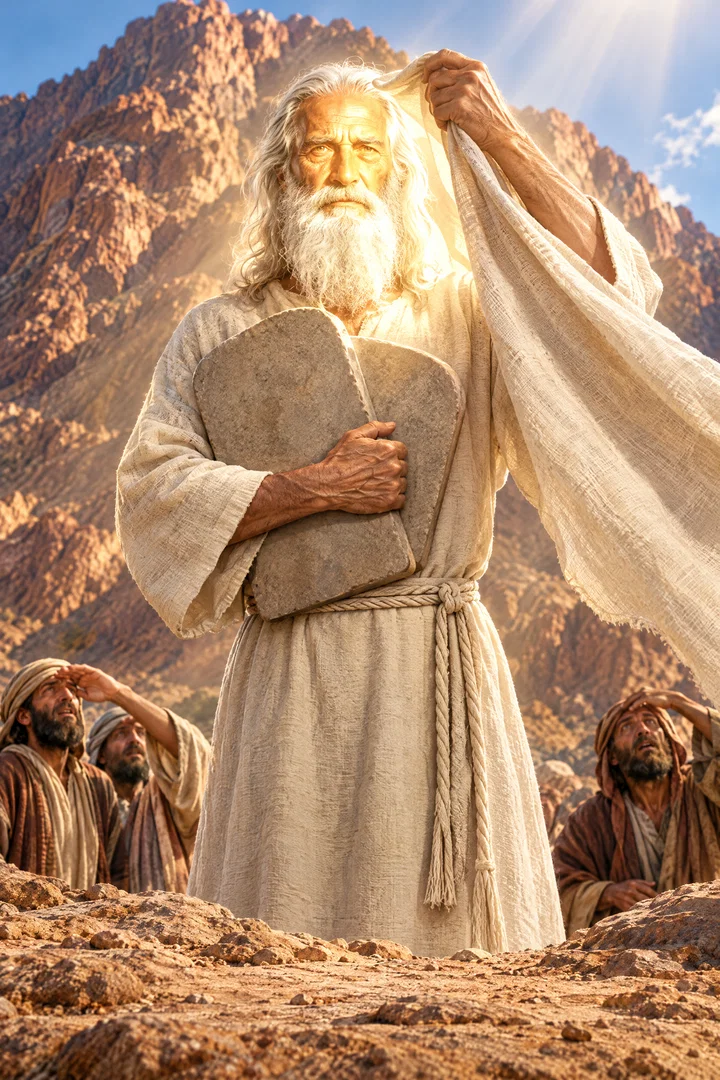
And it came to pass, when Moses came down from mount Sinai with the two tables of testimony in Moses’ hand, when he came down from the mount, that Moses wist not that the skin of his face shone while he talked with him.
Moses’ veiled, radiant face illustrates the glory Paul discusses.
- Jeremiah 31:33
But this shall be the covenant that I will make with the house of Israel; After those days, saith the LORD, I will put my law in their inward parts, and write it in their hearts; and will be their God, and they shall be my people.
The new covenant promises God will write his law in his people’s hearts.
- 2 Corinthians 3:7
But if the ministration of death, written and engraven in stones, was glorious, so that the children of Israel could not stedfastly behold the face of Moses for the glory of his countenance; which glory was to be done away:
Identifies the stone-engraved law and its passing glory, contrasted with the present ministry.
- Hebrews 8:10
For this is the covenant that I will make with the house of Israel after those days, saith the Lord; I will put my laws into their mind, and write them in their hearts: and I will be to them a God, and they shall be to me a people:
God writes his law in the minds and hearts of his people under the new covenant.
- 2 Corinthians 3:3
Forasmuch as ye are manifestly declared to be the epistle of Christ ministered by us, written not with ink, but with the Spirit of the living God; not in tables of stone, but in fleshy tables of the heart.
God’s law is written on believers’ hearts by the Spirit.
- 2 Corinthians 3:18
But we all, with open face beholding as in a glass the glory of the Lord, are changed into the same image from glory to glory, even as by the Spirit of the Lord.
Beholding the Lord’s glory transforms believers into his image.
- 2 Corinthians 3:6
Who also hath made us able ministers of the new testament; not of the letter, but of the spirit: for the letter killeth, but the spirit giveth life.
God makes ministers of the new covenant, whose Spirit gives life.
- Exodus 31:18
And he gave unto Moses, when he had made an end of communing with him upon mount Sinai, two tables of testimony, tables of stone, written with the finger of God.
The stone tablets represent the law engraved on stone.
- Romans 7:6
But now we are delivered from the law, that being dead wherein we were held; that we should serve in newness of spirit, and not in the oldness of the letter.
Deliverance from the law’s letter brings service in newness of spirit.
- Exodus 19:5-8
Now therefore, if ye will obey my voice indeed, and keep my covenant, then ye shall be a peculiar treasure unto me above all people: for all the earth is mine:
Records the covenant made at Sinai and the people’s agreement to its terms.
- 2 Corinthians 3:17
Now the Lord is that Spirit: and where the Spirit of the Lord is, there is liberty.
The Lord is the Spirit, whose presence brings liberty.
- Exodus 34:29
And it came to pass, when Moses came down from mount Sinai with the two tables of testimony in Moses’ hand, when he came down from the mount, that Moses wist not that the skin of his face shone while he talked with him.
The Septuagint’s wording about glory matches Paul’s language.
- Exodus 34:27-28
And the LORD said unto Moses, Write thou these words: for after the tenor of these words I have made a covenant with thee and with Israel.
The covenant words Moses wrote on stone are the law’s ministration.
- Ezekiel 36:26-27
A new heart also will I give you, and a new spirit will I put within you: and I will take away the stony heart out of your flesh, and I will give you an heart of flesh.
The Spirit gives a new heart and enables obedience.
- Jeremiah 31:31
Behold, the days come, saith the LORD, that I will make a new covenant with the house of Israel, and with the house of Judah:
The new covenant is associated with the law written on the heart in the present ministry.
- Hebrews 12:18-24
For ye are not come unto the mount that might be touched, and that burned with fire, nor unto blackness, and darkness, and tempest,
Contrasts the old covenant setting with the new covenant.
- Exodus 20:1-17
And God spake all these words, saying,
Identifies the law written on stone as the Ten Commandments.
- Exodus 32:16
And the tables were the work of God, and the writing was the writing of God, graven upon the tables.
The God-written stone tablets represent the law’s ministration Paul contrasts.
- Galatians 4:21-28
Tell me, ye that desire to be under the law, do ye not hear the law?
The passage explains the covenant contrast in this section.
- 2 Corinthians 4:2
But have renounced the hidden things of dishonesty, not walking in craftiness, nor handling the word of God deceitfully; but by manifestation of the truth commending ourselves to every man’s conscience in the sight of God.
Truth is openly manifested to conscience.
Commentary
Each commentary is drawn from primary sources: the writings of Ellen G. White and Adventist pioneers and periodicals. Each commentary is separate. Its own words are not a quotation; follow the references to read the source passages.
Ellen G. White
9 sources
Paul's "such hope" is set against Moses, who veiled his face so that Israel could not look steadfastly to the end of that which was abolished, while gospel hope gives confidence for open, plain speaking.Lt 52, 1908, par. 9–12Ms 58, 1900, par. 33–36 That plainness was used to settle the minds of the Corinthian church about the gospel of Christ.10MR 328.1 The greatest difficulties there came from Judaizing teachers who caused trouble and dissension at Corinth by continually presenting the virtues of the law and the ceremonies and exalting these above the gospel of Christ.10MR 328.1 They brought Paul under condemnation because he did not urge upon the people the ceremonies that typified Christ and were therefore of no value since Christ's death.10MR 328.1
The "such hope" is confidence grounded in the glorious ministry of the Spirit and of righteousness in Christ.Lt 52, 1908, par. 9–12RH Apr 22, 1902 It is the hope of mercy and grace that was veiled in types and ceremonies and prophecies and then brought to light through the revelation of Jesus Christ in His advent to the world and death as man's sacrifice.10MR 329.3–4 It is grounded in the glory that shone on the face of Moses.PP 330.2–4 Having this hope produces great plainness of speech.Ms 58, 1900, par. 33–36Ms 58, 1900, par. 37–38 That plainness means Christ is presented openly as the righteousness of the law and the end of that which was to be abolished, with no veiling of truth to accommodate unbelief about Him.Ms 58, 1900, par. 33–36Ms 58, 1900, par. 37–38
Seeing to the end of that which was to be abolished means understanding that type met antitype in the death of Christ.Ms 58, 1900, par. 33–36Ms 58, 1900, par. 37–3810MR 329.3–4 The ceremonial system was therefore abolished at His death, and the typical offerings, sacrifices, and ceremonies ceased, became meaningless, and are of no avail and no value.Ms 58, 1900, par. 33–36Ms 58, 1900, par. 37–38RH Apr 22, 190210MR 329.3–4 Distinct from what was abolished is that which remaineth, God's law of ten commandments as the immutable standard of righteousness.10MR 329.3–4 The moral law was never a type or shadow, but existed before man was created and continues.Ms 58, 1900, par. 33–36 It was not nailed to the cross and did not die with Christ, and Christ's mission was to uphold and exalt it and by His own righteousness put men where obedience is possible.Ms 58, 1900, par. 37–38RH Apr 22, 1902
The veil over Moses' face and over minds and hearts represents inability to see that the ceremonial system pointed to Christ.RH Apr 22, 1902 It remains blinded on Jews who refuse Christ as Messiah and on Christians who cannot see to the end of what was abolished and claim the moral law is done away and despise the foundation of God's government.Ms 58, 1900, par. 33–36Ms 58, 1900, par. 37–38RH Apr 22, 1902 It is a heavy veil of pride, bigotry, love of sin, and carnal enmity, with thoughts and affections under Satan's control so that transgressors could not behold the glory of God.Ms 58, 1900, par. 37–38Ms 58, 1900, par. 56–60 It is taken away only when turning to the Lord and accepting Christ as the righteousness of the law.Ms 58, 1900, par. 33–36RH Apr 22, 1902
The brightness on Moses' face was designed to impress Israel with the sacred, exalted character of the law and the glory of the gospel revealed through Christ.PP 330.2–4 While Moses was in the mount God gave him not only the tables of the law but the plan of salvation, showing him that the sacrifice of Christ was prefigured by all the types and symbols of the Jewish age.PP 330.2–4 The radiance therefore came from heavenly light streaming from Calvary no less than from the glory of the law of God.PP 330.2–4 That divine illumination symbolized the glory of the dispensation of which Moses was the visible mediator, a representative of the one true Intercessor.PP 330.2–4
Moses was a type of Christ in veiling: as Israel's intercessor veiled his countenance because the people could not endure its glory, so Christ the divine Mediator veiled His divinity with humanity when He came in the likeness of sinful flesh.PP 330.2–4 Had He come clothed with heaven's brightness He could not have found access to men in their sinful state to reach and lift the fallen race.PP 330.2–4 Likewise Moses veiled his face to hide the reflected glory of the law, and Christ's ascension glory was veiled from human sight so the disciples were spared heaven's full splendor in order to keep Christ's earthly character before them and faithfully carry out their work.6RED 92.1–3 The glory on Moses' face was transient and passed away, while the glory of God in the face of Jesus Christ ever remains and is not transient.PP 330.2–4Ms 58, 1900, par. 56–60 All who look may live and have that glory reflected upon them, for Christ sheds light and brightness and glory and joy into the law.Ms 58, 1900, par. 56–60
The closer the communion with God and the clearer the knowledge of His requirements, the more fully people are conformed to the divine image and become partakers of the divine nature, with blessings received by God's commandment-keeping people through Christ's mediation.PP 330.2–4 The law was ordained to life so the obedient walking in harmony with its claims receive eternal life.10MR 329.3–4 To those under its condemnation it is bondage and death, lusterless and with no power to save except as Christ is represented in it.10MR 329.3–4 Only as men come into harmony with God's government and obey His law through repentance toward God for transgression of His holy law and genuine faith in Christ will Christ avail them, and only through Jesus Christ can man keep it.Ms 58, 1900, par. 37–3810MR 329.3–4 Those without such repentance and faith will at last hear Him say, I know you not.Ms 58, 1900, par. 37–38
Sources
Pioneers and periodicals
96 sources
Having such hope in the ministry of the Spirit and righteousness, whose glory far surpasses condemnation, gives confidence and open boldness of speech in contrast to Moses veiling his shining face.ST Jun 19, 1907RH Feb 17, 1852RH Feb 17, 1852ST Sep 25, 1893RH Nov 17, 1863 The hope rests on forgiveness of past sins through Christ, righteousness by faith, and having that same law written by the Spirit in the mind and heart instead of only outwardly on stone, bringing life and power to keep from sin.ST Oct 23, 1884RH Jan 13, 1852RH Oct 21, 1851ST Mar 26, 1894RH Apr 7, 1851 The change is in ministration and dispensation, not in the law itself, for the ministration of death and condemnation associated with Moses has given place to the more glorious ministration of the Spirit, righteousness and life under Christ while the law remains holy, just and good.RH Jan 1851RH Jun 14, 1864ST Jan 24, 1906RH Jan 13, 1852RH Jan 1851 What was done away is the passing glory on Moses' countenance, the outward ministration that condemned without giving life, and the veil of unbelief on the heart that cannot see Christ as the end of types, removed by turning to the Lord.RH Apr 22, 1902RH Oct 21, 1851RH Sep 2, 1852ST Aug 23, 1910 Such hope calls for plain intelligible speech that first brings conviction under the law and then everlasting peace through justification, and because the same law is still ministered by the Spirit, Sabbath obligation remains and cannot be set aside by the ministration done away.ST Jan 17, 1884ST Mar 26, 1894RH Jul 1, 1862RH Jun 25, 1914
Verse Language and Setting
The statement belongs to several important contrasts in 2 Corinthians 3 between the old and new dispensations, between types and antitypes, between carnal and spiritual things, and between the true and the false.ST Jan 17, 1884 It was uttered in a transitional age calling for radical change in the form of doctrine, when a gospel and religion new to both Jew and Gentile was being preached, so reasoning, deducing, comparing and contrasting were always necessary.ST Jan 17, 1884 Its setting is Moses coming down from the mount with the stone tablets after communing with the Lord, his face shining from God's presence so brightly that the people feared to approach, and his use of a veil when speaking to them.ST Jun 10, 1880ST Jun 5, 1879ST Oct 16, 1884 The chapter compares the priesthood of Moses with that of Christ, and the glory remained on his face when he came down from the mountain.ST Jun 10, 1880ST Jun 5, 1879
The lesson turns on three things: the ministration, the law on stone, and the glory.AUST May 31, 1920 The ministration is not the law itself but the dealing out of the death-penalty demanded by the law, for the Greek diakonia means ministering, ministration, service, office, serving, as in serving out provisions.AUST May 31, 1920 The law is the Sinai writ engraven on stone slabs given to Moses at the close of his forty days meeting with God.AUST May 31, 1920 The glory is the splendour that flooded the person and face of Moses when he came from the mountain after talking with God, so bright that uncovered eyes could not gaze upon him.AUST May 31, 1920
The Greek Old Testament of Exodus 34:29 reads that the appearance of his face was glorified, matching the language of glory and showing that the glory represented the ministration.ST Mar 26, 1896 What was done away was that glorified appearance covered by the veil, not the law itself, for the law is never said to be glorified and Moses never hung a veil over the law.ST Mar 26, 1896 The ministration of death written and engraved on stone refers to the law on the two tables Moses brought from Sinai, not the copy of the law Joshua wrote on the stones at Mount Ebal.RH Sep 6, 1864 The glory on Moses' face when he brought the Sinai tablets down was connected with that ministry and was to pass away, in contrast with the more glorious ministry of the Spirit.RH Sep 6, 1864
The Jewish and Christian ministrations are not teachings of opposite character but stages in one plan of salvation, unfolding with increasing light and glory.RH Jan 20, 1874ST Jul 23, 1874 The greater glory of the Christian ministration gives reason for confident, open speech, and the hope of the Christian age rests on that fuller revelation.RH Jan 20, 1874 The same contrast appears in Hebrews 7: under the gospel and Christ's intercession all may draw near to God, whereas under the former order the people stood afar off and only Moses or the priests approached God's presence.ST Dec 16, 1889 Minds veiled and clouded by prejudice kept the Jews from recognizing Jesus as the Messiah.RH Nov 18, 1862
Hope of New Ministration
Such hope is the hope found in the ministry of the Spirit and righteousness, whose glory surpasses condemnation, and it gives confidence and openness of speech in contrast to the veil of unbelief that remains until turning to the Lord.ST Jun 19, 1907RH Feb 17, 1852ST Sep 25, 1893RH Jan 16, 1866ST Nov 15, 1910 That which remaineth is far more glorious than that which is done away, for the Christian gospel ministry revealing Christ has a greater glory while the glory of the earlier Jewish priestly ministry passed away.ST Sep 25, 1893RH Jan 16, 1866RH Jul 30, 1901 What is done away is the glory of the former dispensation, not God's law, and the greater glory of the Spirit's ministry through Christ surpasses the former glory of the ministry of death.RH Jan 16, 1866RH Jul 30, 1901
The hope rests on forgiveness of past sins and pardon through Christ, with life and immortality brought to light through the gospel, and on righteousness by faith with Christ as righteousness transforming believers into His image.ST Oct 23, 1884RH Jan 13, 1852RH Dec 3, 1914RH Apr 8, 1873 With the veil removed when the heart turns to the Lord, faith in atoning blood brings freedom from death and condemnation, and beholding the Lord's glory with unveiled face the Spirit changes believers from glory to glory.ST Oct 23, 1884RH Jan 13, 1852ST Jun 12, 1879RH Dec 3, 1914 The ministry of the Spirit proclaims pardon, life, righteousness and the gift of the Spirit, surpassing the former ministry of condemnation in glory, and the surrounding discussion of Moses' veil concerns the glory on his face, not the commandments written on stone.ST Mar 26, 1894RH Apr 8, 1873
The hope is to have that same immutable law put into the mind and written by the Spirit of God on the fleshly tables of the heart instead of having it only outwardly on tables of stone and deposited in the ark.RH Oct 21, 1851ST Mar 26, 1894RH Apr 7, 1851 Having the law only there brings condemnation and death, while having it in the heart through Christ presented brings righteousness and life and freedom from the law of sin and death.ST Mar 26, 1894RH Apr 7, 1851ST Jan 2, 1893 The letter by itself kills while the Spirit gives life, for the law apart from Christ condemns and brings death, whereas the ministry ministering Christ gives life.ST Jan 16, 1907ST Jan 2, 1893ST Feb 13, 1901 What is done away in Christ is not the law written and engraven in stones but the glory of Moses' countenance and what it illustrated, the ministration of condemnation and death and the outward observances that condemned without taking away sins or giving life and immortality.RH Oct 21, 1851 The veil done away in Christ is that Mosaic ministration on the heart of unbelieving Jews while continuing in Moses' service unable to see Christ as the end of typical services, and the Ten Commandments remain as the royal constitution of righteous principles now ministered in liberty by the Spirit freed from bondage.RH Oct 21, 1851
The glory and majesty of God's law is experienced first in condemnation of sin and then seen in exceeding glory in the gospel which justifies, and those without the first experience do not see the second.ST Sep 27, 1910 That hope is the permanent abiding gospel experience that remains after temporal conviction passes, when faith takes hold of remission of sin in Christ bringing everlasting peace and joy.RH Jun 25, 1914ST Aug 23, 1910 Plain speech preaches the gospel in its full order, first condemnation under the law through the Holy Spirit and then everlasting peace and rest, not covering the face as Moses did when the people feared the glory on his countenance.RH Jun 25, 1914
Israel in unbelief saw only the condemning glory spoken from Sinai, and looking on Moses' shining face felt condemned, separated from God, stood afar off, would not hear Him, and asked for a veil over his face so they could not see that glory.ST May 12, 1909ST Aug 23, 1910ST Aug 23, 1910 God wanted them to feel that condemnation so they would put away sin and receive His glory that would abolish sin, with the glory of justification or righteousness taking the place of the glory of condemnation by placing the law within their hearts so they would love it and not be condemned by it, but they refused so the law was to them condemnation and condemnation only.ST May 12, 1909 Moses looked beyond condemnation to justification through God's Son, seeing both the condemning glory and beyond it the justifying glory, and believers see the justifying glory that writes the law on the fleshly tables of the heart.ST Nov 21, 1911ST Aug 23, 1910ST Aug 23, 1910 What is done away is not the law but the condemnation the law brings, and that condemnation is done away only when one believes on the Lord Jesus Christ, whose glory of condemnation fades in the greater glory of righteousness.ST May 12, 1909 Through Christ come justification, regeneration and sanctification, and the law written on the heart no longer condemns but witnesses to justification received through Christ.ST Nov 21, 1911
The veil over Moses' face and over minds represents unbelief and inability to see that the ceremonial system pointed to Christ and was abolished at His death, and it is removed by turning not to man but to the Lord and accepting Christ as the righteousness of the law.RH Apr 22, 1902ST Aug 23, 1910 The moral law was not abolished, and claims it was nailed to the cross arise from a veil obscuring its continuing authority and Christ's mission to uphold it.RH Apr 22, 1902 When a person turns to the Lord the veil is taken away, the law becomes inward power through Christ to keep from sin, and the result is love for the law as meditation all the day.ST Aug 23, 1910ST Aug 23, 1910 Received in the heart by faith through the Saviour for forgiveness it saves, makes righteous, gives life and power and goodness, while as mere letter of the Ten Commandments outside the heart it condemns and condemns to death because the wages of sin is death.ST Aug 23, 1910 Moses had this hope with God's glory placed upon him and within him so his face shone with the glory of the law written in his heart.ST Aug 23, 1910
The hope is to have God's glory, which is His righteousness and goodness, revealed by and through His people in all ages and especially His remnant people, to be covered with Christ's righteousness and filled with the measure of the Holy Spirit, to be one in purpose to proclaim the last warning message, to warn the world and to enter the kingdom.RH Mar 21, 1907 The glory resting visibly on Moses at Sinai was a type of that righteousness and an object-lesson of the contrast between Moses' character and sinful Israel separated from God by sin and afraid to be in His presence.RH Mar 21, 1907 That righteousness given to fit His people for this generation's work will exceed the glory seen on Moses' face, as the latter temple was more glorious than the former because of the presence of the Saviour.RH Mar 21, 1907 Its excelling glory means God could not approve animal sin offerings while Christ the high priest pleads His own blood, and the present dispensation is more excellent than a future age reviving first-covenant sacrifices and ordinances.ST Apr 8, 1889RH Sep 4, 1856
Old Testament believers such as Abel, Enoch, Noah, Abraham, Moses and David shared this same hope, seeing Christ and His day afar off by prophecy and the typical blood of the Lamb, with the gospel preached to them.RH Sep 18, 1900 Through Moses by whom came the law they beheld the grace and truth and life and light that came by Christ, cleansed by His blood and quickened by His Spirit under the same immutable law of pardon and life before and since Christ and Pentecost.RH Sep 18, 1900 To the dead sinner the word in both Testaments is a dead letter, but when belief in the gospel brings cleansing and quickening by the Spirit's handwriting, Moses' shining face and Sinai's splendor soften into the milder, sweeter, approachable radiance of Christ and Calvary that the lost sinner can touch.RH Sep 18, 1900 The law was always the schoolmaster leading to Christ, and the gospel was always the glory lighting the tables in Moses' hand with their only true interpretation.RH Sep 18, 1900
Plain Open Gospel Speech
There is no obscurity about the gospel because all types and shadows and the veiled glories connected with them have passed away, and the Christian revelation is clear and full as the last economy that does not look to the future.ST Jan 17, 1884 Its ministers therefore may and should use clear and intelligible language, even the language of common life and expressions other men use, and not language abounding in metaphor and allegory, nor unusual terms, nor illustrations drawn mainly from science, nor mere technical language, nor veiled or cloaked meaning, nor a refined and overwrought style.ST Jan 17, 1884 Preaching that is not understood is worthless, and no one should speak unless intelligible, for the Lord Jesus was plain and simple in words and illustrations.ST Jan 17, 1884 Great plainness of speech means speaking openly and without concealment, in contrast to Moses putting a veil over his face, bringing truth into the light so hearers can understand it.RH Feb 17, 1852RH Nov 17, 1863 Such plain preaching commends truth to each hearer's conscience by bringing the light of truth to bear upon it, aiming to enlighten rather than to dazzle or impress with difficult language and elaborate expression.RH Nov 17, 1863ST Oct 2, 1879
Plain and bold speech is fitting because the hope is so glorious, since that which remaineth is far more glorious than that which is done away.ST Mar 26, 1894 That which was done away in glory was the ministration of the law when it brought only condemnation ending in death, as when guilty Israel under divine displeasure could not endure the heavenly light shining from Moses' face, and that which remaineth in greater glory is the ministration of the Spirit and of righteousness.ST Mar 26, 1894 In that abiding ministration condemnation is done away and righteousness takes its place by the law being written in the heart, so the law becomes a witness to righteousness by faith and fills the obedient with joy.ST Mar 26, 1894 The hope of that abiding gospel experience moves the herald to speak plainly and openly, preaching the gospel in its full order, first condemnation under the law through the Holy Spirit and then everlasting peace and rest, when temporal conviction passes and faith takes hold of remission of sin in Christ bringing everlasting peace and joy.RH Jun 25, 1914 Plain speech therefore does not cover the face as Moses did when the people feared the glory on his countenance.RH Jun 25, 1914
Ministers of present truth should avoid learned or high-flown language that ordinary people cannot understand, so that the message can reach everyone and be obeyed, since plain speech makes truth understandable and able to instruct hearers.RH Nov 17, 1863 Preaching must have the conversion of sinners as its one aim, not pleasing hearers, nor courting applause, nor catering to itching ears with wit, elocution, and ostentatious parade of learning and philosophy.RH Sep 11, 1900 It must speak urgently as a last effort to sinners standing on the very trapdoor of perdition, warning the wicked from his way.RH Sep 11, 1900
Such hope calls for direct and firm speech in present duty.ST Dec 16, 1897ST Feb 24, 1887 When nations are preparing for war, clear and direct speech is necessary to awaken people to the danger of joining the murderous, Satanic spirit of war.ST Dec 16, 1897 Plain speech confronts believers about the judgment hour and their backsliding, prompting confession and reconciliation, and speaks directly and firmly when defending God's word even when personal respect might otherwise soften the criticism.ST Feb 24, 1887 It speaks openly when proclaiming truth even when the church rejects the speaker and calls the message heretical, warning that following the mere letter of the law written on stone rather than its spirit is contrary to the gospel and brings division.RH Apr 12, 1864
Law Continues, Ministration Passes
A law and the ministration of a law are essentially different, for a law is the constitution necessary for government while the ministry is the ordained powers carrying its laws into execution, and the ministry of the law and the law itself are not the same thing.RH Jan 13, 1852RH Jan 1851RH Jan 1851 The chapter contrasts two ministrations of the same divine law, the ministration of death and condemnation associated with Moses and the law written on stone whose glory was passing, with the more glorious ministration of the Spirit and righteousness and life under Christ that took its place, and the change is in ministration and dispensation and not in the law itself, which was neither changed nor abolished and remains holy and just and good.RH Jun 14, 1864ST Jan 24, 1906RH Dec 12, 1854RH Jul 8, 1852RH Nov 2, 1911 The typical service of the former covenant was done away in Christ while the law continued as the rule of life to be written in hearts, the old dealing with transgression in figure and the new providing real atonement that takes away real guilt.RH Jan 1851RH Jun 14, 1864
What was done away in Christ is not the Ten Commandments written and engraven by God's finger, but the glory of Moses' countenance and what it illustrated, the ministration of condemnation and death, the outward observances that condemned the transgressor and enforced death without taking away sins or giving life and immortality, and the veil of that ministration on unbelieving hearts that cannot see Christ as the end of typical services.RH Oct 21, 1851RH Sep 2, 1852RH Sep 1, 1868RH Jul 30, 1901 Under the typical service the minister of the condemning law put willful transgressors to death, while in this dispensation the minister shows the sinner his guilt under that same law on stones and points him to Christ for pardon, so the present ministration is more glorious, and what was veiled and done away was Moses' face and its glory, not the tables of stone.RH Sep 2, 1852RH Sep 1, 1868 The Ten Commandments themselves remain as the immutable royal constitution of righteous principles, now ministered in liberty by the Spirit freed from the yoke of bondage, with better promises including forgiveness of sin through Christ's service in the true sanctuary and better sacrifice before the ark in heaven, and genuine conversion writes that living law within, which would not be done for a dead obsolete law.RH Oct 21, 1851RH Sep 2, 1852RH Aug 27, 1857ST Apr 3, 1928
The law written and engraven on stones is the one whole law given through Moses, not proof of two distinct laws, and the enduring Ten Commandments must be distinguished from the Sinaitic covenant agreement with promises and conditions, and from the ceremonial types and shadows and sacrificial ministry and law of sacrifices fulfilled in Christ that ceased.RH Aug 5, 1851RH Apr 16, 1861RH Dec 1850RH Jun 17, 1862 Moses' ministration inflicted temporal death as temporal punishment to prevent and restrain moral transgression, ended within the seventieth week, and gave place to the Spirit's ministration that stays speedy justice and gives pardon and life to the repentant reconciled and again subject to divine law, and removal of the stoning system did not abolish the law since temporal death was not its full penalty of eternal death, while mercy gives opportunity to turn and live.RH Oct 7, 1851RH Oct 21, 1851 The ministration of death inflicted by men for breaking the Sabbath or any commandment was done away as part of the handwriting nailed to the cross, yet Sabbath profaners are not freed from death since sin is transgression and its wages still death, but execution is changed so God Himself will do it instead of sinners, since only the sinless may first cast the stone.ST Nov 16, 1876
Through faith the believer is under one of two ministrations while living, for the ministration of death for the disobedient is disannulled and the ministration of the Spirit and life takes its place, and divine law is uncreated and eternal with penal force natural in God's attributes to compensate for possible evil, so death springing from violated law is just, whether ministration of death from sin or ministration of life from creation.ST Sep 7, 1915ST Oct 3, 1895 The verse gives no intimation that the ten-commandment law expired by limitation or was abolished at the crucifixion, and to use it for abolition contradicts the Galatians 3:19 expiry argument since if it expired it was not abolished and if abolished it did not expire, while a ministration requires a law ministered so the present ministration proves a law remains, and Christ's death for transgression confirms the law's integrity rather than abolishing it.RH Jan 1851RH Apr 12, 1864RH Mar 29, 1864 The hope is not the hope that the law is dead or disappearing, and to make plain speech mean speaking openly because the law is hoped dead mistakes the verse.RH May 16, 1854 Those who held otherwise taught that the thing abolished is the law of Moses leaving the law of God remaining more glorious, or that the former code including the Ten as enactments completed its purpose and ceased for the law of faith and the Spirit of life and liberty, or that the ministration had to be abolished because the law made nothing perfect though perfect for Jewish times, or that the Ten are the old covenant abolished against the Sabbath, or in sermons that the ministration of death is done away for the Spirit with Gentiles never bound.RH Aug 5, 1851RH Jan 31, 1854RH Dec 30, 1873RH Mar 24, 1859RH Nov 12, 1872
Sabbath Argument and Present Application
The chapter says nothing about the Sabbath by name but includes it only as one of the precepts written and engraved on stones.RH Oct 6, 1859RH Mar 21, 1854RH Feb 21, 1854RH Apr 11, 1854RH Dec 27, 1853 To use its word abolished against the Sabbath therefore forces the further claim that the whole ten commandments are abolished.RH Oct 6, 1859 No inference drawn from it proves that the seventh-day Sabbath has been abolished, for it is not a plain New Testament text proving abolition.RH Mar 21, 1854RH Feb 21, 1854RH Apr 11, 1854RH Dec 27, 1853 The Sabbath law was given in the plainest language possible, so proof of its abolition requires equally plain and positive inspired testimony, not inference.RH Feb 21, 1854
The comparison between the minister of the law and the ministers of the gospel must not be used to break God's law into nine enduring commandments with a Sabbath that can be rejected.RH Sep 20, 1853RH Apr 7, 1851ST Apr 5, 1883 Using it to dash the law in pieces in order to keep nine commandments while rejecting the Sabbath is a misuse that does not abolish God's law, does not remove the Sabbath from the Ten, and leaves God without a law.ST Apr 5, 1883 Nor does the chapter teach that the ten were abolished in the abstract, meaning nine were abolished yet continued in force just the same while the fourth alone was truly abolished.RH Jul 22, 1852
The former ministration of death and condemnation has passed away, but the law written on stone has not, for the law remains the same under the present ministration so the obligation to keep the Sabbath remains.RH Jul 1, 1862 The hope of the verse is consistent with speaking plainly.RH Jul 1, 1862 To use the ministration done away as a pretext to claim the Sabbath is no longer binding is a perversion that lets one suppress conviction and avoid the cost of obeying believed duty.
Under the gospel the same law is ministered by the Spirit in a ministration that surpasses the Jewish ministration of condemnation and death.RH May 2, 1854RH Nov 25, 1852 Under it Christ's atoning blood can reach the sinner, and mercy pleads for the Sabbath-breaker to be spared, repent, receive pardon, and live.RH May 2, 1854RH Nov 25, 1852 The chapter thus bears on the Sabbath question together with Colossians 2:14-17 and Matthew 5:18 and the identity of the Lawgiver in setting forth Sabbath truth.RH Apr 16, 1857RH Jul 1, 1858 It addresses a debated question about the law of God that is made clear by understanding the principles underlying God's government.ST Sep 1, 1909
The hope of the saving ministry gives confidence and openness of speech.ST Jul 3, 1907ST Oct 28, 1897ST Mar 26, 1894 The contrast is not between a glorious law that will pass away and a lesser law, but between the condemnation that comes when the law is only heard or read and the greater glory of God's work within people.ST Jul 3, 1907 That which was done away in glory was the ministration of God's law when it brought only condemnation ending in death, as when guilty Israel under divine displeasure could not endure the heavenly light shining from Moses' face.ST Mar 26, 1894 That which remaineth in greater glory is the ministration of the Spirit and of righteousness, in which condemnation is done away and righteousness takes its place by the law being written in the heart.ST Mar 26, 1894ST Nov 21, 1911
When the law reveals sin, accepting Jesus brings forgiveness, the Spirit writes the law on the heart, removing sin ends the glory of condemnation, and the sinner becomes a child of God.ST Jul 3, 1907 Like Israel people may turn away from condemnation, but Moses looked beyond it to justification through God's Son, whose glory was reflected in his face.ST Nov 21, 1911 Through Christ come justification, regeneration, and sanctification, so the law no longer condemns but witnesses to righteousness by faith and fills the obedient with joy.ST Mar 26, 1894ST Nov 21, 1911 When the heart turns to the Lord the veil of unbelief is taken away, and with unveiled faces beholders minister before the Lord, behold His glory, and are changed by the Spirit.ST Jul 3, 1907ST Oct 28, 1897
Sources