2 Corinthians 3:11
For if that which is done away was glorious, much more that which remaineth is glorious.
Translations
For if that which is done away was glorious, much more that which remains is glorious.
King James Version, KJV Cambridge Paragraph Bible
For if that which is done away was glorious, much more that which remaineth is glorious.
For if that which was done away was glorious, much more that which remaineth is glorious.
Revised Version, American Standard Version
For if that which passeth away was with glory, much more that which remaineth is in glory.
for if that which is being made useless [is] through glory, much more that which is remaining [is] in glory.
For if that annulled [ was introduced] with glory, much rather that which abides [subsists] in glory.
For, if that which was to be done away [was brought in] with glory, much more, that which is to abide, is in glory.
Berean Standard Bible, Majority Standard Bible
For if what was fading away came with glory, how much greater is the glory of that which endures!
For if that which passes away was with glory, much more that which remains is in glory.
For if the order which was for a time had its glory, much more will the eternal order have its glory.
For if that which should be abolished, was glorious, much more shall that which remaineth, be glorious.
Douay-Rheims (Challoner revision)
For if that which is done away was glorious, much more that which remaineth is in glory.
Pictures
Cross-references 20 of 62
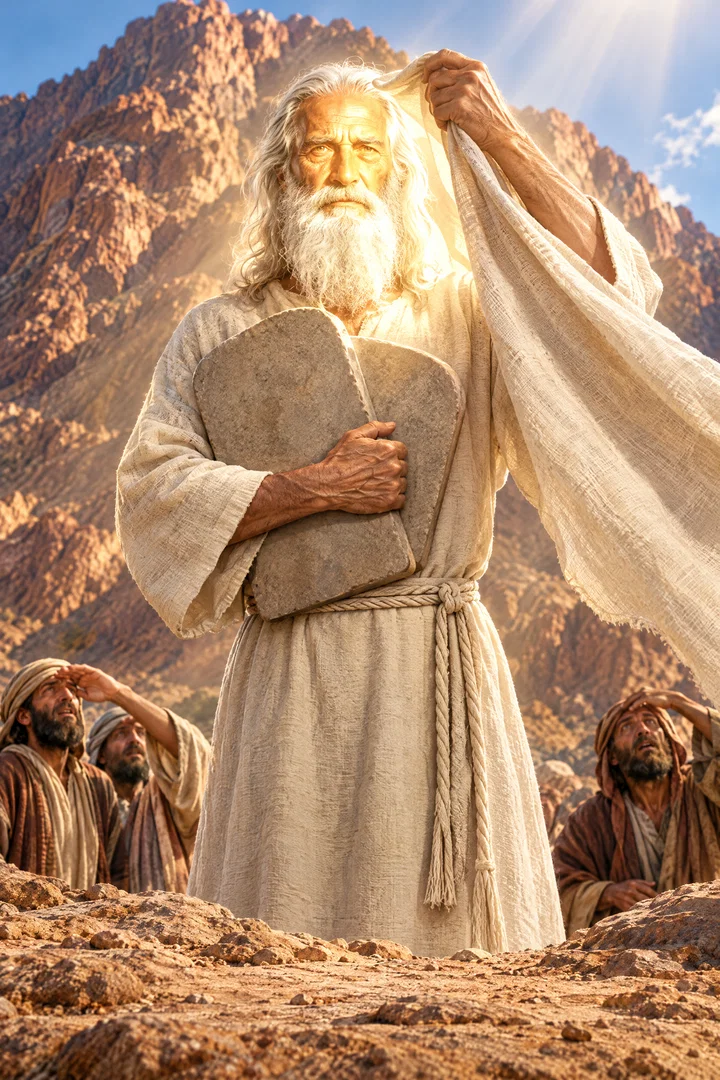
- Exodus 34:29-35
And it came to pass, when Moses came down from mount Sinai with the two tables of testimony in Moses’ hand, when he came down from the mount, that Moses wist not that the skin of his face shone while he talked with him.
Moses’ face shone with the temporary glory of the old covenant, which he veiled.
- 2 Corinthians 3:7
But if the ministration of death, written and engraven in stones, was glorious, so that the children of Israel could not stedfastly behold the face of Moses for the glory of his countenance; which glory was to be done away:
Describes the glory of Moses’ ministry as the glory that was to pass away.
- Colossians 2:14-17
Blotting out the handwriting of ordinances that was against us, which was contrary to us, and took it out of the way, nailing it to his cross;
The ordinances and Sabbath observances are shadows, with their fulfillment in Christ.
- Hebrews 8:10
For this is the covenant that I will make with the house of Israel after those days, saith the Lord; I will put my laws into their mind, and write them in their hearts: and I will be to them a God, and they shall be to me a people:
God writes his law in the heart under the new covenant.
- Jeremiah 31:33
But this shall be the covenant that I will make with the house of Israel; After those days, saith the LORD, I will put my law in their inward parts, and write it in their hearts; and will be their God, and they shall be my people.
God promises to write his law in his people’s hearts under the new covenant.
- 2 Corinthians 3:3
Forasmuch as ye are manifestly declared to be the epistle of Christ ministered by us, written not with ink, but with the Spirit of the living God; not in tables of stone, but in fleshy tables of the heart.
The Spirit writes the law on believers’ hearts rather than on stone tablets.
- 2 Corinthians 3:6
Who also hath made us able ministers of the new testament; not of the letter, but of the spirit: for the letter killeth, but the spirit giveth life.
The Spirit’s life-giving ministry contrasts with the ministry of death and leads to the greater glory.
- Hebrews 8:6
But now hath he obtained a more excellent ministry, by how much also he is the mediator of a better covenant, which was established upon better promises.
Christ mediates a better covenant established on better promises.
- Hebrews 10:1
For the law having a shadow of good things to come, and not the very image of the things, can never with those sacrifices which they offered year by year continually make the comers thereunto perfect.
The law’s repeated sacrifices were only a shadow and could not perfect worshipers.
- 2 Corinthians 3:18
But we all, with open face beholding as in a glass the glory of the Lord, are changed into the same image from glory to glory, even as by the Spirit of the Lord.
Believers behold the Lord’s glory and are transformed into his image from glory to glory.
- Exodus 31:18
And he gave unto Moses, when he had made an end of communing with him upon mount Sinai, two tables of testimony, tables of stone, written with the finger of God.
God wrote the commandments on stone tablets; 2 Corinthians contrasts the law’s glory with what remains.
- Exodus 20:1-17
And God spake all these words, saying,
The commandments given at Sinai are the law whose ministry is contrasted as passing away or remaining.
- Romans 8:2
For the law of the Spirit of life in Christ Jesus hath made me free from the law of sin and death.
The Spirit of life in Christ frees believers from sin and death.
- 2 Corinthians 4:6
For God, who commanded the light to shine out of darkness, hath shined in our hearts, to give the light of the knowledge of the glory of God in the face of Jesus Christ.
The remaining glory shines in hearts through the face of Jesus Christ.
- Galatians 3:24
Wherefore the law was our schoolmaster to bring us unto Christ, that we might be justified by faith.
The law served as a schoolmaster to bring people to Christ.
- Hebrews 8:13
In that he saith, A new covenant, he hath made the first old. Now that which decayeth and waxeth old is ready to vanish away.
The old covenant becoming obsolete echoes the claim that what was glorious was done away.
- Exodus 19:5-8
Now therefore, if ye will obey my voice indeed, and keep my covenant, then ye shall be a peculiar treasure unto me above all people: for all the earth is mine:
Israel’s covenant agreement at Sinai is contrasted with the enduring glory of Christ’s ministry.
- John 1:17
For the law was given by Moses, but grace and truth came by Jesus Christ.
Contrasts the law given through Moses with the enduring grace and truth through Christ.
- Hebrews 9:15
And for this cause he is the mediator of the new testament, that by means of death, for the redemption of the transgressions that were under the first testament, they which are called might receive the promise of eternal inheritance.
Christ mediates the new covenant through his death, redeeming transgressions under the first covenant.
- Romans 7:6
But now we are delivered from the law, that being dead wherein we were held; that we should serve in newness of spirit, and not in the oldness of the letter.
Those delivered from the law now serve in the newness of the Spirit, not the letter.
Commentary
Each commentary is drawn from primary sources: the writings of Ellen G. White and Adventist pioneers and periodicals. Each commentary is separate. Its own words are not a quotation; follow the references to read the source passages.
Ellen G. White
12 sources
For if that which was to be done away was glorious, much more that which remains is glorious, contrasting a temporary ministration of death and condemnation written and engraved in stone with a lasting ministration of the Spirit and righteousness.Lt 52, 1908, par. 9–12Ms 58, 1900, par. 30–32 If the ministration to be abolished at the death of Christ was glorious, what remains must much more excel in glory.Ms 58, 1900, par. 30–32 That which was done away left the transgressor under its curse with no hope of pardon, while that which remains is the lasting new-covenant ministry.Lt 52, 1908, par. 9–12Ms 58, 1900, par. 30–32
What was done away is the ceremonial system of types and offerings with prophecies pointing forward to Christ, including the entire Jewish economy with the ceremonial law connected with the moral precepts.10MR 328.1ST Jul 29, 1886Ms 58, 1900, par. 30–32RH Apr 22, 190210MR 329.3–4 The ceremonies were glorious but were done away at Christ's death and have no value since then, to cease and lose force and value when purpose was fulfilled and type met antitype at Christ's advent and death as man's sin offering.10MR 328.1ST Jul 29, 1886RH Apr 22, 1902ST Jul 29, 1886 Though the ceremonial law could have no force after Christ died on the cross as a sin offering, while in force the whole system had a sacred place and value in the plan of redemption and relation to Christ's work.ST Jul 29, 1886RH Apr 22, 1902PP 367.2 The dim glory of the Jewish age with its offerings pointing forward to Christ was thus surpassed by the brighter glory of the Christian age when the promised Saviour had come.ST Jul 29, 1886
What was done away was glorious because Christ gave it and was embodied and represented in it as one full of righteousness and truth, casting His glory back into the Jewish age.ST Jul 29, 188610MR 329.3–4 It had no glory of itself but was made glorious by the promised Saviour revealed in types and shadows giving a veiled discovery of mercy and grace.Ms 58, 1900, par. 30–3210MR 329.3–4 It bore the stamp of divinity expressing the holiness, justice and righteousness of God, worthy of its divine Originator.Ms 58, 1900, par. 30–32RH Apr 22, 1902PP 367.2 It shed a halo of glory on the law through Christ bearing its curse and completing salvation so that obedient people can keep the law and be accepted through His merits.Ms 58, 1900, par. 30–32 Its glory was in the solemn sanctuary service typifying grand truths to be revealed through successive generations: the cloud of incense ascending with the prayers of Israel represents a righteousness that alone can make the sinner's prayer acceptable to God, the bleeding victim on the altar testified of a Redeemer to come, and the visible token of the divine presence shining from the holy of holies kept faith alive through age after age of darkness and apostasy until the advent of the promised Messiah.PP 367.2
The glory reflected on the face of Moses when he came down with the tables of stone was transient and has passed away, so that Israel could not look on him.Ms 58, 1900, par. 30–32Ms 58, 1900, par. 56–60 His face was veiled so the glory would not shine forth to beholders who were transgressors with thoughts and affections controlled by evil.Ms 58, 1900, par. 30–32Ms 58, 1900, par. 56–60 By contrast the glory of God in the face of Jesus Christ is not transient but remains forever and ever abides, so that all who look may live and have that glory reflected upon them, and Christ as righteousness sheds light and brightness and glory and joy into the law of God.Ms 58, 1900, par. 56–60 The brightness on the face of Moses held two glories together, the sacred exalted character of God's law and the glory of the gospel revealed through Christ, because on the mount Moses received not only the tables of the law but also the plan of salvation and saw the sacrifice of Christ prefigured by all the types and symbols of the Jewish age, so the radiance came from heavenly light streaming from Calvary no less than from the glory of the law.PP 330.2–4
That divine illumination symbolized the glory of the dispensation of which Moses was the visible mediator as representative of the one true Intercessor.PP 330.2–4 The glory reflected in his countenance illustrates the blessings to be received by God's commandment-keeping people through the mediation of Christ.PP 330.2–4 It testifies that the closer the communion with God and the clearer the knowledge of His requirements, the more fully believers are conformed to the divine image and become partakers of the divine nature.PP 330.2–4 Moses veiling his countenance because the people could not endure its glory was a type of Christ veiling His divinity with humanity and coming in the likeness of sinful flesh because fallen people could not endure the brightness of heaven, so that He might gain access to them and lift them up.PP 330.2–4
That which remains and is much more glorious is the reality when type meets antitype, the gospel of Christ and the brighter glory of the Christian age after the promised Saviour had come, with the life-giving, sanctifying Spirit given through Christ to all who believe.10MR 328.1Ms 58, 1900, par. 30–32RH Apr 22, 1902ST Jul 29, 1886 That which remains is also God's law of ten commandments, the moral standard of righteousness which is not typical and is immutable and unchangeable, remaining as long as the heavens remain.ST Jul 29, 1886ST Jul 29, 188610MR 329.3–4 Christ's coming fulfilled what the offerings foreshadowed but did not abolish God's commandments, which still stand, and the remaining law is much more glorious when plainly discerned as unchangeable by all who see to the end of that which was abolished.ST Jul 29, 188610MR 329.3–4 The law that was done away was not God's enduring law for the government of His family in heaven and on earth.ST Jul 29, 1886
The law itself has no power to save and is bondage and death to those under its condemnation and is lusterless apart from Christ, but it was ordained to life so that those obedient in harmony with its claims receive eternal life, and only through Jesus Christ can people keep it and be accepted through His merits.Ms 58, 1900, par. 30–3210MR 329.3–4 The verse does not make either the moral or the ceremonial law a thunder-and-lightning law to be denounced and despised.Ms 58, 1900, par. 30–32 Paul set forth this contrast to settle the minds of the church at Corinth about the gospel against Judaizing teachers who made trouble and division by exalting the law and the ceremonies above the gospel and condemning Paul for not urging the ceremonies on the people.10MR 328.1 Even after the ceremonial system was no longer to be observed Paul presented it in its true position and value, showing its sacred place in the plan of redemption and its relation to the work of Christ.PP 367.2
The surrounding contrast between the glory of the law reflected on Moses' veiled face and a greater glory includes the glory attending Christ as He went to His Father's throne at His ascension, which was veiled from human sight because its full brilliance would have overwhelmed the disciples and distracted them from Christ's earthly character and the work they were called to do.6RED 92.1–3 The verse has been associated with the claim that the law has been done away.Lt 19, 1872, par. 3
Sources
Pioneers and periodicals
117 sources
What passes away is the former Mosaic ministration of death and condemnation, with its tabernacle service and offerings pointing forward to Christ, and what remains is the enduring gospel ministration of the Spirit, righteousness and life through Christ as mediator.RH Jun 14, 1870RH Nov 2, 1911RH Jun 25, 1861RH Dec 12, 1854ST Jan 17, 1884 The glory said to be done away is the radiance on Moses' face after communing with God with the two tables in his hands, which Israel could not steadfastly behold, while the word done away means to abolish or cause to cease and in grammar is linked to that glory and ministration rather than naming the law itself.RH Dec 3, 1914RH Jun 14, 1870ST Aug 23, 1877RH Jul 14, 1868RH Nov 21, 1865 That former ministration was truly glorious in its time and is eclipsed rather than proved defective, as stars are eclipsed when the sun shines, because the remaining ministry brings real pardon through Christ's blood and writes the same law by the Spirit in the fleshly tables of the heart to change believers from glory to glory.ST Aug 12, 1889ST Aug 12, 1889ST Jul 23, 1874RH Dec 12, 1854RH Apr 1, 1858 The law itself, the Ten Commandments as foundation of divine government, is not abolished, for the continuing ministration presupposes a law still in existence, and the chapter never mentions the Lord's Sabbath nor gives plain testimony that the seventh-day Sabbath is abolished.RH Dec 12, 1854RH Nov 2, 1911RH Jun 25, 1861RH Mar 21, 1854RH Feb 21, 1854 Those who held the contrary reading teach that what was written on stone, including the Ten Commandments and the Sabbath as a type of rest, was abolished and replaced at Pentecost by grace and the law of Christ.RH Sep 16, 1852RH Jul 8, 1852RH Jan 31, 1854
Language and Historical Setting
The verse sets two glories side by side, the glory of what passes away and the much greater glory of what remains, and the relation is comparison rather than opposition.ST Mar 26, 1894ST Jul 23, 1874RH Jan 20, 1874ST Jul 23, 1874 The earlier ministration was truly glorious though temporary, while the enduring Christian ministration is much more glorious, and their difference is one of degrees of light and glory as successive stages in the one plan of salvation.ST Jul 23, 1874RH Jan 20, 1874ST Jul 23, 1874RH Jan 20, 1874ST Jul 23, 1874 Both come from God and serve the same people through the ages, leading toward holiness and eternal life, so the passing of the lesser does not make it defective or bad.RH Jan 20, 1874ST Jul 23, 1874RH Jan 20, 1874 The lesser glory belongs to God's law written on tables of stone and deposited in the ark at the center of Israel according to the flesh, where it brings only condemnation and death, while the greater, remaining glory belongs to the same law written by the Spirit in mind and heart among the true Israel of God, where it brings righteousness and life and freedom from the law of sin and death.ST Mar 26, 1894
The phrase done away renders a word meaning to abolish, cause to cease, pass away, or render useless, the same word rendered abolished in verse 13 and make void in Romans 3:31, where faith is said not to make the law void but to establish it.RH Jun 14, 1870RH Nov 21, 1865RH May 3, 1860 In grammar it is linked to glory rather than naming the law itself, for the word that does not name the thing directly and the surrounding verses identify it as the glory of Moses' face, not the law.ST Mar 10, 1881ST Mar 10, 1881 That glory which was temporary is therefore surpassed by the greater glory of what remains.ST Mar 10, 1881ST Mar 10, 1881 Ministration means the act of performing service as a subordinate agent, the act and office of service, even the serving or dealing out of what the law requires as one deals out provisions, and such service cannot itself be written on stone or parchment since only an account of service can be written.RH Mar 27, 1866ST Aug 23, 1877AUST May 31, 1920RH Jun 18, 1901 A law is therefore distinct from the ministry that carries it into effect, so the passing of the ministration does not abolish the law itself, and the chapter names no one commandment.RH Jan 13, 1852RH Mar 27, 1866RH Jan 1851RH Mar 27, 1866
The glory described as done away is the splendor that flooded the person and face of Moses when he came down from the mount after forty days and forty nights communing with the Lord with the two tables of stone in his hands, shining so brightly that Israel with uncovered eyes could not steadfastly behold it.RH Dec 3, 1914AUST May 31, 1920ST Oct 16, 1884 He put a veil over his face while speaking to them, and what was veiled and done away was Moses' face and its glory, which belonged to Moses the minister and not to the law, for the tablets were never veiled.ST Aug 23, 1877RH Jul 14, 1868 The stones meant are the two tables described in Exodus 34, not the plastered stones commanded in Deuteronomy 27.ST Oct 16, 1884 The chapter thus presents two ministries, the ministry of death, condemnation, and men associated with Moses, the Aaronic priesthood sharing in it, and the ministers of the Old Testament, and the ministry of the Spirit, righteousness or justification, mercy, pardon, and life associated with Jesus Christ, the apostles sharing in it, and the ministers of the New Testament.RH Dec 12, 1854RH Mar 27, 1866RH Jul 25, 1854RH Sep 28, 1869 They are set forth with comparison and contrast between old and new dispensations, between types and antitypes, between carnal and spiritual things, and between the true and the false, because Paul lived in a transitional age when a radical change in the form of doctrine was called for and a gospel new to both Jew and Gentile had to be set forth by reasoning, deducing, comparing, and contrasting.ST Jan 17, 1884
The verse belongs to the larger discussion of what was written and engraved in stone and of the Sabbath and law of God, standing with Colossians 2:14-17, Matthew 5:18 on the permanence of the law down to its smallest detail, and the identity of the Lawgiver.RH Jun 24, 1858RH Aug 19, 1858RH Sep 11, 1856RH May 21, 1857 Some uses cite verses 6-13 without separate explanation of verse 11, distinguishing the ceremonial types and shadows fulfilled in Christ and therefore ceased from the Ten Commandments which were not abolished.RH Jun 17, 1862 One use raises as a question whether the ministration written and engraved in stone, the Ten Commandments, was done away, without answering or affirming it.ST Jan 16, 1907
Ministry That Passes Away
What was done away was the former Mosaic, Levitical and typical ministration of the law, also called the ministration of death and condemnation, including its tabernacle service, system of services and ordinances, offerings and sacrifices pointing forward to Christ, and its outward enforcement.RH Jun 14, 1870RH Nov 2, 1911RH Jun 25, 1861RH Jan 13, 1852RH Apr 7, 1851 The contrast is between one glorious service that ministered death and condemnation and an enduring gospel service that ministers life and justification, between the old covenant ministry under Moses passing away and the new covenant ministry under Jesus Christ remaining.RH Jun 14, 1870RH Jan 13, 1852RH Apr 7, 1851RH Oct 21, 1851RH May 5, 1851 The ministration is the service connected with the Ten Commandments written on stone, and it is called a ministration of death because breaking God's law brings the penalty of death, while the ministration of the Spirit gives life.RH Jun 25, 1861RH Oct 21, 1851RH May 5, 1851ST Aug 5, 1889ST Jan 17, 1884 A law is distinct from the ministry that carries it into effect, so the change concerns ministration and not abolition of the law itself, and the continuing ministration presupposes a law still in existence.RH Nov 2, 1911RH Jan 13, 1852RH Apr 12, 1864RH Apr 7, 1851ST Jan 17, 1884 The veil covered Moses' face and hid the glory of his ministry, not the commandments he held, and under the new covenant the same laws are written by God's Spirit in minds and hearts.RH Jun 25, 1861RH Apr 7, 1851RH May 5, 1851ST Aug 23, 1877RH Sep 1, 1868
That former ministration was truly glorious in its time, with blessings to the obedient, and its passing does not make it defective or bad or opposed to what follows.ST Jul 23, 1874RH Dec 12, 1854RH Apr 1, 1858RH Jul 30, 1901ST Mar 10, 1881 Its glory was brought to an end by the greater glory of the present ministration, and it is said to have no glory by comparison because its glory is eclipsed by the surpassing glory that follows.RH Dec 12, 1854RH Apr 1, 1858ST Oct 10, 1895RH Jul 30, 1901ST Mar 10, 1881 As stars are eclipsed when the sun shines, and as moonlight and starlight disappear before the rising sun, so the glory of the letter is eclipsed and lost to view in the glory that excels.RH Dec 12, 1854RH Apr 1, 1858ST Oct 10, 1895RH Jul 30, 1901ST Mar 10, 1881 The glory of Moses' face and the glory of the legal dispensation are thus eclipsed by the superior, enduring glory of the new-covenant ministry.ST Jul 23, 1874RH Dec 12, 1854RH Apr 1, 1858RH Jul 30, 1901ST Mar 10, 1881
The ministration of death is the law held only as outward letter, tables of stone outside the heart, and mere theory, which reveals sin, condemns transgressors, and brings death without giving life, pardon, or power to obey.ST Sep 6, 1910RH Oct 21, 1851RH May 5, 1851ST Jan 17, 1884ST Jan 16, 1907 The letter is the law taken only as an outward written code which always condemns and never justifies, while the Spirit is the very life and power of that law written within until it becomes part of the person, which always gives life.ST Sep 6, 1910RH Oct 21, 1851RH May 5, 1851ST Jan 16, 1907ST Oct 10, 1895 Under Moses it inflicted temporal death to restrain transgression and offered pardon only in figure through animal sacrifices, proclaiming pardon and life only in type until the real atonement should come.ST Sep 6, 1910RH Oct 21, 1851RH May 5, 1851ST Aug 5, 1889ST Jan 17, 1884 That outward administration through penalties and observances condemned transgressors and imposed death without taking away sins, ending within the seventieth week and at the cross when type met its fulfillment.RH Oct 21, 1851RH May 5, 1851ST Aug 5, 1889ST Jan 17, 1884ST Jan 16, 1907
The civil penalties attached to the commandments under the Jewish polity, including immediate death for willful transgression and the stoning system, ended with that polity, but this does not set aside the law or its enduring penalty.RH Apr 12, 1864RH Oct 21, 1873RH Mar 12, 1872RH Apr 12, 1864 The ministration of death for breaking the Sabbath or any other commandment passed as part of the handwriting of ordinances, yet the penalty for profaning the Sabbath remains death because sin remains transgression of the law of ten commandments and the wages of sin is death.RH Apr 12, 1864RH Oct 21, 1873RH Mar 12, 1872ST Nov 16, 1876RH Apr 12, 1864 With this difference, God now does the work of punishment himself instead of entrusting it to sinful men, since he that is without sin must first cast the stone, and execution of its penalties is reserved for the day of judgment.RH Apr 12, 1864RH Oct 21, 1873RH Mar 12, 1872ST Nov 16, 1876 Pardon through Jesus offers repentance and remission of past sins and calls the pardoned to willing obedience, with mercy for penitents and judgment and punishment remaining for the impenitent.RH Apr 12, 1864RH Oct 21, 1873RH Mar 12, 1872ST Nov 16, 1876
The fading and temporary glory on Moses' face illustrated that ministration's passing character and pointed to the temporary character and eventual replacement of that system.RH May 5, 1851ST Aug 23, 1877RH Sep 1, 1868RH Jul 30, 1901RH Dec 16, 1873 The glory belonged to Moses the minister and not to the law, for the tables were never veiled, and what was veiled alone was the glory of his countenance representing that which was to be done away.RH Jun 25, 1861RH May 5, 1851ST Aug 23, 1877RH Sep 1, 1868RH Dec 16, 1873 Israel's inability to look to its end and to see beyond it to Christ led them to resist his higher work, for because they could not look beyond the old covenant's glory to Christ, that glory condemned them.RH May 5, 1851ST Aug 23, 1877ST Sep 28, 1915RH Jul 30, 1901RH Dec 16, 1873 In Christ the veil is removed and the contrast becomes clear, while the glory reflected in Moses' face after he received the tablets is surpassed by the greater, lasting glory of the gospel dispensation.ST Aug 23, 1877RH Sep 1, 1868ST Sep 28, 1915RH Jul 30, 1901RH Dec 16, 1873
Ministry That Remains
What remains is the enduring new-covenant, gospel and Christian ministration of the Spirit, of righteousness and justification, and of life and pardon through Christ, which is much more glorious and permanent because founded on better promises.RH Jun 14, 1870ST Jun 19, 1907RH Apr 7, 1851ST Aug 12, 1889RH Feb 17, 1852 Its contrast is between the former service which ministered death and condemnation and the enduring gospel service which ministers life and justification, with the fading glory on Moses' face pointing to the passing of the old covenant tabernacle service and not to the passing of the law itself which remains the basis of both covenants.RH Jun 14, 1870ST Jun 19, 1907RH Apr 7, 1851ST Aug 12, 1889RH Feb 17, 1852 What is done away is not the law itself nor the Old Testament nor any truth of God's word, but condemnation and death and sin passing from the hearts of those who turn to the Lord and receive righteousness, with pardon coming through Christ's blood changing the ministry from condemnation to righteousness.ST Jun 19, 1907ST Sep 6, 1910RH Apr 7, 1851ST Aug 12, 1889RH Feb 17, 1852 The letter is the law taken only as outward written code, tables of stone outside the heart, and mere theory, which always condemns and never justifies, while the Spirit is the very life and power of that same law written within until it becomes a vital part of the person, which always gives life, for the law in Christ Jesus is life.ST Jul 3, 1907ST Jun 19, 1907ST Sep 6, 1910ST Mar 26, 1894 Israel accepted the law in the letter and in unbelief asked that God speak no more, so to them it brought condemnation and death on account of sin, whereas Moses saw himself condemned yet let the Spirit take away the condemnation and write its principles in his heart, so to him it was spirit and life and the brightness on his face was the outshining of glory within.ST Sep 6, 1910ST Jun 12, 1879ST Mar 26, 1894
The remaining ministry rests on Christ as mediator and minister of the second covenant and as high priest pleading his own blood before the ark containing the holy law, not to abolish the law but to bring pardon and access to the Father.ST Aug 12, 1889ST Aug 12, 1889RH Jun 14, 1864RH Oct 21, 1873RH May 16, 1854 Its better promises include forgiveness of sins and the law written in the heart, enabling people to live in harmony with God's law, with mercy revealing the Lord upon a better sacrifice that upholds the law's justice.ST Aug 12, 1889ST Aug 12, 1889RH Oct 21, 1873RH May 16, 1854 Under the old covenant transgressions were removed only in figure through animal sacrifices pointing forward, while the new covenant provides real atonement that removes real guilt, so God cannot at the same time approve animal sin-offerings alongside Christ's ministry.RH Jun 14, 1864RH Oct 21, 1873RH May 16, 1854ST Apr 8, 1889 The hope in which plainness of speech is used is not hope that the law is dead, for the law is holy and just and good.RH Oct 21, 1873RH May 16, 1854
In the remaining ministry the same law is written by the Spirit in the fleshly tables of the heart and mind, forgiving past sin, removing hostility to the law, reconciling sinners to God, and changing them from glory to glory into the Lord's image.ST Jul 3, 1907ST Sep 6, 1910RH Apr 7, 1851ST Jun 12, 1879 The condemning ministry is the law heard or read externally without being received into the heart, while the enduring glory is the law written within, so that through Christ the sinner receives forgiveness, sin is removed, and the sinner becomes a child of God loved and kept through the Spirit.ST Jul 3, 1907ST Sep 6, 1910ST Jun 12, 1879ST Mar 26, 1894 With unveiled face beholding his glory, the reconciled are made free from the law of sin and death, receiving liberty, boldness of speech, victory over the flesh, justification in place of condemnation, assurance of acceptance and resurrection, and an eternal house in heaven, which is the work of the gospel minister so to present Christ that the Spirit does this writing.ST Jul 3, 1907ST Sep 6, 1910ST Jun 12, 1879ST Mar 26, 1894
The glory that remains is Christ's righteousness covering his people and the measure of his Holy Spirit they are to have, greater than that seen on Moses' face as the latter temple was more glorious than the former by the Saviour's presence.RH Mar 21, 1907RH Sep 18, 1900 The glory on Moses' face and on the old mount was real and ineffable splendor but only for a moment, softening into the milder, sweeter, much greater glory of Christ and Calvary that remains and that the lost sinner can touch, with the law glorious when comprehended in the light of the gospel that lights up the tables with their only true divine interpretation.RH Mar 21, 1907RH Sep 18, 1900 That remaining righteousness is given to make God's people one in purpose to proclaim the last warning message, so that the world is warned and they are ushered into the kingdom.RH Mar 21, 1907RH Sep 18, 1900 Old Testament believers such as Abel, Enoch, Noah, Abraham, Moses and David already shared that remaining glory by seeing Christ afar off through prophecy and typical blood, believing, being cleansed by his blood and quickened by his Spirit under the same immutable law of pardon and life, with the law as schoolmaster leading to Christ.RH Mar 21, 1907RH Sep 18, 1900 The greater glory includes mercy through Jesus Christ and life through the Holy Spirit, through his death and resurrection and faith in his atoning blood, with the hope of being changed from mortality to immortality and sharing the life to come.RH Apr 7, 1851RH Jan 13, 1852
Law Itself Endures
The verse does not teach that God's law, the Ten Commandments, the royal law, or the moral principles written on stone are abolished, for what is done away is the ministration and its glory, not the law itself.RH Dec 12, 1854RH Nov 2, 1911RH Jan 13, 1852RH Jul 8, 1852 The contrast is between one glorious ministration that was passing away and a still more glorious ministration that remains, while the same law remained unchanged and unabrogated.RH Dec 12, 1854RH Nov 2, 1911RH Jan 13, 1852 A law is distinct from the ministry that carries it into effect, since ministration means the act and office of service as a subordinate agent.RH Jan 13, 1852ST Aug 23, 1877RH Mar 27, 1866 The glory belongs to the service performed by Moses, not to the stone tablets or to the commandments themselves, and the veil covered Moses' face and hid the glory of his ministry, never the commandments he held.RH Dec 12, 1854RH Jun 25, 1861ST Aug 23, 1877 The ministration of death means the service connected with the Ten Commandments written on stone, so called because breaking God's law brings the penalty of death, contrasted with the ministration of the Spirit which gives life.RH Jun 25, 1861RH Apr 12, 1864ST Sep 6, 1910 The continuing ministration presupposes a law still in existence, for the law remains the foundation of divine government and rule of conduct.RH Nov 2, 1911RH Apr 12, 1864RH Jan 1851
What is done away must be distinguished as the law's appendages, the Levitical ministration, the ceremonial law and ordinances written in the book of Moses, and the entire Jewish economy including the ceremonial law connected with the moral law.RH Jul 8, 1852RH Feb 17, 1852RH Jul 8, 1852RH Apr 29, 1862 That system was glorious while in force and ceased when type met antitype at Christ's death, when the shadow of typical Levitical service gave way to its substance in Christ.RH Jan 1851RH Jul 8, 1852RH Apr 29, 1862 That which is done away is the temporary glory that shone on the face of Moses when he brought down the holy law, done away by the glory of Christ's more excellent ministry, while that which remaineth is the royal law, the Ten Commandments, the constitution of holy principles, much more glorious.RH Jul 8, 1852RH Feb 17, 1852RH Jul 8, 1852 The Decalogue itself is not the old covenant and was not abolished, for God would not write an obsolete law in hearts under the everlasting covenant validated by Christ's blood.RH Jan 1851 The ceremonial is distinguished from the moral, holding that the Ten Commandments remain holy and binding as a rule of life, while the demand to do and live has been taken away and the duty to live remains.RH Apr 29, 1862ST Jan 15, 1880
What passes away is condemnation, death, and sin, not the law.ST Sep 6, 1910ST May 28, 1912ST May 12, 1909ST Mar 26, 1894 The letter is the law taken only as an outward written code and mere theory, heard or read externally without being received into the heart, which always condemns and never justifies.ST Jul 3, 1907ST Sep 6, 1910ST May 28, 1912 The Spirit is the very life and power of that law written within the being until it becomes a vital part of the person, which always gives life, for the law in Christ Jesus is life.ST Jul 3, 1907ST Sep 6, 1910 Israel accepted the law in the letter and in unbelief asked that God speak no more and that a veil cover Moses' face, so to them it brought condemnation only and condemned them to death on account of sin.ST Jul 3, 1907ST Sep 6, 1910ST May 12, 1909 Moses saw himself condemned by the law but let the Spirit take away the condemnation and write its great principles in his heart, so to him the law was spirit and life and part of his very being, and the brightness on his face was the outshining of glory within.ST Sep 6, 1910ST May 12, 1909 To the sinner the law comes in condemnation and death, but to him who believes the law comes in Christ as spirit and life and shines away the condemnation and death, so that condemnation fades before righteousness by faith and what remains is glorious righteousness and life and peace through Jesus Christ with the law loved and kept.ST Jun 19, 1907ST Sep 6, 1910ST May 28, 1912ST May 12, 1909ST Mar 26, 1894
To use the verse to prove that no part of the Ten Commandments binds Christians would leave adultery, murder, theft, falsehood, idolatry, and profanity no longer binding, yet they are binding.ST Aug 23, 1877 The chapter names no one commandment, so it cannot do away with the fourth commandment alone, for if it proves one abolished it proves all ten abolished.RH Mar 27, 1866 The nine other moral precepts were never abolished for a moment, because men were always bound to those moral duties and the moral government of God never ceased to exist.RH Mar 27, 1866 The abolition argument is made only to avoid the Sabbath, and to abolish the entire code to remove one law and then re-enact all the rest but one would be unwise, like a legislature abolishing all state laws to get rid of one law, and absurd, like a surgeon cutting off all fingers and thumbs to remove one finger in danger of mortification when only that one needed removal.ST Aug 23, 1877RH Mar 27, 1866
In disagreement with the above, some readings take the verse to teach that what was written on stone, the whole glorious code or system, the law including the Ten Commandments and the ministration of death, was abolished, done away, and replaced.RH Sep 16, 1852RH Jan 31, 1854RH Jan 16, 1866RH Apr 9, 1857RH Feb 4, 1873 In this teaching the law of Moses, understood as the detailed writing-out of the commandments' principles, was therefore abolished as well, and God abolished the first principles of his moral government, including the Sabbath, and established a new constitution without it.RH Sep 16, 1852RH Jul 8, 1852 The whole code ceased to bind as a system rather than only the fourth commandment being abolished, the old law has been done away and Christians are now under the law of Christ, and that which remains, the grace and truth and gospel brought by Jesus Christ, is much more glorious.RH Jan 31, 1854RH Jan 16, 1866RH Feb 4, 1873 The Sabbath means rest and was a type of rest, with the remaining glory as Christ's rest given to those who come to Him and entered by those who believe, because Christ is the antitype.RH Feb 4, 1873 The doing away was implied in fulfilling the law, was held back during Christ's personal ministry until all types and prophecies ripened, and was completed at Pentecost when the law ended and the gospel began.RH Feb 4, 1873
Sabbath Still Binding
The verse gives no warrant for transgressing God's law and does not single out the fourth commandment for abolition while others remain.RH Jun 25, 1861ST Jan 24, 1906RH Oct 6, 1859 What was done away was the glorious Mosaic ministration of the law, not the law itself, for the ministration of death means the service connected with the Ten Commandments written on stone, called death because breaking God's law brings the penalty of death, contrasted with the ministration of the Spirit which gives life.RH Jun 25, 1861ST Jan 24, 1906 The veil covered Moses' face and hid the glory of his ministry, not the commandments he held, so the passing glory concerns that ministry and does not support abolishing the fourth commandment or any part of the Ten Commandments.RH Jun 25, 1861 Its reference is to the precepts written and engraved on stones, among which the Sabbath was one of the Ten Commandments, and to use it to say the Sabbath was abolished requires claiming that all ten were abolished.RH Oct 6, 1859ST Aug 25, 1881RH Jul 22, 1852 The claim that nine commandments were abolished but remained in force while the fourth was abolished outright is inconsistent, for Paul's comparison between the ministry of the law and the ministry of the gospel does not cut God's law in pieces, keeping nine and rejecting the Sabbath and leaving God without a law.ST Aug 25, 1881RH Jul 22, 1852ST Apr 5, 1883 God's law stays whole, spiritual, holy, just and good, and the Sabbath remains in company with its nine companions as universal and unlimited in obligation.ST Apr 5, 1883
The chapter never mentions the Lord's Sabbath and gives no plain text teaching that the seventh-day Sabbath has been abolished.RH Mar 21, 1854RH Feb 21, 1854RH Dec 27, 1853RH Apr 11, 1854 Inferences drawn from it to set aside the Sabbath for the gospel dispensation are not valid proof, because the Sabbath law was given in the plainest language possible and abolition requires inspired testimony just as positive and plain.RH Mar 21, 1854RH Feb 21, 1854RH Apr 11, 1854 Any argument for abolition drawn from it is inference, not plain inspired testimony, and such inference is insufficient to overturn the Sabbath law and should not be allowed to set it aside.RH Feb 21, 1854RH Dec 27, 1853RH Apr 11, 1854 The weekly Sabbath of the Bible remains the Sabbath of both Testaments.RH Mar 21, 1854
Under the gospel the law remains binding, but Sabbath-breaking no longer brings temporal execution, for Christ's atoning blood offers mercy, pardon, and life to the transgressor that he may repent and live.RH Oct 21, 1851RH Nov 25, 1852RH May 2, 1854 The Mosaic ministration of condemnation and death, which is done away, is contrasted with the ministration of God's law by the Spirit, which remains and is more glorious.RH Oct 21, 1851 That Mosaic system imposed temporal death on Sabbath-breakers because it provided no atonement, and that stoning system ended at the cross.RH Oct 21, 1851 Temporal death was not the full penalty for breaking God's law, for sin's penalty is eternal death, while Jesus as Sacrifice and Priest offers mercy to the sinner who may turn and live, with God's law written in the heart and the change from condemnation under Moses to righteousness through the Spirit.RH Oct 21, 1851RH Nov 25, 1852RH May 2, 1854
Using the chapter to abolish the whole constitution in order to get rid of the Sabbath tears up and scatters the foundation of God's government.RH Jul 22, 1852RH Jul 8, 1852RH Sep 20, 1853 The Ten Commandments embodied in stone, including the Holy Sabbath, formed the constitution of God's government and the foundation of God's religious system, wholly distinct from the Jewish feasts which were only embodied in the handwriting of ordinances.RH Jul 8, 1852 To blot out Jehovah's constitution to establish a better in its stead relaxes and violates it, a work to be forever repudiated by Christ's disciples and left to the power that exalts himself above all that is called God and thinks to change the times and laws of the Most High.RH Jul 22, 1852RH Jul 8, 1852 The holy, just and perfect law was always exceeding broad and always took cognizance of the heart, so the changes taught by Christ on divorce, swearing, retaliation and loving enemies, and the New Testament statements that covetousness is idolatry and hating a brother is murder, do not establish a rule that the moral constitution has been remodeled and do not justify setting aside the Decalogue.RH Jul 22, 1852 The Sabbath belongs with the nine other moral commandments, while the Jewish rites that pointed to Christ were abolished at his death, and to treat God's moral law as abolished wrongly places the Sabbath among those rites that ended and removes it from the enduring Ten Commandments.RH Apr 7, 1851RH Sep 20, 1853
Pairing the seventh-day Sabbath command with the phrase which is done away would falsely imply that the Sabbath was abolished, just as calling the commandments a covenant does not prove they are the covenant that ceased.RH Jun 14, 1864RH Mar 25, 1875 What is done away points to the first covenant, not to the Ten Commandments merely because they are called a covenant.RH Mar 25, 1875 That first covenant was Israel's agreement with God in Exodus 19, made three days before the commandments were spoken, in which the people agreed to obey God and keep His covenant and God promised to regard them as His treasured people.RH Mar 25, 1875 They failed to keep their agreement, so God did not fulfill that promise, and the moral law itself is not identified as what was done away.RH Jun 14, 1864RH Mar 25, 1875
Receiving Glory by Faith
The glory of the law in condemnation must be experienced first, for without feeling its majesty in convicting of sin the exceeding glory of justification in the gospel cannot be seen.ST Sep 27, 1910ST Nov 21, 1911 The law reveals sin and condemns, yet it leads to Christ where justification, regeneration and sanctification are received, and there, written on the heart, it becomes a witness to justification rather than a source of condemnation.ST Sep 27, 1910ST Nov 21, 1911 This order holds true in Moses' day, in Paul's day, and today.ST Nov 21, 1911
Israel received the law only as outward written code and mere theory, which always condemns and never justifies, and showed lack of love for it by asking that God speak to them no more.ST Sep 6, 1910ST Dec 15, 1909ST Oct 28, 1897 In unbelief they asked for a veil over Moses' face because, looking upon its shining, they felt condemned, and God desired that conviction to lead them to put away sin and receive His glory to abolish sin, with the glory of justification taking the place of the glory of condemnation by placing the law within their hearts; refusing this, the law was to them condemnation only.ST Sep 6, 1910ST May 12, 1909ST Aug 23, 1910 Moses saw himself condemned yet let the Spirit take away the condemnation and write its great principles in his heart, so to him the law became spirit and life and part of his very being, and the brightness on his face was the outshining of glory within, received by faith in a living Redeemer as God's righteousness took root in his heart.ST Sep 6, 1910ST May 12, 1909ST Dec 15, 1909ST Oct 28, 1897 That inward reception is the pattern for every converted child of God, for to the sinner the law comes in condemnation and death, but to the one with faith in the Lord Jesus Christ it comes in Christ as spirit and life, shining away condemnation and death.ST Sep 6, 1910ST Aug 23, 1910ST Oct 28, 1897 The outward blinding glory at Sinai was spoken in love not merely to reveal sin and terrify but to save, not merely to be remembered as law but to be received by faith as life shining into the heart to dispel darkness and sin.ST Dec 15, 1909ST Oct 28, 1897
When the heart turns to the Lord the veil of blindness and unbelief is taken from the heart, and with unveiled face the believer beholds the glory of Christ's righteousness and is changed into the same image by the Spirit.ST Sep 12, 1895ST Jan 16, 1907 That turning disannuls the ministration of death, also called the ministration of condemnation, which is the abnormal, local and transitory action of the divine law written and engraven in stones against a sinful race, revealing righteous indignation because sin perverts God's conserving laws of life into destructive forces resulting in death.ST Sep 12, 1895ST Nov 5, 1896 The same law is the law of life to the obedient and a law of death to the disobedient, and its ministration of death is done away only by destruction of the carnal nature through crucifixion with Christ, so that no obstacle remains to its normal operation in the individual life.ST Sep 12, 1895ST Sep 7, 1915ST Nov 5, 1896 In its place comes the ministration of the Spirit, also called the ministration of righteousness, which is the normal operation of the moral law, the law of the Spirit of life exemplified in Christ's perfect earthly life, containing power for every Christian to live righteously and let light shine in good works, with righteousness, life, peace and power to obey as the Spirit writes the law within and Christ's righteousness overcomes sin.ST Sep 12, 1895ST Sep 7, 1915ST Nov 5, 1896ST Jan 16, 1907 Only in Christ is there hope of this transformation from the letter received only outwardly, whose glory of condemnation passes away, to the greater lasting glory that justifies.ST Nov 5, 1896ST Jan 16, 1907
The work of the gospel minister is so to present Christ Jesus that the Spirit writes the same law, once on tables of stone deposited in the ark at the center of Israel according to the flesh where it brought only condemnation and death, now in the mind and heart of each one who makes up the true Israel of God, where it brings righteousness and life and frees from the law of sin and death.ST Mar 26, 1894ST Sep 25, 1893 This remaining glory is the ministration of the Spirit and of righteousness, the Lord Himself as that Spirit where there is liberty, received by accepting Christ and becoming a new creature cleansed from sin with all sufficiency of God and nothing of self.ST Mar 26, 1894RH Dec 3, 1914 It keeps the believer in justification, giving victory over deeds of the flesh while living in the flesh, with open face beholding as in a glass the glory of the Lord and being changed from glory to glory, sure of acceptance, of resurrection by Jesus, and of an eternal house in heaven.RH Dec 3, 1914 The former Jewish priestly ministration was truly glorious, but the Christian gospel ministration is more glorious because it reveals Christ as life and light, and the law itself is not done away but shines with greater glory in nearer relation to the people, as the dim glory of the Jewish age with offerings pointing forward was surpassed by the brighter glory after the Saviour came without abolishing the commandments.ST Jul 29, 1886ST Jun 10, 1880ST Sep 25, 1893 The passing brightness on Moses' face represented that former service to be done away, while the glory that remains is greater and enduring.ST Jun 10, 1880ST Sep 25, 1893
The letter of the law is glorious, but to the sinner its work is only condemnation and death, while the Spirit's work is life which the law cannot impart and therefore is much more glorious, so that the glory of the letter is eclipsed as moonlight disappears in the overwhelming glory of the sun.ST Oct 10, 1895 This greater light was enjoyed by all who lived in faith before Christ's birth, though seen more clearly at His coming, and is pictured as the church clothed with the sun with the moon under her feet and as the glory lighting the earth, experienced even when darkness seemed briefly to prevail at the Saviour's death until the Sun of Righteousness arose.ST Mar 14, 1878ST Oct 10, 1895 The gospel plan revealed to Moses showed him Christ's meaning in the sacrificial offerings, and its glory illuminated his face, softening the real yet momentary ineffable splendor on the old mount into the milder, sweeter, much greater and abiding glory of Christ and Calvary that the lost sinner can touch.ST Mar 14, 1878RH Sep 18, 1900 Abel, Enoch, Noah, Abraham, Moses and David already shared that remaining glory because they saw Christ and His day afar off by prophecy and by typical blood, believed, were cleansed by His blood and quickened by His Spirit under the same immutable law of pardon and life operating before and since Christ and Pentecost, with the law always serving as schoolmaster leading to Christ and lighting the tables in Moses' hand with their only true divine interpretation.RH Sep 18, 1900
Calling the ministration of death done away cannot validly set aside Sabbath obligation, and to use it to dismiss conviction about Sabbath-keeping in order to protect livelihood is perversion, with the resulting relief and sense of freedom a deception rather than God's blessing. Because Christ is high priest pleading His own blood, God cannot at the same time approve animal offerings as sin offerings, so the excelling glory of the gospel dispensation rules out a sanctuary with such services existing alongside His ministry.ST Apr 8, 1889 Minds veiled and clouded by prejudice fail to recognize Jesus as Messiah and treat Him as impostor and deceiver.RH Nov 18, 1862
Sources