Acts 8:32
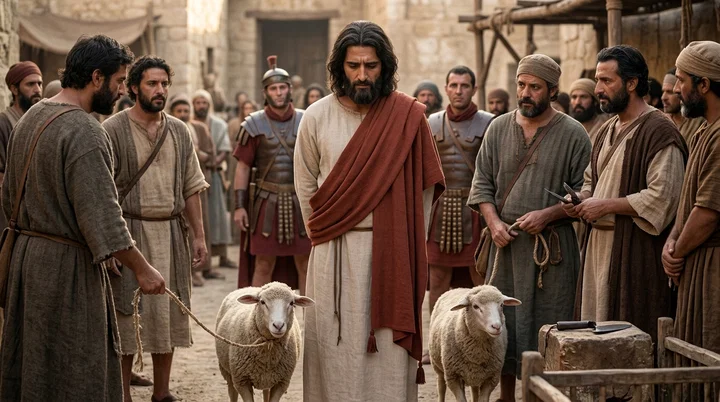
The place of the scripture which he read was this, He was led as a sheep to the slaughter; and like a lamb dumb before his shearer, so opened he not his mouth:
Translations
American King James Version, King James Version, KJV Cambridge Paragraph Bible
The place of the scripture which he read was this, He was led as a sheep to the slaughter; and like a lamb dumb before his shearer, so opened he not his mouth:
The place of the scripture which he read was this, He was led as a sheep to the slaughter; and like a lamb dumb before his shearer, so he opened not his mouth:
Now the place of the scripture which he was reading was this, He was led as a sheep to the slaughter; And as a lamb before his shearer is dumb, So he openeth not his mouth:
Now the passage of the scripture which he was reading was this,
He was led as a sheep to the slaughter;
And as a lamb before his shearer is dumb,
So he openeth not his mouth:And the contents of the Writing that he was reading was this: 'As a sheep unto slaughter he was led, and as a lamb before his shearer dumb, so he doth not open his mouth;
And the passage of the scripture which he read was this: He was led as a sheep to slaughter, and as a lamb is dumb in presence of him that shears him, thus he opens not his mouth.
Now, the passage of Scripture which he was reading, was, this:—As a sheep, unto slaughter, was he led, and, as a lamb, before him that sheareth it, is dumb, so, he openeth not his mouth.
Berean Standard Bible, Majority Standard Bible
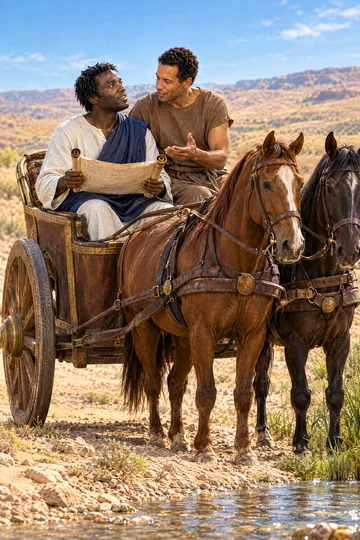
The eunuch was reading this passage of Scripture:
“ He was led like a sheep to the slaughter,
and as a lamb before the shearer is silent,
so He did not open His mouth.Now the passage of the Scripture which he was reading was this,
“ He was led as a sheep to the slaughter.
As a lamb before his shearer is silent,
so he doesn’ t open his mouth.Now the place in the book where he was reading was this: He was taken, like a sheep, to be put to death; and as a lamb is quiet when its wool is being cut, so he made no sound:
Nowe the place of the Scripture which he read, was this, Hee was lead as a sheepe to the slaughter: and like a lambe domme before his shearer, so opened he not his mouth.
Douay-Rheims (Challoner revision)
And the place of the scripture which he was reading was this: He was led as a sheep to the slaughter; and like a lamb without voice before his shearer, so openeth he not his mouth.
Pictures

Cross-references
- Isaiah 53:7
He was oppressed, and he was afflicted, yet he opened not his mouth: he is brought as a lamb to the slaughter, and as a sheep before her shearers is dumb, so he openeth not his mouth.
Describes the silent suffering servant as a lamb led to slaughter.
- Acts 8:36-38
And as they went on their way, they came unto a certain water: and the eunuch said, See, here is water; what doth hinder me to be baptized?
The eunuch confesses faith in Christ and is baptized.
- Acts 8:26-28
And the angel of the Lord spake unto Philip, saying, Arise, and go toward the south unto the way that goeth down from Jerusalem unto Gaza, which is desert.
Philip’s obedient journey brings him to the eunuch as he reads the prophecy.
- 1 Peter 2:23
Who, when he was reviled, reviled not again; when he suffered, he threatened not; but committed himself to him that judgeth righteously:
Both describe Christ suffering without retaliation when reviled.
- Isaiah 52:13-15
Behold, my servant shall deal prudently, he shall be exalted and extolled, and be very high.
The prophecy foretells Jesus and his work, including his suffering and exaltation.
- Isaiah 53:6
All we like sheep have gone astray; we have turned every one to his own way; and the LORD hath laid on him the iniquity of us all.
Christ’s suffering is described as bearing the iniquity of all.
- Isaiah 53:9
And he made his grave with the wicked, and with the rich in his death; because he had done no violence, neither was any deceit in his mouth.
The servant’s innocence and burial with the wicked are described.
- Luke 24:27
And beginning at Moses and all the prophets, he expounded unto them in all the scriptures the things concerning himself.
Jesus explains that the Scriptures foretold his sufferings and glory.
- Isaiah 53:8
He was taken from prison and from judgment: and who shall declare his generation? for he was cut off out of the land of the living: for the transgression of my people was he stricken.
The passage continues the quotation with his humiliation, judgment, and death.
- Isaiah 53:10-11
Yet it pleased the LORD to bruise him; he hath put him to grief: when thou shalt make his soul an offering for sin, he shall see his seed, he shall prolong his days, and the pleasure of the LORD shall prosper in his hand.
same chapter shows resurrection and joy in redeemed
- Isaiah 53:12
Therefore will I divide him a portion with the great, and he shall divide the spoil with the strong; because he hath poured out his soul unto death: and he was numbered with the transgressors; and he bare the sin of many, and made intercession for the transgressors.
He bears the sin of many and intercedes for transgressors.
- Acts 8:27
And he arose and went: and, behold, a man of Ethiopia, an eunuch of great authority under Candace queen of the Ethiopians, who had the charge of all her treasure, and had come to Jerusalem for to worship,
Identifies the Ethiopian eunuch to whom Philip preached.
- Revelation 5:9
And they sung a new song, saying, Thou art worthy to take the book, and to open the seals thereof: for thou wast slain, and hast redeemed us to God by thy blood out of every kindred, and tongue, and people, and nation;
Christ’s blood redeems people from every nation.
- John 1:35-51
Again the next day after John stood, and two of his disciples;
The call of the first disciples and Nathanael is an example of discipleship.
- John 12:33
This he said, signifying what death he should die.
The lamb led silently to slaughter foreshadows Jesus’ death by crucifixion.
- Acts 8:12
But when they believed Philip preaching the things concerning the kingdom of God, and the name of Jesus Christ, they were baptized, both men and women.
Samaritans and the eunuch believed the gospel and were baptized.
- 1 Peter 1:11
Searching what, or what manner of time the Spirit of Christ which was in them did signify, when it testified beforehand the sufferings of Christ, and the glory that should follow.
The Spirit of Christ testified beforehand through the prophets about Christ’s sufferings.
Commentary
Each commentary is drawn from primary sources: the writings of Ellen G. White and Adventist pioneers and periodicals. Each commentary is separate. Its own words are not a quotation; follow the references to read the source passages.
Ellen G. White
28 sources
The passage the traveler was reading was Isaiah's prophecy of Jesus as the Christ, the Son of God and crucified Saviour, who would submit quietly to suffering and death without resistance or protest.8T 57.5–58.4AA 107.2–108.1Ms 46, 1900, par. 10–13SPBC 163.6–7Ms 8, 1900, par. 4–8 He was reading it without grasping its meaning, yet seeking light and asking whether the prophet spoke of himself or of another man.Ms 15, 1909, par. 23–26Ms 46, 1900, par. 10–13SPBC 163.6–7 Philip was sent by heaven to join his chariot, sit beside him, and explain that same Scripture by preaching Jesus from it.8T 57.5–58.4AA 107.2–108.1Ms 15, 1909, par. 23–26Ms 46, 1900, par. 10–13Lt 100, 1909, par. 6–13 That teaching brought the traveler to believe with all his heart, confess his faith, be baptized in water, and go on his way rejoicing.Ms 15, 1909, par. 23–26Ms 46, 1900, par. 10–13Ms 126, 1902, par. 3–6 It shows that those who search Scripture without understanding need God-sent human guides, for God watches honest seekers and by angels and the Spirit brings workers to them to lead them into light.SPBC 163.6–7Ms 17, 1908, par. 14–17Ms 11, 1900, par. 9–12Lt 5, 1895, par. 9–11AA 109.1–2
Reading and Its Meaning
The portion of Scripture being read was Isaiah's prophecy, and it points to Jesus as the Christ, the Son of God, the crucified Saviour.8T 57.5–58.4AA 107.2–108.1Ms 126, 1902, par. 3–6Ms 17, 1908, par. 14–17Lt 100, 1909, par. 6–13 Philip began at that same Scripture and preached Jesus from it, showing how it is to be explained to one seeking to understand it.8T 57.5–58.4SPBC 163.6–7Ms 126, 1902, par. 3–6Ms 17, 1908, par. 14–17Lt 100, 1909, par. 6–13 Its picture of being led as a sheep to slaughter and staying silent as a lamb before its shearer means Jesus submitted to suffering and death without resisting or speaking in protest.AA 107.2–108.1Ms 46, 1900, par. 10–13ST Dec 5, 1878RH Apr 20, 1905RH Mar 2, 1911 Philip used this prophecy to set forth Jesus' mission to save sinners through such suffering.ST Dec 5, 1878RH Apr 20, 1905RH Mar 2, 1911
It presents Christ in His humiliation, suffering to save sinners.Ms 126, 1902, par. 3–6Ms 11, 1900, par. 9–12ST Dec 5, 1878 Even a reader of high rank is being drawn to this Saviour, and high position is no excuse for refusing Him.Ms 126, 1902, par. 3–6Ms 11, 1900, par. 9–12 The reader was an Ethiopian eunuch of great authority under Candace queen of the Ethiopians, who had charge of all her treasure.Ms 15, 1909, par. 23–26Ms 46, 1900, par. 10–13Lt 100, 1909, par. 6–13Ms 11, 1900, par. 9–12Ms 8, 1900, par. 4–8 He was returning in his chariot from worship at Jerusalem, journeying homeward on the desert road from Jerusalem toward Gaza.Ms 15, 1909, par. 23–26Ms 46, 1900, par. 10–13Ms 126, 1902, par. 3–6Ms 17, 1908, par. 14–17Lt 100, 1909, par. 6–13
He was reading without understanding its import, studying the Scriptures yet unable to comprehend them by reading alone.Ms 15, 1909, par. 23–26SPBC 163.6–7Ms 126, 1902, par. 3–6Lt 100, 1909, par. 6–13Ms 8, 1900, par. 4–8 He was at the same time seeking after light, an honest seeker longing for truth.Ms 126, 1902, par. 3–6Ms 17, 1908, par. 14–17Ms 8, 1900, par. 4–8 He asked whether the prophet spoke of himself or of some other man, needing someone to guide him into its meaning.Ms 46, 1900, par. 10–13Ms 126, 1902, par. 3–6Ms 17, 1908, par. 14–17Lt 100, 1909, par. 6–13Ms 11, 1900, par. 9–12
Preaching Christ and Believing
Philip was sent toward the south by the angel of the Lord and told by the Spirit to join himself to the chariot on the desert road from Jerusalem toward Gaza.Ms 15, 1909, par. 23–26Ms 46, 1900, par. 10–13Lt 100, 1909, par. 6–13Ms 8, 1900, par. 4–8Lt 5, 1895, par. 9–11 He found there an Ethiopian nobleman of great authority under Candace, queen of the Ethiopians, who had charge of her treasure and was journeying homeward from worship at Jerusalem while studying the Scriptures without understanding what he read.Ms 15, 1909, par. 23–26Ms 46, 1900, par. 10–13Lt 100, 1909, par. 6–13Ms 8, 1900, par. 4–8 Philip asked him whether he understood what he was reading, and being invited to guide him he climbed up into the chariot and sat beside him to open the Scriptures to his understanding.Ms 15, 1909, par. 23–26Lt 100, 1909, par. 6–13Ms 11, 1900, par. 9–12Ms 8, 1900, par. 4–8Lt 5, 1895, par. 9–11 Heavenly angels were watching the honest seeker for enlightenment while the Spirit directed the worker, since God sends light through angels to His people and through His people to the world rather than having heavenly messengers preach the gospel themselves.Ms 11, 1900, par. 9–12Ms 8, 1900, par. 4–8
When the eunuch asked whether the prophet spoke of himself or of some other man, Philip began at that same scripture of the sheep led to slaughter and the lamb silent before its shearer.AA 107.2–108.1Ms 46, 1900, par. 10–13Ms 126, 1902, par. 3–6Ms 17, 1908, par. 14–17Ms 8, 1900, par. 4–8 He explained it as speaking of Christ in His humiliation, the crucified One, Jesus Christ the Son of God and Saviour, and preached Jesus from it.8T 57.5–58.4Ms 46, 1900, par. 10–13Ms 126, 1902, par. 3–6Ms 17, 1908, par. 14–17Ms 11, 1900, par. 9–12 The opening of the Word delighted the eunuch with the truth and enlightened his heart and mind.8T 57.5–58.4Ms 15, 1909, par. 23–26SPBC 163.6–7 In this way a reader who could not understand its meaning by reading alone was shown its import by one with knowledge of God.SPBC 163.6–7Ms 126, 1902, par. 3–6Lt 5, 1895, par. 9–11
That teaching brought the eunuch to believe with all his heart that Jesus Christ is the Son of God.Ms 15, 1909, par. 23–26Ms 46, 1900, par. 10–13Ms 126, 1902, par. 3–6Ms 17, 1908, par. 14–17Lt 100, 1909, par. 6–13 At his request Philip required such wholehearted belief, heard his confession of faith, went down with him into water at a stream they came to, baptized him, and then was immediately caught away to another place.Ms 15, 1909, par. 23–26Ms 46, 1900, par. 10–13Ms 126, 1902, par. 3–6Lt 100, 1909, par. 6–13Ms 11, 1900, par. 9–12 The newly baptized believer went on his way rejoicing as a believer in the truths of God's Word, no longer dwelling on trials.Ms 15, 1909, par. 23–26Ms 126, 1902, par. 3–6Ms 17, 1908, par. 14–17Lt 100, 1909, par. 6–13Ms 11, 1900, par. 9–12 His prompt acceptance and acting on belief helped carry the gospel to Ethiopia, where many accepted Christ and left heathenism for Christianity.3SP 305.1 His conversion also helped convince the apostles and leaders in Jerusalem that God had granted the Gentiles repentance unto life.SLP 39.2
Pattern for Soul Winning
The Ethiopian was reading the appointed prophecy yet could not grasp its import without someone to guide him, which shows that people may search the Scriptures for truth while remaining unable to understand them alone.SPBC 163.6–7Lt 5, 1895, par. 9–11AA 109.1–28T 58.5 This need belongs especially to those who are starving for the word of the Lord and ignorant of the Scriptures.Ms 158, 1899, par. 8–11 Many all over the world are in this condition, reading without understanding and looking wistfully toward heaven with prayers and tears and inquiries from souls longing for light and grace and the Holy Spirit.RH Mar 2, 1911
Heavenly angels watch such honest seekers for enlightenment, and the Spirit directs the meeting so that those seeking light are brought into touch with appointed human workers who can explain the Word and guide them into full light.Ms 11, 1900, par. 9–12Ms 8, 1900, par. 4–8AA 109.1–2RH Mar 2, 1911 The angel sent to Philip could have done the work for the Ethiopian himself, but it is God's plan that men work for their fellow men, so He sends light through angels to His people and through His people to the world rather than having heavenly messengers preach the gospel themselves.Ms 11, 1900, par. 9–12Ms 8, 1900, par. 4–8RH Mar 2, 1911 The Holy Spirit guides and places willing men and women where they can communicate the light received, and wonderfully works through workers thus guided to bring a seeking soul to faith in Jesus as the Son of God, to baptism in water, and to going on the way rejoicing.Ms 17, 1908, par. 14–17Ms 8, 1900, par. 4–8ApRGC 26.1–4
Every soul is precious in the sight of God, and if there is but one soul to be saved that soul is more precious than all the combined wealth of this world.Ms 15, 1909, par. 23–26Ms 8, 1900, par. 4–8RH Mar 2, 1911 For this reason longing souls are to be sought everywhere without losing sight of neglected parts of the vineyard and out-of-the-way places, for when human hearts are susceptible to the influences of the Holy Spirit God can do a mighty work through His servants by bringing them into association with men and women who need help and encouragement.Ms 15, 1909, par. 23–26 God has His eye upon every soul today and will raise up workers to carry the message of truth to those who greatly need it, calling both white people and colored people to engage in His service and be laborers together with Him.Ms 17, 1909, par. 13–14 Through such conversion as the Ethiopian's the light of truth shines to the higher classes, for he was a man of good standing and wide influence who when converted would give the light to others and exert a strong influence in favor of the gospel.Ms 46, 1900, par. 10–13RH Mar 2, 19114MR 135.2–136.2
The experience presents the work to which the Lord calls His people, requiring missionaries like Philip who hear the voice of God and go where He sends them.Lt 5, 1895, par. 9–11RH Mar 2, 1911 Workers are to be on watch and ready to help every case that comes to their notice, doing true home missionary labor, so that doors are opened to enter new fields.Ms 46, 1900, par. 10–134MR 135.2–136.2 Truth still finds access to those who are interested and inquiring by meeting them, searching the Scriptures with them, and suggesting helpful questions, as when Philip was commanded to go where he would find the searching man, was invited into his chariot, and the man received light.Ms 52, 1900, par. 40–41 In every age the Lord thus leads His people to communicate with one another, bringing honest-hearted ones into connection with informed believers specially fitted to reach their individual needs, so that knowledge of the truth is given by the informed to the uninformed, and hearty encouragement and support are given to those preparing to serve in the byways and hedges.Ms 126, 1902, par. 7
The Ethiopian represents a large class in this seeking condition, described as half-converted, a seeker after truth, honest-hearted but uninformed, having some knowledge of prophecy but unable to understand it clearly.Ms 126, 1902, par. 7 His interest had come from hearing Christ's sermons to the people, and he was desiring light and searching the Scriptures for truth.Ms 52, 1900, par. 40–41 He was earnestly longing and praying for light from heaven, ready to receive the truth when brought into contact with a messenger who could explain it.RH Apr 20, 1905ST Mar 9, 1915 When Christ was revealed to him he received Him with gladness.ST Mar 9, 1915
At that moment the newly awakened mind seeking truth hangs in the balance, with heavenly angels cooperating with the human worker while evil angels wait to press in falsehoods, interpose obstacles, confuse the mind, and divert it from truth.Ms 11, 1900, par. 13 Therefore God's workers must be wholly consecrated and quick to understand their work.RH Mar 2, 1911Ms 11, 1900, par. 13 They are to take advantage of every circumstance to teach the grace of God and draw men to Christ without leaving the inquirer unfinished.Ms 11, 1900, par. 13 They will guide the footsteps aright as they let the Holy Spirit sanctify their tongues and refine and ennoble their hearts, while many stand on the verge of the kingdom waiting only to be gathered in.Ms 126, 1902, par. 3–6RH Mar 2, 1911
Sources
Pioneers and periodicals
78 sources
The passage describes the humiliation, suffering and death of Christ at his first advent, led to death without protest or self-defense like an animal taken to be killed.ST Sep 23, 1897ST Mar 5, 1902RH Sep 16, 1902ST Feb 7, 1878
His silence under reviling and affliction was meek forbearance, entrusting himself to God who judges righteously, and it stands as the perfect pattern for the meek who will inherit the earth.ST Jul 28, 1914ST Jul 9, 1874ST Jun 8, 1882ST Jun 8, 1882
It is Isaiah's prophecy of the suffering servant, exactly fulfilled in Jesus of Nazareth as the antitypical lamb who suffered for human sin to remit it.RH Feb 18, 1909RH Sep 1, 1874ST Sep 13, 1905ST Nov 7, 1900ST Jun 7, 1883
Beginning at that same scripture Philip preached Jesus to the seeking reader, who confessed with all his heart that Jesus Christ is the Son of God and was baptized by going down into the water as the outward sign of inward faith.ST Feb 14, 1884RH Dec 17, 1901ST Jun 14, 1905ST Apr 9, 1912ST Nov 14, 1906
The conversion marks the gospel going beyond the Jewish people to the nations in A.D. 34, when one shut out among the Jews was received and carried the light to others.RH Mar 2, 1911RH Dec 17, 1901RH Feb 18, 1902ST Jun 26, 1907RH Oct 15, 1872
Verse Wording and Setting
The passage read is Isaiah 53:7 given in the wording of the Septuagint, the Greek translation of the Old Testament commonly used by the people.ST Jan 3, 1905 There the sheep is led to slaughter and the lamb is silent before its shearer, transposing sheep and lamb from the Hebrew wording where the sheep is brought to the shearer and the lamb to slaughter.ST Jan 3, 1905 This fits because sheep are sheared while lambs were used for sacrifice.ST Jan 3, 1905 The word Scripture used in the singular without a qualifying word refers to the sacred Jewish Scriptures.ST Jul 10, 1893
The verse stands in Acts 8, which opens on the day Stephen was killed with a great persecution against the church at Jerusalem.ST Jun 7, 1883 The persecutors acted like wild beasts that gnashed on Stephen with their teeth, and Saul ravaged the church from house to house and dragged men and women to judgment and prison.ST Jun 7, 1883 The chapter falls in the period after Jesus' death when persecution following Stephen's martyrdom scattered the disciples.STST Sep 2, 1913RH Jan 20, 1916 Then the apostolic mission turned from Jerusalem toward other fields and the Gentiles, as the message spread beyond Jerusalem after the believers were scattered.ST Sep 2, 1913RH Jan 20, 1916
The reader was the Ethiopian eunuch, a man of Ethiopia of great authority under Candace queen of the Ethiopians with charge of all her treasure.RH Dec 17, 1901 He was returning from Jerusalem where he had come to worship the true God, and was reading the Hebrew Scriptures when met on the road.RH Dec 17, 1901 He was treasurer of Queen Candace, and the place of Scripture he was reading became the text from which Jesus was preached to him.ST Mar 30, 1882RH Mar 28, 1871 He was a proselyte to the Jewish religion who had worshiped at the temple at Jerusalem, the dwelling-place of God, which was a long step in advance of the superstition of his native Ethiopia, yet he felt himself only a learner.ST Jun 7, 1883
The Philip in the account was Philip the evangelist, one of the seven, not Philip the apostle, because all the apostles remained in Jerusalem while Philip preached Christ in Samaria.ST Jun 7, 1883 The verse stands in Acts 8, the chapter that contains the account of the baptism of the Ethiopian.ST Jun 2, 1898
Suffering Silence Meaning
The verse presents Jesus as the one led to death like a sheep to slaughter, remaining silent before those who killed him like a lamb before its shearer.ST Sep 23, 1897ST Mar 5, 1902ST Mar 11, 1897 He did not speak in protest or defend himself as he suffered, but submitted without speaking.ST Mar 5, 1902ST Mar 11, 1897ST Mar 5, 1902 The passage raises the question of whom the prophet meant, which led Philip to teach about Jesus' humiliation and death.ST Jan 17, 1878ST Mar 5, 1902ST May 27, 1880ST Feb 7, 1878 It describes Christ's humiliation, suffering, and death at his first advent, when he was oppressed and afflicted.RH Sep 16, 1902ST Feb 7, 1878ST Jun 7, 1883
The likening of him to a lamb led to slaughter has force because Christ was the antitypical lamb.ST Jun 7, 1883 His judgment was taken away when he was unjustly condemned, led to death without resisting or defending himself.ST Jan 10, 1878 His silence is part of the picture of his undeserved suffering and death, and the surrounding prophecy explains that he suffered for human sin.RH Sep 1, 1874ST Nov 7, 1900 His saving work remits sin.RH Sep 1, 1874
His meek silence during suffering meant that though reviled and put to death, he did not answer with insults or threats, but entrusted himself to God who judges righteously.ST Jul 28, 1914 His silence did not mean defeat, for God's purpose was advancing through the crucifixion.ST Jul 28, 1914 The verse shows Christ as the perfect pattern of meekness: mildness of temper, not easily provoked, given to forbearance under injuries.ST Jul 9, 1874ST Jun 8, 1882ST Jun 8, 1882ST Jul 9, 1874 He did no sin with no guile in his mouth, when reviled reviling not again, when suffering threatening not but committing himself to him that judges righteously, led as a sheep to slaughter and silent as a lamb before his shearer.ST Jul 9, 1874ST Jun 8, 1882ST Jul 9, 1874 A meek person is one who is like Christ in this forbearance, and to such belongs the promise that they shall inherit the earth in the future.ST Jun 8, 1882
Prophecy Fulfilled in Jesus
The place read is Isaiah's prophecy of the suffering servant, who submits quietly to suffering and death like a sheep led to slaughter and a lamb before its shearer, and it presents Christ's suffering and death as part of his mission to save fallen people.RH Feb 18, 1909ST Nov 14, 1906 Philip began from that same passage and preached Jesus directly from it, finding Christ there and identifying the prophecy with his first advent as the one led to death silently accepting suffering without speaking in protest.RH Sep 16, 1902ST Jul 20, 1882 His suffering and silence before those who harmed him were the exact fulfillment in Jesus of Nazareth of the prophecies about the Messiah and his work.ST Sep 13, 1905
The passage is centered on Christ, for beginning at Moses and the prophets Jesus expounded in all the Scriptures the things concerning himself, and Christ is the theme to be preached from every part of the Sacred Writings, including the words about the suffering servant who submitted silently to slaughter.RH Apr 9, 1914ST Apr 4, 1900 The Old Testament thus provided Scripture evidence about Christ and salvation through him, and the disciples preached Christ from those Old Testament Scriptures which were the Scriptures available to them and which remained useful for teaching after his resurrection.RH Oct 17, 1912ST Aug 6, 1894
Preaching Jesus and Baptism
Philip began at that same scripture the eunuch was reading and preached Jesus directly to him, using it as the starting point and opportunity for explaining the prophecy of the suffering servant who submits quietly to suffering and death like a sheep led to slaughter and a lamb before its shearer.ST Feb 14, 1884ST Nov 14, 1906RH Nov 28, 1912RH Aug 22, 1912 The reading he did not yet understand became the text through which the gospel was preached, and the official's response led to his conversion, his becoming a changed man, his baptism, and his carrying the gospel to his people, opening a new field for the gospel.RH Nov 28, 1912ST Jan 22, 1902ST Jul 29, 1913 Philip used the scripture to preach the glad tidings first announced to the shepherds and to give evidence that Jesus is the promised Messiah.RH Jun 29, 1911 The eunuch heard, received, and accepted Jesus as the promised Messiah, and on that faith he was baptized.RH Jun 29, 1911
Preaching Jesus from this scripture means setting forth his death, burial, and resurrection and the final joy as he sees those redeemed by his blood.ST Jun 7, 1883 It foretells in vivid manner his trial and death when he was oppressed and afflicted, and the likening of him to a lamb led to slaughter has force because he was the antitypical lamb.ST Jun 7, 1883 It points to baptism as being buried with him and planted in the likeness of his death, which sprinkling does not resemble.ST Jun 7, 1883 The account shows that the officer confessed faith in Christ and believed with all his heart that Jesus Christ is the Son of God before being baptized, and that Philip baptized him by going down both into the water with him.RH Dec 17, 1901ST Jun 14, 1905RH Jun 29, 1911 Hearing, believing, and accepting God's Word make one a candidate for baptism, and faith in Jesus Christ as the promised Messiah was the great testing truth.ST Apr 9, 1912RH Jun 29, 1911
Belief in that saving work that remits sin is an essential qualification for baptism, which serves as a sign or seal of faith in Christ.RH Sep 1, 1874RH Jun 29, 1911 Baptism is an outward sign to unbelievers of the inward work wrought on the heart by the Holy Spirit and evidence of a good conscience toward God through faith in Jesus, though it does not itself absolve from sin or prevent sin.RH Jun 29, 1911 Baptism began his Christian life, in which he was to learn Christ's ways.ST Apr 9, 1912 Philip began at that passage in the next chapter to preach Jesus, while Isaiah 52 contains nothing about baptism; the verse belongs to the chapter after Isaiah 52, not to Isaiah 52:15.RH Mar 28, 1871 The conversion and baptism give no indication that hands were laid on the eunuch to receive the Holy Ghost.ST Jan 1, 1885 In the same chapter Philip preached Christ and many believed and were baptized yet did not receive the Holy Ghost until Peter and John came and laid their hands on them, when the Holy Ghost came upon them; the laying on of hands there was the occasion for bestowing the Holy Spirit in that instance, but it is not a general ordinance commanded for all believers and not a condition of salvation or of receiving the Spirit, since the Spirit is also given powerfully without that ceremony. The account belongs to Philip's preaching of the gospel in Acts 8:5-40, and shows that deacons whose duties are largely temporal as assistants of the elders and servants of the church may still preach the gospel when the Lord leads them and opens the way.CO 34.2
Gospel to Gentiles History
The chapter belongs to the year A.D. 34, when the gospel first went beyond the Jewish people to the nations, marking the end of Israel's probation as a nation and the beginning of its further ingathering from the Gentiles.RH Feb 18, 1902 It stands in the final part of Daniel's seventieth week, when the gospel was carried beyond the Jewish people and believers began preaching among the Gentiles.ST Jun 26, 1907 Those events close the 490 years cut off from the 2,300 years, when the Jewish nation was cut off as God's special people and the gospel was given to the Gentiles.ST Nov 28, 1895
The episode is an example of a eunuch being admitted to privileges that had been denied to him among the Jews, fulfilling Isaiah's foretelling of the inclusion of eunuchs and Gentiles in the gospel dispensation.RH Oct 15, 1872 It shows that strangers in far countries, even the colored people in Ethiopia, heard of the true God and His temple, came to worship, accepted the gospel, and were accepted by the Lord.RH Dec 17, 1901 His reading proves Abyssinia had already accepted the Hebrew Scriptures, and his response to Philip brought the Christian faith to Abyssinia. From that conversion Abyssinian Christians have held the faith first received more firmly than any other nation, seeing no reason to drop Old Testament rites and continuing to observe both Old and New Testament rites.
Acts 8:26-40 records the conversion of the Ethiopian eunuch and gives the beginning of the Ethiopian Abyssinian Christian people.ST Oct 1, 1896 From that origin a whole people continued through the first four centuries and for eighteen centuries after, whose religious life was molded by the apostasy affecting the whole church, with Sunday creeping in as a festival sister day to the Sabbath while observance of the Sabbath continued as a living testimony to its perpetuity in the Christian church.ST Oct 1, 1896 This contact between Ethiopia and the gospel came about eleven hundred years after the traditional reign of Menilek, son of the queen of Sheba.RH May 6, 1909 The eunuch was reading the Old Testament and therefore knew the commandments of God, and since he was being fitted to preach the gospel in Ethiopia and teach the Ethiopians their duty toward God, Philip necessarily would have informed him if the first day had been sanctified to take the place of the seventh, having no reason to fear prejudice on that point, yet Philip said nothing to him on the subject, which proves no such sanctification had taken place.ST Jun 1, 1882 The instruction of the Ethiopian eunuch joined with the instruction of the Samaritans in the same chapter gives no hint of a new Sabbath, though they needed it if it had yet been made.RH Nov 21, 1871
Seeking Truth and Witness
Though devout and returning from worship at Jerusalem, the reader was studying Scripture without yet grasping its meaning and desired light, and his diligent searching while it conveyed no meaning to his mind, joined with willingness to do God's will, brought the sure promise that he would know the doctrine.ST Feb 14, 1884RH Sep 27, 1870ST Jun 7, 1883 He was a proselyte who had worshiped at the temple, the dwelling-place of God, which was a long step beyond the superstition of his native land, yet he still felt himself only a learner.ST Jun 7, 1883 Philip was sent to explain the passage by preaching Jesus to him, and instruction about baptism belonged to that preaching, so that the eunuch received the light and became a Christian.ST Feb 14, 1884RH Sep 27, 1870
He stands as the example of a reader unable to grasp a passage's meaning without help, needing a friend to guide him into understanding.RH Apr 4, 1912ST Mar 27, 1907 Like the tailor who had often read Scripture without understanding it, he was glad when someone came to teach him and bring him light.RH Apr 4, 1912 If he had not been reading the Bible on his journey, Philip would probably not have been sent to him.ST Jun 7, 1883
His example teaches the commanded duty to take the Bible on a journey and read by the way, and gives encouragement to read even portions beyond comprehension, because attentive study opens the way for great light, with the Spirit ever ready to enlighten when no evangelist is sent.ST Jun 7, 1883 The account shows a heart fully prepared before the gospel seed-sower was sent, the sower sent to sow to one already made ready.ST Oct 23, 1901RH Apr 20, 1905 This proves God prepares the soil of the heart in advance, and the human sower does not need to remain with the ground afterward to do God's part in causing growth.ST Oct 23, 1901 He was ready to receive the truth and was brought into contact with a messenger who could explain it.RH Apr 20, 1905
He was earnestly seeking truth, longing and praying for light from heaven, and when Christ was revealed to him he received Him with gladness.ST Mar 9, 1915 The meeting shows the care of the Lord for those seeking truth, for every soul is precious in God's sight.RH Mar 2, 1911 He was a man of good standing and wide influence who, when converted, would give the light to others and exert a strong influence in favor of the gospel, and by His Spirit God brought him into touch with one who could guide him into the light.RH Mar 2, 1911
Angels are sent to bring those seeking light into touch with those who can help them, and today as then angels wait to lead men to their fellow men and will guide the footsteps of workers who let the Holy Spirit sanctify their tongues and refine their hearts.RH Mar 2, 1911 There are many all over the world reading the Scriptures without understanding their import, looking wistfully to heaven with prayers and tears and inquiries from souls longing for light and grace and the Holy Spirit, many on the verge of the kingdom waiting only to be gathered in.RH Mar 2, 1911 The experience presents the work to which the Lord calls His people, with the Ethiopian representing a large class who need missionaries like Philip who hear the voice of God and go where He sends them.RH Mar 2, 1911
The eunuch desired enlightenment and God answered by sending Philip on a journey of many miles to instruct him face to face.RH May 4, 1911 Light is communicated by personal contact through human agents, for God chooses men with like passions and similar experiences rather than working by the Holy Spirit alone or by angels.RH May 4, 1911 Although an angel could have instructed him, the Lord sent Philip to explain the message, for it is God's plan that men work for their fellow men.RH Mar 2, 1911RH May 4, 1911ST Aug 25, 1898 His conversion came through the Holy Spirit working through Scripture and Philip's explanation, without a dramatic sign, showing the Spirit can draw a person to Christ through reading the Bible or hearing it explained by a preacher.RH Dec 30, 1915
The encounter shows that God sends help to a single person seeking righteousness as readily as to a crowd, and that Jesus would give His life for one person as freely as for the whole world, so that no one however isolated lacks Jesus' sympathy and care.ST Mar 5, 1902 Preaching to one person is just as important as preaching to a large congregation, for if only one is converted out of a large congregation no more is accomplished than by preaching to that one alone.ST Jun 7, 1883 Philip was full of the Holy Ghost and wisdom and able to preach to a city congregation, yet he was sent into the wilderness to preach to one man, and he went without hesitation though he did not know he would find even one man there.ST Jun 7, 1883
The result was great, for the eunuch went on his way rejoicing in the new light he had received and must have preached the word to those he met like the other disciples, so that through him his countrymen heard the truth, which accomplished as much as a mission to his nation and shows personal pride in a large mission is misplaced.ST Jun 7, 1883 The account of the treasurer stands as one of the New Testament's best examples of work done for individuals, showing that labor for single souls is the best work, with hand-picked fruit better gathered than fruit shaken from the tree in mass.ST Jan 22, 1902ST Mar 30, 1882 It gives the pattern for members quickened by the Holy Spirit to make an assault of love upon unconverted friends to win them to Christ.ST Mar 30, 1882 Philip being sent from the crowds in Samaria to the desert road to preach Jesus shows that one soul is worth seeking and saving, and the official's conversion opened a new field for the gospel and stands as an example of the results of personal gospel work.ST Jan 22, 1902ST Jul 8, 1886RH Jun 20, 1912
He heard the passage, became a changed man, was baptized into the faith, and carried the gospel to his people, his search for understanding leading him to personal salvation.ST Jul 29, 1913RH Apr 8, 1909 The account in Acts 8:26-39 shows winning others to Christ by a winsome life in which lips and lives express the holy gospel, Christ indwelling the heart shown forth in love to others, and works and virtues shining to prove the doctrine divine, so that preaching is done as one walks and Christ is mirrored in character, disposition, conduct and temper.ST Apr 2, 1896 The Spirit telling Philip to go south toward the desert proves that God Himself directs individual workers and that this personal leading does not destroy individuality.RH May 30, 1907
No man or group of men has the right to order a worker to go here or there without his consent, nor to cut him off from Christ for not following a decision of men unless it is sanctioned by the Spirit of God, and those truly instructed by God are always in harmony with the body of the church, for God lives to direct His people now as willingly as in the past.RH May 30, 1907 Philip obeyed the call of the Spirit to go to a place outside limits fixed by men, and that obedience shows workers must be left free to work where God calls them, for to oblige him to refuse the Spirit in order to stay inside his legitimate assigned territory would curtail the freedom of the Spirit as far as man could hinder its work.ST Sep 11, 1907 The calling of Philip to instruct him proves the disciples after Pentecost were led by superhuman power, with an all-seeing eye and master hand at the helm of the gospel ship and the Lord Himself directing and supervising the work.ST Jun 26, 1901
To be led as a sheep to the slaughter means going to martyrdom and death with incredible meekness and patience, without resistance or renunciation of faith.ST Oct 18, 1883RH Nov 10, 1859 It is like being shut up together in one house as in a sheep-fold and brought out one by one to kneel and have the throat cut with a knife, taken by an executioner just as a butcher takes sheep to kill, the old meeting death with cheerfulness even while witnessing the killing of those before them.ST Oct 18, 1883 The phrase is echoed in martyrs being dealt out to executioners like sheep to the slaughter.RH Nov 10, 1859
Sources