Acts 8:33
In his humiliation his judgment was taken away: and who shall declare his generation? for his life is taken from the earth.
Translations
American King James Version, King James Version, Webster Bible
In his humiliation his judgment was taken away: and who shall declare his generation? for his life is taken from the earth.
in his humiliation his judgment was taken away: and who shall declare his generation? for his life is taken from the earth.
Revised Version, American Standard Version
In his humiliation his judgment was taken away: His generation who shall declare? For his life is taken from the earth.
in his humiliation his judgment was taken away, and his generation — who shall declare? because taken from the earth is his life.'
In his humiliation his judgment has been taken away, and who shall declare his generation? for his life is taken from the earth.
In his humiliation, his judgment was taken away,—his generation, who shall describe? because, his life, is taken away from the earth.
Berean Standard Bible, Majority Standard Bible
In His humiliation He was deprived of justice.
Who can recount His descendants?
For His life was removed from the earth.”In his humiliation, his judgment was taken away.
Who will declare His generation?
For his life is taken from the earth.”Being of low degree, his cause was not given a hearing: who has knowledge of his family? for his life is cut off from the earth.
In his humilitie his iudgement hath bene exalted: but who shall declare his generation? for his life is taken from the earth.
Douay-Rheims (Challoner revision)
In humility his judgment was taken away. His generation who shall declare, for his life shall be taken from the earth?
Pictures
Cross-references 20 of 21
- Isaiah 53:7-8
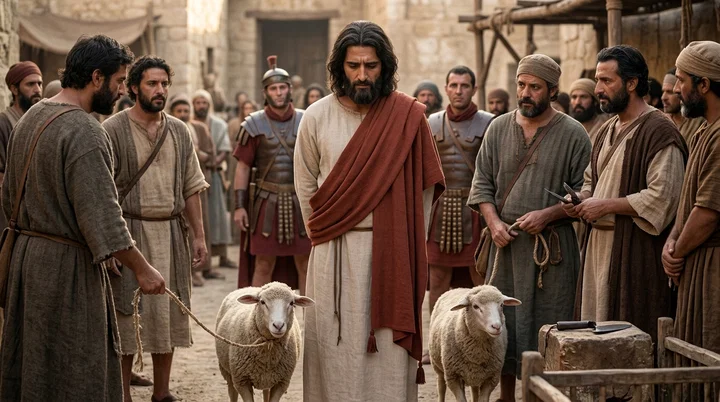
He was oppressed, and he was afflicted, yet he opened not his mouth: he is brought as a lamb to the slaughter, and as a sheep before her shearers is dumb, so he openeth not his mouth.
The prophecy describes Jesus’ humiliation, suffering, and death.
- Isaiah 53:7
He was oppressed, and he was afflicted, yet he opened not his mouth: he is brought as a lamb to the slaughter, and as a sheep before her shearers is dumb, so he openeth not his mouth.
The eunuch was reading this prophecy when Philip explained it as referring to Jesus.
- Daniel 9:26
And after threescore and two weeks shall Messiah be cut off, but not for himself: and the people of the prince that shall come shall destroy the city and the sanctuary; and the end thereof shall be with a flood, and unto the end of the war desolations are determined.
Messiah is cut off in the prophecy’s final week.
- Isaiah 53:10
Yet it pleased the LORD to bruise him; he hath put him to grief: when thou shalt make his soul an offering for sin, he shall see his seed, he shall prolong his days, and the pleasure of the LORD shall prosper in his hand.
same offering for sin by bruising
- Isaiah 52:14
As many were astonied at thee; his visage was so marred more than any man, and his form more than the sons of men:
Both describe the suffering Servant’s marred appearance and humiliation.
- Isaiah 53:9
And he made his grave with the wicked, and with the rich in his death; because he had done no violence, neither was any deceit in his mouth.
The sinless servant suffers and is buried.
- Acts 8:26
And the angel of the Lord spake unto Philip, saying, Arise, and go toward the south unto the way that goeth down from Jerusalem unto Gaza, which is desert.
An angel directs Philip toward the road where he meets the eunuch.
- Romans 6:4
Therefore we are buried with him by baptism into death: that like as Christ was raised up from the dead by the glory of the Father, even so we also should walk in newness of life.
Baptism is burial with Christ, linking believers to his death and resurrection.
- Acts 8:37
And Philip said, If thou believest with all thine heart, thou mayest. And he answered and said, I believe that Jesus Christ is the Son of God.
The eunuch confesses faith in Jesus after hearing Philip’s teaching.
- Isaiah 53:5
But he was wounded for our transgressions, he was bruised for our iniquities: the chastisement of our peace was upon him; and with his stripes we are healed.
His wounds and suffering are for human transgressions and iniquities.
- Isaiah 53:3
He is despised and rejected of men; a man of sorrows, and acquainted with grief: and we hid as it were our faces from him; he was despised, and we esteemed him not.
same despised Man of Sorrows
- Isaiah 53:2
For he shall grow up before him as a tender plant, and as a root out of a dry ground: he hath no form nor comeliness; and when we shall see him, there is no beauty that we should desire him.
same suffering Messiah portrait
- Isaiah 53:12
Therefore will I divide him a portion with the great, and he shall divide the spoil with the strong; because he hath poured out his soul unto death: and he was numbered with the transgressors; and he bare the sin of many, and made intercession for the transgressors.
He bore many people's sin and interceded for transgressors.
- Romans 4:25
Who was delivered for our offences, and was raised again for our justification.
Christ’s resurrection is connected with justification.
- Luke 24:25-27
Then he said unto them, O fools, and slow of heart to believe all that the prophets have spoken:
Jesus explains how the Scriptures foretold his suffering and glory.
- Acts 26:23
That Christ should suffer, and that he should be the first that should rise from the dead, and should shew light unto the people, and to the Gentiles.
Christ’s suffering fulfills what Moses and the prophets said would come.
- 1 Corinthians 15:3-4
For I delivered unto you first of all that which I also received, how that Christ died for our sins according to the scriptures;
Philip’s teaching included Christ’s death for sins, burial, and resurrection.
- John 12:31-33
Now is the judgment of this world: now shall the prince of this world be cast out.
Christ’s death is linked to the judgment passed against him.
- Acts 8:27
And he arose and went: and, behold, a man of Ethiopia, an eunuch of great authority under Candace queen of the Ethiopians, who had the charge of all her treasure, and had come to Jerusalem for to worship,
The Ethiopian eunuch traveled to Jerusalem to worship.
- Mark 12:8
And they took him, and killed him, and cast him out of the vineyard.
The son is killed and cast out, portraying Christ’s rejection and death.
Commentary
Each commentary is drawn from primary sources: the writings of Ellen G. White and Adventist pioneers and periodicals. Each commentary is separate. Its own words are not a quotation; follow the references to read the source passages.
Ellen G. White
18 sources
It is Isaiah's prophecy of Jesus, the crucified Saviour and Son of God, who in humiliation was led silent as a sheep to the slaughter, was denied justice, and had His life taken from the earth in suffering and death for His saving mission.AA 107.2–108.1Ms 17, 1908, par. 14–17Ms 126, 1902, par. 3–6
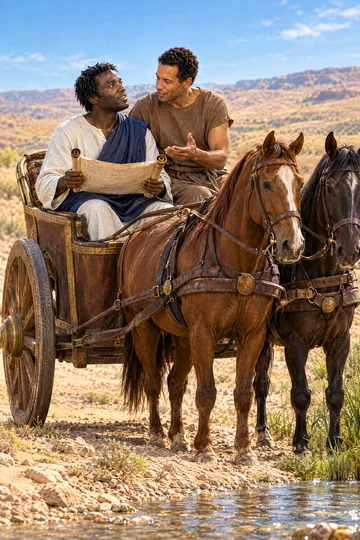
The Ethiopian eunuch, a man of great authority under Candace with charge of all her treasure, was reading it in his chariot on the desert way from Jerusalem to Gaza, searching as one desiring light yet unable by reading alone to understand of whom the prophet spoke.Ms 46, 1900, par. 10–13Ms 15, 1909, par. 23–26SPBC 163.6–7Lt 100, 1909, par. 6–13Ms 126, 1902, par. 3–6
Directed by the angel of the Lord and the Spirit, Philip ran to him, sat with him, and beginning at that same scripture opened it to his understanding and preached Jesus from it.8T 57.5–58.4AA 107.2–108.1Ms 46, 1900, par. 10–13
The man of high position did not resist the drawing to the Saviour nor make it an excuse, but was brought into the full light with enlightened heart, believed wholeheartedly and confessed that Jesus Christ is the Son of God, and when they came to water was baptized and went on his way rejoicing.Ms 46, 1900, par. 10–13Ms 15, 1909, par. 23–26Lt 100, 1909, par. 6–13
So readers may need one who knows God to sit with them and guide them into the meaning, for heaven watches earnest seekers and sends appointed teachers to join them, yet angels do not preach alone but work through consecrated people who must meet inquirers where they are without delay while the newly awakened mind hangs in the balance.Ms 15, 1909, par. 23–26SPBC 163.6–7Ms 11, 1900, par. 9–12Lt 5, 1895, par. 9–11Ms 11, 1900, par. 13
Setting and Prophetic Meaning
The passage was the prophecy of Isaiah that the Ethiopian eunuch was reading aloud in his chariot while returning homeward on the desert way from Jerusalem to Gaza after coming to Jerusalem to worship.Ms 46, 1900, par. 10–13Lt 100, 1909, par. 6–13Ms 17, 1908, par. 14–17Ms 11, 1900, par. 9–12Lt 5, 1895, par. 9–11 He was a man of great authority under Candace queen of the Ethiopians, with charge of all her treasure.Ms 46, 1900, par. 10–13Ms 15, 1909, par. 23–26Lt 100, 1909, par. 6–13Ms 17, 1908, par. 14–17Ms 11, 1900, par. 9–12 He was journeying homeward from Jerusalem when met, and was found sitting in his chariot engaged with this scripture.Ms 15, 1909, par. 23–26Lt 100, 1909, par. 6–13Ms 17, 1908, par. 14–17Ms 126, 1902, par. 3–6Ms 8, 1900, par. 4–8
It speaks not of Isaiah himself or of some other man but of Jesus, the crucified Saviour and Son of God.AA 107.2–108.1Ms 126, 1902, par. 3–6Ms 11, 1900, par. 9–12Ms 8, 1900, par. 4–8RH Mar 2, 1911 It is the prophecy of Isaiah 53:7, that in His humiliation He was led as a sheep to the slaughter and was silent as a lamb before his shearer.Ms 17, 1908, par. 14–17Ms 126, 1902, par. 3–6Ms 11, 1900, par. 9–12Ms 8, 1900, par. 4–8 In that humiliation He was denied justice, with His judgment taken away, and His life was taken from the earth in suffering and death for His saving mission, and it asks who shall declare His generation.AA 107.2–108.1Ms 17, 1908, par. 14–17Ms 8, 1900, par. 4–8RH Mar 2, 1911RH Apr 20, 1905
He was searching the Scriptures as one desiring light, half-converted with some knowledge of God's Word, whose interest had begun by hearing Christ's sermons to the people.Ms 15, 1909, par. 23–26Ms 8, 1900, par. 4–8Lt 5, 1895, par. 9–11 Yet he could not comprehend or understand the passage by reading alone without one to guide him.SPBC 163.6–7Lt 100, 1909, par. 6–13Ms 126, 1902, par. 3–6Ms 8, 1900, par. 4–8Lt 5, 1895, par. 9–11 Therefore he asked of whom the prophet spoke, whether of himself or of some other man.Ms 46, 1900, par. 10–13Ms 17, 1908, par. 14–17Ms 126, 1902, par. 3–6Lt 5, 1895, par. 9–11RH Apr 20, 1905
Preaching Jesus and Believing
Directed by the angel of the Lord and the Spirit to go to the place where the eunuch would be found, Philip ran to the chariot, heard the reading, was invited up and sat with him.Lt 100, 1909, par. 6–13Ms 17, 1908, par. 14–17Ms 11, 1900, par. 9–12 Beginning at that same scripture he opened it to his understanding and preached Jesus from it.8T 57.5–58.4AA 107.2–108.1Ms 46, 1900, par. 10–13Ms 15, 1909, par. 23–26SPBC 163.6–7 That opening showed the passage points to Jesus and delighted the reader with the truth.8T 57.5–58.4Ms 15, 1909, par. 23–26SPBC 163.6–7 The work was done from the very text the eunuch could not understand without guidance, making it instruction in evangelistic work and the highest education to receive and practice.Lt 100, 1909, par. 6–13Ms 126, 1902, par. 3–6
The man of great authority under Candace, with charge of all her treasure, was being drawn to the Saviour and did not resist the drawing.Ms 46, 1900, par. 10–13Ms 17, 1908, par. 14–17Ms 11, 1900, par. 9–12 He did not make his high position an excuse for refusing the crucified One, the Saviour, the Son of God.Ms 11, 1900, par. 9–12 With enlightened heart and mind he was delighted with the truth and brought into the full light of the gospel.Ms 46, 1900, par. 10–13Ms 15, 1909, par. 23–26 That enlightenment led to wholehearted belief and confession with all the heart that Jesus Christ is the Son of God.Ms 46, 1900, par. 10–13Ms 15, 1909, par. 23–26Lt 100, 1909, par. 6–13Ms 17, 1908, par. 14–17Ms 126, 1902, par. 3–6 The prophecy thus brings a seeker after light to faith, showing how wonderfully the Lord works through His servants to convert sinners.Ms 17, 1908, par. 14–17Ms 126, 1902, par. 3–6
On that belief, when they came to a stream of water he asked for baptism.Ms 46, 1900, par. 10–13Ms 15, 1909, par. 23–26Lt 100, 1909, par. 6–13 He was baptized by Philip by going down into the water upon confession of wholehearted belief.Ms 46, 1900, par. 10–13Ms 15, 1909, par. 23–26Ms 17, 1908, par. 14–17Ms 126, 1902, par. 3–6Ms 11, 1900, par. 9–12 Then he went on his way rejoicing as a believer in the truths of God's Word after conversion.Ms 46, 1900, par. 10–13Ms 15, 1909, par. 23–26Lt 100, 1909, par. 6–13Ms 17, 1908, par. 14–17Ms 126, 1902, par. 3–6 Through such a convert the light of truth shines to the higher classes, showing how precious even one soul in neglected parts of the vineyard is.Ms 46, 1900, par. 10–13Ms 15, 1909, par. 23–26
Pattern for Gospel Workers
The Ethiopian's reading shows that a person may read Scripture without grasping its import and needs one who knows God and the truth to explain it, so that knowledge passes from the informed to the uninformed and honest-hearted seekers in every age are brought into contact with those who can best meet their individual needs.Ms 15, 1909, par. 23–26SPBC 163.6–7Ms 126, 1902, par. 3–6Lt 5, 1895, par. 9–118T 58.5 The passage cannot be understood by reading alone, but requires a guide to sit with the reader in the chariot of his own journey and open it to his understanding until heart and mind are enlightened and delighted with the truth.Ms 15, 1909, par. 23–26Ms 126, 1902, par. 3–6Lt 5, 1895, par. 9–11 Beginning at that same scripture to preach Jesus is the appointed way to lead such a reader into full light, wholehearted belief and confession that Jesus Christ is the Son of God, followed by baptism by going down into water and going on the way rejoicing.Ms 15, 1909, par. 23–26Ms 126, 1902, par. 3–6RH Apr 20, 1905
God looks down upon earnest seekers trying to understand the message of salvation, and heavenly angels watch those seeking enlightenment and lead human workers to them while the Spirit directs appointed teachers to join them.Ms 11, 1900, par. 9–12Ms 8, 1900, par. 4–8Lt 5, 1895, par. 9–11Ms 17, 1909, par. 13–14 Angels take notice of honest seekers for light, and the Lord knows each case and commands His servant to go where the seeker will be found and meet him where he is to search the Scriptures with him.Ms 8, 1900, par. 4–8Ms 52, 1900, par. 40–41Ms 17, 1909, par. 13–14 Yet angels do not do the work alone and do not preach the gospel themselves, but work through people who must connect with fellow men as God's instrumentality to communicate the light received and win souls to Christ.Ms 11, 1900, par. 9–12Ms 8, 1900, par. 4–8
Workers are therefore to be on watch and ready to help every case that comes to notice, receiving this as instruction in evangelistic work and the highest education and practicing it by meeting interested and inquiring people where they are and searching the Scriptures with them.Ms 46, 1900, par. 10–13Lt 100, 1909, par. 6–13Ms 52, 1900, par. 40–41 They are to value even one soul in neglected parts of the vineyard and in needy fields in the byways and hedges where only a few have never heard the last message, giving encouragement and support and going without hesitation where sent like Philip who ran when directed by the angel and the Spirit.Ms 15, 1909, par. 23–26Lt 100, 1909, par. 6–13Lt 5, 1895, par. 9–11 Through such a convert the light of truth shines to the higher classes, for the man of high position did not make his position an excuse against the crucified One, and God will surely raise up workers today, both white people and colored people, to labor together with Himself in carrying truth to those who greatly need it.Ms 46, 1900, par. 10–13Ms 11, 1900, par. 9–12Ms 17, 1909, par. 13–14
The work must be done without delay by wholly consecrated workers who are quick to understand their work and as wise stewards take advantage of every circumstance to teach the grace of God and draw men to Christ.Ms 11, 1900, par. 13 The inquiring mind seeking to understand the Word is at a decisive moment when heavenly agencies and evil agencies are both at work, with Satan interposing obstacles to confuse the mind and evil angels waiting for opportunity to press in falsehoods and divert the newly awakened mind from seeking after truth.Ms 11, 1900, par. 13 The case hangs in the balance, and had the teacher left the seeker then he might never have accepted the Saviour.Ms 11, 1900, par. 13
Sources
Pioneers and periodicals
53 sources
In his humiliation justice was denied him when wicked men unjustly condemned him to death, his life was cut off from the earth with no spark of life remaining, and no one could adequately declare his fate.ST Sep 23, 1897ST Mar 5, 1902ST Jan 17, 1878ST Sep 23, 1897 It is Isaiah's prophecy of Christ as the Man of Sorrow led silent as a lamb to the slaughter to save fallen humanity, the Lamb of God laying his soul as an offering for sin to take away sin.RH Apr 20, 1905RH Feb 18, 1909RH Sep 1, 1874ST Sep 13, 1905RH Nov 11, 1862 The question whether the prophet spoke of himself or of some other opened the way for Philip to begin from that same scripture and explain it as Jesus Christ in his death, burial and resurrection, leading to belief with all the heart that Jesus Christ is the Son of God and the promised Messiah.RH Feb 18, 1909ST Jan 17, 1878ST Jun 7, 1883 Philip joined baptism to his explanation of Jesus so duty was learned, and the request for water baptism was a burial with Christ planted in the likeness of his death, showing that whole-hearted belief, repentance and acceptance of Christ's righteousness must come first while water itself does not remove sin.ST Feb 14, 1884ST Jan 17, 1878ST Apr 9, 1912RH Sep 1, 1874ST Jun 7, 1883 God sends Spirit-led human help to honest seekers diligently studying Scripture they cannot understand alone, even sending workers away from crowds into lonely places to one person, because work done for individuals one by one bears great fruit for nations.ST Feb 14, 1884ST Jun 7, 1883ST Sep 11, 1907ST Mar 5, 1902ST Mar 27, 1907
Setting and Wording
The passage belongs to what the Ethiopian official was reading in his chariot on the desert way going down from Jerusalem to Gaza, in the uncultivated region southwest of Jerusalem in the early summer of A.D. 37 after the dispersion of the Christians. The reader was a man of great authority under Candace queen of the Ethiopians, in charge of all her treasure, the treasurer of Queen Candace of Abyssinia, who had come to Jerusalem to worship and was returning reading Esaias the prophet.RH Dec 17, 1901 His possession and reading of the Hebrew Scriptures shows the Abyssinians had accepted them.
He was well informed and highly cultured, a proselyte to the Jewish religion who had worshiped at the temple in Jerusalem, a long step beyond the superstition of his native country, yet still only a learner.ST Feb 14, 1884ST Jun 7, 1883 The word desert on that road from Jerusalem to Gaza can mean an uninhabited region rather than an arid wasteland, with hills, valleys, springs, and pools that could provide ample water for immersion.ST May 20, 1880 The verse is read together with verse 32 as Isaiah 53, the next chapter after Isaiah 52.RH Mar 28, 1871
Isaiah 52:15 was not the text and contains nothing about baptism.RH Mar 28, 1871 The wording follows the Septuagint, where the terms for sheep and lamb are transposed from their order in the Hebrew text, describing the suffering servant as silent before those leading him to slaughter.
Meaning of Suffering Words
In his humiliation just judgment was wrested from him and justice was denied him when the wicked unjustly condemned him to death.ST Sep 23, 1897ST Mar 5, 1902ST Jan 17, 1878ST Mar 5, 1902ST Jan 10, 1878 That denial of justice belongs to his humiliation, trial and death as the suffering servant and Messiah humbled and condemned without justice.RH Mar 2, 1911ST Mar 5, 1902ST Jan 17, 1878ST Mar 5, 1902ST Jan 10, 1878 His life taken from the earth means he was put to death and his life was cut off from the earth.RH Mar 2, 1911ST Mar 5, 1902ST Jan 17, 1878RH Jun 1, 1916ST Nov 7, 1900 He truly gave up his life, with no spark of life remaining.RH Mar 2, 1911ST Jan 17, 1878
Who shall declare his generation means no one could adequately declare it and no one could speak for his generation.ST Dec 5, 1878ST Sep 23, 1897ST Sep 23, 1897RH Jun 1, 1916 His fate was left unspoken.ST Sep 23, 1897ST Sep 23, 1897 The question points to his unique, incomparable character, who suffered for human sin despite doing no violence and having no deceit.ST Nov 7, 1900 It exposed the reader's need for guidance to understand whom Isaiah's prophecy concerns.ST Mar 5, 1902
The verse presents the Prince Messiah, the long-expected One, as a Man of Sorrow.RH Nov 11, 1862 In his deep humiliation he was led to death as a lamb to the slaughter and as a sheep silent before shearers.RH Nov 11, 1862 He was despised and rejected, without form or comeliness, with visage marked by grief and with faces hidden from him.RH Nov 11, 1862
Prophecy of the Messiah
The passage is part of Isaiah's prophecy about Christ, which Philip explained to the Ethiopian and from which he preached Jesus.RH Apr 20, 1905RH Feb 18, 1909ST Sep 13, 1905ST Feb 7, 1878 It concerns his humiliation, suffering and death to save fallen humanity, declaring that in his humiliation justice was denied him and his life was taken from the earth.RH Apr 20, 1905RH Feb 18, 1909ST Sep 13, 1905ST Feb 7, 1878 That preaching led the reader to accept Jesus as Saviour, to be baptized, and to go on his way rejoicing.RH Feb 18, 1909ST Sep 13, 1905 Philip found Christ in Isaiah 53, for the types and prophecies of the Old Testament point to him, and the Scriptures that center on Christ foretold his humiliation and death.ST Jul 20, 1882ST Apr 4, 1900
The prophecies about Jesus of Nazareth and his work were fulfilled exactly, evidencing that he was the Messiah.ST Sep 13, 1905 The prophecy identifies him as the Lamb of God whose suffering and death take away sin, an atonement for the sins of others.RH Sep 1, 1874RH Nov 11, 1862 His soul was laid on the altar as an offering for sin while the Lord bruised and chastened him, the Prince Messiah and long-expected One seen as a Man of Sorrow, led to death as a lamb to the slaughter and as a sheep silent before shearers, with just judgment wrested from him in deep humiliation and his life taken from the earth.RH Nov 11, 1862 So viewed as despised and rejected, without form or comeliness, with visage marked by grief and with faces hidden from him, he left even the most devout and studious Hebrew worshippers strangely interested and strangely perplexed and moved them to cry for someone to guide them and to ask whether the prophet spoke of himself or of some other man.RH Nov 11, 1862
Oppression and affliction and being led as a lamb to the slaughter mean Christ as the antitypical lamb, making his grave with the wicked means the burial of Christ, and the following verses mean his resurrection and his final joy as he sees those redeemed by his blood.ST Jun 7, 1883 Because the reader was reading this death, burial and resurrection, the baptism he asked for must have been an act suggested by and resembling those events.ST Jun 7, 1883
Philip Preaches Jesus
The Ethiopian's reading opened with his question whether the prophet was speaking of himself or of some other man, and that question opened the way for Philip to begin from that same scripture and preach Jesus.RH Apr 20, 1905RH Apr 20, 1905ST Mar 5, 1902 The prophecy he was reading was the humiliation, unjust condemnation, and death of the Messiah, put to death with his life taken from the earth.RH Apr 20, 1905ST Dec 5, 1878ST Jan 17, 1878 Philip explained it as foretelling Jesus Christ and his saving mission.ST Dec 5, 1878ST Jan 17, 1878ST Jun 7, 1883 That mission embraced his death, his burial, and his resurrection.ST Jan 17, 1878ST Jun 7, 1883 The lamb led to slaughter is Christ as the antitypical lamb, the grave with the wicked is the burial of Christ, and what follows is his resurrection and his final joy as he sees those redeemed by his blood.ST Jun 7, 1883
Preaching this prophecy brought the Ethiopian to accept Jesus as his Saviour.RH Feb 18, 1909RH Dec 17, 1901RH Jun 29, 1911 He believed with all his heart that Jesus Christ is the Son of God.RH Dec 17, 1901ST Jan 17, 1878 In that believing he accepted Jesus as the promised Messiah and received the good news about him.RH Dec 17, 1901RH Jun 29, 1911 Baptism belonged to that preaching as the act by which a believer shows faith in him.ST Jan 17, 1878 The Ethiopian was therefore converted and baptized.ST Mar 11, 1897RH Nov 28, 1912ST Sep 13, 1905RH Jun 1, 1916
Having believed, he went on his way rejoicing.ST Sep 13, 1905 As a convert he carried the good news of salvation through Christ to what is now Abyssinia.ST Mar 11, 1897 His conversion and baptism came from Philip beginning with this scripture and preaching Jesus to him as he sought its meaning concerning the Lord.RH Nov 28, 1912ST Sep 13, 1905RH Jun 1, 1916 The same encounter shows that Jesus would give his life even for one person.ST Mar 5, 1902 God thus meets the solitary sincere seeker with help for understanding, conversion, and baptism.RH Apr 20, 1905ST Mar 5, 1902
Baptism from the Passage
Philip preached Jesus from this scripture, explaining his humiliation, unjust condemnation, death, burial and resurrection, and with that explanation he joined the great commission so that the hearer learned his duty regarding baptism, without which the mission would have been incomplete.ST Feb 14, 1884ST Jan 17, 1878ST May 27, 1880ST Nov 14, 1906 The instruction led directly to baptism, for after hearing the message about Jesus the reader asked to be baptized.RH Dec 17, 1901ST May 27, 1880ST Nov 14, 1906 He confessed with all his heart that Jesus Christ is the Son of God and was baptized in water.RH Dec 17, 1901ST May 27, 1880
The text being read set forth death, burial and resurrection, with oppression and affliction and leading as a lamb to slaughter pointing to Christ as the antitypical lamb, making his grave with the wicked pointing to his burial, and the following verses pointing to his resurrection and his final joy in those redeemed by his blood.ST Jun 7, 1883 The baptism requested therefore must have been an act suggested by and resembling those events, namely being buried with Christ in baptism and planted in the likeness of his death.ST Jun 7, 1883 Sprinkling does not resemble such burial.ST Jun 7, 1883
Belief in Christ's saving work is an essential qualification for baptism, which serves as a sign or seal of faith in him and in the work by which sins are remitted.ST Jan 17, 1878RH Sep 1, 1874 Baptism itself does not remove sin.RH Sep 1, 1874 Readiness comes after finding Christ and believing in him with the whole heart, a belief directed toward righteousness that accepts Christ's righteousness, leads to repentance, and begins a life of learning Christ's ways.ST Apr 9, 1912 Baptism marks that beginning, not perfection.ST Apr 9, 1912
Seeking Truth and Evangelism
The story shows divine care for honest seekers after truth, sending a minister out into the desert to meet a man earnestly studying the Scriptures yet unable to understand them because the word is spiritually discerned.ST Feb 14, 1884 The passage he was reading is hard to grasp without help, and God dispatched Philip as a good friend to aid him, proving the promise to teach seekers by sending human help when understanding fails.ST Mar 27, 1907
Scripture can be read without being understood, and a person may need someone to explain it.RH Apr 4, 1912 The reader was diligently studying on a journey, reading words that conveyed no meaning to his mind, feeling himself only a learner though he had advanced far beyond the superstition of his native country by becoming a proselyte who had worshiped at Jerusalem.ST Jun 7, 1883 That same portion remains hard to grasp without help, so that diligent reading even of what is beyond comprehension opens the way for help.ST Jun 7, 1883ST Mar 27, 1907
God sends help to anyone who sincerely seeks the way of righteousness, however alone or isolated that person may be.ST Mar 5, 1902 God knew the reader was devout and seeking and sent Philip to enlighten him, working through special guidance to bring an honest soul to the truth.RH Dec 1, 1904 This dispatch of human help when understanding fails proves the promise to teach seekers.ST Mar 27, 1907
Willingness to do God's will brings knowledge of doctrine.ST Jun 7, 1883 Honesty of purpose appears in taking the Bible to read by the way as commanded, attentively searching the Scriptures, feeling oneself only a learner, seeking the meaning, asking for guidance, and readiness to obey immediately upon learning duty.ST Feb 14, 1884ST Jun 7, 1883 The same diligence in reading brings enlightenment by the Holy Spirit even without a human evangelist.ST Jun 7, 1883 The reader was seeking the meaning of what concerned the Lord, asked for help to understand it, and was then led to conversion and baptism.RH Nov 28, 1912RH Jun 1, 1916
Although an angel could have taught him, God entrusts human servants with bringing instruction to people in need.ST Aug 25, 1898 Angel, Spirit, and Philip worked together to help the official understand Scripture and bring him to God, showing individual care for an inquiring soul.
Gospel work is led by the Spirit beyond human districts and territories and must be left free and untrammeled rather than restricted to exclusive fields assigned by men.ST Sep 11, 1907 Philip obeyed the call of the Spirit to join himself to the chariot where the man of great authority sat.ST Sep 11, 1907
The best work is work done for individuals one by one, like hand-picked fruit rather than fruit shaken from the tree in mass.ST Mar 30, 1882 Preaching to one person is just as important as preaching to a large congregation, for converting one out of a large crowd is no more than preaching to that one alone.ST Jun 7, 1883 Philip was full of the Holy Ghost and wisdom and able to preach to a city congregation, yet he was sent into the wilderness to preach to the single seeker and went without hesitation without knowing he would find even one man, even while many others were listening in Samaria.ST Jun 7, 1883RH Oct 19, 1905
Converting the one had great consequences, for he went on his way rejoicing in new light and preached the word to those he met so that through him the Ethiopians heard the truth.ST Jun 7, 1883 A trip to the desert thus accomplished what a mission to Ethiopia would have done.ST Jun 7, 1883 Two of Christ's most instructive sermons were likewise given to an audience of a single individual.ST Jun 7, 1883
Winning others comes through a winsome life that expresses the gospel in lips and conduct, reflecting the love and beauty of Christ's character, disposition, temper, and works so that others see Christ mirrored and are drawn to him.ST Apr 2, 1896 Those quickened by the Spirit should make personal, loving effort for unconverted friends to win them, and personal interviews illustrate personal work to lead another person to salvation and baptism.ST Mar 30, 1882
The heart was fully prepared before God sent the sower to sow seed in it.ST Oct 23, 1901 The sower did not have to remain continually with the ground after the seed was cast, because God carries forward his own part in causing growth.ST Oct 23, 1901 The reader was led to Christ through the written Word and explanation, without striking outward demonstration.RH Dec 30, 1915
Gospel to Nations and Time
The conversion on the road to Gaza shows that after Stephen's death and the persecution in Jerusalem the gospel was spreading beyond Jerusalem to other peoples.RH Jan 20, 1916 Stephen's public execution for adherence to Christianity marked the end of the Jews' allotted period of special gospel privilege in A.D. 34, the second rejection of Christ and the end of the final half-week of the seventy weeks.RH Sep 28, 1905ST Acts 8 belongs to the events of A.D. 34 that close the 490 years cut off from the 2,300 years, three and a half years after Messiah the Prince was cut off, marking the cutting off of the Jewish nation as God's special people and the giving of the gospel to the Gentiles.ST Nov 28, 1895
The conversion stands at the beginning of the churches of Abyssinia and Ethiopia in the first part of the Christian era, for the treasurer of Queen Candace of Abyssinia possessed and read the Hebrew Scriptures, which shows the Abyssinians had accepted them, and through Philip he received the Christian faith.RH May 13, 1862 His acceptance proves that strangers in far countries and the colored people in Ethiopia heard of the true God and His temple, came to worship, accepted the gospel, and were accepted by the Lord, including one who as a eunuch had no part among the Jews under the old dispensation but was admitted to the blessings promised in Isaiah alongside the Jew.RH Dec 17, 1901RH Oct 15, 1872 Being acquainted with the Old Testament he already knew the commandments of God and was fitted to preach the gospel in Ethiopia, and with no Jewish prejudice to fear Philip would have had to tell him if the first day had been sanctified to take the place of the seventh so he could teach the Ethiopians their duty toward God, so Philip's silence proves no such sanctification had taken place.ST Jun 1, 1882
The view of Messiah despised and rejected, without form or comeliness and with visage marked by grief, left even the most devout and studious Hebrew worshippers strangely interested and strangely perplexed and moved them to cry for someone to guide them.RH Nov 11, 1862 The official's instruction, conversion, and baptism starting from this verse illustrate personal work to lead another to salvation, a personal interview in which the treasurer became a baptized believer.RH Apr 20, 1905 The scripture gave Philip an opportunity to preach Jesus when he met the eunuch reading a prophecy about Christ and seeking spiritual truth, for God called Philip to reach this one hungry soul even while many others were listening in Samaria.RH Aug 22, 1912RH Oct 19, 1905
Sources