Acts 9:26
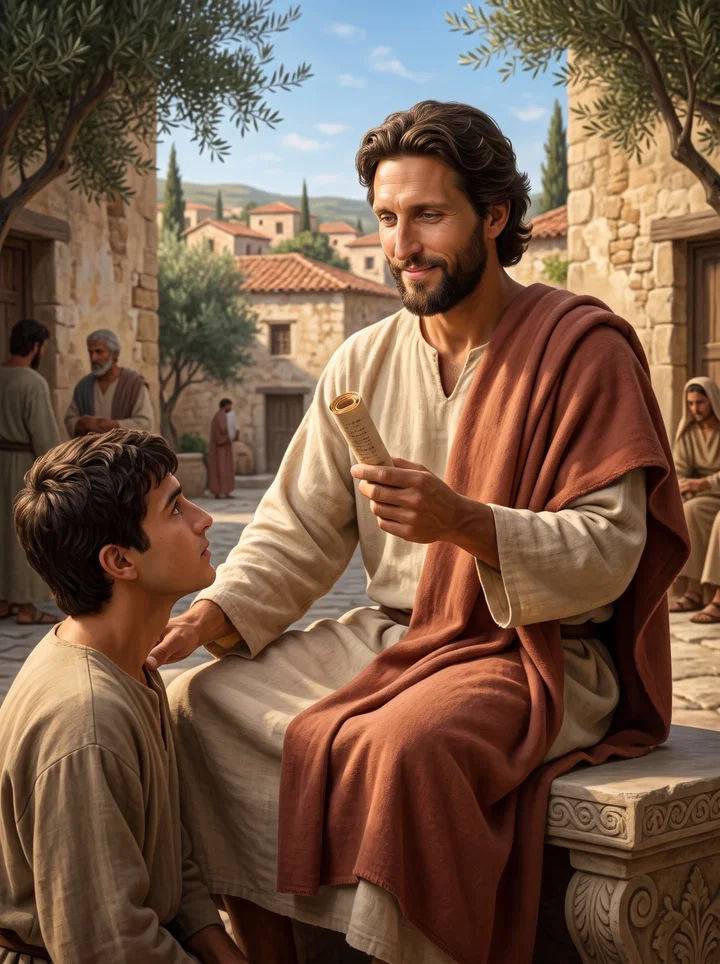
And when Saul was come to Jerusalem, he assayed to join himself to the disciples: but they were all afraid of him, and believed not that he was a disciple.
Translations
American King James Version, King James Version, KJV Cambridge Paragraph Bible
And when Saul was come to Jerusalem, he assayed to join himself to the disciples: but they were all afraid of him, and believed not that he was a disciple.
And when Saul had come to Jerusalem, he essayed to join himself to the disciples: but they were all afraid of him, and believed not that he was a disciple.
Revised Version, American Standard Version
And when he was come to Jerusalem, he assayed to join himself to the disciples: and they were all afraid of him, not believing that he was a disciple.
And Saul, having come to Jerusalem, did try to join himself to the disciples, and they were all afraid of him, not believing that he is a disciple,
And having arrived at Jerusalem he essayed to join himself to the disciples, and all were afraid of him, not believing that he was a disciple.
And, when he had arrived in Jerusalem, he made attempts to join himself unto the disciples; and all were afraid of him, not believing that he was a disciple.
Berean Standard Bible, Majority Standard Bible
When Saul arrived in Jerusalem, he tried to join the disciples, but they were all afraid of him, not believing that he was a disciple.
When Saul had come to Jerusalem, he tried to join himself to the disciples; but they were all afraid of him, not believing that he was a disciple.
And when he came to Jerusalem, he made an attempt to be joined to the disciples, but they were all in fear of him, not taking him for a disciple.
And when Saul was come to Hierusalem, he assayed to ioyne himselfe with the disciples: but they were all afrayd of him, and beleeued not that he was a disciple.
Douay-Rheims (Challoner revision)
And when he was come into Jerusalem, he essayed to join himself to the disciples; and they all were afraid of him, not believing that he was a disciple.
Pictures
Cross-references 20 of 22
- Galatians 1:18
Then after three years I went up to Jerusalem to see Peter, and abode with him fifteen days.
Paul later says he went to Jerusalem to see Peter.
- Acts 22:18-21
And saw him saying unto me, Make haste, and get thee quickly out of Jerusalem: for they will not receive thy testimony concerning me.
Jesus tells Paul to leave Jerusalem and commissions him to the Gentiles.
- Acts 9:20
And straightway he preached Christ in the synagogues, that he is the Son of God.
Saul proclaims Jesus as the Son of God in the synagogues.
- Acts 11:25-26
Then departed Barnabas to Tarsus, for to seek Saul:
Barnabas brings Saul from Tarsus to Antioch, where they serve together.
- Acts 9:3-6
And as he journeyed, he came near Damascus: and suddenly there shined round about him a light from heaven:
Saul’s encounter with Jesus on the Damascus road underlies his acceptance.
- Acts 7:58-60
And cast him out of the city, and stoned him: and the witnesses laid down their clothes at a young man’s feet, whose name was Saul.
Saul witnessed Stephen’s death before later defending the cause he had opposed.
- Acts 26:12
Whereupon as I went to Damascus with authority and commission from the chief priests,
Saul recounts going to Damascus with authority to arrest believers.
- Galatians 2:9
And when James, Cephas, and John, who seemed to be pillars, perceived the grace that was given unto me, they gave to me and Barnabas the right hands of fellowship; that we should go unto the heathen, and they unto the circumcision.
The apostles welcome Paul and Barnabas into fellowship.
- Acts 8:1
And Saul was consenting unto his death. And at that time there was a great persecution against the church which was at Jerusalem; and they were all scattered abroad throughout the regions of Judæa and Samaria, except the apostles.
Persecution scattered the disciples, leading to Paul’s Gentile mission.
- Acts 9:15
But the Lord said unto him, Go thy way: for he is a chosen vessel unto me, to bear my name before the Gentiles, and kings, and the children of Israel:
Saul is chosen to carry Christ’s name to the Gentiles.
- Galatians 1:17
Neither went I up to Jerusalem to them which were apostles before me; but I went into Arabia, and returned again unto Damascus.
Saul withdrew to Arabia after his conversion.
- 2 Corinthians 11:32-33
In Damascus the governor under Aretas the king kept the city of the Damascenes with a garrison, desirous to apprehend me:
Another account of Saul’s early ministry and escape from danger.
- Acts 22:6-11
And it came to pass, that, as I made my journey, and was come nigh unto Damascus about noon, suddenly there shone from heaven a great light round about me.
Paul recounts his Damascus encounter with Jesus.
- 1 Corinthians 9:1
Am I not an apostle? am I not free? have I not seen Jesus Christ our Lord? are not ye my work in the Lord?
Paul appeals to having seen the Lord as proof of his apostleship.
- Galatians 1:21-24
Afterwards I came into the regions of Syria and Cilicia;
brethren had heard of his work from Tarsus
- 1 Timothy 1:13-16
Who was before a blasphemer, and a persecutor, and injurious: but I obtained mercy, because I did it ignorantly in unbelief.
Paul’s former persecution and conversion explain the disciples’ fear.
- Acts 9:13-14
Then Ananias answered, Lord, I have heard by many of this man, how much evil he hath done to thy saints at Jerusalem:
Ananias recalls Saul’s persecution of believers.
- Acts 9:10-12
And there was a certain disciple at Damascus, named Ananias; and to him said the Lord in a vision, Ananias. And he said, Behold, I am here, Lord.
Both texts record visions involving Ananias and Saul.
- Acts 9:17-18
And Ananias went his way, and entered into the house; and putting his hands on him said, Brother Saul, the Lord, even Jesus, that appeared unto thee in the way as thou camest, hath sent me, that thou mightest receive thy sight, and be filled with the Holy Ghost.
Ananias ministers to Saul, who receives his sight.
- Acts 22:19-20
And I said, Lord, they know that I imprisoned and beat in every synagogue them that believed on thee:
Paul's reasons for staying hindered his labor
Commentary
Each commentary is drawn from primary sources: the writings of Ellen G. White and Adventist pioneers and periodicals. Each commentary is separate. Its own words are not a quotation; follow the references to read the source passages.
Ellen G. White
22 sources
Saul came to Jerusalem about three years after his conversion, after escaping from Damascus where his life was hunted, and sought to join the disciples as a brother and be received among them, but they were all afraid of him and did not believe he was truly a follower of Jesus.AA 123.1RH Mar 30, 19113SP 320.2SG1 93.2AA 128.3–129.1 In another place the return is put as shortly after his conversion.SG1 98.1 They remembered him as a zealous persecutor who had sought to destroy the church and deliver believers to death, and though they had heard rumor of his wonderful change, he had retired into Arabia with no definite news since, so they suspected he was acting a part to deceive and destroy them.AA 123.1RH Mar 30, 19113SP 320.27RED 52.2 Barnabas, who had known him when he opposed the believers, heard his testimony of miraculous conversion, fully believed him, took him by the hand and brought him to the apostles, telling them how Jesus had appeared to him on the way to Damascus and how he had boldly preached in the synagogues there that Jesus is the Son of God.3SP 320.3–321.1ST Dec 19, 18787RED 52.3–53.1 Peter and James, then the only apostles in Jerusalem, could not withstand God and gave the once fierce persecutor the right hand of fellowship, so that he became as beloved among those who had feared him as he had formerly been feared.3SP 320.3–321.17RED 52.3–53.1SLP 36.3–4 His change turned the loss of a prominent opponent into gain for the early church, showing that unless the converting power of God comes to souls, Satan will use even zealous, educated men against Christ and His people as he used Saul.AA 123.2–124.2Lt 189, 1909, par. 21
Arrival and Initial Rejection
This belongs to the account of Saul's conversion after he had been traveling to Damascus to search out believers in Jesus and seize them for trial and punishment in Jerusalem. He returned to Jerusalem about three years after his conversion, after his escape from Damascus when his life had been hunted there.RH Mar 30, 1911SG1 93.2AA 128.3–129.1 In those writings that describe the timing differently, the return is set shortly after his conversion.SG1 98.1
He came chiefly to see Peter, with a strong, yearning desire to become acquainted with the apostles, especially Peter as chief of the apostles, and to meet the Galilean fishermen who had lived and prayed and conversed and spoken with Christ on earth.RH Mar 30, 1911AC1 51.23SP 319.27RED 51.3SLP 35.1 As he entered Jerusalem he regarded the city and the temple with changed views, knowing that God's retributive judgment was hanging over them.AC1 51.23SP 319.27RED 51.3SLP 35.1 When come to Jerusalem he assayed to join himself to the disciples as a brother and to be received as one of their number.AA 123.13SP 320.27RED 52.2AC1 51.3–52.1
But they were all afraid of him and did not believe that he was a disciple or had truly become a follower of Jesus, and his own brethren were unwilling to receive him.AA 123.1ST Dec 19, 18787RED 52.3–53.1SG1 93.2EW 168.3 They remembered him as a zealous persecutor who had worked to destroy the church, a proud Pharisee who had persecuted and delivered to death those who believed in Jesus as the Son of God.RH Mar 30, 19113SP 320.27RED 52.2AC1 51.3–52.1ST Dec 19, 1878 So his conversion and new allegiance and his conversion and preaching in Damascus were difficult to trust and accept.AA 123.1RH Mar 30, 19113SP 320.27RED 52.2AA 128.3–129.1 They suspected he was pretending and acting a part in order to deceive and destroy them.3SP 320.27RED 52.2AC1 51.3–52.1SLP 35.3–36.1
Although they had heard reports and rumor of his wonderful conversion and great change, he had immediately retired into Arabia and departed to Arabia, and they had heard nothing definite of him since and lacked definite, reliable news confirming his change, so they did not believe the report.3SP 320.27RED 52.2AC1 51.3–52.1ST Dec 19, 1878SLP 35.3–36.1 His past and the danger surrounding him, and questioning and doubting of his fitness for the work because he had persecuted the church, added to their unwillingness.EW 168.3Ms 18, 1897, par. 5–7 This rejection grieved and disappointed him.3SP 320.3–321.1AC1 51.3–52.1ST Dec 19, 1878
Vindication and Wider Lesson
Barnabas had given money to sustain the cause of Christ and relieve the poor, and had known Paul when he opposed the believers, yet he renewed acquaintance with him, heard his testimony of miraculous conversion and experience since, and fully believed him.3SP 320.3–321.1 He was the first to honor him with the right hand of fellowship, taking him by the hand, vouching for his conversion and experience, and leading and bringing him to the apostles.3SP 320.3–321.1ST Dec 19, 18787RED 52.3–53.1SG1 93.2EW 168.3 All his Christian brethren had questioned and doubted his fitness for the work because he had persecuted the church, but Barnabas was the first to so honor him.Ms 18, 1897, par. 5–7
He told them that Jesus had personally appeared and talked with Paul on the way to Damascus, that Paul had recovered sight in answer to the prayers of Ananias, and that Paul had afterward maintained in the synagogues of Damascus that Jesus is the Son of God and had boldly preached in Jesus' name at Damascus.3SP 320.3–321.17RED 52.3–53.1SG1 93.2EW 168.3AA 128.3–129.1 Peter and James were then the only apostles in Jerusalem, and they no longer hesitated because they could not withstand God, but gave the once fierce persecutor the right hand of fellowship and welcomed him into fellowship, so fear and doubt gave way to fellowship.3SP 320.3–321.17RED 52.3–53.1SLP 36.3–4AA 128.3–129.1 He became as beloved and respected among those who had once feared and avoided him as he had formerly been feared and avoided.3SP 320.3–321.1SLP 36.3–4
The meeting joined Peter, one of the chosen companions of Christ on earth, with Paul, a Pharisee who since the ascension had met Jesus face to face, talked with him, seen him in vision, and seen the nature of his work in heaven.3SP 320.3–321.1 His change of allegiance meant the former persecutor joined the followers of Jesus and strengthened their cause, so the loss of a prominent opponent became a gain for the early church.AA 123.2–124.2 After seeking fellowship he preached Jesus and described his conversion, but his testimony about Christ was not received by the Jews, and it enraged the priests and rulers who sought to kill him and put his life in danger.EW 171.2SG1 98.1 Jesus told him in a vision to leave Jerusalem and go to the Gentiles, though Paul had hoped his former persecutors would be persuaded by his conversion.SG1 98.1
The chapter is a lesson to all about conversion and persecution: Saul hunted up souls to be persecuted before he was converted, and unconverted men will still work with all their power against Christ and His people as satanic agencies did when they crucified the Lord Jesus Christ.Lt 189, 1909, par. 21 History is to be repeated, for Lucifer's act to exalt himself will be a power exercised upon just such men to be met in present and future experience, and long experience and education do not help unless they perfect the knowledge of the glory of God to exalt Jehovah and His only begotten Son Jesus Christ.Lt 189, 1909, par. 21 Therefore the converting power of God must come to souls, or Satan will use them as he used Saul.Lt 189, 1909, par. 21
Sources
Pioneers and periodicals
25 sources
When Saul came to Jerusalem about three years after his conversion, after his escape from Damascus and his time alone in Arabia, he tried to join the disciples but they were all afraid of him and did not believe he had become a disciple, remembering him as a zealous persecutor and fearing he was acting treacherously.RH Mar 30, 1911ST Jun 28, 1883ST Jul 18, 1900RH Aug 3, 1876ST Dec 8, 1898 Barnabas, a respected disciple, took him to the apostles Peter and James and vouched for his conversion, and they then received him into fellowship where he stayed fifteen days with Peter and began to preach publicly.ST Dec 19, 1878CO 72.1–2ST Jan 15, 1885 The event stands at the close of the seventy weeks in A.D. 34, when the 490 years cut off from the 2,300 days ended the time of the Jews as God's special people and God raised up Saul as the great apostle to open the work to the Gentiles.ST Feb 22, 1883ST Jan 30, 1879RH Dec 23, 1852STRH Feb 22, 1870 Because the disciples distrusted him he had not received the gospel from them or any other person, making clear that God Himself had taught him and called him direct from Heaven, and his need to be vouched for by a trusted person establishes the plan that a stranger must be properly introduced and the church must exercise care over whom it admits to fellowship.CO 72.1–2ST Dec 8, 1898ST Oct 17, 1895ST Dec 8, 1898
Saul's Arrival in Jerusalem
Saul came to Jerusalem after his escape from Damascus, about three years after his conversion, the many days being three years during which he had spent time by himself in Arabia as Galatians 1:17-18 supplies.ST Jun 28, 1883ST Jul 18, 1900ST Dec 8, 1898 He had gone into Arabia for quiet meditation and communion with God and to receive revelations, and he came to Jerusalem chiefly to see Peter.RH Mar 30, 1911ST Jun 28, 1883 Before his conversion he had been traveling to Damascus with a commission authorizing him to search out believers in Jesus and seize them to arrest them and bring them to Jerusalem for trial and punishment.ST Oct 17, 1895
By the time he returned he had preached in Damascus with such earnestness and power that the Jews sought to kill him, and he had not yet met any other apostle.ST Dec 8, 1898 For years the churches of Judea did not know him by face, but heard that the former persecutor now preached the faith he had tried to destroy, and they glorified God in him.ST Dec 8, 1898 The disciples were all afraid of him and did not believe he was or had become a disciple because they knew him as a zealous persecutor who had worked to destroy the church and remembered his persecution.RH Mar 30, 1911ST Dec 19, 1878ST Dec 8, 1898 They had not received reliable news confirming his conversion, and feared he might be acting treacherously.ST Dec 19, 1878ST Jun 5, 1901
Barnabas, a respected disciple, took an interest in Saul, vouched for his conversion and experience, and brought him to the apostles.ST Dec 19, 1878CO 72.1–2ST Jan 15, 1885ST Jun 28, 1883 He brought him to Peter and James, and they then accepted him, their fear giving way when he was made known to them.ST Dec 19, 1878ST Jan 22, 1885 He stayed fifteen days with Peter, joined the Christian community and began preaching publicly, and afterward he and the apostles were associated more or less together.ST Jan 22, 1885 This first visit after his conversion, after three years as a Christian in Arabia and Damascus, is distinct from his later visit made fourteen years afterward, seventeen years after his conversion.
Prophecy and Gentile Mission
Acts 9:26 belongs to the events marking the close of the seventy weeks in A.D. 34, the 490 years cut off from the 2,300 days.RH Dec 23, 1852STRH Feb 22, 1870ST Nov 28, 1895ST Sep 2, 1913 After Stephen's martyrdom as the second rejection of Christ and the persecution that scattered the disciples, the Jewish leaders formally rejected Christ through persecution of His disciples.RH Dec 23, 1852STRH Feb 22, 1870ST Sep 2, 1913 Christ confirmed the covenant with the Jews by His own three-and-a-half-year ministry and then through the apostles in the last half-week, ending the 490 years.ST Sep 2, 1913 That ending showed the cutting off of the Jewish nation as God's special people.ST Nov 28, 1895ST Sep 2, 1913
In that setting God raised up and commissioned Saul, the great apostle to the Gentiles.ST Feb 22, 1883ST Jan 30, 1879RH Dec 23, 1852STRH Feb 22, 1870 This marked the end of the period in which the work was confined to the Hebrews and the opening of the work among the Gentiles and the giving of the gospel to the Gentiles.ST Feb 22, 1883ST Jan 30, 1879RH Mar 4, 1862ST Nov 28, 1895 The account stands in the period leading up to the church's first mission to the Gentiles, with the apostles beginning to carry the gospel to the Gentiles after the seventieth week.RH Mar 4, 1862 From this time onward Saul is known by his Roman name, Paul.ST Feb 22, 1883
At this point he had not yet been set apart for ministry to the Gentiles, and the disciples had not fully understood that the gospel was for the Gentiles as well as the Jews.ST Jun 28, 1883 He went to Arabia for quiet meditation and communion with God and to receive revelations, not to preach to the Gentiles.ST Jun 28, 1883 His quiet withdrawal and patient wait for God's call through the church leaders at Antioch show he had to learn patience before becoming a leading messenger to the Gentiles. His circumstances kept him from receiving instruction from Jewish Christians, and the disciples' distrust meant he had not received the gospel from them or any other person, so that it would be clear that God, not people, had taught him.ST Dec 8, 1898ST Dec 8, 1898 He received his ministry direct from Heaven and bases his call to the apostleship upon the Lord's having appeared to him, and having seen Jesus Christ the Lord gives him faith and courage in proclaiming the gospel, just as having seen Christ in the flesh gave the first apostles faith and courage.ST Oct 17, 1895
Among the events of Acts 9 to 16, the verse shows God's use of human agencies, where God's army above always cooperates with God's children below.ST Sep 30, 1908 Souls are born into His kingdom through travail of other souls and sower and reaper rejoice together without any one man or angel claiming a soul by his own labor alone.ST Sep 30, 1908
Church Fellowship and Application
When Saul came to Jerusalem the disciples were afraid of him and did not believe he was a disciple, so Barnabas introduced him to the church there.CO 72.1–2 Even Paul had to be vouched for by a trusted person before being received, establishing the Bible plan that a stranger claiming to be a minister or worker must be properly introduced to protect churches and ministers.CO 72.1–2 Baptism does not by itself make a person a church member, since membership also requires the church's acceptance. When Saul sought to join the disciples they did not receive him until Barnabas recommended him, illustrating the church's responsibility to exercise care over whom it admits to fellowship.
Three years after his conversion the disciples in Jerusalem were still afraid of him and did not believe he was a disciple.ST Jun 5, 1901 Their fear reflected concern that he might be acting treacherously, and a pastor might have delayed his baptism and acceptance into the church for a period of probation.ST Jun 5, 1901 The verse also illustrates the hesitation a person may feel after recognizing the wrong he has done.ST Jun 5, 1901 Saul's case in Acts 9 is evidence that prayer is heard and answered before baptism.RH Aug 3, 1876 His rejection by the disciples grieved and disappointed him, for they remembered his persecution and had not received reliable news confirming his conversion, until Barnabas vouched for his conversion and experience, brought him to the apostles, and they then accepted him.ST Dec 19, 1878
On his return from Damascus to Jerusalem he was very anxious to preach there, wishing naturally to counteract the evil influences of his former course in that city.ST Mar 10, 1887 It is an instance of even the ready and submissive Paul desiring to labor in a field of his own choosing rather than going right ahead in the duty the Lord designed for him.ST Mar 10, 1887 The passage with verses 26-30 records his flight from Jerusalem to Tarsus, his native city, which then became his headquarters for several years until Barnabas brought him to Antioch.ST Apr 23, 1902 It marks his return to Jerusalem after his time in Arabia and his departure for Tarsus. His quiet withdrawal and patient wait for God's call through the church leaders at Antioch show that he had to learn patience before becoming a leading messenger to the Gentiles.
Sources