Daniel 2:26
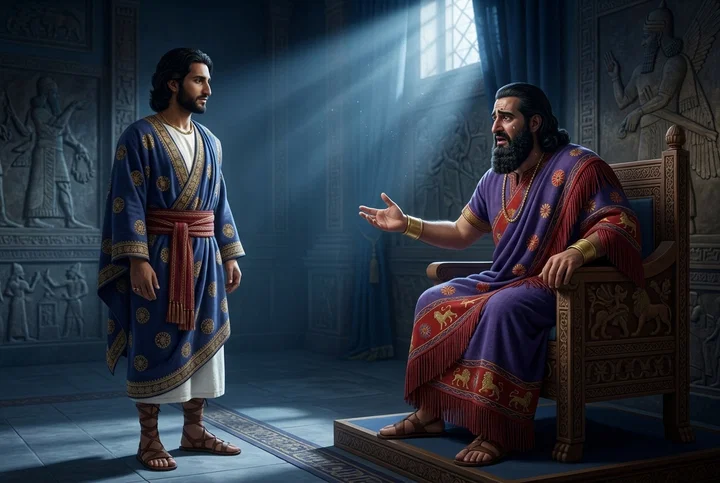
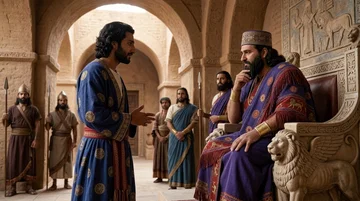
The king answered and said to Daniel, whose name was Belteshazzar, Art thou able to make known unto me the dream which I have seen, and the interpretation thereof?
Translations
The king answered and said to Daniel, whose name was Belteshazzar, Are you able to make known to me the dream which I have seen, and the interpretation thereof?
King James Version, KJV Cambridge Paragraph Bible, Revised Version, American Standard Version
The king answered and said to Daniel, whose name was Belteshazzar, Art thou able to make known unto me the dream which I have seen, and the interpretation thereof?
The king answered and said to Daniel, whose name was Belteshazzar, Art thou able to make known to me the dream which I have seen, and the interpretation of it?
The king hath answered and said to Daniel, whose name [is] Belteshazzar, 'Art thou able to cause me to know the dream that I have seen, and its interpretation?'
The king answered and said unto Daniel, whose name was Belteshazzar, Art thou able to make known unto me the dream that I have seen, and its interpretation?
The king answered and said unto Daniel, whose name was Belteshazzar,—Art thou able to make known unto me the dream which I have seen, and the interpretation thereof?
Berean Standard Bible, Majority Standard Bible
The king responded to Daniel, whose name was Belteshazzar, “ Are you able to tell me what I saw in the dream, as well as its interpretation?”
The king answered Daniel, whose name was Belteshazzar, “ Are you able to make known to me the dream which I have seen, and its interpretation?”
The king made answer and said to Daniel, whose name was Belteshazzar, Are you able to make clear to me the dream which I saw and its sense?
Then answered the King, and sayde vnto Daniel, whose name was Belteshazzar, Art thou able to shew me the dreame, which I haue seene, and the interpretation thereof?
Douay-Rheims (Challoner revision)
The king answered, and said to Daniel, whose name was Baltassar: Thinkest thou indeed that thou canst tell me the dream that I saw, and the interpretation thereof?
Pictures
Cross-references 20 of 34
- Daniel 2:31-45
Thou, O king, sawest, and behold a great image. This great image, whose brightness was excellent, stood before thee; and the form thereof was terrible.
Daniel explains the dream’s image and the kingdoms it represents, culminating in God’s everlasting kingdom.
- Daniel 7
In the first year of Belshazzar king of Babylon Daniel had a dream and visions of his head upon his bed: then he wrote the dream, and told the sum of the matters.
Daniel 7 expands Daniel 2’s outline of successive kingdoms and God’s everlasting kingdom.
- Daniel 2:44-45
And in the days of these kings shall the God of heaven set up a kingdom, which shall never be destroyed: and the kingdom shall not be left to other people, but it shall break in pieces and consume all these kingdoms, and it shall stand for ever.
God’s kingdom replaces earthly kingdoms and endures forever.
- Daniel 2:38
And wheresoever the children of men dwell, the beasts of the field and the fowls of the heaven hath he given into thine hand, and hath made thee ruler over them all. Thou art this head of gold.
Identifies Nebuchadnezzar and his kingdom as the image’s head of gold.
- Daniel 2:17-19
Then Daniel went to his house, and made the thing known to Hananiah, Mishael, and Azariah, his companions:
Daniel and his companions sought God’s mercy, and God revealed the secret.
- Daniel 2:41-43
And whereas thou sawest the feet and toes, part of potters’ clay, and part of iron, the kingdom shall be divided; but there shall be in it of the strength of the iron, forasmuch as thou sawest the iron mixed with miry clay.
The iron-and-clay feet depict a divided kingdom that cannot unite.
- Daniel 2:10-11
The Chaldeans answered before the king, and said, There is not a man upon the earth that can shew the king’s matter: therefore there is no king, lord, nor ruler, that asked such things at any magician, or astrologer, or Chaldean.
The Babylonian wise men admit they cannot reveal the king’s dream.
- Daniel 2:47
The king answered unto Daniel, and said, Of a truth it is, that your God is a God of gods, and a Lord of kings, and a revealer of secrets, seeing thou couldest reveal this secret.
Nebuchadnezzar recognizes Daniel’s God as the revealer of secrets.
- Daniel 2:31-33
Thou, O king, sawest, and behold a great image. This great image, whose brightness was excellent, stood before thee; and the form thereof was terrible.
Daniel recounts the image Nebuchadnezzar dreamed.
- Daniel 5:25-28
And this is the writing that was written, MENE, MENE, TEKEL, UPHARSIN.
Daniel interprets the writing on Belshazzar’s wall, as he interpreted the dream.
- Daniel 2:22
He revealeth the deep and secret things: he knoweth what is in the darkness, and the light dwelleth with him.
God reveals the dream’s hidden meaning.
- Daniel 7:1-8
In the first year of Belshazzar king of Babylon Daniel had a dream and visions of his head upon his bed: then he wrote the dream, and told the sum of the matters.
The four beasts represent the same kingdoms as the image in Daniel 2.
- Daniel 4:10-17
Thus were the visions of mine head in my bed; I saw, and behold a tree in the midst of the earth, and the height thereof was great.
Another of Nebuchadnezzar’s dreams receives a divine interpretation.
- Daniel 2:19
Then was the secret revealed unto Daniel in a night vision. Then Daniel blessed the God of heaven.
The secret is revealed to Daniel in a night vision, enabling his answer.
- Daniel 1:17
As for these four children, God gave them knowledge and skill in all learning and wisdom: and Daniel had understanding in all visions and dreams.
God gave Daniel understanding of visions and dreams.
- Daniel 2:30
But as for me, this secret is not revealed to me for any wisdom that I have more than any living, but for their sakes that shall make known the interpretation to the king, and that thou mightest know the thoughts of thy heart.
The mystery is revealed by God, not through Daniel’s own wisdom.
- Daniel 2:16
Then Daniel went in, and desired of the king that he would give him time, and that he would shew the king the interpretation.
Daniel asks the king for time to find the interpretation.
- Daniel 2:4
Then spake the Chaldeans to the king in Syriack, O king, live for ever: tell thy servants the dream, and we will shew the interpretation.
marks beginning of Aramaic section containing verse
- Genesis 41:14-16
Then Pharaoh sent and called Joseph, and they brought him hastily out of the dungeon: and he shaved himself, and changed his raiment, and came in unto Pharaoh.
Joseph interprets Pharaoh’s dream while a captive.
- Daniel 10:1
In the third year of Cyrus king of Persia a thing was revealed unto Daniel, whose name was called Belteshazzar; and the thing was true, but the time appointed was long: and he understood the thing, and had understanding of the vision.
Daniel receives a true vision whose appointed time is long.
Commentary part 1 of 2
Each commentary is drawn from primary sources: the writings of Ellen G. White and Adventist pioneers and periodicals. Each commentary is separate. Its own words are not a quotation; follow the references to read the source passages.
Ellen G. White
14 sources
Nebuchadnezzar asked Daniel, whose name was Belteshazzar and whom Arioch had brought before him, whether he was able to make known both the dream the king had seen and its interpretation.FE 410.1–411.1STE 218.1–219.1STE 13.2 He asked this because he could no longer remember the dream, after the magicians, astrologers, sorcerers and Chaldeans had failed to tell it under sentence of death while asking him to tell it to them first.FE 410.1–411.1STE 13.2PK 491.2–3 Daniel was able to answer only because, after asking the king for time, he and Hananiah, Mishael and Azariah sought mercy from the God of heaven, and the secret was revealed to Daniel in a night vision, showing that human experts cannot disclose such secrets while God gives wisdom and revelation to those who worship Him.FE 410.1–411.1STE 218.1–219.1FE 373.3–374.1Lt 90, 1894, par. 9–10Lt 151, 1904, par. 3–5 As Daniel related the facts God made the forgotten dream come fresh to the king's mind, and because God gave the interpretation Daniel and the others under condemnation were spared.FE 410.1–411.1Lt 151, 1904, par. 3–5Ms 85, 1910, par. 41–44 The interpretation of the great image, including the mingling of iron and clay, has been fulfilled with remarkable exactness in history, testifying to the inspiration of Scripture, pointing to the coming of the Lord being at hand, and showing that the prophecy of Daniel 2 can be understood and explained even by children.FE 410.1–411.11MR 48GC88 364.2GC 364.2–35T 455.1
The King's Challenging Question
The king Nebuchadnezzar put the question to Daniel, whose Babylonian name was Belteshazzar, after Arioch had brought him into the king's presence, asking whether he was able to make known both the dream the king had seen and its interpretation.FE 410.1–411.1STE 13.2Lt 90, 1894, par. 9–10Lt 67, 1894, par. 11–15 It was a challenge to do what the court experts had failed to do, to tell not only the meaning but the dream itself.FE 410.1–411.1STE 218.1–219.1FE 373.3–374.1 The dream was one the king could no longer remember, and the magicians, astrologers, sorcerers and Chaldeans had been unable to declare it under sentence of death.FE 410.1–411.1STE 13.2 Those wise men had instead asked the king to tell them the dream, promising that they would then give its interpretation.PK 491.2–3 His mind was troubled, and he sought relief in learning what the dream meant.PK 491.2–3
The question was asked while Daniel stood before a king and ruler as a captive, serving in a heathen court.5T 455.1 The answering of it was an act done many years before Belshazzar's feast.CTBH 20.1–21.2 It was remembered by the queen-mother when Belshazzar's wise men could not read the writing on the wall.CTBH 20.1–21.2
God's Revelation and Prophecy
Daniel was able to answer the king only because of faith in the God he served, having first gone in to ask the king for time and then made the matter known to Hananiah, Mishael and Azariah so that they would desire mercies of the God of heaven concerning the secret.FE 410.1–411.1STE 218.1–219.1FE 373.3–374.1 The Spirit of the Lord rested upon them as they sought Him, and the secret was revealed to Daniel in a night vision, so that the wisdom and understanding to answer came from God.FE 410.1–411.1STE 218.1–219.1FE 373.3–374.1Lt 67, 1894, par. 11–15 His confidence in promising to show the interpretation rested on that divine gift received after united prayer for mercy.STE 218.1–219.1FE 373.3–374.1Lt 67, 1894, par. 11–15
The king's question sets up Daniel's reply that human experts cannot disclose the secret, exposing the limits of human wisdom when the wise men of Babylon had to admit they could not recover the forgotten dream.Lt 90, 1894, par. 9–10Lt 151, 1904, par. 3–5 Against that failure stands the superior wisdom and revelation that the God of heaven gives to those who worship Him, made known through Daniel.Lt 90, 1894, par. 9–10Lt 151, 1904, par. 3–5 Through Daniel God made the forgotten dream known, and as Daniel related the facts the dream came fresh to the king's mind.FE 410.1–411.1Lt 151, 1904, par. 3–5 Because God gave the interpretation, Daniel and the others facing execution were spared.FE 410.1–411.1Ms 85, 1910, par. 41–44
The interpretation thus given concerned the great image, including the mingling of iron and clay, and showed remarkable events to transpire in prophetic history.FE 410.1–411.11MR 48 That prophecy of Daniel 2 has been fulfilled with remarkable and wonderful exactness as seen in the historian's record.GC88 364.2GC 364.2–3 That exact fulfillment testifies to the inspiration of the Scriptures and anchors faith amid rationalism and skepticism, leading to positive faith.GC88 364.2GC 364.2–3 The prophecy points to the coming of the Lord being at hand, a solemn and important truth to be brought before the people.GC 364.2–3 Contrary to the belief that the prophecies of Daniel are mysteries that cannot be understood, it can be understood and explained even by children.GC 364.2–3 Daniel's standing and service before kings and rulers while in captivity in this account helped spread the knowledge of the true God among nations devoted to idolatry.5T 455.1
Sources
Pioneers and periodicals
210 sources
Nebuchadnezzar asks Daniel, whom he calls Belteshazzar, whether he is able to disclose both the dream itself and its meaning as two separate revelations.RH Jul 2, 1908ST Jul 1, 1897 The question comes after the decree to destroy the wise men, Daniel's request for time, prayer with his companions, and God's revealing of the secret in a night vision, when Arioch hastily brings the captive from Judah before the king.RH Jul 2, 1908ST Dec 23, 1903 It repeats the same impossible test first laid on the magicians, enchanters and Chaldeans under penalty of death, which they confessed no man could meet, and it is asked with doubt that one young captive could do what aged wise men failed to do.ST May 8, 1907RH Nov 3, 1910ST Apr 30, 1894RH Jan 26, 1869ST Aug 4, 1881 The answer turns wholly on the God of heaven who reveals secrets and makes known what shall be in the latter days, not on any wisdom or power of Daniel himself.ST May 8, 1907RH May 21, 1901 Through that revelation the forgotten dream of successive world kingdoms ending in God's everlasting kingdom is made known, showing that truth about the future comes only by divine disclosure and not by human arts.ST Aug 14, 1893ST Jan 8, 1880RH Jan 30, 1879
King's Question and Setting
The verse records Nebuchadnezzar asking Daniel, whom he also calls Belteshazzar, whether he is able to make known both the dream the king had seen and its interpretation, presenting the dream itself and its meaning as two distinct things to be revealed.RH Jul 2, 1908ST Jul 1, 1897ST Jun 15, 1915ST Nov 28, 1895 The question introduces the dream whose image represents the succession of earthly empires from Babylon onward, outlining world history for thousands of years to the end of the world's career, the second coming of Christ, and the setting up of God's everlasting kingdom.ST Jul 1, 1897ST Nov 17, 1914ST Jun 15, 1915ST Nov 28, 1895 It follows the king's demand that the wise men disclose the dream as well as explain it, and introduces the explanation of the prophecy portraying kingdoms succeeding one another and its fulfillment in history as a waymark toward God's kingdom.ST Jun 15, 1915ST Nov 28, 1895
The question comes after Arioch brings Daniel in haste before the king as a man of the children of the captivity of Judah who will make known the interpretation.RH Jul 2, 1908 It comes after the decree to destroy all the wise men of Babylon, Daniel's request for time, prayer with his companions that they should not perish with the wise men, and God's revealing of the secret to Daniel in a night vision.ST Dec 23, 1903 The events display providence giving Daniel opportunity to speak, leading the king to acknowledge the true God, and promoting Daniel to serve God's purpose, while Daniel declares that no wise men, enchanters, magicians or soothsayers can show the matter but there is a God in heaven that reveals secrets who has made known what shall be in the latter days.ST Dec 23, 1903
The king had first demanded that the wise men, magicians, soothsayers, enchanters and Chaldean philosophers disclose the dream itself as well as explain it, under penalty of death, as a test that a true interpreter claiming supernatural knowledge should be able to do both.ST May 8, 1907RH Nov 3, 1910ST Apr 30, 1894ST Apr 9, 1896 They confessed inability to reveal either, and Daniel, a young captive divinely instructed, stands before him to answer the same demand.ST May 8, 1907ST Jun 29, 1882ST Apr 9, 1896RH May 30, 1854 Daniel and his companions sought God, who revealed the dream and its meaning, and Daniel credits the God of heaven as source rather than his own power.ST May 8, 1907RH Nov 3, 1910ST Apr 30, 1894
The king had forgotten the dream in the morning, though it had made a very deep impression on his mind, startled him with fear, and arose from anxious thoughts on his bed about what should come to pass thereafter, whether Babylon would endure or fall and who would follow him and what the course of empire would be after him.ST Jun 29, 1882ST Apr 9, 1896ST Jun 6, 1916 The dream was given to answer that desire in him and in all who should live after him, to light a torch for God's people in darkness, and its forgetting was of God to lead the king from idolatry to true worship of Jehovah and in providence to bring the matter before Daniel.ST Apr 9, 1896 The interpretation permitted by the Father is an outline of all leading nations to arise down to the close of time, showing Babylon followed by three universal kingdoms, division of the fourth, and no universal dominion again until God establishes His eternal kingdom.
The king receives Daniel with a doubtful salutation, questioning whether one young and inexperienced can do what aged and venerable magicians and soothsayers utterly failed to do, despite Daniel's previous promise to show the interpretation.RH Jan 26, 1869ST Aug 4, 1881 The setting is Babylon at the summit of its greatness and glory in B.C. 603, when Nebuchadnezzar, anxiously looking into the future and pondering what should come to pass thereafter, stood at the head of the mightiest empire seen since the fall of Nineveh after completing the conquest of the known world by the sack of Jerusalem.ST Jun 8, 1915 God did not rebuke that spirit of inquiry but granted the information sought to the king and through him to the world under the symbol of a great image giving the history of the world from that time on. On his royal bed the king had a dream that startled him but which he could not recall, and when magicians and astrologers could not make it known he sentenced them to death; the whole dream was then revealed in a vision to Daniel, a young captive and future prophet, who hastened to the palace where the king asked if he was able to make it known, and when Daniel did so Nebuchadnezzar immediately recognized it and showered favors and honors on him.ST Jun 8, 1915
In prophetic reckoning Babylon's place as first kingdom and head of gold begins in 677 B.C. when connected with God's people through Manasseh's captivity and Jewish subjection, though Babylon existed as a distinct empire from 747 B.C. with earlier Assyrian roots, while others enter its rise as 667 B.C. leaving the marking event an open question.RH Apr 22, 1862RH Apr 22, 1862 Rome succeeding Greece is entered by some as B.C. 30 and in the representation as B.C. 161 as the commencement of Roman ascendancy over the Jews marked by the covenant between Romans and Jews.RH Apr 22, 1862 The prophecy was given when Nebuchadnezzar was seated on the throne holding universal empire and God was using him to punish His rebellious people after they entered the seventy years captivity, with Persia, Greece and Rome each in turn to hold jurisdiction over them, for nations are noted in prophecy only when connected with God's people, and Babylon is not noted until it affects them in this way.RH Mar 12, 1857 Nebuchadnezzar as first universal ruler and head of gold was used to carry out God's purpose, including the conquest of Jerusalem and beginning of the seventy years captivity.RH May 18, 1876
The verse is written in Aramaic or Chaldee as part of the section running from Daniel 2:4 to the close of Daniel 7, because it records speech and proceedings at the Babylonian court in the court language understood by Jews generally.RH Nov 25, 1873 The narrative before Daniel 2:4 is in Hebrew as the native language, and Hebrew is resumed after Daniel 7 for Daniel's personal introduction and the record of the restoration of the Jews and God's future dealings with them.RH Nov 25, 1873 Chaldee is continued through Daniel 7 because of close similarity of subject between Daniel 2 and Daniel 7 and because Daniel's formal introduction of himself comes in Daniel 8, belonging to writing for the common people during the Babylonian captivity.RH Nov 25, 1873
The great image was given in a dream, in which external senses are closed by natural sleep instead of by the Spirit's direct operation while scenes, figures and communications pass before mental perceptions without cooperation of external senses, and the dream is an example of God teaching His servants through dreams.RH Apr 21, 1851RH Feb 28, 1856 Dreams come from three sources, the power of the Holy Ghost, the power of Satan, and multiplicity of business, and Nebuchadnezzar's dream with Pharaoh's of the seven fat and lean kine of approaching famine came from the first source, by the Holy Ghost moving upon mental faculties and stamping upon perceptions and memory the intelligence God designed to give.RH Feb 28, 1856 Dreams by nature are less certain than visions and should be used very cautiously to measure faith or actions, yet when given of God this dream bears divine wisdom as truly a communication from God as a vision.RH Feb 28, 1856
The book accurately records the king's words and actions, but this does not mean Nebuchadnezzar himself or his words were inspired.ST Jul 16, 1912 One passage identifies the asker as Belshazzar asking Daniel, while the weight of passages holds the asker to be Nebuchadnezzar, with another calling him a captive king whose dream raised Daniel to help fellow captives, and others explaining Nebuchadnezzar as Belshazzar's predecessor whose dream interpreted about sixty years before Belshazzar's feast had been heard about by nobles but forgotten.ST Nov 29, 1905ST Oct 23, 1901ST Jan 21, 1889 Technical words in the chapter used to argue for a Maccabean date have mostly been explained, and the remaining ones are consistent with the cosmopolitan Babylonian court.
God Reveals Secrets
The king's question demands both the forgotten dream itself and its meaning, after the wise men who claimed supernatural knowledge proved able to reveal neither.ST May 8, 1907RH May 21, 1901RH Nov 3, 1910ST Oct 13, 1909 The answer to that test is that the knowledge comes not from Daniel's own power or superior wisdom but from the God of heaven who reveals secrets and makes known what shall be in the latter days.ST May 8, 1907RH Nov 3, 1910ST Oct 11, 1883 Daniel credits that God as the source and gives Him all the glory, identifying Nebuchadnezzar himself as part of the image even though the stated purpose is to show what shall be in the latter days, since not everything seen need belong to the latter days to reveal it.ST Oct 13, 1909ST Oct 11, 1883 That answer shows God does dwell with humanity, for Daniel discloses what the Babylonian wise men said only gods whose dwelling is not with flesh could show, and the lasting fifth kingdom endures because God dwells within its people.
Daniel told his godly companions of the requirement, and together they sought the God of heaven in earnest prayer that they should not perish with the wise men under the decree to kill all the wise men of Babylon.ST May 8, 1907ST Apr 30, 1894ST Apr 9, 1896 He had first requested time, then sought God with his three companions who feared God, and God made known the dream and its interpretation in a night vision, for which they returned thanks and gave Him all the glory.ST Apr 9, 1896ST Jul 23, 1885 Their answered prayer strengthened confidence and joy, helped make them unwilling to worship the golden image, and brought about the rescue of Babylon's wise men from destruction.ST Jun 3, 1913ST Jul 23, 1885 Daniel sought God after the king had first called for Babylon's wise men and they could not reveal the dream, and only then was he brought in haste before the king.ST Apr 30, 1894
The truth asked for comes to man only by revelation from God and cannot be found by unaided human knowledge, magic, incantation, science, arts and devices, by which Babylon's wise men had sought it and failed. They confessed that only gods whose dwelling is not with flesh could show it, thereby admitting the God of all knowledge and revelation did not dwell with them and leaving a great gulf between man and the only God who could help them. Daniel and his companions knew the great loving Creator and Saviour waits to manifest Himself in human flesh and by His Spirit makes His abode in every heart open to receive Him, so the secret of the Lord is with them that fear Him and He shows them His covenant. No wise men, enchanters, magicians or soothsayers can show the matter, but there is a God in heaven that revealeth secrets who made known to Nebuchadnezzar what shall be in the latter days, proving divinity united with humanity in contrast to Babylon's gods.
The word for secret is mystery, the same word for the wonderful union between God and man, meaning the Gospel of Christ, the power of God unto salvation, the mystery of godliness, Christ in you the hope of glory. It was a secret upon whose revelation the lives of Daniel and his fellows depended. In answering the king's question by making known the dream and its interpretation, the God of heaven reveals the working of the divine principle to establish the kingdom of heaven upon earth, and shows that the world-kingdoms one after another and finally all together perish because they reject that divine principle. That divine principle is the gift of God's life to make men right in His sight so that by sharing His righteousness they may share His eternal existence, which is justification by faith set forth not as abstract teaching but in its concrete outworking in world history.
The dream was given by God to Nebuchadnezzar, the greatest ruler of Babylon in its golden age, presenting the succession of earthly kingdoms and the coming everlasting kingdom of God which will replace them.ST Apr 9, 1896RH Apr 23, 1867 It answered the king's desire to know who would follow him and what the course of empire would be after him, and answered that desire in all who should live after him, lighting a torch for God's people in darkness.ST Apr 9, 1896 In the morning the dream could not be remembered though its importance was deeply impressed on the king's mind, and this forgetting was of God to lead the king from the folly of idolatry to the true worship of Jehovah.ST Apr 9, 1896 In God's providence the failure of the magi to give either dream or interpretation thus brought the matter before Daniel.ST Apr 9, 1896
Daniel was able to make known the dream and its interpretation because he is a prophet recognized by the Lord, to whom God speaks in vision and dream and to whom He has given understanding in all visions and dreams.ST Jan 20, 1898 His loyalty to God and constant fellowship prepared him to reveal the mystery of the kingdom to Nebuchadnezzar and the world, giving prophetic revelation outlining this world's government from Babylon to the setting up of Christ's kingdom.ST Jan 20, 1898RH Jul 30, 1908 God's revelation through Daniel brought him influence and wisdom to carry out his responsibilities.RH Jul 30, 1908 The chapter thus presents God as the Revealer, making known what human wisdom cannot disclose and what people cannot know, whose wisdom stands above human philosophies and wishes and who is able to reveal what is hidden.ST Jul 16, 1912ST Aug 9, 1910ST Dec 1, 1914ST Aug 9, 1910
Four World Empires
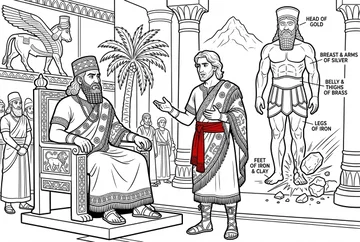
The great metallic image outlines world history from Daniel's time to the end as a succession of earthly governments, Babylon, Medo-Persia, Greece, and Rome, the only universal kingdoms until the eternal kingdom, with Rome the last world-wide kingdom to be broken into smaller kingdoms continuing until Christ comes to overthrow all and establish His everlasting reign.ST Aug 14, 1893RH Nov 26, 1914ST Jun 23, 1914ST Jun 13, 1878ST Jan 8, 1880 The gold, silver, brass, iron, and iron mixed with clay are successive earthly monarchies followed by God's everlasting kingdom, and the iron-and-clay division has continued for many years with the mixture increasingly evident in the monarchies of the Old World.ST Aug 14, 1893RH Nov 26, 1914ST Jun 13, 1878 Nebuchadnezzar, standing for his kingdom, is the head of gold, the first in the prophetic succession.ST Jan 8, 1880ST May 29, 1884ST May 29, 1884 He is head only as representative of the empire and not as an individual man. The gold, chief among metals corresponding to the lion with eagles' wings chief among beasts and birds, symbolizes autocratic, proud, rich, haughty Babylon with soaring ambition and swift conquests.ST Oct 11, 1905ST Sep 29, 1881
The breast and arms of silver are the Medo-Persian kingdom which arose under Darius the Mede, inferior to Babylon in wealth and magnificence and brilliancy of career.ST May 29, 1884ST Apr 5, 1877 The belly and sides of brass are Greece which succeeded Persia in world dominion in B.C. 331, the same as the ram and goat of Daniel 8 and the bear and leopard of Daniel 7, and the bronze Greek kingdoms later divided.ST May 29, 1884RH Jul 28, 1874 The legs of iron are the dreadful and terrible fourth kingdom Rome traced to the Christian era, the same as the dreadful and terrible beast with ten horns divided into ten kingdoms.ST May 29, 1884 The interpretation declaring the then-ruling kingdom to be the head of gold, namely Babylon, was given about forty-eight years before the vision of the four beasts, and more than sixty years before Daniel 7.ST Apr 5, 1877ST Sep 29, 1881ST Sep 17, 1902 Its purpose was not only to show that these kingdoms would follow one another, but also to provide the historical framework for identifying the later kingdom represented in Daniel 7 as antichrist, with the ground gone over again to bring out additional characteristics and show earthly governments as viewed in the light of Heaven as wild and ravenous beasts.ST Apr 5, 1877ST Sep 17, 1902
The marked deterioration descending from gold through silver and brass and iron to iron mixed with clay means mankind has gradually declined since Eden rather than improved, proving the world in its mortal state is not growing better toward a golden age but is becoming more corrupt and ripening for wrath as that wrath approaches.ST Dec 3, 1912RH Aug 11, 1853ST Apr 5, 1877 The descent from gold to silver to brass to iron shows depreciation in value and the physical, mental, and moral degeneration of the fallen race from generation to generation until the world is fully ripe for its final doom, with silver inferior to gold just as the bear is inferior to the lion.RH Jan 1, 1875ST Jun 4, 1874ST Apr 5, 1877 The kingdoms are represented by the image's materials — gold, silver, brass, iron, and iron mixed with clay — not by its anatomical parts.ST Dec 29, 1909 The symbols are fitted to the character of each kingdom, and at the same time earthly powers are shown as successive dynasties without regard to their character.ST Oct 11, 1905 The first prophetic dream was given to Nebuchadnezzar, a heathen and worshiper of images who was a seeker after truth, not to a Jewish believer, so it did not begin in the religious excitement of a Jewish believer.ST Oct 11, 1905 It dealt with metals and was introductory, with its development found in Daniel's own vision in chapter seven, since metals were little adapted to express many important movements running along with this line of history.
This interpretation of four kingdoms as Babylonian, Medo-Persian, Grecian, and Roman was held by Jewish interpreters before and after Christ and by Christ and most Christian expositors for nearly two thousand years.ST Its principal features are those advanced by the most eminent and critical expositors of former and modern times.RH Jul 19, 1864 Its prophecy of the rise and fall of four great monarchies is confirmed by historical events, supporting the Scriptures' divine authority, and is shown through the history of those kingdoms so that denying that history makes the prophecy useless.RH Feb 12, 1861RH Jan 13, 1852
Divided Rome and Everlasting Kingdom
Rome would later be divided, represented by feet and toes of iron mixed with miry clay, for the fourth kingdom divides and remains divided until the end.RH Nov 26, 1914ST Sep 12, 1916ST Jun 22, 1915ST Jun 30, 1914 Rome is the last of the world-wide kingdoms, broken into numerous smaller kingdoms continuing in the nations of Europe for more than fourteen centuries until Christ comes in person to overthrow all and establish His everlasting reign.ST Jun 23, 1914ST Sep 12, 1916ST Jun 22, 1915 No later nation will rule universally, because God will establish an everlasting kingdom in the days of those kings, and Babylon would be followed by three universal kingdoms with the last dividing into ten kingdoms that continue until Christ's second coming.ST Sep 12, 1916ST Jun 30, 1914
The stone cut out without hands from the mountain strikes the image on the feet, breaks gold, silver, brass, iron and clay to pieces together and they become like chaff of summer threshing-floors carried by wind.RH Jan 30, 1879ST May 21, 1902RH Nov 17, 1910 It is God's everlasting fifth universal kingdom that destroys earthly kingdoms, fills the whole earth and stands forever, established in the days of those kings when Christ comes as King.RH Jan 30, 1879ST Sep 12, 1916ST May 21, 1902RH Nov 17, 1910 The prophecy has not yet been fulfilled since the earthly kingdoms remain, and the world has lived in the feet and toes period for more than fourteen centuries until the stone strikes and establishes Christ's kingdom as the fifth universal kingdom.RH Jan 30, 1879RH Nov 17, 1910
The kingdom of the God of heaven is not set up till the Roman Empire is divided into ten parts, and in the days of Christ's first advent and for three hundred years after no such ten parts existed.ST Jul 20, 1882RH Jun 9, 1859RH Dec 11, 1856 The division occurred between 356 A.D. and 483 A.D., so the image could not be smitten on the feet prior to 483 A.D. and the kingdom was not established at the first advent.ST Jul 20, 1882RH Jun 9, 1859RH Dec 11, 1856ST Jun 19, 1884 Rome is the last universal kingdom, first in consolidated form and second in weak and divided form in feet and toes of part iron and part potter's clay, now 1373 years past in 1856, extending to A.D. 483 and nearly the beginning of the sixth century, with ten toes developed in western Europe where ten kingdoms arose out of Rome.RH Dec 11, 1856ST Jun 19, 1884RH Jun 30, 1874 The image stands in western Europe where the ten kingdoms represented by the ten toes were developed, tracing history through the divisions down to nearly the beginning of the sixth century so the nearness of the kingdom can be known.RH Jun 30, 1874
The iron legs represent the Roman Empire and its toes represent kingdoms that arose from its divisions, whose number changed over time without altering their identity in the prophecy.ST Nov 9, 1882ST Dec 14, 1882RH Nov 7, 1871 The ten toes and ten horns are ten kings or kingdoms from Rome's breakup, the same outline given in Daniel 7 where the horns of the fourth beast are those ten kings, and Daniel 2 says the fourth kingdom would be divided without specifying the number.ST Nov 9, 1882RH Jun 30, 1874 The ten are the Huns, Ostrogoths, Visigoths, Franks, Vandals, Sueves and Alans, Burgundians, Heruli and Turingi, Saxons and Angles, and Lombards, formed in Europe before the close of the sixth century after the empire was broken up and filled with northern tribes.ST Dec 14, 1882RH Nov 7, 1871RH Sep 22, 1874 Those ten sovereignties all adopted the faith emanating from Rome in the sixth century, over which the papacy established its influence as paganism revived under a new form.RH Sep 22, 1874
The stone's smiting of the image and breaking even one toe in pieces means literal breaking power which the preaching of the gospel as a merely spiritual kingdom does not possess.ST Jul 20, 1882ST Dec 3, 1874 Facts through this dispensation show the reverse, with the pagan and papal powers of Rome persecuting the gospel church, so that instead of the stone smiting the image the image has been smiting the stone.ST Jul 20, 1882ST Dec 3, 1874 This proves the kingdom was not established at the first advent, since the stone strikes only after that division.ST Jul 20, 1882ST Dec 3, 1874
The kingdom foretold was not set up on the day of Pentecost, for no Old Testament prophecy places its setting up at Pentecost and no New Testament testimony says a kingdom was established then.RH Jun 12, 1860 The New Testament shows the kingdom was still future after Pentecost, since believers must still enter it through much tribulation and are promised a future abundant entrance into the everlasting kingdom as they add to faith virtue, knowledge, temperance and the other graces. There is a sense in which God always has a kingdom among men and his children are in a sense in it now, but the kingdom foretold is still future and will come when the Lord comes and sits upon the throne of his glory.RH Jun 12, 1860
Those who held otherwise connected the setting up to the day of Pentecost with Daniel called to make known the dream and interpretation concerning that kingdom.RH Jul 3, 1860 Others held the smiting kingdom is the church, whose united voice of evangelical Christendom will overthrow the Man of Sin, though scores of years may yet intervene before that takes place, after which the Jews will be converted.RH Mar 11, 1858
The gold of the image is Babylon with Nebuchadnezzar as head only as representative of the empire and not as an individual man, the silver is Medo-Persia, the brass is the next kingdom, the iron is the dreadful and terrible fourth kingdom, and the toes are the divided kingdoms which are the horns of the fourth beast.RH Jan 31, 1856RH Jun 9, 1859 The smiting that breaks the gold, silver, brass and iron in pieces together is their simultaneous destruction at the coming of Christ, not after the thousand years, with fate linked to the four beasts of Daniel 7 and to the ten-horned and two-horned beasts of Revelation 13 so all those powers are destroyed together when Christ comes.RH Jan 31, 1856ST Jan 27, 1898 Their lives continuing for a season and time after dominion is taken away needs no resurrection of the wicked nations or of Nebuchadnezzar for that destruction. When the God of heaven sets up a kingdom the image is dashed in pieces and becomes as chaff of the summer threshing-floor, which is the dashing of the nations in pieces at the coming of Christ, so the kingdom is not established before Christ's second advent.RH Jun 9, 1859ST Jul 27, 1882ST Jan 27, 1898
The stone is the kingdom of God, the same as the kingdom of the Most High in Daniel 7, which was not set up at the first advent of Christ, for the gospel does not subvert and overturn earthly governments and establish itself on their ruins.RH Sep 8, 1874RH Sep 8, 1874 It does not succeed the fourth or Roman kingdom at once, but only after the ten horns develop out of Rome as its division into ten parts, and after the rise, rule and ruin of the papal power.RH Sep 8, 1874RH Sep 8, 1874 The dashing to pieces is still future under the sounding of the seventh trumpet, after the little horn being the papacy which thinks to change God's law and wears out the saints is destroyed by the brightness of His coming before the kingdom and dominion under the whole heaven is given to the saints of the Most High.RH Sep 8, 1874
Mighty men including Napoleon Bonaparte have conspired and worked with Satan exerting all his rebellious powers to unite Europe into one world-embracing empire to overthrow God's prophetic utterance.ST Jun 23, 1914ST Jun 22, 1915 The divided state of Europe for fourteen centuries and more stands as a mighty monument to God's foreknowledge against those efforts.ST Jun 23, 1914ST Jun 22, 1915 The interpretation presents iron mixed with clay as the intermingling of imperialism with republicanism or socialism, and the iron of imperial rule is expected to give way to the clay of social democracy as the final experiment in government.ST Oct 7, 1913ST Apr 13, 1915
The prophecy foretells and prefigures popular government movements around the world, including socialism, republicanism and democracy, with historical changes pictured in prophetic emblems from Babylon over 500 years before Christ to the end of time.ST Apr 18, 1911 The metals represent imperial dynasties, while clay represents a republican form of government that does not blend with iron, applied to the United States as a government of the people rather than an empire ruled by a crown.ST Nov 7, 1900
The dream is to be understood literally, and the kingdom God will establish is a future literal kingdom with a king, laws, territory and subjects, like the kingdoms of Babylon, Persia, Greece and Rome.ST Jan 14, 1886ST Jan 21, 1886 Its interpretation is genuine, to be taken literally not as another symbol, and the dream and its interpretation are certain, depicting the kingdoms of earth and their end when Christ's kingdom breaks and replaces them, fills the whole earth and stands forever.ST Oct 10, 1906ST Jan 21, 1886
The image closes with utter destruction and the setting up of the Stone-Kingdom which crushes and pulverizes the image but does not convert it, proving the present order ends in destruction not conversion of the world.ST Jul 1, 1908ST Sep 16, 1886 Every particular to date fulfilled proves this final teaching, with Babylon, Medo-Persia, Grecia and Rome arising, becoming world powers and being overthrown step by step through the centuries.RH Jun 8, 1911ST Jul 1, 1908 The golden age lies far in the past with descent from gold through silver and brass and iron to iron mingled with clay, and the kingdom comes not by conversion but by entire overthrow and utter destruction, when Christ comes, the earth is purged by fire, and God is glorified in new heavens and earth in which lost harmony is restored.RH Jun 8, 1911ST Sep 16, 1886
The changing metals outline the civil phases of world empire, the deterioration of human kingdoms, their changing governments and eventual failure, showing human rule apart from God is destructive and ends when Christ intervenes.ST Dec 3, 1912ST Apr 11, 1911 The great metallic image represents Babylon, Medo-Persia, Greece and Rome in imperial and divided forms, followed by Christ's everlasting kingdom symbolized by a stone cut without human hands.ST Oct 11, 1905 Nebuchadnezzar's later all-gold image in Daniel 3 expressed his belief that his empire would last forever in attempt to defy that foretold outcome and make Babylon everlasting.ST Dec 3, 1912ST Oct 11, 1905
Five successive universal kingdoms are presented: Babylon, Medo-Persia, Greece, Rome, and finally the kingdom of God.RH Mar 25, 1858 In the time of Rome, which ruled in Jesus' day, the kingdom of God could rightly be called near because it was next in the prophetic sequence.RH Mar 25, 1858 Rome has not entirely passed away but continues in a divided form that precedes the establishment of God's everlasting kingdom.RH Mar 25, 1858
Sources