Daniel 2:38
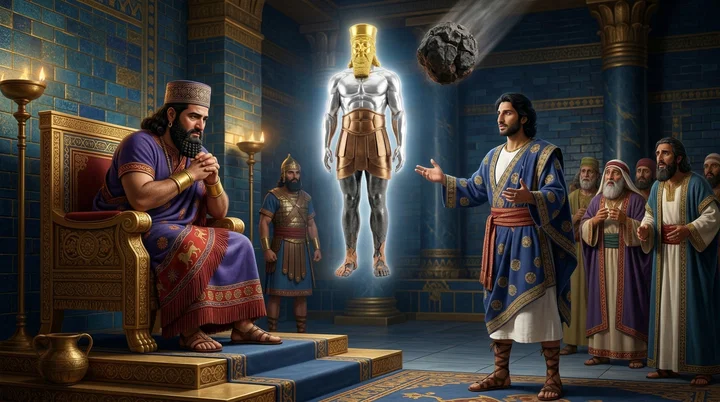
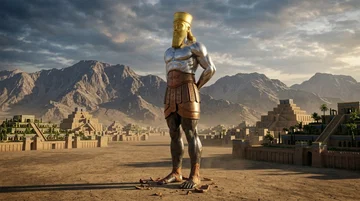
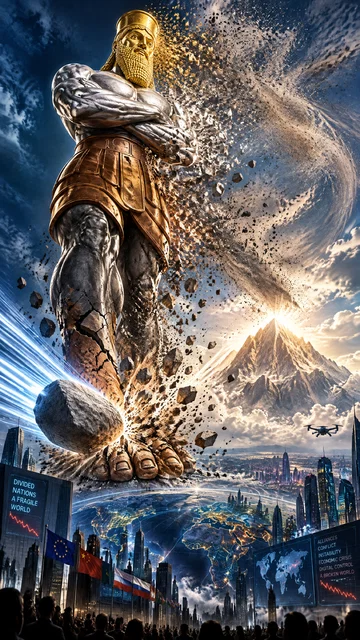
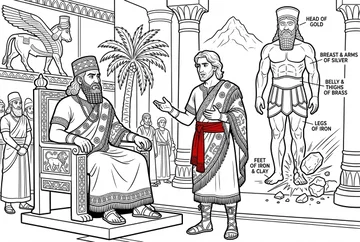
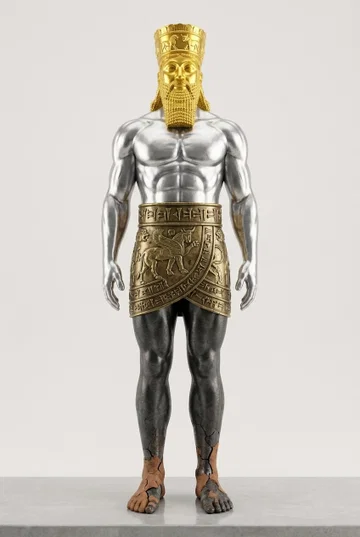
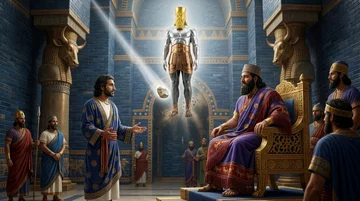
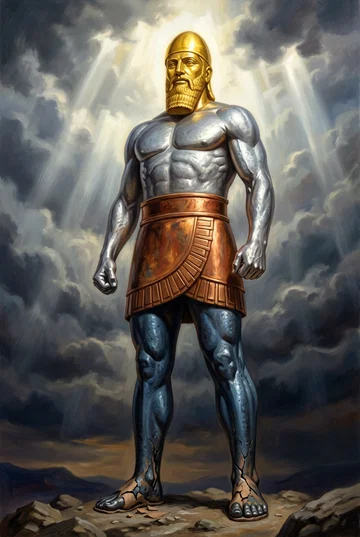
And wheresoever the children of men dwell, the beasts of the field and the fowls of the heaven hath he given into thine hand, and hath made thee ruler over them all. Thou art this head of gold.
Translations
And wherever the children of men dwell, the beasts of the field and the fowls of the heaven has he given into your hand, and has made you ruler over them all. You are this head of gold.
King James Version, KJV Cambridge Paragraph Bible
And wheresoever the children of men dwell, the beasts of the field and the fowls of the heaven hath he given into thine hand, and hath made thee ruler over them all. Thou art this head of gold.
And wherever the children of men dwell, the beasts of the field and the fowls of the heaven hath he given into thy hand, and hath made thee ruler over them all. Thou art this head of gold.
and wheresoever the children of men dwell, the beasts of the field and the fowls of the heaven hath he given into thine hand, and hath made thee to rule over them all: thou art the head of gold.
and wheresoever the children of men dwell, the beasts of the field and the birds of the heavens hath he given into thy hand, and hath made thee to rule over them all: thou art the head of gold.
and whithersoever sons of men are dwelling, the beast of the field, and the fowl of the heavens, He hath given into thy hand, and hath caused thee to rule over them all; thou [art] this head of gold.
and wheresoever the children of men, the beasts of the field, and the fowl of the heavens dwell, he hath given them into thy hand, and hath made thee ruler over them all: thou art this head of gold.
and, wheresoever the sons of men do dwell, the wild beasts of the field and the birds of the heavens, hath he given into thy hand, and hath made thee ruler over them all. Thou, art the head of gold.
Berean Standard Bible, Majority Standard Bible
Wherever the sons of men or beasts of the field or birds of the air dwell, He has given them into your hand and has made you ruler over them all. You are that head of gold.
Wherever the children of men dwell, he has given the animals of the field and the birds of the sky into your hand, and has made you rule over them all. You are the head of gold.
Wherever the children of men are living; into whose hands he has given the beasts of the field and the birds of heaven, and has made you ruler over them all, you are the head of gold.
And in all places where the children of men dwell, the beasts of the fielde, and the foules of the heauen hath he giuen into thine hand, and hath made thee ruler ouer them al: thou art this heade of golde.
Douay-Rheims (Challoner revision)
And all places wherein the children of men, and the beasts of the field do dwell: he hath also given the birds of the air into thy hand, and hath put all things under thy power: thou therefore art the head of gold.
Pictures
Cross-references 20 of 72
- Daniel 7:4
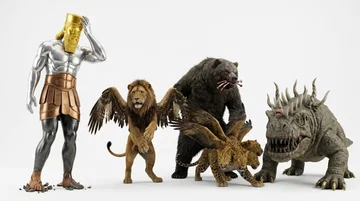
The first was like a lion, and had eagle’s wings: I beheld till the wings thereof were plucked, and it was lifted up from the earth, and made stand upon the feet as a man, and a man’s heart was given to it.
The lion represents Babylon, corresponding to the image’s head of gold.
- Daniel 2:44-45
And in the days of these kings shall the God of heaven set up a kingdom, which shall never be destroyed: and the kingdom shall not be left to other people, but it shall break in pieces and consume all these kingdoms, and it shall stand for ever.
The statue’s sequence of earthly kingdoms culminates in God’s everlasting kingdom.
- Daniel 8:20-22
The ram which thou sawest having two horns are the kings of Media and Persia.
The vision identifies the kingdoms succeeding the first in the prophetic sequence.
- Daniel 7:17-18
These great beasts, which are four, are four kings, which shall arise out of the earth.
Both visions depict successive earthly kingdoms and the saints receiving God’s everlasting kingdom.
- Daniel 3:1
Nebuchadnezzar the king made an image of gold, whose height was threescore cubits, and the breadth thereof six cubits: he set it up in the plain of Dura, in the province of Babylon.
Nebuchadnezzar’s golden image shows his ambition for Babylon to endure despite the dream’s prophecy.
- Daniel 2:32
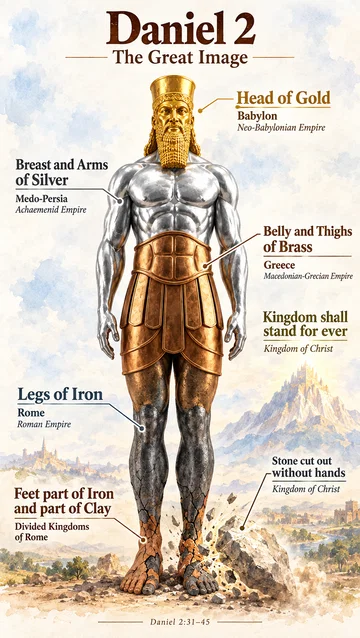
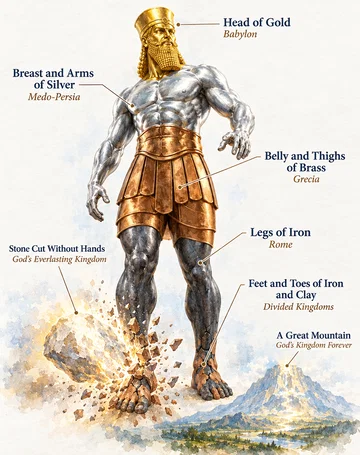
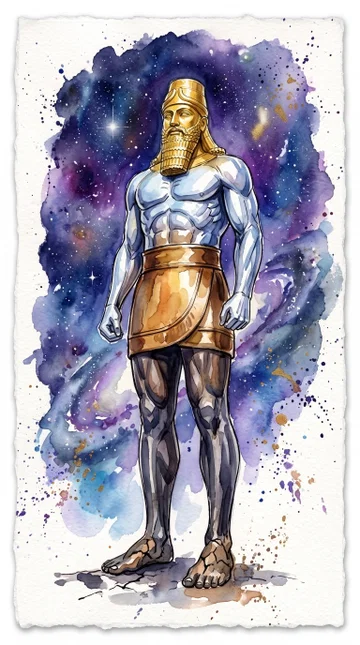
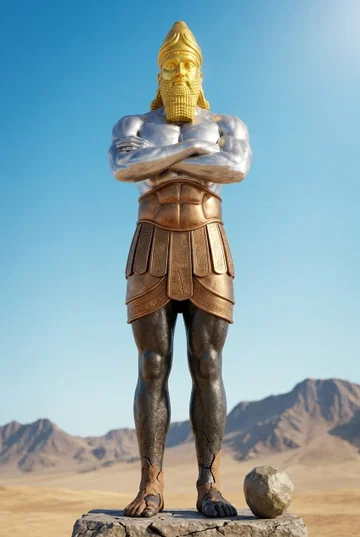
This image’s head was of fine gold, his breast and his arms of silver, his belly and his thighs of brass,
The image’s golden head represents Babylon, followed by metals symbolizing successive kingdoms.
- Daniel 7:7
After this I saw in the night visions, and behold a fourth beast, dreadful and terrible, and strong exceedingly; and it had great iron teeth: it devoured and brake in pieces, and stamped the residue with the feet of it: and it was diverse from all the beasts that were before it; and it had ten horns.
The fourth beast corresponds to the image’s iron kingdom and its ten horns to the toes.
- Daniel 4:17
This matter is by the decree of the watchers, and the demand by the word of the holy ones: to the intent that the living may know that the most High ruleth in the kingdom of men, and giveth it to whomsoever he will, and setteth up over it the basest of men.
Both declare that God rules human kingdoms and appoints their rulers.
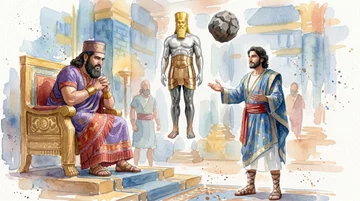
- Daniel 2:28
But there is a God in heaven that revealeth secrets, and maketh known to the king Nebuchadnezzar what shall be in the latter days. Thy dream, and the visions of thy head upon thy bed, are these;
God reveals through Nebuchadnezzar’s dream what will happen in the latter days.
- Daniel 5:28
PERES; Thy kingdom is divided, and given to the Medes and Persians.
Babylon’s kingdom is judged and given to the Medes and Persians, recalling Nebuchadnezzar’s rule.
- Daniel 4:30-32
The king spake, and said, Is not this great Babylon, that I have built for the house of the kingdom by the might of my power, and for the honour of my majesty?
Nebuchadnezzar’s boast is followed by the loss of his rule until he acknowledges God’s sovereignty.
- Daniel 7:13-14
I saw in the night visions, and, behold, one like the Son of man came with the clouds of heaven, and came to the Ancient of days, and they brought him near before him.
The Son of man receives an everlasting kingdom after the earthly kingdoms.
- Jeremiah 27:6-8
And now have I given all these lands into the hand of Nebuchadnezzar the king of Babylon, my servant; and the beasts of the field have I given him also to serve him.
God gives Nebuchadnezzar authority and commands nations to submit to him.
- Daniel 7:3
And four great beasts came up from the sea, diverse one from another.
The first beast represents Babylon, the image’s first kingdom.
- Daniel 7:23-24
Thus he said, The fourth beast shall be the fourth kingdom upon earth, which shall be diverse from all kingdoms, and shall devour the whole earth, and shall tread it down, and break it in pieces.
The fourth kingdom and its ten kings parallel Daniel 2’s fourth empire and its division.
- Daniel 8:3-4
Then I lifted up mine eyes, and saw, and, behold, there stood before the river a ram which had two horns: and the two horns were high; but one was higher than the other, and the higher came up last.
The ram is another symbol for the same empire.
- Daniel 5:30-31
In that night was Belshazzar the king of the Chaldeans slain.
Babylon falls, and the kingdom Daniel foretold passes to the Medes.
- Daniel 7:5
And behold another beast, a second, like to a bear, and it raised up itself on one side, and it had three ribs in the mouth of it between the teeth of it: and they said thus unto it, Arise, devour much flesh.
next kingdom after Babylon in both visions
- Genesis 1:26-28
And God said, Let us make man in our image, after our likeness: and let them have dominion over the fish of the sea, and over the fowl of the air, and over the cattle, and over all the earth, and over every creeping thing that creepeth upon the earth.
Nebuchadnezzar’s rule over living creatures is compared with the dominion God gave humanity.
- Daniel 4:37
Now I Nebuchadnezzar praise and extol and honour the King of heaven, all whose works are truth, and his ways judgment: and those that walk in pride he is able to abase.
Nebuchadnezzar praises God’s just rule after being humbled for pride.
Commentary part 1 of 2
Each commentary is drawn from primary sources: the writings of Ellen G. White and Adventist pioneers and periodicals. Each commentary is separate. Its own words are not a quotation; follow the references to read the source passages.
Ellen G. White
53 sources
God gave Nebuchadnezzar worldwide rule over people and living creatures, making Babylon the golden head and first in the succession of world empires.PK 504.1–2PK 498.1–499.1Ms 163, 1898, par. 5–11PK 495.1 Its gold stood for unmatched wealth, glory and power, yet also marked it as purer and greater than the lesser silver, brass and iron kingdoms that would follow it.PK 504.1–2ED 175.4–5Ms 39, 1899, par. 5–8Ms 15, 1896, par. 4–6 That dominion was a granted trust under God's authority, for He raises up and removes kings to fulfill His purpose and humble human pride.ED 175.4–51MR 49.1–27T 161.1Ms 36, 1896, par. 3 Babylon would not endure forever but would pass away in its own generation to give place to Medo-Persia, Greece and Rome, until God sets up His own eternal kingdom that will fill the earth.12MR 218.2–220.1Ms 163, 1898, par. 5–11Lt 90, 1897, par. 13–18ST Apr 29, 1897PK 496.3 The king's pride seized on being called the head of gold, and he tried to overturn the prophecy by building an image all of gold to exalt himself and demand worship.Ms 110, 1904, par. 50–51Lt 151, 1904, par. 6–8Ms 15, 1896, par. 13–16ST Apr 29, 1897
Dream Context and Revelation
Nebuchadnezzar dreamed a dream he could not bring to remembrance and demanded that the magicians, astrologers, sorcerers and Chaldeans tell both the dream and its interpretation on pain of death, even of being cut in pieces, and they answered in terror that no man on earth could show the matter and only the gods whose dwelling is not with flesh could do it.FE 410.1–411.1 Daniel asked time of the king, made the matter known to Hananiah, Mishael and Azariah that they would seek mercy of the God of heaven concerning the secret, the Spirit rested upon them, the secret was revealed to Daniel in a night vision, and Daniel then recalled the facts so the dream came fresh to the king's mind and gave its interpretation of remarkable events in prophetic history.FE 410.1–411.1
The verse belongs to mysteries of the future taught in figures, pictures and symbols appealing to understanding through sight so truth could be better understood and plainly represented so he who read might understand, a divinely appointed pictorial prophecy that does not violate the second commandment against image worship.HSFM 211.5–212.4PK 484.3 The prophecy presents historical events in figurative sequential form reaching to the latter days and the close of time, recorded for future generations and succeeding kingdoms.ST Apr 29, 1897ST Apr 29, 1897Ms 31, 1896, par. 1–2 Its waymarks must be carefully guarded and correctly applied, since misinterpretation creates confusion rather than genuine light, and it requires insight from God rather than worldly learning alone, yet it can be presented in familiar form so even children can understand and explain it and through them lead parents and grown people to study it.FE 412.1GC88 364.3–365.1Ms 31, 1896, par. 1–2
The dream was given to an idolatrous king and nation to reveal God's power and faithfulness and to bring idolatrous minds into reasoning relation with Daniel concerning prophecies against Babylon and other kingdoms.PK 491.1Lt 109a, 1898, par. 5–8Ms 47a, 1898, par. 2–5 Through the interpretation Jehovah was exalted as more powerful than any earthly kingdom and as Ruler over all monarchs and kings of earth, whose name goes forth as God over all gods, and knowledge was given of the kingdom the Lord was to establish and through His power maintain against all power and craft of Satan.Lt 109a, 1898, par. 5–8Ms 47a, 1898, par. 2–5Lt 32, 1899, par. 6–11 To do this God first silenced Babylon's wise men by placing them where they had to acknowledge inability to revive the forgotten dream, showing human wisdom as folly and scientific power as inefficient in order to display the superior wisdom possessed by those who worship Him.Lt 151, 1904, par. 3–5 In this way He worked to lead princes and people from broken cisterns to the living fountain by revealing the divine science of eternity, and through Daniel and his companions scattered among the kingdoms of the earth, and through faithfulness in rescuing the three captives from the flames and vindicating their course, He made Himself known to the heathen amid the black darkness of heathenism and idolatry.Lt 151, 1904, par. 3–5Lt 32, 1899, par. 6–11
Its meaning was opened not to those charmed by Babylon's splendor but to the Hebrew captives who felt themselves exiles in a strange land dependent on God alone.Lt 151, 1904, par. 3–5 Daniel could understand because he honored God with firmness, self-denial, purity of motive and unwavering trust while learning court duties and receiving instruction from men in the duties of court life, so God blessed him with knowledge and skill in all learning and wisdom and the spirit of prophetic power came upon him.PK 484.3 His interpretation brought him honor and authority in Babylon while the king acknowledged his God as Lord of kings and revealer of secrets, and the authority represented by the golden head was shown to be earthly while God's kingdom was recognized as greater than every earthly kingdom.Ms 8, 1896, par. 22–23 God gave the interpretation through Daniel to help the king out of his difficulty over the dream, and the great men of Babylon were willing to be benefited yet wanted the four Hebrews to mix heathen religion with Hebrew religion to make them complete statesmen fit to be entrusted with the affairs of the kingdom, but Daniel and his fellows entered into no such arrangement and refused compromise, and God upheld and honored them, showing true science and Bible religion are in perfect harmony.16MR 336.2
Head of Gold Identified
Thou art this head of gold identifies Nebuchadnezzar himself and his kingdom Babylon as the head of gold of the image, the first kingdom in the succession of earthly kingdoms and the first universal kingdom.PK 504.1–2PK 498.1–499.1PK 495.1PK 495.2PK 501.1 His kingdom, power and authority over peoples and over the beasts and birds were given to him by the God of heaven, yet the golden head did not mean Babylon or its dynasty would last forever.PK 504.1–2PK 498.1–499.1Ms 163, 1898, par. 5–11 The dream showed that later, lesser kingdoms would follow in appointed succession, with a second and then a third kingdom and then a fourth strong as iron to subdue the nations, while Christ's kingdom represented by the Living Stone alone is eternal.Ms 163, 1898, par. 5–11PK 495.2PK 501.1
The golden head signifies Babylon's wealth, power, strength, glory and magnificence under Nebuchadnezzar, then the greatest and most powerful ruler of the time, whose rule at first was to a great extent just and merciful because God had given prosperity and wisdom for His glory.PK 504.1–2ED 175.4–5Ms 15, 1896, par. 13–16 Under him Babylon stood at the height of its glory, preeminent as the first of the world-moulding empires in shaping the world, its civilization a center and starting point for traditions spreading through western Asia.PK 495.3–496.2PK 496.3 That height no later nation equaled, for God had exalted Babylon, though Nebuchadnezzar failed to recognize its power came from God.ED 175.4–5PK 495.3–496.2
The gold marks its higher purity and value compared with the silver, brass, and iron mixed with clay that follow, and the descending metals show deterioration of the kingdoms in power and glory and in religion and morality.Ms 39, 1899, par. 5–8RH Feb 6, 19001MR 50.1 That deterioration came in proportion as rulers and people forgot God, made void His law and increased in immorality, moving farther from God to decreasing value, whereas keeping the fear of the Lord would have given wisdom and power to bind them together and keep them strong.Ms 39, 1899, par. 5–8RH Feb 6, 1900Ms 15, 1896, par. 4–613MR 60.1–61.21MR 50.1 Despite its far-reaching influence and seemingly invincible magnificence and apparent strength beyond any foe, Babylon was warned it would pass away and be succeeded by another kingdom.Ms 39, 1899, par. 5–8RH Feb 6, 1900 The revelation and warning were given in the same generation in which they were fulfilled, when Babylon fell in 538 B.C. under the weaker rulers Nabonidus and Belshazzar, whose kings failed to profit by Nebuchadnezzar's experience.PK 496.3RH Feb 6, 1900
Dominion Given by God
God gave into Nebuchadnezzar's hand, wheresoever the children of men dwell, the beasts of the field and the fowls of heaven, and made him ruler over them all as king of kings, granting him kingdom and power and strength and glory and a then-universal dominion over peoples and living creatures.PK 498.1–499.1Lt 151, 1904, par. 6–8PK 495.1ST Apr 29, 1897PK 514.1 He himself is the head of gold, and his kingdom Babylon is the first kingdom in the succession of earthly kingdoms revealed in the dream.PK 498.1–499.1PK 495.1ST Apr 29, 1897PK 514.1 His dominion was granted, not independent, and before the inferior second and third kingdoms and the strong fourth kingdom arise, and before the God of heaven sets up a kingdom that shall never be destroyed to replace all earthly powers, his rule was temporary and his glory would give way.ST Apr 29, 1897PK 514.1Lt 57, 1896, par. 4–7
That dominion stood under God's authority for God's glory, for God had exalted Babylon and given Nebuchadnezzar, then the greatest and most powerful ruler of the time, prosperity and wisdom for the glory of God, and his rule was at first to a great extent just and merciful.ED 175.4–5Ms 15, 1896, par. 13–1613MR 63.1–3Ms 15, 1896, par. 10–12 Through the interpretation Jehovah was shown to be more powerful than earthly rulers and kings and than any earthly kingdom.7T 161.1Ms 168, 1898, par. 1–3 Nebuchadnezzar read the word through his idolatrous thinking as flattery of himself as king, perverted his course after light was made clear, misapplied and misused God-given reason to glorify himself, and determined his realm should become still greater like an image all of gold.ED 175.4–5Ms 15, 1896, par. 13–16Ms 168, 1898, par. 1–313MR 63.1–3Ms 15, 1896, par. 10–12
The history of the kingdoms shows that God rules over earthly kingdoms, changes the times and the seasons, raises up and brings down rulers, and removes kings and sets up kings to fulfill His own purpose.1MR 49.1–27T 161.1Ms 36, 1896, par. 3Lt 57, 1896, par. 4–7 He works to humble human pride and bring human glory low, for He alone is truly great and His kingdom is greater than every earthly kingdom, while human glory is temporary and His everlasting kingdom will be established and through His power maintained against all the power and craft of Satan.Lt 57, 1896, par. 4–7Ms 142, 1901, par. 5Lt 32, 1899, par. 6–11 Their greatness and power have their day and then are superseded, their rise and fall having been predicted hundreds of years beforehand by God looking down the ages, with His voice sounding down the line from century to century as succeeding nations arise one after another at the predicted time to fill their appointed place.1MR 49.1–2 Their continuance is governed by the law of obedience, proved by whether their people exalt the one Ruler, the only true God, so that disobedience brings an end to glory and power.1MR 49.1–2Ms 36, 1896, par. 3 By light from the throne of God given through Daniel and the Hebrew captives, and by God's faithfulness in rescuing the three captives from the flames and vindicating their course amid the black darkness of heathenism and idolatry, Nebuchadnezzar and the proud idolatrous nation were shown that the God of heaven is Ruler over all monarchs and kings of earth, whose name goes forth as God over all gods, and were given knowledge of the kingdom the Lord was to establish.Lt 32, 1899, par. 6–11
Kingdoms Foretold to Rise and Fall
The head of gold stands within a symbolic prophecy by which God's purpose for the nations and important future events reaching down to the end of time were revealed.PK 504.3RH Feb 6, 1900PK 505.1 That message set forth Babylon's power and supremacy as part of God's prophetic account of the nations, yet it promised nothing about Babylon or its dynasty enduring forever.PK 504.3RH Feb 6, 1900ST Apr 29, 1897 The symbol was given to spread the knowledge of God, though when used to exalt self and advance human schemes it becomes a force for evil.PK 505.1
Earthly kingdoms are temporary and must pass away, and Babylon would not last forever.12MR 218.2–220.1PK 495.2PK 501.1 It would give way to an inferior second kingdom and then a third kingdom of lesser value, followed by a fourth kingdom strong as iron that would subdue the nations.Ms 163, 1898, par. 5–11ST Apr 29, 1897PK 501.1 The succession is traced as Babylon, then Medo-Persia, then Greece, then Rome.PK 501.1PK 535.1ED 176.4 The declining value of the metals marks their inferiority to Babylon, while the dream at the same time showed they would be followed by the kingdom of the Prince of heaven which will fill the whole earth.12MR 218.2–220.1Lt 90, 1897, par. 13–18ST Apr 29, 1897
Each kingdom was granted only a limited appointed period to occupy its place and fulfill God's purpose.1MR 49.1–2Ms 36, 1896, par. 3ED 176.4 Each was tested by whether its people would exalt the one Ruler, the only true God.1MR 49.1–2Ms 36, 1896, par. 3PK 535.1 Each failed the test, lost its glory and power, and gave way to another that arose at the predicted time to fill its appointed place.1MR 49.1–2Ms 36, 1896, par. 3PK 535.1ED 176.4 Nations are permitted to remain only so their response to God's purposes may be proved.PK 535.1
Their rise and fall were predicted hundreds of years beforehand by God looking down the ages.1MR 49.1–2 Their continuance is governed by the law of obedience.1MR 49.1–2Ms 36, 1896, par. 3 Kings may think they are carrying out their own purposes, but they fulfill the word God has spoken and take their appointed places in His plan.1MR 49.1–2RH Feb 6, 1900 Their passing in order and the arising of succeeding nations demonstrate that God is the ruling power in world affairs, who changes the times and the seasons and removes kings and sets up kings to fulfill His own purpose, with His voice sounding down the line from century to century.1MR 49.1–2Ms 36, 1896, par. 3
The dream showed the earthly kingdoms would finally be replaced by the kingdom which the God of heaven would set up and which shall never be destroyed.ST Apr 29, 1897PK 495.2PK 514.1 It is the kingdom of the Prince of heaven, represented by the Living Stone, which is Christ's kingdom, the only eternal kingdom.12MR 218.2–220.1Lt 90, 1897, par. 13–18PK 495.2 That kingdom will fill the whole earth and outlast all earthly powers.12MR 218.2–220.1Lt 90, 1897, par. 13–18PK 514.1 It was made known even to idolatrous Babylon, and through His power God will maintain it against all the power and craft of Satan.Lt 32, 1899, par. 6–11
The succession has been fulfilled with wonderful exactness, as confirmed by the record of secular history.GC88 364.2GC88 364.3–365.1 This exact fulfillment testifies to the inspiration of Scripture and is able to anchor faith.GC88 364.2GC88 364.3–365.1 The prophecy is not an unintelligible mystery but can be presented in familiar form so that even children can listen, understand it and explain it.GC88 364.3–365.1
Nebuchadnezzar's Proud Misuse
The words identifying Nebuchadnezzar as the head of gold sank deeper into his mind than all the rest of the interpretation and stirred his vanity because pride, worldly ambition and desire for self-exaltation had never been cleansed from his soul.Ms 110, 1904, par. 50–51Ms 15, 1896, par. 13–16ST Apr 29, 1897 His reason was not under divine control, so once the first fear of God wore away he thought only of his own greatness and how to turn the dream to his own honor and exaltation.Ms 110, 1904, par. 50–51Ms 163, 1898, par. 5–11ST Apr 29, 1897 The king and his counselors were flattered by the honor of the gold, which marked a dominion granted by God for God's glory, and he was led to exalt himself and even seek worship.Ms 15, 1896, par. 4–613MR 60.1–61.2Ms 15, 1896, par. 10–12
He refused the warning that earthly kingdoms would end and give place to God's everlasting kingdom, cherished jealousy toward the kingdoms foretold to follow, and imagined his own realm would become still greater and endure.Ms 15, 1896, par. 13–1613MR 63.1–3Ms 169, 1904, par. 8 At the suggestion of his wise men he determined to change the prophecy and to excel the original by making an image that would not deteriorate in value from head to feet but would be composed throughout of the most precious solid gold.Ms 110, 1904, par. 50–51Lt 151, 1904, par. 6–8ST Apr 29, 1897 In that form the whole image would represent the greatness of Babylon alone, and by its splendor would blot from his own mind and from others' minds the truth about the kingdoms to follow.Ms 110, 1904, par. 50–51ST Apr 29, 1897Ms 169, 1904, par. 8
He read the declaration through his own idolatrous mind as meaning the excellence of the kingdom of Babylon and more particularly himself as king, thus perverting the light God had given him.Ms 168, 1898, par. 1–3Lt 109a, 1898, par. 5–8Ms 47a, 1898, par. 2–5 The symbol had been given to spread the knowledge of God and to exalt Jehovah as more powerful than any earthly kingdom, but misinterpreted and misused to glorify human power and advance human schemes it becomes a force for evil.PK 505.1Lt 109a, 1898, par. 5–8Ms 47a, 1898, par. 2–5 Dreams must be read in the light of the living oracles and Scriptures, not Scriptures and providences read in the light of dreams and fancies.Ms 47a, 1898, par. 2–5
In defiance of the message that earthly kingdoms would pass away and give way to the kingdom of the Prince of heaven that would fill the whole earth, he made an image entirely of gold and set it up as an imposing object of worship in place of God.12MR 218.2–220.1Ms 163, 1898, par. 5–11Lt 90, 1897, par. 13–18 He set that image up in the plain of Dura to take the place of God and be worshiped as God, commanding all to fall down and worship it at an appointed time in order to gain glory for himself.Ms 163, 1898, par. 5–11Lt 151, 1904, par. 6–8Lt 90, 1897, par. 13–18 His purpose was to convert all nations to its worship, and that course led to the fiery trial of those who would not bow.Lt 109a, 1898, par. 5–8Ms 47a, 1898, par. 2–5
His rule had at first been to a great extent just and merciful, because God had given him kingdom, prosperity, wisdom and reason for God's glory as the greatest and most powerful ruler of the time.Ms 15, 1896, par. 13–1613MR 65.1–2Ms 169, 1904, par. 8 After light was made clear to his mind he perverted his course, felt independent of God, hardened his heart, and misapplied and misused God-given reason to glorify himself and feed inordinate ambition.Ms 15, 1896, par. 13–16Ms 15, 1896, par. 10–12Ms 169, 1904, par. 8 His rule thus became oppressive, showing that power allied to goodness is exerted in harmony with the divine will, but allied to evil leads to sins that God will punish, and that God-given authority and ability are no grounds for self-exaltation.Lt 151, 1904, par. 6–8Ms 15, 1896, par. 13–1613MR 65.1–2
Though warned, he went on in his own strength until God took wisdom from him and dethroned reason, so that for seven years he followed the instincts of beasts and was an astonishment to his subjects.Ms 15, 1896, par. 13–16Ms 39, 1899, par. 9–11RH Feb 6, 1900 This was to humble him for not honoring God but making himself as God, and to bring him to see and acknowledge the living God as able to create and to destroy.Ms 15, 1896, par. 13–16Ms 39, 1899, par. 9–11RH Feb 6, 1900 In prosperity Babylon forgot God and ascribed the honor and glory of her prosperity to human achievement, and though the golden head was thus honored, Babylon still passed away and fell in an hour of feasting and revelry, while the kings who succeeded him failed to profit by his experience.Lt 109a, 1898, par. 5–8Ms 47a, 1898, par. 2–5Ms 39, 1899, par. 9–11RH Feb 6, 1900
Warning and Instruction Today
The head of gold declares that Nebuchadnezzar himself was that head, and the dream was given to show him that earthly kingdoms are not enduring but will pass away to be followed by the kingdom of the Prince of heaven which will fill the whole earth.Lt 90, 1897, par. 13–18 He rejected that lesson and determined to make an image like the one he had seen, only made entirely of gold, to take the place of God and to be worshiped as God.Lt 90, 1897, par. 13–18 That act resembles the modern movement demanding by human law that all observe an idol Sunday sabbath as sacred and holy in the place where God's holy Sabbath of the fourth commandment should be.Lt 90, 1897, par. 13–18
Babylon was the head of gold, the first of the world kingdoms in the image, the first and most pure and valuable, strong with far-reaching influence and apparent magnificence that seemed beyond any foe.Ms 39, 1899, par. 9–11RH Feb 6, 1900 Though warned, Nebuchadnezzar went on in his own strength until God took from him wisdom and the talent of wisdom to bring him to see and acknowledge the living God, the God of Israel, as able to create and to destroy.Ms 39, 1899, par. 9–11RH Feb 6, 1900 The kings who succeeded him failed to profit by his experience, and Babylon passed away because in prosperity her rulers forgot God, refused to obey His law, and ascribed the honor and glory of her prosperity to human achievement.Ms 39, 1899, par. 9–11RH Feb 6, 1900 The same humiliation and testing comes today when men in prosperity forget God and refuse to obey His law and ascribe honor to human achievement; God tests them, and when they are humiliated, if they do not humble their hearts and confess their sins they receive the penalty of transgression.Ms 39, 1899, par. 9–11RH Feb 6, 1900
The interpretation was opened only to the Hebrew captives who felt themselves exiles in a strange land with God as their only dependence, not to those charmed by the splendor of Babylon.Lt 151, 1904, par. 3–5 What God did first was to silence the wise men of Babylon by placing them where they had to acknowledge inability to revive Nebuchadnezzar's forgotten dream, showing human wisdom to be folly and scientific power to be inefficient.Lt 151, 1904, par. 3–5 This was done to display the superior wisdom possessed by those who worship Him and to lead princes and people from broken cisterns to the living fountain by revealing the divine science of eternity.Lt 151, 1904, par. 3–5 To medical missionaries today the verse therefore teaches that to those who refuse to be charmed by things of time and sense, who come out from the world and be separate and faithfully perform assigned duties, God will reveal the treasures of eternity and open the glories of the eternal world and the glory they have in heaven.Lt 151, 1904, par. 3–5
The interpretation was given through Daniel to help the king of Babylon out of his difficulty over his dream, and the great men of Babylon were willing to be benefited by that instruction.16MR 336.2 Yet they wanted Daniel and his three companions to mix their heathen religion with the Hebrew religion, thinking such compromise would make the four Hebrews complete as statesmen fit to be entrusted with the affairs of the kingdom.16MR 336.2 Daniel and his fellows entered into no such arrangement but were true to God, and God upheld them and honored them.16MR 336.2 Their course shows that true science and Bible religion are in perfect harmony and teaches to seek first the kingdom of God and His righteousness with the promise that all these things shall be added.16MR 336.2
Sources
Pioneers and periodicals
305 sources
Thou art this head of gold names Nebuchadnezzar himself, the king addressed in the dream, put for and representing the kingdom he ruled.ST Jun 6, 1916RH Sep 15, 1863ST May 8, 1907 The head of gold is Babylon, the first of four successive universal world kingdoms followed by Medo-Persia, Grecia and Rome in its divided state and then by the everlasting kingdom God shall set up.ST Jun 6, 1916RH Mar 8, 1915ST Dec 24, 1912 Gold as chief and choicest of metals fittingly marks Babylon's superiority in wealth, splendor, glory and grandeur, while the descending metals show declining worth and increasing weakness in the kingdoms to follow.RH Mar 8, 1915GSAM 54.1–2ST Dec 3, 1912 The God of heaven gave him that kingdom, power, strength and glory, giving into his hand wheresoever the children of men dwell with the beasts of the field and fowls of heaven and making him ruler over them all.ST Jun 6, 1916RH Apr 9, 1857RH Mar 8, 1915 That gift declares that the Most High rules in the kingdom of men and gives it to whom He will, to restrain pride and teach dependence, and it was given under His supreme authority for earthly rule only and not over conscience or worship.ST Aug 4, 1881RH Nov 19, 1857ST Oct 2, 1901RH Aug 19, 1902
Head of Gold Identified
Thou art this head of gold means Nebuchadnezzar himself, the king addressed in the dream, standing for and representing the Babylonian kingdom he ruled at the height of its power and glory.ST Jun 6, 1916RH Sep 15, 1863ST May 8, 1907ST Aug 27, 1885ST May 8, 1907 God gave him kingdom, power, strength and glory, gave into his hand wheresoever the children of men dwell with the beasts of the field and the fowls of heaven, and made him ruler over them all.ST Jun 6, 1916RH Sep 15, 1863ST May 8, 1907ST Aug 4, 1881 The dream was given to answer his concern about what would follow after his death, reaching from the kingdoms of men to God's everlasting kingdom.ST May 8, 1907 The head represents Nebuchadnezzar as ruler of Babylon, then first of four successive world kingdoms in the image.ST Jun 6, 1916
The head denotes the kingdom, dynasty and headship itself and not Nebuchadnezzar as one man alone who must remain alive to the end.ST Dec 9, 1897ST Sep 10, 1885ST May 3, 1877 After thee means after that dynasty, and Babylon did not give place to another until twenty-three years after his death, continuing through his family and successors.ST Sep 10, 1885 The gold is the same power as the lion, first in the succession where silver, brass and iron match the bear, leopard and dreadful beast. The lives of those powers continue beyond the period of their dominion until all are destroyed together at the coming of Christ, so the final destruction does not require a resurrection of Nebuchadnezzar or of the wicked nations. In prophetic dating Babylon's period begins in 677 B.C. when its capture of Manasseh connected it with God's people.ST May 3, 1877
The head of gold is Babylon, the Babylonian or Chaldean or old Chaldean Empire, the first of four successive universal world kingdoms.ST Jun 6, 1916RH Mar 8, 1915ST Dec 24, 1912ST Apr 30, 1894 It is followed by Medo-Persia as silver, Grecia as brass, and Rome as iron with its division, and then by God's everlasting kingdom that will have no successor and whose subjects will live forever.ST Dec 24, 1912RH May 30, 1854RH Apr 27, 1905 From this point neither the Jewish nor the Christian church had an independent government free from Gentile rule or tribute, for Nebuchadnezzar began a succession of universal monarchies.RH May 30, 1854 The kingdom lasted about seventy years until 538 B.C., ruling the civilized world.ST Apr 30, 1894 By a different reckoning the first of the four world-ruling kingdoms is the Assyrian kingdom, followed in order by Medo-Persia, then Greece, then Rome.RH Mar 8, 1915
Gold as chief and choicest of metals fittingly signifies Babylon's superiority, dignity, wealth, splendor, glory, grandeur and proud rich haughty character as the golden city and golden kingdom of a golden age.RH Mar 8, 1915GSAM 54.1–2RH May 20, 1915RH Apr 7, 1863 Babylon itself was renowned for extraordinary size and magnificence, with wealth and splendor making gold an apt symbol for the empire.RH Mar 8, 1915RH May 20, 1915 As the lion is chief among beasts, so gold is chief among metals for the first kingdom.RH Apr 7, 1863 The descending metals of gold, silver, brass, iron and miry clay show declining value and worth, deterioration, degeneration and increasing weakness of human governments.GSAM 54.1–2ST Dec 3, 1912ST May 1, 1907 Each succeeding generation degenerates physically, mentally and morally until ripe for final doom, so the golden age stands at the head in Babylon's days and world conversion is impossible.ST Dec 3, 1912ST May 1, 1907
The meaning lies in the different metals, not in the anatomical body parts of the image.ST Dec 3, 1912ST May 3, 1877ST Dec 29, 1909ST As silver not the two arms identifies Medo-Persia, so the two arms do not mean Media and Persia, nor the thighs Grecia, nor the legs Eastern and Western Rome.ST The image has head, breast, arms, sides, thighs, legs, feet and toes because materially it is a man, while the metals represent successive world-dominating empires rather than every kingdom.ST Dec 3, 1912ST The image is the alphabet of all prophecies, representing the rise and fall and deterioration of the kingdoms of men until they give place to the everlasting kingdom of Christ.ST May 1, 1907 The stone that destroys it introduces a glorious eternal condition that fills the earth.ST May 3, 1877
The beasts of the field and fowls of heaven given into his hand are the kingdoms, peoples, lands and living creatures under his rule within his dominion.RH Sep 15, 1863RH Jul 28, 1863ST Jan 7, 1889 His rule extended over the peoples and creatures of his realm, and Babylon's power surpassed that of the kingdoms that followed as gold surpasses the metals representing them.ST Jan 7, 1889ST Apr 12, 1905 His greatness and wide dominion are also compared to a tree sheltering beasts and birds, an image developed in Daniel 4.ST Apr 12, 1905 The universal language wheresoever the children of men dwell need not mean every people and country was literally occupied or under its control.RH Jan 31, 1856ST Aug 4, 1881ST Jan 27, 1898 At its height Babylon subdued every province or country it attacked, ruling the then-known civilized world within its reach by supremacy while other tributary kingdoms existed powerless to resist, and the same pattern of limited immediate territory with universal control by supremacy held for its successors.RH Jan 31, 1856ST Aug 4, 1881ST Mar 21, 1878ST Jan 27, 1898
The verse belongs to the prophecy of successive kingdoms in consecutive order where when one event is fulfilled the next is known to follow.RH Jun 19, 1860RH Jan 21, 1909 It is to be understood by comparing it with other visions and prophetic figures in Scripture.RH Mar 31, 1868 It places Daniel's explanation of the dream in the setting of Judah's captivity and Daniel's experiences, identifying Nebuchadnezzar's rule over people and living creatures as the head of gold.RH Aug 5, 1902RH Aug 4, 1863RH Oct 14, 1858 The prophecy places the setting up of God's kingdom after the Roman kingdom is divided, not yet happened because the other kingdoms have not been broken and the judgment precedes the saints receiving the kingdom.RH Jun 19, 1860
Dominion Granted by God
The God of heaven gave Nebuchadnezzar kingdom and power and strength and glory, gave into his hand wheresoever the children of men dwell with the beasts of the field and the fowls of heaven, and made him king of kings and ruler over them all.ST Jun 6, 1916RH Apr 9, 1857RH Mar 8, 1915RH Sep 15, 1863RH May 30, 1854 That grant was universal secular dominion over peoples and lands and living creatures, and it identifies him as the head of gold, the king put for Babylon then at the height of its power and glory as the first of four successive world kingdoms.ST Jun 6, 1916RH Apr 9, 1857RH Mar 8, 1915RH Sep 15, 1863ST May 8, 1907 From this point Babylon was a universal monarchy and representative of the world's governments, beginning a succession of universal monarchies after which neither the Jewish nor the Christian church had an independent government free from Gentile rule or tribute.RH May 30, 1854ST May 8, 1907 The dream with its vision from the kingdoms of men to God's everlasting kingdom was given to answer his concern about what would follow after his death.ST May 8, 1907RH Nov 19, 1857
His dominion was universal, extending over much of the known inhabited world, the greatest held by a man since God gave dominion to Adam.ST Oct 29, 1885RH Apr 3, 1900 It was the first kingdom of universal empire, yet it was less than God's everlasting rule and stood at the head of a sweep forward through successive earthly kingdoms to the eternally glorious kingdom of Jesus Christ.ST Oct 2, 1901RH Aug 19, 1902 The iron legs that follow represent the stronger Roman Empire, and the ten toes represent kingdoms formed when that empire was divided, retaining much of Rome's strength while changing in number yet remaining known as the ten kingdoms.ST Nov 9, 1882
Daniel states the source of the exalted position to be the true God of heaven, not the king's own power and wisdom nor a heathen tutelary deity.ST Aug 4, 1881ST Feb 15, 1877RH Oct 22, 1901 This was said to restrain him from pride and to draw out gratitude toward God, teaching that the Most High rules in the kingdom of men and gives it to whom He will.ST Aug 4, 1881ST Feb 15, 1877 The king had not learned that lesson, for pride kept him from recognizing the source of his authority and submitting to God, and he was occupying his position not by his own power or greatness but as an instrument in God's providence placed on the throne because God desired to use him.RH Oct 22, 1901ST Jan 16, 1912
The grant was only under God's supreme authority by His own providence, and the nations were expected to obey him, yet his disloyalty as God's servant did not cancel God's authority nor release the faithful Hebrews from allegiance to God.RH May 8, 1900RH May 8, 1900RH Jan 28, 1902 He had no power of his own and remained obligated to obey God, and his high position increased his responsibility to set an example of loyalty to the Creator.RH May 8, 1900 The grant did not mean God approved every act, for God used this heathen king to accomplish work He could not accomplish through Israel when His people were sent into captivity, giving him world-wide influence so he could command respect and fear.RH May 8, 1900RH Jan 28, 1902 The course of successive empires shows God is about to establish His kingdom.RH May 7, 1867RH Apr 30, 1857
The rule given was over the nations in their earthly affairs and bodily service, belonging to temporary human dominion, while the dream teaches that God's kingdom alone will stand forever.ST Oct 2, 1901RH Aug 19, 1902ST Sep 6, 1899 It did not include jurisdiction over religion or worship, over souls or the right to direct individual conscience, so that in matters between people and God a ruler's decree must give way.ST Sep 6, 1899 Nations' place in history depends on how their rulers and peoples relate to God and to the establishment of His kingdom, and though most far-reaching in influence Nebuchadnezzar's earthly kingdom was of fleeting splendor.ST Oct 2, 1901RH Aug 19, 1902
The grant proves the state is a divine institution whose origin is from God.RH Mar 26, 1914 God made even the heathen idolater Nebuchadnezzar ruler over all the earth as part of His providential ordering of civil government among sinful people.ST Aug 29, 1895ST Mar 19, 1896 Civil government is thus an ordinance of God, given without reference to religion and without reference to the religious convictions of ruler or people, as a temporary arrangement to preserve a measure of order during the probation of a sinful world.ST Mar 19, 1896 The prophecy shows God knows the future and that earthly kingdoms granted by Him are insecure and not beyond His authority.ST Oct 21, 1908
The worldwide dominion given to the ruler shows the foundation of the kingdom of God is the territory of the earth, distinct from the foundation of the church, which will ultimately constitute only the subjects of the kingdom.RH Apr 5, 1860 In worldly position Nebuchadnezzar resembled Adam as ruler in an unfallen world, but he credited his own superior abilities instead of recognizing God's hand in his success.RH Oct 22, 1901 That dominion over people and living creatures belongs to the dominion first given to humanity at creation and later lost through Adam, and the dream presenting world history toward the everlasting kingdom belongs to the story of its loss and the eventual restoration of the first dominion.RH Oct 22, 1901ST Dec 18, 1893ST Feb 26, 1894ST Nov 7, 1892ST Nov 14, 1892
Babylon's Glory and History
Nebuchadnezzar himself is the head of gold, and his long forty-three-year reign beginning in 604 B.C. to 561 B.C. marks the highest point of the Chaldean Empire and makes Babylon the mistress of the world left without a rival.ST Aug 27, 1885STST May 20, 1897ST Apr 9, 1896ST Aug 27, 1885 As the real founder of the Babylonian Empire, its beautifier and mightiest king and undisputed lord of Western Asia, he overran the whole East with the armies of Chaldea and invaded Egypt.ST Aug 27, 1885ST Apr 9, 1896ST Aug 27, 1885 He enriched Babylon with the spoils of foreign conquest, and by internal administration and works of embellishment and public utility, with buildings and walls worthy of the metropolis of the world and with learning and literary culture above even Egypt, he made Babylon the most celebrated city in the world and the center of power, wealth and culture in barbaric splendor at the head of four successive worldwide empires.ST Aug 27, 1885STST May 20, 1897ST Apr 9, 1896ST Dec 9, 1897 His representation of the kingdom means the next kingdom would arise after Babylon, not immediately after his personal reign ended, and because the greatness owed wholly to his abilities and decline began immediately upon his death, calling him the head expresses the very essence of the history.ST Apr 9, 1896ST Dec 9, 1897ST Aug 27, 1885
In his time the empire extended over Chaldea, Assyria, Arabia, Syria, Palestine, Asia Minor, Phoenicia, Egypt, Tyre with its colonies, Susiana and part of Persia, with ascendancy paramount over Media and Lydia through blood relationship and alliance, so that Babylonian influence was recognized as far as civilization extended.RH Jul 28, 1874ST Sep 21, 1882ST Dec 22, 1881ST Apr 9, 1896ST Aug 27, 1885 It excelled in greatness and extended power over nations which were subjected to and obeyed its command, holding world sovereignty from 625 or 603 B.C. until 538 B.C. as the first empire in a succession continuing through Persia, Greece and Rome.ST Sep 21, 1882ST Dec 22, 1881STST May 20, 1897ST Apr 9, 1896
Babylon was the first universal empire, founded by Nimrod the great-grandson of Noah, and lasted nearly seventeen hundred years under the different names of Babylon, Assyria and Chaldea, continuing from Nimrod to Belshazzar its last king.RH Oct 31, 1854RH Apr 9, 1857ST Jun 25, 1874RH Feb 1, 1870 It rose on the ruins of the Assyrian Empire after revolt in 612 B.C. and was founded in 747 B.C. by Belesis called Baladan and Nabonassar from the ancient Assyrian Empire founded by Nimrod which had governed Asia about thirteen hundred years.ST Nov 28, 1895ST May 29, 1884ST Feb 15, 1877 The head can refer to the king or to his kingdom, and the first world monarchy is thus dated from Nimrod to the death of Belshazzar in 538 B.C.ST Jun 25, 1874ST Nov 28, 1895ST May 29, 1884
Its capital was the wealthy and splendid city famed as the glory of kingdoms and the beauty of the Chaldeans' excellency, never equaled before or since as a queen sitting in peerless grandeur with the whole earth prostrate at its feet.RH Feb 6, 1900ST Nov 28, 1895ST Feb 15, 1877 It was laid out in a perfect square sixty miles in circumference, fifteen miles on each side, surrounded by a wall 350 feet high and 87 feet thick with a moat of equal capacity, divided into 676 squares each eighteen furlongs in circumference by fifty streets each 150 feet wide crossing at right angles twenty-five each way, each straight and level and fifteen miles long.ST Feb 15, 1877 It enclosed 225 square miles laid out in pleasure grounds and gardens with magnificent dwellings, with sixty miles of moat, sixty miles of outer wall, thirty miles of river wall, 150 gates of solid brass, hanging gardens rising terrace above terrace to the height of the walls, the temple of Belus three miles in circumference, and two royal palaces of three and a half and eight miles in circumference joined by a tunnel under the Euphrates, with perfect convenience, ornament, defense and unlimited resources, fit capital of the golden head whose wealth and splendor came through vast conquests.ST Feb 15, 1877ST Oct 2, 1901
The Babylonian kingdom lasted about seventy years until 538 B.C., and its prophetic period is dated 606 to 538 B.C.ST Apr 30, 1894ST Apr 2, 1894RH Oct 1, 1914 In prophetic chronology it is dated from 677 B.C. when Manasseh was taken captive and the Jews became tributary, or 667 B.C. by capture of Manasseh or Judea, or 606 B.C., because that was when Babylon became connected with God's people.RH Apr 22, 1862ST Apr 2, 1894ST May 3, 1877ST Feb 15, 1877 The kingdom itself existed earlier, dating as a distinct empire from 747 B.C. and arising in 747 B.C., but entered prophecy only when connected with God's people.RH Apr 22, 1862ST May 3, 1877ST Feb 15, 1877
After Nebuchadnezzar's death in 561 B.C. the glory of that golden monarchy declined through his successors Evil-Merodach, Neriglissar, Laborosoarchod, Nabonidus and Belshazzar conjointly with Nabonidus, losing much of its military strength, making no further conquests, becoming corrupt, until the fall of Babylon in 538 B.C. to Cyrus and the Medes and Persians.ST Jun 30, 1914ST Jul 6, 1915ST Apr 9, 1912ST Aug 13, 1902ST Oct 11, 1905 Its rule ended in 538 B.C. when it was succeeded by the Medo-Persian Empire, and its place in the image shows earthly kingdoms are temporary and serve as setting for the eventual triumph of God's kingdom.ST May 29, 1884ST Aug 13, 1902ST Oct 11, 1905ST Feb 15, 1883 In Daniel 7 the same power is pictured as a lion with eagle's wings, and also as a lion and an eagle.ST Jun 30, 1914ST Jul 6, 1915ST Apr 9, 1896
Daniel lived at its court through the whole seventy years' captivity, most of the time in honor and prosperity as its prime minister.ST Jan 21, 1889 From its height of glory he saw that kingdom decline and pass into other hands, its period of greatest prosperity covered by the lifetime of one man, showing how brief its career and transient its glory were compared with the more enduring honors God entrusted to Daniel. He was thoroughly educated in Babylon, a city illustrious for its schools where astronomy and all the sciences were taught, with the best opportunities Nebuchadnezzar the Great could furnish, and a king's dream became a means for God to raise Daniel, a captive servant, to a position where he can help others in trouble.ST Jan 21, 1889RH Jun 18, 1872
Babylon held the scepter of universal empire when Nebuchadnezzar was seated on the throne and God was using him to punish His rebellious people when they had entered upon their seventy years' captivity, taking God's people captive to Babylon, burning Jerusalem and the temple, and bringing judgment on Jerusalem and its sanctuary.RH Mar 12, 1857RH May 18, 1876ST Apr 9, 1896 The announcement was not given when the Assyrian empire was founded by Nimrod more than fifteen hundred years earlier, but only then, showing that a nation is noted in prophecy only when it becomes in some way connected with the people of God.RH Mar 12, 1857 It stands at the head of a succession of three other universal kingdoms, Persia, Greece and Rome, which would each in turn hold jurisdiction over God's people.RH Mar 12, 1857ST Feb 15, 1883
The words Thou art this head of gold produced the greatest effect on the king's mind, impressing him more than the rest of the interpretation, but because his soul was not cleansed from pride, worldly ambition and desire for self-exaltation, he thought only of his own greatness and how to turn the dream to his own exaltation and honor.ST Apr 29, 1897ST Jul 1, 1897ST Oct 11, 1905 He believed his empire should stand forever and, at the suggestion of his wise men about sixteen years later, determined to make and set up an image like the one seen in the dream in excellent form on a high pedestal demanding universal homage, then resolved to excel the original by making the whole image of the most precious metal throughout.ST Apr 29, 1897ST Oct 11, 1905RH Aug 6, 1908 So it would not deteriorate in value from head to feet but would represent the greatness of Babylon alone, declare Babylon enduring, invincible and eternal, blot from mind the truth about the kingdoms to follow, and contradict the forecast that Babylon would be followed by other kingdoms and that God's kingdom would ultimately endure forever.ST Apr 29, 1897RH Aug 6, 1908RH Nov 3, 1910
When Nebuchadnezzar claimed the glory for himself, God humbled him to a beast's condition, and when he acknowledged his dependence on God his reason and kingdom's glory were restored to a man's heart and a right understanding of his lowly place before God.ST Aug 3, 1904RH Oct 22, 1901RH Jan 23, 1908RH May 4, 1869 Babylon's power, strength, glory and success came from God, not from the king's own superior abilities, and though warned he went on in his own strength until God took from him the talent of wisdom to lead him to see and acknowledge that the God of Israel is able to create and to destroy.RH Feb 6, 1900ST Oct 2, 1901RH Oct 22, 1901 When his successors rejected God and turned to idolatry and unrighteousness that support was withdrawn and dominion passed to other rulers, for in prosperity her rulers forgot God, refused to obey His law and ascribed her honor and glory to human achievement, showing that a king's character affects the greatness and lasting strength of his rule and that forgetting God brings humiliation and fall.RH Feb 6, 1900ST Aug 3, 1904RH May 29, 1900
God would heal Babylon, and He began with her mightiest king, though she was a golden cup in the Lord's hand that made all the earth drunken so the nations are mad.STST Oct 2, 1901 Babylon's greatness is grown and reaches unto heaven and its dominion reaches unto the end of the earth, like a great tree grown strong with height reaching unto heaven and sight unto all the earth, with fair leaves and much fruit and food for all, under which the beasts of the field dwell and on whose branches the birds of the heavens dwell.RH Aug 11, 1904ST Apr 12, 1905 That golden kingdom of a golden age standing in barbaric splendor at the head of four successive worldwide empires would infuse and fashion them with its principles for all time, and its principles would persist even after the city fell.STST May 20, 1897ST Jan 7, 1889ST Oct 2, 1901
Sources