Daniel 7:1
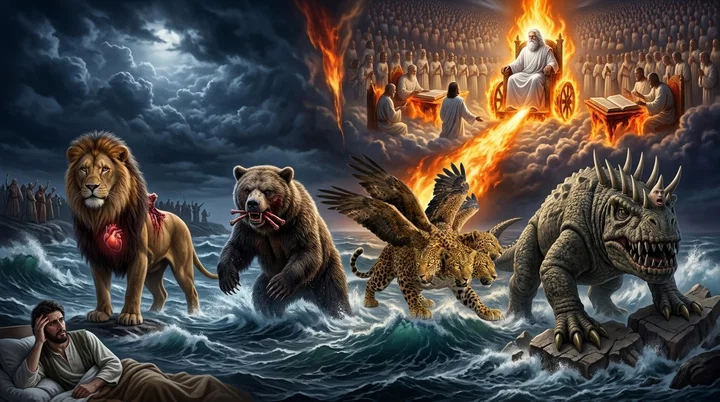
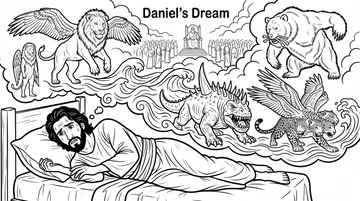
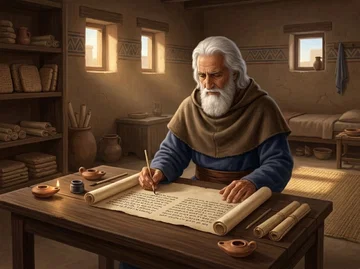
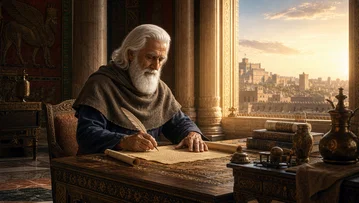
In the first year of Belshazzar king of Babylon Daniel had a dream and visions of his head upon his bed: then he wrote the dream, and told the sum of the matters.
Translations
In the first year of Belshazzar king of Babylon Daniel had a dream and visions of his head on his bed: then he wrote the dream, and told the sum of the matters.
King James Version, KJV Cambridge Paragraph Bible
In the first year of Belshazzar king of Babylon Daniel had a dream and visions of his head upon his bed: then he wrote the dream, and told the sum of the matters.
In the first year of Belshazzar king of Babylon, Daniel had a dream and visions of his head upon his bed: then he wrote the dream, and told the sum of the matters.
Revised Version, American Standard Version
In the first year of Belshazzar king of Babylon Daniel had a dream and visions of his head upon his bed: then he wrote the dream and told the sum of the matters.
In the first year of Belshazzar king of Babylon, Daniel hath seen a dream, and the visions of his head on his bed, then the dream he hath written, the chief of the things he hath said.
In the first year of Belshazzar king of Babylon, Daniel saw a dream and visions of his head upon his bed: then he wrote the dream; he told the sum of the matters.
In the first year of Belshazzar, king of Babylon, Daniel, beheld, a dream, and visions of his head upon his bed,—then, the dream, he wrote, the sum of the matters, he told.
Berean Standard Bible, Majority Standard Bible
In the first year of the reign of Belshazzar over Babylon, Daniel had a dream, and visions passed through his mind as he lay on his bed. He wrote down the dream, and this is the summary of his account.
In the first year of Belshazzar king of Babylon, Daniel had a dream and visions of his head while on his bed. Then he wrote the dream and told the sum of the matters.
In the first year of Belshazzar, king of Babylon, Daniel saw a dream, and visions came into his head on his bed: then he put the dream in writing.
In the first yeere of Belshazzar King of Babel, Daniel sawe a dreame, and there were visions in his head, vpon his bed: then he wrote the dreame, and declared the summe of the matter.
Douay-Rheims (Challoner revision)
In the first year of Baltasar king of Babylon, Daniel saw a dream: and the vision of his head was upon his bed: and writing the dream, he comprehended it in few words: and relating the sum of it in short, he said:
Pictures
Cross-references 20 of 33
- Daniel 8:1
In the third year of the reign of king Belshazzar a vision appeared unto me, even unto me Daniel, after that which appeared unto me at the first.
Both passages introduce Daniel’s visions during Belshazzar’s reign.
- Daniel 2:31-45
Thou, O king, sawest, and behold a great image. This great image, whose brightness was excellent, stood before thee; and the form thereof was terrible.
Both prophecies portray successive world empires and the final enduring kingdom of God.
- Daniel 7:7-8
After this I saw in the night visions, and behold a fourth beast, dreadful and terrible, and strong exceedingly; and it had great iron teeth: it devoured and brake in pieces, and stamped the residue with the feet of it: and it was diverse from all the beasts that were before it; and it had ten horns.
Describes the fourth beast, its ten horns, and the little horn arising among them.
- Daniel 7:13-14
I saw in the night visions, and, behold, one like the Son of man came with the clouds of heaven, and came to the Ancient of days, and they brought him near before him.
The Son of man comes before the Ancient of Days and receives an everlasting kingdom.
- Daniel 7:17
These great beasts, which are four, are four kings, which shall arise out of the earth.
The vision’s beasts are explained as kings.
- Numbers 12:6
And he said, Hear now my words: If there be a prophet among you, I the LORD will make myself known unto him in a vision, and will speak unto him in a dream.
God makes himself known to prophets through dreams and visions.
- Daniel 7:23-25
Thus he said, The fourth beast shall be the fourth kingdom upon earth, which shall be diverse from all kingdoms, and shall devour the whole earth, and shall tread it down, and break it in pieces.
Explains the fourth beast as a kingdom and describes the little horn’s power.
- Daniel 5:30-31
In that night was Belshazzar the king of the Chaldeans slain.
Belshazzar’s death and Babylon’s fall place Daniel’s vision chronologically.
- Revelation 13:1-2
And I stood upon the sand of the sea, and saw a beast rise up out of the sea, having seven heads and ten horns, and upon his horns ten crowns, and upon his heads the name of blasphemy.
The sea beast combines features of Daniel’s four beasts and their empires.
- Daniel 2:28-29
But there is a God in heaven that revealeth secrets, and maketh known to the king Nebuchadnezzar what shall be in the latter days. Thy dream, and the visions of thy head upon thy bed, are these;
God reveals through dreams what will happen in the latter days.
- Daniel 7:20-21
And of the ten horns that were in his head, and of the other which came up, and before whom three fell; even of that horn that had eyes, and a mouth that spake very great things, whose look was more stout than his fellows.
The little horn speaks arrogantly and wages war against God’s people.
- Daniel 7:7
After this I saw in the night visions, and behold a fourth beast, dreadful and terrible, and strong exceedingly; and it had great iron teeth: it devoured and brake in pieces, and stamped the residue with the feet of it: and it was diverse from all the beasts that were before it; and it had ten horns.
The ten-horned beast belongs to this dream.
- Daniel 2:10
The Chaldeans answered before the king, and said, There is not a man upon the earth that can shew the king’s matter: therefore there is no king, lord, nor ruler, that asked such things at any magician, or astrologer, or Chaldean.
The same Aramaic word is translated “matter” in both texts.
- Daniel 7:9-10
I beheld till the thrones were cast down, and the Ancient of days did sit, whose garment was white as snow, and the hair of his head like the pure wool: his throne was like the fiery flame, and his wheels as burning fire.
Describes the judgment session introduced by Daniel’s vision.
- Daniel 1:17
As for these four children, God gave them knowledge and skill in all learning and wisdom: and Daniel had understanding in all visions and dreams.
Daniel was given understanding of visions and dreams.
- Matthew 24:15
When ye therefore shall see the abomination of desolation, spoken of by Daniel the prophet, stand in the holy place, ( whoso readeth, let him understand:)
Jesus identifies Daniel as a prophet and directs readers to understand his prophecy.
- Habakkuk 2:2
And the LORD answered me, and said, Write the vision, and make it plain upon tables, that he may run that readeth it.
Both texts describe writing down a vision.
- Daniel 2:19
Then was the secret revealed unto Daniel in a night vision. Then Daniel blessed the God of heaven.
Both describe Daniel receiving revelation in a night vision.
- Daniel 7:25-27
And he shall speak great words against the most High, and shall wear out the saints of the most High, and think to change times and laws: and they shall be given into his hand until a time and times and the dividing of time.
The chapter’s prophecy identifies the Man of Sin and foretells the end of his dominion and the saints’ kingdom.
- Daniel 5:1
Belshazzar the king made a great feast to a thousand of his lords, and drank wine before the thousand.
Identifies Belshazzar and establishes the chronology.
Commentary part 1 of 2
Each commentary is drawn from primary sources: the writings of Ellen G. White and Adventist pioneers and periodicals. Each commentary is separate. Its own words are not a quotation; follow the references to read the source passages.
Ellen G. White
8 sources
Daniel received the dream and wrote its sum because God honored his firmness, self-denial, purity of motive, and unwavering trust.PK 484.3 God gave him understanding in all visions and dreams and put the spirit of prophetic power upon him.PK 484.3 While he was receiving instruction from men in court duties, God taught him to read the mysteries of the future.PK 484.3
The verse begins the wonderful prophecies recorded in chapters seven to twelve, given to Daniel as God's ambassador as revelations of the mysteries of ages to come.PK 547.1 It records for coming generations in figures and symbols a delineation of historical events covering the history of this world till the close of time.PK 484.3Ms 31, 1896, par. 1–2 The four beasts represent the successive empires of Babylon, Medo-Persia, Greece, and Rome, and the prophecy traces their rise and progress.4SP 502.2–3PK 535.1 Every nation is permitted to occupy its place on earth so it may be determined whether it will fulfill the purposes of the Watcher and the Holy One.PK 535.1 Each empire has its period of test, each fails, its glory fades and its power departs, and history repeats itself with each in turn.PK 535.1
The beast in Revelation 13 has the characteristics of those four beasts and inherits the power they held in succession.4SP 502.2–3 The little horn represents the Roman Church, even before it acquired civil power.4SP 502.4–6 Its description of blasphemy and war against the saints links it to the leopard-like beast of Revelation 13, and both symbols are identified with the papacy.GC88 439.1 The prophecy includes the little horn's loss of dominion, with its 1260 days applied to 1798 when Berthier entered and took Rome on February 10 and the Pope was taken prisoner on February 15.LS 66.1–67.2 The working of the man of sin is plainly revealed as among the last features in this earth's history.Ms 31, 1896, par. 1–2
The visions were not fully understood even by Daniel himself, were ordered to be shut up and sealed even to the time of the end, and belong to the closing period of this world's history.PK 547.1 The verse carries the blessed assurance that Daniel would rest and stand in his lot and place at the end of the days.PK 547.1 Its direct fulfillment in history in order shone out clearly as the sun at noonday and gave great light to those who studied it and bore the message of time to the people.Ms 31, 1896, par. 1–2 It is to be diligently studied and carefully guarded as a great waymark of truth showing bearings in prophetic history, not to be torn down and replaced with theories that bring confusion rather than genuine light, and its correct application belongs with the experience of those who acted a part in the proclamation of the first, second, and third angels' messages and now give the third angel's message to the world.Ms 31, 1896, par. 1–2
Sources
Pioneers and periodicals
332 sources
In the first year of Belshazzar king of Babylon Daniel received a dream with visions upon his bed at night, and he wrote it down and told its sum or main substance.ST Aug 30, 1905RH Aug 9, 1915RH Feb 8, 1870 It opens the prophecy of the four great beasts coming up from the sea, given in symbols where beasts stand for kingdoms and kings.RH Nov 14, 1854RH Mar 12, 1857ST Nov 18, 1903RH Jun 2, 1903 The four are four successive universal kingdoms from Daniel's day onward, Babylon, Medo-Persia, Greece, and Rome, the same as the four parts of the image in Daniel 2 but shown as wild beasts to portray their character.RH Jun 20, 1854RH Jun 20, 1854RH Aug 9, 1915ST Jun 5, 1884 The fourth beast with ten horns is divided Rome, from which arises the little horn, the papal persecuting power that wears out the saints for a time and times and dividing of time, 1260 years from 538 to 1798.ST Jun 5, 1884ST Aug 19, 1880RH Jan 20, 1853RH Oct 7, 1915ST Nov 13, 1901 The vision closes with judgment set in heaven and dominion and the everlasting kingdom under the whole heaven given to the Son of man and to the saints, which is received only at Christ's coming and not before.ST Sep 24, 1902RH Mar 24, 1874RH Feb 24, 1874ST Jul 23, 1874RH Oct 11, 1870
Text Date and Setting
In the first year of Belshazzar king of Babylon Daniel had a dream and visions of his head upon his bed, then he wrote the dream and told the sum or main points and substance of the matters.ST Aug 30, 1905RH Aug 9, 1915RH Feb 8, 1870ST Jul 23, 1874ST Oct 11, 1905 The dream introduces the prophecy of the four beasts representing four kingdoms, including the judgment scene and the transfer of the kingdom to the Son of Man and the saints, and outlines in concise form the history of the world from literal Babylon through successive kingdoms to the end of time, the judgment, and the everlasting kingdom and New Earth.ST Aug 30, 1905RH Aug 9, 1915ST Oct 11, 1905ST Sep 24, 1902 The first beast, the lion with eagle's wings, represents Babylon and corresponds to the head of gold in Daniel 2, with the lion signifying royal glory, the wings the speed of conquests and pride of rulers, and the plucked wings Babylon's humiliation or Belshazzar's failure to defend the kingdom before its fall to the Medes and Persians.RH Feb 8, 1870
The dream and visions came at night while Daniel lay in bed, showing that God teaches His servants and speaks through a prophet by dreams and visions in nocturnal darkness as well as in waking hours.RH Apr 21, 1851RH Dec 10, 1861RH Aug 4, 1859RH Nov 12, 1861 He instructs the human family through members of that family, giving the dream and visions to Daniel, a mortal like other people, rather than sending angels down to have visions for human benefit.RH Sep 27, 1864 The word rendered matter translates the Aramaic millah or millaw from malol meaning to speak or say, also translated matter in Daniel 2:10, and can mean word or saying.ST Sep 24, 1902ST Oct 2, 1901
Belshazzar is the same king named in Daniel 5, holding the title king of Babylon jointly with his father Nabonidus or Nabonadius or Nabonadius while remaining in Babylon and never leaving it so far as known.ST Oct 1, 1885ST Oct 1, 1885 He is very properly so called just as Cyrus king of Persia is called king of Babylon because Babylon was his capital.ST Oct 1, 1885 Monuments contain the names of both Nabonadius and Belshazzar, long thought to be one person until further research showed their true relationship as father and associated son and clarified the Babylonian succession from Nebuchadnezzar to the end of the monarchy.ST Oct 1, 1885 In one reckoning Belshazzar is identified as Nabonadius, who reigned seventeen years to 538 B.C. after Nebuchadnezzar's forty-three years, Evilmerodach's two years, Neriglissar's four years, and the uncounted nine-month reign of Laborosoarchod.ST Jan 8, 1880
Chronologically the vision follows chapter 4 and involves the same Belshazzar as chapter 5, but it is placed here so the historical section in chapters 1 to 6 stands apart and the prophetic section can proceed without interruption.ST Apr 5, 1877ST Sep 29, 1881 It begins a new middle division running from chapter 7 through chapter 10, following chapters 1 to 6 and preceding chapters 11 to 12. Daniel is no longer a youth when he receives it, for it comes after Nebuchadnezzar's death.ST Jul 20, 1882 The first year of Belshazzar is about 555 B.C. in agreement with historical chronology of Babylon's rulers and the marginal date, when he ruled jointly with his father and held Babylon's actual rule and defense.ST Oct 1, 1885ST Oct 1, 1885ST Nov 17, 1881ST Oct 1, 1885RH Jun 21, 1870
The vision is also dated to about 540 B.C. as the first year of Belshazzar, more than sixty years after Daniel interpreted Nebuchadnezzar's dream, while Babylon was still a great empire and Belshazzar was its last king ruling jointly with his father Nabonidus.ST Sep 17, 1902RH Aug 9, 1915ST Sep 17, 1902ST Sep 17, 1902ST Feb 20, 1912 Daniel received the vision himself and wrote down the dream and its main points as prophetic revelation.ST Jan 20, 1898 In another reckoning the dream is dated to 541 B.C., three years before Babylon fell, near the end of the Babylonian Empire which fell in 538 B.C., when Belshazzar ruled jointly with Nabonadius or Nabonidus during the last three years.ST Nov 6, 1901ST Dec 30, 1903 By the vision in Daniel 8, given two years later, Babylon's rule had ended and Medo-Persia was about to succeed it as world empire in 538 B.C., and the vision Daniel had at the first mentioned in Daniel 8:1 is this vision.ST Nov 17, 1881STST Sep 2, 1913RH Jun 21, 1870ST Feb 10, 1898
If Daniel was about twenty when taken to Babylon in 606 B.C., he was about seventy-three when he received the vision.RH Jun 21, 1870 The revelation thus came when he was well advanced in years, showing that age does not impair the gift in the slightest degree, for the spirit of prophecy does not grow old nor lose its power, authority, and value to the church as the instrument advances in years.RH Nov 30, 1905 The vision was given while Babylon was still in its glory yet nearing its end and amid its troubles, before the transition from Babylon represented by gold and a lion to the succeeding power represented by silver and a bear.ST Nov 29, 1905ST Nov 29, 1905RH May 11, 1869 It is God's appointed reliable forecast of future great dynasties and successive great dynasties, given for His people then and always to show the future, covering the same period and empires as Daniel 2 but portraying character through wild and cruel beasts rather than glory and durability through metals.ST Nov 29, 1905ST Nov 29, 1905
The written record preserved the vision for later generations to learn from Scripture and find hope.ST Aug 27, 1885 The prophetic announcements in chapters 7 to 9 began during Belshazzar's reign, which Belshazzar and his subjects failed to heed and instead insulted the worship of the King of Heaven.ST Nov 26, 1912
Literary Place and Form
Daniel 7:1 begins a new middle division of the book running from chapter 7 through chapter 10, following the first division of chapters 1 to 6 and preceding the final division of chapters 11 to 12. It closes the Aramaic portion that begins at Daniel 2:4 and belongs to the prophetic part following the narrative chapters, and it remains in Chaldee because its subject is similar to that of Daniel 2.ST Oct 21, 1908RH Nov 25, 1873 Though Daniel is counted among the Hagiographa and not the prophets in Hebrew, the chapter is distinctively prophetic and with the other prophecies gives rulers and nations great practical lessons of life.ST Oct 21, 1908
The verse opens, introduces and begins the vision and prophecy of the four symbolic beasts — the lion, the bear, the leopard, and the dreadful and terrible beast — forming a distinct line of prophecy to be illustrated, studied and taught.ST Nov 18, 1903RH Jun 2, 1903 Its symbolic figures of a man and beasts represent major events and kingdoms in the world's history and are the Bible's own visual language, chosen to mark the scale of time and to portray events of great importance. Setting them out plainly on a chart helps readers understand the vision, and they are pictured on charts and in an atlas as an object-lesson in the study of the prophecies.RH May 5, 1904 The four beasts are so well known that they are cut in solid stone over the two doors of the city hall at Nuremberg, keeping them ever before the eyes of the people.RH May 5, 1904
The vision is conveyed through symbols rather than predictions expressed directly in words, resuming the subject of Daniel 2 and adding many facts that make the investigation more interesting.RH Aug 1, 1865RH Jun 12, 1855 Earthly governments and kingdoms are represented by wild beasts, the same prophetic symbolism used in Revelation 13, with kings and nations likened to animals with particular characteristics.RH Mar 12, 1857RH Nov 26, 1857ST May 27, 1908 The four beasts are the four universal governments since the days of Nebuchadnezzar, and the chapter's imagery of four beasts, a fourth beast with iron teeth, and a little horn destroying three horns has historical significance as a subject for careful study.RH Nov 26, 1857ST The symbols of beasts, heads and horns are used by the Holy Spirit, and since all Scripture is profitable they must not be derided or scoffed at but are object lessons that make future events and prophetic truths clear and understandable.RH Aug 1, 1865ST May 27, 1908
Daniel 7 belongs to symbolic prophecy and is grouped with Daniel 2, 8 and 9, unlike Daniel 11 which is described as a literal prophecy given mostly in plain language.RH Dec 28, 1911ST Jan 10, 1878 It presents the great kingdoms of the earth through symbolic representation by beasts, in contrast to Daniel 11 which presents historical events in literal language.RH Dec 12, 1912 Its visions are clothed in figures and symbols like those of chapters 2 and 8, and belong among Daniel's symbolic visions of world events.ST Jan 10, 1878ST Apr 6, 1882
The vision is given in a threefold pattern: first emblematic representations pass before Daniel's eyes, then Daniel repeats what he saw in the form of inquiry into the meaning of the imagery, then a divine messenger explains each emblem in order.RH Jun 20, 1854 Each of the three tellings closes with the universal triumph of the saints that never ends.RH Jun 20, 1854 The vision was explained to Daniel by one who stood nearby, probably an unnamed angel, and unlike the vision in chapter 8 it presented no difficulty requiring further explanation.RH Aug 23, 1870ST Feb 9, 1882ST Oct 18, 1877 For that reason it is not the vision Gabriel returns to make Daniel understand in Daniel 9, and its explanation was not completed in Daniel 9 where the question about how long the host would be trodden underfoot remained unanswered and Daniel had not yet learned what would happen to his people at the end of the indignation.RH Jan 10, 1856ST Oct 18, 1877
Prophetic visions may portray events as present to the prophet even when some of those events are still future and have not yet been fulfilled.ST Mar 23, 1915 The chapter presents a connected sequence of prophetic events through the beasts, like the successive empires in Daniel 2, and is consecutive and fulfilled in the order in which it is written.RH Jan 21, 1909RH Sep 2, 1873 In such connected prophecy the events occur in order, so after one is fulfilled the next can be expected.RH Jan 21, 1909 God thereby instructs and forewarns His people of their whereabouts on the stream of time and their entrance into the vast ocean of eternity by employing beasts, nations, trees, cities and other animate and inanimate things.RH Apr 2, 1857 Daniel's visions show how knowledge of certain times and seasons was made known through prophets.
The seventh chapter opened here is a prophecy of special importance and interest for Bible students and their neighbors, worthy of having attention called to it and of verse-by-verse study that throws the most light on it together with the twelfth chapter and with Revelation.RH Apr 12, 1906
Four Successive World Empires
The vision is the clearest consecutive chain of successive earthly governments from Daniel's own day down to the coming of the everlasting kingdom of Jesus Christ, delineating the character of each government and their relation to one another so fully that the governments intended cannot be mistaken.RH Jun 20, 1854ST Jan 17, 1884RH Jan 23, 1900 It is one of Scripture's clearest prophetic chains about four great universal kingdoms whose territory and history from rise to fall illustrate what is foretold.ST Jan 17, 1884RH Jan 23, 1900
In prophetic symbolism kingdoms or earthly governments are represented by wild beasts, the same symbolism used in Revelation 13.RH Mar 12, 1857RH Nov 26, 1857 A beast is a symbol of a kingdom or empire continuing through successive changes, horns wherever used represent kingdoms or nations or power more generally, and in the vision king is used to mean kingdom since a king represents his kingdom.RH Nov 14, 1854ST Dec 22, 1881RH May 8, 1916 This use of symbols is fitting and like the modern use of the lion for Great Britain, the bear for Russia, the crescent for the Turkish Empire, and the eagle for Germany, and is the same kind found in John's visions.ST May 27, 1908RH May 8, 1916 The symbols are object lessons that make future events and prophetic truths clear and understandable, giving in advance the history of the leading nations to the end of the world, where days in the same connection stand for years.ST May 27, 1908RH May 8, 1916
The four winds striving upon the great sea represent commotions, strife, political commotion and war.RH Apr 23, 1857ST May 3, 1877RH Feb 17, 1874 The sea or waters represent peoples, multitudes, nations and tongues.ST May 3, 1877RH Feb 17, 1874RH Apr 15, 1909 The four beasts arise from that sea through conquest, popular upheaval, revolution and war among great nations, succeeding one another as earlier governments are overthrown, in contrast to the two-horned beast which comes up from the earth rather than through conflict among nations.ST May 3, 1877RH Jun 25, 1857RH Jan 15, 1861
The four beasts are four successive universal kingdoms or Gentile kingdoms in succession: Babylon, Medo-Persia, Greece, and Rome, arising successively to fill the time from Daniel until the coming of the Son of man in the clouds and the everlasting kingdom under the whole heaven.RH Jun 20, 1854RH Jun 20, 1854RH Aug 9, 1915RH Jan 20, 1853RH Dec 11, 1860 The chapter begins a prophetic outline of world history from literal Babylon through successive kingdoms to the end of time, the judgment, and the everlasting kingdom, paralleling Daniel 2 with further detail that after the fourth kingdom is broken into ten an eleventh ecclesiastical kingdom arises among them.RH Aug 9, 1915RH Jan 20, 1853ST Jun 30, 1914 Out of that fourth and last kingdom ten kingdoms were to rise, and after the ten another blasphemous persecuting power was to rise and wear out the saints.RH Jun 20, 1854
The chapter covers the same ground as Daniel 2, the four beasts symbolizing the same four kingdoms as the four parts of the image and the horns corresponding to the toes.RH Jan 20, 1853ST Nov 29, 1905ST Jun 13, 1878 Where Daniel 2 portrays human kingdoms by the glory and durability of metals, Daniel 7 portrays their character and attitude toward God, His laws and His people through fierce wild cruel beasts, with more definite particulars and additional history especially concerning medieval and modern developments.ST Jun 30, 1914ST Nov 29, 1905ST Jun 13, 1878 The specifications are more definite and particular than in Daniel 2, so its different predictions can be identified in past history, and its scope reaches from the distant past through to the eternal kingdom marked by events that can be matched with history.ST Jun 13, 1878
Daniel seeing the lion with the other beasts come up out of the sea does not mean Babylon rose then; his attention was carried back to its earlier rise beginning around 625 B.C. in order to set the whole consecutive chain before the student.ST Nov 19, 1885RH Mar 19, 1857 The first beast, the lion with eagle's wings corresponding to the head of gold, is Babylon and the kingdom of Nebuchadnezzar.RH Feb 8, 1870RH Nov 2, 1905ST Sep 21, 1882 The lion signifies royal glory, power, strength and soaring pride shown in conquests, persecution and self-exaltation, the wings the speed of conquests, and the plucked wings and standing with a human heart its humiliation and weakening after Nebuchadnezzar's death under succeeding kings and Belshazzar's failure before its fall to the Medes and Persians.RH Feb 8, 1870
The bear with three ribs in its mouth is the kingdom of Darius, Media and Persia, corresponding to silver and later giving way after Babylon.RH Nov 2, 1905ST Sep 21, 1882 The four-headed leopard is the kingdom of Alexander, Greece, which succeeded Persia in world dominion in 331 B.C. by smiting its power beginning with its first king, its four heads and four wings the four kingdoms into which Alexander's empire divided after his death, matching brass in Daniel 2 and the goat in Daniel 8.RH Nov 2, 1905ST Jul 15, 1913 The meaning of these beasts was already understood in this way as far back as 1617.RH Nov 2, 1905
The great terrible dreadful nondescript beast with iron teeth and brass nails is Rome, the kingdom of Augustus, the fourth universal kingdom that followed Greece, ruled when Augustus decreed, became dominant over the Grecian Empire in 168 B.C., and is shown as one undivided kingdom.ST May 3, 1877RH Nov 2, 1905ST Jul 15, 1913 It is different because of its republican form whose destructive conquests occurred while a republic, a prophecy written about 340 years before the events.ST Nov 29, 1899 It is the last earthly government in the vision, destroyed by fire with its kingdom passing permanently to the saints, foreshowing the successive arising and passing away of Babylon, Medo-Persia, Grecia, and Rome and pointing to God's everlasting kingdom as the fifth universal empire immediately impending, of which the part remaining is the slaying of the beast and giving his body to the burning flame.ST May 3, 1877ST Aug 2, 1877
The beasts represent governments without implying character in one view, while in another they portray cruel, destructive, rapacious, persecuting powers opposed to God, His work, truth and people, using force for advantage and ending in destruction rather than conversion, in contrast to the coming kingdom which bears no resemblance to this world's evil.ST Dec 22, 1881ST Aug 9, 1910ST Nov 3, 1914ST Mar 30, 1915RH Jul 24, 1855 The sequence portrays empires that oppress God's people and devastate the earth, viewed in their opposition to God's gospel with prophetic periods in which days stand for years.ST Aug 9, 1910ST Dec 14, 1882 The third beast is distinct from the fourth with its own ten horns and brazen nails, so merging the third into the fourth by making a Syrian head absorb the whole fourth cuts the prophecy short before the First Advent; under Roman rule Christ would come to redeem humanity.RH Nov 11, 1915RH Mar 2, 1852 The course of empire moves from east to west with Babylon and Medo-Persia in Asia, Greece farther west and Rome farther still, filling the Old World so no room remained there for a new power, requiring the next power to rise from the earth in the New World and pointing toward America to play a part in the final conflict.ST Feb 2, 1915ST Aug 31, 1882RH Feb 8, 1870
Divided Rome and Papal Horn
The ten horns correspond to the ten toes and the iron-and-clay feet and represent the ten primary kingdoms or divisions of the Western Roman Empire occupying territory Rome held.ST Jun 5, 1884RH Jan 20, 1853ST Oct 17, 1906ST Oct 29, 1902 They arose through northern barbarian incursions and great political commotions described by the first four trumpets, existing between A.D. 351 and 493 and completed before the end of the fifth century.RH Jan 20, 1853ST Oct 17, 1906ST Oct 29, 1902RH Dec 11, 1856 They remain, with changes, until Christ's coming, when God's heavenly kingdom begins its reign.ST Jun 5, 1884RH Jan 20, 1853ST Oct 17, 1906RH Dec 11, 1856
The ten kingdoms were the Alemanni, Franks, Burgundians, Vandals, Suevi, Visigoths, Saxons, Ostrogoths, Lombards and Heruli.ST Oct 29, 1902 They are also listed as Ostrogoths, Visigoths, Allemani, Franks, Vandals, Suevi, Burgundians, Heruli, Anglo-Saxons and Lombards with specific dates from 351 to 476.ST Oct 29, 1902ST Oct 22, 1894RH Jun 20, 1912 There were ten from 476 to 493 with the last member dated to 488, and though their number changed they remained known as the ten.ST Oct 29, 1902ST Nov 9, 1882RH Jun 20, 1912ST Jun 20, 1900RH Apr 7, 1874 In another enumeration the ten are Huns, Ostrogoths, Visigoths, Franks, Vandals, Suevi and Alans, Burgundians, Heruli and Thuringi, Saxons and Angles, and Lombards, formed in Europe before the close of the sixth century after Christianity was established by Theodosius in A.D. 390.RH Sep 22, 1874
The horns were not present until A.D. 483, so the stone could not have smitten the image at the first advent because the feet did not yet exist.RH Oct 25, 1870 Although three horns were later destroyed the prophecy still pictures ten because they represent divisions continuing until God sets up His kingdom.RH Oct 25, 1870RH Nov 19, 1901 The fourth kingdom is broken into ten and an eleventh ecclesiastical kingdom diverse from the others arises among them on Roman territory after the division.ST Jun 30, 1914RH Mar 18, 1862ST Dec 22, 1881RH Sep 30, 1862 The ten-horned beast performs its acts before the ten arise while later acts belong to the little horn, distinguishing the beast before division from the horns after it.ST Jun 30, 1914RH Mar 18, 1862ST Dec 22, 1881RH Sep 30, 1862
The little horn arising among the ten is the Papacy, papal Rome, ecclesiastical Rome, modern Babylon, Roman Catholicism, the Man of Sin and the apostasy beginning in Paul's time.RH Jun 20, 1854ST Jun 5, 1884ST Aug 19, 1880RH Jan 20, 1853RH Feb 17, 1853 It is a religious and political blasphemous persecuting power in Rome and Italy arising gradually after Rome's division under the guise of Christianity and continuing until Christ's coming.RH Jun 20, 1854ST Jun 5, 1884ST Aug 19, 1880RH Jan 20, 1853ST Oct 14, 1889 No other power meets its specifications and its characteristics are found in Revelation 13.ST Jun 5, 1884ST Aug 19, 1880RH Jan 20, 1853RH Feb 17, 1853ST Oct 14, 1889 In one view the ten-horned beast represents papal Rome and its little horn the papal sovereigns whose rule was ecclesiastical as well as civil.RH Feb 2, 1864
The little horn was small at first, beginning as a Christian bishop in Rome professing to represent Christ whose kingdom is not of this world.ST Jun 5, 1884RH Dec 11, 1856RH Jan 18, 1870ST Jan 14, 1889ST Nov 13, 1901 It is diverse because it is an ecclesiastical power, first ecclesiastical then temporal, holding sovereignty over rulers and distinct from Rome's civil divisions and pagan Rome.ST Jun 5, 1884RH Dec 11, 1856RH Jan 18, 1870ST Nov 13, 1901RH Apr 15, 1875 Its eyes like a man mean cunning and far-seeing, its mouth speaking great things against the Most High means arrogant and blasphemous as the only power acknowledging Jehovah while assuming God's titles and legislating upon the Bible.ST Jun 5, 1884ST Jun 19, 1884 Its look more stout than its fellows means when it controlled civil affairs it ruled the strongest kingdoms so none could make war with it.ST Jun 5, 1884ST Jun 19, 1884
Its arising after the ten divisions excludes Antiochus Epiphanes who lived centuries earlier.RH May 27, 1873RH Jul 23, 1872ST Nov 19, 1885RH May 29, 1900 Daniel 7 does not bring Antiochus into view, the little horn is not Napoleon III, and Daniel 7's little horn representing the papacy for part of Rome's history is distinct from Daniel 8's little horn and from the two-horned beast.RH Jul 23, 1872ST Nov 19, 1885RH May 29, 1900RH Nov 13, 1866 Three Arian kingdoms opposed to the Trinitarian bishop, the Heruli, Vandals and Ostrogoths, were plucked up before it to make place for it in establishing supremacy.ST Jun 5, 1884RH Jul 23, 1872ST Nov 13, 1901ST Jul 24, 1879ST Oct 22, 1894 They were overthrown between 493 and 553 in 493, 533 or 534, and 538; the last Ostrogothic horn was rooted out when the siege was raised in March 538 and Belisarius suppressed them to carry out Justinian's decree.ST Jun 5, 1884RH Jul 23, 1872ST Nov 13, 1901ST Oct 22, 1894RH Oct 24, 1871
The saints were given into his hand when Justinian decreed the Bishop of Rome head of all churches in 533, with full supremacy set up in Justinian's days.RH Jun 20, 1854RH Oct 7, 1915ST Nov 13, 1901ST Jul 24, 1879ST Oct 22, 1894 With nothing standing in the way in 538 the pope could exercise in fact the power conferred five years before, holding saints, times and laws in his hands, and that setting up in 538 dates the 1260 years.RH Oct 7, 1915ST Nov 13, 1901ST Jul 24, 1879ST Oct 22, 1894ST Sep 30, 1880 Its time, times and dividing of time is 1260 prophetic days or years reckoned as three and a half years of 360 days, the same as 1260 days and 42 months of 30 days, by the day-for-a-year principle.ST Aug 19, 1880RH Feb 10, 1874RH Oct 7, 1915ST May 18, 1915RH Jul 23, 1872 It marks persecuting dominion from its full establishment in 538 to 1798 when Berthier entered Rome February 10 and the pope was taken prisoner February 15 and carried captive by France, ending its power to make war and its acknowledged spiritual domination and corresponding to the deadly wound.RH Feb 10, 1874RH Oct 7, 1915ST May 18, 1915RH Jul 23, 1872RH Mar 29, 1864
It wears out the saints by centuries-long warfare unlike pagan Rome's short persecutions, killing fifty million Christians with torture until many millions are slain, making war, suppressing the Bible, and suffering a wound later healed.ST Jun 5, 1884ST Oct 14, 1889RH Oct 24, 1871ST Jun 19, 1884ST Jul 8, 1897 It thinks to change times and laws by setting aside the second commandment and changing the Sabbath from the seventh to the first day, the day of the sun, claimed as its mark of authority.ST Jun 5, 1884ST Jun 28, 1877RH May 27, 1873ST Mar 18, 1880ST This concerns God's laws not human laws and is distinct from feast days, new moons and ceremonial sabbaths ceasing at the cross, and Christ did not make the change or He would fill the blasphemous office and make prophecy fail.ST Jun 5, 1884ST Jun 28, 1877RH May 27, 1873ST Mar 18, 1880RH Oct 24, 1871 Any claim about the Sabbath change must identify the power with dates and evidence: if Antiochus before the Christian era, if the papacy after Rome's division into ten, contrasted with testimony of Sunday observance before Rome's fall.RH May 27, 1873
After 1798 its dominion was taken away to consume and destroy it unto the end.RH Feb 10, 1874RH Oct 7, 1915RH Jul 23, 1872RH Nov 7, 1871 It continues diminished, weakened in Spain, Naples, Austria and France and left without territory, yet continues as a church stripped of civil power till the advent to be destroyed by the brightness of Christ's coming in flaming fire when the beast is slain for the horn's great words, ending human government.RH Oct 7, 1915RH Jul 23, 1872RH Nov 7, 1871RH Jul 11, 1854 The persecuting Man of Sin abides till Christ comes, proving the world will not be converted before His coming but righteous and wicked remain together till the end, denying a temporal millennium or thousand years of peace before wrath.ST Nov 21, 1895RH Apr 3, 1855 All stations from Babylon through Rome, the ten, the plucking of the three, the papal establishment, blasphemy, wearing out saints, changing law, expiry of years and loss of civil power have passed, leaving only total destruction at Christ's coming and dominion given to His people raised from the dead.RH Jul 23, 1872ST Jan 15, 1880
Ten specifications are fulfilled while an eleventh is expected when the papacy again becomes dominating, with only a brief seeming triumph for the harlot before her end.ST Oct 14, 1889ST Jun 24, 1897STRH Oct 28, 1902 Twelve specific predictions disclose its territory, rise, duration and work.ST Oct 14, 1889ST Jun 24, 1897STRH Oct 28, 1902 Rome appears first in pagan form as the great beast or dragon that sought to put the Bethlehem child to death, then after that phase falls in papal form as the little horn as its second professedly Christian phase continuing the beast's essence, so at the end the beast is destroyed not merely the horn.RH Apr 10, 1900ST May 10, 1877ST Jun 19, 1884 The chapter establishes the pattern for later visions where a horn can represent a church even before union with the state, as the little horn represents Rome's church before civil power, with 1290 years marking supremacy over churches and 1260 years alliance with civil authority, synchronizing with the abomination, the 1290 years, and the blessing of the 1335 days reaching to 1843.RH Sep 30, 1873SMV 33.1 The tribulation of that supremacy ceased about 1776 through the Reformation, so the darkening of the sun and moon between 1776 and 1798 came after the tribulation.ST Apr 16, 1894
Judgment and Everlasting Kingdom
The dream written down in the first year of Belshazzar includes the heavenly judgment scene and the transfer of the kingdom to the Son of Man and the saints.ST Sep 24, 1902ST Dec 16, 1903RH Jan 16, 1900 That judgment is set with books opened at the close of the little horn's dominion, while its words and persecution still continue, and it comes before Christ returns and before He receives the heathen for His inheritance.RH Feb 24, 1874RH Oct 25, 1870ST Mar 28, 1878 The signs that precede the Judgment and the setting up of God's everlasting kingdom have all transpired, so the Judgment, the reward of the just, and the city of the great King are next to be expected.ST Jul 23, 1874RH Feb 17, 1874 Its lesson concerns the symbolic kingdoms, the judgment, the kingdom given to the Son of Man, and the waymarks leading to Judgment-day and the everlasting kingdom of the redeemed.RH Jan 16, 1900RH Feb 17, 1874
That judgment takes place in heaven, not on earth, in the second apartment of the heavenly temple where the ark is, with the Father presiding and entering to sit in tribunal.RH Nov 30, 1869RH Jan 11, 1870RH Jan 4, 1870 It closes Christ's priesthood and crowns Him King of kings to execute the decision, ending with His coronation as King and His taking His own throne after finishing His priestly work on the Father's throne.ST Mar 28, 1878RH Dec 14, 1869ST Aug 29, 1878 Its work is to investigate all cases before the resurrection while the living are still in probation, to acquit God's people, blot out their sins, and decide they are worthy of the world to come, the resurrection to immortality, and eternal life.ST Mar 28, 1878RH Dec 14, 1869RH Jan 4, 1870 The work begins with the righteous dead, while their cases are examined the living righteous are prepared for the close of probation and judgment, and when complete Christ is crowned, appears on the white cloud, makes the faithful immortal, and destroys the rest.RH Dec 14, 1869ST Aug 29, 1878RH Nov 5, 1908
It is the last work of God and Christ before Christ comes to earth and preparatory to it, going on in heaven while the last generation is still living on earth and while the worldwide warning that the hour of judgment is come is preached to every nation.RH Nov 5, 1908RH Feb 8, 1870 The tribunal commences at the end of the 1260 years in 1798 when papal dominion was taken away, which is the last important event before the Judgment.RH Jan 23, 1855ST Jun 22, 1882RH Feb 8, 1870 The judgment-hour message could therefore be preached as immediately impending only after that period had ended, marking the beginning of the time of the end when prophecies about the Judgment are unsealed.RH Jan 23, 1855ST Jun 22, 1882RH Apr 26, 1870 The present is the antitype of the great day of atonement, requiring affliction of soul and confession of sins, revealed in the heavenly sanctuary before the ark of God's testament.RH Feb 8, 1870
Daniel sees the Son of man come to the Ancient of Days to receive dominion, glory, and an everlasting kingdom before coming to earth as king, linked with the cleansing of the sanctuary and identified as 1843 and 1844, then returning and reigning with the saints.ST Sep 24, 1902ST Jul 23, 1874ST Dec 17, 1874 This heavenly judgment concerns the righteous, occurs before their final deliverance at the advent, and is followed by a time of trouble in which Christ delivers those whose names are written in the book.ST Mar 28, 1878ST Feb 21, 1878 The kingdom under the whole heaven is then given to the saints of the Most High as the same everlasting kingdom as Daniel 2, identical after judgment sits and the fourth beast is destroyed by fire with its body given to the burning flame.ST Sep 24, 1902ST May 3, 1877ST Aug 2, 1877 It does not immediately succeed Rome but comes only after the ten horns and the papal rise, rule, and ruin, when all peoples serve the Son and the fourth kingdom as the last earthly government passes permanently to the saints.ST May 3, 1877ST Aug 2, 1877ST Jul 1, 1897
The kingdom was therefore not set up at Pentecost, for the ten horns arise before the judgment and the saints receive the kingdom, and its establishment and the breaking of earthly kingdoms remain future.RH Jun 19, 1860RH Oct 25, 1870 Its setting up comes at the end of the papacy after the church was established, and it does not subvert governments by the gospel but overturns them under the seventh trumpet at the coming of Christ when the beast and the kings of the earth make war against Him.RH Dec 11, 1856RH Mar 20, 1879RH Oct 25, 1870 The horns were not present until A.D. 483, so the stone could not have smitten the image at the first advent because the feet did not yet exist, and the breaking of the nations with a rod of iron comes only after He receives the heathen.RH Oct 25, 1870ST Jul 1, 1897 In the later prophetic history of this power the judgment sits in session, and shortly after come the destruction of earthly powers and the reward of the people of God, so on this highway of prophecy the next event is the reign of Christ.RH Dec 11, 1856ST Jul 1, 1897
The saints inherit it only when Jesus comes, for in the present mortal state they are only heirs since flesh and blood in the mortal, perishable, corruptible condition cannot inherit it or a mortal would die and leave it to successors contrary to its never being left to others.RH Oct 11, 1870ST Mar 13, 1884ST Jun 19, 1884 It is still a matter of promise and hope to the saints, located on the new earth, and the new earth itself constitutes the kingdom in its full and complete establishment at the end of the thousand years.RH Oct 11, 1870ST Mar 13, 1884 He receives the kingdom first, then returns and reigns with the saints in heaven for a thousand years.ST Dec 17, 1874 At Christ's coming the nations will be judged and their rule ended never to exist again, and at the end of the thousand years the wicked will rise as individuals with the characters they had in life, not as members of their former nations whose boundaries and identities have been erased.ST Jan 21, 1913
The year 1798 marks the beginning of the time of the end when Daniel 11:40 takes place, fixing the time of the end to 1798 as the close of the 1260 days of persecution from A.D. 538, when fulfillment of definite-time prophecies began, the last ending in 1844.ST Jul 8, 1897ST Nov 28, 1895 The seventy weeks began in B.C. 457 and ended 490 years later in A.D. 34, set apart upon the Jews during which the Lord worked for them and through them for others.ST At the end they were no longer His special nation for rejecting Him, marked by the second rejection of Christ in His servant Stephen when by stoning him they said His blood be upon us and upon our children, thenceforward His people were scattered abroad winning souls, and about seven years after this Peter preached to Cornelius the centurion.ST
Sources