Daniel 3:4
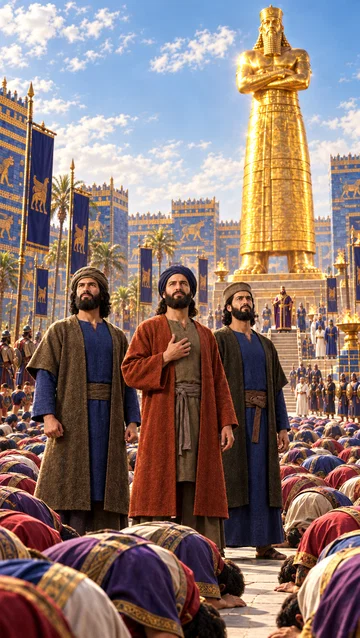
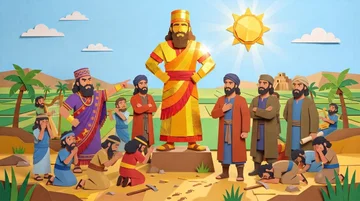
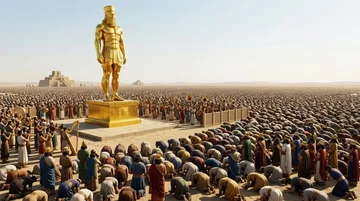
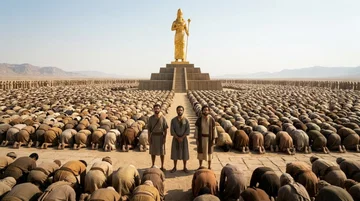
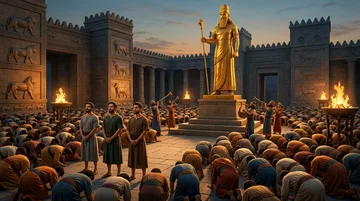
Then an herald cried aloud, To you it is commanded, O people, nations, and languages,
Translations
American King James Version, King James Version
Then an herald cried aloud, To you it is commanded, O people, nations, and languages,
KJV Cambridge Paragraph Bible, Webster Bible
Then a herald cried aloud, To you it is commanded, O people, nations, and languages,
Then the herald cried aloud, to you it is commanded, O peoples, nations, and languages,
Then the herald cried aloud, To you it is commanded, O peoples, nations, and languages,
And a crier is calling mightily: 'To you they are saying: O peoples, nations, and languages!
And the herald cried aloud, To you it is commanded, [O] peoples, nations, and languages,
And, the herald, proclaimed aloud,—To you, is given the word, O ye peoples, races, and tongues:
Berean Standard Bible, Majority Standard Bible
Then the herald loudly proclaimed, “ O people of every nation and language, this is what you are commanded:
Then the herald cried aloud, “ To you it is commanded, peoples, nations, and languages,
Then one of the king's criers said in a loud voice, To you the order is given, O peoples, nations, and languages,
Then an herald cried aloude, Be it knowen to you, O people, nations, and languages,
Douay-Rheims (Challoner revision)
Then a herald cried with a strong voice: To you it is commanded, O nations, tribes, and languages:
Pictures
Cross-references
- Daniel 3:16-18
Shadrach, Meshach, and Abed-nego, answered and said to the king, O Nebuchadnezzar, we are not careful to answer thee in this matter.
The three Hebrews refuse the king’s command to worship the image despite the threat of death.
- Daniel 4:1-3
Nebuchadnezzar the king, unto all people, nations, and languages, that dwell in all the earth; Peace be multiplied unto you.
Nebuchadnezzar’s proclamation to all peoples recounts God’s rule and his humbling of the king.
- Daniel 3:28
Then Nebuchadnezzar spake, and said, Blessed be the God of Shadrach, Meshach, and Abed-nego, who hath sent his angel, and delivered his servants that trusted in him, and have changed the king’s word, and yielded their bodies, that they might not serve nor worship any god, except their own God.
The king praises God for delivering the men who refused to worship another god.
- Exodus 20:4-5
Thou shalt not make unto thee any graven image, or any likeness of any thing that is in heaven above, or that is in the earth beneath, or that is in the water under the earth:
God forbids making and bowing down to images.
- Jeremiah 27:6-7
And now have I given all these lands into the hand of Nebuchadnezzar the king of Babylon, my servant; and the beasts of the field have I given him also to serve him.
God gives Nebuchadnezzar authority to rule over nations.
- Revelation 13:15
And he had power to give life unto the image of the beast, that the image of the beast should both speak, and cause that as many as would not worship the image of the beast should be killed.
The beast’s image demand and threat of death parallel the command to worship the golden image.
- Daniel 3:29
Therefore I make a decree, That every people, nation, and language, which speak any thing amiss against the God of Shadrach, Meshach, and Abed-nego, shall be cut in pieces, and their houses shall be made a dunghill: because there is no other God that can deliver after this sort.
The king’s decree follows the deliverance and declares that no other God can deliver.
- Daniel 3:10-11
Thou, O king, hast made a decree, that every man that shall hear the sound of the cornet, flute, harp, sackbut, psaltery, and dulcimer, and all kinds of musick, shall fall down and worship the golden image:
The decree threatens punishment for refusing to worship the image.
- Daniel 3:15
Now if ye be ready that at what time ye hear the sound of the cornet, flute, harp, sackbut, psaltery, and dulcimer, and all kinds of musick, ye fall down and worship the image which I have made; well: but if ye worship not, ye shall be cast the same hour into the midst of a burning fiery furnace; and who is that God that shall deliver you out of my hands?
Repeats the music signal and worship demand.
- Revelation 14:9-12
And the third angel followed them, saying with a loud voice, If any man worship the beast and his image, and receive his mark in his forehead, or in his hand,
Compelled image worship tests faithful allegiance and brings persecution.
- Daniel 6:25-27
Then king Darius wrote unto all people, nations, and languages, that dwell in all the earth; Peace be multiplied unto you.
A royal proclamation to all peoples spreads knowledge of God and his power.
- Daniel 2:31-35
Thou, O king, sawest, and behold a great image. This great image, whose brightness was excellent, stood before thee; and the form thereof was terrible.
The golden statue resembles the image in Nebuchadnezzar’s vision.
- Daniel 3:20
And he commanded the most mighty men that were in his army to bind Shadrach, Meshach, and Abed-nego, and to cast them into the burning fiery furnace.
Refusal of the herald’s command led to the fiery furnace.
- Daniel 3:24-27
Then Nebuchadnezzar the king was astonied, and rose up in haste, and spake, and said unto his counsellors, Did not we cast three men bound into the midst of the fire? They answered and said unto the king, True, O king.
God vindicated their refusal to bow by delivering them unharmed from the furnace.
- Revelation 13:8
And all that dwell upon the earth shall worship him, whose names are not written in the book of life of the Lamb slain from the foundation of the world.
Both describe a universal demand for worship.
Commentary
Each commentary is drawn from primary sources: the writings of Ellen G. White and Adventist pioneers and periodicals. Each commentary is separate. Its own words are not a quotation; follow the references to read the source passages.
Ellen G. White
50 sources
The herald's cry was a public summons to peoples, nations and languages to hear and obey the king's command.PK 503Lt 351, 1905, par. 9 It required all assembled on the plain of Dura to bow down and worship the golden image representing Babylon and Nebuchadnezzar himself when the music sounded, on pain of immediate casting into the burning fiery furnace, though such worship and homage belong to God alone.ST Sep 2, 1897BS 31.2–3Lt 132, 1901, par. 7–1521MR 59.1–60.1Ms 84b, 1897, par. 9–11 By that proclamation worship was made a matter of civil command rather than conscience, with the king assuming a right that belongs to God alone by forcing men to worship an idol of human creation.Ms 136, 1899, par. 14–1612MR 218.2–220.119MR 243.1–4 That universal command to false worship will be repeated in the last days in the exaltation of a rival, spurious, man-made sabbath above God's Sabbath, with professed Christians calling the world to observe Sunday in place of the seventh day until a universal decree denounces as deserving death those who hallow the Sabbath of the fourth commandment.PK 512.1Ms 32, 1898, par. 11–12Ms 56, 1902, par. 23–24Ms 110, 1904, par. 58–61Ms 27, 1900, par. 32–34 When human authority thus requires violation of God's law, God's people must refuse to bow the knee and remain loyal to His commandments, and He will interpose in behalf of His loyal, commandment-keeping people as Christ walked with the three Hebrews in the furnace and preserved them unharmed.21MR 59.1–60.1Ms 168, 1898, par. 1–3Ms 78, 1897, par. 40Lt 35, 1895, par. 1–3Ms 15, 1896, par. 33–34
Proclamation and Historical Setting
The verse records a herald crying aloud with a public summons addressed to peoples, nations, and languages to hear and obey the king's command.PK 503Lt 351, 1905, par. 9 The command required all rulers and people assembled at the dedication on the plain of Dura to bow down and worship the golden image when the music sounded, on pain of being immediately cast into the burning fiery furnace for refusal.ST Sep 2, 1897BS 31.2–3Ms 110, 1904, par. 50–51ST Dec 24, 1912ST Oct 19, 1882
The episode belongs to the history of the Lord's wonderful deliverance of the three Hebrew worthies, setting forth important principles regarding obedience and disobedience in the working out of His purpose for the children of obedience and the children of disobedience.Lt 118, 1910, par. 2BS 29.1 Their integrity was thereby tested, and an idolatrous nation was shown the power and faithfulness of Israel's God.BS 29.1 This came after a few years of prosperity had filled Nebuchadnezzar's heart with pride, so that he forgot his acknowledgment of the living God and resumed idol worship with increased zeal and bigotry.BS 31.2–3 In that pride he returned to idolatry in an effort to exalt his kingdom through the image.BS 31.2–3PK 503.2
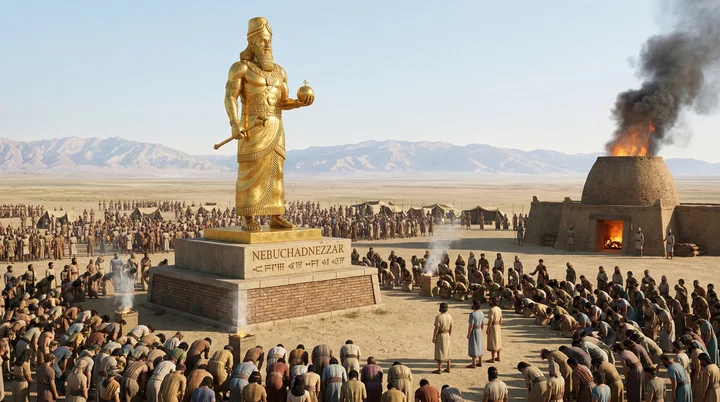
From treasures obtained in war he made a golden image to represent the one he had seen in his dream, exceedingly costly and magnificent, imposing and majestic in appearance and in the eyes of an idolatrous people.BS 31.2–3ST Oct 19, 188213MR 60.1–61.2 It was about ninety feet in height and nine feet in breadth.BS 31.2–3ST Oct 19, 1882 He set it up in the plain of Dura and called all the officers of the kingdom to assemble at its dedication.BS 31.2–3ST Oct 19, 1882
Afterward, when his pride was humbled, Nebuchadnezzar acknowledged that God's kingdom is everlasting and His dominion continues from generation to generation.PK 514.2
Meaning of the Required Worship
The image was made to represent the one Nebuchadnezzar had seen in his dream, and it represented the kingdom of Babylon and more particularly Nebuchadnezzar himself, his glory, and the excellence of Babylon.BS 31.2–3Lt 132, 1901, par. 7–15Lt 109a, 1898, par. 5–8Ms 168, 1898, par. 1–3Ms 47a, 1898, par. 2–5 It was exceedingly costly, magnificent, imposing and majestic in appearance, about ninety feet high and nine feet broad, made from treasures obtained in war and set up in the plain of Dura.BS 31.2–313MR 60.1–61.2 The herald's proclamation commanded all rulers and people assembled at its dedication to bow down and worship it when the music sounded.BS 31.2–3Lt 132, 1901, par. 7–15
The demand grew from Nebuchadnezzar perverting the light given in Daniel's interpretation, reading it through his own idolatrous mind and ambition instead of in the light of the living oracles.Ms 168, 1898, par. 1–3Ms 47a, 1898, par. 2–513MR 60.1–61.2 He and his heathen counselors were flattered that his kingdom was the head of gold while each baser metal signified decrease in value as nations separated from God, and they set him before the people as an object of worship.13MR 60.1–61.2 He supposed the display had authority to convert all nations to its worship, which God allowed him to follow according to his own inventions.Ms 168, 1898, par. 1–3Ms 47a, 1898, par. 2–513MR 60.1–61.2
The required bowing was understood as worship and homage that belong to God alone.21MR 59.1–60.1Ms 84b, 1897, par. 9–11 The three Hebrews refused to give that honor to an idol or, in effect, to the king.21MR 59.1–60.1Ms 84b, 1897, par. 9–11
The herald's universal call to peoples, nations, and languages made loyalty to the image a test of loyalty to Babylon on dedication day.Lt 132, 1901, par. 7–15PK 505.2 It sought to make image worship a permanent part of the state religion and the country's established and official religion.ST Dec 24, 1912PK 506.1ST Sep 2, 1897 It was part of a scheme to compel the three Hebrew youths to obey human law against God's law, to exalt the king, and to stir hostility against the Hebrew captives.ST Dec 24, 1912ST Sep 2, 1897 It threatened to turn captive Israel's presence from a means of blessing the nations into a failure of God's purpose.PK 506.1
The proclamation made worship a matter of civil command rather than conscience, with a royal call to every rank and nation to give homage and submit across the king's realm.12MR 218.2–220.119MR 243.1–4 Nebuchadnezzar thereby assumed a right that belongs to God alone by forcing conscience, which only God can control.Ms 78, 1897, par. 40 His command in pride and self-exaltation was an attempt by man to force fellow men to worship an idol of human creation representing himself.Ms 136, 1899, par. 14–16
That false religion relied on position of authority to command without question all who acknowledge God as Creator and Sovereign to bow to human enactments running counter to the commandments of God.12MR 220.2–3 It relied on outward display, parade, ceremony, and outward beauty, impressive and attractive with beautiful music to charm the senses and hold men by subtle influence upon the senses.12MR 220.2–3 That outward attractiveness covered the absence of inward purity, beauty, and holiness, and concealed spiritual poverty and apostasy.12MR 220.2–3 The worship it secured gave honor to the prince of darkness.12MR 220.2–3
Prophetic Pattern for Last Days
The universal command to false worship on the plain of Dura will be repeated in this day, and is being repeated in the present age.PK 512.1Ms 32, 1898, par. 11–12Ms 110, 1904, par. 58–61 Though innocent of wrongdoing, many servants of God will be given over to suffer humiliation and abuse at the hands of those inspired by Satan and filled with envy and religious bigotry.PK 512.1 The wrath of man will be aroused especially against those who hallow the Sabbath of the fourth commandment, until at last a universal decree denounces them as deserving of death.PK 512.1 His vanity and oppression illustrate a future test in which laws will pressure people to honor a rival sabbath, and those who refuse will face oppression.Ms 110, 1904, par. 58–61
The exaltation of the golden image pictures the exaltation of a rival, spurious, man-made sabbath above God's Sabbath, and the herald's universal call pictures professed Christians calling the world to worship the institution they have made.Ms 32, 1898, par. 11–12 The churches' promotion of Sunday in place of the seventh-day Sabbath, and the exaltation of the first day in place of the Lord's Sabbath, are compared to that image.Ms 56, 1902, par. 23–24Ms 27, 1900, par. 32–34 Satan exalts himself through a false, man-made sabbath and leads people to give it the worship that belongs to God.Ms 65, 1897, par. 7–9 As people were commanded to worship the image, so people are commanded to keep this false rest day holy.11MR 354.2–355.1 Sunday is presented as sacred and exalted for universal observance, although it has no sanctity.Ms 88, 1897, par. 19–2019MR 183.1–2
That requirement to observe the first day of the week is imposed on the world, but has no sanctity or command in God's Word.Lt 21, 1902, par. 10–113MR 314.3–315.1 The episode illustrates rulers using coercion to compel worship, in contrast with following Christ.14MR 93.1–94.1Ms 7a, 1896, par. 15–17 Civil authority was used to demand religious worship, and this parallels later human laws that require observance of a false sabbath in place of God's Sabbath.Lt 90, 1897, par. 13–18 Human laws can be used to demand religious worship and displace God's law, including by exalting a spurious Sabbath over the fourth commandment.Ms 24, 1891, par. 18–21 Representative men exalting Sunday for all people is compared to Nebuchadnezzar's demand that people worship the image, with an idol sabbath set up and rulers using legislation to compel conscience and promote a spurious sabbath.Ms 127, 1897, par. 20–21Ms 71, 1896, par. 10
The same spirit that set aside God's holy seventh-day Sabbath, which He sanctified and blessed as His memorial of creation, exalts a rival rest day of human creating and with bitterness like Cain's against Abel tries to compel God's people to reject God's law and worship accordingly.Ms 136, 1899, par. 14–16 That course manifests the same ceremony, formalism, vainglory, and oppression seen in Nebuchadnezzar's course, carried into effect by satanic agencies through the man of sin as the mystery of iniquity.Ms 32, 1898, par. 11–12 The command to worship Nebuchadnezzar's image is a model for a future decree compelling people to honor Sunday, so that those who refuse to worship the false sabbath will face imprisonment and death.14MR 90.3–91.4 An idol Sunday sabbath is set up like that image, a proclamation commands reverence for the Sunday institution, and all who refuse are punished with imprisonment and death while the Sabbath of the Lord is trampled underfoot.Ms 7a, 1896, par. 6–7
The verse means human law compelling conscience against the law of God, to be repeated when the law of God is made void by a national act, when Sunday is exalted and sustained by law, and when keeping the seventh day as the Sabbath is counted disloyal to the laws of the land.13MR 71.1–72.1 The enforced worship foreshadows the end of the world, when students of God's Word will again stand apart from the customs and appointments of the world's counselors while Babylon falls as it fell in an hour of feasting and reveling.Ms 168, 1898, par. 1–3 The command to worship the image is compared with worship of the beast's image, in which churches that keep Sunday instead of the seventh-day Sabbath exalt the papacy's image and receive the beast's mark.Lt 60, 1898, par. 28–30 The same will happen again in a battle over the seventh-day Sabbath when authorities in the United States and in other countries rise up in pride and power and make laws to restrict religious liberty.Ms 78, 1897, par. 40 They are already making a beginning that they will continue to carry forward till they reach a boundary over which they cannot step.Ms 78, 1897, par. 40
Loyalty and Deliverance Today
The three faithful servants refused to bow the knee to the commanded worship, making a decision for the commandments of God against a human command.Lt 35, 1895, par. 1–3Ms 15, 1896, par. 33–34 Their loyalty to God was made manifest when the king's command put that loyalty in conflict with a public decree.Lt 35, 1895, par. 1–3Ms 15, 1896, par. 33–34 Their example shows that God's people must remain faithful when human authority requires them to violate God's law.Ms 15, 1896, par. 33–34
For their loyalty to the God of heaven they were cast into the burning fiery furnace.21MR 59.1–60.113MR 60.1–61.2 There Christ Himself walked with them in the furnace, and the Lord Jesus was with them and preserved them from harm so that they were unharmed.21MR 59.1–60.1Ms 168, 1898, par. 1–3Ms 47a, 1898, par. 2–513MR 60.1–61.2 The miracle wrought upon Nebuchadnezzar's heart, leading him to see the form of the Fourth and to acknowledge their God as the living God of superior power and to believe in God.Ms 168, 1898, par. 1–3Ms 47a, 1898, par. 2–513MR 60.1–61.2
When blind, hard-hearted powers seek to compel conscience, the duty of the people of God is plain: not to give up loyalty to God but to make manifest the same principle that the three Hebrews manifested.13MR 71.1–72.1 They are to make manifest the value of God's law as a rule of conduct, to have increased zeal as the world and the church unite in making void the law, and to love God's commandments above gold, yea above fine gold.13MR 71.1–72.1 God will interpose in behalf of His loyal, commandment-keeping people when authorities rise up in pride and power to restrict religious liberty.Ms 78, 1897, par. 4013MR 71.1–72.1
That same kind of testing period will come in the Southern States in connection with bringing truth to the colored people, when believers will have to do as the three worthies did and face decisions for or against the commandments of God.Lt 35, 1895, par. 1–3 Until that time believers must not be presumptuous or encourage the spirit of defiance and resistance, but pray for those who treat them evilly and resist not evil, and avoid closing the way for work in untouched fields.Lt 35, 1895, par. 1–3 In the final conflict human laws may be exalted in place of God's law and require worship contrary to conscience, as the royal call to people of every rank and nation to give homage to the image illustrates.19MR 243.1–4
Sources
Pioneers and periodicals
139 sources
On the plain of Dura a herald cried aloud a universal command to all peoples, nations and languages to fall down and worship the golden image when the music sounded, on pain of being cast the same hour into the burning fiery furnace.ST Dec 16, 1897ST Jan 9, 1912ST Jan 29, 1908ST Sep 6, 1899ST Jun 28, 1899 Making the image all of gold and commanding its worship declared Babylon would endure forever and made public homage a test of loyalty to the king and state deified as god.ST Dec 16, 1897ST Oct 11, 1905ST Oct 13, 1909ST Oct 11, 1905ST Jun 3, 1913 Civil law in that form may claim the good of the people and the support of the majority, yet it has no right to direct worship, coerce conscience or take God's place, for government is ordained only to restrain evil and guard outward civil life.ST Sep 9, 1889ST May 12, 1890ST Jul 11, 1911ST Dec 3, 1896ST Nov 28, 1895 When human law commands what God forbids, obedience to God requires passive refusal and meek suffering of the penalty, as Shadrach, Meshach and Abednego stood erect because they worshiped Jehovah alone.ST Jul 24, 1884RH Mar 1, 1860ST Oct 19, 1904RH May 9, 1871 The herald's decree to all peoples, nations and languages is the exact pattern for the last-day decree that all shall worship the image of the beast on pain of death, when God's people will again face the same choice between God's commandment and the law of the land.ST May 6, 1897RH May 1, 1855ST Oct 5, 1882ST Nov 1, 1905RH Apr 27, 1911
Herald's Command at Dura
The herald cried aloud a command to peoples, nations, and languages to fall down and worship the golden image when they heard the music, with refusal punished the same hour by being cast into the midst of a burning fiery furnace.ST Sep 2, 1897ST Dec 16, 1897ST Jan 9, 1912ST Jan 29, 1908RH Apr 13, 1869 The proclamation was public, loud, and universal in scope, addressed to the vast throng of representatives and officials gathered from all parts of the kingdom for the dedication on the plain of Dura.ST Jan 29, 1908ST Sep 6, 1899ST Jun 28, 1899ST Dec 11, 1893RH Sep 11, 1913 It publicly announced the king's command and summoned people of every nation and language to obey the order to worship when the music sounded.ST Sep 2, 1897RH Apr 13, 1869RH Aug 6, 1908RH Aug 6, 1908ST Jan 28, 1886 The signal to worship was the sound of cornet, flute, harp, sackbut, psaltery, dulcimer, and all kinds of music.ST May 6, 1897ST Oct 19, 1882ST Dec 16, 1897ST Jan 29, 1908
The image was all gold, covered with burnished gold, set on an eminence so its glittering splendor could be seen from all parts, over one hundred feet high with its pedestal and over ten feet across the shoulders, before an imposing spectacle.ST Dec 16, 1897ST Jan 29, 1908 It is also described as about ninety feet high and nine feet broad, made from treasures taken in war to represent the image seen in the dream, set up in the plain of Dura with all officers of the kingdom summoned to its dedication.ST Oct 19, 1882ST Jan 18, 1883 It is described as standing upon the great temple of Bel, on what many call the old tower of Babel.RH Oct 17, 1865
The king and his herald were not inspired as Daniel and the prophets were; only the inspired record that reports their words is inspired, for it is the word that is inspired, not the man.ST Jul 16, 1912 The chapter is largely historical and descriptive, belonging to Daniel, a book written nearly six hundred years before Christ that outlines world history through the second coming of Christ.ST Nov 17, 1914ST Dec 12, 1911 It presents earthly kingdoms from humanity's point of view. It comes after the captivity of Judah and the dream and before Nebuchadnezzar's proclamation, and belongs to the Word of God that is fulfilled and confirmed by the records of old Babylon now being brought to light, with an inscribed cylinder of Nebuchadnezzar describing his restoration of the tower and his building of edifices in Babylon confirming the Scripture account of his reign and works.RH May 13, 1909ST Dec 12, 1911
King's Defiance and Ambition
Making the image entirely of gold declared that Babylon and his dynasty would stand supreme until the end of time, and having it dedicated as a universal deity was his plan to add security to his rule and assure the perpetuation of his kingdom.ST Dec 16, 1897ST Oct 11, 1905ST Jun 3, 1913ST May 8, 1907RH Nov 3, 1910 It was a refusal to accept God's revelation through Daniel that Babylon would be overcome and succeeded by other kingdoms, and a proud attempt to prove that word false by proclaiming that his kingdom would never be superseded.ST Oct 11, 1905ST Jun 3, 1913ST Dec 3, 1912ST May 8, 1907RH Nov 3, 1910 Patriotism here placed faith in human power rather than God and resisted His prophetic word, though earthly empires fail while God's righteous kingdom endures forever.ST Jun 3, 1913ST Dec 3, 1912 The herald's proclamation made public worship of the image a test of loyalty to Babylon and its claim to endure forever, imposed on all the gathered peoples as allegiance to Nebuchadnezzar's image.ST Oct 13, 1909ST Oct 11, 1905RH Apr 17, 1900 It set the king's authority against God's truth about the kingdoms that would follow and the everlasting kingdom God would establish, raising the question of which kingdom will endure.ST Oct 13, 1909ST Oct 11, 1905RH Apr 17, 1900
The worship commanded was the worship of Babylon itself, the king and state deified and the creature exalted to the throne of the Creator.ST Jan 29, 1908RH Apr 24, 1900ST Oct 11, 1905RH Jul 3, 1900 Nebuchadnezzar stood as the one law, and the image represented him and the kingdom as the one god for that occasion, an expression of Chaldean patriotism demanding recognition that men need not be servants of God but may show themselves to be gods.ST Jan 29, 1908RH Apr 24, 1900RH Jul 3, 1900 The dedication was a deification of the kingdom and the state as represented in Nebuchadnezzar, under whom Babylon had reached its pinnacle, and a grand patriotic demonstration meant to unite his subjects.ST Jun 3, 1913ST Jan 9, 1912RH Apr 24, 1900 Its command made the king's will law, compelling all the world represented there to acknowledge Babylon's greatness and power as supreme and to bow low to his supremacy and submit as slaves to his will.ST May 6, 1897ST Jan 9, 1912RH Apr 24, 1900 Refusal was treated as disobedience and high treason against the state, punishable by death in the burning fiery furnace, with no opportunity given to exercise choice or conscience.ST May 6, 1897RH Apr 24, 1900RH Aug 6, 1908RH Aug 6, 1908
Like all gods of man's devising it was a god of force, whose form and splendor could compel admiration but not the voluntary love and devotion essential to true service and worship, so that lack was supplied by force-made fear.ST Jan 29, 1908ST Oct 9, 1901 Force is the last resort of every false religion, first trying attraction by music and outward show as at Babylon and then threatening destruction as by the furnace.ST May 6, 1897ST Jan 29, 1908 The golden image presents man's idea of the kingdom of men in contrast with God's idea of the kingdoms of men shown in the previous chapter.ST Jan 9, 1912ST Dec 3, 1912 It means the exaltation of the human and the losing sight of the divine, the same worship continued in modern patriotism that exalts one's own nation and gives it loyalty right or wrong, while earthly kingdoms change and perish and Christ's kingdom is forever.ST Dec 3, 1912ST Jan 9, 1912ST Oct 11, 1905ST Oct 13, 1909
The command embodied pride, arrogance, and self-exaltation above God, the same spirit as Lucifer and Nimrod, putting man in the place of God.ST Jun 3, 1913ST Dec 24, 1896RH Jul 3, 1900 Pride kept the Spirit from working freely in him and led him to boast in his own power instead of recognizing God, imposing idolatry by coercion rather than honoring God and allowing religious liberty.ST Dec 24, 1896RH Oct 22, 1901RH Jul 3, 1900 With apparent religious zeal it demanded submission to the ruler's will rather than devotion to God, placing the king above all gods and seeking for him the supreme distinction he desired.RH Jul 3, 1900ST Oct 10, 1895ST Oct 19, 1904 The decree established worship of the king's image as the country's official national religion, in a scheme to exalt the king, compel the three Hebrew youths to obey human law against God's law, and stir hostility against the Hebrew captives.ST Dec 24, 1912ST Sep 2, 1897RH Oct 21, 1862 It was issued in defiance of God's law and included the Hebrews within its reach.ST Dec 24, 1912ST Sep 2, 1897RH Oct 21, 1862 The lofty statue stands as an example of an ancient false religion.ST Feb 6, 1893
Faithfulness Under Death Threat
When the herald cried out the decree to worship the golden image, Shadrach, Meshach, and Abednego alone refused to bow and stood erect where commanded.ST Oct 19, 1904ST Feb 24, 1881ST Jun 3, 1913RH Sep 11, 1913 They refused because they worshiped Jehovah alone and obeyed God's command against image worship, and neither royal authority nor fear of suffering could turn them from obedience.RH May 9, 1871ST Feb 24, 1881RH Sep 11, 1913 Even bowing without prayer would have publicly acknowledged the image's claim to worship, so faithfulness required open refusal.ST May 20, 1889 Their loyalty angered the king and moved him to destroy them.ST Oct 19, 1904
The command put them to the test between the law of the land and God's commandment not to bow down to a graven image, whether they would heed God and go to the furnace.ST Jul 27, 1904ST Jul 27, 1904ST Oct 28, 1889 Compliance seemed an easy way to avoid notice and remain safe, while refusal brought the threat of being cast the same hour into the midst of a burning fiery furnace.RH May 9, 1871ST Jul 27, 1904 Only the three Jews set over the affairs of the province of Babylon stood for the commandments of God against the king's word when the decree went to the great assembly of officials gathered from all parts of the kingdom.ST They chose God's commandments rather than comply, even at the risk of death, because the human decree required them to disobey God.ST Jul 27, 1904ST Oct 28, 1889
For disobedience the furnace was heated seven times hotter and they were cast into the seething fire.ST Jun 3, 1913 The fire had no effect upon them, and there was not even the smell of smoke upon their garments, because Jesus was with them during that trying hour.ST Jun 3, 1913 They had prayed with faith to their God, and prayer was their shield in the deliverance that moved the nation.ST Nov 11, 1886 The attempt to force God's loyal servants to worship the great image on the plain of Dura utterly failed, God's servants were miraculously preserved, and the king's warriors who tried to carry out the sentence died.ST Aug 13, 1896
They would not disobey God to please the king even though refusal exposed them to serious danger.ST Sep 10, 1885 They remained faithful without knowing beforehand whether God would deliver them, and their faithfulness is honored among those who endured by faith.ST Sep 10, 1885 Their refusal to follow the crowd and bow shows that obedience to God must not be set aside for convenience, popularity, fear of earthly authority, circumstances, or a ruler's command.RH May 9, 1871RH May 17, 1860ST Feb 3, 1881
Their experience strengthens those threatened with being burned alive for doing duty to God.RH Oct 25, 1864 It gives confidence to lay down life for God and to trust that He will either take them to heaven if they are burned to death or deliver them in some way.RH Oct 25, 1864 Daniel's three companions refused the homage demanded of all peoples, nations, and languages on pain of burning, and God delivered them from the fiery furnace.ST Nov 11, 1886
When the music sounded the gathered multitude bowed, with the order going out universally so that all around were bowing in worship.ST Jan 9, 1912ST Feb 27, 1901 Only four did not bow, and Daniel is counted among them, though his absence from the scene is unexplained.ST Jan 9, 1912 The refusal of the three Hebrew children was a flash of genuine loyalty to God in the midst of general backsliding into worldliness and the customs of sinful nations.ST Feb 27, 1901
Their refusal and deliverance prove there is no other God able to deliver after this sort.RH Aug 27, 1908 That proof gives all people confidence in the God of heaven to deliver from the power of darkness and translate into the kingdom of the Son of His love, first as salvation from sin, for God is able and willing to deliver people from sin.RH Aug 15, 1907RH Aug 27, 1908 God approved their loyalty by preserving them from the fiery furnace, and their faithfulness was rewarded with promotion in the province of Babylon.RH Aug 27, 1908STST Apr 24, 1893
Limits of Civil Authority
The heralded order to all peoples, nations and languages was civil law in form, backed by the majority, presented as for the good of the people and as necessary to maintain and stabilize the government, touching no conscience and not forbidding worship of God, yet it compelled obedience to a religious requirement repugnant to faith.ST Sep 9, 1889ST May 12, 1890ST Nov 28, 1895 It claimed to leave liberty to worship the true God while requiring all to fall down and worship the golden image set up in the plain of Dura at the sound of music, on pain of being cast the same hour into the burning fiery furnace.ST Nov 28, 1895ST Dec 10, 1885ST Dec 5, 1895 That added permission does not make the decree neutral, extra, or outside God's law, because worship of God forbids worship of anything besides Him, and no one can worship idols and the true God at the same time or keep the second commandment while bowing to an image.ST Dec 10, 1885ST Dec 5, 1895 It is the same as a law ordering all to keep the first day while saying they may also keep the seventh day if they choose, for the Sunday rest is a human substitute designed to replace the Sabbath of the Lord, and it is impossible to keep the Sabbath as commanded while also keeping the substitute.ST Dec 10, 1885ST Dec 5, 1895 Compulsion to rest the first day is therefore compulsion to labor on the seventh day or lose the means to support self and family, and its direct tendency is to take away religious rights or bring pains and penalties on those who obey God.ST Dec 10, 1885 The refusal of Shadrach, Meshach and Abednego sent them to the furnace, proving a so-called civil Sabbath enforced by law is religious legislation, tyranny and persecution.ST Sep 9, 1889ST May 12, 1890
Civil government is ordained of God as His servant only to restrain evil, prevent incivility, and regulate outward civil acts to keep men civil and prevent harm to lives and property, not to direct and control worship, aid religion, or coerce conscience in any way.ST Jul 11, 1911ST Jul 1, 1903 When a ruler takes God's place by commanding worship and punishing those who refuse, civil government exceeds its legitimate role, and God may humble both the ruler and the power he represents.ST Jul 11, 1911ST Dec 3, 1896ST Jul 1, 1903 The state has no right to go where conscience and soul are concerned, reaching worship regardless of beliefs or convictions by universal command to peoples, nations and languages.ST Oct 30, 1901 The church is in the world to save men only by appealing to hearts to yield to Jesus Christ, never through civil law, so church and state must be kept forever separate. Their refusal to obey such direction in worship was right, and God protected them in the furnace.ST Mar 6, 1907ST Oct 30, 1901
When human statutes stand in open conflict with conscience and the plain law of God, Christians are not required to actively do all that governments require and abstain from all they forbid.ST Jul 24, 1884RH Oct 21, 1862ST Dec 21, 1888 Believers are then justified in passively disobeying and meekly suffering the penalty, suffering wrong without doing wrong and without violent rebellion or defiance.ST Jul 24, 1884 The three Hebrews refused because the command to bow conflicted with God's law against idolatry, honoring God despite the threat, and their refusal was approved and vindicated by God despite punishment.ST May 12, 1890RH Oct 21, 1862ST Dec 21, 1888 A law need not target believers specifically for obeying it to require disobedience to God.RH Oct 21, 1862 Nebuchadnezzar's authority did not justify demanding obedience contrary to God's law, and God justified and honored His servants for such refusal.RH Mar 1, 1860ST Oct 3, 1895
Refusing the command was a crime under the king's law but not sin against God, while obeying it would have been sin.ST Jan 23, 1912ST Jun 11, 1912ST Jan 20, 1898ST Aug 6, 1896 The three Hebrew worshipers were judged criminals and sentenced to death for disobedience, but their refusal to bow was obedience to God.ST Jan 23, 1912ST Jun 11, 1912ST Jan 20, 1898 Civil law makes a crime out of any practice, even one that is good, by passing a law against it, so civil law can make an act criminal without making it sinful.ST Aug 6, 1896ST Jun 24, 1897 Sin is departure from God's eternal principles of right, and custom, law, numbers and majorities never make a human command right.ST Jun 24, 1897 The beast power demands worship, which is service and obedience to its laws even when those laws are contrary to God's laws, making refusal punishable by death and Babylon the first pattern of persecuting church-and-state power.ST Oct 7, 1913
The state in Babylon took guardianship of the religious interests of the nation, sought to compel conscience, to force worship and homage to a man-made statute, and to control minds and consciences that Christ died to make free.ST May 13, 1897 Such human laws are contemptible in His sight when governments enact tyrannical and overbearing laws that trample on God's law and strive to force God's people to disregard His Word and dishonor Him.ST May 13, 1897 Earthly laws are to be obeyed only when they do not conflict with God's laws, and every person has a right to worship God according to conviction.ST May 13, 1897ST Feb 27, 1912 Rulers have no right to require subjects to conform to their religious beliefs or to make laws governing people's relationship with God, and those who refuse such commands are innocent before God and do no harm to rulers, state or society.ST Feb 27, 1912ST Sep 13, 1899 No power on earth can compel a person of true principle to violate conscience, any more than it can compel a true Christian to break the Sabbath, and demands for religious laws such as a Sunday law to enforce rest or prop up weak religion belong to policy, not principle. People have a duty to worship God even when a king commands otherwise, and the king's word cannot rightly override that duty.RH Feb 20, 1900
The command required worship regardless of beliefs, reaching the conscience and soul where the state has no right to go. Being free to pray at another time would not make obedience acceptable, because it required an act of worship contrary to obedience to God.ST Jan 22, 1894 Being free to also keep the seventh day does not make obedience acceptable, because no one can serve two masters or bear the badge of two opposing powers, no one can have the seal of God and receive the mark of the beast at the same time, and no one can observe Sunday and keep the fourth commandment.ST Dec 10, 1885ST Dec 5, 1895
The commingling of sacred and secular into a false theocracy where the ruler becomes supreme religious head, putting man in the place of God, always leads to persecution for conscience' sake and is ruinous to morality.ST Jul 11, 1911ST Dec 24, 1896ST Jul 1, 1903 Disconnected from God and left without power, Babylon enlists the state to supply power and obtain hire, producing a legal creed commanded to peoples, nations and languages and enforced by state power, with pride and exaltation of self resulting in destruction of the proud city.ST Dec 24, 1896 Ancient Babylon claimed universal spiritual jurisdiction and demanded submission under pains and penalties, commanding all peoples, nations and languages to obey its religious decree, and this same claim and coercion is revived in modern Babylon identified with the Church of Rome or Papacy.RH Apr 10, 1916 It is an example of an earthly government enforcing religious dogma by law and persecuting God's people, with the state using its authority to enforce false religion.ST Nov 8, 1905ST Oct 15, 1894
Defying the ruler's command was treated as an offense against the state, showing how persecution could be justified as political rather than religious.ST Oct 1, 1896 Casting the three Hebrew children into the furnace for breaking the law by refusing to submit was wrong and was religious persecution, for the punishment was not meant to change their ideas but to exact submission to an unrighteous law.ST Jan 21, 1903 Men who execute such laws will have to give an account to God for it.ST Jan 21, 1903 Rulers in this episode are described as persecutors, unlike rulers acting to defend their people such as by a draft.RH Sep 23, 1862
The decree was religious, idolatrous and persecuting, directly opposed to the second commandment's prohibition against making, bowing down to and serving images, making the right to worship according to conscience the issue.ST May 21, 1912RH Jun 8, 1916 It illustrates how civil authority can demand obedience in matters of worship and conscience, where human rule must not take the place of God.ST Apr 23, 1912 By issuing this religious command the government exceeded its authority, and the three were free from blame for refusing to obey it.ST Apr 14, 1898 It is cited as persecution of God's people, an unjust command, and a law interfering with religious practice, as with enforced reverence for rival worship, Sunday laws, flag salutes on command, and processional homage enforced by civil power testing conscience and violating liberty.ST May 21, 1912RH Jun 8, 1916ST Apr 23, 1912ST Oct 21, 1908ST Sep 8, 1914
Prophecy of Final Crisis
The herald's command to all peoples, nations and languages to worship the golden image is the exact pattern for the coming decree that all shall worship the image of the beast on pain of death.RH May 1, 1855ST Oct 5, 1882ST Nov 1, 1905ST Jul 21, 1898 The situation of the three Hebrew worthies under that universal command will be precisely the situation of the church under the future decree, when a persecuting power requires worship of the beast's image and threatens death for refusal.RH May 1, 1855ST Oct 5, 1882ST Nov 1, 1905 As Babylon enforced worship by government power and joined apostasy to civil authority, so the later image will use government power to enforce religious observance and impose the death penalty on those who refuse.ST Jul 21, 1898 God saved the three by direct interposition, and He will likewise interpose to save His people, but not until the time of trouble such as never was has fully opened upon the world.RH May 1, 1855
That image was the apotheosis or deification of patriotism, religious patriotism made sacred by law.ST Mar 16, 1915 Once religion is joined to the state its laws are counted divine, the government is counted God's vicegerent, and the transgressor is counted guilty of both blasphemy and treason and worthy of death.ST Mar 16, 1915 The same will be repeated in the later Babylon, when the union of religion and the state is put in operation and worship of the image is enforced by law under pain of death.ST Mar 16, 1915 The image is set up again when the first day of the week, a common working day possessing no sanctity, is exalted as a spurious sabbath to make of no account the day instituted by God and given to the world as a memorial of creation.ST May 6, 1897RH Apr 27, 1911 Sunday has not a vestige of sanctity, yet its universal exaltation is the modern counterpart of the heralded command, making the Sabbath question the issue in the great final conflict over obedience to God's law.ST May 6, 1897RH Apr 27, 1911
The decree enforcing worship of this false day is to go forth to all the world, and in a limited degree it has already gone forth where civil power speaks with the voice of a dragon just as the heathen king spoke to the Hebrew captives.ST May 6, 1897 All nations and tongues and peoples will be commanded to worship this false sabbath, and trial and persecution will come to all who in obedience to the Word of God refuse.ST May 6, 1897 Force is the last resort of every false religion, first trying attraction by music and outward show as at Babylon and then threatening destruction as by the furnace, as the Papacy has compelled men to obey her and will continue to do so.ST May 6, 1897 With a reversal, then those who refused to worship were threatened with the furnace, but in the last day those who do worship will perish in the final fires when the whole earth becomes a burning furnace reserved for the judgment and destruction of ungodly men.RH Aug 27, 1908 Their refusal and deliverance prove there is no other God able to deliver after this sort, giving confidence in the God of heaven to deliver from darkness and translate into the kingdom of the Son, first as salvation from sin, and their faithfulness was rewarded with promotion in Babylon as a pledge of promotion in heaven for every faithful one who now learns the loyalty that will carry through when another beast causes as many as will not worship to be killed.RH Aug 27, 1908
Ancient Babylon claimed universal spiritual jurisdiction and demanded submission under pains and penalties in its public, wide-reaching demand to bow to the image, and this same claim and coercion is revived in modern Babylon, identified with the Church of Rome or Papacy.RH Apr 10, 1916ST Oct 7, 1913RH Oct 14, 1902RH Oct 11, 1915 The beast power demands worship, which is service and obedience to its laws even when those laws are contrary to God's laws, with refusal meaning death as in the fiery furnace, making Babylon the first pattern of persecuting church-and-state power and of image worship and persecution for imposed worship.ST Oct 7, 1913RH Oct 14, 1902RH Oct 11, 1915 The martyrs' refusal to bow is the stand of those who resisted papal religious authority and were persecuted for faith.RH May 28, 1872 The same kind of decision for or against the commandments of God will come in the Southern States, when believers will have to do as the three worthies did, until which time the way is not to be closed by a spirit of defiance and resistance or by making prominent the objectionable features of faith.RH Apr 13, 1911 Babylon is the first head of the seven-headed beast rule and the beginning of all symbolic prophecy, where overthrow of temporal rule at God's earthly center began when Jerusalem was overthrown, and its cruel persecuting work was instigated by fallen Lucifer, the king of Babylon.ST Mar 30, 1915
God's Purpose and Gospel
Daniel 3:4 stands as another step in the schooling of the great Babylonian king in the rights of other men, a lesson slow to be learned since and a lesson for statesmen in these days.ST Jan 29, 1908 It belongs to the furnace experience by which the king was forced to acknowledge that the Hebrews' God is a Deliverer above all other gods and that a King higher than himself ruled.ST Jul 16, 1912RH Apr 25, 1912 The king came to see that God was just and right and his own ways evil, and he submitted and sent out his own great conception of God's goodness and power.ST Jul 16, 1912 The king and his herald were not inspired as Daniel and the prophets were, and the words spoken in the verse were not inspired; only the inspired record that reports them is inspired, for it is the word that is inspired, not the man.ST Jul 16, 1912
The chapter belongs to the message proclaimed in Babylon through Daniel and his companions, a threefold message including Daniel 3 that taught righteousness by faith.RH Aug 22, 1907 That saving message was given so that those who accepted it could be delivered from Babylon's coming destruction, and it led Nebuchadnezzar to acknowledge that God can humble the proud.RH Aug 22, 1907 God made knowledge of the true God known to the world through Daniel's service near the throne and through Gentile kings when Israel failed to carry the gospel to the world, connecting Daniel 3:4-29 with the proclamation of God's power beyond Israel.ST Jun 21, 1905RH Nov 11, 1902 The herald's command to people of every nation and language was a public proclamation at which officials were assembled, and they carried news of the refusal and deliverance back to their provinces so the message about God became known widely, yet the later proclamation made the lesson known to all peoples and they disregarded it and failed to glorify the living God.RH Feb 27, 1900RH May 29, 1900
The golden-image decree addressed to peoples, nations, and languages shows that loyalty to God can bring His servants into direct conflict with civil authority, and the same test of worship applies in the last days.RH Jul 14, 1904 The account of God delivering His servants teaches religious liberty that applies in every age and shows God's power to deliver.ST Aug 9, 1910ST Aug 9, 1910 Earthly authority in this command tried to take God's place by enforcing worship, and people have the duty to obey civil government when it does not do so but retain the privilege and duty to serve God when it demands otherwise.RH Jul 14, 1904RH Jul 14, 1904
The herald's announcement turned the image into a public test of allegiance, giving occasion to appeal to every person to submit to God whose creative power could deliver those who served Him.ST Nov 26, 1912 God is the Deliverer of faithful people who stand against worship driven by worldly patriotism and the deification of human ambition.ST Dec 1, 1914 Daniel's service in Babylon is an example of the kind of worker God would have in the world's closing act.RH Dec 20, 1906
The chapter encouraged three young men preparing for baptism and illustrates faith tested by a demand that risks life.RH Jul 2, 1908ST Mar 7, 1878 The universal command laid upon every people, nation, and language embodies the spirit of compromise, the spirit of the world and of popular acclaim and the multitude, pressing God's servants to fear man rather than God. Faithfulness means fearing only God and making His approval the preeminent concern above whether men, even kings, think well or ill, and refusing to follow a multitude to do evil, since numbers and majorities never decide right or wrong. Man at his worst can only destroy the body while God can destroy both body and soul in hell, so it is better a thousand times to be hurled into the fiery furnace with the favor of God and a good conscience than to live with the flatteries of kings in the comforts of a palace, and the same test meets Christians in everyday living in relation to truth and error, calling for the same noble stand free from compromise.
Men setting up a golden image and crying out loudly before it is repeated in the modern rush for gold, where men of every class, color, and creed gather packed together around gold, throw off all restraint before the golden image they have set up, and shout frantically at the top of their voices with flushed faces and flashing eyes, each crying the price he will take and striving to outshout his neighbor.RH Feb 7, 1865 State power commanding all peoples, nations, and languages to give forced reverence turns what is honored into a fetish and an idol and a symbol of tyranny and oppression, and demanding that all must salute or kiss on command brings reproach upon the symbol and violates civil and religious liberty, freedom of conscience, equality, and freedom, abandoning basic ideals of liberty for intolerance and persecution.ST Jul 9, 1912 Ignoring that image to teach a higher, purer conception of right living is distasteful to the heathen palate and brings the charge of bringing in new gods and corrupting the youth, met by superstition and bigotry even unto death.ST May 5, 1909
The king's command introduced required worship of the golden image, and his later decree against anyone who spoke against the God of heaven was also wrong.ST May 13, 1897ST Sep 13, 1899 Although the king could worship and honor God, he had no right to compel his subjects to worship God or threaten them with death for refusing, just as he had no right to compel worship of the image.ST May 13, 1897 Rulers have no right to require subjects to conform to their religious beliefs or to make laws governing people's relationship with God, and in matters of conscience and religious observance human authority must give way to God's authority.ST Sep 13, 1899 Those who refuse such commands are innocent before God, and their refusal does no harm to rulers, the State, or society.ST Sep 13, 1899
The herald's announcement as a command to all peoples, nations, and languages to obey the king's religious decree, backed by threat of death, illustrates the coercive spirit of national religion and religious legislation and proclaims Nebuchadnezzar's attempt to perpetuate Babylon.ST Aug 24, 1904 The royal decree after he erected the great golden image in the plain of Dura near Babylon, commanding all to fall down and worship it, was an idolatrous attempt to change the law of God.ST For a time the opposing power seemed triumphant, with all present ready to bow except three young men.ST Those three withstood the idolatrous decree and under God brought the attempt to nothing, so that divine providence intervened and changed the king's word until the king himself was forced to confess defeat.ST
Sources