Daniel 6:18
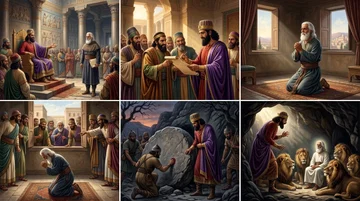
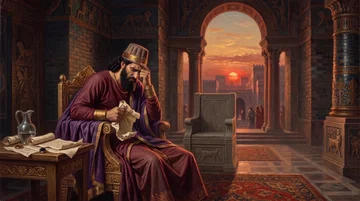
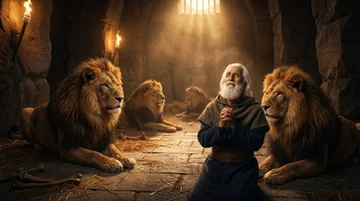
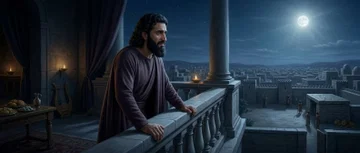
Then the king went to his palace, and passed the night fasting: neither were instruments of musick brought before him: and his sleep went from him.
Translations
American King James Version, Webster Bible
Then the king went to his palace, and passed the night fasting: neither were instruments of music brought before him: and his sleep went from him.
King James Version, KJV Cambridge Paragraph Bible
Then the king went to his palace, and passed the night fasting: neither were instruments of musick brought before him: and his sleep went from him.
Then the king went to his palace, and passed the night fasting: neither were instruments of music brought before him: and his sleep fled from him.
Then the king went to his palace, and passed the night fasting; neither were instruments of music brought before him: and his sleep fled from him.
Then hath the king gone to his palace, and he hath passed the night fasting, and dahavan have not been brought up before him, and his sleep hath fled [from] off him.
Then the king went to his palace, and passed the night fasting; neither were concubines brought before him; and his sleep fled from him.
Then the king departed to his palace, and spent the night fasting, and no, table, was brought in before him,—and, his sleep, fled from him.
Berean Standard Bible, Majority Standard Bible
Then the king went to his palace and spent the night fasting. No entertainment was brought before him, and sleep fled from him.
Then the king went to his palace, and passed the night fasting. No musical instruments were brought before him; and his sleep fled from him.
Then the king went to his great house, and took no food that night, and no... were placed before him, and his sleep went from him.
Then the King went vnto his palace, and remained fasting, neither were the instruments of musike brought before him, and his sleepe went from him.
Douay-Rheims (Challoner revision)
And the king went away to his house and laid himself down without taking supper, and meat was not set before him, and even sleep departed from him.
Pictures
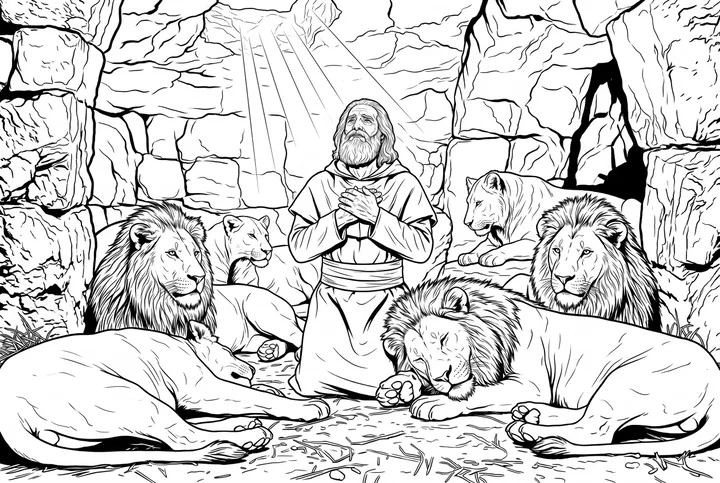
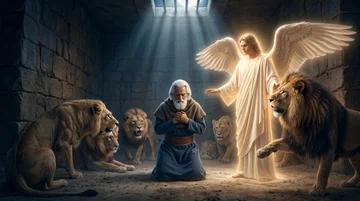
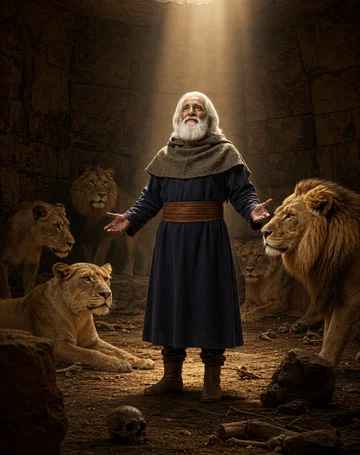
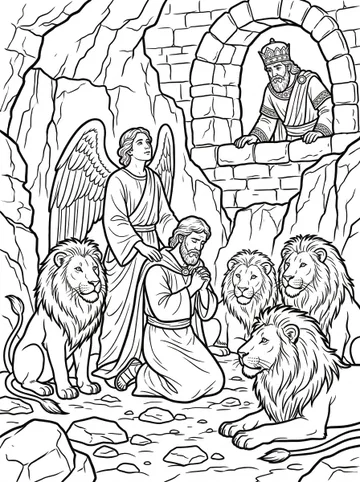
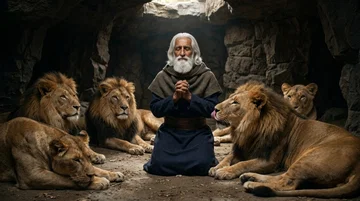
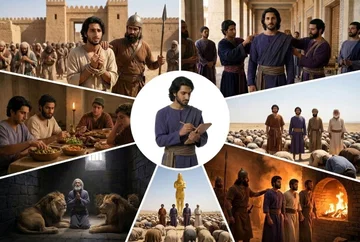
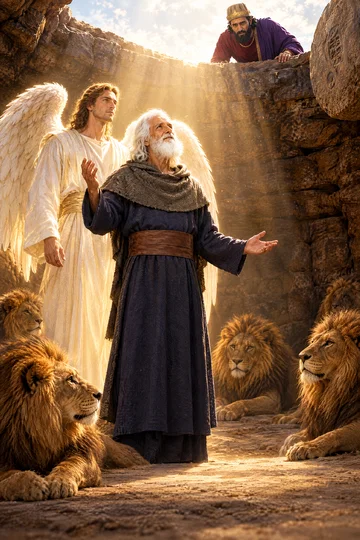
Cross-references
- Daniel 6:22-23
My God hath sent his angel, and hath shut the lions’ mouths, that they have not hurt me: forasmuch as before him innocency was found in me; and also before thee, O king, have I done no hurt.
Daniel is preserved unharmed in the lions’ den, answering the king’s anguish.
- Daniel 6:10
Now when Daniel knew that the writing was signed, he went into his house; and his windows being open in his chamber toward Jerusalem, he kneeled upon his knees three times a day, and prayed, and gave thanks before his God, as he did aforetime.
Daniel continued his accustomed prayer despite the royal decree.
- Daniel 6:23
Then was the king exceeding glad for him, and commanded that they should take Daniel up out of the den. So Daniel was taken up out of the den, and no manner of hurt was found upon him, because he believed in his God.
Daniel is found unharmed after the night in the den because he trusted God.
- Daniel 6:26-27
I make a decree, That in every dominion of my kingdom men tremble and fear before the God of Daniel: for he is the living God, and stedfast for ever, and his kingdom that which shall not be destroyed, and his dominion shall be even unto the end.
Darius proclaims God’s power after Daniel’s deliverance.
- Daniel 6:1-3
It pleased Darius to set over the kingdom an hundred and twenty princes, which should be over the whole kingdom;
Establishes Darius’s government and Daniel’s distinction in royal service.
- Daniel 6:24
And the king commanded, and they brought those men which had accused Daniel, and they cast them into the den of lions, them, their children, and their wives; and the lions had the mastery of them, and brake all their bones in pieces or ever they came at the bottom of the den.
Daniel’s accusers suffer the destruction they planned for him.
- Daniel 6:5
Then said these men, We shall not find any occasion against this Daniel, except we find it against him concerning the law of his God.
Enemies find fault with Daniel only because of his obedience to God’s law.
- Daniel 3:19-27
Then was Nebuchadnezzar full of fury, and the form of his visage was changed against Shadrach, Meshach, and Abed-nego: therefore he spake, and commanded that they should heat the furnace one seven times more than it was wont to be heated.
The fiery furnace, like the lions’ den, is a deadly trial God uses.
- Daniel 6:14
Then the king, when he heard these words, was sore displeased with himself, and set his heart on Daniel to deliver him: and he laboured till the going down of the sun to deliver him.
shows king's sunset effort to rescue before fasting night
- Daniel 6:7
All the presidents of the kingdom, the governors, and the princes, the counsellors, and the captains, have consulted together to establish a royal statute, and to make a firm decree, that whosoever shall ask a petition of any God or man for thirty days, save of thee, O king, he shall be cast into the den of lions.
The thirty-day law trapped Daniel for praying to God.
- Daniel 5:30-31
In that night was Belshazzar the king of the Chaldeans slain.
Daniel 6 follows the events and change of rule recorded there.
- Ezekiel 14:14
Though these three men, Noah, Daniel, and Job, were in it, they should deliver but their own souls by their righteousness, saith the Lord GOD.
Names Daniel alongside Noah and Job as a real person.
- Ezekiel 14:20
Though Noah, Daniel, and Job, were in it, as I live, saith the Lord GOD, they shall deliver neither son nor daughter; they shall but deliver their own souls by their righteousness.
Both texts name Daniel as a real person.
Commentary
Each commentary is drawn from primary sources: the writings of Ellen G. White and Adventist pioneers and periodicals. Each commentary is separate. Its own words are not a quotation; follow the references to read the source passages.
Ellen G. White
49 sources
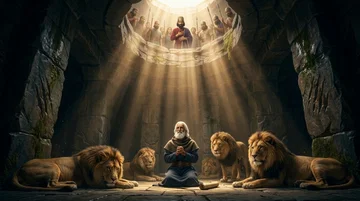
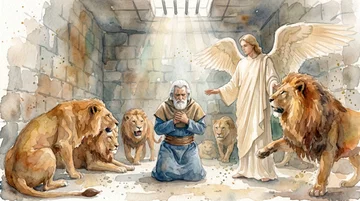
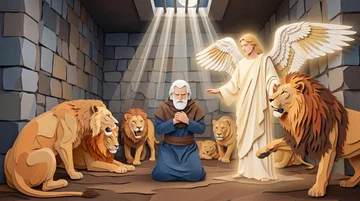
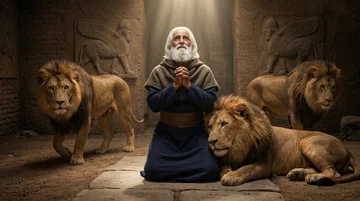
After Daniel was cast into the lions' den and the stone was laid on its mouth and sealed, Darius went to his palace and passed the night fasting, with no music brought before him and sleep gone from him.PK 543.1–2ST Oct 26, 1882 That joyless, sleepless night without entertainment was his deep distress and anxious concern for Daniel, yet through it he held to the hope he had spoken that the God whom Daniel served continually would deliver him.BS 38.1–2ST Oct 26, 1882ST Nov 4, 1889 God permitted wicked men to carry out their purpose and left the king to that fasting, sleepless anguish rather than preventing it, so that His deliverance would be more marked and the defeat of the enemies of truth more complete.ST Apr 11, 1911PK 543.3 He did not forget Daniel among the lions but sent His angels, and an angel shut the lions' mouths so they would not hurt the praying man, while Jesus Himself was present with him in the den.ST Apr 11, 1911SG4 241.1ST Aug 14, 188421MR 220.1–2 The king's fasting anxiety stands in contrast to Daniel's steady loyalty and steadfast integrity, whose heart stayed upon God amid trial and gloom as when prospects were bright, showing that firm religious principle remains faithful even when obedience brings danger and death and that God remembers and protects His people in the trying hour.4T 448.1Ms 61, 1890, par. 425T 42.2–43.2GW92 140.1Ms 83, 1886, par. 12–14
Historical Setting Before Night
Daniel's blameless conduct excited jealousy, and his enemies acknowledged they could find no fault in him except concerning the law of his God, so they arranged a decree aimed against his prayers.PK 539.3Ms 14, 1894, par. 24–25 Darius made a thirty-day decree that anyone asking a petition of any God or man except the king must be cast into the lions' den.ST Nov 18, 1886 Yet Daniel kept seeking his Lord three times a day as before, with his window open toward Jerusalem, without hiding his purpose or lowering his colors.STBk 122.1ST Apr 18, 1911STA 122.1ST Nov 18, 1886
Darius saw that jealousy against Daniel and not zeal for kingly honor had prompted the decree, and he was sore displeased with himself for his part in the evil.PK 543.1–2 He labored till the going down of the sun to deliver his friend, but when the princes pressed him he was compelled to carry out the rash decree because the law of the Medes and Persians cannot be changed.PK 543.1–2 He reluctantly ordered Daniel cast in, and declared that the God whom Daniel serves continually would deliver him.PK 543.1–2 He sealed the stone on the den mouth with his own signet and the signet of his lords so the purpose concerning Daniel might not be changed.PK 543.1–2
The night took place during the two-year reign of Darius the Mede over Medo-Persia after the fall of Babylon, when Daniel stood first over the presidents and princes because an excellent spirit was in him.RH Mar 21, 1907 It was the night Daniel spent in the lions' den.RH Mar 21, 1907
King's Fasting Sleepless Night
After Daniel was cast into the den and a stone was laid upon its mouth and sealed, Darius went to his palace and passed the night fasting, with no instruments of music brought before him and sleep gone from him.ST Oct 26, 1882 That fasting, joyless, sleepless night without music or entertainment was his deep distress, anguish and anxious concern for Daniel.BS 38.1–2ST Nov 4, 1889
The king's fasting anxiety through the night stands in contrast to Daniel's steady adherence to duty under the decree, for he had continued praying to God despite the threat of death.Ms 61, 1890, par. 42 It contrasts the king's distress — fasting, refusing entertainment and music, unable to sleep — with Daniel's integrity and with God's care for him in deliverance.Ms 83, 1886, par. 12–14 It presents that same anxiety as the contrast to Daniel's steadfast loyalty to God persisting even under threat of death, a loyalty that helped spread knowledge of the true God throughout Babylon.Ms 2b, 1895, par. 25–26 Through the anguished night the king still held to the hope he had spoken that Daniel's God whom he served continually would deliver him, and early in the morning he hastened to the den to learn whether that God had been able to deliver Daniel from the lions.ST Oct 26, 1882
Divine Deliverance in Den
Daniel kept seeking his Lord openly three times a day with his window open toward Jerusalem just as before, without hiding his purpose or lowering his colors, even when death threatened for faithfulness to God under the thirty-day decree forbidding petition to any God or man except the king.STBk 122.1ST Apr 18, 1911STA 122.1ST Nov 18, 1886Ms 40a, 1890, par. 101–102 For that faithfulness he was cast into the den of lions, and the God whom he served continually delivered him out of the power of the lions.STBk 122.1ST Apr 18, 1911STA 122.1ST Nov 18, 1886Ms 40a, 1890, par. 101–102 The den did not deter him from duty, and he continued praying even there and even among the lions.SG4 241.11T 295.1–2Ms 40a, 1890, par. 101–102
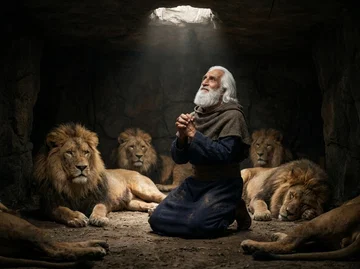
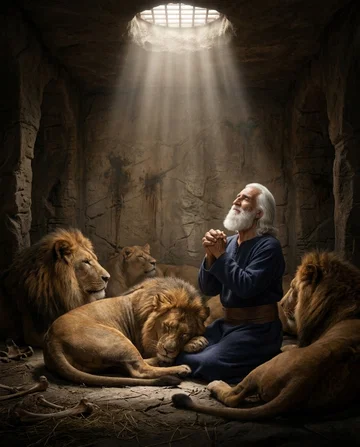
God did not forget him or suffer him to be destroyed, but Michael, the Commander of the hosts of heaven, sent His angels to guard him, and an angel shut the mouths of the hungry lions so they would not hurt the praying man of God.ST Apr 11, 1911SG4 241.1ST Aug 14, 18841T 295.1–2Ms 44, 1886, par. 8–10 All heaven watched his case to see if he would remain faithful with principle at stake and integrity purposed in his heart, and when the trial came angels were his companions and all was peace in that terrible den.ST Apr 11, 19113MR 95.3 Jesus Himself was personally with Daniel in the den, just as He was with the three Hebrews in the fiery furnace so the flames could not harm them, proving God's tenderness and compassion toward the innocent imprisoned for righteousness and that angels come within prison walls to minister.21MR 220.1–2
The king witnessed the miraculous preservation and brought Daniel out with honor, while those who had plotted his destruction, whose real object was to rid Daniel of his power, were destroyed with their wives and children in the terrible manner they had planned for Daniel.ST Apr 11, 1911SG4 241.11T 295.1–23MR 95.3 God permitted evil angels and wicked men to carry out their purpose against Daniel, casting him into the den and leaving the king to spend the night fasting and sleepless, rather than preventing it, so that His deliverance of His servant would be more marked and the defeat of the enemies of truth and righteousness would be more complete.ST Apr 11, 1911PK 543.3 The wrath of man against Daniel is made to praise God, for through the moral courage of this one man who chose even in the face of death to take a right course rather than a politic one, Satan was defeated and God was honored and exalted.ST Apr 11, 1911PK 543.3
His case drew the rulers' attention and gave opportunity to testify that the God of heaven alone is the true and living God who deserves worship, for God brought His servant before a ruler so that the ruler and his people could receive the truth and recognize God's supremacy.ST Apr 11, 1911DA 28.35T 453.1–4 That deliverance caused Darius to decree to all peoples, nations, and languages that men tremble and fear before the God of Daniel as the living and steadfast God whose kingdom shall not be destroyed and whose dominion is to the end, who delivers and rescues and works signs and wonders in heaven and earth.RH Mar 21, 1907 It prepared the hearts of kings to show favor to His repentant people while those loyal in Babylon sought the Lord and studied the prophecies of their deliverance, and Daniel's steadfast loyalty even under threat of death helped spread knowledge of the true God throughout Babylon.RH Mar 21, 1907Ms 2b, 1895, par. 25–26 His unjust condemnation and placement in the den for faithfulness, yet with God present preserving him, shows that condemnation and prison are no evidence that God does not reign or has ceased to reign, and one guilty of no crime except seeking to make men kind and obedient, truthful and loyal can trust God and lift up holy hands without doubting.21MR 220.1–2Lt 49, 1886, par. 7–8
Faithful Witness for Today
Husband and wife are to unite together and pray morning and noon as Daniel did when he prayed morning and noon before being cast into the den where angels protected him, and the angels of God will protect them as they protected Daniel, to prepare for what is coming upon the world.Ms 229, 1902, par. 30–31 His prayerful trust in God and adherence to right gives strength to resist temptation and remain faithful under pressure.ST Nov 4, 1886
Daniel's faithfulness through the smaller trials of daily life had strengthened his faith, courage, and firmness, enabling him to stand true to God and remain faithful even with the lions' den before him.SLP 297.3 In the den through the fasting, sleepless night he remained the same Daniel who stood before the king enshrouded and encircled by the light of God.4T 448.1GW92 140.1 Amid trial and gloom with afflicting and discouraging surroundings his heart stayed upon God just as when his prospects were bright and God's light and favor seemed upon him, with steadfast integrity undaunted by circumstances and a heart as true as steel.4T 448.1GW92 140.1 Such faith reaches to the unseen and grasps eternal things as the pattern for under-shepherds following the Chief Shepherd.4T 448.1GW92 140.1
He would not lower God's standard to meet the people or to suit convenience, but stood forth for the honor of God whatever the result with strict integrity, refusing to accommodate himself to circumstances or adapt his worship and principles for convenience even with a gaping lions' den open before him.10MR 90.1–91.2Ms 7, 1886, par. 4–6 He chose to lose his life rather than dishonor the God of heaven, purposing not to weaken his physical powers by eating at the king's table and praying openly to God instead of praying in secret for convenience, repairing to worship God.10MR 90.1–91.2Ms 7, 1886, par. 4–6 Because he kept the living God exalted as the One who gives wisdom and power and let no man come between him and his God, God let His blessing rest upon him in remarkable degree, honored him with wisdom and understanding above all the astrologers and magicians, and worked for him.10MR 90.1–91.2 Those with divine principles inwrought in the heart as if written with the finger of God will not deny and betray the truth for any favor, worldly honors, exalted position, or reputation which is to them as nothingness, for to live is to obey the word of Christ and to die for truth's sake is gain.Ms 201, 1898, par. 11 God will work for all who take the same position, and the same test is coming to all who would enter the city of God, whether they will keep God's commandments and His honor before them or serve the powers that be, for a convenient faith manipulated according to convenience throws itself on the side of the enemy.10MR 90.1–91.2
Valuing the favor of God above the favor and praise of princes and determining to honor God above every human power brings God's love, shield, and strength from heaven and open honor before men.MYP 27.4–28.1 Daniel would not be tempted to turn aside from integrity or bow to any earthly mandate that took honor from God, but confessed faith in the Lord God of heaven in words, habits, and practices even in the court of the king.MYP 27.4–28.1 Youth are therefore to bind themselves to the throne of God by the golden chain of truth, to display true colors without shame and without false modesty or false prudence, to confess Christ by choice words and consistent action, propriety, and earnest piety, to let Christ occupy the throne in the soul temple, and to lay talents without reserve at His feet for His service.MYP 27.4–28.1 Daniel's example of daring to be a Daniel by daring to stand alone in Jesus Christ is open to all, and by it men and women become vessels and channels through which God imparts His grace and ministering angels communicate heavenly treasures.Lt 2, 1901, par. 12–14 By co-operating with Jesus Christ, learning His methods, accepting His Holy Spirit, and laboring together with Him, they reach the highest stage of mental and moral development and enrich poverty-stricken souls starving for an example of righteousness.Lt 2, 1901, par. 12–14
The threat of the den did not keep Daniel from his daily prayers, showing that firm religious principle remains faithful to God even when obedience brings danger, severe persecution, or possible death.5T 42.2–43.2ST Nov 11, 1889ST Feb 5, 1902 He was cast into the lions' den because he remained true to his allegiance to Heaven and would not give up that allegiance, valuing eternal life above his present life.ST May 19, 1914Ms 10, 1885, par. 11ST Feb 5, 1902 Daniel among the lions, trusting God while facing the lions and the hostility of powerful enemies who held high positions in the kingdom, shows that faith and trust in God's word endures human power and policy and can stand firm and withstand human power used for evil.ED 254.2–3RH Dec 24, 1908RH Nov 11, 1915
Daniel's night under sentence of death was still under God's watchful care, for the Lord does not forget His people in the trying hour.4SP 445.2–446.1GC 626.2–627.1 As God remembered Daniel and was with him in the den, He will remember His people when abandoned by earthly governments, driven to flee from cities and villages, cast into cruel bondage, shut in prison, bound in chains, sentenced to be slain, and left to starve in dark dungeons.4SP 445.2–446.1GC 626.2–627.1 Though they endure privation and suffer for want of food while judgments fall and the wicked die from hunger and thirst, they are not left to perish, dungeon walls cannot cut off their communication with Christ, and angels will come to them in lonely cells bringing light, peace, food, and water, making the prison as a palace.4SP 445.2–446.1GC 626.2–627.1 Daniel's trial in the king's court shows that God protects those who remain faithful when duty brings them into trial, while those who willingly place themselves under temptation will sooner or later fall.GC 509.1 Firm loyalty to God can bring suffering and humiliation, yet God can bring triumph through His faithful servant and be glorified.Lt 10, 1879, par. 4–9
The king passing a fasting, sleepless night without music after Daniel was cast to the lions for continuing to witness for God despite the decree means that faithful witnessing for God takes place under great pressure from worldly solicitations, and such pressure is not pleasing to God.6MR 268.1–269.3 Applied to the publishing work, it means solicitations for worldly or religious work that unsettle faith, introduce Satan and aid his sophistry, and give a wrong tendency to the minds of youth by causing doubt and unbelief must be reasoned from cause to effect and refused, for it is work God condemns.6MR 268.1–269.3 Jesus was personally with Daniel in the den, just as He was with the three Hebrews in the fiery furnace so the flames could not harm them, proving God's tenderness and compassion toward the innocent imprisoned for righteousness, and angels come within prison walls to minister.21MR 220.1–2 Condemnation and prison are no evidence that God does not reign or has ceased to reign, and one guilty of no crime except seeking to make men kind and obedient, truthful and loyal can trust God and lift up holy hands without doubting.21MR 220.1–2
Sources
Pioneers and periodicals
89 sources
The verse belongs to the night after Daniel was cast into the lions' den, when the sealed den held him overnight and the king returned to his palace until he hurried to the den early in the morning to learn whether Daniel's God had been able to deliver him.RH Jan 9, 1900RH Jul 24, 1900 It records that the king passed the night fasting without food and usual pleasures, that no instruments of music or entertainment were brought before him, and that his sleep went from him in a fasting, joyless, sleepless night.RH Jan 9, 1900RH Jul 24, 1900 That fasting, refusal of music, and sleeplessness show his deep distress, grief, anxiety and remorse over Daniel's fate, his genuine concern for his trusted counselor, and his regret over his own part in the unjust scheme he had allowed.RH May 18, 1869RH Oct 7, 1902 God stood by Daniel as vindicator, deliverer and keeper, sending His angel to shut the mouths of the hungry lions so they would not hurt the praying man and preserving him unhurt through the night.ST Sep 6, 1899ST Jan 30, 1912ST May 21, 1912 Daniel had continued his accustomed praying three times a day with windows open toward Jerusalem, refusing to concede that kings can regulate worship, and he chose to break the human law rather than sin against God, showing that when human statutes conflict with conscience and the plain laws of God, passive violation while meekly suffering the penalty is justified, for civil rulers have authority only over outward civil things and none over worship and conscience.ST May 21, 1912ST Jun 6, 1916ST Jan 23, 1912ST Jul 24, 1884
Setting and Plain Sense
The night in question is the night after Daniel had been cast into the lions' den, while the sealed den held him overnight and the king had returned to his palace, until he hurried to the den early in the morning to learn whether Daniel's God had been able to deliver him.RH Jan 9, 1900RH Jul 24, 1900ST Jul 12, 1899ST Jul 12, 1899 The den had been shut with Daniel inside and its mouth closed and sealed, leaving the outcome unknown until morning.ST Oct 26, 1882RH May 18, 1869RH Oct 7, 1902
In history the episode stands at the beginning of the rule of Darius the Mede after the events of Daniel 5 and the fall of Babylon, in a two-year reign over Medo-Persia when Daniel stood first over the presidents and princes because an excellent spirit was in him.RH Mar 21, 1907ST Jan 30, 1912 In canonical order chapter 6 follows the vision of chapter 8 given in the third and last year of Belshazzar, at the beginning of the reign of Darius the Median, showing a power that would rise to take away the continual service so that for a time it would cease in the temple of God and the glory would depart and the house would be desolate.RH Nov 25, 1902 It records Daniel's later, more severe trial after the test at the beginning of his public life, by a form of punishment described as common under Babylonian kings.ST Sep 10, 1894ST May 9, 1878
The verse records three outward facts about the king that night: he passed the night fasting, going without food and giving up usual pleasures; no instruments of music or entertainment were brought before him for comfort; and his sleep went from him, so that he spent a fasting, joyless, sleepless night.RH Jan 9, 1900RH Jul 24, 1900ST Jul 12, 1899ST Oct 26, 1904 He refused the usual music, took no comfort in it through the night, and could not sleep while Daniel was shut in with the lions.ST Jul 12, 1899RH May 18, 1869RH Oct 7, 1902ST Jan 13, 1898
The fasting, refusal of music, and sleeplessness express the king's deep distress, grief, anxiety, anguish, sorrow and remorse over Daniel's fate, his genuine concern for his trusted counselor and his safety, his severe regret over his own part in the unjust scheme he had allowed, and his recognition that Daniel's devotion to serving God had put him in danger.RH May 18, 1869RH Oct 7, 1902RH Jan 10, 1871ST Oct 26, 1904 After sentencing Daniel he could find no comfort or rest in his palace, for palace and royal comforts could give him no comfort or rest, in contrast with Daniel's peace in the lions' den.ST Jan 13, 1898 His conduct shows both genuine concern for Daniel and severe regret over his own part in the matter.RH May 18, 1869
The troubled night was spent between hope and fear, holding to the hope the king had spoken that Daniel's God whom he served continually would deliver him, anxiously awaiting to learn whether that God could deliver him from the lions.ST Oct 26, 1882ST Mar 11, 1908ST Oct 30, 1901 It is suggested that the king also spent the night fasting and praying to Daniel's God.ST Mar 11, 1908ST Jan 30, 1912 His character in the account shows both capable rule and weakness in yielding to flattery, for he governed with capable officials but gave in to the flattery of men seeking favor, which brought trouble and disgrace on himself.ST Oct 30, 1901
God Delivers His Faithful
The chapter sets forth God as vindicator, deliverer, preserver and keeper of those willing to do His will whatever the consequences.ST Sep 6, 1899ST Jan 30, 1912ST Jul 16, 1912ST Aug 9, 1910ST Jun 11, 1912 To the Persian rulers He showed Himself a deliverer as He had been to the Babylonians.ST Sep 6, 1899ST Jul 16, 1912 He stood by Daniel when individual faithfulness triumphed over ruling power, and though Daniel was treated as a criminal for worshiping God his obedience was no sin and God vindicated him.ST May 21, 1912ST Aug 9, 1910ST Jun 11, 1912 He sent His angel, even Michael the Commander of the hosts of heaven, to shut the mouths of the hungry lions so they would not hurt the praying man, making all peace in that terrible den and preserving Daniel unhurt through the night.ST Apr 11, 1911ST Sep 6, 1899ST Oct 29, 1885
That preservation was a miracle in which natural law was restrained from taking its regular course.ST Mar 24, 1914ST Oct 29, 1885 The exception proves the rule that in the administration of natural law effects and consequences normally follow causes and antecedents without regard to motives.ST Mar 24, 1914 It was no more wonderful than preserving Jonah alive three days and three nights in the belly of the great fish, or preserving the three Hebrew children in the fiery furnace.ST Dec 22, 1887ST Oct 29, 1885 The casting into the den tested the power of Babylon's gods against the great Creator worshiped by the Hebrews.ST Dec 12, 1911ST Dec 22, 1887
Through the moral courage of one man who chose even in the face of death to take a right course rather than a politic one, Satan was defeated and God was honored.ST Apr 11, 1911 Daniel kept praying even among the lions, God did not forget him or suffer him to be destroyed, and the king witnessed the miraculous preservation and brought Daniel out with honors.ST Apr 11, 1911 Those who had plotted his destruction were utterly destroyed with their wives and children in the terrible manner they had planned for Daniel.ST Apr 11, 1911 In distress and remorse the king confessed that Daniel's God was the living God and proclaimed this throughout the empire, decreeing to all peoples, nations and languages that men tremble and fear before the God of Daniel as the living and steadfast God whose kingdom shall not be destroyed.ST Apr 11, 1911RH Sep 11, 1900 Through such loyalty the knowledge of the true God was carried throughout the Babylonian and Medo-Persian Empires and made public throughout Persia, proving that loyalty to truth in a little thing may amount to much and preparing the hearts of kings to show favor to His repentant people.ST Sep 6, 1899RH Sep 11, 1900RH Nov 11, 1902
The king wanted to release the offender but could not set aside a just and inexorable law.RH Aug 27, 1861 That inability shows the need for an atonement that upholds the law while allowing release.RH Aug 27, 1861
Human Law Versus Divine Law
Darius issued an unalterable law forbidding any petition of any god or man except the king for thirty days on penalty of the lions' den.ST Jul 13, 1915ST Jan 20, 1898 The law was made for the sole purpose of entrapping Daniel as prime minister and worshiper of the true God.ST Jul 13, 1915 It was passed under a pretext altogether different from its real design, out of jealousy and flattery that deluded the king into putting himself in God's place.ST Nov 19, 1896ST Jul 13, 1915ST Dec 11, 1893 In this it shows oppression by deceitful legislation, persecution presented as state security, and Medo-Persia demanding worship of the king exalted by law to the throne of Deity even when its laws are contrary to God's laws.ST Oct 1, 1896ST Jul 13, 1915 Daniel's defiance was treated as an offense against the state although it involved religious faith, and his refusal to submit to that satanic system of government brought the den.ST Oct 1, 1896ST Nov 19, 1896ST Jun 27, 1911
Daniel continued his accustomed practice of praying three times a day with windows open toward Jerusalem just as before, refusing to abandon worship.ST May 21, 1912ST Jun 6, 1916ST Dec 11, 1893 Obeying the decree would have been sin against God, while disobeying it made him a criminal under human law.ST Jan 23, 1912ST Jun 11, 1912ST Jan 20, 1898 He chose to break the human law rather than sin, proving obedience to God can be treated as a civil offense without making the obedient person a sinner.ST Jan 23, 1912ST Jun 11, 1912ST Jan 20, 1898 To have yielded would have conceded that kings can regulate or forbid worship, and individual faithfulness in continuing daily prayer triumphed over ruling power when God stood by him.ST May 21, 1912ST Jun 6, 1916 The powers that be are ordained only to regulate outward civil things to keep sinful men civil and prevent taking life and property, and can never touch conscience and soul, so Church and State must be kept forever separate.
Subjection to civil government does not mean actively doing all pagan governments require and abstaining from all they forbid.ST Jul 24, 1884 When human statutes openly conflict with conscience and the plain laws of God, passive violation is justified while meekly suffering the penalty without violent rebellion and without doing wrong.ST Jul 24, 1884RH Sep 8, 1910 The duty is to refuse at man's bidding to disobey a plain enactment of heaven, honoring the mistaken earthly law by meekly bearing its penalty and seeking amendment and repeal by constitutional means, leaving vindication to the Lord.ST Jul 24, 1884RH Sep 8, 1910 Civil rulers have no authority to prevent God's servants from giving Him what is due as Lord and no power over hearts and consciences, for ruler and subjects alike are to serve Him, and force to prevent worship or enforce worship whether of the true God or false gods is of Satan not God.ST Dec 11, 1893 Christians must obey the law of the land when it does not conflict with the law of God, but must obey God rather than men even at persecution when it commands disobedience to God, since Daniel's continual service kept him in God's protecting presence through deliverance.ST Oct 3, 1895
The king's fasting and sleepless night without music shows his distress over punishing the best man in the kingdom and sets the limits God has set to civil government to regulate civil matters alone without invading the relation between God and the individual.ST Dec 11, 1893ST Nov 24, 1898 It rebukes the civil ruler for attempting authority in matters of conscience, proving subjection to earthly powers is limited to civil things.ST Nov 24, 1898ST Jul 17, 1907 Executing an unrighteous law does not make the persecutor right, for civil authorities may punish those who obey God rather than an unjust religious decree, and danger and human law do not excuse disobedience to God.ST Feb 26, 1880ST Sep 5, 1895 This same divine right to oppose applies to keeping the Sabbath when human laws favor Sunday and to resisting coercive Sunday legislation commanding Sunday sacredness and forbidding first-day labor.ST Feb 26, 1880 Refusal to obey such a human religious law is not anarchy, as shown with the furnace, Christ condemned under the claim We have a law, and Paul, and calling it anarchy would falsely make Daniel, Christ, and Paul anarchists.ST Feb 19, 1894
The story is persecution directed against God's faithful people for obeying Him, in which Daniel was cast into the den because he prayed to God and remained true to his allegiance to Heaven.ST May 19, 1914RH Sep 9, 1862ST Oct 20, 1887 He did not attempt to resist the authorities but meekly looked to God for deliverance till it came after going down to the bottom of the den.RH Oct 21, 1862 It does not give an example for refusing a military draft in a general war and would only apply if the war were against Seventh-day Adventists.RH Sep 9, 1862 Its true parallel is the end-time persecution over worship described in Revelation 13:15-17, when God will likewise either direct the ballot for those who keep His law or suffer them to be brought into a clearer test before sending deliverance.RH Oct 21, 1862RH Sep 9, 1862
Prophecy and Wider Doctrine
Daniel 6 exposes the union of church and state, where the servant of God is commanded simply to refrain from openly worshiping the true God, in contrast to the demand to pay outward deference to a false god, and both of these tests will come to God's people in these days.ST Sep 6, 1899 Medo-Persia demanded worship of the king exalted by law to the throne of Deity, requiring service and obedience to its laws even when contrary to God's laws, with refusal meaning death in the lions' den. Darius was persuaded to put himself in God's place and used his rule in opposition to God, and Daniel was cast into the den because he would not submit to that satanic system of government, the beast-power, the abnormal satanic system.ST Nov 19, 1896ST Jun 27, 1911 That persecution under Medo-Persia followed persecution under Babylon as the second phase of a sevenfold apostasy by antagonistic world powers from Babylon to the time of the end, belonging to the first division of apostate Babylon working through empires to compel false worship and to events leading to ancient Babylon's fall and a prophecy of modern Babylon.ST Sep 8, 1914 Daniel's night under death sentence, with the king's fasting and sleeplessness showing the distress surrounding that sentence, is the image-of-the-beast sentence from which those condemned for refusing to worship an imposed image will be delivered, as Daniel was delivered and as were the three worthies.RH May 12, 1868
Prayer brought Daniel victory, shut the lions' mouths and delivered him from death, and prayer and faith move nations, for prayer is the shield of the humble but believing suppliant.RH Jan 19, 1911ST Nov 11, 1886 The den became a place of earnest personal communion where Daniel prayed alone and God met him there and delivered him, showing that a place of danger can become a place for earnest prayer.ST Nov 24, 1887ST Nov 24, 1887 Prayer can reach God even in a dungeon and mercy can meet a person there, for access to God is open in every place and does not depend on holy site, rank, or merit.RH Oct 3, 1865 Daniel dared to pray before his open window in the face of enemies, fearing neither counselors nor jaws because he trusted the living God, and he was exceeded by one greater than Daniel, Christ the pure sinless Exemplar, who spent whole nights in lonely vigil on the mountainside communing with His Father while nature was hushed in silence.RH Nov 11, 1873 That example proves that frail, short-sighted children of dust need prayer much more and must learn to love to make wants and wishes known at the Father's throne.RH Nov 11, 1873
The chapter teaches God's care for His children in persecution, for the Lord is the keeper of His people and honors and preserves the loyal.ST Sep 6, 1899ST Aug 26, 1913 Loyalty to truth in a little thing may amount to much, for through such loyalty the knowledge of the true God was carried throughout the Babylonian and Medo-Persian Empires.ST Sep 6, 1899 Daniel continued his daily practice of prayer despite a law forbidding worship and its penalty, and God stood by him, so individual faithfulness triumphed over ruling power and individual faith and obedience to God are greater than human authority.ST May 21, 1912ST May 21, 1912 Daniel remained loyal despite an environment that opposed him, showing character does not depend on favorable conditions, and his devotion to right principles brought scorn yet rose to positions of trust and influence.RH Jan 9, 1913ST Nov 19, 1902
Faithful Example for Today
Daniel in the den is the pattern of steady faith proved under deadly threat, calm and unafraid because his trust rested in God rather than in religious duties, childlike yet strong, steady and firm and joined with love.RH Dec 29, 1859RH Dec 29, 1859RH Dec 29, 1859 That firmness had been formed beforehand, for faithfulness in smaller daily trials had strengthened courage and firmness so that he could stand true with the den before him, and his later and severer trial followed an earlier test at the beginning of his public life.ST Nov 4, 1886 His quiet trust is set before tempted believers as the way to resist temptation and remain faithful under pressure, showing that confidence in God can hold amid danger, hardship and the threat of death.ST Nov 4, 1886RH Dec 29, 1859RH Dec 19, 1871 It calls for venturing all upon present truth without doubt, as Abraham, Noah, Lot, Israel at the Exodus and the three Hebrews did, standing firm even at the cost of life, the tested faith young men must follow and the faith needed to meet the Lord.RH Dec 29, 1859RH Dec 29, 1859
Preparation for crisis comes beforehand through making God a daily refuge, by established habit of prayer three times a day, by communion with God and by yielding to Him, which gives strength to face the den and to emerge unharmed.ST Nov 18, 1886RH May 31, 1906ST Mar 9, 1882 Danger and human law do not excuse disobedience to God, duty is not decided by convenience or popularity, and it is better to face danger faithful than to live comfortably at a distance from Him or lead a prayerless life.ST Feb 26, 1880RH May 24, 1870RH May 17, 1860 Whether the trial is the den, the sea, the lash, or shipwreck, God furnishes support, so that the place of danger becomes the place where He can come nearest.ST Nov 18, 1886RH May 24, 1870
God was with Daniel through that night in the den to comfort and sustain him, just as He is present to comfort and sustain faithful believers imprisoned for His sake, so that solitary confinement is no lack of blessing and isolation is no spiritual death.RH Dec 19, 1907RH Feb 25, 1873RH Oct 20, 1863 The long weary night among ravenous beasts was made a special subject of miraculous care, proving His care for His children and His presence with His people always even unto the end, able to protect when no human help can deliver.RH Nov 4, 1862RH Feb 25, 1873 The torment served His glory, for He suffered Daniel to go there that He might be glorified in it, and praise could ascend even from the den, showing a bright side for every traveler.RH Aug 17, 1916RH Nov 4, 1862RH Oct 20, 1863 A time of danger so becomes an opportunity to honor God, to stand as a true witness whose steadfastness helps convince others that His claims are true, to make the gospel known and to win souls.RH Aug 17, 1916RH Jun 15, 1916
Daniel went from prayer into the den, weak in himself yet standing firm in Christ, daring to pray before open windows fearing neither counselors nor jaws.RH Jul 20, 1916RH May 30, 1854 He did not shrink from danger when obedience led there, did not swerve though cast in, but meekly looked to God till deliverance came, and came out unharmed with greater honor and power.RH Jul 20, 1916RH Aug 21, 1856RH May 30, 1854 That splendid physical courage and heroic faithfulness stands beside the quiet heroic determination now required to keep unspotted and to maintain pure doctrine.RH Jul 20, 1916RH Nov 24, 1910 God was with him and honors those who stand bravely and fearlessly for what is right, delivering the faithful boy from the den, making kings tremble before the Lord, and raising one greatly beloved at Heaven's court far beyond earthly rank, proving that courage is best taught by story.ST Nov 19, 1894RH Nov 24, 1910RH Nov 19, 1908RH Aug 21, 1856
Commitment to principle and to conscience led him into danger rather than violate what he knew was right, yet he came through unharmed.ST Jun 17, 1903 Though deprived of civil and religious liberty in the den, he was free indeed, for true freedom is soul liberty, freedom from sin given only by Christ through truth abided in and obeyed, which no earthly government or men can give or take away.ST Jun 17, 1903ST Feb 6, 1896 Standing apart made him unpopular for a time, yet he outlived his opponents, and God could rely on him to do work in Babylon, showing that a Christian may remain in the world without being shaped by it and that faithfulness can ultimately preserve or increase usefulness amid hardship.ST Jun 17, 1903ST Oct 22, 1896
Sources