Daniel 9:18
O my God, incline thine ear, and hear; open thine eyes, and behold our desolations, and the city which is called by thy name: for we do not present our supplications before thee for our righteousnesses, but for thy great mercies.
Translations
O my God, incline your ear, and hear; open your eyes, and behold our desolations, and the city which is called by your name: for we do not present our supplications before you for our righteousnesses, but for your great mercies.
King James Version, KJV Cambridge Paragraph Bible, Revised Version
O my God, incline thine ear, and hear; open thine eyes, and behold our desolations, and the city which is called by thy name: for we do not present our supplications before thee for our righteousnesses, but for thy great mercies.
O my God, incline thy ear, and hear; open thy eyes, and behold our desolations, and the city which is called by thy name: for we do not present our supplications before thee for our righteousnesses, but for thy great mercies.
O my God, incline thine ear, and hear; open thine eyes, and behold our desolations, and the city which is called by thy name: for we do not present our supplications before thee for our righteousnesses, but for thy great mercies’ sake.
'Incline, O my God, Thine ear, and hear, open Thine eyes and see our desolations, and the city on which Thy name is called; for not for our righteous acts are we causing our supplications to fall before Thee, but for Thy mercies that [are] many.
Incline thine ear, O my God, and hear; open thine eyes and behold our desolations, and the city that is called by thy name: for we do not present our supplications before thee because of our righteousnesses, but because of thy manifold mercies.
Incline, O my God, thine ear, and hearken, open thine eyes, and behold our desolations, and the city on which hath been called thy name; for, not on the ground of our own righteousnesses, are we causing our supplications to fall down before thee, but on the ground of thine abounding compassions.
Berean Standard Bible, Majority Standard Bible
Incline Your ear, O my God, and hear; open Your eyes and see the desolation of the city that bears Your name. For we are not presenting our petitions before You because of our righteous acts, but because of Your great compassion.
My God, turn your ear and hear. Open your eyes and see our desolations, and the city which is called by your name; for we do not present our petitions before you for our righteousness, but for your great mercies’ sake.
O my God, let your ear be turned and give hearing; let your eyes be open and see how we have been made waste and the town which is named by your name: for we are not offering our prayers before you because of our righteousness, but because of your great mercies.
O my God, encline thine eare and heare: open thine eyes, and beholde our desolations, and the citie whereupon thy Name is called: for we doe not present our supplications before thee for our owne righteousnes, but for thy great tender mercies.
Douay-Rheims (Challoner revision)
Incline, O my God, thy ear, and hear: open thy eyes, and see our desolation, and the city upon which thy name is called: for it is not for our justifications that we present our prayers before thy face, but for the multitude of thy tender mercies.
Pictures
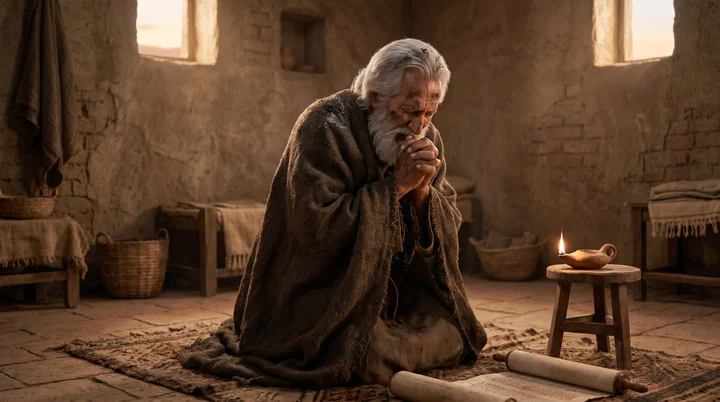
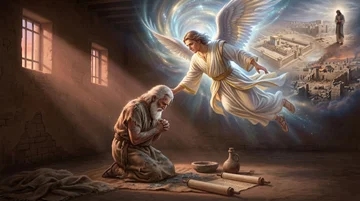
Cross-references 20 of 29
- Daniel 9:3-5
And I set my face unto the Lord God, to seek by prayer and supplications, with fasting, and sackcloth, and ashes:
Daniel responds to understanding the captivity’s end with fasting, prayer, and confession.
- Jeremiah 25:11-12
And this whole land shall be a desolation, and an astonishment; and these nations shall serve the king of Babylon seventy years.
Jeremiah foretold the seventy-year desolation whose end Daniel understood was near.
- Jeremiah 29:10
For thus saith the LORD, That after seventy years be accomplished at Babylon I will visit you, and perform my good word toward you, in causing you to return to this place.
The promised end of the seventy-year captivity grounds Daniel’s plea for Jerusalem.
- Daniel 9:23
At the beginning of thy supplications the commandment came forth, and I am come to shew thee; for thou art greatly beloved: therefore understand the matter, and consider the vision.
Gabriel comes in answer to Daniel’s prayer to give understanding and explain the vision.
- Daniel 9:24-25
Seventy weeks are determined upon thy people and upon thy holy city, to finish the transgression, and to make an end of sins, and to make reconciliation for iniquity, and to bring in everlasting righteousness, and to seal up the vision and prophecy, and to anoint the most Holy.
Gabriel answers Daniel’s prayer with the seventy-week prophecy and its starting point.
- Daniel 9:5
We have sinned, and have committed iniquity, and have done wickedly, and have rebelled, even by departing from thy precepts and from thy judgments:
Daniel confesses that he and the people have sinned before pleading for mercy.
- Daniel 9:2
In the first year of his reign I Daniel understood by books the number of the years, whereof the word of the LORD came to Jeremiah the prophet, that he would accomplish seventy years in the desolations of Jerusalem.
Understanding Jeremiah’s seventy-year prophecy prompts Daniel’s prayer.
- 2 Kings 19:15-19
And Hezekiah prayed before the LORD, and said, O LORD God of Israel, which dwellest between the cherubims, thou art the God, even thou alone, of all the kingdoms of the earth; thou hast made heaven and earth.
Hezekiah prays for God to hear and deliver his people.
- Numbers 14:18-19
The LORD is longsuffering, and of great mercy, forgiving iniquity and transgression, and by no means clearing the guilty, visiting the iniquity of the fathers upon the children unto the third and fourth generation.
Moses pleads for Israel by appealing to God’s name and great mercy.
- Nehemiah 1:5-11
And said, I beseech thee, O LORD God of heaven, the great and terrible God, that keepeth covenant and mercy for them that love him and observe his commandments:
Both are humble prayers confessing sin and appealing to God’s mercy.
- 2 Chronicles 36:17-21
Therefore he brought upon them the king of the Chaldees, who slew their young men with the sword in the house of their sanctuary, and had no compassion upon young man or maiden, old man, or him that stooped for age: he gave them all into his hand.
Judah’s sins brought Jerusalem’s ruin and the people’s captivity in Babylon.
- Ezra 9:9
For we were bondmen; yet our God hath not forsaken us in our bondage, but hath extended mercy unto us in the sight of the kings of Persia, to give us a reviving, to set up the house of our God, and to repair the desolations thereof, and to give us a wall in Judah and in Jerusalem.
God shows mercy by allowing Jerusalem’s desolations to be repaired.
- Isaiah 64:10-11
Thy holy cities are a wilderness, Zion is a wilderness, Jerusalem a desolation.
Describes the sanctuary’s destruction amid Jerusalem’s desolation.
- Daniel 9:22
And he informed me, and talked with me, and said, O Daniel, I am now come forth to give thee skill and understanding.
Gabriel comes to give Daniel skill and understanding.
- 1 John 1:9
If we confess our sins, he is faithful and just to forgive us our sins, and to cleanse us from all unrighteousness.
Both connect confession of sin with God’s forgiveness.
- Ezra 1:1-4
Now in the first year of Cyrus king of Persia, that the word of the LORD by the mouth of Jeremiah might be fulfilled, the LORD stirred up the spirit of Cyrus king of Persia, that he made a proclamation throughout all his kingdom, and put it also in writing, saying,
Cyrus’s decree fulfills the deliverance Daniel prayed for.
- Psalms 74:7
They have cast fire into thy sanctuary, they have defiled by casting down the dwelling place of thy name to the ground.
Both describe the sanctuary cast down and burned.
- Daniel 9:1
In the first year of Darius the son of Ahasuerus, of the seed of the Medes, which was made king over the realm of the Chaldeans;
Dates Daniel’s prayer to Darius’s first year.
- Daniel 9:7
O Lord, righteousness belongeth unto thee, but unto us confusion of faces, as at this day; to the men of Judah, and to the inhabitants of Jerusalem, and unto all Israel, that are near, and that are far off, through all the countries whither thou hast driven them, because of their trespass that they have trespassed against thee.
quoted together as Daniel's confession
- Psalms 79:1
O God, the heathen are come into thine inheritance; thy holy temple have they defiled; they have laid Jerusalem on heaps.
Enemies defile God’s sanctuary and devastate Jerusalem.
Commentary
Each commentary is drawn from primary sources: the writings of Ellen G. White and Adventist pioneers and periodicals. Each commentary is separate. Its own words are not a quotation; follow the references to read the source passages.
Ellen G. White
37 sources
Daniel prayed near the close of the seventy years of captivity learned from Jeremiah, asking God to hear and look upon the desolations of Jerusalem and the sanctuary and the suffering of the people and city called by His name, pleading for pardon, restoration and the honor of His name.Ms 138, 1899, par. 26–31PK 554.3–556.2PK 556.4PK 556.3 He rested his appeal not on any righteousness of Israel but only on God's great mercies, acknowledging that transgression of the law and refusal to hear the prophets had brought the desolation and that restoration required repentance and obedience.Ms 138, 1899, par. 26–31PK 554.3–556.24SP 301.1–302.1 Though greatly beloved and commended for faithfulness, he joined himself with his sinful people and confessed his own unworthiness, showing that true sanctification is marked by humility and contrition rather than claims of personal holiness.4SP 301.1–302.1Lt 203, 1903, par. 7–15GC 470.2–471.2 While he was still speaking his earnest intercession was heard, and Gabriel was sent to give him understanding in the seventy-weeks answer that granted Israel renewed favor and foretold the Messiah.Ms 138, 1899, par. 26–31Ms 93, 1900, par. 27PK 556.318MR 17.4–18.3 His prayer remains the pattern for God's people now to seek together in humility, contrition and fervent faith, confessing sin and asking for the working of the Holy Spirit not for their own merit but for God's mercy.Ms 38, 1905, par. 15–16BS 39.3–40.1STGC 70.4Lt 175, 1902, par. 5–6Lt 59, 1896, par. 21–22
Setting and Plea
The prayer belongs to the first year of Darius the Mede, after the fall of Babylon and before Cyrus succeeded him, when the seventy years of Jewish captivity and of Jerusalem's desolation learned from Jeremiah were nearing completion.Ms 138, 1899, par. 26–31PK 556.4 Daniel had learned from Jeremiah that those seventy years were to be accomplished, and in sorrow and humiliation he sought God with confession of Israel's sin, rebellion, and refusal to obey the prophets.Ms 138, 1899, par. 26–31
He set his face to seek by prayer and supplications with fasting and sackcloth and ashes, afflicting his soul and praying most earnestly in tears, with confession, humiliation, sorrow, and contrition as he witnessed Jerusalem's desolation.Ms 138, 1899, par. 26–31Ms 93, 1900, par. 2718MR 14.1 This seeking followed the true vision of the evening and the morning which was to be for many days, which left him faint and sick certain days and astonished with none understanding it.Ms 129, 1908, par. 11 His was an earnest and complete prayer, and its result was an experience of deep humility before God.18MR 17.4–18.3
The plea asks God to incline His ear and hear and to open His eyes and behold the desolations, Jerusalem and the desolate sanctuary, with the distress and suffering of the people identified with Him in the city called by His name.Ms 138, 1899, par. 26–31PK 554.3–556.2RH Mar 21, 1907BS 39.3–40.1BS 41.2 It is the pleading of an intercessor laying hold of the throne of infinite power, asking God to look on the desolations and on the city called by His name and pleading earnestly for pardon and restoration.Ms 138, 1899, par. 26–31PK 556.3BS 39.3–40.1 The object is the restoration of Jerusalem and the exiles, and the preservation of God's honor and the glory due His name.Ms 138, 1899, par. 26–31PK 554.3–556.2PK 556.3
The appeal rests not on Israel's righteousnesses or earned favor or goodness, but only on God's great mercies.Ms 138, 1899, par. 26–31PK 554.3–556.24SP 301.1–302.1RH Mar 21, 1907 The desolation is acknowledged as the result of the people's sins, rebellion, transgression of God's law, and refusal to obey the prophets.Ms 138, 1899, par. 26–31RH Mar 21, 1907BS 41.2 Restoration could come only as they repented and became humble, faithful, and obedient.BS 41.2
Though Daniel had long served God and received His commendation, and though greatly beloved, devoted, faithful, and honored, he approached as a sinner and did not rely on his own righteousness.4SP 301.1–302.1Lt 203, 1903, par. 7–15GC 470.2–471.2GC88 470.3 He joined himself to his sinful people, included himself among them, identified himself with their sin, confessed his unworthiness, and acknowledged that he and the people had sinned.4SP 301.1–302.1GC88 470.3BS 39.3–40.1RH Jul 13, 1905 He claimed no personal holiness and denied no sin, but pleaded for God's great mercy on behalf of the people he loved.4SP 301.1–302.1Lt 203, 1903, par. 7–15GC88 470.3RH Jul 13, 1905
Heard and Foretold
Daniel's prayer was earnest, complete, and intercessory for himself and for Israel, offered in tears with fasting, affliction of soul, confession and humiliation, and all heaven was interested in the supplication.Ms 138, 1899, par. 26–31Ms 93, 1900, par. 2718MR 17.4–18.3Lt 264, 1902, par. 12–13 While he was still speaking his prayer was heard because it came from unfeigned lips, and ministering angels came to him with communication from God.Ms 138, 1899, par. 26–31Ms 93, 1900, par. 27Lt 335, 1905, par. 10 Gabriel was sent to give skill and understanding with the seventy-weeks answer.Ms 138, 1899, par. 26–31
God is ready to hear the contrite and is willing to help those who come to Him and ask, and those who seek Him wholeheartedly in faith and depend on His power rather than their own wisdom may expect Him to answer.Lt 264, 1902, par. 12–1318MR 15.418MR 16.1 Daniel's wisdom and understanding came through such seeking, and asking God for wisdom can bring increased ability and power from heaven.18MR 15.4 Such full, earnest, complete prayer places the hearer's feet on solid rock.Lt 59, 1896, par. 13–17
Before Daniel finished praying, Gabriel appeared and outlined the seventy weeks, beginning with the command to restore and rebuild Jerusalem.Ms 138, 1899, par. 26–31PK 556.3 The Lord again had mercy on His rebellious people and took them into favor, so a second temple was built and Jerusalem was given another probation.Ms 138, 1899, par. 26–31
The seventy-weeks time prophecy formed the basis for the first disciples' proclamation that the appointed time was fulfilled and the kingdom of God was at hand.GC88 351.1–352.3GC 352.3 The same prophecy foretold the death of the Messiah.GC88 351.1–352.3GC 352.3
The time message was right and given at the right time in God's will.GC 352.3 The disciples did not recognize the predicted death, and popular errors blinded them to expect an earthly kingdom to be set up at the end of the seventy weeks, so they misunderstood what would happen when the seventy weeks ended.GC88 351.1–352.3GC 352.3 They suffered disappointment just as later believers did over the 2300 days.GC 352.3
The prayer follows the true vision of the evening and the morning for many days, which left Daniel faint and sick certain days and astonished with none understanding it.Ms 129, 1908, par. 11 The judgments of God witnessed in San Francisco are a standing warning to the people in Oakland, opening to them what Daniel saw in vision would be.Ms 129, 1908, par. 11
Humility and Present Call
True sanctification shows itself in humility and contrition rather than self-righteousness, for even a faithful and honored servant recognizes human unworthiness before God and places hope in divine mercy rather than personal merit.4SP 301.1–302.1GC 470.2–471.2 The plea to hear and behold the desolation of Jerusalem rests not on any righteousness earned by Israel but solely on great mercy, with the intercessor joining himself to his sinful people in confession instead of claiming personal holiness.4SP 301.1–302.1GC 470.2–471.2
The prayer stands as the pattern for approaching God in humility, contrition, and fervent faith, confessing sin and asking for help while depending on divine power and mercy rather than trusting human goodness or wisdom.Ms 38, 1905, par. 15–16BS 39.3–40.1Lt 264, 1902, par. 12–13 It joins prayer with humility before God rather than pride in self, holding up humbling of self before God as both example and test of whether His people are rightly prepared.13MR 321.2–3Lt 195, 1903, par. 20–2218MR 19.4–20.2 Those who seek in faith in this way depend on His power on behalf of His people.Lt 264, 1902, par. 12–13
Sin must be acknowledged and confessed rather than denied, since refusal to confess leaves a person uncleansed from unrighteousness and unready for the kingdom of God.Ms 56, 1905, par. 10–12 Although greatly beloved, the prophet confessed that he and the people had sinned and humbled his heart before God, and one reproved for departing from the faith should read this prayer and change by humbling the heart in the same way.Ms 56, 1905, par. 10–12Lt 30, 1906, par. 10
This is a prayer God's people need to offer together now, assembling to confess sins, repent, and continue in prayer until the Lord manifests Himself with power.STGC 70.4Lt 175, 1902, par. 5–6 It pleads for attention to desolation on the ground of great mercies and not human righteousness, in humility opposite to self-confidence and presumption, calling those who claim to believe the truth to practice the truth they profess.STGC 70.4Lt 175, 1902, par. 5–6
That present call meets the condition where light has been sent but not heeded, where there is departure from expressed commands and working contrary to messages given.STGC 70.4 It meets the condition where facilities are selfishly gathered to a few favored places while large cities and the Southern field are neglected.STGC 70.4
The prayer is to be made our own prayer for the Holy Spirit to work on our behalf, asking God to hear and to work not for our righteousnesses but for His great mercies.Lt 59, 1896, par. 21–2218MR 19.4–20.26MR 103.1–2 Prayed with the cost of redemption in view, it expels pride, self-esteem, and stubbornness, gives a true sense of human worth as purchased at infinite cost, and consecrates every capability and talent as a precious endowment to be used to the glory of His name in reaching perfection and completeness in Christ.6MR 103.1–2 It teaches believers to humble themselves before God and give Him the glory due His name, while never erasing the line of separation between His commandment-keeping people and those who have no respect for His law.Ms 58, 1903, par. 12
Those who pray as Daniel prayed — faithful and true, living wholly for God's glory and feeling the need of praying and confessing sins — remain awake and not asleep in the last great controversy.11MR 103.4–104.3Lt 201, 1899, par. 22–25 They stay keenly alive to the enemy's malignant devices in the day-by-day conflict between good and evil and between loyal and disloyal angels, knowing their only safety is in keeping God's commandments.11MR 103.4–104.3Lt 201, 1899, par. 22–25
Such prayer finds pardon, brings the protection of angels and the guard of heavenly intelligences and ministering spirits over the good and evil striving for every person, and gives evidence that prayer is heard and victory is won.BS 39.3–40.111MR 103.4–104.3Lt 201, 1899, par. 22–25 Sincere, earnest prayer seeks the character needed to honor God and do Christ's work, and God who heard prayer offered in trust, reliance, and unceasing communion will hear present prayer offered in the same way.Lt 335, 1905, par. 10Lt 200, 1899, par. 5–6 He gives victories to those who rely on Him, enlightening the mind, giving clear conceptions of truth, softening and subduing the heart, quickening understanding to discern truth from error, and establishing the wavering mind with knowledge and faith that will stand the test.Lt 200, 1899, par. 5–6 Those who so pray become greatly beloved, prepared to stand in their lot and place, making thorough work for eternity and becoming ready for the Lord's coming.11MR 103.4–104.3Lt 201, 1899, par. 22–25
Sources
Pioneers and periodicals
97 sources
Daniel pleads for God to bend down to listen and look with open eyes upon the ruined Jerusalem, its holy mountain and its desolate sanctuary where He Himself dwelt on earth.ST Feb 9, 1882RH Aug 16, 1870RH Feb 13, 1900 He prayed thus after learning from the books of Jeremiah that the seventy years of desolation were nearly ended and the return to the land was at hand, humbling himself with fasting, confession and supplication.ST Mar 11, 1889ST Apr 21, 1881RH Feb 17, 1874 His supplication rests not on any human righteousnesses to plead but wholly on God's great mercies, confessing the sins of himself and his people that brought the ruin and asking for forgiveness, favor and restoration for the honor of God's own name.RH Jan 12, 1864RH Feb 13, 1900RH Aug 24, 1916ST Nov 23, 1904ST Feb 25, 1886 By allusion to the sanctuary he supposed the 2300 days until the sanctuary should be cleansed would expire with those seventy years, so Gabriel was sent while he was still praying to undeceive him and to open the unfinished vision of Daniel 8 by cutting off seventy weeks as the first 490 years of the 2300 years.RH Dec 23, 1852RH Nov 15, 1853ST Oct 11, 1877ST Apr 1, 1880RH Aug 23, 1870 That earnest, humble, persistent intercession remains the model for every helpless sinner and for God's people in peril, and it was strikingly answered by the moving of kings and angels to restore the city and by the unfolding of the time to Messiah's baptism and death and to the cleansing of the heavenly sanctuary and judgment in 1844.RH Feb 17, 1874RH Nov 25, 1909ST Sep 25, 1893RH Feb 13, 1900RH Jan 27, 1903
Prayer Setting in Captivity
The prayer belongs to the first year of Darius in B.C. 538, only a few months after the vision of Daniel 8 given in the third and last year of Belshazzar, which was also B.C. 538, the year Belshazzar was slain and Babylon was overthrown by Medo-Persia under Darius and Cyrus.ST Dec 24, 1894ST Mar 26, 1912 The two chapters stand in the same year with a close chronological connection, and the vision of Daniel 9 was given to explain the time brought to view in Daniel 8.ST Dec 24, 1894ST Mar 26, 1912 Daniel sought God, confessed his own sin and the sins of his people, and earnestly pleaded because he had connected the vision of chapter 8 with the sufferings of his people and the promised restoration and return from captivity to the Holy Land.ST Mar 11, 1889ST Mar 26, 1912
Daniel prayed after studying Jeremiah's prophecy that Jerusalem's desolation would last seventy years, understanding from the books that the captivity was nearing its end and that the Jews would afterward be restored and return to their land.ST Apr 21, 1881RH Jul 2, 1867ST Jan 13, 1888RH May 11, 1916 The prayer was offered at the end of the seventy years of Babylonian captivity by the few who had faith in God's promise to restore the Jews to their own land, while the people as a whole were slow to believe.RH Feb 17, 1874 It belongs to the small company who were ashamed of their sins, embraced the free offer to return, went up, and were sustained by God in the arduous work of rebuilding in troublous times.RH Feb 17, 1874 Understanding God's appointed time moved him to pray, to seek God through prayer and fasting, to confess sin, and to pray for and expect the promised restoration.ST Mar 11, 1889RH Feb 17, 1874RH Jul 2, 1867
He sought God with fasting, outward acts of humiliation, confession, and supplication, and Gabriel came to him at the time of the evening offering to give him skill and understanding about the vision.RH Dec 6, 1853RH May 7, 1867 From the first day he set his heart to understand he humbled himself with three full weeks of mourning and fasting with only plain diet, eating no pleasant bread, no flesh nor wine, and not anointing himself.RH Dec 20, 1870RH Dec 20, 1870 He persisted without ceasing because his request was lawful until his petition was granted, and God answered him in a striking way.RH May 7, 1867RH Dec 20, 1870 While Israel was captive in Babylon he thus prayed and fasted while appealing to God for help and deliverance in a time of peril and calamity.RH Sep 17, 1914
By his allusion to the sanctuary he showed he then supposed the 2300 days at the end of which the sanctuary was to be cleansed expired at the same time as the seventy years, misunderstanding the vision given before.ST Oct 11, 1877ST Apr 1, 1880RH Aug 23, 1870 He remained anxious about the part of the vision of Daniel 8 that had not been explained, especially its time period, and connected the seventy years of captivity with the vision to some extent and prayed for understanding.RH Aug 23, 1870ST Jul 28, 1909 While he was supplicating over the desolate sanctuary at the time of the evening oblation, Gabriel, the same angel seen in the vision at the beginning in Daniel 8, came to give skill and understanding and to undeceive him about the time.ST Oct 11, 1877ST Apr 1, 1880 Gabriel had not given full understanding in Daniel 8 because Daniel fainted and was sick certain days and could bear no more, leaving the charge to make him understand the vision unfulfilled, so Daniel 9 is the continuation of that explanation, passing over the already explained ram, goat, and little horn to explain the omitted point of time.ST Apr 1, 1880
The verse asks God to incline His ear and hear and open His eyes and behold the desolations and the city which is called by His name, meaning Jerusalem, its holy mountain, and its desolate sanctuary, God's own dwelling place on earth.ST Feb 9, 1882RH Aug 16, 1870RH Feb 13, 1900ST Oct 11, 1877 His plea seeks God's favor for Jerusalem and the restoration of its desolate sanctuary, asking that anger and fury be turned away and that God's face shine upon it.ST Feb 9, 1882ST Oct 11, 1877RH Aug 9, 1870 The appeal rests not on the people's own righteousness but on God's great mercy, and for the honor of God's name rather than personal advantage.ST Feb 9, 1882RH Aug 16, 1870RH Feb 13, 1900RH Feb 13, 1900 Here Daniel 9 is identified as part of the prophecy reviewing the historical period from 457 B.C. to A.D. 1844, with dates said to be verified by history.
The desolations are plural, meaning more than one power treads down the church, with paganism as the daily desolation and the papacy as the abomination of desolation that follows it.RH Feb 28, 1871ST May 18, 1882 Daniel 9 speaks of Jerusalem's desolations and destruction and more than one abomination that treads down the church, including paganism and the papacy.RH Feb 28, 1871ST May 18, 1882 The sanctuary meant is Jehovah's habitation, distinct from the ground on which it stood and from the land of Canaan which was only its location and the place where the sanctuary stood.ST May 1, 1879RH Jan 6, 1853RH Feb 15, 1870 When the people were driven out the sanctuary in the land was destroyed and lay desolate, and its reference to Jerusalem applies to God's church and people.ST May 1, 1879RH Jan 10, 1856RH Jan 6, 1853
Plea on Mercy and Name
Daniel pleads for Jerusalem and its people to be heard and regarded in their desolation, not because of any righteousness in themselves but solely because of God's great mercies.RH Jan 12, 1864RH Feb 13, 1900RH Aug 24, 1916RH Jun 12, 1856ST Feb 25, 1886 There are no human righteousnesses to present as a claim upon divine favor, and deliverance rests on mercy rather than merit.RH Jan 12, 1864RH Feb 13, 1900RH Aug 24, 1916RH Jun 12, 1856RH Jul 22, 1858 The supplication therefore approaches God in deep humility, acknowledging that personal righteousness gives no ground for asking.ST Feb 25, 1886RH Jul 22, 1858ST Feb 25, 1886
The appeal is made for the honor of God's name, that it not be left a reproach among the nations.ST Feb 9, 1882RH Aug 16, 1870RH Feb 13, 1900ST Oct 11, 1877 It recalls the deliverance from Egypt with a mighty hand and the renown thereby gained, which would be lost if God abandoned His people to perish.RH Aug 16, 1870ST Oct 11, 1877 God is not moved by ambition and vainglory, but He accepts prayer when His people are jealous for His name and ask not for personal benefit or ambition but for His glory.ST Feb 9, 1882RH Aug 16, 1870ST Oct 11, 1877 Such earnest prayer rests on faith in God's promises, with assurance that God hears.ST Oct 26, 1882ST Feb 9, 1882RH Nov 14, 1912
Jerusalem lay in ruins and desolate because the people had sinned and failed to heed the prophets, and this sinful cause of the calamity is openly acknowledged.RH Mar 21, 1907RH Jul 13, 1905ST Nov 23, 1904RH Jan 27, 1903 Daniel humbly includes himself among his sinful people rather than standing apart from their guilt.ST Oct 26, 1882RH Mar 21, 1907RH Jul 13, 1905 He fears those sins may hinder the promised restoration now that the captivity is nearing its close, so he appeals especially to divine mercy for forgiveness and favor.ST Nov 23, 1904ST Feb 25, 1886ST Feb 25, 1886RH Jan 27, 1903
His mind centers at last upon the holy sanctuary, God's own dwelling place on earth then lying in ruins, asking God to look upon its desolation and cause His face to shine upon it.ST Oct 11, 1877RH Dec 8, 1915RH Jan 20, 1853ST Jun 26, 1907 He asks that anger and fury be turned away from the city called by God's name and from the people, that Jerusalem be restored and its sanctuary service revived.ST Oct 11, 1877ST Apr 19, 1910ST Jun 26, 1907 The prayer seeks that the promised return from captivity and restoration proceed without delay, and it is answered by the sending of Gabriel to give further light.RH Nov 14, 1912ST Apr 19, 1910RH Dec 8, 1915
Explanation of 2300-Day Vision
Daniel 9 resumes and completes the unfinished explanation of Daniel 8.RH Jul 14, 1863RH Dec 31, 1857ST Apr 1, 1880RH Jul 21, 1863ST Jul 27, 1882 In Daniel 8 were seen Persia, Grecia and Rome under the ram, the he-goat and the little horn, and was heard the answer of 2300 days until the sanctuary shall be cleansed.RH Jul 14, 1863RH Dec 31, 1857ST Apr 1, 1880 Daniel fainted and was sick certain days before the time could be explained, and was left astonished with none understanding it, so that part of the vision remained unexplained at the close of chapter 8.RH Jul 14, 1863RH Dec 31, 1857ST Apr 1, 1880 The divine command to make Daniel understand the vision was to be obeyed to the letter, and Gabriel, still in divine employ more than four hundred years later on missions to Zacharias and Mary, returned in Daniel 9 in answer to supplication to give skill and understanding and to undeceive Daniel concerning his application of the time.RH Jul 14, 1863RH Dec 31, 1857ST Apr 1, 1880 He did not re-explain the ram, the goat and the little horn already made plain, but explained the very point omitted there, namely time, giving further instruction on the 2300 days and the cleansing of the sanctuary.RH Dec 31, 1857ST Apr 1, 1880RH Jul 21, 1863RH Dec 6, 1864
The seventy weeks introduced in Daniel 9 were cut off from the 2300 days of Daniel 8, being the first 490 days of those 2300 days.RH Dec 23, 1852RH Nov 15, 1853RH Nov 24, 1910RH Jun 2, 1874RH Feb 28, 1854 The two periods commence together, so Daniel 9 supplies the commencement of the seventy weeks and therefore the commencement of the 2300 days.RH Nov 24, 1910RH Jun 2, 1874RH Dec 6, 1864 This connection is one of the main pillars in interpretation of prophetic times, and if it does not exist the whole system is shaken to its foundation, so to deny it is fearful.RH Dec 23, 1852 In symbolic prophecy a day represents a year rather than a twenty-four-hour day, so the 2300 days are 2300 years and the seventy weeks are weeks of years leading to the Messiah's manifestation at His baptism.ST Feb 7, 1884ST Jul 1, 1897ST Nov 7, 1916
Both periods begin with the going forth of the commandment to restore and build Jerusalem when the city lay in ruins.ST Nov 7, 1916ST Oct 4, 1899ST Mar 25, 1897 That going forth met its full fulfillment in the decree recorded in Ezra 7 in the seventh year of Artaxerxes Longimanus, son and successor of Xerxes.ST Nov 7, 1916ST Oct 4, 1899 That date is reckoned as B.C. 457 in the autumn, and 2300 full years from that starting point extend to A.D. 1844 in the autumn.ST Nov 7, 1916ST Oct 4, 1899ST Mar 25, 1897 The date of the seventy weeks is thus established and can be fixed and known.RH Dec 27, 1870ST Jun 10, 1875ST Aug 5, 1875
The vision of Daniel 9 was given in B.C. 538 in the first year of Darius, only a few months after the vision of Daniel 8 given in the third and last year of Belshazzar, which was also B.C. 538, the year Belshazzar was slain and Babylon was overthrown by Medo-Persia under Darius and Cyrus.ST Dec 24, 1894 The two chapters thus stand in the same year with a close chronological connection, and the vision of Daniel 9 was given to explain the time brought to view in Daniel 8.ST Dec 24, 1894 Those who hold the timing not to be essential still identify Daniel 9 as the angel's explanation of the 2300-day vision in Daniel 8.RH May 12, 1910
Daniel 9 did not complete the explanation of the vision, for it did not answer how long the sanctuary vision would last nor explain what would happen to Daniel's people at the final end of the indignation.RH Jan 10, 1856 It does not mention the apostasy and persecution that later came upon Daniel's people, for those events are shown in chapter 10.ST Apr 23, 1912 Daniel still did not fully understand that revelation, and from the first day he set his heart to understand the divine purpose concerning events to befall the church he humbled himself with three full weeks of mourning and fasting on plain diet, eating no pleasant bread, no flesh nor wine, and not anointing himself, persisting without ceasing because his request was lawful until granted.RH Dec 20, 1870RH Dec 20, 1870 In answer more minute information respecting the events included in the great outlines of the former visions was given in chapters 10 through 12, which reveal the Messiah's unjust death and Jerusalem's destruction, leaving Daniel without comfort except in God's power to foretell what will come.ST Apr 9, 1912RH Dec 20, 1870RH Dec 20, 1870
Messiah Sanctuary and Judgment
Daniel 8 and 9 form one line of prophecy that traces the kingdoms and fixes the time of Christ's manifestation as Messiah, the length of His earthly ministry, the beginning of His priesthood, and the year its closing work would begin.ST Aug 14, 1893ST Aug 12, 1875ST Nov 8, 1905 That line stands with the parallel prophecies of Daniel 2, 7 and 8 reaching through this dispensation to the end, and with more than a dozen prophetic highways leading from the past to the coming of Christ.ST Aug 12, 1875ST Nov 8, 1905 Together Daniel 8 and 9 add to the work of civil persecuting powers the very time of the Lord's first coming as Messiah, the length of His ministry, the time of His death, and the time of the beginning of the judgment at the end of the 2,300 days.ST Nov 8, 1905
Sixty-nine weeks, or 483 years, from the decree to restore and build Jerusalem in 457 B.C. reached to Messiah the Prince in A.D. 27, when Jesus was baptized and anointed and began to preach.RH Nov 15, 1853RH Nov 24, 1910ST Jul 1, 1897 Forty-nine years reached to the finishing of the wall in B.C. 408, three and a half years more or 486 1/2 years reached to His death for the sins of the world in A.D. 31 in the midst of the seventieth week, and 490 years reached to A.D. 34 when Israel finished transgression by rejecting Him and the gospel went to the Gentiles.RH Nov 24, 1910ST Jul 1, 1897RH Jan 20, 1853 His appearance as a man thus falls between A.D. 27 and 34, 490 years after Jerusalem's restoration began, and the covenant was ratified and confirmed to both houses of Judah and Israel before the apostles turned to the Gentiles.ST Mar 2, 1915ST May 12, 1881
At the termination of the seventy weeks cut off upon the worldly sanctuary of the first covenant, the true heavenly tabernacle was introduced with its anointing, its sacrifice, and its minister.RH Jan 20, 1853 Then animal offerings gave place to the great sacrifice, the Levitical priesthood was superseded by the order of Melchizedek, the example and shadow was terminated by the more excellent ministry, and the figures of the true were succeeded by the true holy places in heaven which the Lord pitched.RH Jan 20, 1853
After the Messiah was cut off, the city and the rebuilt sanctuary would be destroyed and left in ruins till the consummation, never again to be rebuilt.RH Jan 20, 1853 That desolation came by an army less than forty years after His crucifixion.ST Mar 2, 1915RH Jan 20, 1853
The remaining 1,810 years reach to 1844, when the cleansing of the heavenly sanctuary takes place.RH Nov 24, 1910RH Jun 2, 1874ST Jul 1, 1897 That cleansing is not the earth and was not begun at Christ's ascension, but is the last act of the great High Priest in heaven, the antitypical atonement and blotting out of sin in the most holy place.RH Jun 2, 1874ST Jun 20, 1916ST Jul 1, 1897 It is the investigative judgment of the dead and the finishing work in the most holy place immediately before Christ's coming, accompanied on earth by the threefold message of Revelation 14:6-12 and Heaven's last gospel message.ST Dec 24, 1912ST Jun 20, 1916ST Jul 1, 1897ST Aug 12, 1875 The seventy weeks end in A.D. 34 and the 2,300 days extend to A.D. 1844, beginning in the seventh year of Artaxerxes, and further study after the spring and October 22 disappointments showed the sanctuary is not the earth but that Christ entered the most holy place in the heavenly sanctuary to begin the investigative judgment.ST Dec 24, 1912RH Jun 2, 1874ST Jun 20, 1916
Together with Daniel 2, 7, 8 and 10-12 and Revelation 12-22, especially chapters 12, 13, 17 and 18, this is one of four great lines covering the same ground and bringing to the same end.ST Aug 9, 1910ST Oct 8, 1896ST Apr 9, 1912 The line begins after Babylon has passed as a world power and passes through Medo-Persia, Grecia and Rome in pagan and papal desolations against God's people from the crucifixion to the end, given for the latter days and the time of the end with to do with the indignation, closing with the violent end of the final apostasy, the second coming of the Lord and the everlasting kingdom.ST Jul 1, 1897ST Aug 9, 1910ST Oct 8, 1896ST Apr 9, 1912 In it days stand for years, its details have been fulfilled with great accuracy, and its converging lines with other symbolic and literal prophecies show earthly rule is nearly over and Christ's coming is near.ST Aug 9, 1910ST Nov 28, 1900 It explains the spring and October 22 disappointments over time and the true position of those now waiting for their Lord, and like eleven long chains spanning the whole Christian dispensation and reaching back ages before Christ it is followed link by link to the last link on the verge of the day of God, showing earthly dominion is temporary, the world will not be converted, and the near coming of Christ to punish the ungodly, reward the saints and bring redemption, restitution and the universal reign of Christ is certain.ST Oct 8, 1896RH Mar 11, 1875
Model for Prayer Today
The prayer is marked by humility and contrition, confessing the full guilt of self and people rather than excusing them. RH Jul 13, 1905RH Feb 13, 1900RH Oct 10, 1865 It acknowledges sin specifically, with sincere repentance and reformation, and acknowledges that God's dealings are just. ST Sep 25, 1893RH Feb 13, 1900 The calamity came after the people sinned and failed to heed the prophets, and the appeal asks the Lord to hear and forgive in hope in God's mercy rather than any claim of human merit. RH Jul 13, 1905RH Jan 27, 1903RH Oct 10, 1865 This is sincere, heartfelt repentance and confession, in contrast with empty, merely verbal prayer. RH Feb 13, 1900RH Jan 27, 1903 Confession of both personal and communal faults comes before expecting God to hear and answer prayers for good. ST Sep 25, 1893RH Oct 10, 1865
The confession becomes the cry of every soul who knows its own sinfulness, weakness and helplessness. ST Jul 1, 1897RH Sep 4, 1900 Supplications are not presented for human righteousnesses, for there are none to plead, but only for His great mercies. ST Jul 1, 1897RH Jul 22, 1858RH Sep 4, 1900 It provides a model for a sinner who recognizes guilt and seeks help through faith rather than personal merit. ST Jul 1, 1897RH Jul 22, 1858RH Sep 4, 1900 It is prayed by one in deep soul need and strait, broken over sin, approaching God with deep humility recognizing that own righteousness gives no claim to His favor. ST Jul 1, 1897RH Jul 22, 1858 It leads directly to God's sweet and wonderful promises of pardon and cleansing. ST Jul 1, 1897
Daniel's example shows deep humility, fasting, and persistent earnest appeal preceding deliverance from captivity. RH Nov 25, 1909ST Oct 14, 1880RH May 7, 1867 His plea for God to see Jerusalem's desolation and deliver His people from Babylonian captivity appealed to God's mercy rather than to the people's righteousness. RH Nov 25, 1909ST Oct 14, 1880 The prayer expressed the people's condition and was fitting for a time of fasting and prayer, calling for humbling oneself, confessing sins, and seeking God's blessing. ST Oct 14, 1880RH May 7, 1867RH Jun 5, 1866 It included outward acts of humiliation, and God answered him in a striking way. RH Nov 25, 1909RH May 7, 1867 It is presented as a brief model of prayer that asks directly for the desired blessing, in contrast with prayers that fail to obtain spiritual blessings. RH Nov 25, 1909ST Oct 14, 1880ST Aug 26, 1875 It shows God's people seeking deliverance through prayer in a time of peril and calamity while Israel was captive in Babylon, fitting for seeking restraint of wrath upon themselves and their land and for deliverance in peril. RH Nov 25, 1909RH Jun 5, 1866RH Sep 17, 1914
The verse teaches intercession, showing earnest prayer for the people and their desolated city and asking God to hear and look upon their distress. STRH Nov 14, 1912 Daniel prayed for others, giving warrant to pray continually for all people, including those who oppose them. ST He confessed his own sins and the sins of his people while longing to see and praying earnestly for the promised Deliverer, the coming Messiah, and for the city bearing God's name. STRH Nov 14, 1912ST Sep 17, 1902 His earnest prayer for the speedy fulfilment of God's promise made him ready to cooperate in the work for which he prayed. RH Nov 14, 1912 Prayer likewise prepares God's people to answer God's call and help finish His work, and the plea for God to hear serves as personal prayer amid a famine of hearing the word of life where the last warning message has not been proclaimed. RH Nov 14, 1912RH Oct 24, 1885
God strikingly heard and answered while Daniel was still pleading and supplicating, sending Gabriel and angels to execute His will. RH Nov 25, 1909ST Aug 19, 1897 He was praying at the end of the seventy years of Babylonian captivity with the few who had faith in God's promise to restore the Jews to their own land, confessing sin and praying for and expecting the promised restoration while the people as a whole were slow to believe. RH Feb 17, 1874 He prayed because the promised return seemed delayed and asked God not to defer His promise. RH Feb 17, 1874 God answered the petition for deliverance through His power by sending Michael and Gabriel to move Cyrus to free His people, and not long afterward the rulers of Media and Persia ordered the people to return to Jerusalem. RH Nov 25, 1909ST Aug 19, 1897 In answer God sent a leader to bring His people back to their land and city and moved the king of Persia to decree deliverance. RH Nov 25, 1909ST Aug 19, 1897RH Jan 5, 1905 The small company who were ashamed of their sins embraced the free offer to return, went up, and were sustained by God in the arduous work of rebuilding in troublous times, obtaining restoration as a lesson of faith. RH Feb 17, 1874RH Jan 5, 1905
The prayer belongs in the first year of Darius, shortly after Belshazzar's reign, as Daniel's earnest prayer for Jerusalem, its people, and blessing upon His sanctuary. RH Aug 23, 1870ST Jan 20, 1904ST Sep 2, 1913 It is supplication for the desolated sanctuary and Jerusalem, praying and confessing the sins of himself and Israel when Gabriel arrives to answer him. RH Aug 23, 1870RH Dec 8, 1915 It expresses deep concern for the Lord's sanctuary and earnest prayer for light and deliverance, answered when Gabriel comes to explain the vision's remaining features, including the 2300 days. RH Aug 23, 1870RH Dec 8, 1915
Sources