Psalms 79:1
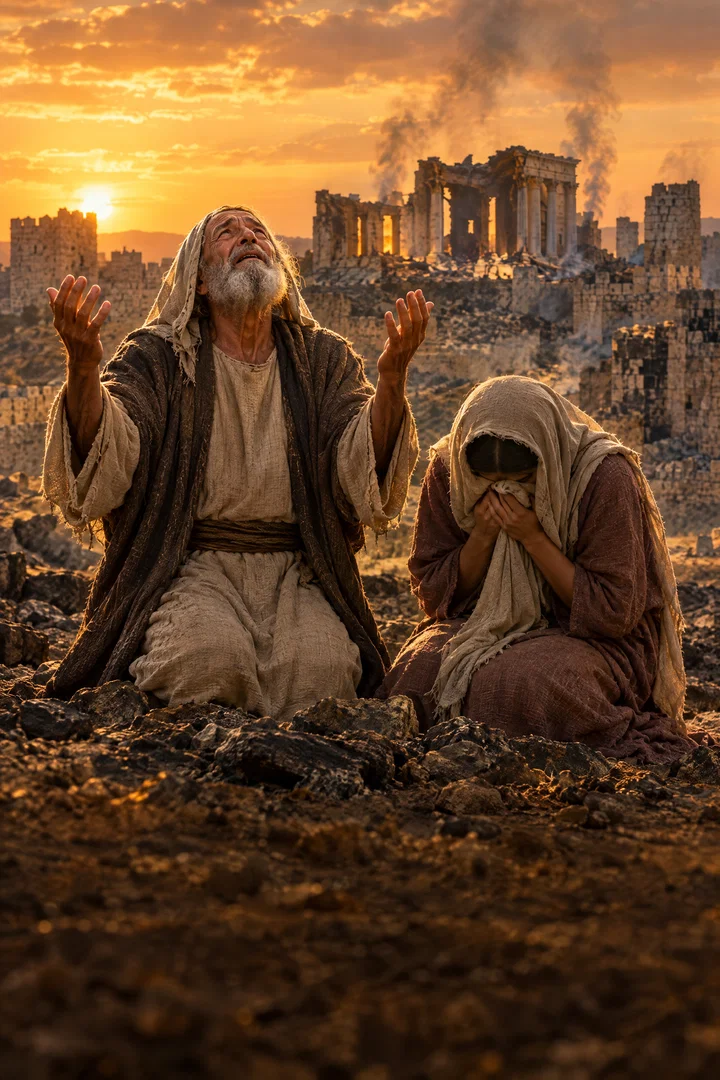
O God, the heathen are come into thine inheritance; thy holy temple have they defiled; they have laid Jerusalem on heaps.
Translations
O God, the heathen are come into your inheritance; your holy temple have they defiled; they have laid Jerusalem on heaps.
King James Version, Revised Version
O God, the heathen are come into thine inheritance; thy holy temple have they defiled; they have laid Jerusalem on heaps.
O God, the heathen are come into thine inheritance;
Thy holy temple have they defiled;
They have laid Jerusalem on heaps.A Psalm of Asaph. O God, the heathen have come into thy inheritance; thy holy temple have they defiled; they have laid Jerusalem on heaps.
O God, the nations are come into thine inheritance;
Thy holy temple have they defiled;
They have laid Jerusalem in heaps.A Psalm of Asaph. O God, nations have come into Thy inheritance, They have defiled Thy holy temple, They made Jerusalem become heaps,
O God, the nations are come into thine inheritance: thy holy temple have they defiled; they have laid Jerusalem in heaps.
O God, nations, Have entered thine inheritance, Have profaned thy holy temple,—Have laid Jerusalem in heaps:
The nations, O God, have invaded Your inheritance;
they have defiled Your holy temple
and reduced Jerusalem to rubble.A Psalm of Asaph. The nations, O God, have invaded Your inheritance; they have defiled Your holy temple and reduced Jerusalem to rubble.
God, the nations have come into your inheritance.
They have defiled your holy temple.
They have laid Jerusalem in heaps.O God, the nations have come into your heritage; they have made your holy Temple unclean; they have made Jerusalem a mass of broken walls.
A Psalme committed to Asaph. O God, the heathen are come into thine inheritance: thine holy Temple haue they defiled, and made Ierusalem heapes of stones.
Douay-Rheims (Challoner revision)
A psalm for Asaph. O God, the heathens are come into thy inheritance, they have defiled thy holy temple: they have made Jerusalem as a place to keep fruit.
Pictures
Cross-references
- Isaiah 64:10-11
Thy holy cities are a wilderness, Zion is a wilderness, Jerusalem a desolation.
Describes Jerusalem and its holy places as desolate, with the temple burned.
- Psalms 74:3-7
Lift up thy feet unto the perpetual desolations; even all that the enemy hath done wickedly in the sanctuary.
Both describe the destruction and defilement of God’s sanctuary.
- 2 Chronicles 36:19
And they burnt the house of God, and brake down the wall of Jerusalem, and burnt all the palaces thereof with fire, and destroyed all the goodly vessels thereof.
Records the temple’s destruction by invading heathen.
- Psalms 74:7
They have cast fire into thy sanctuary, they have defiled by casting down the dwelling place of thy name to the ground.
Both describe the sanctuary being burned and profaned.
- Lamentations 2:7
The Lord hath cast off his altar, he hath abhorred his sanctuary, he hath given up into the hand of the enemy the walls of her palaces; they have made a noise in the house of the LORD, as in the day of a solemn feast.
Both describe the sanctuary given over to enemies and profaned.
- Isaiah 63:18
The people of thy holiness have possessed it but a little while: our adversaries have trodden down thy sanctuary.
Both describe enemies trampling or possessing the sanctuary.
- Jeremiah 51:51
We are confounded, because we have heard reproach: shame hath covered our faces: for strangers are come into the sanctuaries of the LORD’s house.
Both describe nations profaning the Lord’s sanctuary and the shame it brings.
- Ezekiel 24:21
Speak unto the house of Israel, Thus saith the Lord GOD; Behold, I will profane my sanctuary, the excellency of your strength, the desire of your eyes, and that which your soul pitieth; and your sons and your daughters whom ye have left shall fall by the sword.
Foretells the sanctuary’s profanation and destruction.
- Lamentations 1:10
The adversary hath spread out his hand upon all her pleasant things: for she hath seen that the heathen entered into her sanctuary, whom thou didst command that they should not enter into thy congregation.
Describes foreign nations entering the sanctuary.
- Isaiah 64:11
Our holy and our beautiful house, where our fathers praised thee, is burned up with fire: and all our pleasant things are laid waste.
Both describe the temple destroyed and its treasures laid waste.
Commentary
Each commentary is drawn from primary sources: the writings of Ellen G. White and Adventist pioneers and periodicals. Each commentary is separate. Its own words are not a quotation; follow the references to read the source passages.
Pioneers and periodicals
8 sources
The verse foretells and describes foreign nations entering God's inheritance, defiling His holy temple, and laying Jerusalem in heaps or ruins, which is the destruction of Jerusalem and its sanctuary.RH Jan 20, 1853ST Aug 23, 1910RH Jan 20, 1853RH Sep 11, 1856RH Jan 6, 1853 It predicts the future desolation of God's temple or sanctuary, when the heathen enter the Lord's holy places, profane His holy temple, and leave the city in ruins.RH Jan 20, 1853RH Jan 20, 1853ST Aug 23, 1910RH Sep 11, 1856RH Jan 6, 1853 Its fulfillment is the Babylonian captivity and destruction, specifically the final Babylonian conquest and desolation of Jerusalem during Zedekiah's reign.RH Jan 20, 1853RH Sep 11, 1856
Psalm 79 is a post-Davidic psalm applicable to the time when Jerusalem was brought low and its people scattered.RH Aug 3, 1916ST Aug 23, 1910ST Aug 23, 1910 It expresses the captives' sorrow and desolation during the Babylonian captivity, their longing, and their prayers for deliverance.RH Aug 3, 1916ST Aug 23, 1910ST Aug 23, 1910 The verse is a witness to the destruction of the sanctuary described in 2 Chronicles 36:17-20 and Isaiah 64:10-11.RH Jan 6, 1853 It refers to the destruction of God's sanctuary in Canaan when God's people were driven from the land, and the land or Canaan itself was the place of the sanctuary, not the sanctuary itself.RH Jan 6, 1853RH Feb 15, 1870
Sources