Daniel 9:17
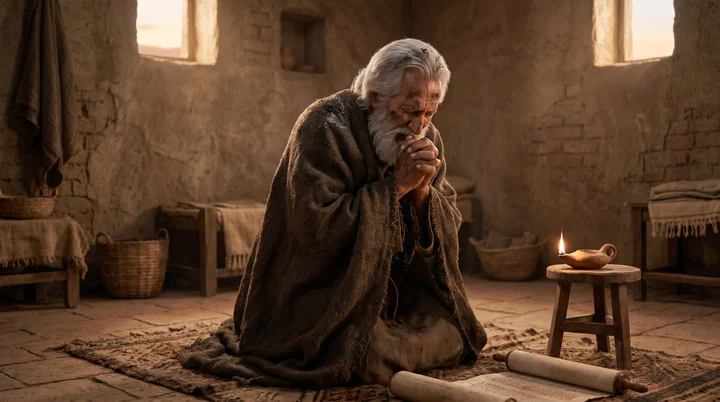
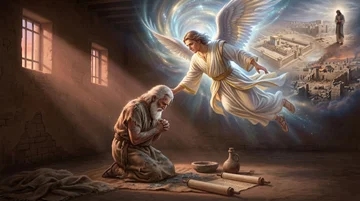
Now therefore, O our God, hear the prayer of thy servant, and his supplications, and cause thy face to shine upon thy sanctuary that is desolate, for the Lord’s sake.
Translations
Now therefore, O our God, hear the prayer of your servant, and his supplications, and cause your face to shine on your sanctuary that is desolate, for the Lord’s sake.
King James Version, KJV Cambridge Paragraph Bible
Now therefore, O our God, hear the prayer of thy servant, and his supplications, and cause thy face to shine upon thy sanctuary that is desolate, for the Lord’s sake.
Now therefore, O our God, hear the prayer of thy servant, and his supplications, and cause thy face to shine upon thy sanctuary that is desolate, for the LORD'S sake.
Revised Version, American Standard Version
Now therefore, O our God, hearken unto the prayer of thy servant, and to his supplications, and cause thy face to shine upon thy sanctuary that is desolate, for the Lord’s sake.
and now, hearken, O our God, unto the prayer of Thy servant, and unto his supplication, and cause Thy face to shine on Thy sanctuary that [is] desolate, for the Lord's sake.
And now, our God, hearken to the prayer of thy servant, and to his supplications, and cause thy face to shine upon thy sanctuary that is desolate, for the Lord's sake.
Now, therefore, hearken, O our God, unto the prayer of thy servant, and unto his supplications, and let thy face shine, upon thy sanctuary, that is desolate,—for the sake of thy servants, O Lord.
Berean Standard Bible, Majority Standard Bible
So now, our God, hear the prayers and petitions of Your servant. For Your sake, O Lord, cause Your face to shine upon Your desolate sanctuary.
“ Now therefore, our God, listen to the prayer of your servant and to his petitions, and cause your face to shine on your sanctuary that is desolate, for the Lord’s sake.
And now, give ear, O our God, to the prayer of your servant and to his request for grace, and let your face be shining on your holy place which is made waste, because of your servants, O Lord.
Nowe therefore, O our God, heare the prayer of thy serunant, and his supplications, and cause thy face to shine vpon thy Sanctuarie, that lyeth waste for the Lords sake.
Douay-Rheims (Challoner revision)
Now therefore, O our God, hear the supplication of thy servant, and his prayers: and shew thy face upon thy sanctuary which is desolate, for thy own sake.
Pictures
Cross-references 20 of 50
- Daniel 8:14
And he said unto me, Unto two thousand and three hundred days; then shall the sanctuary be cleansed.
The 2,300 days and sanctuary cleansing provide the prophetic timetable supplemented in Daniel 9.
- Daniel 9:2
In the first year of his reign I Daniel understood by books the number of the years, whereof the word of the LORD came to Jeremiah the prophet, that he would accomplish seventy years in the desolations of Jerusalem.
Daniel learns Jeremiah’s prophecy of Jerusalem’s seventy-year desolation.
- Daniel 9:23
At the beginning of thy supplications the commandment came forth, and I am come to shew thee; for thou art greatly beloved: therefore understand the matter, and consider the vision.
Gabriel answers Daniel’s supplications by bringing understanding and directing him to consider the vision.
- Jeremiah 29:10
For thus saith the LORD, That after seventy years be accomplished at Babylon I will visit you, and perform my good word toward you, in causing you to return to this place.
The promised return after seventy years prompts Daniel’s prayer for the desolate sanctuary.
- Jeremiah 25:11-12
And this whole land shall be a desolation, and an astonishment; and these nations shall serve the king of Babylon seventy years.
Jeremiah’s seventy-year prophecy shapes Daniel’s prayer as the captivity nears its end.
- Daniel 9:3-4
And I set my face unto the Lord God, to seek by prayer and supplications, with fasting, and sackcloth, and ashes:
Daniel begins his earnest, fasting prayer with confession and a plea concerning the sanctuary.
- Daniel 9:26
And after threescore and two weeks shall Messiah be cut off, but not for himself: and the people of the prince that shall come shall destroy the city and the sanctuary; and the end thereof shall be with a flood, and unto the end of the war desolations are determined.
Both identify Daniel’s sanctuary as the earthly temple, whose desolation is foretold.
- 2 Chronicles 36:19
And they burnt the house of God, and brake down the wall of Jerusalem, and burnt all the palaces thereof with fire, and destroyed all the goodly vessels thereof.
The temple’s burning and Jerusalem’s destruction left the sanctuary desolate.
- Daniel 9:4-6
And I prayed unto the LORD my God, and made my confession, and said, O Lord, the great and dreadful God, keeping the covenant and mercy to them that love him, and to them that keep his commandments;
Daniel confesses his and his people’s sins before petitioning God.
- Ezra 1:1-3
Now in the first year of Cyrus king of Persia, that the word of the LORD by the mouth of Jeremiah might be fulfilled, the LORD stirred up the spirit of Cyrus king of Persia, that he made a proclamation throughout all his kingdom, and put it also in writing, saying,
Cyrus’s decree enables Israel’s return and the sanctuary’s restoration.
- Daniel 9:24-25
Seventy weeks are determined upon thy people and upon thy holy city, to finish the transgression, and to make an end of sins, and to make reconciliation for iniquity, and to bring in everlasting righteousness, and to seal up the vision and prophecy, and to anoint the most Holy.
Gabriel answers Daniel’s prayer by explaining the seventy weeks and Jerusalem’s restoration.
- Hebrews 9:1-5
Then verily the first covenant had also ordinances of divine service, and a worldly sanctuary.
Both describe the earthly sanctuary and its furnishings.
- Hebrews 8:1-2
Now of the things which we have spoken this is the sum: We have such an high priest, who is set on the right hand of the throne of the Majesty in the heavens;
Christ ministers as High Priest in the true heavenly sanctuary.
- Isaiah 64:11
Our holy and our beautiful house, where our fathers praised thee, is burned up with fire: and all our pleasant things are laid waste.
The burned house describes Jerusalem’s desolate sanctuary.
- Hebrews 9:23-24
It was therefore necessary that the patterns of things in the heavens should be purified with these; but the heavenly things themselves with better sacrifices than these.
Christ’s better sacrifice purifies the heavenly sanctuary, where he appears before God for us.
- Daniel 8:13
Then I heard one saint speaking, and another saint said unto that certain saint which spake, How long shall be the vision concerning the daily sacrifice, and the transgression of desolation, to give both the sanctuary and the host to be trodden under foot?
Its question about the sanctuary’s desolation prompts Daniel’s petition for its restoration.
- Exodus 25:8
And let them make me a sanctuary; that I may dwell among them.
The sanctuary is made as God’s dwelling among Israel.
- Daniel 9:22
And he informed me, and talked with me, and said, O Daniel, I am now come forth to give thee skill and understanding.
Gabriel comes during Daniel’s prayer to give him understanding.
- Daniel 10:12
Then said he unto me, Fear not, Daniel: for from the first day that thou didst set thine heart to understand, and to chasten thyself before thy God, thy words were heard, and I am come for thy words.
Daniel’s prayer was heard from the beginning, though the messenger was delayed.
- Numbers 14:13-16
And Moses said unto the LORD, Then the Egyptians shall hear it, (for thou broughtest up this people in thy might from among them;)
Moses pleads for Israel, appealing to God’s name and reputation.
Commentary
Each commentary is drawn from primary sources: the writings of Ellen G. White and Adventist pioneers and periodicals. Each commentary is separate. Its own words are not a quotation; follow the references to read the source passages.
Ellen G. White
34 sources
Daniel pleads with God to hear his prayer and supplication and to let favor shine upon the ruined sanctuary for the Lord's own sake, seeking its restoration, the return of the exiles, and the vindication of God's honor while Jerusalem lies a reproach because of sin.PK 554.3–556.2PK 556.3RH Mar 21, 1907 He prays this in the first year of Darius as the seventy years of captivity near their end, with Jerusalem and its temple in ruins before him.LS 45.2–3PK 556.4 He claims nothing from the righteousness or achievements of the people, but casts himself wholly on God's great mercy, numbering himself with the transgressors and confessing both his own sin and the sin of his people.PK 554.3–556.2Ms 5, 1885, par. 23–25RH Mar 21, 1907 His seeking is earnest and humble, with prayer and supplication, fasting and self-denial, tears and contrition, confession and unity, approaching God as a sinner with unfeigned lips though long in His service.Ms 93, 1900, par. 27Lt 203, 1903, par. 7–15Ms 38, 1905, par. 15–16 His humiliation and confession are not in vain, for heaven hears and sends Gabriel to reveal the seventy weeks beginning with the command to restore Jerusalem, and his faithful intercession stands as the model for God's people today to wrestle with God in humility, confession, and unity for His help.Ms 93, 1900, par. 27Ms 38, 1905, par. 15–16PK 556.3Lt 264, 1902, par. 12–13
Daniel's Plea for Sanctuary
The prayer belongs to the first year of Darius, as the seventy years since the first Judean captives were taken to Babylon neared completion.LS 45.2–3PK 556.4 With Jerusalem and its temple lying in ruins before him, Daniel faced that desolation and asked favor for the desolate sanctuary.LS 45.2–3PK 556.4 He asked God to hear the prayer and supplications of His servant and to cause His face to shine upon the desolate sanctuary for the Lord's sake.PK 554.3–556.2PK 556.318MR 14.1RH Jul 13, 1905Ms 56, 1905, par. 10–12 The request sought the promised restoration and the return of the captive exiles, and the preservation of God's honor at a time when Jerusalem and its people had become a reproach because of sin.PK 554.3–556.2PK 556.3RH Mar 21, 190718MR 14.1
The plea was made on no ground of the people's righteousness, faithfulness, or achievements, but only on God's great mercy.PK 554.3–556.2Ms 5, 1885, par. 23–25RH Mar 21, 1907 Daniel identified himself with the sinful people, confessing both his own sin and the sin of his people.PK 554.3–556.2RH Jul 13, 1905Ms 6, 1884, par. 9Ms 56, 1905, par. 10–12 Though greatly beloved by God, he did not claim holiness but acknowledged sin, and though long in God's service he approached humbly as a sinner.Lt 203, 1903, par. 7–15Ms 5, 1885, par. 23–25RH Jul 13, 1905Ms 6, 1884, par. 9Ms 56, 1905, par. 10–12 His seeking was earnest and humble, marked by prayer and supplication with fasting, self-affliction, tears, sackcloth and ashes, contrition, confession, simplicity, and unity with one another, and his prayer came from unfeigned lips.Ms 93, 1900, par. 27Lt 203, 1903, par. 7–15Ms 38, 1905, par. 15–16Ms 129, 1908, par. 11Lt 335, 1905, par. 10
He prayed as one who believed the 2300 days might end with the seventy years of Israel's servitude, and this belief prompted his prayer.LS 45.2–3 The prayer followed his fainting and being sick and astonished at the true vision of the evening and the morning which is for many days but none understood.Ms 129, 1908, par. 11 What he saw in that vision is the great judgments to take place, witnessed in San Francisco as a standing warning to Oakland.Ms 129, 1908, par. 11
Heaven's Answer and Prophecy
The fasting, self-affliction, tears, confession, and humility were not in vain, for the earnest prayer for hearing and for favor to be restored to the desolate sanctuary was heard, and a heavenly messenger came to bring God's communication.Ms 93, 1900, par. 27 Before the request for pardon and restoration was even finished, Gabriel appeared and explained the seventy weeks, which begin with the command to restore and rebuild Jerusalem.Ms 93, 1900, par. 27PK 556.3 The plea belongs to the prophetic periods of Daniel 8 and 9 that are reckoned from the year 457 B.C., a starting date fixed by historical and chronological facts.GC 687.4 The chapter gives the seventy-week prophecy that provided the basis for the time-related message at Christ's first advent, and that same prophecy also foretold the Messiah's death, which was not recognized in that message.GC88 351.1–352.3
The prayer and its answer show that God hears the contrite soul, and that when people seek Him with all their hearts and pray in faith He answers their petitions.18MR 17.4–18.318MR 15.4 God is willing to help those who come to Him, and asking Him can bring wisdom, increased ability, and power from heaven.18MR 15.418MR 16.1 Those who come to God as they are may see His salvation, and this willingness to help encourages prayer for God to open the way for His work.18MR 15.418MR 16.1 The appeal to turn His face toward the desolate sanctuary expresses dependence on God and concern for the sanctuary, grounded in a complete prayer of confession and supplication for God's favor and intervention.18MR 17.4–18.318MR 16.1
As Daniel approached God with prayer and supplications, God heard his prayers, and the same God will hear present prayers if approached as Daniel approached Him.Lt 200, 1899, par. 5–6 That approach is in trust and continual communion of soul with God, with prayer not neglected but offered without ceasing.Lt 200, 1899, par. 5–6 It is offered with confidence that God can and will help all who put their trust in Him.Lt 200, 1899, par. 5–6
Pattern for Prayer Today
Daniel's earnest, faithful intercession for himself and for Israel stands as the model for seeking the Lord, calling believers to prayer and supplication with humility, contrition, confession of sin, and unity with one another, wrestling with God for His help.Ms 38, 1905, par. 15–16Lt 264, 1902, par. 12–13 It is a prayer believers are to make their own, asking God to hear their supplications and to work on their behalf through the Holy Spirit.18MR 19.4–20.2Lt 59, 1896, par. 21–22 Made their own, it is offered in humility under the view of the cross and what redemption cost, with a true sense of human worth measured by the price paid for redemption.6MR 103.1–2 Every capability and talent is then valued as the Lord's precious endowment to be used to His name's glory, so that every advantage may be gained in the strife for immortality and eternal life unto perfection and completeness in Jesus Christ.6MR 103.1–2
This is the prayer God's people need when they have become self-confident and presumptuous, have not heeded light and testimonies, have departed from expressed commands, have worked contrary to messages about the different features of the work, and have selfishly gathered facilities in a few favored places while neglecting other fields, the large cities, and the Southern field.STGC 70.4 It means assembling together, confessing sins, repenting before God, and continuing in prayer until the Lord manifests Himself with power, and then practicing the truth professed.STGC 70.4Lt 175, 1902, par. 5–6 It shows what it means to humble oneself before God, for though greatly beloved Daniel humbled his heart, confessing sins and pleading in supplication.13MR 321.2–3Lt 195, 1903, par. 20–22 It is the pattern for one who has walked in false paths, been reproved for not doing the Lord's will, and departed from the faith, to make a change by humbling the heart, confessing sins, repenting, and pleading with God, and it serves as a test of personal experience, with blessing, mercy, and grace promised to those who humble themselves.13MR 321.2–3Lt 195, 1903, par. 20–22Lt 30, 1906, par. 10
God's people are to humble themselves as Daniel humbled himself and gave God the glory due His name, but never to obliterate the line of demarcation between God's commandment-keeping people and those who have no respect for His law.Ms 58, 1903, par. 12 Longing for the restoration of the desolate sanctuary is bound to repentance for breaking God's law, whose prosperity can be restored only as the people become humble, faithful, and obedient.BS 41.2 Praying as Daniel prayed, confessing sin and finding pardon, keeps believers awake and keenly alive to exposure to the enemy's malignant devices instead of asleep and unready, with safety found only in keeping the commandments of God and living wholly for His glory as faithful and true.11MR 103.4–104.3Lt 201, 1899, par. 22–25 Such prayer brings the protection and guarding of heavenly intelligences and ministering angels, so that the man himself determines whether good or evil angels win over him and those who will be heirs of salvation stand in their lot and in their place under angelic protection, prepared to stand in their lot and place and made ready for the last great controversy and the Lord's coming.11MR 103.4–104.3Lt 201, 1899, par. 22–25
Sources
Pioneers and periodicals
88 sources
Daniel pleads for God to hear his prayer and supplication and to let favor shine again upon the sanctuary lying in ruins, asking it for the Lord's sake. RH Feb 13, 1900RH Aug 16, 1870ST Feb 9, 1882ST Jul 10, 1901ST Apr 19, 1910 The desolate sanctuary is the earthly house at Jerusalem where God dwelt among His people, broken down and burned by the Chaldeans, for whose restoration with the city and people Daniel confesses sin near the close of the seventy years in the first year of Darius. ST Aug 31, 1915ST Jul 10, 1901RH Mar 21, 1865RH Jan 20, 1853RH May 5, 1851 The plea rests on God's honor, mercy and name and not on Israel's righteousness, that His name be no longer reproached among the heathen. RH Aug 16, 1870ST Oct 11, 1877ST Feb 9, 1882RH Nov 14, 1912ST Feb 18, 1886 He supposes the cleansing of the sanctuary after the 2,300 evenings and mornings left unexplained in Daniel 8 will come with the ending of the captivity and the restoration of the earthly house. ST Oct 11, 1877ST Aug 31, 1915ST Jul 10, 1901RH Jul 14, 1863RH Dec 31, 1857 While he is still speaking Gabriel is sent to give understanding and to correct the time, showing that the seventy weeks are cut off from the 2,300 days as its first 490 years, reckoned from the commandment to restore Jerusalem in B.C. 457 to Messiah's work and the turning to the Gentiles, with the remaining years reaching to 1844. RH Nov 15, 1853RH Mar 1851RH Jan 12, 1864ST Jul 10, 1901RH Jul 14, 1863 The sanctuary then to be cleansed is not the earthly temple destroyed by Rome nor the earth, but the heavenly true tabernacle, where Christ began the blotting out of sin and the investigative judgment, and Daniel's earnest, confessing, importunate prayer stands as the model for God's people to cooperate with fulfilled prophecy by seeking Him. ST Aug 14, 1893ST Dec 24, 1912RH Jun 2, 1874ST Oct 14, 1880RH May 7, 1867
Words and Historical Setting
Daniel's words in this verse are a distinct and pointed request within his prayer, asking God to hear the prayer and supplications of His servant and to let divine favor shine upon the sanctuary lying desolate, and to do this for the Lord's sake.RH Feb 13, 1900RH Aug 16, 1870ST Feb 9, 1882RH Dec 6, 1853RH Feb 13, 1900 The plea is for restoration of favor to that desolate house, that its ruin be repaired.RH Aug 16, 1870ST Feb 9, 1882RH Jul 21, 1863 It belongs to the larger supplication in which Gabriel was sent to give skill and understanding about the vision of the eighth chapter, supplying the explanation of time Daniel had not understood.RH Dec 6, 1853RH Jul 21, 1863
The desolate sanctuary is the earthly house of God at Jerusalem, His dwelling among His people and the place of His special presence, where sacrifice was offered and worship rendered and help was sought.RH Aug 16, 1870ST Feb 9, 1882RH May 5, 1851ST May 1, 1879 It was first the movable tabernacle and then the temple on Mount Moriah, including Solomon's temple, a marvel of architecture and the center of worship of the true God.ST Aug 31, 1915ST May 1, 1879 It was broken down and burned by the Chaldeans of Babylon and lay in ruins near the close of the seventy years, so that while it lay waste the work of God in the earth seemed to have come to a standstill and the national polity was ruined.ST Aug 31, 1915RH Jan 20, 1853RH May 5, 1851RH Sep 11, 1856ST Jan 24, 1878 It remained desolate until after the captivity under the reign of the kingdom of Persia, when it was rebuilt, and after its later history it was finally destroyed by the Romans in A.D. 70.RH Jan 20, 1853ST May 1, 1879
The prayer was offered in the first year of Darius after the fall of Babylon, in B.C. 538, when Daniel understood by the books and by Jeremiah's prophecy that the seventy years of Jerusalem's desolation and the captivity were nearing their end.ST Jul 10, 1901ST Apr 19, 1910RH Mar 21, 1865ST May 11, 1876ST Jan 24, 1878 With his face turned toward the prostrate city and ruined temple of his fathers, he confessed his own sins and the sins of his people and pleaded for mercy, restoration, and favor toward the people, the city, and the sanctuary.ST Apr 19, 1910ST Nov 23, 1904RH Feb 17, 1874ST Jan 24, 1878 His mind was still exercised over the sanctuary question from Daniel 8, having heard that the sanctuary would be cleansed after 2,300 evenings and mornings, and he connected that cleansing with the ending of the captivity and sought further light.ST Aug 31, 1915ST Jul 10, 1901ST May 11, 1876
Sanctuary here is used in its proper and natural sense for the tabernacle and temple and for God's habitation and dwelling place on earth, not for the land of Canaan or Palestine as a whole.RH Aug 16, 1870ST Oct 11, 1877ST Feb 9, 1882ST May 1, 1879 That land was only the place where the sanctuary stood.RH Jan 20, 1853 While the people were scattered in dispersion, God Himself was to them as a little sanctuary.RH Jan 20, 1853
Basis and Burden of Plea
The plea is made for the Lord's sake, resting on God's honor, mercy and name rather than on any righteousness of the people or any personal benefit to the petitioner.RH Aug 16, 1870ST Oct 11, 1877ST Feb 9, 1882RH Nov 14, 1912ST Feb 25, 1886 What is sought is that God hear the prayer and supplications of His servant and cause His favor to shine again upon His desolate sanctuary, His own dwelling place on earth, repairing its desolation.RH Aug 16, 1870ST Oct 11, 1877ST Feb 9, 1882ST Feb 25, 1886ST Jun 26, 1907 The motive is jealousy for the honor of God's name, that it should be honored and not be reproached and blasphemed among the heathen, and such a plea is acceptable to God.RH Aug 16, 1870ST Oct 11, 1877ST Feb 9, 1882 Daniel feared that the sins of his people might hinder the promised restoration, so he appealed not to their righteousness but to God's great mercies.RH Nov 14, 1912ST Feb 25, 1886 While God's people lay captive in Babylon and Jerusalem lay desolate with its sanctuary destroyed and its service interrupted, he asked God to revive that service and to end the captivity and restore Jerusalem and its worship when the promised seventy years were complete.RH Nov 14, 1912ST Feb 25, 1886ST Jun 26, 1907
The burden joins intercession for Jerusalem, the city called by His name, with the sanctuary as the center of the worship rendered to the true God.ST Oct 11, 1877ST Aug 31, 1915RH Nov 14, 1912 Jerusalem had become a reproach because of the sins of the people, and Daniel asks that anger be turned away for His mercies' sake, that God hear, forgive, show mercy to His disobedient people, and restore favor to city, people and house.ST Oct 11, 1877RH Nov 14, 1912ST Nov 23, 1904ST Feb 25, 1886 The sanctuary in view is Solomon's temple, a marvel of architecture, whose ruin brought special reproach upon the nation and ruined the national polity.ST Oct 11, 1877ST Aug 31, 1915 While it lay in ruins the work of God in the earth seemed to have come to a standstill, and the promised restoration of Jerusalem and its sanctuary was the burden of the prayer near the end of the captivity, connecting its rebuilding with the end of the seventy years.ST Aug 31, 1915ST Nov 23, 1904ST Feb 25, 1886RH Aug 23, 1870
The prayer that carries this plea is a prayer of confession, supplication and fasting, offered with outward humility, contrition and earnestness.ST Feb 18, 1886STRH Feb 13, 1900RH Sep 4, 1900 It confesses the full extent of sin, the petitioner's own sins and the sins of his people, acknowledges that God has dealt justly with them, and expresses a sinner's sorrow and appeal for mercy.ST Feb 18, 1886RH Feb 13, 1900RH Sep 4, 1900RH Jan 27, 1903 Confession is presented as necessary before expecting the Lord to hear, and the longing for the prosperity of the sanctuary and the restoration of its desolations is bound to Israel's repentance from breaking God's law into humility, faithfulness and obedience.ST Oct 26, 1882RH Feb 13, 1900RH Jan 27, 1903 So offered, the words are heard, forgiveness is sought, and the petitioner is assured that he is beloved by God.STRH Sep 4, 1900RH Jan 27, 1903
Misunderstanding and Angelic Answer
Daniel's mind was still exercised over the sanctuary question from the vision of Daniel 8, given fifteen years before, or only months before in Belshazzar's last year.ST Oct 11, 1877ST Aug 31, 1915ST Jul 10, 1901 Having heard that the sanctuary would be cleansed after 2,300 evenings and mornings, with that part left unexplained while the rest had been explained and declared true, he was left without answer as to what sanctuary was meant and what the days were, and this mystery increased the fervor and helplessness of his petition.ST Aug 31, 1915ST Jul 10, 1901RH Dec 31, 1857 He connected that cleansing with the ending of the seventy years of Jerusalem's desolations and the captivity, and supposed the 2,300 days would terminate with the captivity and the sanctuary then be restored.ST Oct 11, 1877ST Jul 10, 1901RH Dec 31, 1857RH Jul 21, 1863RH Mar 21, 1865 It was in that mistaken expectation that he prayed for God to hear his prayer and supplications and to cause His face to shine upon His desolate sanctuary for the Lord's sake, seeking further light on the vision.ST Oct 11, 1877ST Jul 10, 1901RH Dec 31, 1857RH Jul 21, 1863RH Mar 21, 1865
While he was still speaking in prayer, with fasting, humility, and supplication, Gabriel was sent promptly to give him skill and understanding.RH Jan 12, 1864ST Jul 10, 1901RH Dec 31, 1857RH Dec 6, 1853ST Mar 26, 1912 The Gabriel who came was the same being seen in the vision at the beginning in Daniel 8.RH Dec 31, 1857ST Apr 1, 1880 He came to undeceive Daniel concerning his application of time, to correct the application of the 2,300 days to the end of the captivity, and to supply the explanation and chronological data Daniel had not understood.RH Dec 31, 1857RH Dec 6, 1853RH Jul 21, 1863ST Apr 1, 1880RH Dec 6, 1864 His coming proves Daniel 9 is the continuation of Daniel 8, resuming and completing the explanation of that vision in obedience to the command to make Daniel understand the vision.RH Jul 14, 1863RH Dec 31, 1857RH Dec 6, 1853ST Apr 1, 1880
Gabriel had explained the ram as Persia and the he-goat as Grecia and the little horn as the exceeding great kingdom of Rome, but had explained nothing of the 2,300 days before Daniel fainted and was sick certain days and could bear no more, so the charge to make him understand was left unfulfilled in Daniel 8.RH Jul 14, 1863RH Dec 31, 1857RH Jun 2, 1874 Daniel 9 therefore takes up the one point there omitted, namely time, not the ram or goat or little horn which were already explained and made plain.RH Jul 14, 1863RH Dec 31, 1857ST Apr 1, 1880RH Dec 6, 1864 It is where Gabriel gives further instruction on that remaining part, the 2,300 days, bidding him consider the vision and teaching time alone.RH Jul 14, 1863RH Jun 2, 1874RH Dec 6, 1864
The vision of Daniel 9 was given in B.C. 538, in the first and last year of Darius, in the third and last year of Belshazzar and the very year Babylon was overthrown by Medo-Persia, only a few months or even weeks after the vision of Daniel 8 given in Belshazzar's third and last year.ST Dec 24, 1894ST Mar 11, 1889ST Mar 26, 1912ST Jan 20, 1904RH Dec 20, 1870 That close chronological connection shows Daniel 9 was given to explain the time brought to view in Daniel 8, and explains why Babylon has no symbol in Daniel 8 because Babylon was then passing away.ST Dec 24, 1894RH May 12, 1910 The marginal dates in reference Bibles that place the visions fifteen years apart are not inspired and may be wrong.ST Dec 24, 1894 The exact interval between the chapters is not essential to interpreting the prophecy, and later dates were adjusted to fit modern research into Babylonian history, while the instruction itself is dated to B.C. 538, four years before the vision of Daniel 10 in the third year of Cyrus in B.C. 534.RH May 12, 1910RH Dec 20, 1870
Daniel 9 does not complete the explanation of the vision, for it does not answer how long the host will be trodden under foot nor tell what will befall his people at the last end of the indignation.RH Jan 10, 1856
Seventy Weeks and Twenty-Three Hundred Days
Daniel 9 supplies the time left unexplained in Daniel 8, for the seventy weeks are cut off from the 2,300 days as the first 490 days of that longer period.RH Nov 15, 1853RH Dec 23, 1852RH Jun 2, 1874RH Sep 17, 1861 Where the seventy weeks begin the 2,300 days begin, so to understand the seventy weeks is to understand the 2,300 days.RH Nov 15, 1853RH Jun 2, 1874RH Sep 17, 1861 That connection is one of the main pillars of prophetic time interpretation, supported by a mass of direct testimony, and to deny it shakes the whole system to its foundation.RH Dec 23, 1852 Because those weeks are weeks of years reaching to the manifestation of the Messiah at His baptism, the 2,300 days are likewise counted as years, with each prophetic day representing a year.RH Mar 1851ST Feb 7, 1884RH Jun 2, 1874
The common starting point told in Daniel 9 is the going forth of the commandment to restore and build Jerusalem when it lay in ruins.RH Nov 15, 1853RH Jun 2, 1874RH Sep 17, 1861ST Aug 12, 1875ST Oct 21, 1880 That decree went forth in the seventh year of Artaxerxes, identified as B.C. 457, in the autumn, and from that date the 2,300 days as years are reckoned.RH Nov 15, 1853ST Jul 1, 1897RH Sep 17, 1861ST Oct 21, 1880ST Nov 7, 1916 The first sixty-nine weeks amount to 483 years and reach to the Messiah, beginning with that decree to rebuild Jerusalem.RH Nov 15, 1853 The period dates from the command to restore and rebuild Jerusalem, and stands with the parallel prophecies of Daniel 2, 7 and 8 spanning nearly the whole field of vision through this dispensation to the end.ST Aug 12, 1875ST Oct 21, 1880
The periods subdivide as 49 years to the restoration under Nehemiah.ST Jul 1, 1897 Then 483 years or sixty-nine weeks reach to Messiah the Prince at His baptism and beginning to preach in A.D. 27.RH Nov 15, 1853ST Jul 1, 1897 Then 486 1/2 years reach to His being cut off and causing sacrifice and oblation to cease by His death on the cross in the midst of the last week in A.D. 31.RH Mar 1851RH Jun 2, 1874ST Jul 1, 1897 The prophecy thus fixes the times of the beginning of Christ's ministry, His death, and the apostles' turning to the Gentiles at the specified ends of the periods.RH Feb 21, 1856ST Nov 8, 1905 The full 490 years reach to A.D. 34 with the turning to the Gentiles and the cutting off of the Jews, and the remaining 1,810 years then reach to 1844.ST Mar 2, 1915RH Jun 2, 1874ST Jul 1, 1897
The 2,300 days are therefore 2,300 years beginning in the autumn of B.C. 457 and ending in the autumn of A.D. 1844.RH Jun 2, 1874ST Jul 1, 1897ST Nov 7, 1916 The period was reckoned to close in 1844, first expected as Christ's coming in the spring and then on October 22 after the midnight cry of the parable of the ten virgins in Matthew 25.ST Jun 20, 1916ST Nov 7, 1916 The great advent movement reached its climax at the close of the period, following the falling of the stars in 1833 as proof that Christ was near even at the doors.ST Jun 20, 1916ST Nov 7, 1916 The dates are presented as definite and verified by history and by astronomy, with the threefold message of Revelation 14 to be proclaimed immediately afterward.ST Aug 12, 1875ST Nov 7, 1916
Sanctuary Cleansing and Judgment
The prayer belongs to the chapter that marks the transfer from the earthly sanctuary of the first covenant to the heavenly sanctuary and true tabernacle of the new covenant near the end of the 490 days at the cross.RH Jan 20, 1853RH Oct 2, 1856ST May 1, 1879 Only the seventy weeks cut off upon Daniel's people and holy city pertain to the earthly sanctuary, and when they end the true tabernacle is introduced with its anointing, sacrifice, and minister, because the old covenant shadows ended at the cross.RH Jan 20, 1853RH Jun 2, 1874RH Oct 2, 1856 The earthly house Daniel had in mind was God's temple in Jerusalem, then desolate, God's dwelling among Israel first in the tabernacle and later in the temple on Mount Moriah, which was destroyed by fire, and his plea asks God to restore it to favor and use.ST May 1, 1879RH Jan 20, 1853RH Mar 10, 1874 In answer God showed that sixty-nine weeks from the going forth of the decree to restore and build Jerusalem the Messiah the Prince would come and begin to preach in A.D. 27 and finally be cut off, and that after this the city and the sanctuary then rebuilt would be destroyed and never again be rebuilt but left in ruins till the consummation.RH Jan 20, 1853RH Jan 20, 1853 The earthly sanctuary and its high priest served as types of Christ and the heavenly sanctuary, its cleansing being performed by the high priest with the blood of the sin offering while Christ's blood cleanses the heavenly sanctuary, so because the prophecy reaches the last days and the earthly sanctuary had long since been destroyed, the sanctuary of Daniel 8:14 is the heavenly one.RH Jun 2, 1874ST May 1, 1879
The sanctuary to be cleansed at the end of the 2,300 years is not the typical sanctuary destroyed by the Romans in A.D. 70 nor the earth, but the antitypical sanctuary and true tabernacle.RH Jun 2, 1874ST Jul 1, 1897 The chapter supplies the explanation of the time left unexplained in the vision of Daniel 8, teaching time alone, for the seventy weeks are cut off from the 2,300 days and both commence together with the commandment to restore and build Jerusalem in B.C. 457, with forty-nine years to the restoration under Nehemiah, 483 years to Messiah the Prince in A.D. 27, 486 1/2 years to His death on the cross in the midst of the last week in A.D. 31 when He caused sacrifice and oblation to cease, 490 years to the cutting off of the Jews and turning to the Gentiles in A.D. 34, and the remaining 1,810 years reaching to 1844.RH Jun 2, 1874ST Jul 1, 1897 Then in 1844 Christ entered the most holy place to begin the cleansing, which is the last work of the great High Priest on the antitypical tenth day of the seventh month, the blotting out of sin and the atonement for His people.ST Dec 24, 1912RH Jun 2, 1874ST Jul 1, 1897 That cleansing is the investigative judgment that takes place immediately before the coming of Christ, the judgment of the dead that determines who is worthy of the heavenly inheritance and approves those worthy before His coming, whose next event is the second coming.ST Dec 24, 1912ST Jul 1, 1897 The prophetic line traces the kingdoms and points to Christ's manifestation as Messiah, the duration of His earthly ministry, the beginning of His priesthood, and the year His closing work for the heavenly sanctuary began in 1844, when the last threefold message began on earth and the finishing work in the most holy place began in heaven.ST Aug 14, 1893ST Jul 1, 1897 The hour of God's judgment began in heaven on October 22, 1844, the appointed day when God judges the world, separating the just from the unjust to give to each according to his works, announced to all peoples and nations by the first message, The hour of his judgment is come, as part of the three messages sent before Christ comes to reap the harvest, carrying life for those who accept it and death for those who refuse it.ST Jul 1, 1897RH Nov 30, 1905
The desolation prayed about also points to the sanctuary trodden underfoot by Rome under pagan continual desolation and the papal transgression of desolation.ST Jul 1, 1897 That final sanctuary desolation of Daniel 8 is identified with Rome, not Mahomedism.RH May 1, 1856 Jerusalem is associated with the church and people of God, trodden down by Gentile powers, Paganism and then Papacy, for a total of 2,520 years ending in 1798.RH Jan 10, 1856 Daniel 9 is a prediction of Jerusalem's destruction and speaks of multiple desolations, for in relation to the church more than one abomination treads it down: paganism and the papacy.ST May 18, 1882
Together Daniel 8 and 9 point out distinctly the commencement and termination of the 2,300 days, show what the sanctuary is and the nature of its cleansing, and explain the disappointment of the Advent people in regard to time and the true position of those who are now waiting for their Lord since 1844.RH Jul 10, 1856RH Jun 26, 1856RH Jan 10, 1856 They give the exposition of the sanctuary and the twenty-three hundred days in connection with the prayer for the desolate sanctuary.RH Jun 26, 1856RH May 15, 1856RH Aug 7, 1856 The exposition belongs with Daniel 2, Daniel 7, and Daniel 8.RH Aug 19, 1858
Prophetic Lines and Prayer Example
Daniel 9 stands with Daniel 2, 7, 8 and 10-12, with Revelation and with the Olivet discourses, as one of the great lines of symbolic and literal prophecy covering the same ground and powers from Daniel's time to the everlasting kingdom.ST Aug 14, 1893ST Aug 9, 1910ST Nov 28, 1900 Together with Daniel 8 it forms one vision in which earth's history passes in review, whose principal subject is the sanctuary and its cleansing reaching to the solemn events of the great day of atonement and judgment at the appointed time of the end.ST Aug 12, 1875 The line traces kingdoms and points to Christ's manifestation as Messiah, the duration of His earthly ministry, the beginning of His priesthood, and the year His closing work for the heavenly sanctuary began in 1844.ST Aug 14, 1893ST Aug 12, 1875 The 2,300 days span nearly the whole field of vision through this dispensation to the end, ending in 1844 when Christ entered the most holy place of the heavenly sanctuary and the cleansing began, immediately before His coming.ST Aug 12, 1875 Like chapter 7 onward it belongs to the great prophetic periods in which days stand for years and which reveal great events in connection with God's work, showing the nations as God sees them in a religious way as enemies to His gospel.ST Aug 9, 1910ST Nov 28, 1900 These lines converge almost to the focal center of the second coming, showing the end of earthly rule nearly over and Christ's coming near, bringing us to the same end at the second coming and the everlasting kingdom on the verge of the day of God, which must be fulfilled before Christ comes.ST Aug 9, 1910ST Nov 28, 1900
The seventy-weeks prophecy of Daniel 9 has an established, fixable date centered on the commandment to restore and build Jerusalem.ST Jan 24, 1878RH Dec 27, 1870RH Feb 7, 1871RH Nov 11, 1873RH Nov 18, 1873 It gives the date of the seventy weeks and explains that commandment, and demonstrates the first advent of the Messiah.ST Aug 12, 1875RH Dec 27, 1870 Chapter 9 further explains the vision of chapter 8 concerning God's purposes and future events affecting the church.RH Dec 20, 1870
Daniel's prayer in Daniel 9:11-19 is one of ten model prayers showing how public prayer should be offered, pointed, expressive, direct and brief, taking less than four minutes to repeat and about three minutes to speak aloud.ST Aug 26, 1875RH Jul 14, 1868 It helps set an average of about three minutes for public prayer, with only an extraordinary occasion equal to the dedication of the temple justifying a prayer longer than five minutes.ST Aug 26, 1875 Its prime object is to lift up hearts to commune with Heaven in tender, filial, direct, quiet, simple asking for the blessing desired, as a child asking One more willing to give good gifts than to be asked, without wandering, vain repetitions, or many Ohs and Ahs.ST Aug 26, 1875 It was offered during fasting with outward acts of humility, confession of the full extent of the people's sins, acknowledgment that God had dealt justly, supplication and intercession for others, and longing for the promised Deliverer and Messiah.ST Oct 14, 1880RH May 7, 1867RH Feb 13, 1900RH Sep 4, 1900 It is an example of sincere, heartfelt, effectual earnest prayer in which the sinner's sorrow and appeal are heard, showing the one who prays thus to be beloved by God.RH Feb 13, 1900RH Sep 4, 1900 It is recommended as a model to follow when humbling oneself before God, confessing sin, and praying for God's blessing.ST Oct 14, 1880
Understanding that the prophesied seventy years of Jerusalem's desolation were coming to an end prompted the prayer, providing an example for the church when the time for a prophecy to be fulfilled has come.RH Mar 21, 1865 The supplication is a real appeal heard by God and answered through angelic ministry, showing that prayer has an active part in fulfillment of God's purposes.RH Jan 12, 1864 Daniel earnestly pleaded that God end Israel's captivity and restore Jerusalem and its worship, asking God to hear and show favor to the sanctuary lying desolate, not because the people are righteous but for the Lord's sake and mercy.RH Nov 14, 1912RH Mar 21, 1865 He mistakenly thought the 2,300 days would end with the seventy years of captivity and that the sanctuary would then be cleansed, yet though mistaken about timing and application he prayed when he believed fulfillment had come, seeking the Lord with fasting and humility without delay.RH Mar 21, 1865 His prayer, accompanied by fasting and sustained supplication, was heard, and deliverance followed when Cyrus's decree ended the captivity, when the kings of Media and Persia commanded the Jews to return to Jerusalem, enabling the people to return and rebuild the house of God.RH Jan 12, 1864RH Nov 14, 1912RH Nov 25, 1909
The faithful thus prayed for fulfillment of God's promise to restore the Jews from Babylon to their own land at the end of the seventy years when God punished the king of Babylon in the time of Nebuchadnezzar's grandson, seeking God, confessing sins, and praying for and expecting the promised restoration.RH Feb 17, 1874 This was done by only a few who had faith in the promises while the people were slow to believe.RH Feb 17, 1874 It teaches faith that confesses sin, asks God to act, expects Him to keep His word with punctuality, and then embraces the offered return and the arduous work of rebuilding in troublous times under God's sustaining care, as a lesson of faith to learn now.RH Feb 17, 1874 Daniel's earnest supplication for God to act without delay on His promise to restore Israel and bring the desolate sanctuary back into use committed him to cooperate in the work he asked God to accomplish.RH Nov 14, 1912 It is an example of praying on behalf of others and a warrant for the church to pray continually, humbling itself, seeking blessing and deliverance in peril, praying earnestly and continuously for the speedy completion of the work, and becoming ready to answer God's call to serve.ST Oct 14, 1880RH Nov 14, 1912
The prophetic announcements in Daniel 7-9 are ones that Babylon failed to heed.ST Nov 26, 1912
Sources