Deuteronomy 19:4
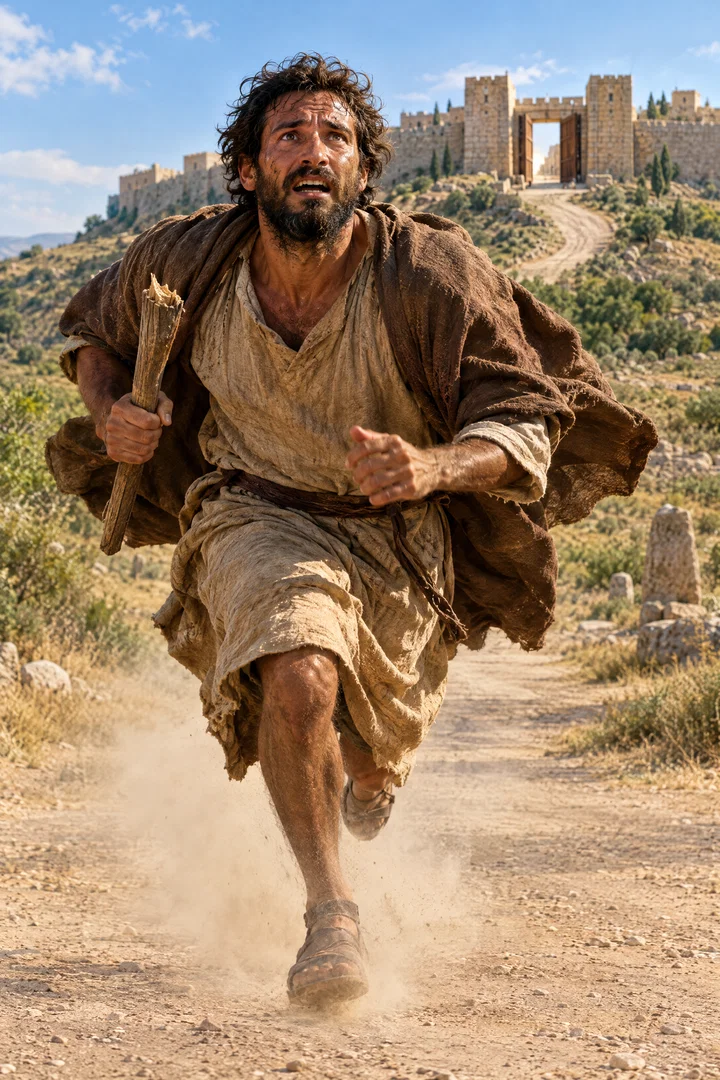
And this is the case of the slayer, which shall flee thither, that he may live: Whoso killeth his neighbour ignorantly, whom he hated not in time past;
Translations
And this is the case of the slayer, which shall flee thither, that he may live: Whoever kills his neighbor ignorantly, whom he hated not in time past;
King James Version, KJV Cambridge Paragraph Bible
And this is the case of the slayer, which shall flee thither, that he may live: Whoso killeth his neighbour ignorantly, whom he hated not in time past;
And this is the case of the slayer, who shall flee thither, that he may live: Whoever killeth his neighbor ignorantly, whom he hated not in time past;
And this is the case of the manslayer, which shall flee thither and live: whoso killeth his neighbour unawares, and hated him not in time past;
And this is the case of the manslayer, that shall flee thither and live: whoso killeth his neighbor unawares, and hated him not in time past;
'And this [is] the matter of the man-slayer who fleeth thither, and hath lived: He who smiteth his neighbour unknowingly, and is not hating him heretofore,
And this is the case of the slayer who shall flee thither that he may live: he that smiteth his neighbour unwittingly, whom he hated not previously;
And, this, is the case of the manslayer, who shall flee thither and live,—Whoso shall smite his neighbour unwittingly, he, not having hated him aforetime;
Berean Standard Bible, Majority Standard Bible
Now this is the situation regarding the manslayer who flees to one of these cities to save his life, having killed his neighbor accidentally, without intending to harm him:
This is the case of the man slayer who shall flee there and live: Whoever kills his neighbor unintentionally, and didn’t hate him in time past—
This is to be the rule for anyone who goes in flight there, after causing the death of his neighbour in error and not through hate;
This also is ye cause wherfore the manslayer shall flee thither, and liue: who so killeth his neighbor ignorantly, and hated him not in time passed:
Douay-Rheims (Challoner revision)
This shall be the law of the slayer that fleeth, whose life is to be saved: He that killeth his neighbour ignorantly, and who is proved to have had no hatred against him yesterday and the day before:
Pictures
Cross-references
- Numbers 35:11-12
Then ye shall appoint you cities to be cities of refuge for you; that the slayer may flee thither, which killeth any person at unawares.
The accidental slayer may flee to refuge and remain there until judgment.
- Joshua 20:3-6
That the slayer that killeth any person unawares and unwittingly may flee thither: and they shall be your refuge from the avenger of blood.
Explains protection and judgment for the unwitting slayer.
- Numbers 35:22-25
But if he thrust him suddenly without enmity, or have cast upon him any thing without laying of wait,
Sets out refuge and judgment for an accidental slayer.
- Numbers 35:19
The revenger of blood himself shall slay the murderer: when he meeteth him, he shall slay him.
The avenger’s expected response contrasts with the slayer’s right to refuge.
- Numbers 35:30
Whoso killeth any person, the murderer shall be put to death by the mouth of witnesses: but one witness shall not testify against any person to cause him to die.
Requires evidence and trial before a person is condemned to die.
- 2 Samuel 14:7
And, behold, the whole family is risen against thine handmaid, and they said, Deliver him that smote his brother, that we may kill him, for the life of his brother whom he slew; and we will destroy the heir also: and so they shall quench my coal which is left, and shall not leave to my husband neither name nor remainder upon the earth.
illustrates kin required to kill murderer
- Genesis 4:14-15
Behold, thou hast driven me out this day from the face of the earth; and from thy face shall I be hid; and I shall be a fugitive and a vagabond in the earth; and it shall come to pass, that every one that findeth me shall slay me.
The passage contrasts an early reference to blood revenge with its restriction in Deuteronomy 19.
Commentary
Each commentary is drawn from primary sources: the writings of Ellen G. White and Adventist pioneers and periodicals. Each commentary is separate. Its own words are not a quotation; follow the references to read the source passages.
Pioneers and periodicals
10 sources
Deuteronomy 19:4 belongs to the laws Moses recalled for Israel before they crossed the Jordan, rehearsing what God had done for them and the chief laws given to them to remind them of the law's sacred importance and their need to keep it.ST Mar 1, 1910 It belongs to the Mosaic provision of cities of refuge that mitigated the deeply rooted Hebrew custom that authorized and even required the next-of-kin to avenge a murdered person by killing the murderer.ST Sep 23, 1897 The restriction of blood revenge in this chapter shows a law that existed in patriarchal times before it became part of the Mosaic code.ST Dec 17, 1902 The verse defines the protected slayer as one who kills his neighbor ignorantly or unintentionally and without prior hatred or enmity.ST Sep 23, 1897ST Aug 29, 1895ST Aug 29, 1895ST Jan 2, 1907 A killing so described is judged as accidental rather than treated as murder.ST Jan 2, 1907 Such a slayer may flee to refuge to escape immediate or private vengeance and claim protection from the avenger of blood until the case receives a fair trial and is judged by the congregation.ST Sep 23, 1897ST Aug 29, 1895ST Jan 2, 1907
The elders' decision admits the fugitive while a later, fuller trial is arranged.ST Aug 29, 1895 In its marginal reading, the day before yesterday is described as the third day, counting the day of reference as the first.RH Aug 12, 1875 The verse is an example of inclusive day-counting when reckoning backward, where the day being spoken of counts as the first and the day two days before it counts as the third.ST Feb 3, 1881RH Feb 7, 1871 This inclusive reckoning supports counting the day of Christ's suffering as the first day when he foretold that he would rise the third day.ST Feb 3, 1881
A city of refuge is a place to be secured for people who are bitterly persecuted and must leave their own countrymen in order to live.RH Apr 16, 1908 Applied to Jews who accept Christ, it means providing such a refuge in a suitable place.RH Apr 16, 1908 There they are given work and at the same time trained to be workers for others.RH Apr 16, 1908
Sources