Exodus 16:13
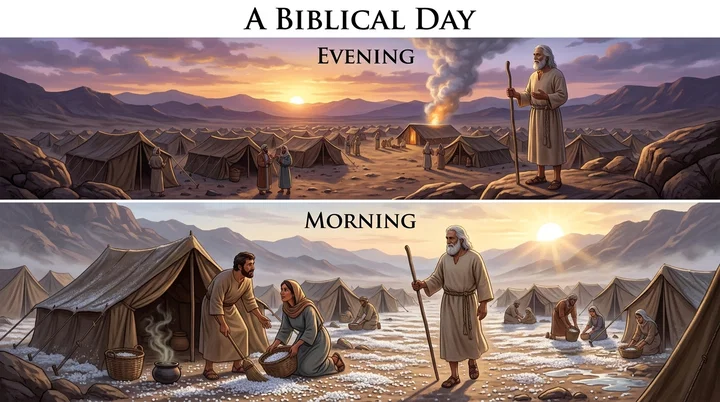
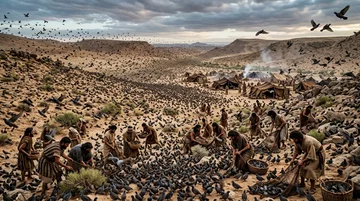
And it came to pass, that at even the quails came up, and covered the camp: and in the morning the dew lay round about the host.
Translations
American King James Version, King James Version, KJV Cambridge Paragraph Bible
And it came to pass, that at even the quails came up, and covered the camp: and in the morning the dew lay round about the host.
And it came to pass, that at evening the quails came up, and covered the camp: and in the morning the dew lay around the host.
Revised Version, American Standard Version
And it came to pass at even, that the quails came up, and covered the camp: and in the morning the dew lay round about the camp.
And it cometh to pass in the evening, that the quail cometh up, and covereth the camp, and in the morning there hath been the lying of dew round about the camp,
And it came to pass in the evening, that quails came up, and covered the camp; and in the morning the dew lay round the camp.
And it came to pass, in the evening, that there came up quail, and covered the camp,—and in the morning was the outpouring of dew, round about the camp;
Berean Standard Bible, Majority Standard Bible
That evening quail came and covered the camp, and in the morning there was a layer of dew around the camp.
In the evening, quail came up and covered the camp; and in the morning the dew lay around the camp.
And it came about that in the evening little birds came up and the place was covered with them: and in the morning there was dew all round about the tents.
And so at euen the quailes came and couered the campe: and in the morning the dewe lay round about the hoste.
Douay-Rheims (Challoner revision)
So it came to pass in the evening, that quails coming up, covered the camp: and in the morning, a dew lay round about the camp.
Pictures
Cross-references 20 of 40
- Exodus 16:4-5
Then said the LORD unto Moses, Behold, I will rain bread from heaven for you; and the people shall go out and gather a certain rate every day, that I may prove them, whether they will walk in my law, or no.
Manna’s daily gathering and sixth-day double portion test obedience and introduce the Sabbath.
- Exodus 16:22-30
And it came to pass, that on the sixth day they gathered twice as much bread, two omers for one man: and all the rulers of the congregation came and told Moses.
The double portion and absence of manna on the seventh day mark the Sabbath and its rest.
- Numbers 11:4-6
And the mixt multitude that was among them fell a lusting: and the children of Israel also wept again, and said, Who shall give us flesh to eat?
Israel complained that manna was their only food and craved meat.
- Exodus 16:1
And they took their journey from Elim, and all the congregation of the children of Israel came unto the wilderness of Sin, which is between Elim and Sinai, on the fifteenth day of the second month after their departing out of the land of Egypt.
Dates Israel’s arrival in the wilderness of Sin and the quails and manna that followed.
- Exodus 16:26
Six days ye shall gather it; but on the seventh day, which is the sabbath, in it there shall be none.
Manna was gathered for six days and withheld on the seventh, the Sabbath.
- Numbers 11:31-34
And there went forth a wind from the LORD, and brought quails from the sea, and let them fall by the camp, as it were a day’s journey on this side, and as it were a day’s journey on the other side, round about the camp, and as it were two cubits high upon the face of the earth.
God provides quail after Israel’s craving, and the people suffer for it.
- John 6:9-13
There is a lad here, which hath five barley loaves, and two small fishes: but what are they among so many?
Jesus miraculously feeds a multitude, repeating the pattern of God’s provision.
- Exodus 16:3
And the children of Israel said unto them, Would to God we had died by the hand of the LORD in the land of Egypt, when we sat by the flesh pots, and when we did eat bread to the full; for ye have brought us forth into this wilderness, to kill this whole assembly with hunger.
Israel’s hunger prompts complaints as they long for Egypt’s food.
- Exodus 20:8-11
Remember the sabbath day, to keep it holy.
Exodus 16’s sixth and seventh days uphold the commandment’s Sabbath.
- Psalms 78:26-31
He caused an east wind to blow in the heaven: and by his power he brought in the south wind.
God sends quail to Israel, then judges them while the meat is still in their mouths.
- Exodus 16:8
And Moses said, This shall be, when the LORD shall give you in the evening flesh to eat, and in the morning bread to the full; for that the LORD heareth your murmurings which ye murmur against him: and what are we? your murmurings are not against us, but against the LORD.
Moses promise of flesh and bread fulfilled
- John 6:35
And Jesus said unto them, I am the bread of life: he that cometh to me shall never hunger; and he that believeth on me shall never thirst.
Jesus identifies himself as the bread of life, fulfilling the wilderness provision.
- Exodus 16:5
And it shall come to pass, that on the sixth day they shall prepare that which they bring in; and it shall be twice as much as they gather daily.
The sixth-day gathering provides a double portion before the Sabbath.
- Genesis 2:3
And God blessed the seventh day, and sanctified it: because that in it he had rested from all his work which God created and made.
The Sabbath in Exodus 16 is identified with the day God blessed at creation.
- Deuteronomy 8:3
And he humbled thee, and suffered thee to hunger, and fed thee with manna, which thou knewest not, neither did thy fathers know; that he might make thee know that man doth not live by bread only, but by every word that proceedeth out of the mouth of the LORD doth man live.
God’s wilderness provision of food taught Israel dependence on what God provides.
- Matthew 6:11
Give us this day our daily bread.
Both describe dependence on God for daily provision.
- 1 Corinthians 10:6
Now these things were our examples, to the intent we should not lust after evil things, as they also lusted.
Israel’s desire for flesh warns against lusting after evil things.
- Psalms 105:40
The people asked, and he brought quails, and satisfied them with the bread of heaven.
God brings quail and satisfies Israel with bread from heaven.
- Psalms 106:14-15
But lusted exceedingly in the wilderness, and tempted God in the desert.
Israel’s craving for flesh was granted, but their souls became lean.
- John 6:49-51
Your fathers did eat manna in the wilderness, and are dead.
The manna in the wilderness points to Christ, the living bread who gives eternal life.
Commentary
Each commentary is drawn from primary sources: the writings of Ellen G. White and Adventist pioneers and periodicals. Each commentary is separate. Its own words are not a quotation; follow the references to read the source passages.
Ellen G. White
28 sources
At evening the quails came up and covered the camp, and in the morning the dew lay round about the host, with bread falling from heaven around the tents during the night.Ms 77, 1899, par. 15–173T 340.1Lt 112, 1909, par. 18–19 This was a miracle by which God sustained Israel through the forty years in the wilderness and preserved the Sabbath law, upholding the binding claim of the seventh-day Sabbath hallowed at creation and given in Eden before it was proclaimed at Sinai.Ms 77, 1899, par. 15–17Ms 19, 1894, par. 10–12Ms 21, 1897, par. 12–15Ms 63, 1897, par. 1–3 The feeding is repeated when Christ feeds thousands from five barley loaves and two small fishes, showing He is the divine giver of bread, and the manna is continual spiritual nourishment, for Christ is the living bread whose words are to be received continually so that those who come to Him and believe shall never hunger nor thirst.DA 377.1STE 83.117MR 252.4–254.2 God's plan was not to give flesh but to feed them with the bread of heaven, and the quails came only after they murmured against that heaven-appointed food and craved Egypt's food, yet He could have supplied flesh as readily as manna but restricted it after one day for their good to correct appetite and restore taste for the food given to Adam and Eve in Eden.CTBH 118.1–119.1SG4 121.3–122.1Lt 112, 1909, par. 18–19Lt 26, 1908, par. 7Ms 59, 1890, par. 2–4 Contentment with the provision is a blessing and discontent a curse, and the account shows God is mindful of physical wants and can sustain His people miraculously, giving precedent for trusting Him to provide food during the time of trouble even by sending manna from heaven.7T 61.2Ms 101, 1906, par. 42–43Lt 121, 1904, par. 14–16ExVEGW 44.1
Evening Quails, Morning Manna
At evening the quails came up and covered the camp, and in the morning the dew lay round about the host.Ms 77, 1899, par. 15–173T 340.1Lt 112, 1909, par. 18–19 The daily bread fell from heaven around the tents during the night.1SP 337.1 This evening and morning feeding belonged to the miracle by which God sustained Israel through the forty years in the wilderness and preserved the Sabbath law.Ms 77, 1899, par. 15–17 Even when Moses was absent God continued to feed the Hebrews morning and evening by divine care, protecting, leading and supplying them.3T 340.1Lt 112, 1909, par. 18–19 When they longed for Egypt's food He gave manna, leading Israel and teaching them to change their eating habits.Lt 112, 1909, par. 18–19
This was God's first answer to Israel's clamors for flesh just before reaching Sinai, when quails came into the camp at evening.CTBH 118.1–119.1ST Aug 12, 1880PP 377.4Ms 59, 1890, par. 2–4 The flesh thus granted was furnished for only one day, the quails being eaten only one day.CTBH 118.1–119.1ST Aug 12, 1880PP 377.4Ms 59, 1890, par. 2–4 God could have supplied flesh as readily as manna, but restricted it for their good to correct appetite.CTBH 118.1–119.1Ms 59, 1890, par. 2–4 He withheld flesh-meat because it was not the best food for them while traveling in the wilderness, removing flesh food in great measure to supply food better suited to their wants than the feverish diet of Egypt.ST Aug 12, 1880Ms 59, 1890, par. 2–4 The restriction was discipline to establish them in Canaan a pure, happy, healthy and righteous people, to bring the perverted appetite into a healthy state to enjoy the food given to Adam and Eve in Eden.Ms 59, 1890, par. 2–4
Had they willingly denied appetite in obedience to His restrictions, feebleness and disease would have been unknown among them, and their descendants would have possessed physical and mental strength, clear perceptions of truth and duty, keen discrimination and sound judgment.Ms 59, 1890, par. 2–4 Their unwillingness to submit, their murmuring at the restriction, and their lusting after the flesh-pots of Egypt kept them from that standard and blessing, and when God let them have flesh it proved a curse to them.Ms 59, 1890, par. 2–4 The provision granted was plenty of palatable food, quails at evening and manna with the morning dew, so wonderful it is called angels' food.17MR 252.4–254.2 The manna was sweet and nourishing when the God-given portion was accepted, and discontent with that provision brought worms in the manna, showing contentment to be a blessing and discontent a curse.Lt 121, 1904, par. 14–16
The bread sent from heaven was one of the marked events of the deliverance from Egypt never to be forgotten.Lt 8a, 1896, par. 8–9 It was given by direction from the pillar of cloud through Moses to the children of Israel, to be preserved as a memorial.Lt 8a, 1896, par. 8–9 It was to be told to children when they inquired about it, that they might know how the Lord brought His people out of bondage and oppression that they might serve Him and keep His Sabbaths.Lt 8a, 1896, par. 8–9
Sabbath, Christ, and Providence
The evening quails and morning dew were part of the miracle by which God sustained Israel through the forty years in the wilderness and preserved the Sabbath law.Ms 77, 1899, par. 15–17Ms 21, 1897, par. 12–15 The manna was given by God's miracle as food for Israel in the wilderness.Ms 77, 1899, par. 15–17Ms 21, 1897, par. 12–15
That miracle upholds the binding claim of the seventh-day Sabbath, which was hallowed and sanctified at creation.Ms 19, 1894, par. 10–12 Its sacredness was afterward proclaimed in the giving of the commandments on Mount Sinai, where it stands in the very bosom of the Decalogue, yet this holy institution is discarded for a spurious first-day sabbath.Ms 19, 1894, par. 10–12 The provision of manna testified continually to the Sabbath commandment, which God had given in Eden before proclaiming it at Sinai.Ms 63, 1897, par. 1–3
God's feeding of Israel with manna in the desert in the days of Moses is repeated when Christ feeds thousands of hungry people from five barley loaves and two small fishes, which no human power could do.DA 377.1 That likeness shows Jesus is the divine giver of bread and He whom Moses had foretold, of a truth that prophet that should come into the world.DA 377.1 The wilderness provision is an image of continual spiritual nourishment, for Christ is the living bread and His words are to be received continually.STE 83.1 Temporal food is of far less consequence than spiritual food, for the wilderness bread points to the true bread from heaven that God Himself gives through Christ, the living bread that endures unto eternal life so that those who come to Him and believe on Him shall never hunger nor thirst.17MR 252.4–254.2
The quails at evening and manna with the morning dew were plenty of palatable food so wonderful it is called angels' food, proving He is mindful of the physical wants of His followers and will provide food to satisfy bodily necessities.17MR 252.4–254.2 Care for the body as well as the soul is part of His provision through the manna that supplied the wilderness church's needs, and the blessings He gives are to be shared with those who are less favored.Ms 101, 1906, par. 42–43 God provided for His people then and still lives, reigns, guides, and supplies what His people need for the work He gives them.7T 61.2MH 200.2 That supply includes skill and understanding for their work.MH 200.2 God provides for the benefit of His people.Lt 180, 1901, par. 17–18
Though the wilderness bread was miraculous mercy, He could have provided in the same miraculous way everything necessary for religious service, but He did not.4T 469.1ST Jan 29, 1880 In His infinite wisdom He saw that the moral discipline of His people depended on their cooperating with Him, every one doing something.4T 469.1ST Jan 29, 1880 Therefore as long as truth is progressive the claims of God rest upon men to give of what He has entrusted to them for that purpose, each bearing his share according to his abilities.ST Jan 29, 1880
The quails arriving at evening and dew surrounding the camp in the morning show that God continued to feed the Hebrews morning and evening by divine care, even when Moses was absent.3T 340.1 God provided food for Israel when the people were hungry, protecting, leading, and feeding them.3T 340.115MR 291.1–2
Appetite, Health, and Trust
God's plan in bringing Israel from Egypt was not to give flesh but to feed them freely with the bread of heaven, and the evening quails came only after they murmured against that heaven-appointed food, craving and demanding flesh and longing for Egypt's food, as a concession to rebellion rather than a continuing flesh diet.SG4 121.3–122.1Lt 112, 1909, par. 18–19Lt 26, 1908, par. 7Ms 38, 1898, par. 11 He could have supplied flesh by miracle as readily and as easily as manna, but He granted it for only one day and then withheld and removed it in great measure, restricting it for their good to correct perverted appetite.CTBH 118.1–119.1Ms 59, 1890, par. 2–4Ms 38, 1898, par. 11 That restriction was to supply food better suited to their wants than the feverish diet of Egypt and to bring appetite into a healthy state to enjoy again the food given to Adam and Eve in Eden.Ms 59, 1890, par. 2–4
The restriction was discipline to establish them in Canaan a pure, happy, healthy, and righteous people.Ms 59, 1890, par. 2–4 Had they willingly denied appetite in obedience, feebleness and disease would have been unknown among them, and their descendants would have possessed physical and mental strength, clear perceptions of truth and duty, keen discrimination, and sound judgment.Ms 59, 1890, par. 2–4 But unwillingness to submit, murmuring at the restriction, and lusting after the flesh-pots of Egypt kept them from that standard and blessing.Ms 59, 1890, par. 2–4 The meat demanded was eaten to excess and proved a curse and a rebuke to appetite ruling them, with speedy consequences as many died while the flesh was yet between their teeth.SG4 121.3–122.1Lt 26, 1908, par. 7Ms 59, 1890, par. 2–4 The experience teaches that eating flesh shortens life and that God's people should study Israel's rebellion and learn not to demand flesh meat.Lt 26, 1908, par. 7
God was leading Israel and teaching them to change their eating habits, and the same God will now give His people knowledge of how to provide food in a simple, inexpensive manner from fruits and grains without flesh meats.Lt 112, 1909, par. 18–19Ms 96, 1905, par. 3–4 In this way those who cannot obtain expensive preparations need not live on an impoverished diet.Ms 96, 1905, par. 3–4 Knowledge of diet reform and simplicity of living, with lessons in hygienic cookery, is an essential part of education to be given in schools and in new places where the truth is presented.Ms 96, 1905, par. 3–4 The provision was sweet and nourishing when the God-given portion was accepted, but discontent with it brought worms in the manna, showing contentment is a blessing and discontent a curse.Lt 121, 1904, par. 14–16 That account shows God can sustain His people miraculously and is a precedent for trusting Him to provide food during the time of trouble, even by sending manna from heaven.ExVEGW 44.1
Sources
Pioneers and periodicals
182 sources
At evening the quails came up and covered the camp and in the morning the dew lay round about the host, bringing flesh at night and the moisture that introduced the bread from heaven in the morning.RH Jul 14, 1874RH Sep 19, 1854ST Jun 10, 1880 This fulfilled God's word to murmuring Israel that at even they would eat flesh and in the morning be filled with bread, that they might know He is the Lord their God who heard their murmurings and brought them out of Egypt.RH Dec 17, 1861ST Jun 25, 1902RH Jun 19, 1856 The chapter to which this belongs shows the Sabbath already existed, known and observed a month before Sinai, with no act instituting it and no reason given for choosing the seventh day.RH Apr 11, 1854RH Jul 14, 1874RH Sep 19, 1854 God pointed out the true seventh day by a threefold weekly miracle for forty years, with manna on six days, a double portion on the sixth, and none on the seventh that kept sweet over the Sabbath.RH Aug 19, 1915ST Jul 22, 1880ST Feb 26, 1894 That day is the creation rest-day blessed and sanctified in Paradise and made for man, not a new or shifted Jewish Sabbath, while those who held otherwise taught that the wilderness transaction was its first institution.RH Aug 6, 1872RH Sep 24, 1872RH Jun 27, 1912ST Mar 13, 1879 The provision also proved whether they would walk in His already existing law and trust His daily care, training a murmuring people freed from slavery to trust Him for food in the desert.RH May 7, 1857RH Dec 17, 1861ST Aug 18, 1909ST Feb 11, 1913ST Oct 11, 1899
Setting and Plain Sense
At evening the quails came up and covered the camp, and in the morning the dew lay round about the host, the evening flesh and the morning moisture that introduced the bread from heaven.RH Jul 14, 1874RH Sep 19, 1854ST Feb 26, 1894ST Jun 25, 1902 The quails came to the camp in the evening, yet it cannot be proved from this alone that they came on the very day Israel arrived in the wilderness of Sin.ST Jun 10, 1880 The pattern belonged to the weekly manna miracle that identified the seventh day, with manna falling on every day except the Sabbath, a double portion on the sixth day, and the preserved portion keeping over the Sabbath but not over another day.ST Feb 26, 1894 A day's portion was given daily, with twice as much prepared on the sixth day and none to be found on the seventh, and food kept through the seventh day would not keep on other days.
This fulfilled God's word to murmuring Israel that at evening they would eat flesh and in the morning be filled with bread, so they would know He is the Lord their God who heard their murmurings against Himself and brought them out of Egypt.RH Dec 17, 1861ST Jun 25, 1902RH Jun 19, 1856ST Jun 25, 1902 Their complaint was directed not merely against Moses but against God their divine Leader, and He remembered their wants and in His wisdom provided the needed supply by His own power through Moses, giving flesh to eat in the evening and bread in abundance in the morning. The evening coming of the quails covering the camp fulfilled the word that He heard the murmurings against Himself and would give flesh to eat, while the morning dew round about the host brought the small round manna, the bread given to eat, the corn of heaven and angels' food, with flesh rained as dust and feathered fowls like sand of the sea.RH Jun 19, 1856
The event happened in the wilderness of Sin between Elim and Sinai after the journey from Elim, in the month after the passage through the Red Sea when food from Egypt had run out and the people murmured for bread.RH May 7, 1857RH Dec 17, 1861RH Apr 11, 1854RH Dec 23, 1851RH Jun 19, 1856 The arrival was on the fifteenth day of the second month, thirty days after departure from Egypt on the fifteenth day of the first month and thirty days before coming to the desert of Sinai on the fifteenth day of the third month, about one month after the exodus and about five weeks after the Red Sea crossing.RH Apr 11, 1854ST Apr 24, 1879RH Jun 19, 1856RH Mar 1851 The Lord sent quails at night on the fifteenth day of the second month after Israel journeyed from Elim into the wilderness of Sin and murmured for want of provisions, and the next morning, the sixteenth day, manna began to fall and continued for six days successively until the Sabbath kept on the twenty-second.ST Apr 24, 1879 That Sabbath is connected with the fall of the manna one month after the exodus events of Exodus 12.ST Apr 24, 1879ST Apr 24, 1879
The glory of the Lord appeared in the cloud as the whole congregation looked toward the wilderness just before this provision came.RH Jun 19, 1856 There was a visible manifestation of His glory and an audible voice to give evidence of His presence, to hold the people in restraint and subordination, to lift up their demoralized characters through knowledge of Himself, and to prove them whether they would keep His commandments. In fulfillment, in the evening the quails came and covered the ground about the camp, and in the morning the dew lay round about followed by a strange substance in small white hard grains the size of coriander seed, pleasant to the taste, called manna meaning What is it, given as evidence that He would supply their necessities and protect and preserve them if they would be obedient.
This is the first giving of quail in the Wilderness of Sin, with quail in the evening before manna the next morning, distinct from the later giving of quail in Numbers 11 about a year afterward.ST Apr 22, 1889 At first Israel were not restricted to manna alone but ate manna in the morning and the flesh of quails in the evening, with flesh given once a day either to make the change of habits more gradual or because of frenzied murmurings, and at a later period they were restricted to manna alone.ST Jun 10, 1875ST Apr 22, 1875 They ate the quails only one day at the time they received the manna just before reaching Sinai, and then God withheld flesh-meat because it was not the best food for them while traveling in the wilderness.ST Aug 12, 1880 The manna introduced by the dew was miraculous bread rained from heaven, corn of heaven and angels' food.RH Dec 17, 1861RH Jun 19, 1856 It was a new food that came from heaven, fell only where Israel camped, and was supplied in the quantity the people needed, not a natural exudation from tamarisk trees.ST Dec 17, 1912RH Apr 17, 1900
Sabbath Known Before Sinai
Exodus 16 belongs to the giving of the manna in the wilderness of Sin between Elim and Sinai, where the Sabbath is mentioned a month before Sinai and shown to have existed before Mount Sinai and not to have originated there for Jews alone.RH Apr 11, 1854ST Oct 31, 1906RH Apr 11, 1854 It happened on the fifteenth day of the second month, thirty days after departure from Egypt on the fifteenth day of the first month and thirty days before coming to the desert of Sinai on the fifteenth day of the third month, thirty to thirty-two days before the law was spoken and before the tables of Testimony existed.RH Jul 14, 1874RH Apr 11, 1854RH Dec 23, 1851 There Israel knew, understood and observed the seventh-day Sabbath, which from that time was specially marked by withholding manna on the seventh day.RH Sep 19, 1854ST Oct 31, 1906RH Dec 23, 1851 The chapter acknowledges the Sabbath as part of God's law although it gives no command to keep it, and the evening quails and morning dew around the camp introduce that bread-from-heaven provision.RH Jul 14, 1874RH Sep 19, 1854
The Sabbath there is spoken of as perfectly well known from having been generally observed, not as then first given, with nothing in text or context intimating a new Sabbath.RH Sep 19, 1854RH Mar 3, 1863ST Jun 10, 1880 There is no act instituting it, no explanation of its origin, no reason given for choosing the seventh day, and the seventh day is called the holy Sabbath as an institution already in existence.RH Feb 3, 1852RH Aug 6, 1872RH Apr 21, 1868 Moses gave no new precept respecting the Sabbath but reminded of an old institution already given, recognizing the seventh day as the Lord's Sabbath and enforcing abstinence from ordinary work, with its institution connected to God's creation work and rest rather than to the wilderness.RH Mar 3, 1863RH Aug 6, 1872RH Apr 21, 1868 The circumstantial narrative of Exodus 16:4-30 testing the people with bread from heaven shows the holy Sabbath already part of existing law, with correct reckoning of the weeks up to that time proving the obligation already known.RH Mar 3, 1863RH Apr 28, 1874
The people gathered twice as much on the sixth day of their own accord before direction was given, in anticipation of the Sabbath, and the general direction to gather daily did not authorize breaking the Sabbath even though they had not been told in advance about the exception.RH May 7, 1857RH Aug 5, 1852RH Apr 28, 1874 Moses had been informed it would happen but had not told the people, leaving the rulers perplexed because Moses had been angry at manna kept overnight until he approved keeping the double portion as agreeable to the word of the Lord.RH May 7, 1857RH Dec 9, 1851 That voluntary gathering without direction proves previous knowledge of the Sabbath and preservation of the right reckoning of the week and of knowledge of the true seventh day.RH May 7, 1857RH Apr 28, 1874RH Sep 2, 1852 Their actions on the sixth day and in going out on the Sabbath are not proof the Sabbath was new, since they can be explained by disobeying explicit instructions amid an unusual camp-wide divine intervention.RH Dec 11, 1856
God rained bread from heaven to prove whether Israel would walk in His already existing law, with the test centering directly on the holy Sabbath of the Lord.RH Dec 17, 1861RH Sep 24, 1872 He deliberately left them without direction to provide for the seventh day so that keeping it on the sixth would be voluntary and manifest free regard for His law.RH May 7, 1857RH Sep 24, 1872 A day's portion was given daily, with twice as much prepared on the sixth day and none to be found on the seventh, and food kept through the seventh day would not keep on other days.RH Apr 28, 1874 His rebuke, How long refuse ye to keep my commandments and my laws, for gathering on the seventh day though gathering had not been expressly forbidden, proves violation of a law already known and that the Sabbath was not then new but under continued observance.RH May 7, 1857RH Sep 24, 1872RH Dec 9, 1851 God's law already required Sabbath observance before the law was spoken at Sinai and before the manna was given, and the order for a set daily rate did not put secular things on the same level as the holy Sabbath.RH Sep 24, 1872ST Jun 10, 1875
The Sabbath tested is the Sabbath to or of the Lord, called the seventh day and the rest-day of Jehovah, the rest of the holy Sabbath unto the Lord by prior appointment, already holy before that day arrived and before the manna ceased on it.RH Feb 3, 1852RH Sep 24, 1872 Tomorrow could already be called the rest of the holy Sabbath before it arrived because God had hallowed, blessed and sanctified it at creation and it had come in regular order ever since.RH May 7, 1857RH Sep 24, 1872 The seventh day without qualifying term and the Sabbath both point to the last day of the week, because those were the only methods then known of designating it, the days being known only by numbers and having no names except the seventh named Sabbath or day of rest, with any other seventh day requiring specification as of the month.RH May 8, 1900 Moses reminded Israel that the next day is the seventh-day Sabbath, not a new commandment but a reminder of the old Sabbath made for man in Eden, with three weekly miracles instituted in the quails at evening and dew and manna in the morning to guard against further desecration.ST Apr 25, 1906RH May 8, 1900
What God later did at Sinai a month afterward was not the first beginning but a fuller, more formal public proclamation and writing, a making known again.RH Jul 14, 1874RH Jun 30, 1859 The Sabbath was observed before the old covenant was made, since Israel's wilderness experience in Exodus 16 came about a month before the preliminary covenant work beginning in chapter 19, thirty-two days before that covenant.ST Aug 13, 1885RH May 27, 1852RH Jul 24, 1866 It therefore did not owe existence to that covenant, which embodied moral duties rather than creating them, and its existence before the covenant shows it could continue after the covenant was dissolved.ST Aug 13, 1885RH Feb 3, 1852RH Jul 24, 1866 The statement that God made the Sabbath known at Sinai does not mean it was before unknown, but refers to that public proclamation, the Sabbath having been enforced nearly a month before Sinai and already in existence before Horeb.RH May 27, 1852RH Jun 30, 1859
Bondage where Sabbath observance was impossible had prevented keeping it, and idolatrous customs in Egypt had made Israel habitual Sabbath-breakers and nearly erased it from memory.RH Jun 10, 1862RH May 27, 1852ST Mar 31, 1898 After only thirty days out of the house of bondage God called them back to the Sabbath by the manna and guarded its observance by a threefold miracle.RH Apr 11, 1854ST Apr 25, 1906 He placed them after deliverance where conduct could be tested against His law, restored the Sabbath to them, and reminded them that liberty included opportunity and power to obey.RH May 27, 1852ST Mar 31, 1898 That setting forth in the wilderness may be called a revival of observance, while disputing that this proves it had been entirely forgotten or unused in Egypt.RH May 6, 1852
The seventh-day Sabbath thus observed before the law was given at Sinai could not be the rest Joshua later gave Israel through peaceable possession of Canaan.RH Mar 3, 1853
True Day Marked by Miracle
God pointed out the true seventh day by a threefold weekly miracle continued for forty years, B.C. 1491 to 1451: manna fell on six days contrary to natural order, a double portion fell on the sixth day, none fell or was to be found on the seventh, and the sixth-day portion kept sweet over the Sabbath while manna kept on other nights bred worms and stank.RH Aug 19, 1915ST Jul 22, 1880ST Feb 26, 1894RH Jun 2, 1851 The evening quails covering the camp and the morning dew lying round the host introduced this bread rained from heaven, given to prove whether Israel would walk in His already existing law, with a day's portion daily, twice as much prepared on the sixth day, and nothing to be found on the seventh.RH Aug 19, 1915ST Feb 26, 1894 The account belongs to the time when the Hebrews began taking special interest in the Sabbath, establishing that the Sabbath was the seventh day, the holy rest day set apart in Genesis, and that its observance was part of God's law and a test of the people.ST Jul 22, 1880
The signs occurred three times each week, amounting to 156 occurrences each year and 6,240 during the forty years, constantly impressing Sabbath truth, fixing the seventh day where it belongs and leaving no question or guesswork about the day.ST Nov 12, 1912ST Mar 21, 1906ST Sep 22, 1909ST Apr 4, 1906ST Jun 4, 1912 By this constantly occurring miracle every day He showed He had given them the Sabbath, and for forty years this daily miracle impressed Sabbath truth so the people could identify the Sabbath without mistake.ST Mar 21, 1906ST A few days after the manna began He spoke His law from heaven declaring the seventh day is the Sabbath, while the miracle of the manna was still current.ST Nov 12, 1912
The miracle proves the Sabbath is one definite seventh day of the weekly cycle, not merely a seventh part of time or any day of human choosing.RH Apr 28, 1874ST Oct 23, 1893 God is particular about which day is rested upon, appointed a particular day and not merely a proportion, and requires conformity to His order and the distinctions among days made in the beginning, guarding against the idea that the day is to be settled by human caprice or custom.RH Aug 19, 1915ST Oct 23, 1893 The sixth day immediately precedes the seventh-day Sabbath, and sixth day and seventh day name positions in the week, not merely recurring intervals of six and seven days, for treating them as proportions would disrupt the gathering instructions and leave the people without food on the Sabbath.RH Nov 28, 1871ST Jan 30, 1879 The seventh day without any qualifying term and the Sabbath both point to the last day of the week, because those were the only methods then known of designating the last day of the week, the days being known only by numbers and having no names except the seventh which was named the Sabbath, and any other seventh day but the seventh day of the week had to be specified, as the seventh day of the month. Israel already had the right reckoning of the week, gathering a double portion on the sixth day of their own accord before direction was given in anticipation of the Sabbath, giving providential testimony that knowledge of the true seventh day had been preserved and making plain beyond mistaking that a certain day was the Sabbath and the other six days were not.RH Apr 28, 1874
The day thus marked is the true seventh day later given in the law at Sinai and commanded in the fourth commandment.RH Aug 19, 1915RH Apr 28, 1874ST Nov 12, 1912ST Sep 22, 1909 It is the same seventh day kept by the Jews as Saturday from sunset Friday to sunset Saturday, and the biblical seventh day runs from sunset Friday to sunset Saturday. That reckoning was confirmed by Jesus by His practice and teaching at His first advent, and the order of the days of the week has continued without variation to the present time, so the day now commonly called Saturday is the seventh day of the week and not Sunday.RH Aug 19, 1915 This prepared Israel a month later at Sinai to appreciate and understand beyond all doubt what day the fourth commandment meant when it recited the creation week and bade sacred observance of the seventh day because of what God did to that day at the close of creation.RH Apr 28, 1874
The weekly provision would have corrected any lost reckoning of time before the exodus, so whether knowledge of the seventh day had been preserved until then or not it was then made certain.RH Jun 2, 1851RH Mar 27, 1856 Even if the Sabbath had been lost it was clearly made known, and from that time forward knowledge of the true seventh day was preserved throughout the Old Testament for the church, with blessing on those who observe it and curse on those who desecrate it.RH Jun 2, 1851RH Dec 1850RH Aug 31, 1905RH Jun 16, 1874 The manna was made to conform to the already holy Sabbath, ceasing on the seventh day because that day was already holy, rather than the seventh day becoming holy because the manna ceased.RH Apr 14, 1874 The Sabbath was made at the close of creation, twenty-five hundred years before, as a memorial of creation, and already existed in sacred force when the manna fell in the Wilderness of Sin about one month after the flight out of Egypt, and it does not mark the origin of the Sabbath.RH Apr 14, 1874 Keeping a day other than the seventh day brought trouble.ST Jul 30, 1912
Familiarity with the repeated mercy in time dulled its force, for the weekly miracle bore public testimony to the Sabbath throughout the forty years yet became an ordinary event to many.RH Jan 7, 1862 When manna first fell the people were surprised and astonished, said What is it, having never seen the like, and felt deep gratitude for bread from heaven, but when it fell for weeks and months it became a common occurrence and ceased to be a wonderful providence.RH Aug 3, 1869 Familiarity led them in part into backsliding until they dared to murmur against God and speak of it as not at all adapted to their wants, proving how repeated mercy loses its force, how people grow accustomed to the most solemn realities and make light of them, and how the evil heart of unbelief hardens them until they are wholly insensible to providence.RH Aug 3, 1869 Those hardened by sin had little regard for its testimony to the Sabbath, and their later compliance did not end murmuring or refusal to recognize God's authority when His word came through Moses, especially over the Sabbath commandment long disregarded.ST Mar 7, 1906RH Jan 7, 1862
Origin and Nature Disputed
The Sabbath marked at the manna is the same creation rest-day instituted when creation was finished, blessed and sanctified in Paradise as memorial of creation and of the Creator's rest.RH Aug 6, 1872RH Sep 24, 1872ST May 17, 1883RH Dec 4, 1856ST Jun 2, 1881 It was made for man and not for Jews alone, existing before any distinction between Jew and Gentile and before there was a Jew, ordained in the Garden of Eden and handed down from family to family and generation to generation with knowledge of the true God kept alive in hearts and experience.RH Sep 24, 1872RH Jun 27, 1912ST Dec 17, 1902 The chapter recognizes the seventh day as the Lord's Sabbath and enforces abstention from ordinary work, yet gives no account of why the seventh day is the Sabbath or of its institution, because its institution belongs to God's work of creation and rest.RH Aug 6, 1872RH Sep 24, 1872RH Dec 4, 1856 It is spoken of as perfectly well known and generally observed, with nothing intimating a first giving, the command being renewed because Israel in an unsettled wilderness state after leaving Egypt might have supposed itself exempt.ST May 17, 1883RH Dec 4, 1856ST Jun 2, 1881 The order to gather a set rate each day did not include the holy Sabbath, for secular things are not put on the same level, and gathering double on the sixth day was right because the next day was already by prior appointment the rest of the holy Sabbath unto the Lord, already holy before that day arrived and before manna ceased on it.RH Sep 24, 1872 The reproof How long refuse ye to keep my commandments proves it was not then new but under continued observance, while Passover commemorated deliverance from Egypt and the rest after wandering was not the weekly Sabbath kept forty years for the creation reason that God rested, blessed and sanctified the seventh day.RH Sep 24, 1872
There was no change, shift, reset or replacement at the fall of the manna into a temporary ceremonial or Jewish Sabbath distinct from creation.ST Nov 15, 1883ST Jun 5, 1879ST Jun 26, 1893RH Jun 2, 1851ST Jul 24, 1879 Nothing is written there of changing the Sabbath from the seventh day back to the sixth, nothing renames the seventh day as the first day, and nothing fixes such a change or makes the fall of manna bear testimony for a new Jewish Sabbath against the ancient Sabbath of the Lord.RH Jun 2, 1851ST Jul 24, 1879 The Sabbath observed when manna was given remained the Lord's creation rest-day, later kept by the Jewish people as Saturday and pointed to as God's established Sabbath rather than a temporary exodus arrangement.ST Jun 5, 1879ST Jun 26, 1893 Conflicting claims placing a supposed change at the Red Sea, at the manna, and at the exodus expose the change theory as false, including the argument that would make the Sabbath fall on the same weekday Pharaoh was drowned.ST Nov 15, 1883ST Apr 24, 1879 The claim that Israel journeyed on the seventh day before quails and manna came and therefore the manna Sabbath was another Sabbath distinct from creation is mere inference.RH Jun 2, 1851
The Sabbath command is moral, commanded because already binding and founded on facts concerning the race, unlike ceremonial laws binding only because commanded.RH Jan 30, 1866ST Jan 30, 1896 The word remember implies the existing institution, and its revelation in the heart of the moral law with nine other precepts shows it as moral and unchangeable as the rest, immutable and eternal with the same authority as the other commandments, memorial of creative power.STST Dec 17, 1902ST Jan 30, 1896 The long silence of more than twenty-five centuries from Genesis 2 to Exodus 16 does not prove non-observance or that it was unknown, just as absence of the command against other gods until Exodus 20 does not prove that command was not in force.ST Jun 28, 1883ST Sep 3, 1896ST Jan 30, 1896 The renewed mention closes the alleged gap, and the chapter proves a Sabbath commandment and law existed before Sinai and before the old covenant, independent of it, so that doing away with the old covenant does not do away the Sabbath.RH Jan 30, 1866ST Sep 3, 1896 The chapter shows how highly God regarded His Sabbaths by the double portion on the sixth day to prove whether they would walk in His law, with no other day made holy and none set apart for His own use alone.ST Dec 17, 1902
In opposition it is held that the wilderness transaction was the first actual institution of the Sabbath, given not long before its solemn establishment in the fourth commandment.ST Mar 13, 1879RH Mar 15, 1864ST Jan 28, 1886 On that holding there is no intimation that the Sabbath then appointed was only revival of an ancient neglected, forgotten or suspended institution, no neglect imputed to the old world or to Noah's family, no record of permission to dispense with it in Egypt or on public emergency, and no imposition before the exodus or existence from creation.RH Mar 15, 1864 In that view Exodus 16:1-30 shows the Sabbath originating in the wilderness thirty days before Sinai, with the quails at evening and dew in the morning as part of the succouring setting for the first command to observe Saturday.ST Mar 13, 1879ST Jan 28, 1886 In further opposition the Sabbath is held to be a new test commandment then instituted after the exodus, mentioned for the first time.RH Sep 24, 1872RH Oct 29, 1872RH Nov 12, 1872 On that holding the Hebrew lacks the definite article and the English definite article is a mistranslation with no basis in Hebrew, so no argument for an earlier Sabbath can be built on English wording, first mention being without the article as with holy convocation and attending sabbaths and memorials.RH Sep 24, 1872RH Nov 12, 1872 On that same holding rulers and people did not know of a Sabbath to follow when the double portion was gathered, Moses introduced it afterward with rulers informed the day before the seventh and people on the seventh, orders issued when the day begins and the Jewish day beginning with evening, the chapter being plain legal information not poetry requiring positive knowledge of actual conditions.RH Sep 24, 1872RH Oct 29, 1872
In still further opposition the manna giving is held to have originated a Jewish Sabbath one month after the exodus, not the same as the Sabbath of the Lord ordained in Paradise at the close of creation.ST Apr 24, 1879ST Apr 24, 1879 On that holding the patriarchal Sabbath was the day after the Hebrews' Sabbath, the six days of manna followed by the Sabbath afterward observed by Israel began one month after Exodus 12, and the day one week before that Sabbath spent in marching and not kept shows God set the Sabbath apart at the fall of manna.ST Apr 24, 1879ST Apr 24, 1879 In one view the manna gathering instructions are temporary rules adapted to the wilderness setting, not part of the Sabbath's original institution, serving as test of following God's law and preparation for the giving of law.RH Sep 24, 1872RH Mar 21, 1865 On that view the Sabbath was introduced there as sacred rest to God without reference to creation or deliverance, while permanent legislation and reasons were given at Sinai.RH Sep 24, 1872 The placing of the Sabbath and obligation to keep it holy before Sinai does not on that view prove obligation from creation, though the chapter's day is identified with the day in Genesis 2.RH Aug 6, 1872 The Hebrew grammar and original text rightly read support the seventh day of the fourth commandment rather than set it aside, and use of the chapter against the seventh day misrepresents the sacred text which gives full assurance of faith in the holy commandments.ST Apr 5, 1883
Dates and Weekly Order
The sixth day on which twice as much was gathered was the sixth day of the week, not the sixth day counted from the first fall of manna, known as the sixth day from creation and proved to be the weekday because the next day was the Sabbath of the fourth commandment, the very day God rested at creation.RH May 7, 1857ST Jan 30, 1879RH Nov 15, 1864 Sixth day and seventh day name positions in the week, not merely recurring intervals of six and seven days, for treating them as proportions would disrupt the gathering instructions and leave the people without food on the Sabbath.RH Nov 28, 1871ST Jul 12, 1883 The numbered days are days of the week in fixed order, with the seventh-day Sabbath immediately following the sixth day of double gathering in the same weekly cycle.ST Jan 30, 1879ST Jul 12, 1883RH Dec 17, 1857 The record says nothing about five preceding days of manna, contains no institution of the Sabbath, gives no facts on which an institution is based, expresses no meaning and intent, assigns no reason for observance, and therefore shows the Sabbath already in existence.RH May 7, 1857RH Nov 15, 1864
The journey from Elim to the wilderness of Sin is not stated to have been on the Sabbath, and the number of days manna fell before the Sabbath is not stated, so the journey could have been on the first, second, or third day and the first manna on the second, third, or fourth day.RH May 7, 1857RH Nov 15, 1864 The falling of manna the next day does not prove the travel day was the Sabbath, nor does the verse establish that the quails came on the very day of arrival, for that timing is assumption without proof.ST Jun 10, 1880RH Nov 15, 1864 The arrival date and the later manna account do not prove how much time passed between them, so they cannot show a shift of the Sabbath or identify it by counting forward from arrival.RH Jun 10, 1862ST Aug 27, 1885 In one reckoning the quails came at night on the fifteenth day of the second month after the journey from Elim and the murmuring for provisions, and manna began the next morning on the sixteenth and continued six days successively until the Sabbath kept on the twenty-second.ST Apr 24, 1879
That journey from Elim could not have been performed on the Sabbath, because God would not command travel and then soon after forbid it on pain of death, and no further camp move in the wilderness sojourn was caused on the Sabbath.RH May 7, 1857 Even if Israel marched on the Sabbath at God's command, that would be obedience to God rather than doing their own work, and the sixth day is not shown to be counted from the first fall of manna so it does not prove travel on the preceding Sabbath.RH Dec 20, 1864RH Dec 17, 1857RH Dec 20, 1864 There is no proof that the fifteenth day of the second month when Israel came to the wilderness was a Sabbath nor that the twenty-second was a Sabbath.RH Jun 10, 1862ST Aug 27, 1885 The chapter does not say the Sabbath succession was interrupted in Egyptian slavery and restarted when manna began, nor that Israel then kept each seventh day counted from the first bread from heaven.RH Apr 13, 1869
The sixth and seventh days of the first manna week synchronize with the sixth and seventh days of the original week, showing the weekly period had been carefully preserved from the beginning.RH May 6, 1852ST May 1, 1879 The week originates alone in Genesis 1 and 2, with the last day the sanctified rest-day of the Creator, and God's weeks ordained in the beginning remain unchanged and do not begin with God's seventh day and end with His sixth.RH May 6, 1852ST May 1, 1879 Under the proposed opposing chronology the first manna was gathered on Sunday six days before the Jewish Sabbath, which would mean gathering on the claimed true Sabbath with divine sanction.ST May 1, 1879ST May 1, 1879 Since that Sunday was claimed to be the Lord's Sabbath kept since Eden, gathering on it would violate the chapter's own prohibition of gathering on the Sabbath, and because manna began before the Sabbath marked by its cessation the claim of a changed Sabbath is rejected.ST May 1, 1879ST May 1, 1879ST May 1, 1879
The days in the manna account were ordinary twenty-four-hour solar days, and the Sabbath was measured by the same rule as the days established at creation.ST Nov 19, 1912ST Jun 28, 1905 The Hebrews understood them so, the fall of manna confirming the pattern of six days of work followed by the seventh-day Sabbath.ST Nov 19, 1912ST Jan 20, 1881 The seventh day is distinguished from the other days of the week.ST Jan 20, 1881ST Jun 28, 1905
Food Diet and Health
God began Israel's preparation for Canaan with health reform through diet, withdrawing the flesh-pots of Egypt that they clung to as the dearest thing on earth and feeding them manna from heaven because He knew what was best for them.RH Jan 6, 1910 He gave this simple pure diet to purify their blood from what they had eaten and to make them a holy, happy people, and these heaven-born diet principles originated in the mind of God and not in the science of that day.RH Jan 6, 1910 He answered their urgent lack of food in the wilderness with abundant supplies from heaven laid round about the camp, showing that He gives food best adapted to human wants for life and health.ST Jun 10, 1875ST Apr 22, 1875 He could have sent cattle, sheep, swine, hams, beef, turkeys, chickens, ducks, lobsters, oysters, clams, eels, tea, coffee and tobacco, and would have done so if those things were necessary to life and health, but He sent none of them and gave one simple food, manna, because it was best for them.ST Jun 10, 1875ST Apr 22, 1875RH Apr 9, 1867
The quails that came after God had begun providing there were a concession to craving for flesh, for God had intended them to travel on a simple diet without meat and they would have been better off without the flesh they demanded.ST Nov 29, 1883RH Apr 9, 1867RH Apr 3, 1879 Flesh was given once a day either to make the change of their habits more gradual or because of their frenzied murmurings, to prove He was right in what He gave and they were wrong in lusting for something besides manna.RH Apr 9, 1867ST Jun 10, 1875 The quail were a merciful provision and a lesson Israel should have remembered, given after the people lusted for the meat they had eaten in Egypt to show that manna was better for them.RH Apr 3, 1879RH Mar 19, 1867
At first Israel were not restricted to manna alone but ate manna in the morning and the flesh of quails in the evening, so their manna provision did not exclude flesh meat.RH Jun 25, 1914ST Jun 10, 1875ST Apr 22, 1875 At a later period they were restricted to manna alone, and then God withheld flesh-meat because it was not the best food for them while traveling in the wilderness, they eating the quails only one day.ST Aug 12, 1880ST Jun 10, 1875 This provision is consistent with His original plan, while their later desire for animal food arose from their murmuring.RH Jun 25, 1914 When He brought His people out of Egypt He fed them in the wilderness on manna with no animal food in connection with it, pointing back to the beginning when He gave man no animal food at all to eat and pointing to the best diet of vegetables and grains and fruits and nuts.ST Oct 21, 1908ST Jan 2, 1912ST Aug 13, 1912ST Aug 11, 1909 Those most faithful to that God-given diet were remarkable for physical strength, mental power and longevity, which science demonstrates is better than all flesh food and by which man lives according to the highest law of eating and drinking to the glory of God, so getting back to the vegetarian diet now glorifies God as He sets His hand to gather His people the second time.ST Oct 21, 1908ST Aug 13, 1912
Israel later lusted for flesh, and receiving what they demanded brought disease, spiritual leanness and sickness.RH Apr 9, 1867RH Mar 19, 1867RH Dec 21, 1905 Even that simplest wild flesh, from quails flying at liberty and eating green and healthful food, corrupted in their teeth and soured in stomachs made healthy by manna, producing flatulence whose scent came out of their nostrils.RH Apr 9, 1867 The quail made them sick, yet they continued to lust and murmur, and only two adults who left Egypt entered the promised land.RH Mar 19, 1867 The wilderness experience with manna and water illustrates the value of a plain, unstimulating diet and of manna as a better diet than flesh, and wilderness life with manna and water from the rock supplied conditions for physical regeneration and healing from physical maladies.ST Jul 15, 1908ST Jul 27, 1882 The manna stands as an example of a better diet than flesh, not as a command that everyone must follow a vegetarian diet.ST Jul 15, 1908
Trust Obedience and Christ
The evening quails and morning dew that introduced bread from heaven were also a moral proving whether a murmuring people just freed from slavery would regard God and trust His continuing care for food in the desert, so they would be fitted for the Land of Promise, with the Red Sea deliverance removing unbelief and drawing them close to prepare them to stand the test of obedience and Sabbath-keeping.ST Aug 18, 1909ST Feb 11, 1913ST Oct 11, 1899ST Apr 15, 1875ST Jan 30, 1907
God fed Israel day by day out of endless store instead of giving a year's supply at once, like a generous father who gives only one day's need at a time so daily want leads the son to seek him daily, because He loves His children and will not give tomorrow's food today lest they go away satisfied and stay away, His love new each morning teaching daily coming for daily bread with strength given for each day and no more and no less.RH Aug 1, 1912RH Jan 8, 1901ST Mar 3, 1881
The manna fell in the camp but the people had to gather it, prepare it, and eat it and trust for the next day, for God gives special help when needed while people must do what they can and must not presume on Him to do it for them, and ordinary needs are normally met through providence rather than repeated miracles, with direct miraculous supply coming where ordinary labor and deliverance were beyond reach.RH Apr 17, 1900ST Jul 20, 1882ST Feb 11, 1886RH Jun 12, 1855
The murmuring when food from Egypt ran out was Israel's first outbreak of unbelief in the Wilderness of Sin and failure to remember benefits when hardship came, directed not merely against Moses and Aaron but against God their divine Leader enshrouded in the pillar of cloud, in fact doubt directed against Christ who was leading them.ST Jul 30, 1902ST Nov 7, 1895
God in wisdom remembered wants and provided the needed supply by His own power through Moses, flesh in the evening and bread in abundance in the morning, with visible manifestation of glory and audible voice to hold the people in restraint and subordination and to lift demoralized character through knowledge of Himself and prove whether they would keep His commandments, giving the strange small white hard grains like coriander seed, pleasant to taste, called manna meaning What is it, as evidence He would supply necessities and protect and preserve them if obedient.
His method was first to bring His people into the wilderness and permit hunger to bring them face to face with absolute incompetence and reduce them to nothingness, strewing the desert floor with breakfast morning by morning with quails at evening and dew-covered bread in the morning, that they might learn to trust Him more and He might have opportunity to reveal Himself and the Father through their poor resources.RH Dec 23, 1902
The afresh-each-morning supply illustrates fresh spiritual life and resources for each day, requiring renewed living contact rather than dependence on stored supply from the day before, like dew and manna gathered early before melting or fading, so Bible words and prayer taken up at the start sustain the soul through the day, feeding on God's word daily for growth, with love renewed daily making home and gentle comforting speech like that bread from the skies.ST Apr 1, 1889RH Sep 3, 1908ST Mar 6, 1907ST Feb 4, 1889
The desert leading itself is necessary for Christian pilgrims to see this spiritual manna even when fear makes them pray not to be led there, and God answers prayer for bread by laying fresh provision around the resting place in morning light so the asker wakes, is fed, praises, and goes on, even when the answer first feels like a stone after night rest with dreams reaching upward.
The Lord's provision of quail and bread in the wilderness is Christ's work before His birth in Bethlehem, symbolizing His work for the world through all the history of sin, for born in Bethlehem the House of Bread He as bread of life is the inexhaustible Bethlehem for the whole starving world feeding His flock in Jehovah's strength, where soul hunger and thirst alone secure bountiful supply of bread and water of life which no king or pope or priest or tyrant by dungeon or stake can lock away any more than stopping sun or rain.RH Nov 21, 1912ST Feb 17, 1904
The same God who sent quails to nestle near hands and daily bread from tents withheld such provision from His own fasting Son, watching and letting no manna fall while Jesus fainted with hunger after forty days, so Jesus Himself might know hunger and best help and pity the poor who pray in this suffering world, a withholding permitted out of love for mankind, while the manna coming down is also compared with the Holy Spirit descending upon the apostles.RH Oct 20, 1874ST Sep 24, 1894
The same gift of manna opened from heaven for waiting Israel will be given once more to suffering people when food is cut off and thirst prevails in the time of the seven last plagues, so that bread is given and water is sure, the wilderness feeding pattern showing God sustaining the remnant through hardship toward future rest.RH Oct 15, 1857ST Oct 17, 1878
After deliverance from slavery God first proved Israel respecting His law by calling attention to the Sabbath as an existing institution and laying strongest obligation to keep it to test whether they would walk in His law, designed to lead them to recognize Him as the only living and true God who sanctifies them, and the same proving work is repeated after 1844 when the third angel's message calls attention to the law in the heavenly ark and first proves people by the Sabbath commandment.RH May 12, 1863RH May 28, 1867
The food instructions directed boiling and baking on the sixth day so no such work would be done on the seventh, with manna gathered six days and none on the seventh while remaining in place, teaching that work that can be done beforehand should be completed before the Sabbath to minimize unnecessary work and leave more time for worship, the preparation day followed by the seventh-day Sabbath, yet not denying necessary food or work for human need and comfort but forbidding work for selfish purposes, profit, or pleasure.ST Jul 1, 1908ST Apr 19, 1877ST May 24, 1910
The lesson was taught directly in the wilderness training-school after crossing the Red Sea by faith and healing bitter water, demonstrating ability to feed the vast multitude under any circumstances and proving ability and willingness to do all promised, standing with the riven sea, streams from rocks, abundant water by miracle, and overthrown enemies, and it was written for learning today that through patience and comfort of the Scriptures present believers might have hope.ST Sep 17, 1902ST Aug 31, 1888ST Nov 4, 1880
The daily signal manifestations preserved about three million souls who left with only two or three days of food during about sixteen months toward the promised inheritance, spreading a table in the wilderness through which Israel came to know more of God and faith could grow, teaching that human life and strength depend on God as harvest also shows, displaying power when circumstances were against them and care when the way ahead was not understood.ST Aug 31, 1888RH Jan 28, 1902ST Jan 26, 1915RH Nov 4, 1902RH Dec 21, 1911
These miracles accredited the divine mission in bringing Israel out and showed unchanged power and resources to provide when ordinary supplies fail and to supply real need abundantly bringing joy and contentment, cited as manna food through forty years and provision in the barren desert.ST May 4, 1904RH Sep 2, 1862RH Oct 7, 1902ST Mar 18, 1875ST Mar 3, 1881
The provision continued day after day despite fretfulness, sin, and cowardice, not depending on faithfulness but on long-suffering purpose, feeding with heaven's bread even while they disbelieved, murmured, and limited the Holy One, with guiding cloud by day and fire by night, clothing not growing old and shoes not wearing out, and promise to go before to drive out enemies and bring to a good land flowing with milk and honey if they would serve and obey, a care that should have produced unwavering faith.RH Oct 26, 1911RH Apr 15, 1873
The furnishing of quails in the evening with manna makes God known by creative power as Creator and Redeemer together in Israel's redemption, the greatest manifestation since the earth was made, and there it was supremely fitting to make known His Sabbath as memorial of creation and sign of power to recreate, save, sanctify, and regenerate, His weekly constant pledge of the everlasting covenant to redeem, the weekly miracle showing the leading God to be the Sabbath's author and Creator while the Sabbath already existed and was not established by the manna, with no manna created on the seventh following creation's pattern.ST Sep 10, 1902ST Apr 28, 1909ST Aug 22, 1911RH Dec 31, 1861
Rigid observance of a definite Sabbath through the forty-year history proves keeping the commanded time is physically possible and therefore always possible, and the spirit of obedience consists in actual literal observance of the seventh day set apart and hallowed to commemorate creation, not supposed obedience ignoring the plain letter, as shown by quails at evening and dew and manna in the morning.ST Nov 3, 1881ST Jul 29, 1889
The chapter gives the Bible's first reference showing when rest was required and is the next mention of the Sabbath after man's apostasy and after Genesis 2, closing the alleged gap of over twenty-five centuries used against perpetuity, for absence of mention no more proves non-force than absence of the command against other gods until Exodus 20, and it stands with Deuteronomy 5 and Nehemiah 9 on whether the Sabbath was enjoined at creation, so that if the writings lie about the Sabbath they cannot be trusted about the manna, and believing them is necessary to believing Christ.RH Sep 2, 1852ST Sep 3, 1896RH Sep 24, 1872RH Mar 3, 1863RH Dec 2, 1862
Those who held the wilderness transaction to be the first actual institution hold that it contains the first occurrence with no Sabbath command to patriarchs for 2500 years before, given not long before solemn establishment in the fourth commandment.RH Jan 30, 1866
The history belongs to Exodus 1 to 18 telling the departure from Egypt, how the family grown more and mightier than Egyptians yet in bitter bondage received great deliverance and became a nation with thorough organization, efficient leadership under Moses from infancy, complete laws, and established worship, in which deliverance the Sabbath became central to loyalty and to preserving and sharing truth.RH Jan 20, 1916ST Aug 11, 1909
God's miraculous mercy in providing bread did not extend to providing everything for religious service the same way, because in infinite wisdom He saw moral discipline depended on cooperation with every one doing something, so as long as truth is progressive His claims rest on men to give of what is entrusted to them, each bearing share according to ability.ST Jan 29, 1880
Sources