Exodus 16:14
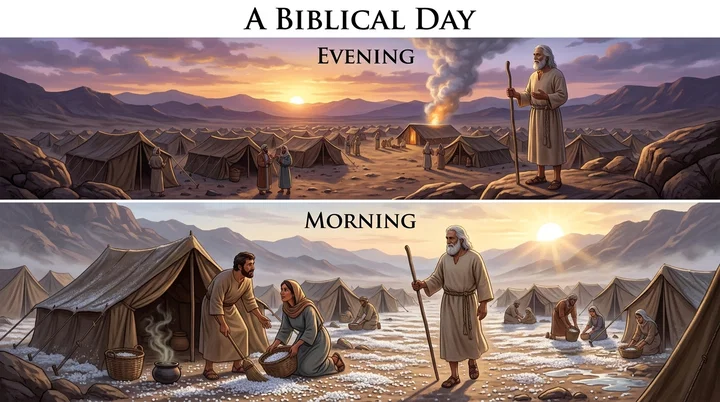
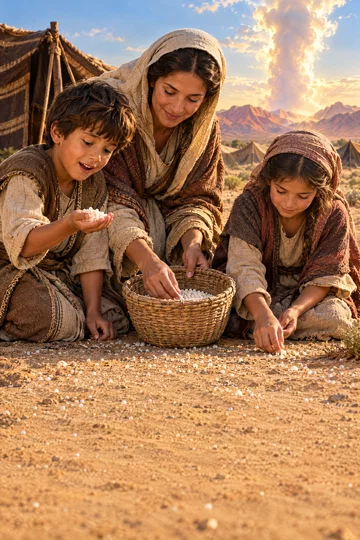
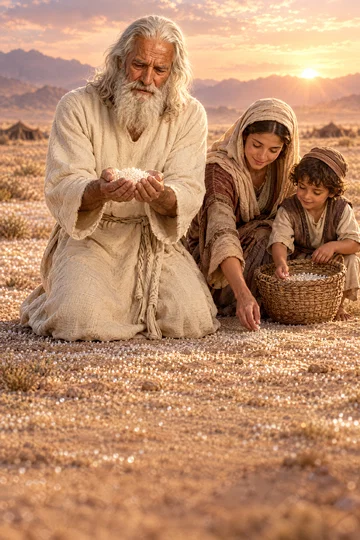
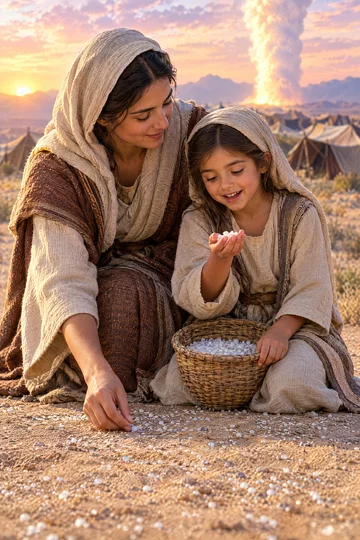
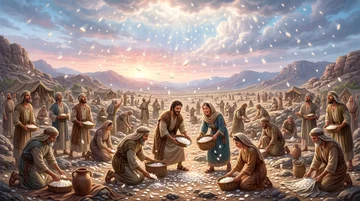
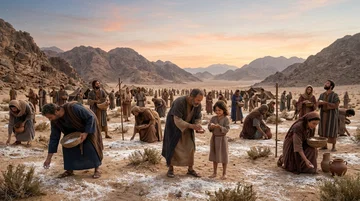
And when the dew that lay was gone up, behold, upon the face of the wilderness there lay a small round thing, as small as the hoar frost on the ground.
Translations
And when the dew that lay was gone up, behold, on the face of the wilderness there lay a small round thing, as small as the hoar frost on the ground.
King James Version, KJV Cambridge Paragraph Bible
And when the dew that lay was gone up, behold, upon the face of the wilderness there lay a small round thing, as small as the hoar frost on the ground.
And when the dew that lay was gone up, behold, upon the face of the wilderness there lay a small round thing, as small as the hoar frost on the ground:
And when the dew that lay was gone up, behold, upon the face of the wilderness a small round thing, small as the hoar frost on the ground.
And when the dew that lay was gone up, behold, upon the face of the wilderness a small round thing, small as the hoar-frost on the ground.
and the lying of the dew goeth up, and lo, on the face of the wilderness a thin, bare thing, thin as hoar-frost on the earth.
And when the dew that lay [round it] was gone up, behold, on the face of the wilderness there was [something] fine, granular, fine as hoar-frost, on the ground.
and when the outpouring of dew went up, then lo! on the face of the desert, a thin flake, thin as hoar-frost on the earth,
Berean Standard Bible, Majority Standard Bible
When the layer of dew had evaporated, there were thin flakes on the desert floor, as fine as frost on the ground.
When the dew that lay had gone, behold, on the surface of the wilderness was a small round thing, small as the frost on the ground.
And when the dew was gone, on the face of the earth was a small round thing, like small drops of ice on the earth.
And when the dewe that was fallen was ascended, beholde, a small round thing was vpon the face of the wildernes, small as the hoare frost on the earth.
Douay-Rheims (Challoner revision)
And when it had covered the face of the earth, it appeared in the wilderness small, and as it were beaten with a pestle, like unto the hoar frost on the ground.
Pictures
Cross-references 20 of 50
- Exodus 16:22-30
And it came to pass, that on the sixth day they gathered twice as much bread, two omers for one man: and all the rulers of the congregation came and told Moses.
Describes the sixth-day double portion, no manna on the Sabbath, and Israel’s rest.
- Exodus 16:4-5
Then said the LORD unto Moses, Behold, I will rain bread from heaven for you; and the people shall go out and gather a certain rate every day, that I may prove them, whether they will walk in my law, or no.
God provides manna daily and tests Israel’s obedience, with a double gathering before the Sabbath.
- Numbers 11:6
But now our soul is dried away: there is nothing at all, beside this manna, before our eyes.
Israel tires of manna and craves other food.
- Exodus 16:26
Six days ye shall gather it; but on the seventh day, which is the sabbath, in it there shall be none.
Manna was withheld on the seventh day, when the people were to rest.
- John 6:35
And Jesus said unto them, I am the bread of life: he that cometh to me shall never hunger; and he that believeth on me shall never thirst.
Christ is the true bread from heaven, fulfilling the manna’s provision.
- Exodus 16:1
And they took their journey from Elim, and all the congregation of the children of Israel came unto the wilderness of Sin, which is between Elim and Sinai, on the fifteenth day of the second month after their departing out of the land of Egypt.
Dates Israel’s arrival in the wilderness of Sin before the manna was given.
- Psalms 78:24-25
And had rained down manna upon them to eat, and had given them of the corn of heaven.
Describes God raining manna from heaven, called angels’ food.
- Exodus 16:3
And the children of Israel said unto them, Would to God we had died by the hand of the LORD in the land of Egypt, when we sat by the flesh pots, and when we did eat bread to the full; for ye have brought us forth into this wilderness, to kill this whole assembly with hunger.
Israel’s hunger and longing for Egypt’s food prompted God’s provision of manna.
- Exodus 16:35
And the children of Israel did eat manna forty years, until they came to a land inhabited; they did eat manna, until they came unto the borders of the land of Canaan.
States that Israel ate manna throughout its forty years in the wilderness.
- Exodus 16:5
And it shall come to pass, that on the sixth day they shall prepare that which they bring in; and it shall be twice as much as they gather daily.
Israel is told to gather a double portion on the sixth day before the Sabbath.
- Exodus 16:29
See, for that the LORD hath given you the sabbath, therefore he giveth you on the sixth day the bread of two days; abide ye every man in his place, let no man go out of his place on the seventh day.
Moses identifies the next day as the Sabbath in the manna account.
- John 6:5-13
When Jesus then lifted up his eyes, and saw a great company come unto him, he saith unto Philip, Whence shall we buy bread, that these may eat?
Both texts describe God miraculously providing food for a multitude.
- Exodus 16:22
And it came to pass, that on the sixth day they gathered twice as much bread, two omers for one man: and all the rulers of the congregation came and told Moses.
The people gathered a double portion of manna on the sixth day.
- Exodus 20:8-11
Remember the sabbath day, to keep it holy.
The manna account illustrates the Sabbath commanded at Sinai.
- Deuteronomy 8:3
And he humbled thee, and suffered thee to hunger, and fed thee with manna, which thou knewest not, neither did thy fathers know; that he might make thee know that man doth not live by bread only, but by every word that proceedeth out of the mouth of the LORD doth man live.
Manna teaches Israel that life depends on God.
- Exodus 16:21
And they gathered it every morning, every man according to his eating: and when the sun waxed hot, it melted.
Manna was gathered each morning before melting in the sun.
- Matthew 6:11
Give us this day our daily bread.
The daily bread petition teaches the same lesson as manna.
- Exodus 16:33-34
And Moses said unto Aaron, Take a pot, and put an omer full of manna therein, and lay it up before the LORD, to be kept for your generations.
A pot of manna is laid before the Testimony.
- Numbers 21:5
And the people spake against God, and against Moses, Wherefore have ye brought us up out of Egypt to die in the wilderness? for there is no bread, neither is there any water; and our soul loatheth this light bread.
Israel despises the manna God provided and complains against Moses.
- Matthew 14:15-21
And when it was evening, his disciples came to him, saying, This is a desert place, and the time is now past; send the multitude away, that they may go into the villages, and buy themselves victuals.
Jesus feeds a multitude, illustrating God’s provision.
Commentary
Each commentary is drawn from primary sources: the writings of Ellen G. White and Adventist pioneers and periodicals. Each commentary is separate. Its own words are not a quotation; follow the references to read the source passages.
Ellen G. White
39 sources
After the dew lifted there lay on the face of the wilderness around the tents a small round thing, fine and frostlike as hoarfrost on the ground.1SP 224.1–225.1SG3 252.1–253.1Ms 77, 1899, par. 15–17 It was manna, the morning bread the Lord Himself gave Israel to eat, at first unknown to them until they were told.1SP 224.1–225.1SG3 252.1–253.1Ms 77, 1899, par. 15–17 Each morning it lay fresh by a daily standing miracle of mercy, God's own provision and not man's, angels' food given to satisfy hunger and nourish body and soul.Ms 21, 1897, par. 12–15ST Oct 28, 1880SG4 121.3–122.1Lt 121, 1904, par. 14–1617MR 252.4–254.2 Its gathering was a test of walking in God's law, with a daily portion that melted in the sun and could not be kept, but a double portion on the sixth day kept pure for the holy Sabbath, a continuing sign of the Sabbath hallowed since Eden.1SP 224.1–225.1Ms 77, 1899, par. 15–17Ms 19, 1894, par. 10–12Ms 63, 1897, par. 1–3Ms 57, 1897, par. 1–3 The perishable bread points to the true living bread from heaven given through Christ, to be received as the Word that sustains spiritual life unto everlasting life.STE 83.117MR 252.4–254.2Lt 43a, 1890, par. 1–2
Manna's Form and Gathering
After the dew that lay lifted, there lay on the face of the wilderness around the tents a small round thing, fine and frostlike as hoarfrost on the ground.1SP 224.1–225.1SG3 252.1–253.1Ms 77, 1899, par. 15–17Ms 156, 1901, par. 23–27PP 294.3–295.1 It covered the ground in the morning where Israel encamped, a fine substance left exposed once the moisture went up.1SP 224.1–225.1SG3 252.1–253.1Ms 77, 1899, par. 15–17Ms 156, 1901, par. 23–27ExVEGW 44.1
It was manna, the morning bread the Lord gave Israel to eat.1SP 224.1–225.1SG3 252.1–253.1Ms 77, 1899, par. 15–17PP 294.3–295.1 At first the people did not know what it was until told that this was the bread provided for them.1SP 224.1–225.1SG3 252.1–253.1
Every morning each person gathered according to eating, an omer for each one according to the numbers in the tents.1SP 224.1–225.1SG3 252.1–253.1Ms 156, 1901, par. 23–27 He who gathered much had nothing over and he who gathered little had no lack.1SP 224.1–225.1SG3 252.1–253.1Ms 156, 1901, par. 23–27 It melted when the sun grew hot and had to be gathered early.1SP 224.1–225.1SG3 252.1–253.1 On ordinary days it could not be kept till morning, but bred worms and stank if left over.1SP 224.1–225.1SG3 252.1–253.1
It had to be gathered up and prepared to be eaten.SG3 252.1–253.1Ms 42, 1902, par. 1–5Ms 57, 1897, par. 1–3 That preparation included grinding or beating it and baking it into cakes, and baking and boiling.SG3 252.1–253.1Ms 57, 1897, par. 1–3
Wilderness History and Leadership
The small round frost-like thing on the face of the wilderness belongs to the history of Israel after being freed from Egypt, following deliverance from Egyptian bondage and temptation, during forty years of guidance through the wilderness.Ms 21, 1897, par. 12–15Lt 112, 1909, par. 18–19STE 83.17MR 307.3–308.2 It stands in the sequence of Exodus 13, 14, 15, and 16, given by miracle under divine leadership immediately after the passage through the Red Sea.Ms 21, 1897, par. 12–15 It is recalled as heavenly food connected with Christ as the living bread from heaven.STE 83.1
Israel was led by Jesus Christ Himself, enshrouded in the pillar of cloud by day and fire by night, their mighty General and teacher.Ms 21, 1897, par. 12–15Lt 112, 1909, par. 18–197MR 307.3–308.215MR 291.1–2 He had just brought more than a million people safely through the Red Sea with angels walking on either side so no harm could come to them.Ms 21, 1897, par. 12–15 As their invisible Leader He worked wondrously for them and quieted their murmurings.15MR 291.1–2
He worked miracles for them when in straitened places, giving manna when hungry and pure water from the rock when thirsty.Lt 112, 1909, par. 18–197MR 307.3–308.215MR 291.1–2 With it belong defense against Pharaoh's army, springs of cool water from the Rock, preserving power, and manifestation of His glory as great light and precious opportunity to know God's will.Lt 112, 1909, par. 18–197MR 307.3–308.215MR 291.1–2 These gave unmistakable evidence of being led and protected by divine power.Lt 112, 1909, par. 18–197MR 307.3–308.2 The manna continued to fall, and God fed the Hebrews morning and evening by divine power even while Moses was absent.3T 340.1
Though fed by daily miracle of mercy as a token of love and care with food lying fresh upon the ground every morning, Israel hardened their hearts in unbelief.ST Oct 28, 1880 They dwelt on imaginary evils, distrusted the hand that led them, loathed the provision, said they had no bread, and accused Moses of killing them with hunger.ST Oct 28, 1880 The Lord had brought them into strait places to prove whether they would trust Him after such evidences of care, and when they still complained He withdrew His protecting hand and permitted death to come upon them to bring them to repentance and humiliation.ST Oct 28, 1880 Believing Satan's hostile suggestions against Moses and Aaron and against Joshua and Caleb after such signs passed the boundary of forbearance and patience and awakened anger to smite the rebellious with pestilence and disinherit them.15MR 291.1–2
The sending of bread from heaven was a miraculous event to be remembered and taught to the children of Israel.Lt 8a, 1896, par. 8–9
Sabbath Test and Law
The daily gathering of what appeared after the dew lifted was a test of whether Israel would walk in God's law.Ms 77, 1899, par. 15–17 That test centered on keeping the Sabbath holy.Ms 77, 1899, par. 15–17Ms 57, 1897, par. 1–3 On the sixth day twice as much was to be gathered as on other days.1SP 224.1–225.1SG3 252.1–253.1Ms 77, 1899, par. 15–17 What was kept till morning then did not stink nor breed worms, while none was to be found in the field on the seventh day, because six days are given for gathering and the seventh is the rest of the holy Sabbath.1SP 224.1–225.1SG3 252.1–253.1
All preparation of the heaven-sent bread, including grinding or beating it and baking it into cakes, and baking and boiling, was to be done on the day before the Sabbath.1SP 224.1–225.1SG3 252.1–253.1Ms 57, 1897, par. 1–3 That direction not to bake or boil food on that day stands as a continuing requirement.1SP 224.1–225.1 The manna is thus a continuing sign of the Sabbath commandment, which had been given in Eden before it was spoken at Sinai.Ms 63, 1897, par. 1–3 The seventh day was hallowed and sanctified by God at creation, the miracle in the giving of the manna sustained its validity, and its sacredness was then proclaimed in the giving of the commandments on Mount Sinai in the very bosom of the Decalogue.Ms 19, 1894, par. 10–12
Strangers connected with Israel shared in that heavenly food when they met the stated conditions.Ms 14, 1901, par. 6–12 Keeping God's Sabbath was among those conditions.Ms 14, 1901, par. 6–12
Miraculous Provision and Care
After the dew lifted there lay fresh upon the ground every morning food from heaven, a small round frostlike thing, given by a daily standing miracle of mercy and love.Ms 21, 1897, par. 12–15ST Oct 28, 188017MR 252.4–254.2 It was a work only divine power could perform, God's own provision for bodily need and not that of Moses or any human agent.Ms 21, 1897, par. 12–15DA 377.117MR 252.4–254.2 It was angels' food, healthy food He designed to be eaten freely.SG4 121.3–122.117MR 252.4–254.2 It supplied plenty of palatable food to satisfy physical hunger.17MR 252.4–254.2 When the people were content with the daily portion they found it sweet and nourishing to body and soul.Lt 121, 1904, par. 14–1617MR 252.4–254.2
It shows God is mindful of physical wants and provides for bodily and spiritual needs.Ms 101, 1906, par. 42–4317MR 252.4–254.2 He keeps His eye upon His people every moment and feeds them by miracle in time of need when food can be obtained from no other source.RH Dec 24, 1872 He thereby provides a way to preserve life and supplies the necessities of the journey, as He provided for Joseph, Mary and Jesus in Egypt through the valuable offerings brought by the wise men from the East.RH Dec 24, 1872 His provision then remains an example of what He can do for His people now.7T 61.2MH 200.2
The same God still lives and reigns.7T 61.2 He is able to guide His people and give them skill and understanding for their work.7T 61.2 He is ready to give light and knowledge to those whose desire is to glorify Him, including skill and wisdom to make wholesome, palatable foods.18MR 186.3 He can provide food miraculously and will sustain His people in the time of trouble, even by sending manna from heaven if necessary.ExVEGW 44.1
The provision teaches trust in God for daily needs.1SP 224.1–225.1 Contentment with His provision is a blessing, while discontent is a curse, bringing worms in the manna.1SP 224.1–225.1Lt 121, 1904, par. 14–16 Those who receive His blessings should share them with people who are less favored.Ms 101, 1906, par. 42–43 It shows God's mercy, yet He chose not to supply every need for religious service miraculously.4T 469.1ST Jan 29, 1880 In His wisdom He saw the moral discipline of His people depended upon their cooperating with Him, every one of them doing something, so as long as truth is progressive His claims are upon men to give of that which He has entrusted to them for that purpose.4T 469.1ST Jan 29, 1880
Diet and Health Reform
When Israel hankered after the flesh pots of Egypt, God did not continue the flesh diet they craved but fed them with the bread of heaven, heaven-appointed food suited to their needs.Lt 112, 1909, par. 18–19CTBH 118.1–119.17MR 307.3–308.2Lt 26, 1908, par. 7Ms 38, 1898, par. 11 It was a better provision than what many had grown accustomed to in Egypt, though He could have provided meat by a miracle.CTBH 118.1–119.1Ms 38, 1898, par. 11 By it He meant to make Israel a separate people and to reform their habits of eating.Lt 112, 1909, par. 18–197MR 307.3–308.2 Flesh of dead animals shortens life, and though once permitted, it was withheld to teach a better diet.Lt 26, 1908, par. 7 Their murmuring for flesh and the death that followed excess meat eating make the experience a lesson to be studied and obeyed today by avoiding flesh meat and living simply without it.Ms 96, 1905, par. 3–4Lt 26, 1908, par. 7
Even in providing food God sought their highest good as part of an all-embracing education in all habits of life under divine care and law.ST Nov 2, 1915 The manna was of a nature to promote physical, mental and moral strength, so that despite wilderness hardships there was not a feeble one in all their tribes.ST Nov 2, 1915 The same God gives His people today knowledge of how to provide food simply from fruits and grains, more simple and less expensive than many preparations now obtained.Ms 96, 1905, par. 3–4 Those who cannot obtain expensive preparations need not live on an impoverished diet.Ms 96, 1905, par. 3–4 In different countries health foods suited to those countries are to be prepared, with skill and wisdom to make wholesome, palatable foods.Ms 42, 1902, par. 1–518MR 186.3
The giving benefited His people as an example of providing for the common good, not giving wisdom and skill to devise food to one person or a small group alone.Lt 180, 1901, par. 17–18
Christ and Spiritual Bread
God feeding Israel with manna in the desert was a work only divine power could perform, and Christ feeding thousands from five barley loaves and two small fishes repeats that same divine feeding in the desert.DA 377.1 This repetition proves He is the One Moses foretold.DA 377.1 The miracle appealed to everyone in the multitude because all shared in its benefit.DA 377.1
The manna was a standing miracle given to Israel in the wilderness, when man ate angels' food.17MR 252.4–254.2 It was God's own provision for bodily need, not given by Moses or any human agent, supplying His people with plenty of palatable food to satisfy physical hunger.17MR 252.4–254.2 This teaches that God is mindful of physical wants and will provide food for bodily necessities.17MR 252.4–254.2 Yet its greater meaning is spiritual, for temporal bread points to the true bread from heaven, the living bread that endures to everlasting life given by God through Christ.17MR 252.4–254.2 That living bread matters far more than perishable food and is to be sought with greater anxiety.17MR 252.4–254.2 As Israel was fed by manna, people are to keep receiving spiritual life from Christ, the living bread from heaven.STE 83.117MR 252.4–254.2
The heavenly manna is still eaten spiritually.Lt 43a, 1890, par. 1–2 Eating it means receiving the Word of God and speaking the words God gives, which feed hungry souls and sustain the speaker.Lt 43a, 1890, par. 1–2 It is more than meat and drink, giving freedom from feebleness and infirmity, bringing sustaining power and abiding peace in the heart.Lt 43a, 1890, par. 1–2 It produces a thankful heart full of continual praise, which once begun on the Sabbath from early morning through the day can continue day and night without ceasing.Lt 43a, 1890, par. 1–2
Lessons for Today
The giving of manna, angels' food, came after deliverance from Egyptian bondage and temptation when Israel hankered after the flesh pots of Egypt.7MR 307.3–308.2 It came during forty years of guidance through the wilderness to make them a separate people and to reform their habits of eating.7MR 307.3–308.2 Christ was their leader and teacher, leading them by the pillar of cloud and of fire and working miracles for them such as pure water from the rock when thirsty, so Israel had unmistakable evidence of being led and protected by divine power.7MR 307.3–308.2 This provision is a lesson for those in the last days who separate from all idolatry to free themselves from all hindrances that confuse mind and conscience and lead into sin.7MR 307.3–308.2
The manna from heaven is an example of something fresh to present as people's needs require.21MR 300.3–4Ms 18, 1885, par. 3 Ministers must present truth in the same way, with personal labor that removes the rubbish of error.Ms 18, 1885, par. 3 That labor gives something fresh suited to people's wants as they require.21MR 300.3–4Ms 18, 1885, par. 3
Sources
Pioneers and periodicals
128 sources
After the overnight dew lifted, a fine small rounded substance lay exposed on the open wilderness floor, as delicate as frost.ST Jun 25, 1902ST Feb 26, 1894 It appeared in the morning in the wilderness of Sin, after quails in the evening, when Israel had murmured for bread a month after leaving Egypt, and being unknown it was asked about as what is this and was identified by Moses as bread the Lord had given to eat.RH Dec 23, 1851RH Apr 11, 1854 God rained that bread from heaven morning by morning in a day's portion to prove obedience to His law, letting it spoil overnight and melt with heat, but giving twice as much on the sixth day preserved over the seventh with none to be found on the seventh, week by week for forty years.ST Feb 26, 1894RH Aug 19, 1915RH Jun 2, 1851ST Aug 18, 1909 By falling six days and ceasing on the seventh with a preserved double portion, He pointed out one definite seventh day as His Sabbath already known and binding weeks before Sinai, resting not on a new institution but on His rest and blessing at creation.RH Jul 14, 1874ST Jun 10, 1880ST Jun 10, 1880ST Jun 10, 1880RH Nov 28, 1871 That wilderness bread was Christ Himself, the true bread from heaven and corn of heaven, given daily to teach dependence, simple healthful living, and fresh morning trust.RH Nov 21, 1912RH Jan 6, 1910RH Jun 19, 1856RH Jun 25, 1914ST Nov 7, 1895
Wilderness Setting and Appearance
When the layer of dew lifted in the morning, there lay exposed on the open face of the wilderness a fine, small, rounded substance like hoar frost on the ground, which was the bread from heaven the Lord gave to fill Israel with bread after quails had been given in the evening.ST Jun 25, 1902ST Feb 26, 1894ST Mar 7, 1906ST Jul 22, 1880 It appeared on the ground of the wilderness after the surrounding dew went up, left as that small round frost-like thing.ST Feb 26, 1894ST Jan 25, 1910 Its weekly pattern of falling, with none on the Sabbath and a double portion on the sixth day preserved through the seventh, marked the definite seventh day, and disregard of that direction, especially going out to gather on the seventh and finding none, belonged to a long refusal to obey God's law.ST Feb 26, 1894ST Mar 7, 1906ST Jul 22, 1880
This belongs to God's provision of food for Israel in the wilderness of Sin in the Arabian peninsula, in warm weather, where instruction was given to prepare on the sixth day what was to be baked or boiled so no such work would be done on the seventh.RH Dec 23, 1851RH Dec 9, 1851 It was the first giving of quails and manna upon coming into the Wilderness of Sin, the quails coming up in the evening and the manna appearing the next morning.ST Apr 22, 1889 The manna was given in the wilderness of Sin on the fifteenth day of the second month, thirty days after departure from Egypt on the fifteenth day of the first month and thirty days before coming to the desert of Sinai on the fifteenth day of the third month, to prove whether Israel would walk in God's law and to guard Sabbath observance by a threefold miracle.RH Dec 23, 1851RH Apr 11, 1854 That sequence began with one day of travel by divine direction from Elim to the wilderness of Sin after journeying from Elim and murmuring for bread, followed by six days on which manna rained with the seventh named as the Sabbath, making known the rest day God would have Israel observe.RH Apr 11, 1854RH May 7, 1857 That journey from Elim to the wilderness of Sin could not have been on the Sabbath, since God would not without assigned reason command travel He soon after forbade on pain of death, and He did not cause the camp to move again on the Sabbath during the wilderness sojourn.RH May 7, 1857
The children of Israel did not know what the substance was when they saw it lying on the face of the wilderness. Moses identified it as the bread which the Lord had given them to eat. Its sight prompted the inquiry man hu, what is this, from which comes the Hebrew name man, the interrogative pronoun What, so they called it manna meaning What is it.RH Sep 8, 1874
It was new food unlike anything seen before, supplied in wisdom by raining bread from heaven, flesh in the evening and bread in abundance in the morning to prove whether they would keep His commandments.ST Dec 17, 1912 It appeared in the morning in small white grains of the size of coriander seed, hard and pleasant to the taste, its taste being as fresh oil and like wafers made with honey. There was sufficiency for the whole company when each gathered an omer, about five pints, for every person, and they ground it in mills or beat it in a mortar and made cakes of it, and it could be boiled or baked.ST Dec 17, 1912 It was spread round about the camp and not confined to one crowded place where the people had to crowd one another to obtain it, and it was God-provided food and not a natural tamarisk-tree secretion.ST Dec 17, 1912RH May 6, 1852 It had to be gathered fresh early each morning because as the heat of the sun increased it melted and disappeared, so like dew-covered manna it is heaven's provision for the day that must be gathered early or it melts away, and what was kept over against command until the next day bred worms and became offensive.ST Nov 21, 1911RH Sep 3, 1908ST Jul 20, 1882
Miraculous Daily Provision Pattern
God rained bread from heaven a day's portion every day to prove whether Israel would walk in His law, giving sufficiency morning by morning according to eating.RH Jun 2, 1851ST Aug 18, 1909 On the six working days only enough for the day was to be gathered, and what was kept overnight bred worms and became foul, while what lay on the ground melted and disappeared when the sun waxed hot.RH Jun 2, 1851ST Oct 23, 1893 The daily instruction to gather every day did not authorize breaking the Sabbath, for every day need not include the Sabbath; Moses had not told the people beforehand to gather twice as much on the sixth day or announced the Sabbath exception, and that direction came as the Sabbath drew near, while the sixth-day gathering was voluntarily doubled and the Sabbath was the exception on which they were not to gather.RH Aug 5, 1852ST Jul 1, 1908 The food was therefore gathered on six days and not gathered on the seventh, but prepared the day before according to God's direction.ST Oct 23, 1893ST Jul 1, 1908
On the sixth day twice as much was gathered and laid up for the seventh day without becoming foul and with no worm therein, and none was to be found in the field on the seventh day.ST Feb 26, 1894ST Oct 23, 1893 This threefold and indeed fourfold weekly miracle of falling, double portion, preservation, and absence was continued every week for forty years, B.C. 1491 to 1451, to enforce the Sabbath and to show God's regard for the Sabbath day.RH Aug 19, 1915ST Aug 30, 1905RH Apr 28, 1874ST Oct 23, 1893ST Nov 12, 1912 By falling six days and none on the seventh, with a double portion on the sixth preserved over the seventh, God pointed out, fixed, and guarded one definite seventh day as His Sabbath, not merely a seventh part of time or any day left to caprice or custom, so that the seventh day could fall nowhere in the week except on the seventh day.RH Aug 19, 1915ST Oct 23, 1893 The weekly pattern identified the true Sabbath despite the loss of chronological records of the week, and whether knowledge of the seventh day had been preserved from creation or not the true day was made certain by God Himself.ST Feb 26, 1894RH Jun 2, 1851 By His own miraculous power He spanned the centuries and established a mighty pillar of witness to the identity of the week and the order of the days from creation to the exodus, anticipating subversions and perversions of that truth, and then guarded that day by a holy commandment in the very heart of His unchangeable law.RH Aug 19, 1915ST Aug 30, 1905 There is no need to go back before Exodus 16 to identify the definite day, and the day given in the law at Sinai only a few days after the manna began, while the miracle was still current, is the true seventh day; that Jewish reckoning was identified and endorsed by Jesus by His practice and teaching, and by the united testimony of the Jews supported by the agreement of all the rest of the nations there has been no variation in the order of the days to the present, so the day now commonly called Saturday is the seventh day reckoned so by all nations.RH Aug 19, 1915RH Apr 28, 1874ST Nov 12, 1912 The manna's six-day appearance and cessation on the seventh made God's Sabbath definite and known, treated the Sabbath as an existing institution rather than one begun when the manna fell, proved the people had the right reckoning because of their own accord without prior direction they gathered a double portion on the sixth day, and prepared them the following month at Sinai to understand the fourth commandment about the creation week beyond doubt.RH Jun 2, 1851RH Apr 14, 1874RH Apr 28, 1874
The manna did not fail except on the Sabbath, when a double portion had fallen the preceding day.ST Jul 20, 1882 It ceased after Israel crossed the Jordan, took possession of Canaan, and had food from the land.ST Jul 20, 1882 Three million people left Egypt with only two or three days of food, and for about sixteen months God fed them with manna on the way to the promised inheritance.ST Aug 31, 1888
The provision continued to be given despite the people's fretfulness, sin, and cowardice, and its giving did not depend on their faith.RH Oct 26, 1911 God delivered Israel from Egypt, parted the Red Sea, and destroyed their pursuers to remove unbelief, draw them near to Himself, impress them that His hand was leading them, and prepare them to stand the test in the manna.ST Apr 15, 1875 That feeding, together with providing water by miracle, sending quails when they craved flesh, and overthrowing their enemies, proved His ability and willingness to do all He had promised, leaving no reason to doubt Him and be filled with terror at the false report of the ten spies.ST Aug 31, 1888 God accepted the faith of Israel in Egypt before they knew He could spread a table in the wilderness, and then gave this provision as an experience to increase their knowledge of Him so that faith could grow; He can feed people without a wheat crop when ordinary supplies are lacking, and His power and resources remain unchanged despite outward conditions.ST Jan 26, 1915RH Oct 7, 1902 The manna came every morning by a daily miracle of divine mercy as a token of love and care, yet Israel hardened their hearts in unbelief, dwelt on imaginary evils, distrusted the hand that led them, said they had no bread, loathed the provision, and accused Moses of killing them with hunger; the Lord had brought them into strait places to prove whether they would trust Him after such evidences of care, and when they still complained He withdrew His protecting hand and permitted death to come upon them to bring them to repentance and humiliation.ST Oct 28, 1880
Sabbath Known Before Sinai
The small round frost-like substance that lay on the face of the wilderness after the dew lifted belongs to the manna given in the wilderness of Sin on the fifteenth day of the second month, thirty days after departure from Egypt on the fifteenth day of the first month and thirty days before coming to the desert of Sinai on the fifteenth day of the third month.RH Dec 23, 1851RH Apr 11, 1854RH Sep 19, 1854 It was given to prove whether Israel would walk in God's law, and its giving guarded Sabbath observance by a threefold weekly miracle.ST Jun 10, 1880RH Apr 11, 1854 The Sabbath connected with it was already known, understood, observed and enforced in Exodus 16, about a month and three days, thirty to thirty-two days, at least fifteen days and more than two weeks before Israel came to Sinai and before the law was proclaimed there.RH Jul 14, 1874RH Apr 11, 1854RH Sep 19, 1854 It was an old institution already given, not instituted at Sinai about a month later for the Jews alone, and Israel was called to keep it after only thirty days out of the house of bondage where it could not be observed.RH Apr 11, 1854RH Apr 11, 1854 The silence of the brief record of the first twenty-five hundred years, which touches only great events, does not mean the Sabbath did not then exist.RH Apr 11, 1854
The chapter is the second mention of the Sabbath in the narrative of Moses, a circumstantial narrative in Exodus 16:4-30 testing obedience to an existing law of which the holy Sabbath was already a part, with Moses giving no new precept respecting it.RH Mar 3, 1863RH May 7, 1857 The people gathered a double portion on the sixth day of their own accord without prior direction, showing they already knew the Sabbath and proving that the reckoning of the weeks had been correctly kept up to that time.RH Mar 3, 1863RH May 7, 1857RH Apr 28, 1874 Moses had been informed by the Lord that this would take place but had not communicated it to the people, and when the rulers laid before him the dilemma of manna laid up overnight after he had been wroth at such laying up, he approved it because tomorrow is the rest of the holy Sabbath unto the Lord.RH May 7, 1857RH Aug 5, 1852 That sixth day is the sixth day of the week numbered and marked at creation, known in heaven only as the sixth day and not the sixth day on which manna had fallen, and the next day was the Sabbath proved by the fourth commandment to be the very day on which God rested at creation, holy since God at creation hallowed, blessed and sanctified the day on which He rested and it had come in regular order ever since.RH May 7, 1857RH Sep 24, 1872 The number of days the manna fell before that first Sabbath is not stated, and the journey from Elim to the wilderness of Sin is not shown to be on the Sabbath, since it could have been on the first, second or third day of the week and the first fall of manna could have been on the second, third or fourth day.RH May 7, 1857
The daily instruction to gather a set rate every morning had not been qualified to the people beforehand, because Moses had not previously told them to gather twice as much on the sixth day or announced the Sabbath-day exception, that direction coming as the Sabbath drew near.RH May 7, 1857RH Aug 5, 1852 Thus every day in secular work does not include the holy Sabbath of the Lord, and the daily gathering instruction did not authorize breaking the Sabbath.RH Aug 5, 1852RH Sep 24, 1872 Gathering twice as much on the sixth day is approved because tomorrow is the rest of the holy Sabbath, already the holy Sabbath by prior appointment before any cessation of manna had yet marked it.RH Sep 24, 1872ST Dec 18, 1907 The manna was given to prove them whether they would walk in His law or not, leaving them without direction to provide for the seventh day so free action would manifest regard for His law and what was in the heart.RH May 7, 1857ST Dec 18, 1907 The rebuke, How long refuse ye to keep my commandments and my laws, against those who went out to gather on the seventh day, though gathering on that day had not by express precept been forbidden, proves violation of a known law and continued disobedience rather than first knowledge, even after only one offense.RH May 7, 1857RH Sep 24, 1872 The miracles of the manna honored God's law which they already knew and showed its sacredness, not to give a special day, point out a lost day or enable keeping of an unknown Sabbath, and Israel had already begun to keep the Sabbath in Egypt.RH May 7, 1857ST Dec 18, 1907
The chapter does not tell how, why and when the seventh day became the holy Sabbath, for its origin, blessing and sanctification rest only on God resting from creation, making the Sabbath a memorial of creation and not of deliverance from Egypt.RH Sep 24, 1872ST Dec 18, 1907 It is a providential testimony that the knowledge of the true seventh day had been preserved, so there could be no mistaking that a certain day was the Sabbath and the other six days were not, preparing them the following month at Mount Sinai to understand the fourth commandment about the creation week and to know beyond doubt what day of the seven to observe.RH Apr 28, 1874ST Dec 18, 1907 Three miracles with the manna each week for forty years attest its sacredness and definitely point out the day to honor: a double portion on the sixth day, none on the seventh day, and preservation over the Sabbath of what was gathered on the sixth day, kept forty years in the wilderness before Israel came to the rest and inheritance.RH Apr 28, 1874RH Sep 24, 1872 When the law was given in Exodus 20 the reason given for the Sabbath was the same as at its institution in the beginning in Genesis 2:3.ST Dec 18, 1907
Saying God made the Sabbath known at Sinai does not mean it was first brought to knowledge then, but refers to its public proclamation and writing and to revealing its true character as moral and unchangeable like the other precepts.RH Jul 14, 1874RH Jun 30, 1859ST Jan 30, 1896 Making the Sabbath known implies it already existed beforehand and had a previous existence, just as making the true God known to those separated from Him by apostasy does not mean God then began to exist, and making Jesus of Nazareth known as Saviour does not mean there was no Saviour until then.RH Jun 3, 1862 The chapter shows observance of the Sabbath was already part of God's law, not a new precept incorporated in the wilderness of Sin but a previously existing commandment, so the later statement that God made known the Sabbath at Sinai means declaring what already existed.RH Jun 30, 1859RH Jun 3, 1862 There is need to make the way of truth known again to those who have lost the way.
Those who held the opposite teach that Exodus 16 is the first mention, first account of keeping, first recorded formal observance, first knowledge and first actual institution or imposition of the Sabbath.RH Apr 21, 1868RH Jun 19, 1856 In that view the observance of Saturday as the Sabbath was first commanded and appointed in the wilderness of Sin, where after the evening quails covered the camp and the morning dew lifted the frost-like manna lay on the ground as the bread from heaven Jehovah gave Israel to eat, also called the corn of heaven and angels' food, gathered every morning for six days with twice as much on the sixth day so none would be needed and none would fall on the seventh day which is the Sabbath.ST Mar 13, 1879RH Jun 19, 1856 Since Israel made the long journey from Elim on the day before the manna first fell without keeping it as rest, they had no established Sabbath before this, making this the first recorded formal observance of a day of rest by Abraham's descendants.RH Jun 19, 1856 The manna-gathering commands were a trial preparing Israel for the law, testing whether the people would follow God's instructions, with the Sabbath introduced during this preparation as a sacred rest for God without reference to creation or Israel's deliverance from Egypt, its enduring legislation and stated reasons being given later at Sinai.RH Sep 24, 1872RH Oct 29, 1872
In the same line the double portion is said to have been gathered on the sixth day by order of the Lord, yet the rulers were ignorant that a Sabbath was to follow until Moses introduced it to their notice and the people were informed on the seventh day itself, orders for the day being given when the day begins in the evening, since Exodus 16 belongs to plain legal instruction demanding clarity, not poetry or impassioned prose.RH Oct 29, 1872 The rebuke, How long refuse ye to keep my commandments, is then held not to imply continued desecration of the Sabbath, because the Sabbath is only one of many commandments and the new test commandment was no better kept than others long neglected.RH Oct 29, 1872
Some argue the fall of manna upon the face of the wilderness marks a change from the paradisaical rest-day to the so-called Jewish Sabbath, with the fall made to bear testimony in behalf of the new Jewish Sabbath and against the ancient Sabbath of the Lord, though there is nothing in Exodus 16 to fix such a change at the fall of the manna.ST Jul 24, 1879ST Apr 24, 1879 In that reckoning the account belongs to the first account of the Jewish Sabbath coming on the weekday on which Pharaoh was drowned in the Red Sea, so that Sunday is the true seventh day, with the patriarchal Sabbath falling the day after.ST Apr 24, 1879ST May 1, 1879 On that chronology the people are said to have gathered manna on the ancient Sabbath with divine sanction six days before the Jewish Sabbath began, and not to have first gathered on the paradisaical Sabbath, the proposed chronology instead making a thirteen-day span from Sabbath to Sabbath containing six days but only one Sabbath, while gathering on the first day is taken to prove a third change.ST May 1, 1879ST Jul 31, 1879 Against this it is taught that God made no change of the Sabbath and no change or setting back of the week at the exodus, with no resting or sanctifying of any other day.ST Nov 15, 1883ST Nov 15, 1883 The Sabbath made known in Exodus 16 is the rest of the holy Sabbath unto the Lord, the same seventh day that became the rest of the holy Sabbath at creation and the creation Sabbath commanded in the fourth commandment because God made heaven and earth in six days and rested the seventh day and blessed and hallowed it, for forty years day by day working miracles in the manna to impress its sacredness and preserve it from desecration, and the manna account is no evidence that God shifted the week or changed the Sabbath.ST Nov 15, 1883ST Nov 15, 1883
The frost-like appearance after the dew belongs to the restoration of the Sabbath to the Israelites after leaving Egypt.ST Jan 11, 1905
Definite Seventh Day Marked
After the dew lifted a small round frost-like substance lay on the face of the wilderness, and that provision fell on six days with none on the seventh, a double portion falling on the sixth and kept fresh through the seventh while what was kept overnight on other days spoiled, thereby pointing out, fixing and guarding one definite seventh day as the Sabbath rather than merely a seventh part of time or any day chosen for convenience.RH Nov 28, 1871ST Aug 7, 1879RH Jul 21, 1853ST Nov 9, 1915ST Sep 22, 1914 The weekly order of the sixth day followed immediately by the Sabbath belongs to the manna account itself.RH Nov 28, 1871 Attempting to keep another day brought trouble, fasting or corrupt food.RH Nov 28, 1871ST Aug 7, 1879RH Jul 21, 1853ST Nov 9, 1915
By this threefold weekly miracle of falling, double portion with preservation, and absence, continued every week for forty years, the true seventh day was made certain whether its knowledge had been preserved from creation or not, and its knowledge was preserved onward through the Old Testament.RH Aug 19, 1915RH Jun 2, 1851ST Jul 22, 1880ST Apr 4, 1906 The marking spans the centuries from creation to the exodus and preserves the weekly cycle and order of days, so the sixth and seventh days at the manna synchronize with the creation week and the seventh day could fall nowhere in the week except on the seventh day.RH Jun 2, 1851ST Jul 22, 1880ST Jun 28, 1905ST Apr 4, 1906 There is no need to go back before Exodus 16 to identify the definite day, and the day given in the law at Sinai is the true seventh day.RH Aug 19, 1915 That day is the same kept by Ezra and Nehemiah after the captivity, observed by Christ, rested on by His disciples according to the commandment, still kept by Jews on Saturday, and reckoned Saturday by all nations to the present without variation, identified and endorsed by Jesus in His practice and teaching.RH Aug 19, 1915ST Jun 28, 1905ST Apr 4, 1906
The sixth day on which twice as much was gathered and the Sabbath that followed are days of the week numbered and marked at creation, not a sixth day counted from the first fall of manna, and the record says nothing about five preceding days of gathering.RH May 7, 1857RH May 7, 1857RH Nov 15, 1864RH Dec 20, 1864RH Dec 17, 1857 The journey from Elim to the wilderness of Sin is not shown to have been on the Sabbath, since it could have been on the first, second or third day of the week and the first fall could have been on the second, third or fourth day.RH May 7, 1857RH May 7, 1857RH Nov 15, 1864RH Dec 20, 1864 Even if Israel marched on the Sabbath at the command of God, that marching was obedience to God and not doing their own work which the Sabbath law forbids, no more a violation than marching around Jericho seven days in succession forty years later, one of which must have been the Sabbath.RH Dec 20, 1864 The chapter contains no institution of the Sabbath, gives no facts on which such an institution is based, expresses no meaning and intent of the Sabbath, and assigns no reason why it should be observed.RH Nov 15, 1864
The account identifies the preparation day as the day before the Sabbath, requiring what was to be baked or boiled to be prepared beforehand so that no work of cooking would be done on the Sabbath day.ST Jul 1, 1908ST May 24, 1910ST May 1, 1884RH Aug 27, 1914 Those instructions were given in the warm wilderness of the Arabian peninsula where fire was needed only to cook food and not to keep warm, and those who went out to gather on the seventh day against instruction incurred disapproval.ST Jul 1, 1908RH Aug 27, 1914 Minimizing unnecessary work leaves more time available for honoring and worshiping God.ST May 24, 1910 The daily measure gathered morning by morning also establishes ordinary solar days and sunset-to-sunset sacred hours.ST Jul 1, 1908ST May 24, 1910ST May 1, 1884
Creation Origin and Permanence
The chapter does not institute a new Sabbath or record its sanctification, but speaks of the seventh day familiarly as already the Sabbath, withholding manna on that day because it was the Sabbath.ST Jun 10, 1880ST Jun 10, 1880ST Jun 10, 1880RH Feb 3, 1852ST Jul 27, 1882 The account states the Sabbath's existence and enjoins abstaining from ordinary work on that day, without explaining why the seventh day is the Sabbath or describing any act that instituted it there.RH Feb 3, 1852RH Aug 6, 1872ST Jul 27, 1882 Its institution and reason are given only in Genesis 2 and Exodus 20, where blessing, sanctification, and obligation rest on God's resting, blessing, and hallowing the seventh day at the close of creation.RH Aug 6, 1872ST May 17, 1883RH Sep 24, 1872RH Apr 14, 1853 The claim that the Sabbath was newly instituted when the manna first fell conflicts with what follows in Exodus 16 and the following chapters and with the fourth commandment, and depends on misrepresenting the Hebrew text.ST Jul 27, 1882ST Oct 11, 1883ST Apr 5, 1883
The long silence about the Sabbath from Genesis 2 to Exodus 16, over twenty-five centuries and about twenty-five hundred years after creation, does not prove it was unknown, unobserved, or not in force.RH Apr 11, 1854RH Apr 14, 1853ST Jun 28, 1883ST Sep 3, 1896 The brief record of the first 2500 years touches only great events, and silence about the command to have no other gods until Exodus 20 no more proves that command absent than silence proves the Sabbath absent.RH Apr 11, 1854ST Sep 3, 1896RH Dec 2, 1862 Knowledge was handed from family to family and kept alive with knowledge of God, including Abraham's keeping of commandments and laws, and the silence is taken as evidence of continued observance throughout the intervening period.RH Apr 14, 1853ST Jun 28, 1883 Making the Sabbath known implies it already existed beforehand, just as making the true God known to those separated by apostasy does not mean God then began to exist, and making Jesus of Nazareth known as Saviour does not mean there was no Saviour until then.
The Sabbath proved at the manna is the same day instituted when God finished creation, insisted upon when He brought the people out of Egypt, and made a tenth part of the whole when He gave the law, the rest-day of the creation week and not a new day first made known in Arabia.RH Aug 6, 1872ST May 17, 1883RH Sep 24, 1872ST Jun 26, 1893 It was already in existence before God made the covenant with Israel at Horeb, about a month before the preliminary work of the covenant began in chapter 19 and thirty-two days before arrival at Sinai, so the covenant did not create it and its later passing away would not abolish it.RH Aug 6, 1872ST Aug 13, 1885RH May 27, 1852RH Jul 24, 1866 It therefore did not owe its existence to the old covenant and could continue after that covenant was dissolved, distinct from Levitical law, universal, moral, and perpetual, binding before Sinai.ST Aug 13, 1885RH May 27, 1852RH Jul 24, 1866 It is not a merely Jewish memorial of deliverance from Egypt or of the manna, nor the rest given by Joshua, nor a type of Christian rest, but the Creator's rest commanded for all, kept forty years in the wilderness before Israel came to the rest and inheritance.RH Aug 6, 1872RH Sep 24, 1872
The seventh day and the Sabbath were then the only methods known of designating the last day of the week, because the days were known only by their numbers and had no names except the seventh, which was named the Sabbath or day of rest. Any other seventh day but the seventh day of the week had to be specified, as the seventh day of the month, so either the seventh day without any qualifying term or the Sabbath specifically points out the last day of the week. The wording is examined critically, including insertion or omission of the definite article, and compared with parallel expressions such as first mentions of a holy convocation, sabbaths, and memorials, to decide whether the Sabbath was already known and blessed and sanctified at creation.RH Sep 24, 1872ST Oct 11, 1883ST Apr 5, 1883 Those who deny prior institution argue that when an institution is instituted or mentioned for the first time the definite article is always wanting in Hebrew prose, that Exodus 16 follows that rule in mentioning the Sabbath without the article, and that the article before Sabbath in English is a mistranslation giving false support to reading it as an old institution.RH Oct 29, 1872RH Nov 12, 1872 Those who affirm prior institution answer that the Hebrew original, including its grammar, upholds the seventh-day Sabbath of the fourth commandment, and that expositions using the original to oppose the seventh day err in Hebrew grammar and misrepresent the text.ST Jul 27, 1882ST Oct 11, 1883ST Apr 5, 1883
By a threefold weekly miracle continued for forty years God fixed the definite day of the Lord's rest day, spanned the centuries, and established a mighty pillar of witness to the identity of the week and order of days from creation to the exodus, anticipating subversions and perversions, then guarded that day by a holy commandment placed in the very heart of His unchangeable law.ST Aug 30, 1905 In furnishing manna by creative power and in redeeming His people, the greatest manifestation of creative power since the earth came from His hand, God made Himself known as Creator and Redeemer and made Himself a glorious name, and it was supremely fitting there to make known His Sabbath as memorial of creation and sign of redemption and sanctification, His weekly constant pledge of His everlasting covenant to redeem.ST Aug 11, 1909ST Sep 10, 1902ST Apr 28, 1909ST Aug 22, 1911 He created manna on each of the six working days and created none on the seventh, thereby recognizing the blessing and sanctification of the seventh day by His own example of ceasing material creation, and required Israel to recognize it by preparing on the sixth day and resting on the seventh without going out to seek manna.ST Apr 28, 1909ST Aug 22, 1911 This Sabbath test designates the Author of the moral law of ten commandments as Creator of heaven and earth and sea, distinguishes Him from false gods and from the beast and his image, stands opposite the mark of the beast as the sign or seal of the living God and the Father's name, serves as the golden link and bond uniting duties to God in the first four commandments with duties to fellow men in the last six, and acts as the great sanctifying truth preparing a people for translation, in order that they would recognize Him as the only living and true God who sanctifies them.RH May 28, 1867
That history is repeated after the first and second messages proclaimed from spring to fall of 1844, when at the close of the 2300 days and the start of Christ's closing sanctuary work God by the third angel's message called attention to the ark containing the law in heaven and first proved His people by the Sabbath commandment whether they would walk in His law.RH May 28, 1867 God already had a law requiring Sabbath observance before Sinai and even before the manna, with creation as its reason, and the manna was given to test obedience to that existing law, especially the Sabbath, to see whether Israel would walk in His law.RH Dec 5, 1871ST Feb 11, 1913RH Mar 19, 1872 God had already instructed the people about Sabbath observance through the gathering and provision of food, providing on the six working days and withholding on the seventh, which He declared to be the Sabbath, and the Sabbath there is restored as a well-known institution already in practice, not introduced as new, the same Sabbath given at creation and later commanded at Sinai.RH Mar 19, 1872ST Jun 26, 1893 The rebuke, How long refuse ye to keep my commandments and my laws, after some went out to gather and found none, proves continued disobedience and violation of known law rather than first knowledge, and they were reproved for profaning the sanctified day.RH Sep 24, 1872RH Oct 29, 1872
Christ the True Bread
The bread from heaven in the wilderness was given by Christ Himself before His earthly life in Bethlehem.RH Nov 21, 1912 After evening quails covered the camp and the morning dew lifted, a fine frost-like substance lay on the ground, which was manna, the bread from heaven Jehovah gave Israel to eat, also called the corn of heaven and angels' food, given to prove whether they would walk in God's law.RH Jun 19, 1856 When food was gone in the Wilderness of Sin Israel murmured in their first outbreak of unbelief after leaving Egypt, and their complaint against Moses and Aaron was ultimately against Christ who was leading them, for their leaders were following His direction.ST Nov 7, 1895 He who gave the manna is the same who fed the five thousand in the desert place, and in both cases He gave only plain, substantial food rather than the luxuries of life.
The manna which the people called bread given from heaven is contrasted by Jesus with the true bread from heaven that gives life to the world, for Moses was not its giver, but God.ST Jun 27, 1900 That manna symbolized the work of Christ for the world during all the history of sin, and Christ born at Bethlehem, meaning House of Bread, as the bread of life is the inexhaustible Bethlehem for the whole starving world.ST Feb 17, 1904 No hungry soul coming to that House of Bread finds repulsion or emptiness, and no king or pope or priest can lock its door against the yearning of a single unsaved soul, nor can tyrants cut off the supply of that bread of life by locking men in dungeons or burning them at the stake for partaking of it, any more than preventing the sun from shining or the clouds from raining.ST Feb 17, 1904 A sense of hunger and thirst of soul is the only ticket required to secure a bountiful supply of the water of life and the bread of life.ST Feb 17, 1904 Though its source was hidden, it appeared fresh each morning, and a portion was later kept in the sanctuary as a memorial of God's providing care.ST Jun 15, 1904
The daily manna pictures the fresh spiritual nourishment and divine resources available for each day, for yesterday's supply cannot take the place of receiving and living from God anew today.ST Apr 1, 1889 It also illustrates the daily spiritual nourishment Christ supplies to His struggling disciples from the heavenly sanctuary, individually meeting the needs of those who seek and receive it by faith.ST Jun 15, 1904 Morning time with God is like this dew-covered manna, heaven's provision for the day which must be gathered early or it melts away.ST Nov 21, 1911 Its small form lying on the wilderness ground after the dew was gone teaches that the bread of God should be made easy for children to receive, for they need patient, thoughtful guidance to Christ and careful portions of the life-giving Word.RH Sep 30, 1915
As the Lord laid manna on the face of the wilderness for Israel and opened the heavens with manna, He will do so once more for His waiting Israel.ST Oct 17, 1878 In the time of the seven last plagues, when food is cut off from the eyes of men and seed rots and pastures are desolate and cattle and sheep perish, God's suffering people will receive bread given and waters made sure, with manna from heaven for their hunger and thirst slaked with water called forth from the flinty rock by the word of the Lord.ST Oct 17, 1878
Israel's going out of Egypt into Canaan is a type of the deliverance of God's people from the dark Egypt of earth.ST The giving of the manna belongs to Israel's training-school in the wilderness, a lesson for the present day as well as for Israel, coming after leaving Egypt and crossing the Red Sea by faith in God's word when the vast multitude was suddenly confronted with the problem of getting food in the wilderness.ST Sep 17, 1902 In it God demonstrated His ability to feed His people under any circumstances, as He had previously shown His power to heal the bitter water.ST Sep 17, 1902 It was written for learning, not merely for memorizing or scholarship, but that through patience and comfort of the Scriptures present readers might have hope.ST Sep 17, 1902 The manna is a picture of God sustaining His people during their journey through a barren place, applied to the remnant as they press on toward the promised rest.RH Oct 15, 1857
Health Diet and Daily Trust
After bringing Israel out of Egypt toward the land flowing with milk and honey, God fed them with manna from heaven to prepare them for Canaan, and that feeding was the beginning of health reform, diet, and the law of God, the entering wedge of their preparation.RH Jan 6, 1910RH Jun 25, 1914ST Oct 11, 1899 It was simple, purest food, what the divine Leader knew was best adapted to their wants, given to purify their blood and make them a holy, happy people, because bodies are made up of what is eaten and the purest food makes the purest blood.RH Jan 6, 1910ST May 4, 1904ST Nov 29, 1883 It preserved His original purpose for human food and continued the creation diet of fruits, grains, and vegetables without flesh meat, tea, coffee, tobacco, or luxuries, promoting physical, mental, and moral strength so that there was not a feeble one.RH Jun 25, 1914ST May 4, 1904ST Nov 29, 1883 Giving up the flesh-pots of Egypt for manna was like parting with the dearest thing on earth and called for faith in heaven-born principles that originated in the mind of God and not in the science of that day.RH Jan 6, 1910 Israel received animal food in the wilderness only after complaints and murmuring, when they lusted for meat during the demanding journey; He gave it to them, but they would have been better off without it, for lusting for flesh brought quails, disease, and spiritual harm.RH Jun 25, 1914ST Oct 11, 1899ST Nov 29, 1883
The people had no food stored for the next day and had to trust God to provide continually from His endless store in small daily portions rather than a year's supply at once.RH Apr 17, 1900RH Aug 1, 1912 As a generous father gives his son only one day's need so that daily want leads the son to seek him daily, God gave only one day's manna at a time so Israel would seek Him daily, and He will not give tomorrow's food today lest His people grow content and stay away from Him.RH Aug 1, 1912 His love is new each morning, teaching daily dependence expressed in praying for daily bread and in receiving the provision with gratitude even during a long and difficult delay before entering the promised land.RH Aug 1, 1912RH Jul 20, 1869 God caused the manna to fall in their camp and to strew the desert floor with their breakfast morning by morning, but they had to gather it, prepare it, and eat it themselves; God supplied what they could not produce, while they had to do their part to receive its benefit.RH Apr 17, 1900RH Jul 23, 1901RH Dec 23, 1902 That method brings people face to face with their own absolute incompetence, permitting hunger and reduction to nothingness and allowing almost insuperable difficulty, that they may learn to trust Jesus more and that He may reveal Himself and the Father by using their poor resources.RH Dec 23, 1902 The manna thus teaches dependence on God and cooperation with Him, showing that He can provide for His people in the desert even when outward conditions are unfavorable and no grain grows.RH Apr 17, 1900ST Jan 30, 1907RH Aug 13, 1908 Believers may therefore trust ordinary providence without expecting a miracle when needs can be met by means provided, yet God still spreads a table in the desert when human resources fail and circumstances offer no visible provision, and His power remains unchanged.RH Jan 28, 1902
Like dew-covered manna that must be gathered early or it melts and fades away, morning time with God is heaven's provision for the day which must be gathered early.ST Apr 1, 1889ST Nov 21, 1911RH Sep 3, 1908 The daily manna pictures the fresh spiritual nourishment and divine resources available for each day, providing what is needed, no more and no less; yesterday's supply cannot take the place of receiving and living from God anew today.ST Mar 31, 1881ST Apr 1, 1889RH Jan 8, 1901 Its fresh appearance each morning illustrates the need for daily bread, daily strength, daily love, and daily feeding on God's Word, making it one's own through faith and conduct.ST Mar 31, 1881ST Mar 6, 1907RH Jan 8, 1901
At first the fall surprised Israel because they had never seen anything like it, and they asked what it was with astonishment and deep gratitude to God for bread from heaven, fresh upon the ground every morning by a daily miracle of divine mercy as a token of His love and care.ST Oct 28, 1880RH Aug 3, 1869 When the same provision fell day after day for weeks and months it became a common occurrence and ceased to seem a wonderful providence; familiarity dulled solemn impression, gratitude was lost, and the weekly miracle that for forty years bore public testimony to the Sabbath came to be treated as a mere ordinary event with little regard for its testimony.RH Jan 7, 1862RH Aug 3, 1869 They then dared to murmur against God and against the bread thus sent from heaven, speaking of the manna as not suited to their wants, saying they had no bread, loathing the provision, dwelling on imaginary evils, distrusting the hand that led them, and accusing Moses of killing them with hunger.ST Oct 28, 1880RH Jan 7, 1862RH Aug 3, 1869 Repeated mercy can thus lose its force through habit, hardening the heart in unbelief through the deceitfulness of sin until even awful realities like judgment are treated carelessly.RH Jan 7, 1862RH Aug 3, 1869 The Lord had brought them into strait places to prove whether they would trust Him after such evidences of care, and when they still complained He withdrew His protecting hand and permitted death to come upon them to bring them to repentance and humiliation.ST Oct 28, 1880 The gift met the sterner demands of nature and for a time satisfied hunger and quieted the mixed multitude and Israel on the barren desert, but it left the carnal heart unsubdued, with no deep thorough soul-converting power, viewed with carnal eyes as a miracle weighed in the scale of human probabilities and bringing no soul-transforming influence.RH Nov 25, 1873
The record of forty years in which a definite Sabbath was rigidly observed proves that God's requirement to keep the same time as the day of worship and rest is not physically impossible but can always be performed.ST Nov 3, 1881 Its daily provision taught that Jehovah could supply bread where no grain grew, miraculously providing bread for people in need when circumstances offered no visible provision.ST Jan 30, 1907RH Jan 28, 1902 Long years before, manna fell from heaven in the desert and all the hungry hosts came from their tents and gathered daily food for every day, for God sent showers of food from heaven and sent the quails to nestle near their hands because He loved His children and would not let them starve.RH Oct 20, 1874 Yet the same God watched His own dear Son faint for hunger and let no manna fall, that He Himself might know how best to help and pity all the poor who in this suffering world should pray to Him, showing how wonderful He is who for our sakes let the Saviour fast after fasting forty days.RH Oct 20, 1874 Hardship and blessing vary, as manna fell in the wilderness while corn grew in Canaan, and almost insuperable difficulty is allowed to reveal incompetence and teach trust.RH Dec 23, 1902 The manna incident is part of the account presented as relevant to understanding the Sabbath's claims because it is used to argue that the Sabbath was a Jewish institution given only to Israel, and it is cited against claims that Sabbath keepers expect miraculous feeding.RH Apr 17, 1900
Sources