Exodus 16:21
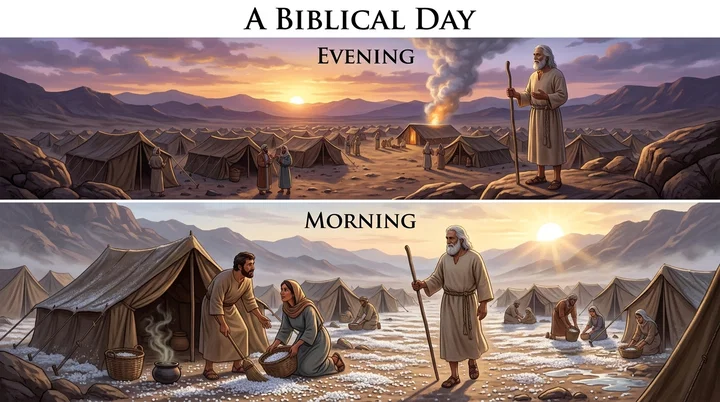
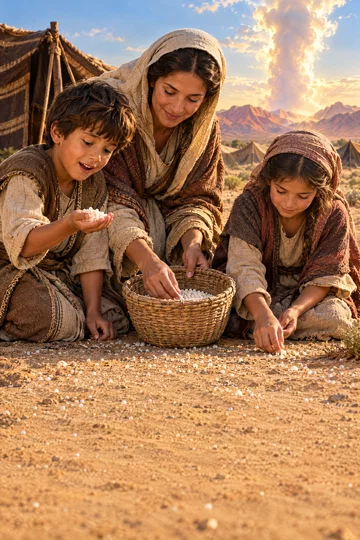
And they gathered it every morning, every man according to his eating: and when the sun waxed hot, it melted.
Translations
American King James Version, King James Version, KJV Cambridge Paragraph Bible
And they gathered it every morning, every man according to his eating: and when the sun waxed hot, it melted.
And they gathered it every morning, every man according to his eating: and when the sun became hot, it melted.
Revised Version, American Standard Version
And they gathered it morning by morning, every man according to his eating: and when the sun waxed hot, it melted.
And they gather it morning by morning, each according to his eating; when the sun hath been warm, then it hath melted.
And they gathered it every morning, every man as much as he could eat; and when the sun became hot, it melted.
Thus then they gathered it morning by morning, each man what he needed for eating, and as soon as the sun waxed hot, so soon it melted.
Berean Standard Bible, Majority Standard Bible
Every morning each one gathered as much as was needed, and when the sun grew hot, it melted away.
They gathered it morning by morning, everyone according to his eating. When the sun grew hot, it melted.
And they took it up morning by morning, every man as he had need: and when the sun was high it was gone.
And they gathered it euery morning, euery man according to his eating: for when the heate of the sunne came, it was melted.
Douay-Rheims (Challoner revision)
Now every one of them gathered in the morning, as much as might suffice to eat: and after the sun grew hot, it melted.
Pictures
Cross-references 20 of 36
- Exodus 16:4-5
Then said the LORD unto Moses, Behold, I will rain bread from heaven for you; and the people shall go out and gather a certain rate every day, that I may prove them, whether they will walk in my law, or no.
God sets the daily manna gathering and sixth-day double portion as a test of obedience.
- Exodus 16:29
See, for that the LORD hath given you the sabbath, therefore he giveth you on the sixth day the bread of two days; abide ye every man in his place, let no man go out of his place on the seventh day.
Cited as a verse where the Hebrew article appears.
- Exodus 16:26
Six days ye shall gather it; but on the seventh day, which is the sabbath, in it there shall be none.
Manna was gathered for six days and withheld on the Sabbath.
- Exodus 16:5
And it shall come to pass, that on the sixth day they shall prepare that which they bring in; and it shall be twice as much as they gather daily.
The sixth day’s double manna supply provided for the Sabbath.
- John 6:35
And Jesus said unto them, I am the bread of life: he that cometh to me shall never hunger; and he that believeth on me shall never thirst.
Jesus is the true bread from heaven, giving lasting life and ending hunger.
- Exodus 16:35
And the children of Israel did eat manna forty years, until they came to a land inhabited; they did eat manna, until they came unto the borders of the land of Canaan.
Manna sustained Israel throughout the wilderness journey until they reached Canaan.
- Matthew 6:11
Give us this day our daily bread.
Daily manna illustrates dependence on God for each day’s bread.
- Exodus 20:8-11
Remember the sabbath day, to keep it holy.
The manna account shows the Sabbath kept before the commandment at Sinai.
- Exodus 16:1
And they took their journey from Elim, and all the congregation of the children of Israel came unto the wilderness of Sin, which is between Elim and Sinai, on the fifteenth day of the second month after their departing out of the land of Egypt.
Dates Israel’s journey before the manna test and Sabbath instruction.
- Numbers 11:4-6
And the mixt multitude that was among them fell a lusting: and the children of Israel also wept again, and said, Who shall give us flesh to eat?
Israel craved other food after receiving manna.
- Genesis 2:2-3
And on the seventh day God ended his work which he had made; and he rested on the seventh day from all his work which he had made.
The Sabbath in Exodus 16 is the day God blessed and made holy at creation.
- Exodus 16:14-15
And when the dew that lay was gone up, behold, upon the face of the wilderness there lay a small round thing, as small as the hoar frost on the ground.
Describes the manna’s appearance and identification.
- Numbers 11:8
And the people went about, and gathered it, and ground it in mills, or beat it in a mortar, and baked it in pans, and made cakes of it: and the taste of it was as the taste of fresh oil.
Both describe the manna’s handling and preparation as food.
- Exodus 16:31
And the house of Israel called the name thereof Manna: and it was like coriander seed, white; and the taste of it was like wafers made with honey.
Describes the manna’s appearance and taste.
- Exodus 16:8
And Moses said, This shall be, when the LORD shall give you in the evening flesh to eat, and in the morning bread to the full; for that the LORD heareth your murmurings which ye murmur against him: and what are we? your murmurings are not against us, but against the LORD.
The Lord answers Israel’s murmuring with evening flesh and morning bread.
- Revelation 2:17
He that hath an ear, let him hear what the Spirit saith unto the churches; To him that overcometh will I give to eat of the hidden manna, and will give him a white stone, and in the stone a new name written, which no man knoweth saving he that receiveth it.
Hidden manna is promised as a reward to the one who overcomes.
- Psalms 78:24
And had rained down manna upon them to eat, and had given them of the corn of heaven.
Calls manna food from heaven that God gave Israel.
- 1 Corinthians 10:11
Now all these things happened unto them for ensamples: and they are written for our admonition, upon whom the ends of the world are come.
Israel’s wilderness experiences, including the manna, serve as warnings for later generations.
- Exodus 16:33-34
And Moses said unto Aaron, Take a pot, and put an omer full of manna therein, and lay it up before the LORD, to be kept for your generations.
Manna is kept before the Testimony for future generations.
- John 6:5-13
When Jesus then lifted up his eyes, and saw a great company come unto him, he saith unto Philip, Whence shall we buy bread, that these may eat?
Jesus feeds the multitude and gathers the remaining fragments, recalling manna gathered each morning.
Commentary
Each commentary is drawn from primary sources: the writings of Ellen G. White and Adventist pioneers and periodicals. Each commentary is separate. Its own words are not a quotation; follow the references to read the source passages.
Ellen G. White
13 sources
Every morning each person gathered manna as food for that day in the amount needed, before the heat of the sun melted what was left on the ground so it could not be gathered later.1SP 224.1–225.1SG3 252.1–253.1Ms 77, 1899, par. 15–17 It was bread from heaven given by miracle as mercy to meet hunger and stop murmuring for flesh and full bread, though murmuring still continued.Ms 125, 1909, par. 17–18Ms 21, 1897, par. 12–154T 469.1 The daily gift tested obedience to the Sabbath law, with a double portion gathered on the sixth day that kept overnight and none to be found on the seventh day, upholding the seventh day as binding from Eden before Sinai.Ms 77, 1899, par. 15–17Ms 19, 1894, par. 10–12Ms 125, 1909, par. 17–18Ms 63, 1897, par. 1–3 By supplying only enough for each day God taught continual reliance, contentment and cooperation as moral discipline.4T 469.1Lt 121, 1904, par. 14–16PP 294.3–295.1 The morning gathering calls for seeking fresh spiritual nourishment morning and evening instead of living on past blessings, as part of an education in all habits of life for physical, mental and moral strength.ST Nov 2, 19155T 486.2
Manna Provided Each Morning
The manna was bread from heaven, called angels' food, bestowed by a miracle of God.Ms 125, 1909, par. 17–18Ms 21, 1897, par. 12–15Ms 14, 1901, par. 6–12 Its giving was an act of mercy to stop murmuring for flesh and full bread, yet even then it did not satisfy those who received it.Ms 125, 1909, par. 17–184T 469.1 In receiving it God's people were to take their part, and that cooperation belonged to their discipline.4T 469.1
Every person gathered it every morning, each one according to his eating, as food for that day, before the sun grew hot.1SP 224.1–225.1SG3 252.1–253.1Ms 77, 1899, par. 15–17Lt 121, 1904, par. 14–16PP 294.3–295.1 What was left lying on the ground melted when the sun waxed hot.1SP 224.1–225.1SG3 252.1–253.1Ms 77, 1899, par. 15–17Ms 19, 1894, par. 10–12Lt 121, 1904, par. 14–16 The melting meant the work could not be put off until later in the day, for none could depend on gathering it afterward.1SP 224.1–225.1Ms 19, 1894, par. 10–12PP 294.3–295.1
The giving of food was part of an all-embracing education that took in all the habits of life, with everything touching well-being placed under divine care and law.ST Nov 2, 1915 Even food was provided for the highest good, fitted to promote physical, mental, and moral strength.ST Nov 2, 1915 So complete was this care that, notwithstanding the hardships of wilderness life, there was not a feeble one in all their tribes.ST Nov 2, 1915 This heavenly blessing was shared even with strangers among Israel who met the conditions and honored the Sabbath.Ms 14, 1901, par. 6–12
Sabbath Test and Trust
The daily supply preserved and tested obedience to the Sabbath law, for twice as much was gathered on the sixth day, kept overnight without spoiling, and none was to be found in the field on the seventh day.Ms 77, 1899, par. 15–17 The giving of the manna in this way upheld the validity of the seventh-day Sabbath and its requirement to be kept.Ms 19, 1894, par. 10–12Ms 125, 1909, par. 17–18 The daily miracle stood as testimony that the Sabbath commandment had been given in Eden before it was given at Sinai.Ms 63, 1897, par. 1–3
Receiving the bread required cooperation on the part of the people, and that cooperation formed part of their moral discipline.4T 469.1 The portion had to be gathered in the morning as food for that day in an amount suited to each person's need, and what remained on the ground melted when the sun grew hot, so gathering could not be put off until later.PP 294.3–295.1 God supplied enough for each day in order to teach reliance on daily provision.PP 294.3–295.1 That provision was sweet and nourishing when received with contentment with the allotted portion, while dissatisfaction brought worms, illustrating trust in God's provision and contentment with what He gives.Lt 121, 1904, par. 14–16
The morning gathering applies as the need to seek fresh spiritual nourishment and divine enlightenment morning and evening rather than relying on past blessings.5T 486.2
Sources
Pioneers and periodicals
140 sources
Each one gathered in the morning only as much as could be eaten, for what remained in the field melted when the sun grew hot and had to be secured early before the heat.RH Aug 14, 1868RH Dec 17, 1861ST Aug 18, 1909 On working days what was kept overnight bred worms and became corrupt, while the double portion gathered on the sixth day was kept sweet and fresh for the Sabbath on which none fell.ST Feb 26, 1894ST Jul 22, 1880 By falling on six days and not on the seventh, by giving double on the sixth, and by preserving the sixth-day portion over the Sabbath, God marked the true seventh day for forty years and showed the Sabbath to be a definite day and not merely a seventh part of time.ST Feb 26, 1894RH Aug 19, 1915ST Jul 22, 1880RH Nov 28, 1871 The day so marked was already known and binding before Sinai, being the sanctified seventh day of creation handed down from the beginning, though those who held the contrary taught it was first instituted there as a new test for Israel alone.ST Oct 31, 1906RH Jul 14, 1874ST Jun 10, 1880RH Apr 11, 1854RH Sep 24, 1872 The morning gathering gives the law of daily grace, that present need is met morning by morning in Christ the true bread from heaven, who must be sought early by prayer and His word before heat and temptation come.ST Jun 27, 1900ST Apr 1, 1889ST Apr 1, 1889ST Nov 21, 1911ST Sep 2, 1880
Morning Gathering Described
In the wilderness of Sin in the month after the passage through the Red Sea, when God rained bread from heaven in answer to Israel's murmuring for bread, each person gathered manna every morning in the amount suited to eating and need for that day, and what was left in the field melted when the sun waxed hot, so the appointed portion had to be gathered early each morning before the heat.RH Aug 14, 1868RH Dec 17, 1861ST Aug 18, 1909 This daily gathering was part of God's instructions for the manna, which tested whether the people would walk in His law and formed part of the Sabbath arrangement: they gathered a daily amount on ordinary days, with a double portion gathered on the sixth day for the Sabbath.ST Aug 18, 1909ST May 17, 1883ST Jun 11, 1894 The daily pattern was part of the manna provision that marked the days of the week and made the Sabbath day identifiable, so that Israel was expected to observe the Sabbath before reaching Sinai.RH Aug 14, 1868ST May 17, 1883
The daily portion was for immediate daily use on working days, with a fresh supply to be collected each morning for that day's needs.ST Oct 23, 1893RH Oct 29, 1914 If more than the day's supply was kept till the next day on the first five days it bred worms and stank and became corrupt and would not keep, but the double portion gathered on the sixth day was miraculously preserved sweet and fresh for the Sabbath when none fell and the regular order was suspended and manna could not be obtained.ST Oct 23, 1893RH Oct 29, 1914 God thus pointed out the true seventh-day Sabbath by a threefold weekly miracle in the fall of manna for forty years: the manna fell on every day but the Sabbath, a double portion fell on the sixth day, and what was kept over the Sabbath would keep but would keep over no other day.ST Feb 26, 1894ST Jul 22, 1880 Counted as five weekly miracles they total 260 each year and 10,400 in all in forty years, the direct work of God so plain that a child could know when the Sabbath came, to teach Israel to remember, reverence, and keep holy His sanctified Sabbath day, the rest of the holy Sabbath unto the Lord afterward confirmed at Sinai as the Sabbath day of the fourth commandment reaching back to creation. Even if the chronological order of the days of the week had been lost between creation and the Exodus, there could be no question among the people of God at that time as to which was the true seventh day, proving the Sabbath is definite and fixed by the Lord Himself and not indefinite or settled by human caprice or custom, so that the particular seventh day mattered.ST Feb 26, 1894ST Oct 23, 1893
Gathering manna was work, and the chapter's instructions to gather on the six workdays and not on the Sabbath show that gathering it on the Sabbath violated the Sabbath.ST Dec 8, 1881ST May 1, 1879 The instruction to gather every morning and every day concerned ordinary days on which ordinary work was lawful and did not include the holy Sabbath, which was already appointed; the reference to gathering every morning therefore does not mean every day without exception.RH Sep 24, 1872ST Dec 8, 1881RH Jun 18, 1901ST May 24, 1905 In the daily-gathering instruction the sixth day was not announced in advance as an exception: the people voluntarily gathered twice as much then, and the Sabbath exception was stated only as the Sabbath drew near.RH Aug 5, 1852 On the seventh day there was none in the field to gather, and those who went out to gather were rebuked and reproved for profaning the seventh day God had sanctified and for disobedience and refusal to obey God's laws.RH Oct 29, 1914ST Dec 8, 1881RH Jun 18, 1901
The Hebrews would have understood the days of the manna instructions as ordinary twenty-four-hour days, and the manna's daily gathering and its melting when the sun grew hot confirmed the commandment's day-and-night measure and the Sabbath institution.ST Nov 19, 1912 The daily gathering in the morning and melting demonstrate that the wilderness days followed the ordinary solar-day pattern, which also established the measure of the Sabbath day.ST Nov 19, 1912ST Jun 28, 1905
Wilderness Setting Dated
Exodus 16:21 belongs to God raining bread from heaven in the wilderness of Sin between Elim and Sinai after the passage through the Red Sea, when food brought from Egypt was exhausted and Israel murmured for bread against Moses and Aaron and against Christ who led them.RH Apr 11, 1854RH Dec 23, 1851RH Dec 17, 1861RH May 7, 1857 They gathered the appointed portion early each morning before the heat, every man according to his eating, and what remained in the field melted when the sun waxed hot.RH Dec 17, 1861RH May 7, 1857 Its daily gathering and melting is part of the threefold miracle in the manna by which God guarded observance of the Sabbath, falling for six days and stopping on the seventh to name and make known the Sabbath as the rest day He wanted Israel to observe.RH Apr 11, 1854RH May 7, 1857 From that time the Sabbath was specially marked by the withholding of the manna on the seventh day, furnishing proof that it did not originate at Sinai for the Jews alone but was already given and known about a month before coming to Sinai while camped between Elim and Sinai.ST Oct 31, 1906RH Apr 11, 1854RH Dec 23, 1851 The account shows God's provision for guiding and sustaining the people on the journey to Sinai.
The manna was given on the fifteenth day of the second month, thirty days after Israel departed Egypt on the fifteenth day of the first month and thirty days before Israel came to the desert of Sinai on the fifteenth day of the third month.RH Apr 11, 1854 It shows the people well understood the Sabbath more than a month before they came to Sinai, one month and three days before Sinai, where God took the Sabbath commandment as the one by which to test obedience to His law.RH Jul 14, 1874 The daily manna-gathering shows the Sabbath was kept thirty-two days before the ten commandments were spoken, with no commandment to keep it given in Exodus 16, while keeping it was practiced and its violation was rebuked, proving it was already known and binding before Sinai.RH Sep 19, 1854RH Jul 17, 1866 While slaves in Egypt they could not keep the Sabbath, but now free thirty days after leaving Egypt they were reminded of it and commanded to keep it, God guarding it by three standing miracles and speaking of the Sabbath as an old institution already understood.RH Apr 11, 1854RH Mar 1851 The only reason given for commanding observance at that time is that God had brought Israel out of bondage with a mighty hand and outstretched arm to where they could keep it, not to institute it as new nor to commemorate deliverance from Egypt.RH Mar 1851
The journey from Elim to the wilderness of Sin was divinely directed for one day and gives no evidence of Sabbath travel.RH May 7, 1857RH May 7, 1857 That opening journey could not have been on the Sabbath, because God would not command Israel to travel and soon after forbid travel and work on the Sabbath on pain of death, and He caused no camp to move on the Sabbath during the wilderness sojourn.RH May 7, 1857 The sixth and seventh days in the manna account are identified by their place in the week, not by the timing of the manna or Israel's journey, so the mention of manna melting when the sun grew hot does not establish that Israel journeyed on the seventh day.RH Nov 15, 1864RH Dec 17, 1857RH Dec 20, 1864 The day Israel traveled from Elim to the wilderness cannot be proved to have been the Sabbath from the fact that manna fell the next day.RH Nov 15, 1864
Quails were sent the night Israel reached the wilderness of Sin and manna began the next morning, the quail coming in the evening and the manna falling the next morning.ST Apr 24, 1879ST Apr 22, 1889 The day's portion had to be gathered fresh each morning by each household according to what each person would eat, about an omer for each person, which was sufficient for the whole company, because as the heat increased the manna melted and disappeared and could not be gathered later. God in wisdom so supplied the daily need with flesh in the evening and bread in abundance in the morning to prove whether they would keep His commandments. The verse stands in the detailed story of the great deliverance from bitter bondage after the family settled in Egypt had grown mightier than the Egyptians, and in the account of how they became a nation with thorough organization, efficient leadership, a complete code of laws, and an established form of worship under Moses from his rescue in infancy through his experiences as chosen leader.RH Jan 20, 1916
The verse does not establish the date on which manna first fell or how many days it fell before the first Sabbath.ST Jun 10, 1880RH May 7, 1857 The manna could have begun falling in the middle of the week, on the second, third, or fourth day of the week, and one or more days could have passed after arrival at Sin before it fell.ST Jun 10, 1880RH May 7, 1857ST Apr 24, 1879 Events narrated in adjacent verses may be separated by time, so the account does not prove that the manna began falling the day after Israel reached the wilderness of Sin.ST Aug 27, 1885 The sixth day brought to view is certainly the sixth day of the week, numbered and marked from creation and called only the sixth day, not the sixth day of manna nor the sixth day counted from when the manna first fell, and the record gives no preceding five days of manna falling.RH Nov 15, 1864ST Apr 24, 1879RH Dec 20, 1864 Its timing does not make the Sabbath a new institution, for the Sabbath in Exodus 16 is the seventh day and was already known.ST Jun 10, 1880
Miracle Marking Sabbath
God pointed out the true seventh-day Sabbath by a threefold weekly miracle in the fall of manna for forty years.ST Feb 26, 1894RH Aug 19, 1915RH Jun 2, 1851 Manna fell on the six working days and none fell on the seventh, a double portion fell on the sixth day, and what was gathered on the sixth day kept good and sweet over the Sabbath while manna kept overnight on other days bred worms, stank and would keep over no other day.ST Feb 26, 1894ST Jul 22, 1880RH Jun 2, 1851 This daily recurring miracle centered on the Sabbath proved whether Israel would walk in His law, showing God already had a law with the Sabbath commandment in it before Sinai, and the daily spoiling, the preservation over the seventh day, and the absence in the field fixed the seventh day where it belongs and would not let it be moved to any other day.ST Jul 22, 1880RH Jun 2, 1851 Counted as five weekly miracles they are manna falling the first six days, none falling on the seventh-day Sabbath, a double portion on the sixth, keeping overnight only from the sixth to the Sabbath, and not keeping when gathered on other days, making 260 each year and 10,400 in all in forty years. Counted as four notable miracles they were the direct work of God to teach Israel to remember, reverence and keep holy His sanctified Sabbath day so plainly that a child could know when it came.RH Jun 16, 1874
The pattern proves the Sabbath is a definite particular day and not merely a seventh part of time, for acceptable keeping requires a definite day and the sixth day comes immediately before the seventh-day Sabbath in fixed order.RH Aug 19, 1915RH Nov 28, 1871RH Apr 28, 1874ST Jan 30, 1879 The days name their order in the week and not merely recurring proportions of time, with the sixth day three times named and the seventh day four times named in Exodus 16 given thirty-three days before Israel stood at Sinai, too short a time for language or customs to change.ST Jan 30, 1879ST Jul 12, 1883 Choosing another day such as the first or the fifth or the sixth would bring no manna or corrupt food, since gathering ceased on the Sabbath and only the sixth-day portion was preserved.ST Jul 22, 1880RH Apr 28, 1874 The day so marked is the true original seventh day from creation, the rest of the holy Sabbath unto the Lord afterward confirmed at Sinai as the Sabbath day of the fourth commandment reaching back to creation.ST Feb 26, 1894ST Apr 4, 1906 Even if the chronological order of the days had been lost between creation and the Exodus there could be no question then which was the true seventh day, and from that time forward knowledge of it was preserved without loss in unbroken order to the present Saturday, indorsed by the practice and teaching of Jesus at His first advent and attested by the united testimony of the Jews supported by the agreement of all nations.ST Feb 26, 1894RH Aug 19, 1915RH Jun 2, 1851ST Apr 4, 1906
Those who held for a change taught that the Sabbath observed from the fall of manna began one month after the exodus and is not the same as the Sabbath of the Lord ordained in Paradise at the close of creation, but falls one day before the patriarchal Sabbath.ST May 1, 1879ST Apr 24, 1879 In that reckoning the six days in which manna fell and was gathered every morning were followed ever afterward by Saturday as Israel's Sabbath, while the day before the six days began, one week before that first Sabbath, was spent in marching and therefore could not have been a Sabbath until God set it apart as such at the fall of the manna.ST Apr 24, 1879ST Apr 24, 1879 On the chronology thus challenged the first gathering would fall on Sunday treated as the Lord's Sabbath so that gathering would mean laboring on the Sabbath with divine sanction, and the count from the fall of manna to the later point would span thirteen days while containing only one Sabbath.ST May 1, 1879ST Jul 31, 1879 Those who held against a change taught there was no change of the Sabbath at the exodus or fall of manna and no calling of the seventh day the first day, for Exodus 16 names no change from the seventh day to the sixth and contains nothing fixing such a change.ST Nov 15, 1883RH Jun 2, 1851ST Nov 15, 1883ST Jul 24, 1879 In that teaching the sixth and seventh days are identified by their place in the week and not by the timing of the manna or Israel's journey, the melting of manna when the sun grew hot does not establish journeying on the seventh day, claims of change rely on assumptions and contradict the record and leave no room for setting back the week one day, and unless a change hereabout can be proved the Jews now have the true seventh day which is the identical Sabbath of creation blessed and hallowed in Eden, made known as God's holy Sabbath and kept holy as the sign between God and Israel, not a new Sabbath appointed to the Jews for a specific purpose.ST Nov 15, 1883RH Dec 17, 1857RH Jun 2, 1851ST Nov 15, 1883ST Jul 24, 1879
Sabbath Known Before Sinai
The falling and gathering described belongs to the weeks between Elim and Sinai when Israel kept the seventh-day Sabbath about a month before reaching Sinai, with the withholding of manna on the seventh day specially marking it.ST Oct 31, 1906RH Jul 14, 1874RH Apr 11, 1854RH Dec 23, 1851 It came in the wilderness of Sin on the fifteenth day of the second month, thirty days after departure from Egypt on the fifteenth day of the first month and thirty days before arrival at the desert of Sinai on the fifteenth day of the third month, one month and three days before Sinai.RH Jul 14, 1874RH Apr 11, 1854 There God took the Sabbath commandment as the test of obedience to His law, proving the people already understood it before He spoke it at Sinai.RH Jul 14, 1874RH Apr 11, 1854 The daily gathering and melting formed part of the threefold miracle guarding Sabbath observance, showing the Sabbath did not originate at Sinai for the Jews alone but was spoken of by God and Moses as an old institution already given to a people only thirty days out of bondage where they could not keep it.RH Apr 11, 1854RH May 7, 1857 The morning-by-morning gathering proves the true Sabbath was never lost and was already known in Israel before Sinai, with the journey from Elim to Sin giving no evidence of Sabbath travel and with the number of days manna had fallen before the first Sabbath unstated, so the first fall may have been on the second, third, or fourth day of the week.RH May 7, 1857ST Jun 10, 1880 The sixth day of the double portion is the sixth day of the creation week, numbered and marked from creation and called only the sixth day, not the sixth day of manna, and the next day is the creation Sabbath of the fourth commandment in regular order ever since God blessed and sanctified it.RH May 7, 1857ST Jun 10, 1880 Gathering the double portion without direction to do so proves previous knowledge which Moses knew beforehand but had not yet told the people, which the rulers honored when they laid it up for tomorrow as the rest of the holy Sabbath unto the Lord.RH May 7, 1857RH Mar 3, 1863RH Apr 28, 1874 God gave the manna to prove whether Israel would walk in His law, leaving them without direction to provide for the seventh day so their voluntary preparation manifested regard for His law, while going out on the seventh drew the rebuke for refusing His commandments and laws though no express precept had yet forbidden it, and the miracles honored the already-known law and showed its sacredness.RH May 7, 1857ST Jun 10, 1880 The regular six-day falling ceased on the morning of the twenty-second day of the month because that day was the Sabbath, spoken of every time as the seventh day without explanation, the same seventh day sanctified from creation.ST Jun 10, 1880ST May 17, 1883 The manna was withheld on the seventh day not to constitute it a Sabbath but because it already was the Sabbath, and no act sanctifying a day or erecting a new institution is recorded there.ST Jun 10, 1880ST Jun 10, 1880
Its reason and origin lie in the work of creation and God's resting on and sanctifying the seventh day, which the reading of the Sabbath commandment in Exodus 20 proves by referring back to creation.ST May 17, 1883ST Jun 10, 1875RH May 8, 1900 The command in the wilderness renews and insists on strict observance because Israel might have supposed their unsettled state exempted them, and it is the same day instituted when God finished creation, the rest-day of the creation week, not a new cycle or new day first made known in Arabia.ST Jun 10, 1880ST May 17, 1883 God already had a law enjoining Sabbath observance before it was spoken on Sinai and even before manna was given.ST Jun 10, 1875RH May 8, 1900 Some weeks before Sinai Moses reminds Israel that the morrow is the seventh-day Sabbath, the holy Sabbath unto the Lord, not as a new commandment but as a reminder of the old Sabbath law made at creation for man and long neglected, now recalled to stop further desecration.ST Jun 10, 1880ST Apr 25, 1906 The manna with its three weekly miracles guards the Sabbath during the journey and proves the Sabbath law was already known, recognized, and binding before the whole law was repeated with solemnity at Sinai, continuing unrepealed from Eden to Sinai as shown by Abraham keeping the commandments and laws of God.RH May 8, 1900ST Apr 25, 1906 The Sabbath belonged to the Lord as part of His commandments, statutes, and laws, not a new institution introduced in the wilderness.ST Jun 10, 1875RH May 8, 1900
The reckoning of the weeks had been kept correctly to that time, for on their own accord the people gathered a double portion on the sixth day in anticipation of the Sabbath before being directed, with the supply fitted to each man's need and melting when the sun grew hot.RH May 7, 1857RH Mar 3, 1863RH Apr 28, 1874 The daily morning gathering joins with no manna on the seventh day and preservation over the Sabbath of what was gathered on the sixth to form three weekly miracles for forty years that attest the sacredness of the Sabbath, definitely point out the day to be honored in obedience to God's commandment, and prepared the people at Sinai to understand beyond doubt what day the fourth precept commands in memory of what God did to the seventh day at creation.RH Mar 3, 1863RH Apr 28, 1874 The rulers knew of the order for the double rate and came and told Moses about it before Moses spoke to them of the Sabbath in verse 23.RH May 7, 1857RH Oct 29, 1872
Exodus 16 gives no institution of the Sabbath, no facts upon which an institution is based, no expression of its meaning and intent, and no reason assigned why it should be observed.RH Nov 15, 1864RH Mar 31, 1859 It gives no account of how the day became the Sabbath, no enactment for its observance, and none of its general requirements and characteristics, proving the Sabbath was not instituted in the wilderness after the exodus from Egypt.ST Jul 27, 1882RH Nov 15, 1864RH Mar 31, 1859 The Hebrew text does not support the claim that it was a new institution created when manna first fell and intended for the Jews alone, a claim conflicting with events in Exodus 16 and later chapters as well as with the fourth commandment.ST Jul 27, 1882RH Nov 15, 1864 The sixth day is the sixth day of the week without reference to the fall of manna, not the sixth day counted from when manna first fell, and the record gives no preceding five days of manna falling, nor can the day of travel from Elim be proved to have been the Sabbath from the fact that manna fell the next day.RH May 7, 1857RH Nov 15, 1864 Rest is required on the seventh day because God had a law requiring it, without explaining why such a law was made or why it embraces the seventh day in preference to any other, since the reason for sanctification and for placing it on the seventh day must be learned from other scriptures.ST Jun 10, 1875ST Nov 16, 1876 The seventh-day Sabbath and the duty to abstain from ordinary work on it were recognized before proclamation at Sinai, recognized and enforced rather than instituted, without saying when or by what act it was made holy.ST Nov 16, 1876
The absence of direct mention of the Sabbath in the brief record of the first twenty-five hundred years does not mean it did not then exist, because that record touches only the great events of that period.RH Apr 11, 1854RH Dec 11, 1856ST Jun 28, 1883 Silence can reflect how well known a practice was, and the long silence before Exodus 16 does not mean the Sabbath was unknown or unobserved when it is again discussed there as a subject of command.RH Dec 11, 1856ST Jun 28, 1883 Enoch prophesied though details are not fully given, showing brevity does not disprove earlier existence.RH Apr 11, 1854 The double portion on the sixth day and the later attempt to gather on the Sabbath do not show the Sabbath was new, for the rulers' perplexity is explained by the people's departure from Moses' explicit instruction and by the event's occurrence throughout the camp, indicating divine intervention.RH Dec 11, 1856
Those who held the contrary taught that Exodus 16 is where the Sabbath is instituted and mentioned for the first time, showing man had no Sabbath before, proved by the want of the definite article the before Sabbath in the Hebrew of that chapter.RH Sep 24, 1872RH Nov 12, 1872RH Mar 15, 1864 In that teaching the article is always wanting when an institution is instituted or mentioned for the first time, and the article found before Sabbath in the English version of Exodus 16 is a mistranslation with no basis in the Hebrew.RH Sep 24, 1872RH Nov 12, 1872 Creation supplied only the reason God chose that day for Israel, with permanent Sabbath legislation with its proper reasons reserved for Sinai when Israel was made a holy nation, and the Sabbath there was given simply as a rest sacred to God without reference to creation or to deliverance from Egypt.RH Sep 24, 1872RH Sep 24, 1872RH Mar 15, 1864 Exodus 16 is counted as one of three scriptural grounds brought to prove the Sabbath was not enjoined on man at creation, along with Deuteronomy 5 and Nehemiah 9, against Genesis 2:3.RH Sep 24, 1872RH Sep 24, 1872 That grammatical rule about first mention without the article proves nothing, since insertion or omission of the article depends on euphony and rhythm and nice distinctions of ideas, promotes perspicuity when inserted and vivacity when omitted, varies between philosophical and rhetorical composition and prose and poetry, differs widely among manuscripts especially with proper names, and is widely departed from in both Old and New Testaments, as with holy convocation and attending sabbaths and memorials never mentioned in any other manner.RH Sep 24, 1872RH Oct 29, 1872
In that same contrary teaching the daily morning gathering by every man according to his eating was imposed as arbitrarily as possible, with God miraculously causing the greedy to have no more and the indolent no less.RH Sep 24, 1872RH Oct 29, 1872 The double gathering on the sixth day was required without telling of a Sabbath to follow or that no manna would fall, even though attempts to keep manna overnight had failed.RH Sep 24, 1872RH Oct 29, 1872 The gathering, including the double portion on the sixth day according to the order of the Lord in verse 5, was a new and test commandment given to prove Israel whether they would walk in God's law before the law was given at Sinai.RH Sep 24, 1872RH Oct 29, 1872 The rulers who reported the double gathering were ignorant of a Sabbath to follow until Moses explained it the day before the seventh day, and the people were told on the seventh day, with the Jewish day beginning in the evening and orders for the day issued when the day begins.RH Sep 24, 1872RH Oct 29, 1872 God's rebuke, How long refuse ye to keep my commandments, does not imply continued desecration of the Sabbath, because the Sabbath is one of many commandments and this new test commandment was kept no better than others long disobeyed.RH Sep 24, 1872RH Oct 29, 1872
The manna precept was adapted to the wilderness period like other temporary laws there, and was not part of the Sabbath's original institution.RH Mar 21, 1865
Sabbath Test Of Obedience
God gave the manna morning by morning to prove whether Israel would walk in His law, with the Sabbath as the chosen test of obedience.RH May 7, 1857RH Jun 10, 1862ST Jun 11, 1894ST Oct 23, 1893 Each person gathered every morning according to eating and need, and what was left melted when the sun grew hot, while only enough for the day was to be taken on the first five days and what was kept over spoiled with worms and stench.RH Jun 10, 1862ST Jun 11, 1894ST Oct 23, 1893 On the sixth day a double portion fell to be laid up for the Sabbath, and then it kept sweet, while none fell or was to be found in the field on the seventh day.ST Jun 11, 1894ST Oct 23, 1893 Going out to gather on the seventh drew the rebuke, How long refuse ye to keep my commandments and my laws, though no express precept had yet forbidden it, and their voluntary preparation on the sixth without direction manifested regard for His law while disobedience exposed long-standing refusal.RH May 7, 1857ST Mar 7, 1906RH Jun 10, 1862 The daily rate and the recurring miracles honored an already-known law and showed its sacredness, fixing the seventh day where it belongs so it could not be moved to any other day by human caprice or custom.RH May 7, 1857ST Oct 23, 1893 Israel had become habitual Sabbath-breakers through compulsion and idolatrous customs in Egyptian bondage and needed such a rebuke and test, yet the chapter upholds the Sabbath rather than testifying against it.ST Mar 7, 1906RH Jun 10, 1862 The journey from Elim to the wilderness of Sin gives no evidence of Sabbath travel, and the number of days manna had fallen before the first Sabbath is not stated, so the first fall may have been on the second, third, or fourth day of the week.RH May 7, 1857 The sixth day of the double gathering is the sixth day of the creation week numbered and marked from creation, not the sixth day of manna, and the next day is the creation Sabbath of the fourth commandment in regular order ever since God blessed and sanctified it.RH May 7, 1857 Gathering the double portion without direction proves previous knowledge and correct reckoning, which the rulers honored when they laid it up for tomorrow as the rest of the holy Sabbath unto the Lord.RH May 7, 1857 The account gives no proof that the fifteenth day of the second month when Israel came to the wilderness of Sin was a Sabbath or that the twenty-second was a Sabbath.RH Jun 10, 1862
The Sabbath there was already part of God's commandments, statutes, and laws, coming to the surface as an institution already well known more than a month before the giving of the law on Sinai.RH Jul 14, 1874ST Aug 13, 1885ST Jan 4, 1877RH Jun 30, 1859RH Jan 30, 1866 It was binding before Sinai and was afterward written by the finger of God as part of the everlasting rule by which sin is known, so silence in Genesis does not overturn its obligation.RH Jul 14, 1874ST Jan 4, 1877 Making it known at Sinai meant its public proclamation and writing, and afterward placing it in the very bosom of the Ten Commandments guarded before and behind by immutable moral precepts, not its first revelation.RH Jun 30, 1859ST Jun 17, 1889 It therefore did not originate with the old covenant made at Horeb and could continue after that covenant was dissolved, existing before it and independent of it.ST Aug 13, 1885RH Jan 30, 1866 It is moral law, commanded because already binding, whereas ceremonial laws are binding only because they are commanded, and it is as binding and immutable and eternal as the first or sixth or any other commandment.RH Jan 30, 1866ST Jun 17, 1889
The Sabbath is the key to the law of God and the golden link that unites man to his Creator and joins obligations owed to God with those owed to fellow man, inseparably connected with the rest of the law and holding central importance in God's word.RH May 12, 1863 It is the commandment placed by God in the midst of the ten commandments, the moral law that is the will of God and the law of the coming kingdom.RH Oct 27, 1874 It alone traces back to creation when man in innocence possessed Eden, explains itself and gives its reason, and will be kept by all flesh in the restored Eden as the abiding memorial that God created the world in six days and rested on the seventh.RH Oct 27, 1874 When God brought Israel out of Egypt that they might observe His sabbaths and keep His laws, He proved them with the Sabbath and gave the daily gathering of manna as the test of obedience.RH May 12, 1863
God there made Himself known as Creator by creating manna on each of the six working days and creating none on the seventh, and as Redeemer by deliverance and by furnishing food, the greatest manifestation of creative power since the earth was made from His hand.ST Sep 10, 1902ST Apr 28, 1909ST Aug 22, 1911 That revelation of creative power in providing food and redemptive power in deliverance made it supremely fitting to make known His Sabbath there as the memorial of creation and the sign of redemption and sanctification, His weekly constant pledge of His everlasting covenant to redeem.ST Sep 10, 1902 He told them not to go out to seek manna on the seventh but to prepare on the sixth so they might rest on the seventh, thus leading the people delivered and led by creative power to keep His sign by His example and sanction, following the pattern of creation when God rested from creative work.ST Apr 28, 1909ST Aug 22, 1911 The Sabbath is divine rather than originating there as a Jewish memorial, and is instead the memorial of the Creator's rest.RH Dec 10, 1861 God instituted the Sabbath to commemorate the great work of creation as a constant reminder that He who created heaven and earth is the true God, setting apart and hallowing the seventh day for that purpose and Himself resting upon it, and the daily wilderness gathering every morning according to eating with the remainder melting when the sun waxed hot demonstrated over and over that He requires literal obedience to His Sabbath command in the spirit as well as the letter.ST Jul 29, 1889
After delivering the Hebrews from bondage in Egypt God first proved them respecting His law by calling their attention to the Sabbath as an existing institution and laying the strongest obligation on them to keep it, that they might know Him as the only living and true God and as the Lord who sanctifies them.RH May 28, 1867 The same proving is repeated after the first and second messages of 1844, when by the third angel's message based on the closing sanctuary work of Christ begun at the end of the 2300 days God calls His people to the ark containing His law in heaven and first proves them by the Sabbath commandment whether they will walk in His law.RH May 28, 1867 That work forms a people who keep the commandments of God and the faith of Jesus, bear the Sabbath as the sign and seal of the living God and the Father's name in opposition to the mark of the beast, and unite the duties to God and to fellow men.RH May 28, 1867
Rigid observance of a definite Sabbath was possible for forty years, which proves that keeping the same time as a day of worship and rest can always be done wherever commanded, for the fact that God commanded it is sufficient warrant that its performance is possible and no requirement of God is physically impossible despite variation of days east, west, north or south.ST Nov 3, 1881 Long bondage under idolatrous masters had nearly erased the Sabbath from the people's memory, so it needed restoration after deliverance from Egypt.ST Mar 31, 1898 It was known before the law was given at Sinai, and the conflict over its observance shows it had been neglected in Egypt and efforts to restore it came before deliverance, linking Sabbath keeping with deliverance from bondage as the later restoration is also connected with deliverance from sin.RH Mar 25, 1909
Sabbath Practice And Preparation
Food and other work should be prepared beforehand on the sixth day, with baking and boiling done before the Sabbath so that no work is done on the seventh and unnecessary work is minimized to leave more time for honoring and worshiping God.ST May 9, 1878ST Apr 19, 1877ST May 24, 1910 The chapter teaches preparation in the warm land through which Israel traveled, where manna gathered each morning melted when the sun grew hot and had to be gathered and prepared beforehand for Sabbath use.ST May 9, 1878 Gathered manna otherwise spoiled if kept overnight, while the double portion gathered on the sixth day could be kept for the Sabbath, and this provision showed which day God had set apart as the definite seventh day.ST May 9, 1878ST Apr 19, 1877ST May 1, 1884 The day called the preparation was the sixth day because it came immediately before the seventh-day Sabbath, which is the only weekly Sabbath ever given, and it was called the preparation because food was ordered to be prepared on that day for the coming Sabbath.ST Apr 19, 1877ST May 24, 1910ST May 1, 1884
The command to remain in place concerned going out to gather manna and doing no work, with Israel gathering during the six workdays and not gathering on the seventh day the Sabbath.ST Jul 1, 1908 It does not require people to stay inside their houses throughout the Sabbath.ST Jul 1, 1908
Manna gathered on the first day had fallen after the Sabbath, while none appeared on the Sabbath morning because it had not fallen the preceding evening, so its falling and absence taught the weekly timing of the Sabbath.RH Dec 9, 1852RH Jun 23, 1853ST Dec 19, 1892 The people gathered it each morning, each taking what was needed, because it melted when the sun grew hot, and the surrounding instructions identify the seventh day as a day on which no manna was to be gathered, marking a definite weekly Sabbath.RH Dec 9, 1852RH Jun 23, 1853ST Dec 19, 1892 God proved by a miracle directly from heaven before about six hundred thousand witnesses that the particular seventh day in order from creation is the Sabbath, giving the food for that day on the day before and withholding manna on that day, which proves the Sabbath is a specific blessed and sanctified day and not merely one seventh part of time that men may choose.RH Dec 9, 1852RH Jun 23, 1853ST Dec 19, 1892 The day is celebrated from evening to evening as the evening and the morning were reckoned for the day, a literal day running from sunset to sunset which God enjoined on people.RH Dec 9, 1852RH Jun 23, 1853ST Dec 19, 1892
The reckoning of the week was rightly kept from creation, for the week originates alone in Genesis 1 and 2 and its last day is the sanctified rest-day of the Creator.RH May 6, 1852ST Feb 25, 1889ST Aug 20, 1902 On the sixth day Moses declares that tomorrow is the rest of the holy Sabbath unto the Lord, proving the sixth day and the seventh-day Sabbath were still known and correctly counted.RH May 6, 1852ST Feb 25, 1889 The daily morning gathering before the manna melted in the heat was part of the threefold weekly miracle by which God marked and preserved the identity of the Sabbath for forty years, with manna falling on six days, a double portion on the sixth, and preservation over the Sabbath, so the order of the days was not lost.RH May 6, 1852ST Feb 25, 1889ST Aug 20, 1902 The seventh day in this record is still the Sabbath, the same seventh day of the creation week hallowed at creation and already recognized, not a new seventh day given here.RH May 6, 1852ST Feb 25, 1889ST Aug 20, 1902
During the forty years of the falling of the manna God emphatically taught that only one day was and could be His Sabbath, with the Sabbath institution inseparably connected with the day and fixed from Genesis to Revelation to one day only, the seventh day of the seven.ST Aug 20, 1902 The Sabbath of the Decalogue includes only the weekly Sabbath and not the yearly sabbath days, for God rested upon one day only, blessed but one day, and sanctified but one day.ST Aug 20, 1902 At that time the seventh day and the Sabbath were the only ways to designate the last day of the week, since the days were known only by their numbers and had no names except the seventh, which was named the Sabbath or day of rest.ST Aug 20, 1902 Any other seventh day besides the seventh day of the week had to be specified, as the seventh day of the month, so the seventh day without any qualifying term, or the Sabbath, and the phrases the Sabbath to or of the Lord and the seventh day, specifically point out the last day of the week and prove Moses and Israel knew the seventh-day Sabbath, the rest-day of Jehovah.ST Aug 20, 1902
Christ The True Bread
The account belongs to the fathers eating manna in the wilderness, the bread out of heaven gathered every morning every man according to his eating.ST Jun 27, 1900 That bread was not truly given by Moses, but the Father gives the true bread out of heaven.ST Jun 27, 1900 That true bread is the bread of God which comes down out of heaven and gives life unto the world, which is Jesus Himself, the bread of life.ST Jun 27, 1900 He that comes to Him shall not hunger, and he that believes on Him shall never thirst.ST Jun 27, 1900
Christ is the true Manna and Bread from heaven, whose grace must be sought and received anew each day, because the manna had to be gathered fresh each morning and could not be kept when the sun waxed hot and it melted.RH Oct 6, 1868RH Apr 17, 1900 Past spiritual blessings cannot sustain present need nor be stored up for later, but God continues to provide fresh supplies for those who receive and use them.RH Apr 17, 1900 The manna is also the Testimonies to the church, which must be read daily as from God and not as from an erring mortal.RH Oct 6, 1868 A day's neglect brings loss that makes work for repentance.RH Oct 6, 1868 God who inspires is to be worshiped, while His accredited and approved agent is to be highly esteemed without being worshiped, as Paul was esteemed without being worshiped.RH Oct 6, 1868
The daily manna, gathered each morning in the amount each person needed and melting when the sun grew hot, is a picture of God's life-giving word.RH Sep 30, 1915ST Mar 6, 1907 Children need it given faithfully and carefully, in portions suited to their understanding, so they can be led to Christ.RH Sep 30, 1915 It is to be fed upon each day by receiving it afresh and making it one's own through faith and conduct.ST Mar 6, 1907
Daily Grace For Life
God's grace works by the law of the manna, morning by morning, each day's gathering meeting only that day's need.ST Apr 1, 1889ST Apr 1, 1889ST Apr 1, 1889ST Apr 1, 1889RH Aug 1, 1912 Yesterday's supply is not available for present uses and cannot nourish today's life, and there is no need to be troubled about tomorrow's requirements.ST Apr 1, 1889ST Apr 1, 1889ST Apr 1, 1889ST Jan 20, 1887 In Christ Jesus there is fullness of supply, in kind and measure, to meet all the possible exigencies of life, but everything is in the present tense.ST Apr 1, 1889 Vital religion is present-tense religion, for life is lived in the Now and the Now is emphatic, and God's plan is to feed and supply grace today; past disclosures and helps and future hopes of blessedness are precious, but neither memories nor hopes can meet immediate needs.ST Apr 1, 1889 Spiritual life therefore requires renewed, living contact with God and abiding in Christ continually, receiving spiritual nourishment from Him day by day rather than relying on yesterday's experience or expecting tomorrow's, just as manna had to be gathered each morning to nourish them before the sun grew hot and melted it.ST Apr 1, 1889ST Apr 1, 1889ST Apr 1, 1889ST Jan 20, 1887
God gave only one day's need at a time on purpose.RH Apr 17, 1900RH Aug 1, 1912 As a wise royal Father He deals with His children still as He dealt with Israel of old, like a father who gives his son a daily allowance rather than a yearly sum, so that daily want leads the son to seek his father daily instead of going away content on his own pleasure until the year ends.RH Aug 1, 1912 He will not give tomorrow's food today, lest they content themselves away from Him, but gives love new each morning and draws them to come to Him every day for daily bread.RH Aug 1, 1912 God supplied the manna, but gathering it was their part in receiving the food He provided, for they had to gather and prepare it and eat it, and the daily provision also required them to trust Him for the next day's food.RH Apr 17, 1900
Manna had to be gathered early each morning because it melted when the sun grew hot, and the opportunity if neglected might pass away.ST Nov 21, 1911ST Sep 2, 1880RH Dec 2, 1858RH Sep 3, 1908ST Oct 9, 1884 This illustrates the need to seek spiritual nourishment at the beginning of the day, gathering heavenly manna for the day by communing with God in prayer in the morning, with Jesus and the Bible, before daily activity begins.ST Nov 21, 1911ST Sep 2, 1880RH Dec 2, 1858RH Sep 3, 1908RH Dec 26, 1907 Morning is especially the time to pray and an excellent way to begin the day, when the mind is clear and the busy cares of life have not come in to crowd out communion with God, and the soul must be fed and strengthened then before temptations arise.RH Dec 26, 1907ST Oct 9, 1884 Delay is dangerous, and neglecting this early daily supply may leave a person spiritually hungry through the day; many Christians have leanness in their souls because they fail to seek it.ST Sep 2, 1880ST Oct 9, 1884 Every morning Christ asks for spiritual food and calls His disciples to watch and pray so they do not enter into temptation, and day by day, little by little, step by step, this morning feeding brings growth up to the full stature of men and women in Christ Jesus, for the laws of spiritual life and growth are as definite and inflexible as those of physical nature.ST Oct 9, 1884
Health And Provision
God fed Israel with food from heaven because He knew what was best for them, beginning with health reform and diet and the law of God as the entering wedge to prepare them to enter Canaan and the land flowing with milk and honey.RH Jan 6, 1910RH Jun 25, 1914RH Jan 27, 1916 He required them to part with the flesh-pots of Egypt and gathered them manna every morning, every man according to his eating, which melted when the sun waxed hot.RH Jan 6, 1910ST Dec 17, 1912RH Jan 27, 1916 This simple pure diet without flesh meat was given for forty years in the wilderness to purify their blood, since bodies are made up of what is eaten and the purest food makes the purest blood, to make them a holy and happy people with physical and mental and moral strength, so that there was not a feeble one among them.RH Jan 6, 1910ST Dec 17, 1912ST May 4, 1904 The daily sun-sensitive supply, about an omer for each person and sufficient for the whole company, was miraculous provision of bread from heaven and corn of heaven and spiritual food that physically prepared them for the promised land, taught that life depends on every word from God, and served with the Sabbath as a test of keeping His commandments.ST Dec 17, 1912RH Jun 25, 1914ST Oct 11, 1899 These diet principles originated in the mind of God and were revealed to man, not from the science of that day, and call for faith in heaven-born principles.RH Jan 6, 1910
When God fed Israel with manna from heaven He gave no animal food in connection with it.ST May 4, 1904ST Aug 13, 1912 The provision points back to the beginning when God gave man no animal food to eat, and proves that food from the earth in vegetables and grains and fruits and nuts is better than all flesh food.RH Jan 6, 1910ST Aug 13, 1912 One who studies Scripture with science learns this from the manna and ought to live by the highest law of eating and drinking to the glory of God.ST Aug 13, 1912 Israel's experience with these cleansing truths including health reform stands as a warning not to turn away from them.RH Nov 3, 1868
At the Exodus Israel was being formed as the keeper of God's truth to show loyalty to His law, especially the Sabbath.ST Aug 11, 1909 The manna's daily appearance according to each person's need and its melting when the sun grew hot, with its preservation for the Sabbath, was part of God's providence for Israel, and this weekly miracle continued for forty years and showed that the God leading Israel was the author of the Sabbath and the Creator.ST Aug 11, 1909RH Dec 31, 1861 The teaching rests on the wording and grammar of the original Hebrew and belongs to the original Sabbath of Eden and Sinai, which is the seventh day Saturday blessed and sanctified by Jehovah and thereby made a holy day, His own rest from creation, the holy of the Lord and His holy day, not Sunday the first day.ST Sep 14, 1882ST Apr 5, 1883 To call that original Sabbath Sunday is dishonest, and to call keeping the seventh day keeping the Jewish Sabbath admits that the Jews kept the seventh day, not Sunday.ST Sep 14, 1882 The seventh-day Sabbath so observed before the law was given at Mount Sinai therefore existed before Joshua's rest in the land of Canaan and was not a type of that rest spoken of in Hebrews 4:4, 9, and it is part of the biblical testimony with the creation account and the commandment at Sinai for why the seventh day is observed.RH Mar 3, 1853RH Oct 18, 1870ST Nov 4, 1886
Exodus 16:4-30 is the circumstantial account and second mention of the Sabbath in the story of Moses, the next mention after its hallowing in Eden at creation following man's apostasy, and the first biblical reference telling when it was required to be kept.RH Mar 3, 1863RH Sep 2, 1852RH Mar 3, 1863 The morning gathering each day fitted to each man's need, with the supply melting away when the sun grew hot, shows the test God made by giving bread from heaven.RH Mar 3, 1863 The account proves the holy Sabbath was already part of the existing law and first recognized in Scripture as the law of God, that Moses gave no new precept about the Sabbath here, that the people gathered a double portion on the sixth day of their own accord showing they knew the Sabbath and had kept the reckoning of the weeks correctly, and that their action does not prove ignorance of the Sabbath.RH Mar 3, 1863RH Sep 2, 1852 That weekly Sabbath mentioned in the manna account is the earlier mention against which much later indefinite mentions of the weekly Sabbath are measured.RH Oct 29, 1872
Sources