Numbers 11:8
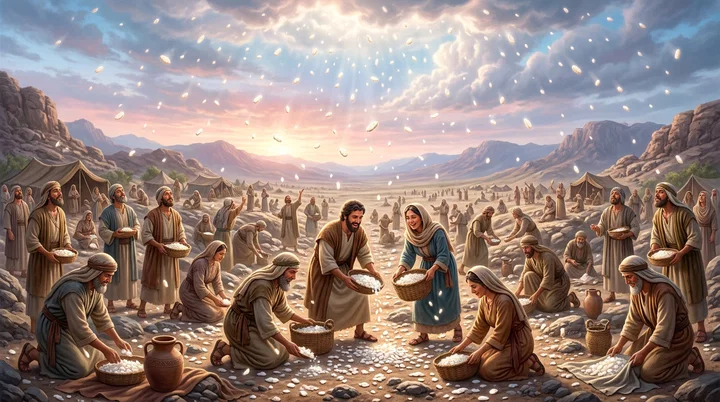
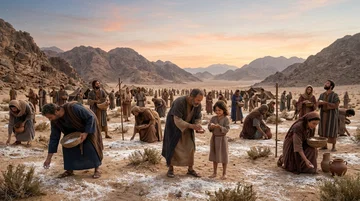
And the people went about, and gathered it, and ground it in mills, or beat it in a mortar, and baked it in pans, and made cakes of it: and the taste of it was as the taste of fresh oil.
Translations
American King James Version, King James Version, KJV Cambridge Paragraph Bible
And the people went about, and gathered it, and ground it in mills, or beat it in a mortar, and baked it in pans, and made cakes of it: and the taste of it was as the taste of fresh oil.
And the people went about, and gathered it and ground it in mills, or beat it in a mortar, and baked it in pans, and made cakes of it: and the taste of it was as the taste of fresh oil.
The people went about, and gathered it, and ground it in mills, or beat it in mortars, and seethed it in pots, and made cakes of it: and the taste of it was as the taste of fresh oil.
The people went about, and gathered it, and ground it in mills, or beat it in mortars, and boiled it in pots, and made cakes of it: and the taste of it was as the taste of fresh oil.
the people have turned aside and gathered [it], and ground [it] with millstones, or beat [it] in a mortar, and boiled [it] in a pan, and made it cakes, and its taste hath been as the taste of the moisture of oil.
The people went about, and gathered it, and ground it with hand-mills, or beat it in mortars, and boiled it in pots, and made cakes of it; and the taste of it was as the taste of oil-cakes.
The people used to go about and pick it up, and grind it with a pair of mill-stones, or pound it in a mortar, and boil it in a pot, and make it into round cakes,—then was the taste thereof like the taste of a sweet cake made with oil.
Berean Standard Bible, Majority Standard Bible
The people walked around and gathered it, ground it on a handmill or crushed it in a mortar, then boiled it in a cooking pot or shaped it into cakes. It tasted like pastry baked with fine oil.
The people went around, gathered it, and ground it in mills, or beat it in mortars, and boiled it in pots, and made cakes of it. Its taste was like the taste of fresh oil.
The people went about taking it up from the earth, crushing it between stones or hammering it to powder, and boiling it in pots, and they made cakes of it: its taste was like the taste of cakes cooked with oil.
The people went about and gathered it, and ground it in milles, or beat it in morters, and baked it in a cauldron, and made cakes of it, and the taste of it was like vnto the taste of fresh oyle.
Douay-Rheims (Challoner revision)
And the people went about, and gathering it, ground it in a mill, or beat it in a mortar, and boiled it in a pot, and made cakes thereof of the taste of bread tempered with oil.
Pictures
Cross-references 20 of 23
- Exodus 16:3
And the children of Israel said unto them, Would to God we had died by the hand of the LORD in the land of Egypt, when we sat by the flesh pots, and when we did eat bread to the full; for ye have brought us forth into this wilderness, to kill this whole assembly with hunger.
same complaint that brought manna and flesh
- Psalms 78:24-25
And had rained down manna upon them to eat, and had given them of the corn of heaven.
Manna is described as food from heaven given to Israel.
- 1 Corinthians 10:6
Now these things were our examples, to the intent we should not lust after evil things, as they also lusted.
Israel’s craving is a warning against desiring evil things.
- Exodus 16:14-15
And when the dew that lay was gone up, behold, upon the face of the wilderness there lay a small round thing, as small as the hoar frost on the ground.
Both describe the manna, the morning bread given to Israel.
- Exodus 16:31
And the house of Israel called the name thereof Manna: and it was like coriander seed, white; and the taste of it was like wafers made with honey.
Describes manna’s taste and appearance as food God gave Israel.
- Exodus 16:4
Then said the LORD unto Moses, Behold, I will rain bread from heaven for you; and the people shall go out and gather a certain rate every day, that I may prove them, whether they will walk in my law, or no.
God provides bread from heaven for Israel.
- Exodus 16:23
And he said unto them, This is that which the LORD hath said, To morrow is the rest of the holy sabbath unto the LORD: bake that which ye will bake to day, and seethe that ye will seethe; and that which remaineth over lay up for you to be kept until the morning.
Both describe preparing manna before the Sabbath.
- Psalms 78:30-31
They were not estranged from their lust. But while their meat was yet in their mouths,
The people lusted for flesh, and judgment followed.
- Numbers 11:18-20
And say thou unto the people, Sanctify yourselves against to morrow, and ye shall eat flesh: for ye have wept in the ears of the LORD, saying, Who shall give us flesh to eat? for it was well with us in Egypt: therefore the LORD will give you flesh, and ye shall eat.
God answers the people’s demand for flesh with judgment.
- 1 Corinthians 10:11
Now all these things happened unto them for ensamples: and they are written for our admonition, upon whom the ends of the world are come.
The wilderness events are examples recorded for the admonition of those in the last days.
- Exodus 16:35
And the children of Israel did eat manna forty years, until they came to a land inhabited; they did eat manna, until they came unto the borders of the land of Canaan.
Israel eats manna during its wilderness journey.
- Joshua 5:12
And the manna ceased on the morrow after they had eaten of the old corn of the land; neither had the children of Israel manna any more; but they did eat of the fruit of the land of Canaan that year.
It records the manna ceasing after Israel entered Canaan.
- Exodus 16:21
And they gathered it every morning, every man according to his eating: and when the sun waxed hot, it melted.
sun heat melting the manna
- Exodus 16:20
Notwithstanding they hearkened not unto Moses; but some of them left of it until the morning, and it bred worms, and stank: and Moses was wroth with them.
bred worms when kept
- Exodus 16:26
Six days ye shall gather it; but on the seventh day, which is the sabbath, in it there shall be none.
Manna was not provided on the Sabbath.
- Psalms 105:40
The people asked, and he brought quails, and satisfied them with the bread of heaven.
Recalls the first giving of manna.
- Exodus 16:22
And it came to pass, that on the sixth day they gathered twice as much bread, two omers for one man: and all the rulers of the congregation came and told Moses.
A double portion of manna fell before the Sabbath.
- Psalms 78:18-21
And they tempted God in their heart by asking meat for their lust.
Israel’s demand for meat reveals distrust of God’s provision in the wilderness.
- Psalms 106:14-15
But lusted exceedingly in the wilderness, and tempted God in the desert.
God granted their craving for meat but sent leanness into their soul.
- Numbers 11:4
And the mixt multitude that was among them fell a lusting: and the children of Israel also wept again, and said, Who shall give us flesh to eat?
The people’s craving for flesh begins the account.
Commentary
Each commentary is drawn from primary sources: the writings of Ellen G. White and Adventist pioneers and periodicals. Each commentary is separate. Its own words are not a quotation; follow the references to read the source passages.
Ellen G. White
5 sources
The people went about and gathered the manna and then ground it in mills or beat it in a mortar and baked it in pans and made cakes of it, so that it could be prepared in different ways before eating, and its taste was as the taste of fresh oil.6T 354.4–355.1ST Mar 7, 1906 It was the daily bread God rained from heaven as the healthy food He designed for Israel, heavenly food described as angels' food, given along with purest water out of the flinty rock.SG4 121.3–122.1ST Mar 7, 1906Lt 224, 1908, par. 6–7 This belongs to God's leading of His people from Egyptian bondage through the wilderness to prove and try them after promising to be their God and take them as His peculiar treasure, with the covenant promise to put no disease upon them if they obeyed Him in all things.SG4 121.3–122.1 God did not prohibit Israel from eating meat but withheld it in great measure.SG4 121.3–122.1
The gathering, grinding or beating, and baking was work God assigned for Friday as part of preparation day duties, making it a test of whether Israel would keep the Sabbath holy.6T 354.4–355.1 When Israel was content with God's portion, manna was sweet and nourishing, but dissatisfaction made it loathsome to them, so that it did not satisfy them.ST Mar 7, 1906Lt 224, 1908, par. 6–7 The people murmured against Moses and against God, lusted for meat and longed to sit by the flesh pots in Egypt, wishing themselves back there and at times preferring slavery and even death to being deprived of meat.SG4 121.3–122.1Lt 224, 1908, par. 6–7
Israel's indulgence of appetite in this wilderness account became the means by which Satan overthrew them, teaching that God is displeased when appetite is permitted to control.SG4 121.3–122.1LC1 136.2 In anger God granted their demand and gave them flesh to gratify their lustful appetite, and the transgression brought a deadly plague, with great numbers dying in the act of eating the meat for which they had lusted while it was still between their teeth.SG4 121.3–122.1Lt 224, 1908, par. 6–7
Sources
Pioneers and periodicals
33 sources
The verse shows the people gathering the heaven-sent bread each morning and preparing it like grain by grinding, beating, boiling and baking into cakes that tasted rich like fresh oil and sweet like honey cakes.ST Apr 22, 1875ST Jun 10, 1875ST Dec 17, 1912RH Sep 8, 1874 It was no natural product of the desert but a miraculous new creation, enough to feed about three million people daily for forty years wherever they journeyed.ST Dec 17, 1912RH Apr 17, 1900RH Apr 16, 1872 By its double portion before the Sabbath and its preservation through the Sabbath it bore weekly witness that the Sabbath dated from creation.RH Jan 7, 1862RH Apr 16, 1872 In it God gave Israel the simple plant food He had appointed at creation, withholding flesh in order to restore perverted appetite and secure physical, mental and moral strength.RH Jun 25, 1914RH Sep 12, 1871RH Dec 21, 1911ST Mar 3, 1914RH Nov 2, 1905 Their loathing of it and lusting for the food of Egypt stands as a warning that appetite is no safe guide, and that discontent with God's wholesome provision brings leanness of soul and judgment.ST Mar 7, 1906ST Apr 22, 1875ST Jun 10, 1875ST Feb 14, 1911
Manna's Gift and Setting
The people went out and gathered the manna, then ground it in mills or beat it in a mortar, boiled and baked it in pans, and made cakes of it.ST Apr 22, 1875ST Jun 10, 1875ST Dec 17, 1912ST Apr 22, 1889RH Sep 12, 1871 Its preparation and taste are set forth as food that could seem disagreeable to a morbid taste, like graham bread.ST Apr 22, 1875ST Jun 10, 1875 Its taste was as the taste of fresh oil, also described as like wafers or cakes made with honey, sweet and nourishing when received contentedly.ST Apr 22, 1875ST Jun 10, 1875RH Sep 8, 1874RH Apr 17, 1900 When content with the daily portion it was sweet and nourishing, but dissatisfaction made the same food loathsome.ST Mar 7, 1906 The account of its substance, color, taste, and preservation shows it could be prepared in different ways and was given as daily food.ST Mar 7, 1906RH Sep 8, 1874
It was miraculous bread rained from heaven, not a natural saccharine exudation of tamarisk trees or any natural substance now known.ST Dec 17, 1912RH Apr 17, 1900RH Apr 16, 1872 It was a new production never seen before, round like coriander seed and transparent like dew, a combination of features unknown in any natural substance.RH Apr 17, 1900 It was dry enough to grind and beat and bake like grain, yet it bred worms if kept to the second day.RH Apr 17, 1900RH Apr 16, 1872 It melted in the heat of the sun, yet it was hardened by artificial cooking heat.ST Dec 17, 1912RH Apr 17, 1900 It was given in amount sufficient to feed about three million people daily six days a week, winter and summer, for forty years, found wherever they went, beginning and ending with their need, which no natural source on the Arabian peninsula could furnish.ST Dec 17, 1912RH Apr 16, 1872
By not falling on the Sabbath, falling double the day before, and remaining fresh through the Sabbath, it miraculously attested week by week the sanctity of the Sabbath as dating from creation and not from Sinai.RH Jan 7, 1862RH Apr 16, 1872 The people treated the provision as ordinary and disregarded its testimony.RH Jan 7, 1862 The verse stands in the second giving of quails, a year after the first giving in Exodus 16 when quails came at evening and manna fell the next morning.ST Apr 22, 1889 It was given after the mixed multitude lusting for the fish, cucumbers, melons, leeks, onions and garlic of Egypt and complaining of the manna.ST Apr 22, 1889RH Apr 17, 1879RH Mar 12, 1867 Moses complained of excessive burdens and was relieved by gathering seventy elders to the tabernacle, where God took of the Spirit upon Moses to endow them, to Moses' great loss of divine help, showing that if God calls to great labors He gives great grace and that it is wiser to cheerfully bear heavy burdens than to meet the loss of that help.RH Mar 22, 1870
Doubting His promises of the land and His power to supply food and longing for things left behind brought judgment in giving the request but sending leanness of soul, warning Christians not to look back with a divided, double-minded heart prizing earth above heaven but to look unto Jesus and seek first the kingdom of God and His righteousness.ST Apr 22, 1889 The verse belongs to the account of the wanderings and murmurings of the children of Israel and of the ceremonies, service, and strict order God had among His children to teach them systematic character.ST Mar 4, 1913 The quails were brought from the sea and let fall by the camp over a territory a day's journey on each side to eat for a full month.RH Jan 11, 1915 Their being two cubits high means they were made to fly about three feet high upon the earth within reach where anyone could take as many as he chose, not that dead birds lay packed three feet deep over forty miles across.RH Jan 11, 1915
The lust and neighborhood murmuring against God brought plague in which many were slain.ST May 6, 1913ST Apr 22, 1889 The place was called Kibroth-hattaavah, meaning graves of lust, ever recalling their sin unto humility.ST May 6, 1913 Their longing and disobedience led to wandering in the wilderness, and that generation did not enter the promised land.RH Apr 17, 1879
God's Wholesome Diet Purpose
The verse shows the simple, wholesome, nutritious food God chose for Israel in the wilderness after calling them out of Egypt, manna gathered and ground in mills or crushed in a mortar, then baked in pans into cakes tasting as fresh oil.RH Jun 25, 1914RH Sep 12, 1871RH Dec 21, 1911 Flesh meat was no part of that chosen diet, and no part of man's original plant diet of herbs and fruits given at creation and in Eden.RH Jun 25, 1914RH Dec 21, 1911ST Mar 3, 1914 It was permitted only after the people repined and murmured and insisted in demanding it, while the manna tested their control of appetite and willingness to obey.RH Jun 25, 1914RH Sep 12, 1871RH Dec 21, 1911ST Mar 3, 1914
His intention was to remove flesh from their diet after Egypt, withholding what He could as easily have given as manna, in order to bring perverted appetite into a healthy state that they might enjoy the food originally provided for man, the fruits of the earth given to Adam and Eve in Eden.ST Mar 3, 1914 He gave a special restricted bill of fare to make them holy representatives and promote physical, mental and moral strength, supplying food better suited to their wants than the feverish diet of Egypt.ST Mar 3, 1914RH Nov 2, 1905 Flesh-meats hinder advancement in spiritual life, and keeping the Egyptian diet would have produced the unmanageable spirit the world exhibits, as follows now for those refusing reform in eating and drinking.RH Nov 2, 1905
Had they denied appetite in obedience to His wise restrictions, feebleness and disease would have been unknown among them, as proved by the fact that up to that time there was not a diseased or infirm one among them.ST Mar 3, 1914 Moses, Caleb and Joshua fully cooperated in urging the rebellious people to abandon animal flesh.RH Nov 2, 1905 Their persistent murmuring caused God to give what was not for their greatest good because they would not be satisfied with what was most beneficial, and they suffered the results of intemperance.ST Mar 3, 1914
The quails granted to their craving were a test proving God right to provide manna rather than a variety of foods.RH Apr 9, 1867 After living on manna their stomachs were not prepared for flesh, so the quail soured and caused flatulence, bringing disease and spiritual leanness of soul.RH Apr 9, 1867RH Dec 21, 1905 God sent the flesh food to meet their lust and to cure them of longing for the flesh-pots left in Egypt, teaching them a good lesson they ought to have remembered about a kind and long-suffering God supplying their wants with wholesome and nutritious food.ST Feb 25, 1886
Flesh, even from normal healthy animals, is not man's natural food and not the ideal diet, and since man began to eat it his life has been shortened because flesh produces that effect.RH Dec 21, 1911ST Mar 3, 1914 A man may be defiled and ruined for time and eternity by what he eats and drinks through perverted appetite, as Israel fell under a curse in this account.RH Sep 15, 1874 The words about what goes into the mouth do not justify eating and drinking whatever one pleases for self-gratification.RH Sep 15, 1874
Warning Against Murmuring Appetite
The setting is a sad and important lesson in which appetite and habit made the food of Egypt more enticing than the food provided from heaven, so that appetite overruled reason and the people murmured.ST Feb 14, 1911ST Feb 20, 1912 The manna that was gathered and ground in mills or beaten in a mortar, then baked in pans into cakes tasting as fresh oil, could seem disagreeable to a morbid taste, like graham bread.ST Apr 22, 1875ST Jun 10, 1875 Appetite is not a reliable guide to what is good, and the demand for flesh in the wilderness is a terribly false example of following it.ST Feb 14, 1911ST Jun 10, 1875
When content with the daily portion God gave, the manna was sweet and nourishing, but dissatisfaction made the same food loathsome to them.ST Mar 7, 1906 It was given as daily food that could be prepared in different ways, gathered, ground or crushed, and baked into cakes.ST Mar 7, 1906 Perverted appetite and refusal of plain food brought them under God's displeasure, while self-denial and training the appetite to accept simple food would have kept His favor.
This was the second giving of quails, a year after the first giving in Exodus 16 when quails came at evening and manna fell the next morning.ST Apr 22, 1889 It came after the mixed multitude of Egyptian and Israelitish blood grew weary of the manna and lusted for the fish, cucumbers, melons, leeks, onions and garlic of Egypt.ST Apr 22, 1889 Doubting His promises of the land and His power to supply food, and longing for things left behind, brought judgment in giving them their request but sending leanness of soul.ST Apr 22, 1889RH Jul 10, 1916 The quails were thus given as a painful lesson that God knew best how to provide for and lead His people, for discontent brings judgment rather than the loving prosperity by which He delights to lead.RH Jun 20, 1871
God could as easily have given flesh as manna, but withheld it for their good in order to remove flesh from their diet after Egypt and bring perverted appetite into a healthy state to enjoy the food originally provided for man, herbs and fruits, which is the ideal diet.ST Mar 3, 1914 Because they would not be satisfied with what was most beneficial, He finally permitted what He had denied and what was not for their greatest good, and it spelled disaster through intemperance and its results.ST Mar 3, 1914RH Jan 29, 1914 It is a most dangerous thing to insist upon having something God has denied, as will follow if the federated churches succeed by compelling the state to get the Sunday law long refused.RH Jan 29, 1914
Their murmuring stands as a warning against peevishness and fretfulness when hardship comes.RH Jun 26, 1860 It warns Christians not to look back with a divided, double-minded heart prizing earth above heaven, but to look unto Jesus and seek first the kingdom of God and His righteousness.ST Apr 22, 1889 The wanderings and murmurings, with the ceremonies, service and strict order God had among His children, were to teach systematic character.ST Mar 4, 1913 The daily gift of bread in the wilderness calls for asking whether the daily gifts of bread and water and raiment are truly appreciated.RH Feb 10, 1916
Sources