Exodus 2:3
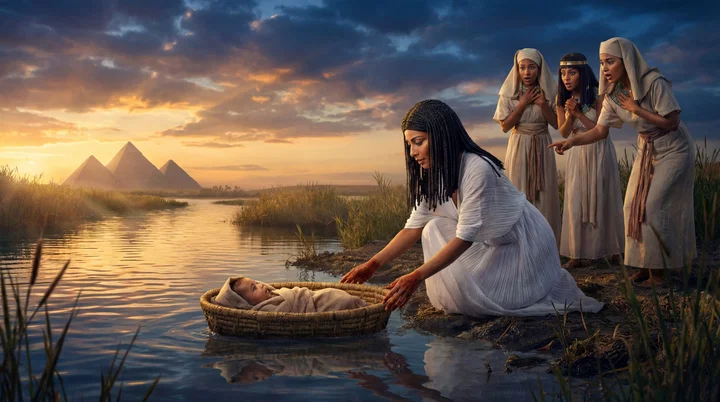
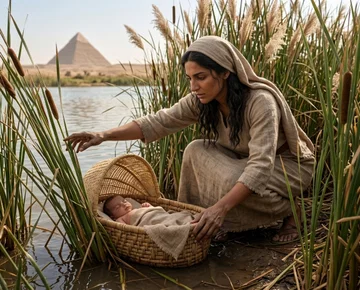
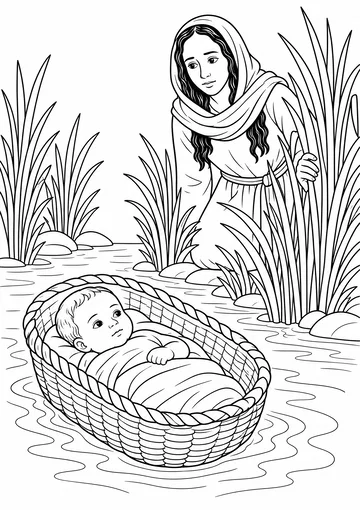
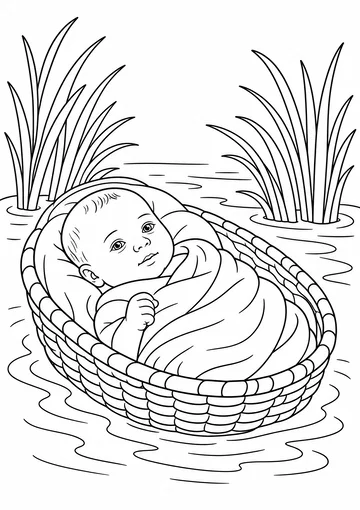
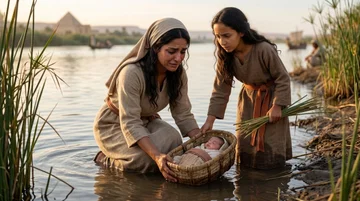
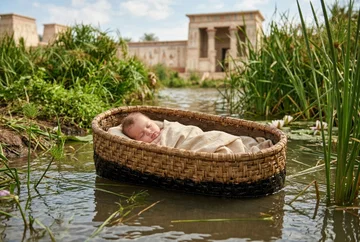
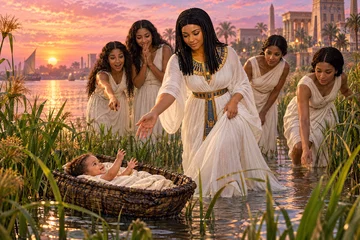
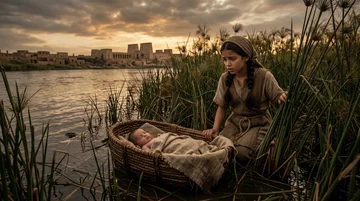
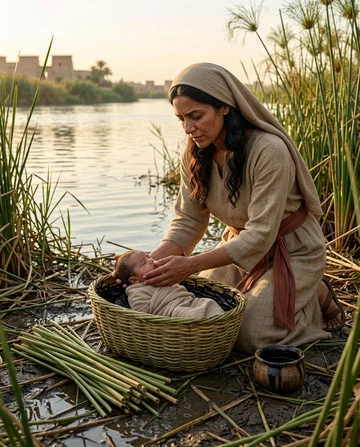
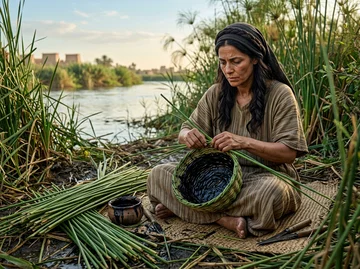
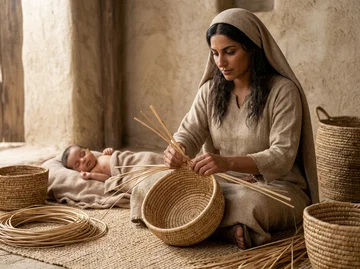
And when she could not longer hide him, she took for him an ark of bulrushes, and daubed it with slime and with pitch, and put the child therein; and she laid it in the flags by the river’s brink.
Translations
American King James Version, King James Version, KJV Cambridge Paragraph Bible
And when she could not longer hide him, she took for him an ark of bulrushes, and daubed it with slime and with pitch, and put the child therein; and she laid it in the flags by the river’s brink.
And when she could no longer hide him, she took for him an ark of bulrushes, and daubed it with slime and with pitch, and put the child therein; and she laid it in the flags by the river's brink.
Revised Version, American Standard Version
And when she could not longer hide him, she took for him an ark of bulrushes, and daubed it with slime and with pitch; and she put the child therein, and laid it in the flags by the river’s brink.
and she hath not been able any more to hide him, and she taketh for him an ark of rushes, and daubeth it with bitumen and with pitch, and putteth the lad in it, and putteth [it] in the weeds by the edge of the River;
And when she could no longer hide him, she took for him an ark of reeds, and plastered it with resin and with pitch, and put the child in it, and laid [ it] in the sedge on the bank of the river.
And when she could no longer hide him, she took for him an ark of paper-reed, and covered it over with bitumen, and with pitch,—and put therein the child, and laid it among the rushes upon the bank of the river.
Berean Standard Bible, Majority Standard Bible
But when she could no longer hide him, she got him a papyrus basket and coated it with tar and pitch. Then she placed the child in the basket and set it among the reeds along the bank of the Nile.
When she could no longer hide him, she took a papyrus basket for him, and coated it with tar and with pitch. She put the child in it, and laid it in the reeds by the river’s bank.
And when she was no longer able to keep him secret, she made him a basket out of the stems of water-plants, pasting sticky earth over it to keep the water out; and placing the baby in it she put it among the plants by the edge of the Nile.
But when she could no longer hide him, she tooke for him an arke made of reede, and daubed it with slime and with pitch, and laide the childe therein, and put it among the bulrushes by the riuers brinke.
Douay-Rheims (Challoner revision)
And when she could hide him no longer, she took a basket made of bulrushes, and daubed it with slime and pitch: and put the little babe therein, and laid him in the sedges by the river’s brink,
Pictures
Cross-references
- Hebrews 11:23
By faith Moses, when he was born, was hid three months of his parents, because they saw he was a proper child; and they were not afraid of the king’s commandment.
Moses’ parents hid him by faith, unafraid of the king’s command.
- Acts 7:20
In which time Moses was born, and was exceeding fair, and nourished up in his father’s house three months:
child's beauty moved mother to preserve him
- Exodus 1:22
And Pharaoh charged all his people, saying, Every son that is born ye shall cast into the river, and every daughter ye shall save alive.
Pharaoh’s order to drown Hebrew boys creates the danger that prompts Moses’ concealment.
- Exodus 2:9-10
And Pharaoh’s daughter said unto her, Take this child away, and nurse it for me, and I will give thee thy wages. And the woman took the child, and nursed it.
Moses’s mother nurses and cares for him before he becomes Pharaoh’s daughter’s son.
- Exodus 1:15-17
And the king of Egypt spake to the Hebrew midwives, of which the name of the one was Shiphrah, and the name of the other Puah:
Pharaoh’s decree to kill Hebrew boys led Moses’ mother to hide him.
- Acts 7:22
And Moses was learned in all the wisdom of the Egyptians, and was mighty in words and in deeds.
His rescue led to his Egyptian upbringing and education.
- Hebrews 11:24-26
By faith Moses, when he was come to years, refused to be called the son of Pharaoh’s daughter;
Moses’s early life in Egypt preceded his choice to reject its riches and suffer with God’s people.
- Numbers 26:59
And the name of Amram’s wife was Jochebed, the daughter of Levi, whom her mother bare to Levi in Egypt: and she bare unto Amram Aaron and Moses, and Miriam their sister.
Identifies Miriam, Moses’ sister who watched over him.
- Matthew 2:16
Then Herod, when he saw that he was mocked of the wise men, was exceeding wroth, and sent forth, and slew all the children that were in Bethlehem, and in all the coasts thereof, from two years old and under, according to the time which he had diligently enquired of the wise men.
Herod’s decree parallels Pharaoh’s attack on infant boys.
- Exodus 2:15
Now when Pharaoh heard this thing, he sought to slay Moses. But Moses fled from the face of Pharaoh, and dwelt in the land of Midian: and he sat down by a well.
Moses flees Pharaoh’s wrath and settles in Midian.
- Exodus 2:10
And the child grew, and she brought him unto Pharaoh’s daughter, and he became her son. And she called his name Moses: and she said, Because I drew him out of the water.
Moses is taken from the Nile and returned to his parents.
- Acts 7:23-30
And when he was full forty years old, it came into his heart to visit his brethren the children of Israel.
Recounts Moses’ early life before God sent him to deliver Israel.
- Genesis 6:14
Make thee an ark of gopher wood; rooms shalt thou make in the ark, and shalt pitch it within and without with pitch.
Both arks were used to save lives.
- Exodus 4:10-16
And Moses said unto the LORD, O my Lord, I am not eloquent, neither heretofore, nor since thou hast spoken unto thy servant: but I am slow of speech, and of a slow tongue.
Moses is called to deliver Israel after being preserved as a child.
- Exodus 3:1
Now Moses kept the flock of Jethro his father in law, the priest of Midian: and he led the flock to the backside of the desert, and came to the mountain of God, even to Horeb.
Moses tended Jethro’s flocks in the desert before his service to God.
- 1 Peter 3:20
Which sometime were disobedient, when once the longsuffering of God waited in the days of Noah, while the ark was a preparing, wherein few, that is, eight souls were saved by water.
Both texts describe an ark preserving lives through water.
- Exodus 2:12
And he looked this way and that way, and when he saw that there was no man, he slew the Egyptian, and hid him in the sand.
Moses strikes the Egyptian, expecting Israel to rally.
- Revelation 15:3
And they sing the song of Moses the servant of God, and the song of the Lamb, saying, Great and marvellous are thy works, Lord God Almighty; just and true are thy ways, thou King of saints.
Moses’ story leads to a triumphant song.
- Exodus 7:12-14
For they cast down every man his rod, and they became serpents: but Aaron’s rod swallowed up their rods.
Both events occurred on the Nile shore.
Commentary
Each commentary is drawn from primary sources: the writings of Ellen G. White and Adventist pioneers and periodicals. Each commentary is separate. Its own words are not a quotation; follow the references to read the source passages.
Ellen G. White
12 sources
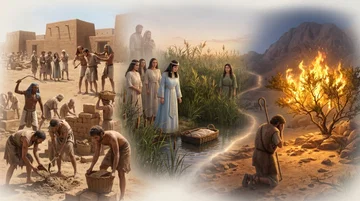
Pharaoh had decreed death for every Hebrew male child, and when Moses' mother could no longer keep him hidden safely she sought another way to protect him.PP 241.3–4SG3 180.1–182.1PP 242.2–243.3Ms 52, 1903, par. 8 She made a small ark, vessel or basket of bulrushes or rushes, daubed and sealed it with slime and pitch to make it watertight so that water could not enter.PP 241.3–4SG3 180.1–182.11SP 162.2PP 242.2–243.3 She put the child in it and laid it among the flags or reeds at the river's edge or brink.PP 241.3–4SG3 180.1–182.11SP 162.2PP 242.2–243.3
She entrusted her helpless child and his life to God with earnest prayer, prayers and tears.SG3 180.1–182.11SP 162.2PP 242.2–243.3 His sister Miriam watched nearby to see what would happen to him.SG3 180.1–182.1PP 242.2–243.3Ms 52, 1903, par. 8 Angels and the heavenly host guarded and watched over the infant with interest, and guided and directed Pharaoh's daughter to the place and to the vessel.SG3 180.1–182.11SP 162.2Ms 52, 1903, par. 8 There she found him and took compassion on him, and the Lord guided all that followed so that Miriam brought his own mother to nurse him without fear.1SP 162.2Ms 52, 1903, par. 8
God placed this history on record by the same divine Instructor who gave the prophetic records of Revelation and the history of Christ's life, condemnation and crucifixion.Ms 52, 1903, par. 8 It was written to teach God's care in the smallest details of life and that all human actions are seen by Him and by the heavenly angels.Ms 52, 1903, par. 8 The mother was Jochebed, a Hebrew mother strong in faith who was not afraid of the king's command, and her son Moses became Israel's deliverer.MH 372.1
The verse belongs to Moses' early life in the lowly cabin home in Goshen, where home and school were one and his father and mother themselves gave him instruction.FE 95.5–96.1RH Oct 30, 1900 There thoughts of God were joined to all the events of daily life, the mighty works of God in delivering His people were told with eloquence and reverence, and the great truths of God's providence and the future life were pressed on his young mind with the true, the good and the beautiful.RH Oct 30, 1900 Lessons were illustrated and fixed in memory by figures and symbols, so that almost from infancy he was initiated into the mysteries, wisdom and hopes of his fathers and guided to think and feel and anticipate beyond things seen and transitory to the unseen and eternal.RH Oct 30, 1900
That godly home training was the same given to Samuel, David, Daniel, Christ and Timothy.FE 95.5–96.1 From this training he came forth vigorous in body and mind, quick to perceive and strong to act, with the heart prepared like good ground for the growth of truth and precious seed and the mind trained to see God in the words of revelation and the scenes of nature.FE 95.5–96.1RH Oct 30, 1900 His twelve years among his Hebrew family laid the foundation of his greatness through the care and influence of his mother, a woman little known to fame, as she faced his removal from her care and sought to prepare him to remain faithful to God, showing that her influence began before he entered Pharaoh's household.ED 61.3ED 61.2
His mother was one Hebrew woman, an exile and a slave, whose influence had far-reaching results in his whole future life and the great mission he fulfilled as the leader of Israel.CE 223.2–224.1 Her example proves the importance of the work of the Christian mother, which no other work can equal, because to a very great extent the mother holds the destiny of her children in her own hands.CE 223.2–224.1 She deals with developing minds and characters, working not alone for time but for eternity, sowing seed that will spring up and bear fruit either for good or for evil, and impressing upon a human soul the image of the divine rather than painting beauty on canvas or chiseling it from marble.CE 223.2–224.1
Especially during their early years the responsibility of forming children's characters rests upon her, for a mother's influence and power to shape character is strongest then and the impressions then made upon developing minds will remain through life.CE 223.2–224.1ST Nov 10, 1881 Parents should therefore direct the instruction and training of their children while very young to the end that they may be Christians, trained not as heirs to the throne of an earthly empire but as kings unto God to reign through unending ages.CE 223.2–224.1 Every mother's moments are priceless and her work will be tested in the solemn day of accounts, when many failures and crimes will be found to have resulted from ignorance and neglect in guiding childish feet in the right way, and many who blessed the world with light and genius and truth and holiness will be found to owe the principles that were the mainspring of their influence and success to a praying Christian mother.CE 223.2–224.1
Sources
Pioneers and periodicals
63 sources
When his mother could hide her three-month-old son no longer, she wove a small waterproof basket of papyrus reeds, sealed it outside with slime and pitch and lined it soft within, laid the child in it among the flags by the brink of the Nile, and left his sister watching at a distance.ST Feb 12, 1880ST May 7, 1894ST May 7, 1894 She did this under Pharaoh's cruel decree that every Hebrew male child be thrown into the river to destroy Israel as a separate people.ST Jul 21, 1881RH Mar 9, 1869RH Nov 28, 1912 God overruled what looked helpless and accidental, timing the coming of Pharaoh's daughter to pity and adopt him, so the order meant to kill the future deliverer brought him into Pharaoh's own house to be nursed by his own mother and educated in all the learning of the Egyptians.RH Jan 9, 1913ST Dec 25, 1901ST Jul 21, 1881RH Jan 30, 1872 Because he must soon pass to guardianship that knew not God, his mother used his few early years in the lowly Goshen home to link his soul with heaven by teaching him God's works, promises and coming Redeemer, and that grounding kept him true amid the idolatry, pomp and vice of the court.RH Aug 26, 1909RH Aug 28, 1913RH Apr 2, 1861 His preservation as a babe to become Israel's deliverer exposes Satan's impotence against the promised seed and is a type of Christ, whom Satan likewise sought to destroy in infancy but failed.RH Oct 19, 1916RH Jan 30, 1872ST Mar 30, 1904RH Mar 9, 1869RH Nov 28, 1912
Setting and Basket Details
Exodus 2:3 belongs to the historical opening of Exodus in chapters 1-4, telling Israel's oppression in Egypt and the birth and upbringing of Moses until his call as deliverer, within the larger series of events in Exodus 1-14.RH Apr 23, 1908 No direct mention of such events is to be expected on Egypt's public monuments, where court historiographers registered only successes and triumphs and would naturally refrain from all mention of them, and the monarch would certainly not inscribe any account of them upon his edifices.RH Apr 23, 1908 The account in Exodus 1 and 2 gives the background to Stephen's speech in Acts 6 and Acts 7:17-60.
The event took place about three and one-half millenniums or thirty-six centuries ago, when Egypt was the world's greatest kingdom in might and power and skill and wisdom in statecraft.ST Nov 14, 1906ST Nov 28, 1878 Egypt then deified its annually overflowing and fertilizing river as a god and worshiped the sun that joined with the river in producing food, with its kings titled as representatives of the sun-god on the throne of men.ST Nov 14, 1906 Abraham's family had come seeking supplies from her granaries, where the captive slave Joseph had taught Pharaoh to store grain in plenteous years to become rich in famine and had instituted just land-laws with easy combined rental and taxes.ST Nov 14, 1906 While Joseph was prime minister and as long as his memory lived among Egypt's rulers he was honored, his laws governed, the country flourished, the people prospered, and those living in Egypt knew no oppression, but brief prosperity was followed by long and terrible oppression like the iron furnace foreshadowed in Abraham's vision.ST Nov 14, 1906RH Dec 17, 1861
Pharaoh, a cruel sun-worshiping king who did not love God, had ordered every Hebrew male child destroyed at birth and thrown into the river to blend the Hebrews with the Egyptians and prevent their existence as a separate people.RH Mar 9, 1869RH Nov 28, 1912 The decree was repeated and emphasized after the midwives refused to kill them and then was being carried out.RH Nov 28, 1912 Moses belonged to the tribe of Levi, the son of Amram and Jochebed, a poor Levite family living in a lowly cabin or thatched home in Goshen by the river almost hidden by marshy reeds, with husband, son Aaron, daughter Miriam and secret baby boy, the father at times away making brick.ST Nov 12, 1894ST Jul 22, 1886 He was a goodly and surpassingly beautiful child, and his beauty together with foretellings of his birth and future greatness to Pharaoh by Egyptian magicians and to Amram in a dream led his mother to plan his preservation, God giving the beauty in providence so his life would be saved by it.RH Feb 3, 1910RH Mar 9, 1869
After three months hidden indoors without warm sunshine he could no longer be concealed, so after prayer and the comforting impression that God would care for him and might need him for a great work, his mother wove and prepared the basket.RH Jul 2, 1908 She made a small boat or waterproof basket from papyrus or bulrush reeds, daubed and sealed outside with slime, lime, mineral pitch and pitchy mud to keep water out, lined soft inside, put the child in it, and clasped him tenderly.ST Feb 12, 1880ST May 7, 1894ST May 7, 1894ST Dec 20, 1899 She laid it in the flags, reeds and rushes by the river's brink, at a branch of the Nile near Tanis said not to be infested with crocodiles, on a desolate narrow shore near Memphis, by the cabin home.ST May 7, 1894ST May 7, 1894ST Dec 4, 1884 She parted the tall reeds with Miriam, set it down in the water, left it under God's care, and Miriam stayed crouching faithfully at a distance to watch without going to him.
His infancy among the rushes of the Nile, followed by adoption by Pharaoh's daughter and upbringing in the palace, was the beginning of the first of the three forty-year periods of his life.ST Nov 7, 1878 The birth and rearing of Moses stands with Israel's prosperity despite oppression.ST Jan 20, 1909 The same scene can be formed in miniature with a mirror for the river so children see it as real.
Divine Preservation and Providence
Behind the decree to oppress Israel and destroy every Hebrew male child by throwing him into the river lay Satan's effort to destroy the promised seed.RH Mar 9, 1869RH Nov 28, 1912 He stirred up Pharaoh because he knew the time of deliverance was at hand, hoping to destroy the deliverer at birth so that Israel would never leave bondage.RH Mar 9, 1869RH Nov 28, 1912 Pharaoh's order was meant to blend the Hebrews with the Egyptians and prevent their existence as a separate people, and after the midwives refused to kill the infants it was repeated, emphasized, and carried out.RH Mar 9, 1869RH Nov 28, 1912 The time was ripe for the birth of the deliverer who should lead Israel out of Egyptian bondage into the promised land, the type of Christ who should lead God's people into the typical land of promise, and Satan meant him to perish under that decree, the same thing he later attempted against the child Jesus, but God caused both attempts to fail.RH Mar 9, 1869RH Nov 28, 1912
The hiding of Moses and then placing him in the ark by the river was God's overruling for preservation.ST Jun 11, 1894 It belongs to the account of his childhood and shows God's overruling care in preserving and preparing the person chosen to deliver Israel, part of the story of His providence over His people under trial.ST Jun 11, 1894 When his mother could no longer hide him she placed him in a waterproofed ark among the reeds by the river, where God's providence preserved him.ST Jan 28, 1913ST Dec 20, 1899 Unable to keep him hidden, she set the bulrush ark sealed with slime and pitch among the river's reeds, and his preservation was part of God's providential care for a child kept alive in defiance of Pharaoh's law, whom God made the leader who delivered Israel from Egyptian bondage.ST Jan 28, 1913ST Dec 20, 1899
In her last extremity, with heart wrung with anguish at having to leave her babe there, the pious mother committed her helpless child to the little frail ark of bulrushes in the flags by the river's brink.ST Feb 12, 1880RH Jan 30, 1872RH Mar 9, 1869 She sealed the small vessel with lime and pitch to keep it watertight and set it among the riverbank reeds, entrusting him to God's care with earnest prayer and with many prayers and tears.ST Feb 12, 1880RH Mar 9, 1869 She thus exposed her surpassingly beautiful child to the crocodiles of the river and to the still more cruel Egyptians, while his sister watched nearby and angels guarded him.ST Feb 12, 1880RH Mar 9, 1869 God had in providence given the child such beauty that his life would be saved by it.RH Mar 9, 1869
What looked like a small accidental affair had God in the act.RH Jan 30, 1872 He timed the coming of Pharaoh's daughter just then and touched her heart to pity, save, and adopt the child.RH Jan 30, 1872 The order meant to destroy the future deliverer instead became part of the means by which Moses survived and was brought into Pharaoh's court, where it was needful for him to be raised and educated.ST Jul 21, 1881RH Mar 9, 1869 There he secured the utmost advantage of earthly wisdom and all the learning of the Egyptians, without which he never could have led God's people.RH Jan 30, 1872RH Mar 9, 1869
By providence the princess found him there among the Nile reeds, took pity on him, and adopted him.RH Jan 9, 1913 His own mother was chosen to nurse him until he could be taken into Pharaoh's home, so the child Pharaoh sought to destroy was brought up in his own household and educated at his expense.RH Jan 9, 1913 God not only spared his life but arranged for him to be cared for and taught by his own mother during his early years, and by providence she became his nurse and taught him about his people and God.ST Dec 25, 1901RH Apr 2, 1861 Those early years with his mother, telling of God, His dealings with Israel, and His promises of future mercy, helped prepare him with God's blessing for the work God later called him to do and to become Israel's deliverer, guide, and legislator amid the corruption of the Egyptian court.RH Jan 25, 1912RH Apr 2, 1861
Pharaoh's decree threatened the life of the future deliverer, but God heard the mother's prayers, rewarded her faith, and preserved Moses for an important work.ST Nov 13, 1901ST Mar 30, 1904 A deliverer was provided when Israel was enslaved in Egypt and groaning under taskmasters after the king's decree that every Hebrew male child should be destroyed at birth.RH Feb 3, 1910RH Sep 17, 1914 Amram and Jochebed of the tribe of Levi had a goodly son, and his beauty together with foretellings of his birth and future greatness to Pharaoh by Egyptian magicians and to Amram in a dream led his mother to arrange a plan for his preservation.RH Feb 3, 1910 After hiding him three months in the home she placed him in a water-tight vessel and deposited it among the tall vegetation at the verge of the Nile, and God began the exodus deliverance through that helpless infant born under sentence of death, preserving and preparing him to become the leader of the movement that led Israel out of bondage toward the promised land, a better country, and a knowledge of the Most High.ST Mar 30, 1904RH Nov 28, 1912RH Feb 3, 1910RH Sep 17, 1914
The ark of bulrushes was in God's providence the means of saving his life to become the deliverer of Israel, and his deliverance from the decree to kill Hebrew boys was part of the events through which God preserved the future deliverer.ST May 13, 1897RH Jan 9, 1913 This exposes the impotence of Satan's malice and gives reason for stronger faith in God.RH Mar 9, 1869 It proves that He who keeps Israel never slumbers or sleeps, His watchcare is never withdrawn, and He withholds no good thing from those who walk uprightly, giving assurance that when all things are seen as they are His hand will be recognized in occurrences now passed over without thought.RH Jan 30, 1872
His rescue in infancy from Egyptian danger, when his mother could no longer hide him and placed him in a basket among the riverbank reeds, begins the account of his remarkable life and his eventual role as Israel's leader.RH Jan 20, 1916 From this humble and perilous start in the bulrush ark God raised him to lead Israel out of Egypt, through the wilderness, and into the promised land.RH Feb 2, 1905 In mother love Jochebed shielded him and then launched her fair treasure alone on the wave in an ark by the river's brink, daring to leave him where the king's house might espy him, because the time of the promise drew nigh while God's chosen were pressed by bitter servitude and a death-dealing scepter had driven hope from the breast.RH Dec 24, 1914
Called and Prepared Deliverer
Exodus 2:3 begins the story of Moses as the man of the hour whom the Lord raised up to fill an important place in His work and great plan, specially called and fitted for that particular occasion.RH Oct 19, 1916 Years before Israel was called out of Egypt, God had already chosen Moses as a child and had him trained to become the mighty leader who would lead them out.RH Jun 13, 1912 His deliverance from the decree to kill the Hebrew boys was part of the events through which God preserved the future deliverer of Israel.RH Jan 9, 1913
That preservation included his being brought up in Pharaoh's house, where, as Acts 7:20-31 adds, he was instructed in all the wisdom of the Egyptians.RH Jun 6, 1912 His infancy in the ark was thus the beginning of a long preparation in which God trained him to deliver Israel from Egypt, with eighty years of life devoted to that preparation.RH Aug 22, 1865 The hardships of his early discipline were sharp but beneficial, and his life as the son of a slave began in obscurity and hardship before he rose to renown and power.RH Aug 22, 1865ST Oct 22, 1902
Hidden three months in his mother's house and then placed in a simple rude ark of bulrushes daubed with pitch and committed to the keeping of the river, that same lowly child when he came to years of understanding chose the humble path of suffering with the people of God rather than the enjoyment of the pleasures of sin for a season.GSAM 33.4 His calling proves that God's call to do a great work of saving men comes in youth.RH Jun 13, 1912 Every faithful child is just as truly called and stationed by God in a special designated place on earth to work in cooperation with Christ for the salvation of souls.RH Oct 19, 1916
Mother's Early Training Work
When the child was laid by the river's brink it was with the knowledge that he must soon pass beyond a mother's care to the guardianship of those who knew not God, to the palace of the Pharaohs and to the Egyptian princess to welcome him as a loved and cherished son, after only twelve years or a short period with his Hebrew kindred in the humble Goshen home, younger than Joseph or Daniel were when taken.RH Aug 26, 1909RH Aug 28, 1913 In that lowly cabin home where home and school were one, father and mother themselves gave him true education directed by the Lord, joining thoughts of God to all the events of daily life.RH Oct 30, 1900 There the mighty works of God in delivering His people were told with eloquence and reverence, with God's dealings with the fathers, His requirements, His providence, the great truths of the future life, and the promises of mercy and of the Redeemer to come.RH Oct 30, 1900RH Apr 2, 1861 By figures and symbols the lessons were illustrated and fixed in memory, so that almost from infancy he was initiated into the mysteries, wisdom and hopes of his fathers and guided to think and feel and anticipate beyond things seen and transitory to the unseen and eternal.RH Oct 30, 1900
Because that separation was near she the more earnestly endeavored to link his soul with heaven, seeking to implant love and loyalty to God in his heart, and the work was faithfully accomplished.RH Aug 26, 1909 She knew her son would be taken from her while yet a child and be surrounded by all the vices and alluring temptations and the pomp and pride a king's court could offer, so with the greatest earnestness she improved the few years of his earliest childhood allowed her to instill into his heart principles that would make it possible for him to be true to God and to his own manhood in the midst of such influences.RH Aug 28, 1913 She used her early opportunity to plant seeds of truth in his mind and heart as a safeguard against all Satan could bring against him.RH Aug 28, 1913 His after life of service to God was the result of his mother's efforts.
That childhood grounding kept his integrity, for alone among a toil-worn and oppressed people he had been taught the worship of Jehovah in a humble home of poverty.RH Feb 4, 1873 When at twelve years old he was separated from his father's house and exposed to the allurements of an idolatrous court, though of noble form, rare talents improved by royal advantages, mighty in word and deed, leading the armies of Egypt and regarded as future king in the full blaze of worldly prosperity and glory, he still refused heathen worship, revered the God of his fathers, and knew he was to be the deliverer of his brethren from the house of bondage.RH Feb 4, 1873 Those principles of truth that were the burden of his mother's teaching and the lesson of her life laid the foundation of his greatness, which no after-influence in Egypt could induce him to renounce, preparing his nobler choice for the honor of God and the deliverance of his downtrodden people.RH Aug 26, 1909
The little ark of bulrushes floating on the placid waters of the Nile contained God's answer to nearly four hundred years of moans and cries for deliverance, yet the child lying in his floating cradle was too young to know anything about the God of Israel or His truth, and from that basket he was taken right into the palace of the king where heathenism reigned supreme, so that without his mother's influence his life and influence would have been buried in Egyptian darkness never to be heard in history.RH May 7, 1901 But his mother's devotion in leaving her home to hire herself out to the king's daughter and spend her life in the interests of her child enabled her, alone amid the darkness and baneful influence of heathenism, to patiently and persistently teach him truth and crowd out error so successfully that he stood firm for God.RH May 7, 1901 From this training he came forth vigorous in body and mind, quick to perceive and strong to act, with the heart prepared like good ground for precious seed and the mind trained to see God in the words of revelation and the scenes of nature.RH Oct 30, 1900
Her work was done as a woman and a slave with humble lot and heavy burden, through days and nights of watching by his hidden cradle in the rushes of the Nile, and it saved him for his great career as lawgiver and leader of his people through the wilderness to deliver Israel.RH Aug 26, 1909RH Feb 27, 1908RH Sep 16, 1902 During the twelve years she had her boy she worked earnestly to instil in him the true meaning of life, and that work developed him into a mighty man to deliver Israel.RH Feb 27, 1908 To a very great extent the mother holds in her own hands the destiny of her children for time and eternity, dealing with developing minds and characters not for time alone but for eternity, sowing seed that will spring up and bear fruit either for good or for evil.RH Mar 4, 1915 Her task is not to paint a form of beauty upon canvas or to chisel it from marble, but to impress upon a human soul the image of the divine, with special responsibility during the early years for forming character because impressions made upon developing minds remain with them all through life.ST Nov 10, 1881RH Mar 4, 1915
The mother's influence is strongest in the child's earliest years, and the history shows her great power to shape character from those years.ST Nov 10, 1881 The home is the place God designed for educating the human family and remains the principal gateway for the entrance of the Gospel, as proved when Jochebed's influence as mother brought one of the world's greatest blessings. What was given to her is given to every parent and every mother: to take son and daughter and train them for God, to form a character polished for the courts of the Lord, and to work as for life to save children from being drowned in the polluting, corrupting influences of the world, so they may pass safely through life and be fitted to occupy the place planned for them in His kingdom and be trained not as heirs to the throne of an earthly empire but as kings unto God to reign through unending ages.RH Aug 28, 1913RH Mar 4, 1915 God-fearing parents, even in humble circumstances, can thus lay the foundations of a child's education, Christian character, and future work and leadership.RH Sep 17, 1914
She is held up as a watchful mother whose vigilance in placing him in a carefully prepared basket among the river reeds when she could no longer hide him, with early prayerful instruction, helped lay the foundation for her son's useful life.RH Jul 2, 1908 She was a plain, practical, industrious, prayerful and God-fearing woman, and Moses is counted among great and useful persons so shaped by a good mother.ST Apr 3, 1879 The faithfulness of his parents in guarding and preserving him in danger gives courage to parents who feel the solemn and heavy responsibility of rearing children.RH Jul 28, 1904 God works with parents for the salvation of their children when they walk fully in the light of His counsel in His Word, prayerfully train the child in the way of the Lord, and secure for him Christian education, watering the seed with prayers and tears into the abundant harvest of a godly life of service in the cause of right, with the sure promise that the child so trained will not depart from it in manhood.RH Jul 28, 1904
His character is presented as a model showing the value of children and of true education.ST Nov 19, 1902 His mother's instruction in his early youth prepared him to leave Pharaoh's court at forty and join the enslaved Hebrews.ST Oct 11, 1883 Miriam's caring for him as a babe in the little ark later made her feel he owed her attention and consideration when she and Aaron found fault with him.
Types and Doctrinal Teachings
Moses preserved under the death decree was the deliverer who would lead Israel out of Egyptian bondage into the promised land, a type of Christ who should lead God's people into the typical land of promise.ST Mar 30, 1904RH Nov 28, 1912 Pharaoh had ordered every Hebrew male child thrown into the river to blend the Hebrews with the Egyptians and prevent their existence as a separate people, and Satan stirred him to this decree because he knew the time of deliverance was at hand and hoped to destroy the deliverer at birth so Israel would never leave bondage.RH Mar 9, 1869RH Nov 28, 1912 It was the same thing he later attempted against the child Jesus, but God caused both attempts to fail.RH Mar 9, 1869 The decree itself became the means of bringing Moses into Pharaoh's court where he needed to be raised and educated with the utmost advantage of earthly wisdom, and this exposes the impotence of Satan's malice and gives reason for stronger faith in God.RH Mar 9, 1869
The story of the babe in the ark of bulrushes, together with the Babe of Bethlehem in the manger, is being told and sung by nearly all the nations of men.ST Mar 1, 1905 This shows the Bible is indestructible and on its road to complete and final victory.ST Mar 1, 1905 It points to when the triumphant church of God will sing the song of Moses and the Lamb on the sea of glass.ST Mar 1, 1905 The record in the first five chapters of Exodus shows Israel's oppressed state as bondmen in Egypt.RH May 16, 1854 That state made it impossible for them to keep the Sabbath even if they had desired to, though they might have kept the other nine commandments.RH May 16, 1854 God wrought deliverance and brought them out with a mighty hand to where they could keep it, which is why they were then required to keep it.RH May 16, 1854
After hundreds of years of slavery had unfitted Israel to comprehend God's great salvation and the character He required, God redeemed them with a mighty hand. He then gave them the sanctuary as a great multiple object-lesson comprehending the plan of salvation by various forms and rites. A Hebrew foundling in a basket in the Nile taken into the imperial palace of Egypt was a great honor.ST Nov 3, 1881 It pictures the supreme honor of sinners in the beggarly rags of sin and guilt being picked up, renewed after the image of God, and adopted into the royal family of Heaven as sons of God.ST Nov 3, 1881
The event took place in the Nile River about thirty-six centuries ago, where the son of Levi was miraculously saved to become the conductor of the people of God.ST Nov 28, 1878 The same river is a place for baptism, where believers are buried in water to live no longer to themselves but to Him in whose name they are baptized.ST Nov 28, 1878 Moses as an infant sleeping in the little ark on the Egyptian river lived long after the doctrine of metempsychosis was already well matured and holding sway through the Eastern world.RH Jun 29, 1869
Trust and Life Application
The helpless babe laid in the ark of bulrushes and preserved by God proves that divine strength is made perfect in human weakness and that a minority with God on its side is powerful.ST Jul 14, 1887 Truth in morals and religion is decided by the word of God alone, not by numbers or by the sentiments of fallible men.ST Jul 14, 1887 When outnumbered for the truth, therefore, God's people should not be intimidated or discouraged but should trust Heaven's approval and the Father's promise to give the kingdom to the little flock.ST Jul 14, 1887
God's guarding of the infant among the river reeds proves that the infinite Ruler of the universe carries the loads of poor, weak people and has them on His heart.RH Oct 21, 1902 Weary believers may therefore roll their anxieties over upon Him, and He will sustain them and supply strength underneath the load.RH Oct 21, 1902 His preservation of Moses as an infant likewise assures a bereaved mother that God cares for her child, for God is the Father of orphans and the protector of those left vulnerable.ST Dec 9, 1913
His life, which began as the son of a slave in obscurity and hardship before he rose to renown and power, shows how heroic people can struggle from difficult beginnings to greatness.ST Oct 22, 1902 It is presented as an example of a person who accomplished great things for God through faith, offering children an ideal worthy of imitation.ST Oct 22, 1902RH Dec 14, 1911 That same Moses knew heartache and homesickness, bearing responsibilities such as none before him nor after him bore in the burden of a great and rebellious people.ST Feb 18, 1913 At times he longed for his peaceful home in Midian and the restful quiet of the desert, where for forty pleasant and prosperous years he had lived guiding and tending the flocks of his father-in-law.ST Feb 18, 1913
Sources