Exodus 25:10
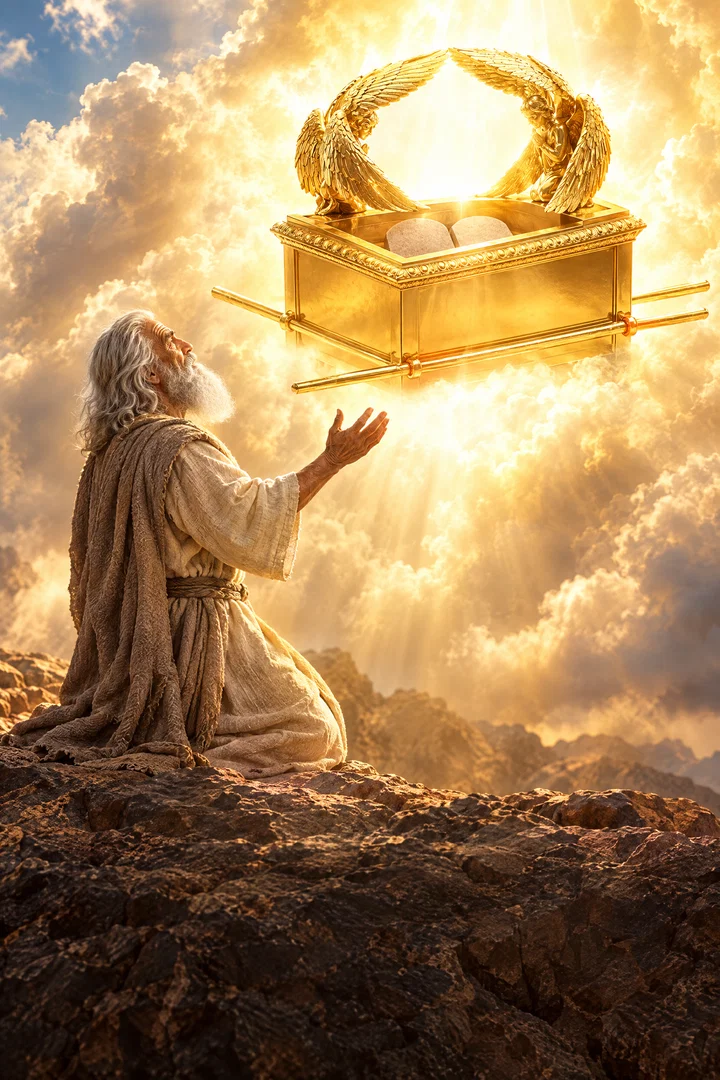
And they shall make an ark of shittim wood: two cubits and a half shall be the length thereof, and a cubit and a half the breadth thereof, and a cubit and a half the height thereof.
Translations
American King James Version, King James Version, KJV Cambridge Paragraph Bible
And they shall make an ark of shittim wood: two cubits and a half shall be the length thereof, and a cubit and a half the breadth thereof, and a cubit and a half the height thereof.
And they shall make an ark of shittim wood: two cubits and a half shall be its length, and a cubit and a half its breadth, and a cubit and a half its hight.
Revised Version, American Standard Version
And they shall make an ark of acacia wood: two cubits and a half shall be the length thereof, and a cubit and a half the breadth thereof, and a cubit and a half the height thereof.
'And they have made an ark of shittim wood; two cubits and a half its length, and a cubit and a half its breadth, and a cubit and a half its height;
And they shall make an ark of acacia-wood; two cubits and a half the length thereof, and a cubit and a half the breadth thereof, and a cubit and a half the height thereof.
And they shall make an ark of acacia wood,-two cubits and a half, the length thereof and, a cubit and a half, the breadth thereof, and, a cubit and a half, the height thereof.
Berean Standard Bible, Majority Standard Bible
And they are to construct an ark of acacia wood, two and a half cubits long, a cubit and a half wide, and a cubit and a half high.
“ They shall make an ark of acacia wood. Its length shall be two and a half cubits, its width a cubit and a half, and a cubit and a half its height.
And they are to make an ark of hard wood; two and a half cubits long, and a cubit and a half wide and high.
They shall make also an Arke of Shittim wood, two cubites and an halfe long, and a cubite and an halfe broade, and a cubite and an halfe hie.
Douay-Rheims (Challoner revision)
Frame an ark of setim wood, the length whereof shall be of two cubits and a half: the breadth, a cubit and a half: the height, likewise, a cubit and a half.
Pictures
Cross-references 20 of 54
- Hebrews 9:1-5
Then verily the first covenant had also ordinances of divine service, and a worldly sanctuary.
Paul describes the sanctuary and identifies the ark among its sacred furnishings.
- Exodus 25:17-22
And thou shalt make a mercy seat of pure gold: two cubits and a half shall be the length thereof, and a cubit and a half the breadth thereof.
Describes the mercy seat, cherubim, and God’s presence above the ark.
- Hebrews 8:1-2
Now of the things which we have spoken this is the sum: We have such an high priest, who is set on the right hand of the throne of the Majesty in the heavens;
Christ ministers in the heavenly sanctuary, of which the earthly sanctuary was a pattern.
- Deuteronomy 10:3-5
And I made an ark of shittim wood, and hewed two tables of stone like unto the first, and went up into the mount, having the two tables in mine hand.
Moses made the ark and placed the stone tablets inside it.
- Revelation 11:19
And the temple of God was opened in heaven, and there was seen in his temple the ark of his testament: and there were lightnings, and voices, and thunderings, and an earthquake, and great hail.
The opened heavenly temple reveals the ark of God’s covenant.
- Hebrews 9:23-24
It was therefore necessary that the patterns of things in the heavens should be purified with these; but the heavenly things themselves with better sacrifices than these.
Earthly sanctuary furnishings are patterns of the heavenly sanctuary where Christ ministers.
- Exodus 25:16
And thou shalt put into the ark the testimony which I shall give thee.
The ark is commanded to hold the testimony, the tablets of the law.
- Exodus 26:33-34
And thou shalt hang up the vail under the taches, that thou mayest bring in thither within the vail the ark of the testimony: and the vail shall divide unto you between the holy place and the most holy.
Places the ark and mercy seat behind the veil in the most holy place.
- Hebrews 8:5
Who serve unto the example and shadow of heavenly things, as Moses was admonished of God when he was about to make the tabernacle: for, See, saith he, that thou make all things according to the pattern shewed to thee in the mount.
The ark was made according to the earthly pattern of heavenly things.
- Exodus 25:22
And there I will meet with thee, and I will commune with thee from above the mercy seat, from between the two cherubims which are upon the ark of the testimony, of all things which I will give thee in commandment unto the children of Israel.
God meets Moses and speaks from above the ark between the cherubim.
- Exodus 31:18
And he gave unto Moses, when he had made an end of communing with him upon mount Sinai, two tables of testimony, tables of stone, written with the finger of God.
God’s stone tablets of testimony were placed inside the ark.
- Exodus 25:40
And look that thou make them after their pattern, which was shewed thee in the mount.
The ark’s design follows the sanctuary pattern shown to Moses on the mount.
- Leviticus 16:14-16
And he shall take of the blood of the bullock, and sprinkle it with his finger upon the mercy seat eastward; and before the mercy seat shall he sprinkle of the blood with his finger seven times.
Blood is sprinkled at the mercy seat during the atonement and cleansing rites.
- Hebrews 9:1
Then verily the first covenant had also ordinances of divine service, and a worldly sanctuary.
Identifies the tabernacle as the first covenant’s earthly sanctuary.
- Exodus 40:20-21
And he took and put the testimony into the ark, and set the staves on the ark, and put the mercy seat above upon the ark:
The ark is placed in the tabernacle with the testimony inside.
- Exodus 37:1-5
And Bezaleel made the ark of shittim wood: two cubits and a half was the length of it, and a cubit and a half the breadth of it, and a cubit and a half the height of it:
Records the ark’s construction and measurements as directed.
- 1 Kings 8:9
There was nothing in the ark save the two tables of stone, which Moses put there at Horeb, when the LORD made a covenant with the children of Israel, when they came out of the land of Egypt.
The ark contained the stone tablets for which it was made.
- Hebrews 9:11
But Christ being come an high priest of good things to come, by a greater and more perfect tabernacle, not made with hands, that is to say, not of this building;
Christ ministers as High Priest in the greater heavenly sanctuary typified by the earthly one.
- Acts 7:44
Our fathers had the tabernacle of witness in the wilderness, as he had appointed, speaking unto Moses, that he should make it according to the fashion that he had seen.
The wilderness tabernacle was made according to the pattern shown to Moses.
- Hebrews 9:9
Which was a figure for the time then present, in which were offered both gifts and sacrifices, that could not make him that did the service perfect, as pertaining to the conscience;
The earthly sanctuary and its services are described as a figure of heavenly realities.
Commentary
Each commentary is drawn from primary sources: the writings of Ellen G. White and Adventist pioneers and periodicals. Each commentary is separate. Its own words are not a quotation; follow the references to read the source passages.
Ellen G. White
18 sources
The verse commands the making of a chest of shittim wood, also called acacia or precious wood, two and a half cubits long by a cubit and a half broad and high, overlaid within and without with gold and finished with a crown or border of gold about the top.Ms 8, 1902, par. 3–6SG4 7.2–8.2RH Nov 9, 1905
It was made as a depository to receive and hold the two tables of stone on which God engraved the Ten Commandments, which were the basis of the covenant between God and Israel, and hence it is called the ark of God's testament or the ark of the covenant.Ms 8, 1902, par. 3–6SG4 7.2–8.2RH Nov 9, 1905ST Mar 4, 1903PP 348.2–349.1
Because the law it contained represented God and was the foundation of His government, the ark symbolized His presence, formed a link between heaven and earth, and was regarded as Israel's glory and strength.Ms 8, 1902, par. 3–6SG4 101.1PP 348.2–349.1
Its cover, the mercy-seat of one solid piece of gold with a golden cherub at each end looking reverently downward in humility, was overshadowed by the Shekinah manifestation of the divine presence in the cloud of glory between the cherubim, from where God made known His will.RH Nov 9, 19051SP 272.1ST Mar 4, 1903PP 348.2–349.1RH Nov 8, 1915
The earthly ark made to God's pattern is a pattern of the true ark in heaven, standing in the second apartment of the heavenly sanctuary with the tables of the law within, overshadowed by God's glory, where Jesus ministers above the mercy-seat and offers intercession for the prayers of the saints.SG4 7.2–8.21SP 272.1SG1 158.1ST Mar 4, 1903LSEGW 100.1–3
Ark Construction and Setting
The command is to make the ark as a chest two cubits and a half in length and a cubit and a half in breadth and a cubit and a half in height, formed of shittim wood, also called acacia or precious wood.Ms 8, 1902, par. 3–6SG4 7.2–8.2RH Nov 9, 1905GC 411.2–412.3 It was to be overlaid within and without with gold and inlaid with gold, and finished with a crown or border of gold about the top.SG4 7.2–8.2RH Nov 9, 19051SP 272.1ST Mar 4, 1903PP 348.2–349.1 Its cover, called the mercy-seat, was wrought from one solid piece of gold.RH Nov 9, 19051SP 272.1ST Mar 4, 1903RH Nov 8, 1915GC 411.2–412.3 Upon that cover stood a golden cherub at each end, the two facing each other and looking reverently downward toward the ark, with one wing of each stretched forth on high while the other was folded over the body in token of reverence and humility.RH Nov 9, 19051SP 272.1ST Mar 4, 1903PP 348.2–349.1RH Nov 8, 1915
The ark stood beyond the inner or second veil in the holy of holies or most holy place of the wilderness tabernacle built by Moses as God's earthly dwelling-place.RH Nov 9, 1905GC 411.2–412.3GC88 411.1–412.3 That tabernacle had two apartments called the holy and the most holy place, separated by a rich veil.GC88 411.1–412.3 There, in the innermost apartment, the symbolic service of atonement and intercession centered.RH Nov 9, 1905PP 348.2–349.1
The direction belongs to the detailed specifications and directions for the tabernacle and Israel's service that Christ gave to Moses on the mount.Ms 97, 1899, par. 3–4 Moses received them during his forty days and nights there after the law was given at Sinai, and they belong with Exodus 24-27.Ms 97, 1899, par. 3–4Ms 170, 1904, par. 4–6 They were given after Moses went up into the mount with his minister Joshua, following the people's covenant promise, the sprinkling of the blood of the covenant, and the seeing of the God of Israel by Moses, Aaron, Nadab, Abihu, and seventy elders.Ms 58, 1900, par. 23–25
After the settlement in Canaan the movable tabernacle was replaced by Solomon's temple, a permanent and larger structure that observed the same proportions and was similarly furnished.GC88 411.1–412.3 In that form the earthly sanctuary continued, except while it lay in ruins in Daniel's time, until its destruction by the Romans in A.D. 70.GC88 411.1–412.3
Law, Covenant, and Presence
The ark commanded here was made as a chest and depository to receive and hold the two tables of stone on which God Himself engraved the Ten Commandments.Ms 8, 1902, par. 3–6SG4 7.2–8.2RH Nov 9, 19051SP 272.1ST Mar 4, 1903 It was a sacred chest made to hold that stone record of the ten-commandment law.Ms 8, 1902, par. 3–6SG4 7.2–8.21SP 272.1SG4 101.11SP 398.1 Because the Ten Commandments were the basis of the covenant made between God and Israel, the chest was therefore called the ark of God's testament, or the ark of the covenant.RH Nov 9, 1905ST Mar 4, 1903PP 348.2–349.1 The stone tablets engraved by God held the Ten Commandments which were God's covenant with Israel and the basis of the covenant between them.RH Nov 9, 1905ST Mar 4, 1903PP 348.2–349.1
The law within it represented God and was the foundation of God's government.Ms 8, 1902, par. 3–6SG4 101.11SP 398.1 So the ark symbolized God's presence with His people, formed a link between heaven and earth, and was regarded as Israel's glory and strength, with the sign of God's presence resting upon it day and night.Ms 8, 1902, par. 3–6SG4 101.1PP 348.2–349.11SP 398.1 Above the mercy-seat as its cover was the Shekinah manifestation of the divine presence in the cloud of glory between the cherubim.RH Nov 9, 1905PP 348.2–349.1RH Nov 8, 1915GC 411.2–412.3GC88 411.1–412.3 From between the cherubim God made known His will, with signs from the cloud conveying approval or rejection to the high priest.RH Nov 9, 1905PP 348.2–349.1
The reverent posture of the cherubim represents the reverence with which the heavenly host regard God's law and their interest in the plan of redemption.RH Nov 9, 19051SP 272.1ST Mar 4, 1903PP 348.2–349.1 They look reverently toward the law, with reverence and humility for God's law in the heavenly sanctuary.RH Nov 9, 19051SP 272.1ST Mar 4, 1903PP 348.2–349.1 The ark thus stood at the center of the symbolic service of atonement and intercession.RH Nov 9, 1905PP 348.2–349.1 It is connected with the sanctuary and the great day of atonement, whose features also have counterparts in the heavenly sanctuary.RH Nov 9, 1905PP 348.2–349.1Lt 253, 1903, par. 17
Heavenly Pattern and Faithful Work
The chest commanded to be made for the earthly sanctuary was made to God's pattern as the pattern of the true ark in heaven, where the law of God is deposited.SG4 7.2–8.21SP 272.1ST Mar 4, 1903 Its gold cover, the mercy-seat, its angels, its sanctuary setting in the inner apartment, and its connection with the great day of atonement all have their counterparts in the heavenly sanctuary.1SP 272.1ST Mar 4, 1903Lt 253, 1903, par. 17 There living angels stand beside the ark in reverence and humility, looking reverently toward it and toward God's law.SG4 7.2–8.21SP 272.1ST Mar 4, 1903 Their posture, with one wing overshadowing and raised on high and the other folded over them, expresses reverent interest in the law and in the plan of redemption.SG4 7.2–8.21SP 272.1ST Mar 4, 1903
The heavenly original stands in the second apartment of the heavenly sanctuary, entered within the second veil when ministration in the Holy place ended in 1844.SG1 158.1 It has the appearance of finest or pure gold, covered and sided with gold and finished with a beautiful crown-like border of fine gold work about its top.SG1 158.1EW 213.2–214.1LSEGW 100.1–3 It contains the tables of stone bearing the Ten Commandments.SG1 158.1EW 213.2–214.1 A lovely cherub stands on each end with wings raised on high, outstretched above and touching each other above, faces turned toward each other and looking downward to the ark.SG1 158.1EW 213.2–214.1LSEGW 100.1–3 Above is the exceeding bright glory of the throne where God dwells, a brilliant glory overshadowing the mercy-seat and marking the place of God's presence.SG1 158.1LSEGW 100.1–3
Jesus stands before or beside the heavenly ark above the mercy-seat, and between the cherubim intercession is offered.SG1 158.1EW 213.2–214.1LSEGW 100.1–3 The prayers of the saints come up in faith to Jesus for the Father with sweet fragrance like beautiful colored smoke, rising with incense from a golden censer as Jesus presents them to the Father.SG1 158.1EW 213.2–214.1LSEGW 100.1–3 Glory coming from the Father to Jesus is shed upon the praying ones and poured upon Jesus in rich abundance of light and glory until the train of glory fills the temple.SG1 158.1
The detailed specifications given by Christ to Moses for building the tabernacle, belonging with Exodus 24-27, are to be repeated and taught as an example of diligence and thoroughness in work.Ms 97, 1899, par. 3–4 Paul repeated them chapter after chapter to his fellow workers while working quickly and skillfully with his hands at tentmaking with Aquila, for his own benefit and theirs.Ms 97, 1899, par. 3–4 By example and instruction he thus preached the gospel, teaching that supreme honor is to be given to God and that the skill, genius, and wisdom brought into the work of building the tabernacle were given by God to be used for His glory.Ms 97, 1899, par. 3–4
Sources
Pioneers and periodicals
96 sources
God commanded Moses on Sinai to build a chest of acacia wood two and a half cubits long and a cubit and a half wide and high, overlaid inside and out with pure gold.ST Jan 29, 1908RH Apr 21, 1851ST Apr 8, 1889ST Apr 2, 1912 It was made on purpose as the first and chief article of the sanctuary furniture to receive and contain the testimony, the two tables of stone written by God.RH Apr 21, 1851ST Mar 11, 1886ST Nov 11, 1897ST Feb 17, 1890RH Oct 20, 1863 It stood alone in the most holy place within the veil, crowned by the mercy-seat of solid gold with cherubim overshadowing it, where God manifested His presence between the cherubim.ST May 20, 1880RH Apr 21, 1851ST Mar 11, 1886ST Nov 11, 1897ST Jun 26, 1884 It was made after the pattern shown on the mount as a copy and shadow of the true sanctuary in heaven, where the original ark holds the same law as the foundation of God's throne.ST Nov 11, 1897ST Jan 6, 1881ST Apr 8, 1889ST Jun 26, 1907 With the broken law inside beneath and pardon offered by blood sprinkled above, it shows mercy covering justice and the Ten-commandment law standing at the foundation of God's moral government.ST Nov 12, 1912ST Oct 22, 1874ST Jan 6, 1881ST Mar 26, 1896
Command and Setting
Exodus 25:10 belongs to God's call to Moses on Mount Sinai to build a sanctuary as a center of worship and a dwelling-place where His manifest presence would abide among Israel.ST Jan 29, 1908ST Jun 26, 1907RH Feb 11, 1858 Moses was summoned up into the mount in the third month after the departure from Egypt at the wilderness of Sinai to an audience with his Maker, and remained there forty days and forty nights, during which he was shown the pattern of the sanctuary and all its sacred vessels and received full instructions concerning them.ST May 20, 1880RH Feb 11, 1858 Together with the desired materials and the consecration of the priests, the command to make the ark is part of that God-given pattern for the sanctuary and its furniture.ST Jan 29, 1908ST May 16, 1878 It belongs to the covenant legislation that bound the ransomed people to Jehovah and provided them with a system of legal ordinances for guidance, whose earthly form and service were a figure of the true sanctuary in heaven and pointed to Christ and His work of forgiveness and deliverance.ST Jun 26, 1907
The verse stands at the beginning of the first instructions respecting the sanctuary commencing in Exodus 25 after Exodus 24, giving what the ark was and its dimensions as part of the tabernacle Moses was enjoined to make according to what was shown him for the express purpose for which the sanctuary was erected.ST Feb 17, 1890RH Oct 20, 1863ST Apr 8, 1889 The ark of the covenant introduced there was the first item requested for the tabernacle and received more detailed instructions than any other single item, with the testimony to be placed inside it, and the sanctuary service centered on the ark, its contents, and its covering.ST Aug 23, 1910ST Jan 27, 1909 Those detailed instructions were to be followed exactly rather than left to human choice, for the furniture was fashioned after the pattern shown in the mount and represents the pattern of things in the heavens.ST Feb 17, 1890ST Apr 8, 1889 God's direction for making the ark as the center of the sanctuary described in Exodus 25-31 was to be built exactly as directed, and its carrying out is recorded in Exodus 35-40, where consecrated workers including Bezalel and Oholiab with other devoted men and women, upon whom God placed His Spirit, built the ark with all its furniture and equipment just as directed, and wonderful blessing and glory came down upon the congregation and the building when it was completed.ST Jan 27, 1909ST Nov 23, 1904
It stands at the beginning of the first formal written ceremonial law regulating the typical service, the sacrifices, the altar, the temple, and the priesthood, extending through Leviticus and Exodus 25-30.ST May 20, 1875ST Apr 15, 1886 It follows immediately after the giving of the moral law of Ten Commandments and the solemn ratification of the covenant concerning it, and is distinct from the Ten Commandments spoken directly to Israel, being given through Moses and angels and written out by Moses in a book of parchment while up in the mount.ST May 20, 1875ST May 6, 1875ST Apr 15, 1886 It is to the ceremonial system what the Decalogue is to the moral system, an epitome of everything relating to the types, made necessary by violation of the moral law.ST May 20, 1875 The laws given through Moses encompass more than the Ten Commandments, including Israel's civil regulations, health laws, and ceremonial laws concerning sacrifices, offerings, and types, revealing the shadows from which the substance of the new dispensation can be traced.
The wilderness tabernacle to which the verse belongs was the sanctuary of the first covenant from Sinai to Christ, a portable dwelling suited to wandering that could be taken down, carried and set up, later replaced by Solomon's temple.ST Jun 19, 1907ST Dec 3, 1874ST Dec 8, 1881 It is described in full from Exodus 25 onward as erected by Moses according to the direction of the Lord, thirty cubits long and ten broad with walls of boards roofed by curtains and divided by a veil, with a holy place and a most holy place and various vessels of service including the ark of the covenant overlaid round about with gold.ST Dec 8, 1881RH Jul 19, 1870ST May 17, 1877 Worship on earth centered in these buildings, especially in the Most Holy Place, where the law of God rested beneath the mercy seat, and that sanctuary was a type, figure, or pattern of the heavenly sanctuary of the new covenant remaining the sanctuary under discussion until the time of Christ.ST Jun 19, 1907RH Nov 3, 1874ST May 17, 1877
The interview in Exodus 25-31 followed immediately upon the giving of the Ten Commandments in Exodus 20, required only a brief space of time, and came the day after the Ten Commandments were spoken, showing they were spoken on the Sabbath before Moses went up to receive the tables of stone.RH Dec 24, 1861RH Dec 31, 1861 It came after the giving of the Sabbath in Exodus 16, the espousing of Israel as a holy nation in Exodus 19, and the giving of the law in Exodus 20 amid God's personal descent with angels upon Mount Sinai.RH Dec 24, 1861 The instructions show how particular God was about what pertained to His worship, and are presented as a lesson in true worship and part of the eternal plan of salvation, worthy of careful and prayerful study as profitable for doctrine, for reproof, for correction, for instruction in righteousness and written for learning and hope, though their full meaning and every reason for precision cannot be fathomed.ST Jun 10, 1908ST Mar 25, 1889RH Aug 26, 1902ST Jun 19, 1907 Apart from that lesson they give no further detail about the ark itself.ST Jan 31, 1911ST Nov 23, 1904
The sanctuary so commanded was an earthly object-lesson of God's government and His plan for salvation from sin, with God dwelling among His people in a building located in the midst of the camp of Israel.RH Oct 15, 1901 The people had a part in building it and cooperated with God in the work carried out through Christ, and there were the law, the priesthood, the sacrifices, and the symbols of pardon and forgiveness.RH Oct 15, 1901 There the penitent came confessing his sins and sending them through the blood of the victim and the ministration of the priest into the sanctuary, where atonement was made and sins in figure were put away.RH Oct 15, 1901 That ministration involving sacrifices and offerings was constructed for its time and passed away when Christ died once for all, and the sanctuary typified the heavenly temple where Jesus now ministers.ST Jan 24, 1911 The instructions are statutes given for the wilderness period rather than the original institution of the Sabbath, and belong to the story after creation through the giving of the law leading toward the taking of the ark by the Philistines and its return.RH Sep 22, 1904RH Mar 21, 1865
Size and Materials
The chest was two and a half cubits long and a cubit and a half broad and a cubit and a half high, an oblong small chest made purposely to contain the tables of the covenant.RH Apr 21, 1851ST Apr 8, 1889ST Apr 2, 1912ST Feb 17, 1890RH Jan 6, 1853 The cubit is reckoned at eighteen inches, making the ark a little more than four feet six inches long and about two feet six to eight inches wide and high.RH Apr 21, 1851ST Apr 8, 1889RH Jan 6, 1853 It is also reckoned as about forty-five inches long and twenty-seven inches wide and deep, and as three feet nine inches by two feet three inches.ST Apr 8, 1889RH Jan 6, 1853 From its size the stone tables are estimated at about two by four feet.RH Apr 21, 1851ST Apr 8, 1889
It was to be made of shittim wood, that is acacia wood.ST Apr 8, 1889ST Nov 12, 1912ST Feb 17, 1890ST Dec 5, 1895ST Nov 5, 1894 Acacia is precious, fine-grained, hard and durable, an incorruptible wood suitable for the furniture of the tabernacle.ST Nov 12, 1912ST Dec 5, 1895ST Nov 5, 1894 The shittim wood is identified as tamarisk, held sacred in ancient Egypt and now very rarely found in the valley of the Nile.ST Jun 17, 1875 It is timber of great lasting power, staying just as sound after thousands of years as on the day it was set in place, like the hourglass-shaped ties holding stone to stone in the ancient Egyptian temples.ST Jun 17, 1875
It was overlaid with pure gold inside and out, covered and lined with pure gold within and without.ST Apr 8, 1889ST May 13, 1897RH Aug 4, 1863RH Jan 6, 1853RH Mar 28, 1854 It was finished with a crown of gold about the top, a golden crown around it.ST Apr 8, 1889ST May 13, 1897 It was fitted with four gold rings at its corners, two on each side, with carrying staves so it never had to be touched by hands.ST Apr 8, 1889ST Mar 11, 1886
The original ark made in the wilderness was later absent from the second temple.RH Dec 31, 1901 A replacement of the same shape and dimensions stood in its place there.RH Dec 31, 1901 That replacement held scrolls inscribed with the Ten Commandments rather than the law tablets.RH Dec 31, 1901
Place and Contents
The ark was the only article of furniture in the most holy place, the second apartment within the second or inner veil.ST May 20, 1880RH Apr 21, 1851ST Mar 11, 1886 That most holy place was the holiest place on earth, standing beyond the veil where the symbolic service of atonement and intercession centered as the connecting link between heaven and earth.RH Nov 9, 1905RH Apr 21, 1851RH Feb 18, 1904 No one entered there except the high priest once a year, and even he could not look openly upon what was there because the cloud of incense hid it lest he die, for the glory of God was there in His immediate presence.RH Apr 21, 1851ST Mar 11, 1886 There the ark was placed beneath the mercy-seat and between the cherubim, where God manifested His presence and communicated with His people and made known His will.ST May 20, 1880ST Mar 11, 1886RH Sep 23, 1902 The ark and the mercy-seat belong together in the holiest of all, with the mercy-seat placed upon the ark, and the same ark and mercy-seat exist in the heavenly sanctuary where Christ ministers.ST Oct 22, 1874RH May 27, 1852RH Mar 4, 1862
It was the great central point of the first-covenant sanctuary, before which the priesthood ministered to make atonement for sins, pointing to Christ as High Priest presenting His own blood before the ark of God's testament in the heavenly temple.RH Mar 4, 1862RH Jun 21, 1864 It was made on purpose as a chest and depository to receive and contain the testimony and covenant and testament God would give.RH Apr 21, 1851ST Nov 11, 1897ST Jan 6, 1881RH Dec 31, 1861 That testimony was the two tables of stone, the tables of the covenant, written with the finger of God, spoken with His own voice at Sinai, and given to Moses to put in the ark as the Lord commanded.RH Apr 21, 1851ST Mar 11, 1886ST Nov 11, 1897ST Jan 6, 1881 The tables deposited inside beneath the mercy-seat were the Ten Commandments, the basis of the covenant made between God and Israel.RH Nov 9, 1905ST Jun 24, 1880ST Mar 21, 1911ST May 13, 1897RH Feb 18, 1904 That law enshrined within is the great rule of righteousness and judgment, the rule of human life, the standard of character, the detector of sin and the approver of righteousness, pronouncing death upon the transgressor.ST Oct 22, 1874RH May 27, 1852RH Feb 18, 1904
It was therefore called the ark of the testimony because God's commandments are His testimony or witness to His will and presence.ST Jun 24, 1880RH Sep 23, 1902 It was called the ark of the covenant and the ark of God's testament since the commandments were His covenant.RH Nov 9, 1905ST Jun 24, 1880ST Mar 21, 1911RH Feb 18, 1904 The law witnesses to God's presence, since love fulfills the law and God is love.RH Sep 23, 1902 Above the ark, between the cherubim, God met and spoke and His glory was specially manifested there.RH Nov 9, 1905RH Sep 23, 1902
It also enclosed a golden pot of manna in memorial of heavenly bread received, and the budding almond rod to keep in mind the delegated heavenly power of the Aaronic priesthood.RH Jul 27, 1916 The pot of manna and the rod testified to God's goodness despite unworthiness.RH Jul 27, 1916 The book of the law written by Moses was kept beside or before it and testified against rebellious tendencies.
Its place in the innermost most sacred part, beneath the cherubim and near the visible sign of God's presence, shows the honor God gives His law.RH Apr 4, 1871RH Aug 5, 1851ST Apr 8, 1889 It was the center of all worship and of Israel's religious system and the glory of Israel, the earthly center of worship, veiled in the glory of God because it held the law.RH Dec 20, 1853ST Apr 8, 1889 It was invested with utmost sacredness requiring reverence on pain of death, and everything connected with it was designed to show not its own holiness but the holiness of the law it contained.RH Aug 5, 1851ST Sep 3, 1912ST Apr 8, 1889 The ark was holy only because the law was holy; holiness was inherent in the law, the law was holiness itself, while the holiness of the ark was only derived, relative and temporal, absolute and eternal in the law.ST Apr 8, 1889 That honor is seen when Jordan parted and stood still while Israel passed through before it, when the walls of Jericho fell down before it, when Israel won victories going forth to battle with it, and when fifty thousand and seventy men of Beth-shemesh were slain for looking into it and gazing upon God's immutable laws.RH Aug 5, 1851RH Dec 20, 1853
Built to hold God's law, it was carried into the most holy place of the erected tabernacle in the desert and deposited there within the first year after the proclamation from Sinai and before the second numbering of men able to go to war.ST Mar 3, 1881 Made according to God's direction, it later stood in Solomon's temple still containing the stone tablets written by Jehovah.RH May 18, 1876 There the high priest entered once a year and sprinkled sacrificial blood on its mercy-seat to make atonement for the people and cleanse the sanctuary.RH Jun 21, 1864 Its cover and cherubim symbolized God's throne, and God manifested His presence from between the cherubim on its mercy-seat with the stone tablets beneath it inside.ST Dec 29, 1909ST Jul 2, 1896
Mercy Seat and Presence
Upon the ark was set its cover, the mercy-seat of pure gold wrought of one solid piece, with a cherub of gold on each end, their wings arched and stretched forth to overshadow it and their faces turned toward each other and down toward the ark.ST Mar 11, 1886ST Nov 11, 1897ST Jul 2, 1896 The cherubim stand with one wing stretched forth on high while the other is folded over the body in token of reverence and humility.RH Nov 9, 1905 Above the mercy-seat between the cherubim rests the Shekinah, the divine light and cloud of glory, the visible symbol of God's presence from which He meets, communes, and makes known His will in giving commandments to His people.ST Mar 11, 1886ST Nov 11, 1897ST Jun 26, 1884RH Jul 27, 1916ST Mar 26, 1896 That appointed meeting place between the cherubim above the mercy-seat marks the design and use of the ark as holy and requiring reverent treatment.ST Jun 26, 1884
Even the high priest, who alone might enter once a year, could not look upon it, for the cloud of incense from his censer hid it lest he die, because the glory of God is there in His immediate presence.ST Mar 11, 1886 The top is called the mercy-seat because the breaker of the law beneath can find pardon by the sprinkling of the blood of atonement upon it and before it.ST Oct 22, 1874ST Jan 6, 1881ST Aug 10, 1882 The testimony placed inside with the mercy-seat covering it shows that grace is offered to the sinner before justice is exacted.ST Nov 12, 1912ST Aug 23, 1910 God's presence resting over the mercy-seat covers the broken law with mercy and grants mercy and pardon to sinners who confess, repent, and believe, while honoring and satisfying the claims of the law.ST Nov 12, 1912ST Jan 6, 1881RH May 27, 1852 The close joining of ark and mercy-seat binds together the Father's commandments as the rule of human life and the Son's blood through which mercy and pardon for transgression are found.ST Oct 22, 1874RH May 27, 1852
The cherubim are real living beings, heavenly angels continually in God's presence and sent on errands of mercy.ST Aug 23, 1910 Their reverent downward gaze toward the ark represents the reverence with which the heavenly host regard the law of God and their interest in the plan of redemption.RH Nov 9, 1905ST Jun 24, 1880ST Mar 4, 1903 That same reverence and humility beside the ark marks the angels' reverence for God's law in the heavenly sanctuary.ST Mar 4, 1903 Together the ark with the mercy-seat is a representation and miniature of the throne of God.ST Mar 26, 1896ST Oct 21, 1930 The Ten Commandments resting beneath as pillars of His government teach that this law expressing His character and embracing man's whole duty stands at the foundation of His moral government over all.RH Jul 27, 1916
The law enshrined within pronounces death upon the transgressor, but above the law pardon is granted to the repentant sinner by virtue of the atonement, so that mercy and truth meet together and righteousness and peace kiss each other.RH Apr 24, 1913RH Feb 18, 1904 Breaking the law affronts the throne and brings the sinner into account with its Ruler, while the mercy-seat as a type of Christ standing between the sinner and the broken law bears the penalty of transgression.RH Apr 24, 1913 There mercy and justice meet, for God rules as both Ruler and loving Father, dispensing justice and mercy in harmony with the law deposited under the mercy-seat as the foundation of His moral government.RH Apr 24, 1913ST May 14, 1894 All the interest and sacredness of the ark comes from what it contains, for it became the center of worship, given a place in the holy of holies and veiled in the glory of God, because it held the law testifying to God's will and character in holiness, righteousness, unchangeableness, and greatness.ST Oct 21, 1930ST Apr 8, 1889 Everything connected with it was designed to show not its own holiness but the holiness of the law, which is absolute and eternal and inherent, while the holiness of the ark is only derived, relative, and temporal, given to impress upon the people the holiness of His law.ST Apr 8, 1889
Heavenly Pattern and Ministry
The ark with its furniture was made exactly according to the pattern shown to Moses on the mount, and that earthly sanctuary with its two holy places was a dwelling-place for God among Israel whose form and service were a figure, shadow, copy and type of the true, greater and more perfect tabernacle in heaven which the Lord pitched and not man.ST Apr 8, 1889ST Jun 26, 1907ST May 16, 1878RH Jan 9, 1855 The earthly sanctuary was the sanctuary of the first covenant with its mortal priesthood and sacrifices, while the heavenly is the sanctuary where Christ ministers as High Priest and Minister of the new covenant in priestly service on behalf of men.ST Jun 19, 1907RH Jan 9, 1855 Study of the earthly is therefore an impressive object-lesson concerning the heavenly temple, enabling understanding of the heavenly and giving clearer views of the Saviour and His work of forgiveness and deliverance, and it is worthy of careful and prayerful study as profitable for doctrine, reproof, correction and instruction in righteousness.ST Jun 26, 1907ST Jun 19, 1907 As Israel built this ark of shittim wood with its mercy-seat of pure gold above upon it and its two cherubim of gold, so there is a corresponding ark in the sanctuary pitched by God.ST Nov 11, 1897
The same ark and mercy-seat that belonged together in the holiest of all, with the mercy-seat placed upon the ark, exist in the heavenly sanctuary where Christ ministers in this dispensation.RH May 27, 1852RH Oct 7, 1873RH May 27, 1852 The ark is as relevant to the present dispensation as the mercy-seat, as real as God and Christ and the mercy-seat, with the mercy-seat still resting upon the ark beneath which the merciful High Priest stands ready to plead for those who come sincerely and truthfully.RH May 27, 1852ST Oct 22, 1874RH May 27, 1852 The law of types and Hebrews give precisely the same evidence for the existence of that ark in the heavenly sanctuary as for the existence of the mercy-seat there, and any true antitypical sanctuary must have what answers to the ark, the apartments, the candlestick, the incense altar and the continual priesthood.RH May 27, 1852 The ark holds the commandments of God the Father as the rule of human life, closely joined to the mercy-seat where mercy and pardon for transgression of that holy law are found through the blood of the Son of God.RH May 27, 1852RH Oct 7, 1873 The ark containing God's law is in heaven under the throne of the Almighty, and the holy precepts contained in that ark remain to be kept.RH Apr 13, 1869RH May 27, 1852
The ark was made on purpose to receive the two tables of the moral law proclaimed with God's own voice and written with His own finger at Sinai, and those tables were placed inside it beneath the mercy-seat with the glory of God seen between the cherubim above them where God spoke to the people.ST Jan 6, 1881ST Mar 26, 1896 The Ten Commandments in the earthly ark are only a duplicate of the testimony in the heavenly ark, identical with the law as it stands in heaven.ST Mar 26, 1896ST Nov 11, 1897 The ark of God's testament in the temple in heaven contains the great original of this same law, which is the very foundation of the throne of God and of His universal government, magnified and made honorable while God pardons the penitent.ST Jan 6, 1881ST Mar 26, 1896ST Nov 11, 1897 The earthly ark with its mercy-seat, cherubim, Ruler between the cherubim and Ten Commandments inside is thus patterned after and matched by the same ark, testament, cherubim and ruling God in the heavenly sanctuary where Christ ministers.ST Nov 11, 1897 The law shut up in the ark demanded a real atonement, and the blood of atonement sprinkled above the broken law beneath extended pardon to the penitent, showing that the real atonement when made does not take away the broken law but takes away guilt.ST Jan 6, 1881
The earthly ark of the covenant was a copy of God's own ark in the temple in heaven, holding the tables of stone on which God wrote the Decalogue and covered by the mercy-seat with adoring cherubim above it.ST Apr 11, 1911 The original ark and law remain in heaven as the foundation of God's government, forever settled and untouched even when men strip the gold from the earthly ark, melt the cherubim, break the tablets and put to death those in whose hearts the law is written.ST Apr 11, 1911 The opening of the heavenly temple in the days of the seventh angel reveals that original law in the fullness of letter and spirit, including the Creator's downtrodden Sabbath, together with the gospel of the vicarious sacrifice and all-sufficient High Priest.ST Apr 11, 1911 Shelter and refuge are now offered to the faithful from the coming wrath.ST Apr 11, 1911
The ark was the great central point of the first-covenant sanctuary and contained the law of God in ten commandments, kept in the second apartment, and the priesthood ministered before that earthly ark to make atonement for sins, pointing to Jesus Christ as High Priest presenting His own blood before the ark of God's testament in the heavenly temple.RH Mar 4, 1862RH Dec 30, 1873 This correspondence supports the conclusion that the heavenly sanctuary has the same two-apartment arrangement and that Christ performs the real atonement in its most holy place at the close of the typical dispensation and in the judgment and closing work of His priesthood.RH Dec 30, 1873ST Mar 17, 1898 The ark belongs to the most holy place and is never seen in the first apartment, where the antitype of the seven-branched golden candlestick burns before the throne of God.RH Sep 14, 1911 Its absence from the throne scene with the seven lamps of fire shows that scene is Christ's ministry in the first apartment after His ascension, while the coming into view of the ark marks the transition to ministry in the most holy place.RH Sep 14, 1911
The building of the tabernacle has Christ as its central theme and reveals Christ even when the text does not mention Him directly.RH Dec 31, 1901 The command for a sanctuary that He might dwell among His people gives an earthly object-lesson of Christ Jesus, God manifest in the flesh, the Word made flesh tabernacling among men as Immanuel, God with us. Christ dwells in His church as the Head dwells in the body, His representative and fullness on earth, on condition of separation from the world, and each individual member becomes a tabernacle of God as a temple of the Holy Spirit in whom Christ lives through crucifixion of self. The ark made of shittim wood to specified dimensions stands with the golden mercy-seat and cherubim as part of a design that points beyond the earthly structure to heavenly realities and reveals God's love, making the study of the tabernacle practically important for true worship in all ages.
Law Government and Life
The ark held only the Ten-commandment law and no other law, covered by the mercy-seat with an angel on either side, a gold-overlaid wooden chest holding the two stone tablets with its golden cover crowned by two cherubim with outstretched wings and the Shekinah shining beneath their wings as the sign of God's presence.ST Mar 10, 1898 It is a symbol of the throne of God in heaven, with the articles of the earthly sanctuary as patterns of things in heaven and the heavenly temple containing its own ark where God sits between the cherubim, from which He dispensed mercy to Israel through the high priest's atonement.ST Mar 10, 1898 Placing only that law inside teaches that this law, which expresses His character and embraces man's whole duty, stands at the foundation of His moral government over all, and the commandments beneath the mercy-seat are the enduring pillars of that government so that breaking any one of them is rebellion against heaven's throne.ST Mar 10, 1898 The ark of God's testimony stood in the most holy place distinct from the candlestick and the table and the shewbread in the holy place, the copy God gave to Moses kept safe beside God's holiness from the wrath of man and the rage of demons, with the mercy-seat upon it as its cover where Jesus stands in priestly garments pleading His blood.ST Mar 14, 1878 The law in the ark remains binding, especially its fourth precept, and those who do His commandments have right to the tree of life and entrance through the gates into the city of God, showing the Sabbath as part of that universal government and not confined to the Jews.ST Mar 14, 1878
The ark was made on purpose to receive the two tables of the moral law proclaimed with God's own voice and written with His own finger at Mount Sinai, and the tables were placed inside it and set in the second apartment of the earthly sanctuary, the most holy place.ST Jan 6, 1881ST Aug 10, 1882 Its top was called the mercy-seat because the breaker of the law beneath could find pardon by the sprinkling of the blood of atonement upon it, with the blood of the sin offering sprinkled above the broken law beneath to extend pardon to the penitent sinner.ST Jan 6, 1881ST Aug 10, 1882 The whole ceremonial law ordaining the Levitical priesthood and sacrifices was ordained to enable man to approach again to this broken law, teaching how atonement could be made and typifying restitution of the pardoned to their inheritance and destruction of the impenitent.ST Jan 6, 1881ST Aug 10, 1882 The shadowy atonement related to that same shut-up law shows a real atonement was demanded by that perfect law, and the real atonement when made does not take away the broken law but takes away the guilt of the transgressor.ST Jan 6, 1881 Under the new dispensation the death of Jesus as the great sacrifice for sin and His priesthood in the heavenly sanctuary, the great original after which the earthly was patterned, are the antitypes of the Levitical sacrifices and priesthood, and the ark of God's testament in the temple in heaven contains the great original of this same law, which is magnified and made honorable while God pardons the penitent.ST Jan 6, 1881
The testimony was set apart from the other laws by being placed inside the ark beneath the mercy-seat, and the ark was therefore called the ark of the testimony because the stone tables testified to God's will.ST Apr 22, 1880 The ark was made on purpose to contain the ten commandments, overlaid with pure gold within and without with a crown of gold round about it, a secure and precious casket of incorruptible shittim wood overlaid with gold within, without and above, kept under the overshadowing cherubim and the inviolable Shekinah and given a place in the holiest of all, the holiest place on earth.RH Aug 5, 1851RH Jul 4, 1912 The tablets of stone bearing the ten commandments, written twice by God's own finger and spoken by God's own voice amid thunders and lightnings and amid smoke as of a great furnace with lightning and thunder, were deposited inside for safe keeping, showing the holiness, glory, permanence, reverence and care due to that law.RH Jul 4, 1912RH Dec 20, 1853 The fourth commandment shared fully in these honors, with its words spoken by the divine voice, engraved by the divine finger and entrusted to the sacred keeping of the ark, with the greatest curses pronounced for its violation and the greatest blessings promised for Sabbath observance, proving the Sabbath is not a Jewish rite belonging to a covenant to decay, wax old and vanish away, so that to abolish it through Christ without one plain testimony in Inspiration is preposterous.RH Jul 4, 1912RH Dec 20, 1853 By contrast the laws of a temporary polity and shadowy ritual were spoken in the ears of Moses alone, written by the hand of Moses in a book and placed beside or before the ark as things warranting less reverence and ready to be removed, while the pot of manna and Aaron's budding rod testified to God's goodness despite unworthiness and the book testified against rebellious tendencies.RH Jul 4, 1912 This difference in speaking, writing and placing makes God's own clear distinction between the eternal Decalogue and the temporal typical law, the tables of rock written by God's own hand put inside the golden chest invested with utmost sacredness requiring reverence on pain of death, while the remainder never attained the dignity of a place beside the tables inside, though the mercy-seat and cherubim belonging to the chest are highly figurative.ST Sep 3, 1912 The special honor of the ark containing the law is seen where the river Jordan parted and stood still while Israel passed through before it, where the walls of Jericho fell down before it, where Israel won victories crossing Jordan, marching around Jericho and going forth to battle, and where fifty thousand and seventy men of Beth-shemesh were slain for looking into it and gazing upon God's ten immutable laws, and it stood as the center of Israel's religious system and the glory of Israel.RH Aug 5, 1851RH Dec 20, 1853
The command to make the ark and the beautiful figures of cherubim woven into the curtains for a house of worship after a pattern given by God proves that making likenesses of things is not itself forbidden.ST Jun 3, 1908 What is forbidden is making them to worship, for the house and its figures were not to be worshiped but to be used to glorify God, and making things that are useful and that glorify Him is proper.ST Jun 3, 1908 The ark of the covenant was unlike an ordinary box or chest because God designed it for His service and set it apart for His own use, and that made it sacred to be distinguished from all common property.ST Aug 8, 1916RH Sep 11, 1913 It illustrates how God sanctifies certain portions of the bounties He gives man for use and pleasure, making them holy by His presence not to deprive man of blessing but to bring untold blessings to humanity, and how serious it is to ignore His claims, disregard His requirements and desecrate what He has sanctified by treating it as common.ST Aug 8, 1916 As the central sacred object of the tabernacle placed in its innermost holy place, its position illustrates that a person's truest character is known most closely at home, where those who know him best should have the greatest reason to love him.RH Nov 24, 1863 Its pattern of the holy ark kept in the holiest of holy is followed in Abyssinian churches, which have three courts like the ancient temple in Jerusalem with a court of the men and women remaining in the forecourt, a holy place for the priests, and a holiest of holy where the sacramental dishes are kept and the elements consecrated by the highest priest who alone can enter, where the tabot is kept and in festal processions carried about under a great umbrella while young and old reverently bow and kneel before it.RH Mar 25, 1909
Sources