Exodus 25:36
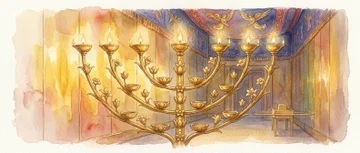
Their knops and their branches shall be of the same: all it shall be one beaten work of pure gold.
Translations
American King James Version, King James Version, KJV Cambridge Paragraph Bible
Their knops and their branches shall be of the same: all it shall be one beaten work of pure gold.
Their knobs and their branches shall be of the same: all of it shall be one beaten work of pure gold.
Their knops and their branches shall be of one piece with it: the whole of it one beaten work of pure gold.
Their knops and their branches shall be of one piece with it; the whole of it one beaten work of pure gold.
their knops and their branches are of the same, all of it one beaten work of pure gold;
Their knobs and their branches shall be of itself — all of one beaten work of pure gold.
their apples and their branches, of the same, shall be,—all of it, of one beaten work, of pure gold.
Berean Standard Bible, Majority Standard Bible
The buds and branches are to be all of one piece with the lampstand, hammered out of pure gold.
Their buds and their branches shall be of one piece with it, all of it one beaten work of pure gold.
The buds and the branches are to be made of the same metal; all together one complete work of hammered gold.
Their knops and their branches shall bee thereof. all this shalbe one beaten worke of pure golde.
Douay-Rheims (Challoner revision)
And both the bowls and the branches shall be of the same beaten work of the purest gold.
Pictures
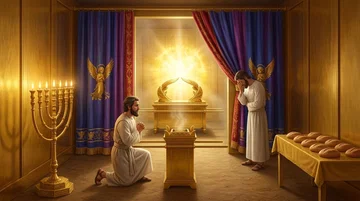
Cross-references 20 of 22
- Hebrews 9:2
For there was a tabernacle made; the first, where in was the candlestick, and the table, and the shewbread; which is called the sanctuary.
Lists the candlestick among the furnishings of the first tabernacle.
- Hebrews 8:5
Who serve unto the example and shadow of heavenly things, as Moses was admonished of God when he was about to make the tabernacle: for, See, saith he, that thou make all things according to the pattern shewed to thee in the mount.
The earthly candlestick follows the God-given pattern of heavenly things.
- Hebrews 9:24
For Christ is not entered into the holy places made with hands, which are the figures of the true; but into heaven itself, now to appear in the presence of God for us:
The earthly sanctuary is a figure of the true heavenly sanctuary.
- Exodus 25:40
And look that thou make them after their pattern, which was shewed thee in the mount.
The sanctuary furnishings were made according to the pattern shown to Moses on the mountain.
- Exodus 25:8-9
And let them make me a sanctuary; that I may dwell among them.
The sanctuary and its furnishings were made according to the pattern shown to Moses.
- Revelation 4:5
And out of the throne proceeded lightnings and thunderings and voices: and there were seven lamps of fire burning before the throne, which are the seven Spirits of God.
Seven lamps burn before God’s throne as the heavenly counterpart of the sanctuary lampstand.
- Exodus 37:17-22
And he made the candlestick of pure gold: of beaten work made he the candlestick; his shaft, and his branch, his bowls, his knops, and his flowers, were of the same:
Records the making of the candlestick according to these instructions.
- Numbers 8:4
And this work of the candlestick was of beaten gold, unto the shaft thereof, unto the flowers thereof, was beaten work: according unto the pattern which the LORD had shewed Moses, so he made the candlestick.
Both describe the candlestick as beaten gold, made according to the pattern shown to Moses.
- Zechariah 4:2
And said unto me, What seest thou? And I said, I have looked, and behold a candlestick all of gold, with a bowl upon the top of it, and his seven lamps thereon, and seven pipes to the seven lamps, which are upon the top thereof:
The vision’s candlestick is contrasted with the tabernacle candlestick.
- Revelation 1:20
The mystery of the seven stars which thou sawest in my right hand, and the seven golden candlesticks. The seven stars are the angels of the seven churches: and the seven candlesticks which thou sawest are the seven churches.
The golden candlesticks represent the seven churches.
- Hebrews 9:11
But Christ being come an high priest of good things to come, by a greater and more perfect tabernacle, not made with hands, that is to say, not of this building;
Christ ministers as High Priest in the greater, heavenly sanctuary.
- Hebrews 8:2
A minister of the sanctuary, and of the true tabernacle, which the Lord pitched, and not man.
The earthly sanctuary illustrates Christ’s priestly work in the true sanctuary in heaven.
- Leviticus 24:2-4
Command the children of Israel, that they bring unto thee pure oil olive beaten for the light, to cause the lamps to burn continually.
Pure olive oil fuels the lamps, which are kept burning continually.
- Hebrews 9:9
Which was a figure for the time then present, in which were offered both gifts and sacrifices, that could not make him that did the service perfect, as pertaining to the conscience;
The earthly sanctuary and its service are described as a figure.
- Exodus 25:31
And thou shalt make a candlestick of pure gold: of beaten work shall the candlestick be made: his shaft, and his branches, his bowls, his knops, and his flowers, shall be of the same.
The candlestick and its parts are made as one piece of beaten gold.
- 2 Chronicles 4:20
Moreover the candlesticks with their lamps, that they should burn after the manner before the oracle, of pure gold;
Both describe the temple’s lampstands as pure gold.
- 1 Chronicles 28:18-19
And for the altar of incense refined gold by weight; and gold for the pattern of the chariot of the cherubims, that spread out their wings, and covered the ark of the covenant of the LORD.
The temple’s design was given as a divine pattern.
- Exodus 25:9
According to all that I shew thee, after the pattern of the tabernacle, and the pattern of all the instruments thereof, even so shall ye make it.
gives pattern for sanctuary furniture
- Acts 7:44
Our fathers had the tabernacle of witness in the wilderness, as he had appointed, speaking unto Moses, that he should make it according to the fashion that he had seen.
Moses made the tabernacle according to the pattern he had seen.
- Exodus 27:20-21
And thou shalt command the children of Israel, that they bring thee pure oil olive beaten for the light, to cause the lamp to burn always.
The lamp is to burn continually and never go out.
Commentary
Each commentary is drawn from primary sources: the writings of Ellen G. White and Adventist pioneers and periodicals. Each commentary is separate. Its own words are not a quotation; follow the references to read the source passages.
Ellen G. White
11 sources
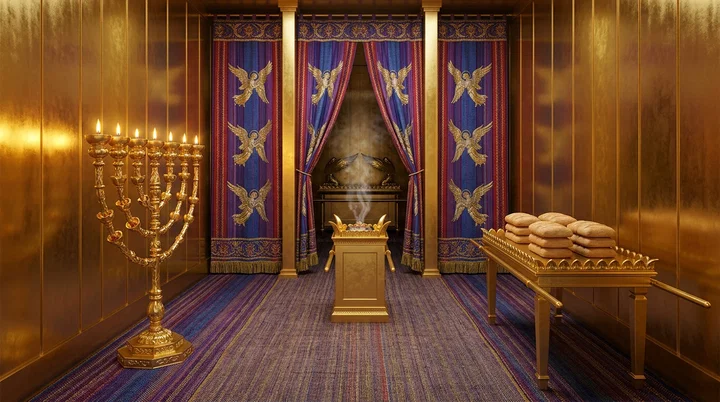
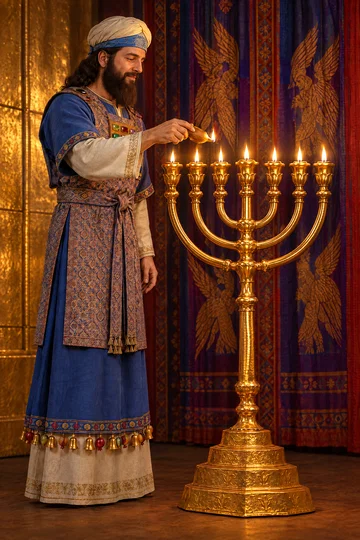
The knops and branches of the lampstand were of the same pure gold as the rest of it, formed together with it as one beaten work in a single piece.Ms 97, 1899, par. 3–41SP 274.1SG1 158.1ST Mar 4, 1903 The lampstand had seven lamps.RH Jul 21, 1851SG1 158.1LSEGW 100.1–3RH Nov 8, 1915EW 213.2–214.1 In the earthly tabernacle built by Moses as God's dwelling place, it belonged in the holy place or first apartment, standing on the south side.RH Nov 8, 1915EW 213.2–214.1GC 411.2–412.3GC88 411.1–412.3
Its counterpart stands in the holy place of the temple in the Holy City in heaven.RH Jul 21, 1851SG1 158.1LSEGW 100.1–3 There it stands together with the altar of incense and the table of shewbread, inside a first veil entered through a door, while beyond a second veil lies the Holy of Holies.RH Jul 21, 1851 Its lamps burned day and night, giving light to the sanctuary.1SP 274.1SG4 9.1RH Nov 8, 1915GC 411.2–412.3GC88 411.1–412.3 They lighted both apartments, which had no windows.1SP 274.1SG4 9.1ST Mar 4, 1903
Its light reflected from the gold furnishings and the richly colored curtains.1SP 274.1SG4 9.1 The furniture looked like pure gold, rich and glorious, reflecting the image of the one who entered.SG1 158.1EW 213.2–214.1 The skill and wisdom used to make the tabernacle were gifts from God to be used for His glory.Ms 97, 1899, par. 3–4
Sources
Pioneers and periodicals
58 sources
The verse requires that the knops and branches of the lampstand be of the same pure gold as the rest of it, all formed as one unified hammered work out of one solid piece, with a central standard and six branches making seven lamps in all.ST Jan 25, 1910ST Nov 19, 1912ST Apr 29, 1897ST Mar 11, 1886 It belongs to the detailed instructions for the tabernacle given to Moses on Mount Sinai, showing him the heavenly pattern for God's dwelling place among Israel.ST Jan 24, 1911RH Jan 6, 1853RH Dec 31, 1861RH Feb 11, 1858 The earthly lampstand in the first apartment answers to the seven lamps of fire burning before the throne in the true tabernacle where Christ ministers.ST Nov 11, 1897RH Dec 30, 1873ST Jul 2, 1896RH Sep 14, 1911RH Jul 27, 1876 Its seven branches represent God's church and the fullness of the seven Spirits of God, and being only a receptacle for oil, its light is the Spirit and the truth pointing to Christ the true Light.ST Nov 19, 1912ST Apr 29, 1897RH Jul 27, 1916STST Mar 10, 1898 The hard continuous beating that shaped it pictures how God refines and harmonizes those who belong to Him until character is formed and His light burns continually in the heart.ST Nov 19, 1912ST Apr 29, 1897
Form and Craftsmanship
The knops and branches of the lampstand were to be of the same pure gold as the rest of it, all formed together as one unified beaten or hammered work out of one solid piece.ST Jan 25, 1910ST Nov 19, 1912ST Apr 29, 1897RH Aug 4, 1863ST Feb 17, 1890 The skilled hammering shaped its flowers, bowls, knops and branches into one piece, with the gold first taken in the lump and then passed through refining and beating until each part exactly harmonized with the intended shape.ST Nov 19, 1912ST Apr 29, 1897 The whole was a substantial solid work weighing about a talent.RH Jan 6, 1853RH Mar 1, 1870ST Nov 21, 1892 Beaten out of one solid piece of pure gold with a central standard, it was worth over twenty-five thousand dollars.ST Nov 21, 1892
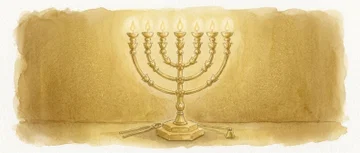
It had six branches coming out of the central standard, three on each side, artistically designed with most beautiful trimmings.ST Apr 29, 1897 With one lamp on top and six lamps on branches extending from its sides, this made seven branches and seven lamps in all.ST Mar 11, 1886ST May 10, 1883ST Mar 10, 1898ST Apr 1, 1913 The seven-branched form stood on the left as one entered the holy place.
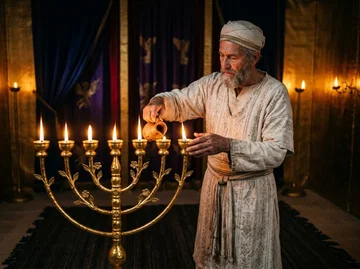
The lampstand stood in the first apartment or holy place of the tabernacle on the south side to the left of the entrance and of the door.RH Aug 4, 1863ST Nov 11, 1897STST Nov 21, 1892 Together with it in that apartment were the table of showbread on the north and the altar of incense before the second veil, while the second apartment held the ark.RH Aug 4, 1863ST Nov 11, 1897RH May 11, 1869 Its seven lamps held lamps supplied with pure olive oil, which the priest trimmed every morning and evening at the time incense was offered on the golden altar, to burn always and never go out.ST Apr 29, 1897ST Mar 11, 1886 Kept constantly and continually burning day and night, they gave perpetual light where all other artificial light and all natural light were excluded, to light both sacred apartments which had no windows, shining upon gold-plated walls, embroidered curtains, and glittering furniture.ST Apr 29, 1897
The tabernacle lampstand differed in form from the lampstand shown in Zechariah's vision, which had one bowl on top with seven lamps around it, each lamp fed by a single pipe from the bowl, the bowl being fed by two pipes from two olive trees that give forth oil itself.ST Jan 16, 1893ST May 10, 1883 It also differed from the later temple arrangement, where the single lampstand of the wilderness sanctuary was replaced by ten lampstands arranged on separate tables, five on each side of the first apartment.RH Mar 17, 1910 The seven-branched golden lampstand with its seven branches is represented among the temple spoils in the sculptures on the Arch of Titus, providing a historical illustration of the biblical description.RH Dec 8, 1859 Its presence among the objects taken from the holy place marks it as especially important and sacred among the vessels of the temple.ST May 14, 1902
Historical Setting and Context
The verse belongs to the detailed instructions for the tabernacle and its furniture given to Moses during his forty days and forty nights on Mount Sinai together with the tables of stone.RH Dec 31, 1861RH Feb 11, 1858 There he was shown the pattern of the ark in which to place the law written on stone, the mercy-seat to place over that law, the sanctuary in which to deposit the ark, and the ordination of the priesthood to minister in the sanctuary before the ark, all ordained just before God committed His own handwritten law into the hands of Moses.RH Dec 31, 1861RH Feb 11, 1858 It is part of the account of the sacred vessels, including the lampstand with its decorative knobs and branches made from the same single piece of pure gold by hammering, made according to the pattern shown on the mount.ST May 16, 1878ST May 27, 1889
The verse stands in Exodus 19-26 at the giving of the law of Ten Commandments upon Mount Sinai.ST Mar 3, 1914 It stands at the beginning of the first formal written code regulating the typical service, the sacrifices, the altar, the tabernacle, the priesthood and all else of that system, beginning with Exodus 25 and extending through Leviticus.ST May 20, 1875 That code follows immediately after the giving of the moral law, after the Ten Commandments spoken by God Himself were given and the covenant concerning them was solemnly ratified.ST May 20, 1875ST Apr 15, 1886 Moses received it up in the mount through several weeks and wrote it out in a book, given through angels in the hand of a mediator, and it is to the ceremonial system what the Decalogue is to the moral system, an epitome of everything relating to the types, afterward enlarged by many explanations and illustrations of how it was to be applied and by further light added through teachers and prophets until Christ.ST May 20, 1875 The fuller sanctuary description spans Exodus 25-31 and 25-40, recorded chiefly in Exodus 25-30 after the people asked Moses to speak with God for them, and distinguished from the Ten Commandments spoken by God and written on the stone tablets.ST Mar 11, 1886ST Jun 4, 1885ST Nov 14, 1892ST Apr 15, 1886
The sanctuary was to be built from willingly offered gold, silver, brass, acacia wood, fine linen, goat's hair and other materials as God's dwelling place among Israel in the midst of the camp, that He might dwell among them and reveal more fully His great love.ST Mar 11, 1886ST Jun 4, 1885ST Jul 8, 1930RH Oct 15, 1901 It was constructed exactly as directed by Spirit-empowered builders Bezalel and Oholiab with other devoted men and women, so the building might be properly erected and the work properly done.ST Jan 27, 1909 When it was completed wonderful blessing and glory came down upon the congregation and the building.ST Jan 27, 1909 The tabernacle Moses built in the wilderness of Sinai was the sanctuary of the first covenant from Sinai to Christ, with a holy and a most holy place and various vessels of service, giving the distinct and plainly defined basis for inquiry about the sanctuary.ST Dec 3, 1874ST Dec 8, 1881ST Jun 14, 1883 Its earthly center was the holy of holies where the ark of the covenant holding God's holy law rested beneath the mercy seat with the shekinah over it, while the golden candlestick stood in the first apartment or holy place together with the table of showbread and the altar of incense.RH Aug 4, 1863ST Jun 19, 1907ST Jan 27, 1909
The verse does not form part of the fourth commandment, the grand law of the Sabbath, or of the Sabbath's original institution.RH Mar 21, 1865 It belongs with the precepts for building the tabernacle and the manner of setting it up given from the time Moses brought down the second tables until the close of Exodus, together with the laws respecting the manna and the manner of encamping about the tabernacle that grew out of the Sabbath being entrusted to the Hebrews and were peculiar to that nation only while they were in the wilderness.RH Mar 21, 1865 It falls within the laws given through Moses, including ceremonial regulations and revealed offerings, sacrifices, and types whose substance would be seen in the new dispensation. Its command to make beautiful sanctuary ornaments and objects for worship does not violate the command against images, since they were made according to God's instruction for proper use to glorify God and not to be worshiped.ST Jun 3, 1908 The detailed instruction for building the sanctuary served as an object lesson on God's plan of government and salvation from sin and about Christ's priestly service, testifying of Christ throughout Moses' writings.ST Nov 23, 1904RH Dec 31, 1901 It belonged to the preparation for its services, through which God made His plan known to His people and gave them a part in cooperating with Him, where the penitent came confessing sins and sending them through the blood of the victim and the ministration of the priest into the sanctuary, where atonement was made and sins in figure put away.RH Oct 15, 1901
Type of Heavenly Sanctuary
The lampstand was made after the express pattern shown to Moses on the mount, as an earthly model of heavenly things whose furnishings and service pointed to Christ and his priestly service.RH Jan 6, 1853ST Jun 26, 1907ST Nov 11, 1897RH Dec 30, 1873ST Nov 23, 1904 It belonged to the description of the ancient tabernacle built for the ministry of sacrifices and offerings, which typified the great temple in heaven where Jesus now ministers.ST Jan 24, 1911ST Jun 26, 1907ST Nov 11, 1897 The sanctuary was designed as an object lesson about that priestly service, with its seven lamps identified as furnishings of the first apartment serving as a pattern for the heavenly sanctuary.RH Jan 6, 1853RH Dec 30, 1873ST Nov 23, 1904 Earthly things could not fully represent heavenly realities, and its sacrifices and offerings passed away when Christ died once for all.ST Jan 24, 1911ST Jun 19, 1907
The earthly lampstand in the first apartment corresponds to a reality in the true greater tabernacle pitched by God, identified as the seven lamps of fire burning before the throne seen in the heavenly temple where Jesus now ministers.ST Nov 11, 1897RH Dec 30, 1873ST Jul 2, 1896ST Nov 21, 1892 It was a candlestick of pure gold with seven lamps standing in the first apartment with the table of showbread and the altar of incense, made after the pattern of the sanctuary in heaven, so what Israel built points to corresponding articles in the sanctuary pitched by God.RH Jul 21, 1851ST Nov 11, 1897ST Nov 21, 1892 The seven lamps before God's throne in Revelation 4:1-5 are the corresponding heavenly article, representing the seven lamps of fire burning before the throne of God in heaven.ST Jul 2, 1896ST Nov 21, 1892RH Jul 29, 1875 The candlestick with seven lamps made of pure gold stands in the Holy Place of the temple in the Holy City in heaven, together with the altar of incense and the table of shewbread inside a first veil entered through a door, while beyond a second veil lies the Holy of Holies.RH Jul 21, 1851ST Nov 11, 1897
That heavenly candlestick belongs to the first apartment of the heavenly sanctuary and is never seen in the most holy place.RH Sep 14, 1911RH Jul 27, 1876 The candlestick in the sanctuary's first apartment is the earthly pattern for the seven lamps seen before God's throne in Revelation 4, and those lamps identify that scene with the first apartment of the heavenly sanctuary where Christ began His ministry.RH Sep 14, 1911RH Jul 27, 1876 Its prominence in the throne scene where God the Father sits and Christ ministers in His presence proves Christ ministered in the first apartment of the heavenly sanctuary after His ascension, doing the general work of that apartment and not the judgment work of blotting out sins.RH Sep 14, 1911RH Jul 27, 1876
The sanctuary lampstand is one lampstand with seven branches, distinct from the seven separate lampstands symbolizing the seven churches, while its heavenly counterpart is the seven lamps of fire before God's throne.ST Nov 21, 1892RH Jul 29, 1875 Unlike the seven separate lampstands in Revelation, its branches belong to a single lampstand.ST Nov 21, 1892RH Jul 29, 1875 As part of the type it must have a corresponding reality in the antitypical sanctuary, with the candlestick treated as part of the typical structure having a corresponding reality in the true sanctuary.ST Jun 19, 1907RH Feb 18, 1858RH Oct 2, 1856 Neither Canaan, the whole earth, the church, nor heaven and earth together can be that sanctuary because they provide nothing answering to the lampstand and the other furniture and continual service, including the two apartments, the altar of incense, the ark of the covenant, and the continual service of the earthly priesthood; the earth itself is not its antitype and the candlestick is an item of that sanctuary, not an image of the earth.RH Feb 18, 1858RH Oct 2, 1856ST May 27, 1880
The sanctuary and its service belonged to the first covenant and to a ministration of condemnation and death whose sacrifices could not take away sins or make people perfect.ST Jan 24, 1911ST Aug 5, 1889 Its ordinances were related to sin as part of that ministration, connected with the earthly sanctuary and its service under the first covenant.ST Jan 24, 1911ST Aug 5, 1889 Its sacrifices and offerings passed away when Christ died once for all.ST Jan 24, 1911ST Aug 5, 1889
Symbolism and Doctrine
The seven branches are God's church, and the seven-branched lampstand is the seven Spirits of God and the fullness of God's Spirit.ST Nov 19, 1912RH Jul 27, 1916STST Aug 19, 1913 It stood on the south side of the holy place, on the left as one entered, beaten out of one piece of solid gold with its knobs and branches of the same gold as the rest, and its lamps were kept constantly burning.ST Nov 19, 1912RH Jul 27, 1916ST It was made according to a heavenly pattern as an earthly model of heavenly things, and its oil is the Spirit of God while its light is the truth that God's people are to show to the world.ST Nov 19, 1912ST Aug 19, 1913 The lampstand is also understood as the church itself, with its oil representing the Spirit of God.
The lampstand gave no light of itself but was simply a receptacle for light, placed where all other artificial light was excluded in order to give perpetual light.ST Apr 29, 1897 It had six branches coming out of its sides, three on each side, artistically designed with most beautiful trimmings, holding lamps supplied with pure olive oil which the priest trimmed every morning and evening at the time incense was offered on the golden altar, so that they would burn always and never go out.ST Apr 29, 1897 Its constant light called minds to Christ, the true Light who lights every person.ST Apr 29, 1897ST Mar 10, 1898 The gold was first taken in the lump and then passed through refining and beating until it was made exactly in the shape intended, each part in exact harmony with the divine ideal, otherwise it was of no service.ST Apr 29, 1897
Its seven small jets of light burned night and day as an early reminder to anyone entering that he was approaching the dwelling and presence of Jehovah.ST Mar 21, 1911RH Feb 10, 1910 It was beaten out of one solid piece of gold and kept burning day and night to give light to both sacred apartments because they had no windows to admit light.ST Mar 21, 1911RH Feb 10, 1910 Its seven lamps shone upon the gold-plated walls and the richly embroidered blue and purple and scarlet curtains with shining cherubim, while the table of showbread and the altar of incense glittered like burnished gold.ST Mar 21, 1911 Its light reflected from the gold-plated walls contributed to the magnificence and glory of the sanctuary.ST Mar 21, 1911ST Apr 1, 1913
Application to Believers
The hammering that shaped the knops and branches of the lampstand out of the same gold as the rest of it, joined together as one piece, illustrates how God shapes those who belong to His church.ST Nov 19, 1912ST Apr 29, 1897 The skilled blows that formed its flowers and bowls and beautiful trimmings made an earthly model of heavenly things, and its seven branches, six coming out three on each side with lamps supplied with pure olive oil, represent God's church.ST Nov 19, 1912ST Apr 29, 1897 The gold was first taken in the lump and then passed through various processes of refining and beating until it was made exactly in the shape intended, each part exactly in harmony with the divine ideal, otherwise it was of no service.ST Nov 19, 1912ST Apr 29, 1897 Placed where all other artificial light was excluded to give perpetual light, trimmed by the priest every morning and evening and made to burn always and never go out, it gave no light of itself but was simply a receptacle for the light.ST Apr 29, 1897
The beaten work of pure gold for the vessels of the sacred sanctuary pictures how character is formed in the hard, stern school of life. The vessels were shaped out of pure gold by the hard, continuous hammering of a skilled workman appointed by God to produce the finished article, so lives are molded and shaped by contact with hard problems and hard people, while gentle folk also put on the soft tints. God directs a person's goings and chooses surroundings and the persons who take part in the schooling, while a person's part is to shape himself to circumstances, learn each day's lesson, and meet people where they are to help and be helped, which is true education.
The explicit direction for the sanctuary God told Israel to build had as its center the holy of holies where the ark holding God's holy law was placed, and it was afterward carried out exactly as directed.ST Jan 27, 1909 God placed His Spirit upon the builders Bezalel and Oholiab together with other devoted men and women so the building might be properly erected and the work properly done, showing He is just as willing to bless consecrated workers in material things as workers in spiritual things.ST Jan 27, 1909 Wonderful blessing and glory came down upon the congregation and the building when it was completed.ST Jan 27, 1909 The lampstand with seven branches burning perpetually before the Lord illustrates what is to illumine the hearts of those who accept the Gospel, with Christ as the light of the world whose life shines in the heart to give knowledge of God, bringing His cleansing presence to abide in the inner life with a light that never grows dim and never ceases burning.
Sources