Exodus 27:6
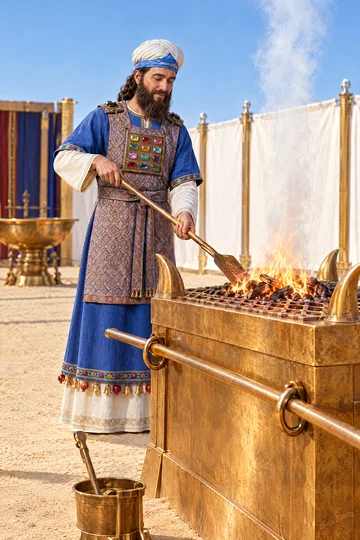
And thou shalt make staves for the altar, staves of shittim wood, and overlay them with brass.
Translations
And you shall make staves for the altar, staves of shittim wood, and overlay them with brass.
King James Version, KJV Cambridge Paragraph Bible
And thou shalt make staves for the altar, staves of shittim wood, and overlay them with brass.
And thou shalt make staffs for the altar, staffs of shittim wood, and overlay them with brass.
Revised Version, American Standard Version
And thou shalt make staves for the altar, staves of acacia wood, and overlay them with brass.
'And thou hast made staves for the altar, staves of shittim wood, and hast overlaid them [with] brass.
And thou shalt make staves for the altar, staves of acacia-wood, and overlay them with copper.
And thou shalt make staves for the altar, staves of acacia wood,—and shalt overlay them with copper.
Berean Standard Bible, Majority Standard Bible
Additionally, make poles of acacia wood for the altar and overlay them with bronze.
You shall make poles for the altar, poles of acacia wood, and overlay them with bronze.
And make rods for the altar, of hard wood, plated with brass.
Also thou shalt make barres for the altar, barres, I say, of Shittim wood, and shalt couer them with brasse.
Douay-Rheims (Challoner revision)
Thou shalt make also two bars for the altar of setim wood, which thou shalt cover with plates of brass:
Pictures
Cross-references
- Hebrews 8:5
Who serve unto the example and shadow of heavenly things, as Moses was admonished of God when he was about to make the tabernacle: for, See, saith he, that thou make all things according to the pattern shewed to thee in the mount.
The earthly sanctuary was made according to the pattern shown Moses on the mountain.
- Exodus 25:8-9
And let them make me a sanctuary; that I may dwell among them.
God commands the sanctuary and its furnishings to be made according to the pattern shown Moses.
- Acts 7:44
Our fathers had the tabernacle of witness in the wilderness, as he had appointed, speaking unto Moses, that he should make it according to the fashion that he had seen.
The tabernacle furnishings were made according to the pattern shown to Moses.
- Exodus 38:1-7
And he made the altar of burnt offering of shittim wood: five cubits was the length thereof, and five cubits the breadth thereof; it was foursquare; and three cubits the height thereof.
parallel account of altar construction
- Exodus 40:6
And thou shalt set the altar of the burnt offering before the door of the tabernacle of the tent of the congregation.
Places the burnt offering altar before the tabernacle door, in the sanctuary court.
- Hebrews 9:24
For Christ is not entered into the holy places made with hands, which are the figures of the true; but into heaven itself, now to appear in the presence of God for us:
The earthly sanctuary is a figure of the true heavenly holy place.
- Exodus 25:40
And look that thou make them after their pattern, which was shewed thee in the mount.
commands building after shown pattern
- Exodus 29:37
Seven days thou shalt make an atonement for the altar, and sanctify it; and it shall be an altar most holy: whatsoever toucheth the altar shall be holy.
Declares the altar most holy.
- Exodus 36:1-7
Then wrought Bezaleel and Aholiab, and every wise hearted man, in whom the LORD put wisdom and understanding to know how to work all manner of work for the service of the sanctuary, according to all that the LORD had commanded.
Skilled workers carry out the instructions for the sanctuary.
- John 1:29
The next day John seeth Jesus coming unto him, and saith, Behold the Lamb of God, which taketh away the sin of the world.
Altar animals point to the Lamb who takes away sin.
- Hebrews 9:1-5
Then verily the first covenant had also ordinances of divine service, and a worldly sanctuary.
Describes the earthly sanctuary and its furnishings.
- Exodus 25:1-8
And the LORD spake unto Moses, saying,
Describes the sanctuary Israel was told to build.
- Hebrews 7:27
Who needeth not daily, as those high priests, to offer up sacrifice, first for his own sins, and then for the people’s: for this he did once, when he offered up himself.
The altar’s sacrifices connect with Christ offering himself once.
Commentary
Each commentary is drawn from primary sources: the writings of Ellen G. White and Adventist pioneers and periodicals. Each commentary is separate. Its own words are not a quotation; follow the references to read the source passages.
Ellen G. White
1 source
The command to fashion carrying poles of acacia wood and overlay them with bronze belongs to the instructions God gave to Moses for building the tabernacle.Ms 97, 1899, par. 3–4 It stands within a body of exact specifications governing the materials, construction, and furnishing of that sacred structure.Ms 97, 1899, par. 3–4 Those detailed requirements show that the skill and wisdom exercised in the work were gifts from God.Ms 97, 1899, par. 3–4 They were entrusted to the workers to be used for His glory.Ms 97, 1899, par. 3–4
Sources
Pioneers and periodicals
27 sources
The command requires carrying poles for the altar of burnt offering to be formed of acacia wood and covered with brass, made exactly after the pattern shown to Moses and not left to human invention.ST May 20, 1880ST Feb 17, 1890ST May 27, 1889 That altar was the large square brazen altar overlaid with brass, standing in the court before the sanctuary entrance where sacrifices were slain, burned and their blood poured out at its base.RH Feb 11, 1858RH Jan 6, 1853ST Aug 19, 1913 The poles and the altar were made after the pattern shown by Christ of the heavenly sanctuary itself, which has two holy places with the ark of the law in the second apartment.RH Jan 6, 1853ST Jun 26, 1907ST May 27, 1889 The wilderness sanctuary built to that pattern was God's dwelling among journeying Israel, easily taken down and set up, given as an object-lesson of His government, His dealing with sin, and Christ's power to forgive and transform.ST Jun 19, 1907ST Jun 26, 1907 It is where the sinner must first come with confession and shed blood for acceptance, and where the offering consumed by fire points to Christ the Lamb foreordained and slain from the foundation of the world, who poured out His sinless life to cleanse and make sinners acceptable to God.ST Apr 1, 1897
Setting and Construction
The verse belongs to the detailed instructions for the tabernacle and its furniture given to Moses in the mount where he remained forty days and nights in the presence of Divinity.ST Mar 25, 1889ST Jan 31, 1911ST Jun 19, 1907 Those instructions are recorded in Exodus 25 to 31, also described as Exodus 25 to 30.ST Mar 25, 1889ST Feb 17, 1890ST Dec 10, 1896 They form part of the chiefly legislative second division of Exodus in chapters 19-40 that bound the ransomed people to Jehovah by solemn covenant and provided legal ordinances for their guidance to preserve them as a peculiar treasure, a kingdom of priests, and a holy nation. In chronological order they stand between Exodus 19-32 and the building and setting up in Exodus 33-40, and were complied with in Exodus 35-40.ST Feb 17, 1890ST Dec 10, 1896 They were afterward carried out in the preparation and fitting of the tabernacle that was set up on the first day of the first month of the second year from the Exodus.
The verse commands that carrying staves or poles be made for the altar of shittim wood, that is acacia wood, and overlaid or covered with brass.ST Jul 8, 1930RH Jan 27, 1916RH Mar 1, 1870RH Sep 19, 1912 They were to be made according to the pattern shown to Moses on the mountain, and were not left to man's fancy as to material and overlay.ST Feb 17, 1890ST May 27, 1889ST Sep 17, 1874 The work was to be carried out by men specially endowed with wisdom, and the directions were not to be disregarded.ST Feb 17, 1890 The altar itself was also overlaid with brass.RH Mar 1, 1870
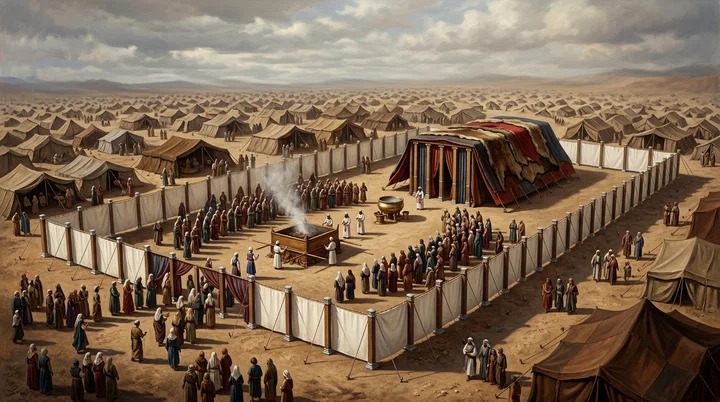
The altar to which the staves belong is the altar of burnt offering, also called the brazen altar.RH Jan 6, 1853RH Mar 28, 1854ST Apr 1, 1897RH Mar 1, 1870 It was made of acacia boards and overlaid with brass, about nine feet square and nearly or about five and one-half feet in height.RH Jan 6, 1853RH Mar 28, 1854RH Sep 19, 1912 It was square on top with horns at each corner.ST Apr 1, 1897 The tabernacle itself was a structure of extraordinary magnificence formed of upright boards overlaid with gold, thirty cubits long and about ten in width and ten in height, with five pillars of shittim wood at the east entrance.RH Feb 11, 1858
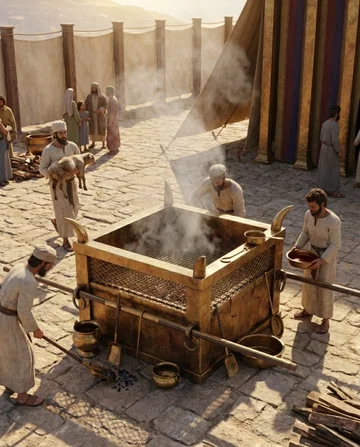
The altar stood without the door of the tabernacle before the sanctuary entrance in the court, in the eastern open space at the entrance of the court.ST May 20, 1880RH Jan 6, 1853RH Mar 28, 1854ST Apr 1, 1897 The laver also stood outside the sanctuary building.RH Mar 28, 1854 It was used, as its name implies, for offering up sacrifices to God, where sacrificial victims were slain, certain offerings burned and their blood poured out at its base.RH Jan 6, 1853ST Aug 19, 1913STRH Mar 28, 1854 It was in use the year round for killing whole burnt offerings, peace offerings, meat offerings and other offerings, where beasts and other articles to be offered were brought.ST Apr 1, 1897
Type of Heaven
The altar of burnt offering with its staves was to be made after the pattern the Lord showed to Moses on the mount, and that pattern was the heavenly sanctuary and its vessels shown by Jesus Christ, the Son of God and minister of the true tabernacle.RH Jan 6, 1853ST May 27, 1889ST Sep 17, 1874RH Mar 28, 1854RH Aug 12, 1873 That pattern, and therefore the heavenly temple itself, consists of two holy places, with the ark containing the tables of the law to be placed in the second apartment.RH Jan 4, 1870 The altar thus described stood without the door of the tabernacle, measured about nine feet square and nearly or about five and one-half feet in height, was overlaid with brass, and was used, as its name implies, for offering up sacrifices to God.RH Jan 6, 1853RH Mar 28, 1854 The directions for the wilderness sanctuary and its furnishings to which the staves belong present the sanctuary as made according to God's instructions as a dwelling place among Israel that He might dwell among them, and as a type of the heavenly sanctuary whose objects and rites point to Christ and His power to forgive sin and transform character.ST Jun 26, 1907
The wilderness earthly sanctuary built by Israel was where their worship centered.ST Jun 19, 1907 It was made when God instructed Moses to have Israel bring willing offerings of gold, silver, brass, shittim wood and other materials to make a sanctuary that He might dwell among them, and the priests might minister in His presence.ST Nov 14, 1892RH Jan 4, 1870 It was built with strict regard to proportion and beauty to impress every beholder with the importance, purity and sacredness of its worship, and it was adapted to Israel's journeying so that it could be easily taken down when the camp moved forward and set up again where the pillar of cloud indicated the camp should halt.ST Nov 14, 1892 It was a divinely given object-lesson through which Israel was to learn the plan of salvation, setting forth God's plan of government and how He deals with those who have sought to dethrone Him by sin, even the plan devised from eternity for salvation from sin. As Priest upon the throne, still King while executing the office of Priest in dealing with sinners, God sets forth in the sanctuary provision that eternal plan.
God is particular in that which pertains to His worship, as shown by the detailed directions for building recorded in Exodus 25 to 31, given to Moses in the mount where he remained forty days and nights in the presence of Divinity after the covenant with Israel had been made and ratified.ST Mar 25, 1889 That interview was concluded by giving the law written on two tables of stone graven by the finger of God, since the object of all worship, all services, and all remedies is to bring men into harmony with the holy law of God.ST Mar 25, 1889 God's people are so intimately related to the sanctuary that they cooperate with God in His work through Christ in the sanctuary, so that the divine and the human cooperate at every step in making a sanctuary that He may dwell among them.
The ancient tabernacle was built for ministry involving sacrifices and offerings, its services passed away when Christ died, and it typified the heavenly temple where Jesus now ministers.ST Jan 24, 1911 The verse belongs to the law given through Moses, which included rules about sacrifices and offerings as well as moral, civil, health, and ceremonial laws, and which revealed offerings, sacrifices, and types that served as shadows of the substance of the new dispensation. It belongs to the description of the worldly sanctuary and its service connected with the first covenant.ST Aug 5, 1889 It is among the instructions for ceremonies and sanctuary worship given to Moses, rather than the Ten Commandments spoken directly by God from Sinai, directing that the altar's carrying poles be made of shittim wood and covered with brass.ST Apr 15, 1886 The priestly rites and arrangements of Exodus 27 were entrusted to Aaron and his sons, and those outside the priesthood were not to perform priestly services unless the Lord specifically directed them.ST Mar 3, 1914
Salvation and Response
The altar of burnt offering stands at the entrance of the court, square on top with horns at each corner, in use the year round for killing whole burnt offerings, peace offerings, meat offerings and other offerings.ST Apr 1, 1897 It is where the sinner must first come to find peace, joy, forgiveness and acceptance, bringing an animal to the door, confessing sin upon its head, shedding its blood and having the priest lay it upon the altar for fire from heaven to consume in token of acceptance.ST Apr 1, 1897 The blood represents life and is poured on the ground all around the altar and covered with dust, never eaten.ST Apr 1, 1897 Every animal has a double meaning, both the forfeited life of the man whose sins are transferred to the animal and the life of the spotless Lamb who takes away the sins of the world.ST Apr 1, 1897
The offering consumed to show God accepts it teaches Christ, the Lamb of God seen by Abel and Isaiah as led to the slaughter, foreordained before the foundation of the world yet slain from the foundation of the world.ST Apr 1, 1897 He gave His life freely and was offered on God's altar for man, accepted by the fire of God's love and the voice declaring pleasure in Him because He always did what pleases God.ST Apr 1, 1897 He poured out His blood freely for humanity instead of using it for Himself, and poured out His sinless soul unto death, giving Himself for sins and being made sin.ST Apr 1, 1897 Through offering their own lives to God sinners may thus be cleansed, purified, made the righteousness of God and made acceptable to God.ST Apr 1, 1897
The directions for making the altar and its carrying poles of shittim wood covered with brass belong to a chapter connected with the question of one's attitude of heart toward God's sanctuary.RH Jan 27, 1916
Sources