Exodus 28:17
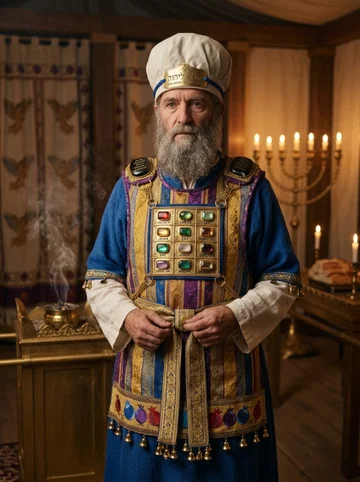
And thou shalt set in it settings of stones, even four rows of stones: the first row shall be a sardius, a topaz, and a carbuncle: this shall be the first row.
Translations
And you shall set in it settings of stones, even four rows of stones: the first row shall be a sardius, a topaz, and a carbuncle: this shall be the first row.
King James Version, KJV Cambridge Paragraph Bible, Webster Bible
And thou shalt set in it settings of stones, even four rows of stones: the first row shall be a sardius, a topaz, and a carbuncle: this shall be the first row.
Revised Version, American Standard Version
And thou shalt set in it settings of stones, four rows of stones: a row of sardius, topaz, and carbuncle shall be the first row;
'And thou hast set in it settings of stone, four rows of stone; a row of sardius, topaz, and carbuncle [is] the first row;
And thou shalt set in it settings of stones — four rows of stones: [ one] row, a sardoin, a topaz, and an emerald — the first row;
And thou shalt set therein a setting of stones, four rows of stones,—one row—a sardius, a topaz and an emerald, the first row;
Berean Standard Bible, Majority Standard Bible
And mount on it a setting of gemstones, four rows of stones:
In the first row there shall be a ruby, a topaz, and an emerald;You shall set in it settings of stones, four rows of stones: a row of ruby, topaz, and beryl shall be the first row;
And on it you are to put four lines of jewels; the first line is to be a cornelian, a chrysolite, and an emerald;
Then thou shalt set it full of places for stones, euen foure rowes of stones: the order shalbe this, a rubie, a topaze, and a carbuncle in the first rowe.
Douay-Rheims (Challoner revision)
And thou shalt set in it four rows of stones: in the first row shall be a sardius stone, and a topaz, and an emerald:
Pictures
Cross-references
- Revelation 21:19-20
And the foundations of the wall of the city were garnished with all manner of precious stones. The first foundation was jasper; the second, sapphire; the third, a chalcedony; the fourth, an emerald;
The city’s twelve foundations are made of precious stones like those of the breastplate.
- Exodus 28:30
And thou shalt put in the breastplate of judgment the Urim and the Thummim; and they shall be upon Aaron’s heart, when he goeth in before the LORD: and Aaron shall bear the judgment of the children of Israel upon his heart before the LORD continually.
The breastplate’s stones and the Urim and Thummim relate to receiving God’s answers.
- Hebrews 8:5
Who serve unto the example and shadow of heavenly things, as Moses was admonished of God when he was about to make the tabernacle: for, See, saith he, that thou make all things according to the pattern shewed to thee in the mount.
The earthly sanctuary follows the pattern of heavenly things shown to Moses.
- Exodus 28:29
And Aaron shall bear the names of the children of Israel in the breastplate of judgment upon his heart, when he goeth in unto the holy place, for a memorial before the LORD continually.
The high priest bears Israel’s names on the breastplate before the Lord.
- Exodus 25:7
Onyx stones, and stones to be set in the ephod, and in the breastplate.
Lists stones to be set in the breastplate among the sanctuary materials.
- Revelation 4:3
And he that sat was to look upon like a jasper and a sardine stone: and there was a rainbow round about the throne, in sight like unto an emerald.
The throne-sitter’s jasper and sardius resemble stones from the breastplate.
- Exodus 28:2-4
And thou shalt make holy garments for Aaron thy brother for glory and for beauty.
God specifies garments for the priests’ service.
- Ezekiel 28:13
Thou hast been in Eden the garden of God; every precious stone was thy covering, the sardius, topaz, and the diamond, the beryl, the onyx, and the jasper, the sapphire, the emerald, and the carbuncle, and gold: the workmanship of thy tabrets and of thy pipes was prepared in thee in the day that thou wast created.
Jasper is listed among the stones adorning the king of Tyre.
- Exodus 25:8-9
And let them make me a sanctuary; that I may dwell among them.
The sanctuary and its furnishings were made according to the pattern shown to Moses.
Commentary
Each commentary is drawn from primary sources: the writings of Ellen G. White and Adventist pioneers and periodicals. Each commentary is separate. Its own words are not a quotation; follow the references to read the source passages.
Ellen G. White
16 sources
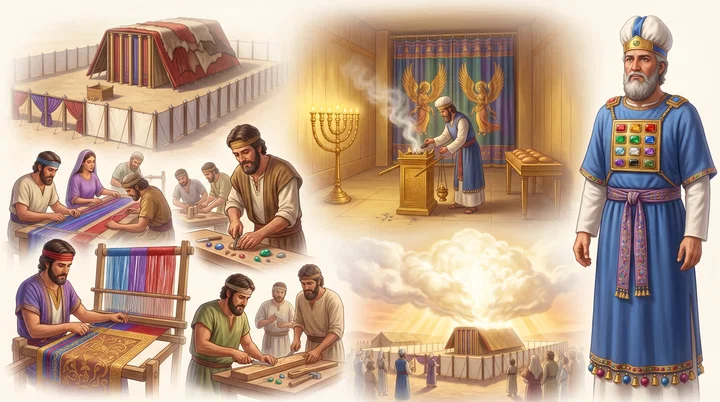
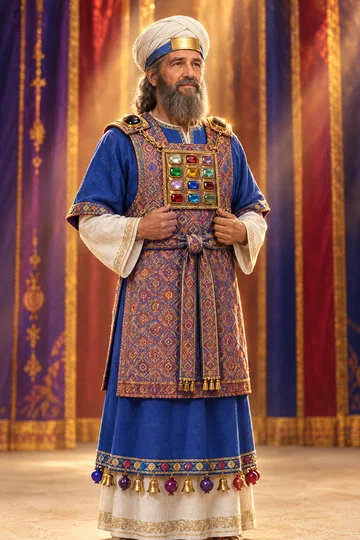
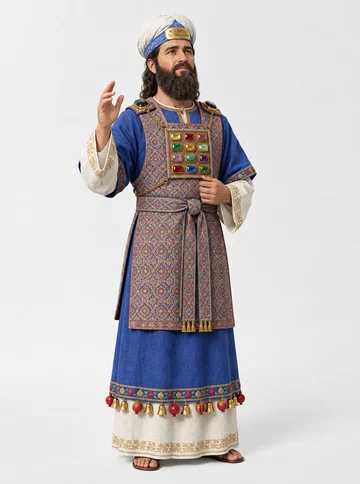
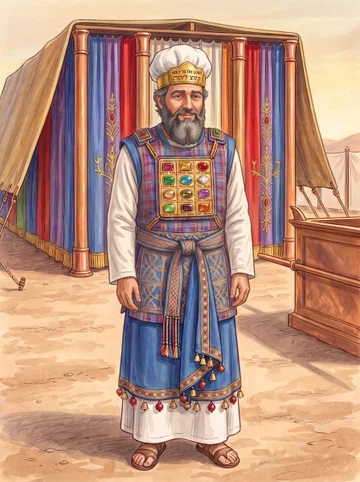
Exodus 28:17 prescribes the first of four rows of stones on Aaron's high priestly breastpiece, placing the sardius, topaz, and carbuncle in that first row.SG4 101.11SP 398.1Ms 56, 1900, par. 11–12 The breastpiece was a rich and beautiful work bordered with stones set in gold and engraved with the names of Israel's twelve tribes.SG4 101.11SP 398.1 Set with precious stones, it served as a means by which messages from Jehovah were received, with God's approval shining upon the stones and His disapproval shadowing them.1SP 398.2–399.1ST Feb 21, 19113SP 166.2–167.1 The care ordered for this sacred dress taught reverence for God and the holiness of His service, since the apparel of those who officiate before Him may honor or dishonor Him.GW92 161.12T 610.3–612.1 The earthly breastplate is reflected in the breastplate Jesus wears as He ministers in the heavenly sanctuary, richly made and glittering with letters like names engraved upon it.EW 213.1SG1 158.1 The many distinct stones forming one breastplate show how people with different characteristics belong to one united church family, each stone with its own light adding beauty to the whole.Ms 105, 1900, par. 6Lt 53, 1900, par. 9–12
Breastplate and Its Stones
The verse prescribes the first of four rows of stones on Aaron's high priestly breastpiece, placing the sardius, topaz, and carbuncle in that first row.SG4 101.11SP 398.1Ms 56, 1900, par. 11–123SP 166.2–167.1ST Oct 7, 1886 The breastplate was a rich, beautiful work bordered with stones, with its precious stones set in gold and engraved with the names of Israel's twelve tribes.SG4 101.11SP 398.1 The materials of those precious stones were the same as those of the twelve foundations of the city of God.1SP 398.1
The breastpiece also had two larger stones at its sides whose signs revealed God's will: light shining on the right stone signified favor and success, while clouding over the left signified disapproval and refusal.1SP 398.2–399.1 Set with precious stones, the breastplate served as a means by which messages from Jehovah were received.1SP 398.2–399.1ST Feb 21, 1911 God's glory shone upon the stones and His disapproval shadowed them.1SP 398.2–399.13SP 166.2–167.1ST Oct 7, 1886
After Christ's death God's presence no longer overshadowed the earthly mercy seat and the most holy place was exposed, so the stones no longer received those signs of shining or shadowing.3SP 166.2–167.1ST Oct 7, 1886
Reverence in Sacred Service
This verse is part of God's specific instructions for the priests' garments for service in the holy place.GW92 162.2 Those instructions provided sacred clothing authorized for the high priest's service before God, suited to the work of the priestly office.GW92 162.2ST Jul 28, 1881
The God who moves the world and sustains life and health gave special directions about everything connected with His service.GW92 161.1 Even the details of sacred dress were to be carefully ordered.GW92 161.12T 610.3–612.1 He requires order in everything and especially cleanliness.GW92 161.1
The apparel of those who officiate before Him may honor or dishonor Him.GW92 161.1 The prescribed care in their appearance helped teach the people reverence for God and the holiness of His service.2T 610.3–612.1 The breastplate's materials and workmanship did not make it sacred apart from its use in the service God had directed.ST Jul 28, 1881
Heavenly Ministry and Application
The breastplate commanded here is reflected in the one Jesus wears as He ministers in the heavenly sanctuary, richly made and suspended from His shoulders.EW 213.1SG1 158.1 It shines like diamonds and glitters with letters that look like names engraved upon it.EW 213.1SG1 158.1 After ending His ministry in the holy place, He entered the second apartment in 1844 wearing these priestly garments.EW 213.1
Each stone in the breastplate had its own light and significance, bearing an important message from God.Ms 105, 1900, par. 6Lt 53, 1900, par. 9–12 Together the distinct stones added beauty to the whole breastplate.Ms 105, 1900, par. 6Lt 53, 1900, par. 9–12 The many distinct stones forming one breastplate illustrate how people with different characteristics can belong to one united church family.Ms 105, 1900, par. 6Lt 53, 1900, par. 9–12
The detailed directions for Aaron's garments show that God cared about the clothing of those who served Him.Ms 56, 1900, par. 11–12 Aaron's robes were symbolic, and the clothing worn by Christ's followers should likewise represent Him.Ms 56, 1900, par. 11–12 The verse is part of Christ's instruction in educating His church in the wilderness, giving the outline of God's expressed will and the highest knowledge after the divine similitude.Ms 92, 1899, par. 10–12 It presents the higher education that trains mind, body, and morals for present and eternal good.Ms 92, 1899, par. 10–12 It tells God's covenant with the people He is seeking to save today, the terms of salvation, and the education of most value today.Ms 92, 1899, par. 10–12
Sources
Pioneers and periodicals
54 sources
Exodus 28:17 prescribes the first row of the high priest's breastpiece as sardius, topaz and carbuncle, part of four rows of three stones making twelve in all with sardius first and jasper last.ST May 13, 1908ST May 13, 1897ST Jun 4, 1885RH Aug 19, 1851 Each stone bore the name of one of the children of Israel, carried over the high priest's heart as he ministered before the Lord.ST May 13, 1908ST Dec 17, 1912 The direction was given to Moses on the mount as part of the exact pattern for the tabernacle and its worship after Israel's deliverance from Egypt, built to teach the plan of salvation so God might dwell among them.ST Oct 29, 1894ST Mar 25, 1889ST Jun 26, 1907 Aaron and his sons alone were to serve in this priesthood and splendid dress, which was laid aside for the plainest garments when entering the most holy place on the tenth day of the seventh month.RH Jan 11, 1870ST Mar 3, 1914ST Aug 12, 1880RH Mar 8, 1870RH Dec 12, 1854 In its heavenly meaning the Great High Priest bears on His heart the names of all His true Israel, presenting every repentant believing soul individually before the Father in the closing work of judgment when each case is examined and sins are blotted out.RH Apr 8, 1858RH Aug 19, 1851RH Feb 2, 1911RH Dec 1850ST Dec 10, 1912
Wording and Breastplate Construction
The verse sets in the breastpiece a first row consisting of a sardius, a topaz, and a carbuncle.ST May 13, 1897RH Aug 19, 1851ST May 6, 1875ST May 16, 1878 That first row is the first of four rows of stones in the high priest's breastplate.ST Jun 4, 1885RH Dec 15, 1910 Together with the following verses it specifies four rows of three stones, twelve stones altogether.ST May 13, 1908RH Dec 15, 1910RH May 7, 1901 The order runs from sardius first to jasper last.ST Jan 24, 1911ST Sep 15, 1887
The twelve stones bore the names of the children of Israel, with one tribe engraved on each stone.ST May 13, 1908ST Dec 17, 1912RH Feb 2, 1911ST Dec 17, 1912 The jeweled breastpiece thus bore the names of Israel's tribes before the Lord, carried over the high priest's heart.RH Aug 19, 1851 It was worn over the high priest's heart as he officiated before the Lord, in the work which typified the judgment work.ST Dec 17, 1912ST Dec 17, 1912
The breastplate was the crowning feature of the gorgeous robe, made of the same material as the ephod and formed as a square measuring a span.ST Dec 17, 1912 Its twelve precious stones were arranged three in a row and set in gold, with the breastplate attached to the ephod.RH Feb 2, 1911ST Dec 17, 1912ST Dec 17, 1912 The exact colors of the sardius, topaz, and carbuncle are not known, since these stones can occur in many shades and mixtures, so that assigning each a definite color is uncertain.ST May 13, 1897 The passage does not say whether a border surrounded the stones.ST May 13, 1908
Sanctuary Setting and History
The verse belongs to the minute, detailed instructions for the tabernacle, its furnishings, and its worship that Moses received from God during his forty days and nights on the mountain.ST Oct 29, 1894ST Mar 25, 1889RH Feb 11, 1858RH Dec 31, 1861 Those instructions are the explicit directions in Exodus 25 to 31 concerning the dimensions, material, and furnishings of the sanctuary, part of the very minute description in Exodus 25 to 40 of the sanctuary built in the days of Moses.ST Oct 29, 1894ST Jan 24, 1911RH Feb 11, 1858ST Jun 26, 1907 Moses was to make everything exactly according to the pattern shown him in the mount, and the people in the wilderness followed those directions exactly in fashioning a dwelling-place that God might dwell among them.ST Oct 29, 1894ST Jun 26, 1907ST May 16, 1878RH Jan 4, 1870 The sanctuary was built and set up afterward according to that mount-given pattern for making the sanctuary and its sacred furnishings, specifying even the first row of stones set in the high priest's breastpiece.ST Oct 29, 1894ST Jun 26, 1907ST Dec 10, 1896ST May 16, 1878
The directions were given after Israel's deliverance from Egyptian bondage, when slavery had unfitted them to comprehend God's salvation and required character. They form a great, multiple object-lesson comprehending the great plan of salvation, built from freewill offerings so God might dwell among them, with workmen specially endowed by God to build it.ST Jun 26, 1907ST Jun 4, 1885 The breastplate stones were among the materials provided for the sanctuary, which was made as God's dwelling place among His people.ST Jun 26, 1907ST Jun 4, 1885 Its setting of stones in rows belongs to the prescribed furnishings of the earthly sanctuary whose center was the holy of holies, where the ark containing God's law rested beneath the mercy seat.ST Jun 19, 1907ST Jan 27, 1909RH Dec 31, 1861 The verse is part of the instructions for the sanctuary and the priesthood that served before that ark containing the law.ST Jun 19, 1907ST Jan 27, 1909RH Dec 31, 1861
The sanctuary and its service in the tabernacle among Israel, and later in the temple, is the object-lesson let down upon earth that sets forth God's plan of government and how He deals with those who have sought to dethrone Him. In the provision of the sanctuary He sets forth as priest upon the throne, still King and executing the office of priest in dealing with sinners, the plan He devised from eternity for salvation from sin. God's people are so intimately related to this sanctuary question that they co-operate with God in His work through Christ in the sanctuary, so that at every step the divine and the human co-operate in making and carrying out what God commanded Moses. The description in Exodus 25-31 of the ancient tabernacle, sanctuary, and priests has no likeness to modern churches, for the tabernacle was constructed for ministration in sacrifices and offerings.ST Jan 24, 1911 Those sacrifices and offerings passed away when Christ came and suffered and died once for all, and the ancient sanctuary typified the great temple on high where Jesus now ministers.ST Jan 24, 1911
The instructions were given after Israel's covenant was ratified, and their place among these instructions shows the care given to the details of worship.ST Mar 25, 1889 They stand within the narrative of Exodus 19, 20, and 24-34 that records the personal descent of God upon Mount Sinai with His angels.ST Mar 25, 1889RH Dec 24, 1861 They are used as evidence that the earthly sanctuary was a pattern of the heavenly temple, which has two holy places.RH Jan 4, 1870
Priestly Service and Guidance
The verse belongs to the direction committing the priesthood to Aaron and his sons, so that afterward no one else was to perform a priest's rites unless specially directed by the Lord, with Moses setting apart the Levitical priesthood to minister before the ark while the typical sanctuary continued.ST Mar 3, 1914RH Dec 12, 1854 The splendid high-priestly dress, including the breastplate with its rows of stones, was prescribed to be worn on ordinary occasions.RH Jan 11, 1870ST Jun 6, 1878 On the tenth day of the seventh month, when entering the most holy place, that splendid dress was laid aside and the plainest and humblest dress was put on.RH Jan 11, 1870ST Jun 6, 1878 That ministry included daily service in the holy place and yearly service in the most holy place for the people's sins and for atonement for the sanctuary and the congregation and its cleansing.ST Aug 12, 1880RH Mar 8, 1870
That laying aside solemnly admonished that he was high priest only in a typical sense and not in reality.ST Jun 6, 1878 It was expressly designed to impress his infirmity and sinfulness.ST Jun 6, 1878 That infirmity and sinfulness has no counterpart in the sinless work of Christ.ST Jun 6, 1878 The breastplate of judgment, containing the names of the twelve tribes, was worn over the high priest's heart as he performed the work which typified the judgment work.ST Dec 17, 1912RH Apr 8, 1858ST Sep 6, 1910 Going in bearing the breastplate of judgment with the names of the twelve tribes, he bore the judgment of the children of Israel before the Lord continually to make atonement for the holy sanctuary and for all the people of the congregation.RH Apr 8, 1858ST Sep 6, 1910 The work of cleansing the earthly sanctuary was a work of judgment.RH Apr 8, 1858
By contrast, those who so describe it also hold that the breastplate, bearing the names of the twelve tribes over his heart, was worn during the Day of Atonement service as the high priest entered the sanctuary with the goat's blood.RH Oct 10, 1912 The breastplate was part of his official equipment and supported the Urim and Thummim, two brilliant stones by which the mind of the Lord could be known through the high priest.ST Dec 17, 1912RH Dec 8, 1910 Light encircling the stone at the right gave an affirmative answer and light encircling the stone at the left gave a negative answer.ST Dec 17, 1912 The breastplate set with precious stones belonged to the sanctuary where everything relating to God's worship and revealings to His people in the Jewish age was centered, first in the tabernacle in the wilderness and afterward in the temple, where God was worshiped and sacrificial offerings were presented before Him and messages from Jehovah were received through the breastplate.ST Jun 3, 1886ST Feb 21, 1911 The breastplate was attached to the ephod, which explains why David called for the priest to bring the ephod when undecided what course to pursue, that he might know the mind of the Lord, and it was a means by which God gave guidance in difficult situations and serves as a type of divine direction and aid under the new covenant.ST Dec 17, 1912RH Jul 16, 1872
God's glory had shone upon the precious stones of the earthly sacred service, and His disapproval had shadowed them.ST Oct 7, 1886 When Christ died, the most holy place was exposed.ST Oct 7, 1886 After that the stones no longer received that sign of His presence.ST Oct 7, 1886
Christ Heavenly Ministry Typology
The Levitical priesthood ministering in the earthly sanctuary was an example and shadow of Christ's ministry in the heavenly sanctuary.RH Feb 3, 1853 The bright jewels of the breastpiece were part of Aaron's splendid attire, and Aaron's beauty and priestly service point to Christ, the sinless Priest who lives forever.RH Jul 5, 1864 In the heavenly application the Great High Priest bears on His heart the names of all God's true Israel, presenting them before the Father and the angels.RH Aug 19, 1851 He bears the name of every repentant believing soul, remembering each person individually and confessing their names before God when they come under review.RH Feb 2, 1911ST Dec 10, 1912
Aaron so bearing the judgment of the children of Israel upon his heart before the Lord continually was a type of Jesus Christ as great High Priest, who has ascended into the heavens to appear in the presence of God for His people.ST Sep 6, 1910 He bears the sins of all God's people upon His heart before the Lord continually, holding them in unfailing remembrance as graven upon the palms of His hands with their walls continually before Him.ST Sep 6, 1910 The presence of all twelve tribes on the breastplate showed that the sanctuary service concerned the common interest of all Israel.ST Jun 12, 1884 Their four rows of three stones are associated with assurance of light and truth for all the tribes.RH Dec 15, 1910
The two end stones, sardius first and jasper last, symbolize the breastplate's meaning as God's merciful remembrance of all His people.ST Jan 24, 1911 They signify the blending of justice with mercy, truth with love, and righteousness with peace.ST Jan 24, 1911 The work of cleansing the earthly sanctuary, when the high priest went in bearing the breastplate of judgment with the names of the twelve tribes to make atonement for the holy sanctuary and for all the people of the congregation, was a work of judgment.RH Apr 8, 1858 It prefigures the great time of judgment and decision upon the human race in the closing work of the heavenly sanctuary, when sins are blotted out and all cases are decided.RH Apr 8, 1858 Christ stands before the Father presenting those represented names, and each name is examined, with having one's name on the breastplate presented as evidence of being among those who keep God's commandments.RH Dec 1850
Those same varieties of precious stones placed in the breastplate are now formed into the foundations of the wall of the holy Jerusalem which Christ has built in heaven beyond the taint of sin and brings down to earth for man.ST Dec 17, 1912RH May 7, 1901 God created nothing in vain.RH May 7, 1901 In the breastplate were two brilliant stones called the Urim and Thummim by which the mind of the Lord could be known through the high priest, with light encircling the stone at the right giving an affirmative answer and light encircling the stone at the left giving a negative answer, which explains why David called for the priest to bring the ephod when undecided what course to pursue.ST Dec 17, 1912
Law Doctrine Symbolism Application
The detail of sardius, topaz, and carbuncle in the first row belongs to the law of ordinances that Moses wrote out after the moral law, giving the construction of the priestly garments with four rows of stones in the breastpiece.ST May 6, 1875 The appointment of that Levitical priesthood described in Exodus 28 came after the giving of the Ten Commandments in Exodus 20, so that the commandments given before that priesthood existed stand distinct from the later changeable law of priesthood, tithes, and offerings received under it, proving the moral law distinct from and earlier than the Levitical law.ST Mar 22, 1883ST Mar 22, 1883ST Feb 20, 1879 What was spoken directly to the assembly at Sinai and written on the two tables of stone with nothing added is distinct from what was given by the hand of Moses during forty days in the mount to deliver to the people, recorded chiefly in Exodus 25-30 and Leviticus alongside many burdensome ceremonies and carnal ordinances imposed until the time of reformation, a yoke which neither the fathers nor their children were able to bear.ST Apr 15, 1886 It belongs to the law of Moses given through Moses at Horeb with statutes and judgments, including moral, civil, health, ceremonial and sacrificial laws and the types whose substance is in the new dispensation, standing in Exodus 20 to 40 with Leviticus which God calls His people in the last days to remember.
The priest's clothing was significant of his calling and purpose, and the jeweled breastpiece bore the names of Israel's tribes before the Lord. The specified care in sacred dress was to teach reverence for God and to show that God is holy and His work sacred, with even small details of clothing and service prescribed because the work was sacred and was not to be done carelessly.RH Oct 30, 1913ST Mar 15, 1883 Its materials and workmanship did not make it sacred apart from its use in the service God had directed.ST Jul 28, 1881 The high priest's many-colored robe stands in comparison with the garments prescribed for Israel's priests.ST Oct 4, 1899
Odem stands as a red and bright jewel in the first row, and the red earth-clod of Adam, soiled and dim by sin and failing to reach life's goal, is changed by grace into crystal light in Christ, no longer soiled but gleaming with redemption's glory and the beauty of the Lord.RH Apr 6, 1911 That change comes through the shed precious blood of the sinless Deliverer from Edom with red-dyed garments, which makes sinners one with God and casts out all fear, so that in Adam, Edom, and Odem together the plan of God unfolds in which though people are clods God through Christ beholds them as His fair jewels.RH Apr 6, 1911 The anointed cherub's covering position is one of the two positions nearest God's throne, and that nearness supports the conclusion that Satan, who once held that position, could know forces of nature unknown to humanity.ST Aug 8, 1900
Sources