Exodus 28:16
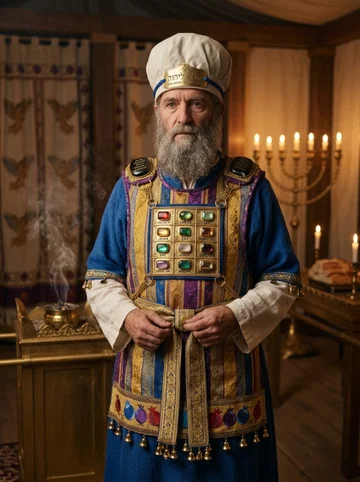
Foursquare it shall be being doubled; a span shall be the length thereof, and a span shall be the breadth thereof.
Translations
American King James Version, King James Version, KJV Cambridge Paragraph Bible
Foursquare it shall be being doubled; a span shall be the length thereof, and a span shall be the breadth thereof.
Foursquare it shall be, being doubled; a span shall be its length, and a span shall be its breadth.
Revised Version, American Standard Version
Foursquare it shall be and double; a span shall be the length thereof, and a span the breadth thereof.
it is square, doubled, a span its length, and a span its breadth.
Square shall it be, doubled; a span the length thereof, and a span the breadth thereof.
Four-square, shall it be double,—a span the length thereof and a span the breadth thereof.
Berean Standard Bible, Majority Standard Bible
It must be square when folded over double, a span long and a span wide.
It shall be square and folded double; a span shall be its length, and a span its width.
It is to be square, folded in two, a hand-stretch long and a hand-stretch wide.
Foure square it shall be and double, an hand bredth long and an hand bredth broade.
Douay-Rheims (Challoner revision)
It shall be foursquare and doubled: it shall be the measure of a span both in length and in breadth.
Pictures
Cross-references
- Exodus 28:29
And Aaron shall bear the names of the children of Israel in the breastplate of judgment upon his heart, when he goeth in unto the holy place, for a memorial before the LORD continually.
The high priest bears Israel’s names on the breastpiece before God.
- Hebrews 8:5
Who serve unto the example and shadow of heavenly things, as Moses was admonished of God when he was about to make the tabernacle: for, See, saith he, that thou make all things according to the pattern shewed to thee in the mount.
The earthly sanctuary was made according to the divine pattern shown to Moses.
- Exodus 25:8-9
And let them make me a sanctuary; that I may dwell among them.
The verse belongs to the sanctuary pattern God gave Moses.
- Hebrews 9:3-4
And after the second veil, the tabernacle which is called the Holiest of all;
Describes the sanctuary and its furnishings, including the Most Holy Place.
- Exodus 28:2-4
And thou shalt make holy garments for Aaron thy brother for glory and for beauty.
God specifies garments that set the priests apart for sacred service.
- Acts 7:44
Our fathers had the tabernacle of witness in the wilderness, as he had appointed, speaking unto Moses, that he should make it according to the fashion that he had seen.
The wilderness tabernacle was made according to the pattern shown to Moses.
- Exodus 28:30
And thou shalt put in the breastplate of judgment the Urim and the Thummim; and they shall be upon Aaron’s heart, when he goeth in before the LORD: and Aaron shall bear the judgment of the children of Israel upon his heart before the LORD continually.
The breastplate held the Urim and Thummim and was borne continually on Aaron’s heart.
- Exodus 25:9
According to all that I shew thee, after the pattern of the tabernacle, and the pattern of all the instruments thereof, even so shall ye make it.
Both describe the pattern shown in the mount.
- 1 Samuel 23:9-12
And David knew that Saul secretly practised mischief against him; and he said to Abiathar the priest, Bring hither the ephod.
David uses the ephod to seek God’s answers about Saul and Keilah.
- Hebrews 8:2
A minister of the sanctuary, and of the true tabernacle, which the Lord pitched, and not man.
true tabernacle Lord pitched foreshadowed
- Hebrews 9:11
But Christ being come an high priest of good things to come, by a greater and more perfect tabernacle, not made with hands, that is to say, not of this building;
The earthly sanctuary typifies the greater heavenly sanctuary of Christ.
- Exodus 25:40
And look that thou make them after their pattern, which was shewed thee in the mount.
Repeats the instruction to follow the pattern shown on the mountain.
Commentary
Each commentary is drawn from primary sources: the writings of Ellen G. White and Adventist pioneers and periodicals. Each commentary is separate. Its own words are not a quotation; follow the references to read the source passages.
Ellen G. White
12 sources
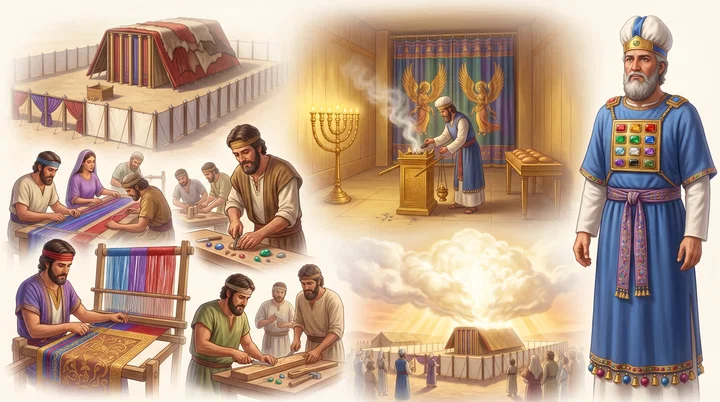
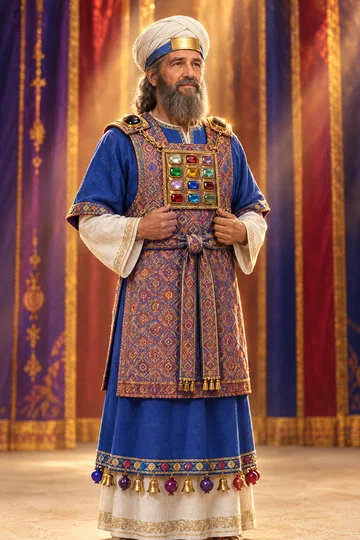
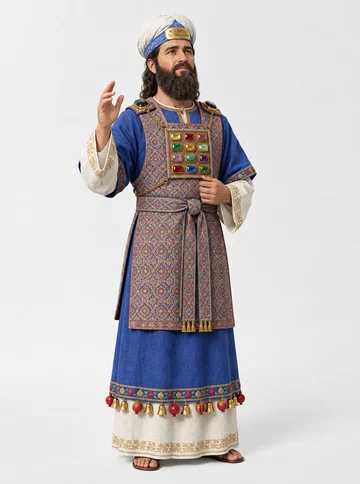
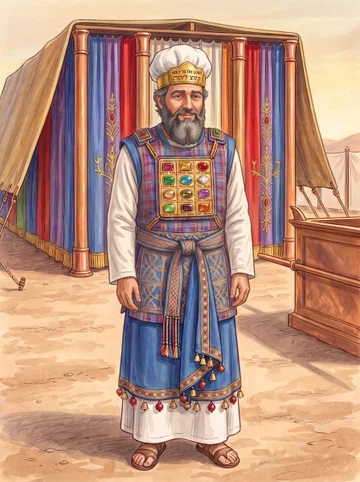
The breastplate was doubled to be foursquare, a span long and a span broad.SG4 101.1EW 213.1SG1 158.1ST Feb 21, 1911Ms 56, 1900, par. 11–12 That same square and doubled form, a span on each side, belonged to the high priest's breastpiece worn before God's presence.ST Oct 7, 18863SP 166.2–167.1 It covered the priest's breast and was a rich, beautiful work set with precious stones in gold, bearing the names of Israel's twelve tribes engraved upon the stones.SG4 101.11SP 398.1
The measure belongs to God's specific, detailed directions for the garments worn in tabernacle service, by which He Himself specified what those ministering before Him in the holy place and in the priest's office should wear, in a particular style suited to their work.GW92 162.2GW92 161.12T 610.3–612.1Ms 56, 1900, par. 11–12 The apparel of those officiating before Him could honor or dishonor Him, and the order in everything and especially the cleanliness required taught the people that He is holy, His service is sacred, and everything connected with approaching Him must be free from impurity and uncleanness.GW92 161.12T 610.3–612.1 Aaron's dress was symbolic, teaching that the dress of Christ's followers should also represent Him.Ms 56, 1900, par. 11–12
The breastpiece was part of the breastplate through which messages from Jehovah were received.ST Feb 21, 1911 Jesus is depicted wearing that breastplate as part of priestly garments, suspended from His shoulders and glittering with letters like names engraved upon it.EW 213.1SG1 158.1 At Christ's death the temple's most holy place was exposed, ending the earthly service in which the high priest wore the breastpiece with its precious stones before God's presence.ST Oct 7, 1886 Those precious stones were associated with the light of God's glory and the shadow of His disapproval, and at Christ's death that glory no longer shone upon them.3SP 166.2–167.1 As a unified piece made from distinct stones, each with its own light and significance, the breastplate illustrates how church members with differing characteristics form one family.Ms 105, 1900, par. 6
Sources
Pioneers and periodicals
43 sources
The breastpiece was doubled to form a square measuring a span in length and a span in breadth.ST Feb 17, 1890ST Mar 11, 1886 It was the crowning, gem-covered feature of the high priest's sacred vestments, made of the same material as the ephod and holding twelve precious stones set in gold with one tribal name engraved on each.ST Jun 4, 1885ST Dec 17, 1912RH Feb 2, 1911 Borne over Aaron's heart when he went in before the Lord, it carried the judgment of the children of Israel continually as the token of their common interest in the sanctuary service.ST Dec 17, 1912RH Aug 19, 1851RH Apr 8, 1858 It also held the Urim and Thummim by which messages from Jehovah were received while worship and revelation centered in the tabernacle and afterward in the temple.RH Sep 16, 1852RH Dec 8, 1910 Made exactly according to the pattern shown to Moses in the mount during his forty days alone with God, it belonged to the worldly sanctuary that served unto the shadow of heavenly things and passed away when the veil was rent at the death of Christ.ST Oct 7, 1886ST Oct 29, 1894RH Feb 11, 1858ST Jan 24, 1911ST Jun 26, 1907 Worn over the heart, it typifies the ministry of Jesus Christ, the sinless High Priest who lives forever, who bears every repentant believing soul upon His heart before the Father and whose closing work of judgment blots out sins as names come under review before God.ST Dec 17, 1912RH Aug 19, 1851RH Feb 2, 1911RH Jul 5, 1864ST Sep 6, 1910
Setting in Exodus
Foursquare doubled, a span long and a span broad, stands in the second, chiefly legislative division of Exodus, chapters 19-40, where the ransomed people are bound to Jehovah by solemn covenant and given a system of legal ordinances for guidance. It belongs to the detailed instructions for the construction of the Tabernacle and its furniture given to Moses during his forty days' stay in the mountain after receiving the tables of stone, following the solemn proclamation of the Ten Commandments and the ratification of the book of the covenant, and before the sin of the golden calf and the actual preparation and setting up of the Tabernacle on the first day of the first month of the second year from the Exodus.
It was given during Moses' forty days and nights alone with God in the thick darkness on the mountain, after the people withdrew and asked to hear God through Moses.ST Mar 25, 1889RH Dec 31, 1861ST Apr 15, 1886 It is additional instruction given through Moses, distinct from the Ten Commandments which God spoke directly to the assembled people, to which He added no more, and which He wrote on the two tables of stone.ST Apr 15, 1886ST Jul 8, 1886 It falls within the sanctuary instructions and the pattern for the sanctuary and its priesthood, found chiefly in Exodus 25-30, showing God's care and precision in matters of worship.ST Mar 25, 1889RH Dec 31, 1861ST Jul 8, 1886ST Dec 10, 1896 The sanctuary was built and set up afterward.ST Dec 10, 1896
It belongs to the very minute, explicit account in Exodus 25-31 and Exodus 25-40 of the Tabernacle, its furniture, sanctuary, priests and priesthood.ST Oct 29, 1894RH Feb 11, 1858ST Jan 24, 1911 Moses was instructed to make it exactly according to the pattern shown him in the mount, with explicit directions for dimensions, material and furnishings, including provision of precious stones, and appointment of the Levitical order to minister in the two holy places.ST Oct 29, 1894ST Jun 26, 1907ST Jun 4, 1885RH Mar 8, 1870 That description concerns the ancient tabernacle first pitched in the wilderness after Israel came out of Egypt across the Red Sea, constructed for ministration in sacrifices and offerings.ST Jan 24, 1911ST Jun 26, 1907
What was so commanded was wrought exactly as commanded as a dwelling-place that God might dwell among Israel and be ever with them, and that the priests might minister in His presence.ST Jun 26, 1907ST Jun 4, 1885RH Jan 4, 1870 It was made as God's dwelling place among His people, where earthly worship centered on the holy of holies, with God's law beneath the mercy-seat.ST Jun 19, 1907ST Jun 4, 1885RH Jan 4, 1870
Shape and Measure Described
The breastpiece was doubled and foursquare, a span in length and a span in breadth, square when doubled with each side measuring a span.ST Feb 17, 1890ST Mar 11, 1886RH Feb 3, 1853RH Jul 5, 1864 It was part of the high priest's clothing and distinctive priestly equipment, belonging to the instructions for the Levitical priesthood and its ministration in the earthly sanctuary.RH Feb 3, 1853RH Jul 5, 1864RH Dec 8, 1910 It bore the names of Israel's twelve tribes before the Lord and furnished a place for the Urim and Thummim, while the priests' white linen garments signified purity of priestly character and work.RH Dec 8, 1910 It belonged to the splendid garments of Aaron, whose priestly role stands contrasted with Christ the sinless High Priest who lives forever.RH Jul 5, 1864RH Dec 8, 1910
It was of the same material as the ephod, the crowning feature of the gorgeous robe and the high priest's most sacred vestment, gem-covered and holding precious stones for which provision was made.ST Jun 4, 1885ST Dec 17, 1912RH Feb 2, 1911ST Jan 17, 1911 It was included among the sanctuary furnishings made as God's dwelling-place among His people, and the earthly service in which the high priest wore it before God's presence ended when Christ died and the most holy place of the temple was exposed.ST Oct 7, 1886ST Jun 4, 1885 It held twelve precious stones arranged three in a row and set in gold, with the name of one tribe of Israel engraved on each stone.ST Dec 17, 1912RH Feb 2, 1911 Its border of precious stones was like those forming the foundations of the city of God, and as the breastplate of judgment it represented the twelve tribes of Israel.RH Feb 2, 1911ST Sep 6, 1910
Its place among the sanctuary instructions given to Moses during his forty days and nights on the mountain shows God's care and precision in matters of worship.ST Mar 25, 1889ST Mar 15, 1883 Even the measurements and construction of the sacred garments and the directions for sanctuary service were specified by God.RH Oct 30, 1913ST Mar 15, 1883 The clothing of the priests was to follow God's precise specifications, and the care and reverence shown in their dress taught that God is holy and His service sacred.ST Mar 25, 1889RH Oct 30, 1913
Earthly Priestly Use
The foursquare doubled breastpiece a span long and a span broad was part of Aaron's distinctive splendid official priestly clothing and equipment.RH Jul 5, 1864RH Dec 8, 1910 It was of the same material as the ephod, the crowning feature of the gorgeous robe and the high priest's most sacred vestment, gem-covered and holding precious stones for which provision was made.ST Dec 17, 1912RH Feb 2, 1911 It held twelve precious stones arranged three in a row and set in gold, with the name of one tribe engraved on each, its border of precious stones like those forming the foundations of the city of God.ST Dec 17, 1912RH Feb 2, 1911 It was worn over the high priest's heart as he officiated in the holy of holies before the Lord, while the priests' white linen garments signified the purity of priestly character and work.ST Dec 17, 1912RH Dec 8, 1910
Resting over his heart and borne upon his breast when he went in before the Lord, the breastplate of judgment bore the names of Israel's twelve tribes and the judgment of the children of Israel continually.ST Dec 17, 1912RH Aug 19, 1851RH Sep 16, 1852 In that going into the most holy place bearing the breastplate with the names of the twelve tribes to make atonement for the holy sanctuary and for all the people of the congregation, the work of cleansing the earthly sanctuary was a work of judgment.RH Apr 8, 1858 Those names represented the common interest of all Israel in the sanctuary service, and the breastplate worn over the heart performed the work which typified the judgment work.ST Dec 17, 1912ST Jun 12, 1884 In the high priest's service on the Day of Atonement this breastpiece bore the names of Israel's twelve tribes over his heart.RH Oct 10, 1912
The breastplate also had a place for the Urim and Thummim and supported them as part of Aaron's equipment.RH Sep 16, 1852RH Dec 8, 1910 It was the means by which messages from Jehovah were received.ST Jun 3, 1886ST Feb 21, 1911 This was in the wilderness tabernacle and afterward in the temple where God was worshiped and sacrificial offerings were presented before Him, when everything relating to God's worship and every revealing of God to His people was closely connected with the sanctuary.ST Jun 3, 1886
The splendid official dress prescribed in this chapter was worn on other occasions but was laid aside on the Day of Atonement when entering the most holy place.RH Jan 11, 1870ST Jun 6, 1878 That entering was on the tenth day of the seventh month to make atonement for the sanctuary and the people, and instead the plainest and humblest dress was put on.RH Jan 11, 1870ST Aug 12, 1880ST Jun 6, 1878 The breastplate of judgment bore the names of the twelve tribes on the high priest's breast when he entered the most holy place on that day.RH Oct 10, 1912ST Jun 12, 1884
The passage about priests and sanctuary set apart for sacred use is an example of sanctification.RH Jul 26, 1864 The clothing was to follow God's precise specifications, and the care and reverence shown in their dress taught the people that God is holy and His service is sacred.RH Oct 30, 1913
Antitype in Heavenly Ministry
The ancient sanctuary described here bears no likeness to modern churches, for it was constructed for ministration in sacrifices and offerings which passed away when Christ suffered and died once for all, and it typified the great temple on high where Jesus now ministers.ST Jan 24, 1911ST Jun 26, 1907 It was the worldly sanctuary first pitched in the wilderness, wrought exactly as commanded as a dwelling-place that God might dwell among His people, yet serving unto the shadow of heavenly things as an object-lesson pointing to the coming Messiah and His power to forgive sin, transform character, and deliver from burdens.ST Jan 24, 1911ST Jun 26, 1907 It was typical of and foreshadowed the better temple, the true tabernacle which the Lord pitched and not man, the example and shadow of Christ's more excellent ministry in heaven.ST Jun 26, 1907RH Mar 8, 1870
That earthly service passed away forever with the death of Christ when the veil was rent and the most holy place was exposed, ending the service in which the high priest wore the square and doubled breastpiece, a span in length and a span in breadth, before God's presence.ST Oct 7, 1886ST Jan 24, 1911ST Jun 26, 1907 Worn over the heart, the breastplate of judgment contained the names of the twelve tribes and was worn as the high priest performed the work which typified the judgment work.ST Dec 17, 1912RH Aug 19, 1851 It serves as a pattern for the heavenly ministry of the Great High Priest, who bears the names of God's true Israel before the Father.ST Dec 17, 1912RH Aug 19, 1851
The cleansing of the earthly sanctuary, when the high priest went into the most holy place bearing the breastplate of judgment with the names of the twelve tribes of the children of Israel to make atonement for the holy sanctuary and for all the people of the congregation, was a work of judgment.RH Apr 8, 1858 It prefigures the closing ministration of the heavenly sanctuary, the great time of judgment and decision upon the human race, when in the antitype sins are blotted out and names are presented and confessed as they come under review before God.RH Apr 8, 1858RH Dec 1850ST Dec 10, 1912
As Aaron in the type bore that breastplate upon his breast, upon his heart, when he went in before the Lord, and bore the judgment of the children of Israel upon his heart before the Lord continually, so Jesus Christ in the antitype bears the sins of all God's people upon His heart before the Lord continually.ST Sep 6, 1910ST Dec 10, 1912 Aaron's splendid garments belong to a priesthood contrasted with Christ, the sinless High Priest who lives forever, who ascended into heaven to appear in the presence of God for His people.RH Jul 5, 1864ST Sep 6, 1910 He bears on His heart every repentant believing soul, never forgetting them but having them graven upon the palms of His hands with their walls continually before Him, together with the continual burnt offering, the continual showbread, the lamps burning continually, and the perpetual incense rising with the prayers of Israel, thinking of each person individually.RH Feb 2, 1911ST Sep 6, 1910ST Dec 10, 1912 The breastplate picturing this was His most sacred vestment, its border of precious stones like those forming the foundations of the city of God, with twelve stones set in gold within it bearing the names of Israel's tribes.RH Feb 2, 1911
Law and Covenant Place
It belongs to the law of Moses commanded at Horeb with statutes and judgments, which embraces all the laws given through Moses — moral, civil, health, ceremonial, sacrificial, and conduct between man and man — and not the Ten Commandments alone. In it offerings, sacrifices and types were revealed as shadows whose substance is traced in the new dispensation. With Exodus 20 to 40 and Leviticus it is part of the law God calls His people in the last days to remember both as the rule of conduct and as the shadows leading to the substance.
It belongs to the appointment of the Levitical priesthood and to the directions appointing the Levitical order to minister in the two holy places of the earthly sanctuary.ST Mar 22, 1883RH Mar 8, 1870ST Feb 20, 1879 That appointment came after the giving of the Ten Commandments in Exodus 20, so that the Ten Commandments were received before that priesthood existed.ST Mar 22, 1883ST Feb 20, 1879 This proves the faulty law received under the Levitical priesthood is the Levitical law and not the Ten Commandments.ST Feb 20, 1879 That earthly ministration was the example and shadow of Christ's more excellent ministry in the true tabernacle in heaven.RH Mar 8, 1870
It is part of what was commanded by the hand of Moses, recorded chiefly in Exodus 25-30 and Leviticus.ST Apr 15, 1886 It was given as instruction to Moses alone with God in the thick darkness on the mount for forty days after the people withdrew and asked to hear God through Moses, distinct from the Ten Commandments which God spoke directly to the assembly, to which He added no more, and which He wrote on the two tables of stone.ST Apr 15, 1886 It consists of burdensome ceremonies and carnal ordinances imposed until the time of reformation, a yoke which neither the fathers nor their children were able to bear.ST Apr 15, 1886
Reverence and Divine Direction
The detailed directions in Exodus 25-31 for building the sanctuary and preparing for its services let down upon earth an object-lesson setting forth God's plan of government and how He deals with sinners who have sought to dethrone Him. He remains priest upon the throne, still King while executing the office of priest, in a plan devised from eternity for salvation from sin. That plan is made known to His people because they are so intimately related to the sanctuary question that they cooperate with God in His work through Christ in the sanctuary, so that the divine and the human cooperate at every step.
The breastplate of judgment has not passed away without an antitype in the Christian age, for its divine discernment, special revelation, miraculous proof, and divine aid and direction in seasons of difficulty and danger continue.RH Jul 16, 1872 They continued when Simeon and Anna fully endorsed the child Jesus and when John the Baptist did the same.RH Jul 16, 1872 They continued when Peter decided the fate of Ananias and Sapphira, and when John and Paul received special revelations from God.RH Jul 16, 1872 Miracles and miraculous proofs attested every step of the apostles as they proclaimed the truth, and later wonderful manifestations of divine power prove that God has never changed but is still near to deliver His people.RH Jul 16, 1872
Together with Psalm 80:1, the measure of the doubled foursquare breastplate identifies the cherubim as holding the positions nearest the throne of God.ST Aug 8, 1900 In this way it supports the description of the former position of the anointed cherub.ST Aug 8, 1900
Sources