Exodus 3:2
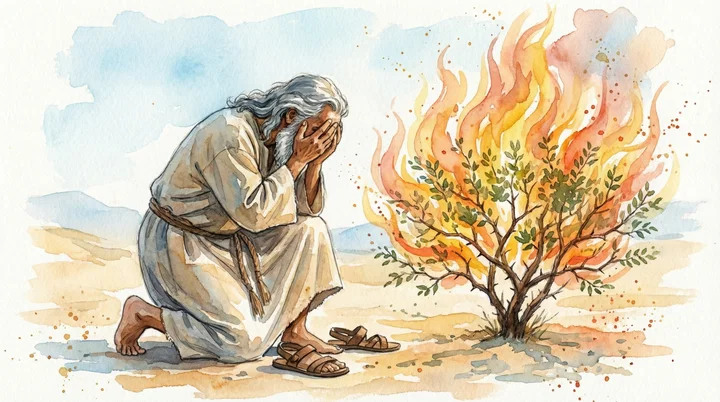
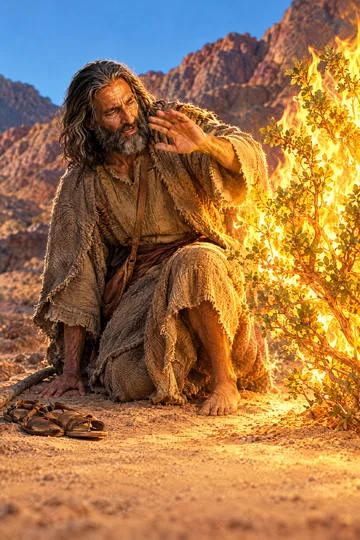
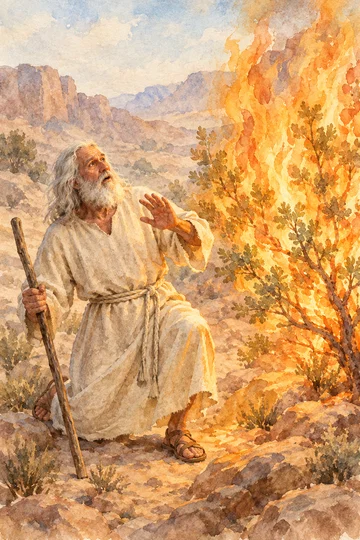
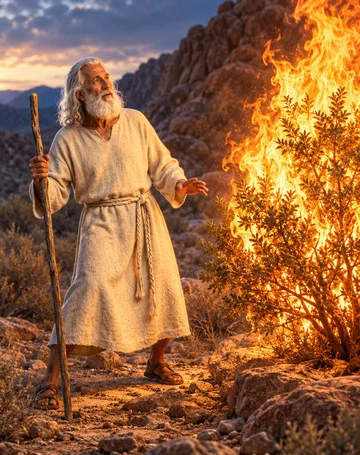
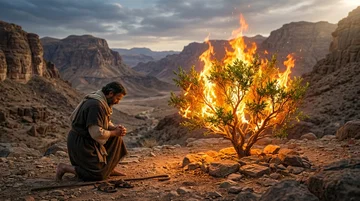
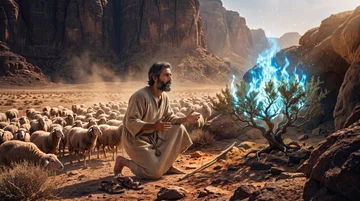
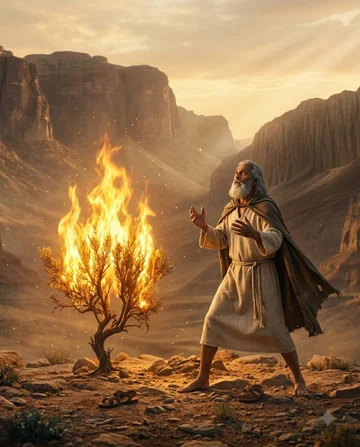
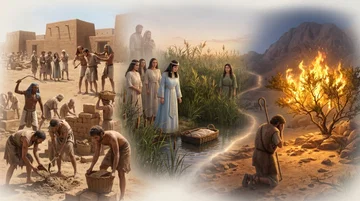
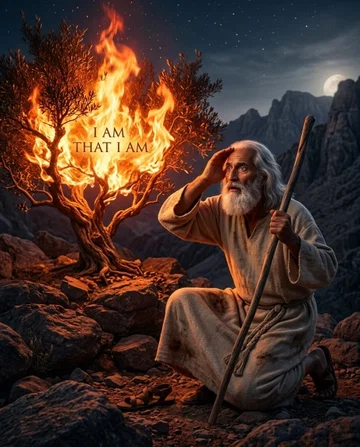
And the angel of the LORD appeared unto him in a flame of fire out of the midst of a bush: and he looked, and, behold, the bush burned with fire, and the bush was not consumed.
Translations
And the angel of the LORD appeared to him in a flame of fire out of the middle of a bush: and he looked, and, behold, the bush burned with fire, and the bush was not consumed.
King James Version, Revised Version
And the angel of the LORD appeared unto him in a flame of fire out of the midst of a bush: and he looked, and, behold, the bush burned with fire, and the bush was not consumed.
And the angel of the Lord appeared unto him in a flame of fire out of the midst of a bush: and he looked, and behold, the bush burned with fire, and the bush was not consumed.
And the angel of the LORD appeared to him in a flame of fire out of the midst of a bush: and he looked, and behold, the bush burned with fire, and the bush was not consumed.
And the angel of Jehovah appeared unto him in a flame of fire out of the midst of a bush: and he looked, and, behold, the bush burned with fire, and the bush was not consumed.
and there appeareth unto him a messenger of Jehovah in a flame of fire, out of the midst of the bush, and he seeth, and lo, the bush is burning with fire, and the bush is not consumed.
And the Angel of Jehovah appeared to him in a flame of fire out of the midst of a thorn-bush: and he looked, and behold, the thorn-bush burned with fire, and the thorn-bush was not being consumed.
Then appeared the messenger of Yahweh unto him, in a flame of fire from the midst of the thorn-bush,—so he looked and lo! the thorn-bush burning with fire and yet the thorn-bush, was not consumed.
Berean Standard Bible, Majority Standard Bible
There the angel of the LORD appeared to him in a blazing fire from within a bush. Moses saw the bush ablaze with fire, but it was not consumed.
The LORD’s angel appeared to him in a flame of fire out of the middle of a bush. He looked, and behold, the bush burned with fire, and the bush was not consumed.
And the angel of the Lord was seen by him in a flame of fire coming out of a thorn-tree: and he saw that the tree was on fire, but it was not burned up.
Then the Angel of the Lord appeared vnto him in a flame of fire, out of the middes of a bush: and he looked, and behold, the bush burned with fire, and the bush was not consumed.
Douay-Rheims (Challoner revision)
And the Lord appeared to him in a flame of fire out of the midst of a bush: and he saw that the bush was on fire and was not burnt.
Pictures

Cross-references 20 of 38
- Exodus 3:10
Come now therefore, and I will send thee unto Pharaoh, that thou mayest bring forth my people the children of Israel out of Egypt.
God sends Moses to deliver Israel from Egypt.
- Exodus 3:14
And God said unto Moses, I AM THAT I AM: and he said, Thus shalt thou say unto the children of Israel, I AM hath sent me unto you.
God identifies the voice from the bush as I AM.
- Acts 7:30
And when forty years were expired, there appeared to him in the wilderness of mount Sina an angel of the Lord in a flame of fire in a bush.
Stephen recounts the angel appearing in the burning bush when God called Moses.
- Exodus 3:6
Moreover he said, I am the God of thy father, the God of Abraham, the God of Isaac, and the God of Jacob. And Moses hid his face; for he was afraid to look upon God.
God identifies himself as the patriarchs’ God, and Moses hides his face in fear.
- Joshua 5:15
And the captain of the LORD’s host said unto Joshua, Loose thy shoe from off thy foot; for the place whereon thou standest is holy. And Joshua did so.
Christ’s presence makes the ground where Joshua stands holy.
- Judges 6:11-14
And there came an angel of the LORD, and sat under an oak which was in Ophrah, that pertained unto Joash the Abi-ezrite: and his son Gideon threshed wheat by the winepress, to hide it from the Midianites.
Gideon is called while threshing wheat.
- Isaiah 43:2
When thou passest through the waters, I will be with thee; and through the rivers, they shall not overflow thee: when thou walkest through the fire, thou shalt not be burned; neither shall the flame kindle upon thee.
God’s people pass through fire without being burned.
- Daniel 3:27
And the princes, governors, and captains, and the king’s counsellors, being gathered together, saw these men, upon whose bodies the fire had no power, nor was an hair of their head singed, neither were their coats changed, nor the smell of fire had passed on them.
God’s power keeps the men unharmed in the fire.
- Hebrews 12:29
For our God is a consuming fire.
The burning bush’s fire signifies God’s presence as a consuming fire.
- Hebrews 11:24-27
By faith Moses, when he was come to years, refused to be called the son of Pharaoh’s daughter;
Moses’ faith choice led to his call in the bush.
- Exodus 13:21
And the LORD went before them by day in a pillar of a cloud, to lead them the way; and by night in a pillar of fire, to give them light; to go by day and night:
God’s presence was revealed in fire as He led Israel.
- Mark 12:26
And as touching the dead, that they rise: have ye not read in the book of Moses, how in the bush God spake unto him, saying, I am the God of Abraham, and the God of Isaac, and the God of Jacob?
God's words at the bush affirm that the dead will rise.
- Deuteronomy 33:16
And for the precious things of the earth and fulness thereof, and for the good will of him that dwelt in the bush: let the blessing come upon the head of Joseph, and upon the top of the head of him that was separated from his brethren.
Both refer to the LORD dwelling in the bush.
- Isaiah 63:9
In all their affliction he was afflicted, and the angel of his presence saved them: in his love and in his pity he redeemed them; and he bare them, and carried them all the days of old.
The Angel of the LORD appears in the bush; the Angel of God’s presence saves Israel.
- Exodus 23:20-21
Behold, I send an Angel before thee, to keep thee in the way, and to bring thee into the place which I have prepared.
God’s name is in the Angel he sends to lead Israel.
- Exodus 3:11
And Moses said unto God, Who am I, that I should go unto Pharaoh, and that I should bring forth the children of Israel out of Egypt?
Moses questions his fitness for the burden of going to Pharaoh.
- Exodus 2:11-15
And it came to pass in those days, when Moses was grown, that he went out unto his brethren, and looked on their burdens: and he spied an Egyptian smiting an Hebrew, one of his brethren.
Moses’ earlier attempt to act for Israel by force contrasts with God’s plan.
- John 1:18
No man hath seen God at any time; the only begotten Son, which is in the bosom of the Father, he hath declared him.
The Son makes the unseen God known despite the angel’s visible appearance.
- 1 Kings 18:38
Then the fire of the LORD fell, and consumed the burnt sacrifice, and the wood, and the stones, and the dust, and licked up the water that was in the trench.
Both show nature yielding to God's purpose.
- Acts 7:37-38
This is that Moses, which said unto the children of Israel, A prophet shall the Lord your God raise up unto you of your brethren, like unto me; him shall ye hear.
Stephen identifies an angel as speaking to Moses at Sinai.
Commentary
Each commentary is drawn from primary sources: the writings of Ellen G. White and Adventist pioneers and periodicals. Each commentary is separate. Its own words are not a quotation; follow the references to read the source passages.
Ellen G. White
29 sources
At Horeb, the mountain of God, Moses was leading the flocks of Jethro through the desert in his retirement from Egypt when he saw a lowly bush aflame with fire yet not destroyed, and as he drew near God called to him from the flame.1SP 168.2–169.1PP 251.2–252.1SG3 186.1–187.1 The angel in the flame was Christ Himself, the I AM and Jehovah, speaking in His own name and voice and making the ground holy by His presence.PP 251.2–252.1Ms 20, 1895, par. 2Ms 8a, 1891, par. 25–27 The brightness was the glory of God's presence veiled in the insignificant shrub so fallen man could behold Him and live, foreshadowing divinity veiled in humanity to make God accessible.Ms 200, 1898, par. 15Ms 126, 1901, par. 4–617MR 30.1–2 The bush burned yet no fiber was destroyed because the Lord dwelt within it, representing all who receive Christ by faith in terrible conflict and affliction, whose trials burn like a furnace yet consume only the dross while faith shines brighter because He in their midst sustains them.PP 251.2–252.1Ms 145, 1902, par. 12–15Ms 200, 1898, par. 15MH 211.3–212.2 Forty years of faithful shepherding had humbled and disciplined Moses in meekness, patience and trust to fit him for his work, and the sight marked God's chosen time for him to exchange the shepherd's staff for the rod of God and deliver Israel from bondage by God's mighty power, that the glory would belong to God.1SP 168.2–169.1SG3 186.1–187.1MH 474.3–475.24T 442.1
Moses Prepared at Horeb
Moses was in retirement as keeper of Jethro's flocks, leading them through the desert to Horeb, the mountain of God in the mountains of Midian.1SP 168.2–169.1SG3 186.1–187.1DA 290.2–291.2 He had turned from courtly honors and a prospective kingdom as prospective ruler of Egypt to this humble shepherd life.GW 332.3–333.11SP 337.1 There he saw a bush with branches, foliage and trunk aflame, burning with fire yet not consumed.1SP 168.2–169.1PP 251.2–252.1SG3 186.1–187.1 As he approached to examine the extraordinary sight, God called to him from the flame.PP 251.2–252.1SG3 186.1–187.1
Forty years of faithful shepherding was God's discipline to prepare Moses for his life's work.GW 332.3–333.1CT 406.2Ms 8a, 1891, par. 25–27 In the humble duties of a faithful shepherd God was teaching him self-control and humility and training him to become a spiritual shepherd of Israel after his qualification as a general to lead armies.1SP 168.2–169.1SG3 186.1–187.1 The work taught him humility, meekness, faith and trust in the Lord, with a simple unwavering bond with God that palace education could not give.1SP 168.2–169.1CT 406.2 It gave him experience in caretaking, thoughtfulness and tender solicitude, hunting with patience for erring and straying sheep until he became a tender, patient, loving, faithful shepherd.1SP 168.2–169.14T 442.1Ms 8a, 1891, par. 25–27 Those years removed false ideas gained in Egypt and made him a strong thinker and doer of God's word.Ms 45, 1890, par. 11–13
Moses had first tried to deliver by force and human wisdom and strength when he slew an Egyptian fighting an Israelite and hid him in the sand, showing he was not ready.OEWP 14.1–16.2Ms 8a, 1891, par. 25–279MR 62.1 His earlier confidence in human wisdom and strength had to be put aside, and God sent him into forty years of desert exile among deserts and mountains and rocks to learn his helplessness and need to trust and obey.OEWP 14.1–16.2Ms 8a, 1891, par. 25–279MR 62.1 Jethro helped him toward correct faith as far as he understood, and Moses worked steadily upward toward the light until he was prepared to see God in singleness of heart as a learner.Ms 130, 1898, par. 4 While he supposed he had forfeited all right to be the instrument and was considering how deliverance could be accomplished, this proving, testing, humbling and refining made him ready.OEWP 14.1–16.2Lt 116, 1896, par. 7–10Ms 45, 1890, par. 11–13
Angel in Unconsumed Flame
The Angel who appeared in the flame is Christ Himself, the Light of the world, the I AM, Jehovah, the Lord and Captain of the Lord's host who later appeared to Joshua and to Gideon.Ms 20, 1895, par. 2Ms 8a, 1891, par. 25–271SP 347.3–348.2 He was no common angel and no prophet merely telling what the Lord would do, but spoke in His own name with His own voice.1SP 347.3–348.2 From the flame He revealed the holy presence of the God of Abraham, Isaac and Jacob, and that presence made the ground holy.PP 251.2–252.11SP 347.3–348.2
The fire was the brightness of God's presence veiled in a lowly, insignificant shrub that enshrined the Infinite, so that fallen Moses could behold the unseen God in representation and live.Ms 200, 1898, par. 15Ms 126, 1901, par. 4–617MR 30.1–2DA 21.2–4 The bush thus foreshadowed Christ's divinity veiled in visible human form to make God accessible.17MR 30.1–2DA 21.2–4 No mortal can endure the unveiled revelation, which has always been shrouded by a guard of angels, in contrast to the privilege later given to John of seeing Christ amid the indescribable glory of the holy sanctuary on Patmos.Ms 126, 1901, par. 4–6Ms 168, 1907, par. 15
The bush burned with fire yet was not consumed, and not a fiber of its branches was destroyed, because the Lord dwelt within it.PP 251.2–252.1Ms 145, 1902, par. 12–151SP 347.3–348.2ST Mar 5, 1896 Moses knew the voice speaking from it was God because it was not consumed.Ms 200, 1898, par. 15 The sight demands humility and reverence, so Moses hid his face because he was afraid to look upon God.PP 251.2–252.1
The unconsumed bush represents people enduring adversity, deprivation, reverses and affliction, and all who believe in terrible conflict and receive Christ by faith.Ms 145, 1902, par. 12–15Ms 200, 1898, par. 15MH 211.3–212.2STST Mar 5, 1896 The brightness of the Unseen is in their midst to comfort and sustain them.Ms 145, 1902, par. 12–15MH 211.3–212.2 Trials, persecution and temptation may burn as a furnace, but His refining power consumes only the dross and what is impure while the human agent is not consumed and faith and gold shine brighter.Ms 200, 1898, par. 15STST Mar 5, 1896 He in the faithful heart is greater than he who controls unbelieving hearts, and knowing Him is proved by keeping His commandments.Ms 200, 1898, par. 15ST Mar 5, 1896
In the deliverance from four hundred years of bondage the appearance made God's holiness, grace and love known to idolatrous Egypt, appointing Moses to make known that Jehovah is superior to every false deity.Ms 20, 1895, par. 2
Commission to Deliver Israel
The burning bush marked that God's chosen time had fully come for Moses to exchange the shepherd's staff for the rod of God. 1SP 168.2–169.1SG3 186.1–187.1 He was sanctified, selected and accepted as co-worker with God, summoned to leave his flock, go to Pharaoh, deliver Israel from oppression and preserve them when pursued by enemies. 1SP 168.2–169.11SP 337.1 Though he felt incapable of the task, the deliverance would come through God's mighty power in signs and wonders, not through the warfare Moses had expected, so that the glory would belong to God. 1SP 168.2–169.1SG3 186.1–187.1MH 474.3–475.2 Near death he still remembered this call as the beginning of his God-appointed mission. 1SP 168.2–169.1SG3 186.1–187.1
Speaking with the Angel before carrying God's message to Pharaoh shows that God bids workers to come up to Him into the mount in solitary communion before He sends them out. MH 508.2ST Jul 27, 1915 That communion, after forty years of meeting God in the mountain altitudes, fitted Moses to be God's instrument in delivering Israel. MH 508.2ST Jul 27, 1915 Beholding His glory and receiving fresh revelation in this way gives moral power for duty, trial and mission. ST Jul 27, 1915
The verse shows that God trains useful and honored workers amid the humble duties of the most lowly positions before entrusting them with His cause. GW 332.3–333.1 Moses, though prospective ruler of Egypt, could not be taken from the king's court to do his appointed work as deliverer, but was sent only after forty years as a faithful shepherd. GW 332.3–333.19MR 62.1 Only after patiently hunting for stray sheep in desert and mountains and rocks until he learned to be a tender, patient, loving, faithful shepherd did God appear in the bush as the I AM and bid him go and deliver the children of Israel. 4T 442.19MR 62.1 His earlier confidence in human wisdom and strength had to be put aside through discipline that taught helplessness and need to trust and obey, until through faith and submission he became a sanctified channel through whom God could work. OEWP 14.1–16.2 Those who preach the truth need the same preparatory experience, first drinking at the life-giving fountain themselves in order to lead souls to it, seeing the infinite sacrifice made by the Son of God to save fallen men and being imbued with undying love. OEWP 14.1–16.24T 442.1 Schools must fit workers for service in the same way, as the wilderness journey itself taught Israel to endure hardship and rely on God alone for relief and deliverance. OEWP 14.1–16.29MR 62.1
Because Moses gave himself to God with the whole soul, listened for His commands that he might obey them, and used his talents to do the work of God, increase of talents was then given him. 4T 612.2–613.1 He became eloquent, patient, self-reliant and competent to do the greatest work ever entrusted to mortal man. 4T 612.2–613.1 This is the effect upon character whenever men so give themselves to God with the whole soul and obey. 4T 612.2–613.1
Sources
Pioneers and periodicals
106 sources
At Horeb, while Moses was keeping the flock of Jethro in the back side of the desert, the angel appeared in a flame of fire in the midst of a bush that burned yet was not consumed, and from the bush God called Moses by name, warned him not to draw near, told him to remove his shoes because the ground was holy, and declared Himself the God of Abraham, Isaac and Jacob.ST Mar 24, 1887RH May 11, 1869ST Dec 21, 1888 The Angel in the bush was the Son of God, the Messenger of the covenant who speaks as God in person and bears His name to deliver His people.ST Aug 19, 1880ST Jun 10, 1908ST Jul 23, 1912ST Aug 14, 1901RH Jun 18, 1867 The ground was made holy by His specially present glory in the flame, which sanctifies whatever His living presence fills, even as His presence in the seventh day makes it holy.RH Dec 4, 1913RH Jan 19, 1905RH Feb 5, 1901ST Jul 15, 1908ST Jul 30, 1894 The bush burning without being consumed shows God preserving Israel in Egypt's furnace of affliction and His church in every age through fiery trial, burning away dross and bonds without destroying His people.ST Dec 2, 1880RH May 11, 1869RH May 11, 1869ST Dec 2, 1880ST May 14, 1894 The appearing came after forty years tending sheep that emptied Moses of self-sufficiency and taught him humility, patience and compassion, and it commissioned him to lead afflicted Israel out of Egypt at the fulness of time in the name I AM THAT I AM.ST Jan 24, 1911ST Jun 10, 1908ST Dec 21, 1888RH Mar 23, 1869
Setting and Historical Details
The setting is Horeb, the mountain of God, where Moses was keeping the flock of Jethro his father-in-law, the priest of Midian, and had led it to the back side of the desert.ST Mar 24, 1887ST Dec 21, 1888 There the angel of the Lord appeared in a flame of fire out of the midst of a bush that burned with fire and was not consumed.ST Mar 24, 1887RH May 11, 1869ST Dec 21, 1888 Not a twig or leaf was consumed, the bush standing in the midst of the flame as though in its natural element, the fire preserving rather than devouring it, with branches, foliage, and trunk burning without being consumed.ST Feb 26, 1880RH May 11, 1869
Moses turned aside to see this great sight why the bush was not burnt.ST Mar 24, 1887RH May 11, 1869ST Dec 21, 1888 God then called to him by name out of the midst of the bush, warned him not to draw near, and commanded him to put off his shoes from his feet because the place where he stood was holy ground.ST Mar 24, 1887RH May 11, 1869ST Dec 21, 1888 He declared Himself to be the God of his father, the God of Abraham, the God of Isaac, and the God of Jacob, so that Moses hid his face for he was afraid to look upon God.ST Mar 24, 1887ST Dec 21, 1888ST Jul 23, 1912
The appearance came at the end of forty years in Midian tending sheep after his flight from Egypt following his failed self-sent effort to deliver God's people.ST Jan 24, 1911ST Dec 25, 1901ST Jan 28, 1913ST May 14, 1894 Before that he had been educated in all the learning and wisdom of the Egyptians and was mighty in words and deeds, yet felt all-sufficient in his Egyptian education and knowledge of warfare.ST Jan 24, 1911ST Jun 17, 1889 The forty years of schooling alone with God in the desert of Midian changed him from confidence and self-sufficiency to humility and a sense of utter insufficiency.ST Jan 24, 1911RH Mar 23, 1869ST Mar 8, 1910ST Jun 17, 1889 There he learned man's littleness and God's greatness, with humility, patience, submission to God, poverty of spirit, tenderness, compassion, wisdom, earnest devotion, constant self-sacrifice, and dying to self, fitting him to shepherd and lead God's flock.ST Jan 24, 1911RH Mar 23, 1869ST Mar 8, 1910ST Jun 17, 1889RH Mar 23, 1869
The encounter commissioned him to go to Pharaoh to deliver afflicted Israel out of the hand of the Egyptians and out of Egypt to a good large land flowing with milk and honey.ST Dec 21, 1888RH Dec 17, 1861ST Jan 20, 1909ST May 14, 1894 It came at the fulness of time when the covenant promise made to Abraham centuries before could be fulfilled, at the hour of deliverance when Israel suffered Egyptian bondage and the knowledge of Jehovah seemed about to become extinct.ST Jun 10, 1908ST Dec 21, 1888 In it God made Himself known by the name I AM THAT I AM, the Lord God of the fathers, His name and memorial forever.ST Dec 21, 1888 The event is placed about 1493 B.C. according to Usher's chronology, and the call at the burning bush that began the exodus stood less than two years before the spies were sent to Canaan.ST May 14, 1894ST Apr 14, 1914
The account is true history and not fictitious, as shown by Stephen also rehearsing it in Acts 7.ST Apr 13, 1904ST Jun 14, 1899 To question its truth because it is not in accord with modern human reason puts the Bible on the level of human historical works and undermines Scripture and a fundamental pillar of theology.ST Jun 14, 1899 Horeb is thereby made the most memorable of all mountains as the first of seven great events there, and one of the mountains of God made blessed by association with the Divine.ST Sep 20, 1899RH Nov 17, 1859 Upon one of its peaks, Sinai, He manifested His glory and presence and twice called Moses up and communed with him forty days and nights, thus honoring mountains above all other forms of nature and marking them with the footsteps of His presence.ST Sep 20, 1899ST Aug 27, 1896
Identity of the Angel
The Angel of the Lord who appeared in flame of fire out of the midst of the bush is also called the Lord and God in the account, speaking as God in person because He came to represent God and speak for God.ST Aug 19, 1880ST Aug 14, 1901ST Jan 23, 1907 He is the Son of God, the Angel of Jehovah and Messenger of the covenant, God's mighty Messenger and Representative to the world, who had seen His people's oppression and come down to deliver them from Egyptian bondage and bring them to a good land flowing with milk and honey.ST Aug 19, 1880ST Jun 10, 1908ST Aug 14, 1901ST Apr 22, 1889 He came at the fulness of time when the covenant promise made to Abraham centuries before could be fulfilled, at the hour of deliverance when Israel suffered bondage and the knowledge of Jehovah seemed about to become extinct, to sustain Moses in one of the greatest crises of earth's history and still continue in charge of His Father's plans to bring blessing to the world.ST Jun 10, 1908 He is the same Person Stephen later saw standing at God's right hand, Jesus the Just One.ST Aug 19, 1880 He is the same who had walked with Enoch, preserved Noah, tested Abraham and encouraged Jacob, who as the I AM lived before Abraham's day and led Israel out of Egypt, whose divinity is proved by His exact foretelling of Judas's betrayal.ST Jun 10, 1908ST Mar 30, 1915 The angel who appeared to Gideon veiled in divine glory was this same Person, Christ the Son of God, who unlike a prophet or angel delivering a message of what the Lord would do spoke in His own name, promising, I will be with thee, so that Gideon sought a sign that his visitor was the same One who had spoken to Moses.ST Jun 23, 1881
This Angel is Michael, the Commander of the angels and Protector of Israel, who bears God's name and goes before His people, with Moses hiding his face because he was afraid to look upon God when God called to him from the bush.ST Jul 23, 1912 The appearance was God the Son, through whom the Father is revealed, not God the Father; as the Angel of the covenant He acted in subjection as servant and representative of the Father, and in this manifestation His purpose was to reveal the Father rather than Himself.ST Mar 18, 1903ST May 20, 1908 Those who held the angel to be only a personal representative taught that he was sent from Jehovah's presence, bearing God's name and doing His will, so that the Lord seen in the bush was this angel and not God seen directly.RH Jun 18, 1867 Those who held the title God to be applied to angels taught that since the angel in the bush calls himself LORD and the God of Abraham, Isaac, and Jacob, the fact that Christ is called God does not by itself prove He is Jehovah, the very and eternal God. Being called an Angel means He took upon Himself the nature of angels to lift up the fallen race, and that taking the form of a servant was the first step downward in humiliation, before the next step of being made in the likeness of men and the final step of becoming obedient unto death, even the death of the cross.
Symbol of Unconsumed Fire
The flame did not devour the bush but preserved it, with not a twig or leaf consumed, the bush standing in the midst of the fire as though in its natural element.ST Dec 2, 1880RH May 11, 1869 Its passivity before its Creator let the glory of God appear through it without destroying it.RH Dec 30, 1902 The fire itself visibly set forth God, for it shone and was powerful and purifying and consumed what could be consumed.ST Nov 27, 1901 That flame was the glory of the divine presence, a living flame, akin to the light that led Israel by night, and that presence made the very ground holy.RH Dec 4, 1913RH Aug 1, 1907
The unconsumed bush signified Israel suffering in Egypt's iron furnace and furnace of slavery, preserved amid intense oppression while flourishing in the midst of it.ST Dec 2, 1880RH May 11, 1869ST May 14, 1894 Their slavery was as furnace fire, yet it burned away dross rather than destroying the people, and God remembered their affliction to deliver them from Egypt to a good land flowing with milk and honey after Moses had spent forty years in Midian tending Jethro's flock, about 1493 B.C. according to Usher's chronology, revealing Himself as the God of Abraham, Isaac, and Jacob.ST May 14, 1894ST Jun 15, 1904RH Jan 13, 1874 The same bush pictures the church of God in every age, burning with fiery trials and afflictions of various kinds yet continuing to live and enduring until deliverance.ST Dec 2, 1880RH Jan 15, 1867ST Jan 18, 1877 Affliction and worldly influences may burn away the bonds and restraints by which Satan has held God's people, but they do not destroy the church, which comes out of the fire without its marks.RH May 11, 1869ST Dec 2, 1880
Though individual members may be killed by the enemy, God preserves His people by raising others to take their place.RH May 11, 1869ST Dec 2, 1880 Zion shall surely rise again out of all her troubles and lift her victorious head over all her enemies, thriving by her losses and multiplying by being diminished, by the good will of Him that dwelleth in the bush, and must not be buried before she is dead nor given up for lost before Christ has tried His skill.RH Nov 13, 1856 Worldly prosperity is more difficult for God's people to bear than affliction.RH May 11, 1869 This preserving power was seen in the Waldensian church planted in the valleys of Piedmont near the papal throne, holding the Bible as the only rule of faith and practice in protest against Rome's corruptions, repeatedly condemned to extirpation and assailed through centuries of ferocious persecution with heroic constancy by armies sent to bring havoc and carnage, yet kept alive in the fire without being destroyed so that the seed of truth sown in suffering lived on to bear fruit when the Reformation came.RH Oct 24, 1912ST Aug 30, 1883 The same image holds for English Sabbath-keepers enduring persecution without being destroyed.ST Jan 4, 1883
The unconsumed bush also pictures the Bible itself, staying in the fires of persecution and hatred without being destroyed, and its survival proves its Author is the One who spoke from the bush.RH Jun 26, 1855 It shows how Christ dwells in the feeble human agent who receives Him by faith and puts trust in Him, with the Lord's presence abiding within so that not a fiber is destroyed.STST Mar 5, 1896 The furnace fire of temptation may burn and persecution and trial may come, but only impurity and dross are consumed while faith and gold shine brighter because of purification, for He who is in the heart of the faithful is greater than he who controls the hearts of unbelievers.STST Mar 5, 1896 Yielded people thus become channels through whom God's fullness shines without destroying them, drawing those lost in sin to seek Him.RH Dec 30, 1902 The glory of the just is inward radiation given by God, so that even when buried in obscurity their surroundings burn with light and their light looms up again round and clear as a light to their land, as Luther hidden in the depths of the Black Forest rose as the light of Europe.RH Mar 27, 1856RH Jul 24, 1856
In Eden and the unfallen earth every bush burned like the bush at Horeb, for the whole earth was filled with the visible glory of God.RH Feb 5, 1861RH Jan 16, 1900 That glory has faded with sin and suffering, leaving Horeb's bush a picture of the glory that once was everywhere.RH Jan 16, 1900 God chose for His appearing a humble, slender, abject bush rather than a lofty cedar, sturdy oak, or spreading palm, to check human pride and arrogance.RH Mar 21, 1871RH Dec 17, 1857 It matches His choice of the low creeping vine among trees, the soft and patient lamb among beasts, and the mild and guiltless dove among birds, honoring humility over pride, for humility produces love and pride produces hate.RH Dec 17, 1857 By fixed law fire devours wood, yet this bush in the desert was made fireproof, burning with fire yet not consumed.RH Mar 24, 1904RH Jul 14, 1904 This proves God as Author and Architect of all law is not circumscribed, bound, or hampered by fixed laws known to man, but controls the machinery of the universe and can work independently of them and apparently contrary to them, so that natural obstacles do not count when His purposes are concerned.RH Mar 24, 1904RH Jul 14, 1904
The kindling of fire without consuming is divine action that defies human reasoning and is accepted by faith.ST Apr 17, 1893 It means God has miraculous power to preserve a human life while it is preyed upon by a deadly wasting condition beyond natural expectation, keeping the person alive for His own reason. Such sustaining preservation is distinct from restoration to health, which requires a further miracle.
Call and Training of Moses
The call came directly and impressively from God's own voice speaking out of the bush, laying hold on conscience until the rest of life was surrendered to the Exodus, and it did not originate in Jethro's counsel nor in Israel's suffering condition in Egypt, but carried unmistakable evidence on the spot that it was from God and no misguidance. The majesty of the angel's glory displayed there and the audible voice from the flames left no room for doubt that God had chosen Moses, and that remarkable commission would command his brethren's attention and prepare them to accept him under God as their leader.GSAM 198.3–199.1RH Mar 23, 1869 When the Lord saw Moses turn aside to see why the bush was not burnt, He revealed Himself with a definite program for that hour for the relief of the oppressed nation, showing that turning aside to attend to what God presents leads to learning God's program for this time from His word.ST Oct 21, 1930
This first great manifestation to Moses answers to the third angel's message in the last days, for after Moses had chosen suffering with God's people over the glory of an Egyptian monarch the Lord proved him to see what he would endure, and his leaving the flock to come to the mount in obedience to the intimation of God's presence brought blessing, the burden of going to Pharaoh to bring Israel out, and the cry of who am I for such a work.RH Mar 5, 1861 God even submitted His word to test by a visible sign to prove it to Moses His servant, because as fallible man he was slow to accept it without such test, and the extraordinary manifestations of the vision stand as evidence of the same divine Spirit who spoke there.ST May 1, 1901GSAM 237.1 At the close of the second forty years the hour of deliverance had come and Moses was ready, yet forty years of humble shepherd life near Sinai in communion with God, fierce temptation, humility, patience, submission, poverty of spirit, self-denial, dying to self, and deep experience had taken away all self-sufficiency and sight of his own strength, so that though he was the only man with the natural ability and experience for the greatest task ever given to mortal man, he was humble as a child, knew only weakness and lack of grace, felt his time for the work had gone by, and begged God to send some other fitter and more suitable instrument.RH Mar 23, 1869RH Mar 23, 1869RH Jan 16, 1913
He had tried forty years ahead of God to deliver Israel by himself by slaying the Egyptian oppressor without God's call, but God's thought for Israel was deeper and grander, so He put him in the mountains of Midian tending sheep to teach him his lesson and called him when the full time had come, an example that God is never surprised by the unforeseen but has men and agencies in training, often years before, so that as His great clock marks the centuries and prophetic prediction reaches fulfillment the means come into existence to meet the crisis and stand for right when great principles are involved.RH Jun 12, 1913RH Feb 2, 1911RH Jan 16, 1913 The encounter came before Moses carried God's message to Pharaoh and fitted him as God's instrument for deliverance, with full instruction for the work and the Spirit of God placed upon him in abundance to qualify him to guide with wisdom, and beholding God's glory and receiving fresh revelation gave moral power for duty, trial, and mission.ST Jul 27, 1915ST Aug 31, 1915ST Feb 27, 1896 Alone with God beside the bush in the stillness and solitude of the wilderness, Moses entered into secret communion in which prevailing prayer draws nearest to God and receives richest blessing for self and others, and the divine image and charge then given remained with him through later trials, persecution, and rebellion, enabling him to endure as seeing Him who is invisible and to face Pharaoh without fear.ST Jul 27, 1915ST Nov 24, 1887ST Sep 22, 1914ST Oct 29, 1902ST Apr 24, 1893
Patient care of Jethro's flocks trained him to lead Israel with tenderness and patience, and the call came at God's appointed time, not when Moses first expected it, while meeting the Lord there gave true knowledge of self, weakness, selfishness, and need, which comes through effectual fervent prayer and gives power to work, intercede, and bear abundant fruit.RH Feb 4, 1873RH Sep 23, 1902 His calling is compared with Christ's calling and appointment by God, accompanied by angels at His coming and the Father's approving voice from heaven.RH Feb 19, 1861 God met him by a bush in the desert in the middle of ordinary life while busy at humble work keeping sheep, proving God is met in commonplaces and leads through everyday duty and secular motives to an entirely different spiritual blessing, so faithful daily work brings the richest blessings and he was called from that lowly service to confront a powerful king, free an enslaved people by signs and wonders, and become leader, lawgiver, and favored servant.ST Oct 18, 1877RH Apr 8, 1909RH Jan 28, 1902 He found God in the wilderness at the bush rather than in Egypt's gardens of ease, teaching that finding God and following Him may involve hardship rather than comfort.RH Oct 27, 1863RH Oct 29, 1861
The appearance reveals Jehovah's design to attach Himself to rescued Israel, drawn toward the One about to deliver them from bondage while still an alien in Midian, as the type of a proposed eternal union with the finally redeemed of all ages, with the visible brightness as symbol of the divine presence, the same brightness attending Sinai's proclamation of the moral law as pledge that those guided by the law would have that glory shining on their pathway, and to preserve that presence with the law God commanded offerings for a sanctuary to dwell among them after centuries of slavery had left them unable to grasp His salvation and the character He required.RH Feb 10, 1910 The burning bush remains a sign calling people to turn aside and hear a gentle yet decisive voice of mercy calling them to their work and bringing a message to the inquiring soul, applied to spiritual gifts and their reproofs which should be heeded rather than neglected.RH May 7, 1861ST Oct 6, 1909 There Moses saw God face to face before the thunders of Sinai announced that God would write with His own fingers the moral code that is the basis of laws today except Sunday laws.ST Oct 8, 1896
Holiness from Divine Presence
The flame in the bush was the glory of the divine presence, and that specially present glory made the ground holy and different from other places.RH Dec 4, 1913RH Jan 19, 1905ST Apr 24, 1893 Moses was therefore commanded to draw not nigh and to put off his shoes, because had he disregarded the warning and carelessly approached he would have been quickly consumed, since the presence of the holy God consumes everything with which sin is connected.RH Dec 4, 1913 God's presence makes a place holy, and His presence in the seventh day makes it holy and His day.ST Jun 20, 1916RH Jan 19, 1905RH Feb 5, 1901 As Christ made the Sabbath holy by placing His presence in that day for man in a special manner, making a difference between it and other days, so the ground at the bush was holy because the Lord was specially present there in the flame.ST Jun 20, 1916RH Jan 19, 1905RH Feb 5, 1901
Christ, the Angel of Jehovah, was present in the burning bush, and His living presence is what made the place holy and sanctified it.ST Jul 15, 1908ST Jul 30, 1894 Blessing is never separated from presence, for to bless is to put living presence within, as His presence in Jacob gave a new nature and made him holy, as His presence in the tabernacle sanctified the building, as His presence in the bush sanctified the ground, and as His presence put into the seventh day blessed and sanctified it and makes it holy.ST Jul 15, 1908 His presence within people likewise sanctifies them, and by abiding in them keeps them sanctified.ST Jul 30, 1894 The bush was made holy because God was present in it, just as the seventh-day Sabbath is holy because He rested and was refreshed upon it, so the day is holy in the same way the bush was holy.ST Feb 7, 1900
The encounter filled Moses with awe and fear at seeing branches, foliage, and trunk burn without being consumed and hearing God speak from the flame as the angel of the covenant who had revealed Himself to the fathers.ST Feb 26, 1880 God Himself was present in fire that burns and burns yet does not consume, speaking with His own voice from the bush as the God of Abraham, Isaac, and Jacob.RH Oct 29, 1914 Moses hastened to remove his shoes and hid his trembling face in silent awe, showing that God's presence is holy and must be approached with reverence and wonder, not presumption.ST Feb 26, 1880RH Oct 29, 1914 Its glory passing by permits sinful, fallen people to gaze for one little moment on His loveliness and light.RH Oct 29, 1914
The same God who spoke to Moses there speaks now from out of field and bush and tree, and people should meet Him there with that same spirit of wonder and reverence.ST Nov 21, 1900 They should learn to see and hear Him, praying for opened eyes and ears for themselves and for their children, so that their finer sensibilities may be awakened and their lives blessed.ST Nov 21, 1900 God present in flame of fire in the midst of the bush, the bush burning yet not consumed, is known by every bush and oak as I AM.RH Dec 2, 1858 Springs and leaves with bushes and oaks give Him a morning hymn in the hush of early day, and their singing calls man to note creation, leave cares and follies, sing to God, and prosper all day by early rising and prayer.RH Dec 2, 1858
Doctrine Proved from Verse
The bush scene is where God spoke to Moses and declared Himself the God of Abraham, Isaac, and Jacob.ST Jul 7, 1887ST Jul 7, 1887 Christ takes those words spoken at the bush as proof that the dead will be raised.ST Jul 7, 1887ST Jul 7, 1887 Since the patriarchs had died, the promise points to their future resurrection, not to their already living elsewhere or continuing conscious after death.ST Jul 7, 1887ST Jul 7, 1887
The verse states in clear language for preservation in fire that the bush burned with fire and was not consumed.RH Dec 8, 1868 That exact wording could have been used of the punishment of the wicked if they were to be preserved in fire without undergoing a consuming process, but it never is.RH Dec 8, 1868 The wicked instead face the opposite, to be burned up root and branch in unquenchable fire through a real consuming process.RH Dec 8, 1868 That consuming ends in the second death in the lake of fire, while only those with access to the tree of life live forever.RH Dec 8, 1868
The verse falls within the account of Israel's oppression and deliverance.RH May 16, 1854 That history shows the Israelites had been unable to keep the Sabbath while enslaved.RH May 16, 1854 Their deliverance made it possible for them to observe it.RH May 16, 1854
Application to Believers Today
The burning bush is God's kind, watchful and merciful call in Christ to every sinner and every cold-hearted professor to come out of spiritual Egypt.ST Aug 6, 1912 It is His voice speaking to dull ears and His presence set before dim eyes to awaken a longing for holiness.ST Aug 6, 1912 The call is out of darkness into light, out of idolatry into true worship, out of unbelief into faith, out of superstition into truth, out of stubbornness into meekness, out of rebellion into loyalty, and out of slavery and death into freedom and life.ST Aug 6, 1912 The way may lead through persecution and loss of worldly goods and a hostile wilderness, yet to all who are faithful is promised immortal, transcendent blessedness in eternal reign with Christ.ST Aug 6, 1912
After forty years of caring for the flock in the deserts of Midian, the call at the bush showed that the wilderness experience had not been wasted and that Moses was ready to be used.ST Jun 15, 1904ST Jun 17, 1889 The greatest worldly wisdom does not fit a person to do God's work, for though Moses was learned in all the wisdom of the Egyptians and mighty in words and deeds, he was not ready until forty years taught him man's littleness and God's greatness and the compassion and tenderness necessary to be a true shepherd to God's flock.ST Jun 17, 1889 When God calls to a work, feeling insufficient should not turn one away, for if one depends on Him He will fit the called person for that work and supply all need.ST Jun 17, 1889 In that same unconsumed burning is seen Israel also, whose slavery was like furnace fire consuming dross rather than destroying the people.ST Jun 15, 1904
The bush burning with fire without being consumed is a picture of undying enthusiasm for a life of self-sacrifice.ST Apr 7, 1909 A garden bush aflame with roses becomes like that striking sight, and its beauty becomes a lesson through which the Lord speaks to the attentive soul.RH Jun 17, 1902 Knowing the flames in the bush and the voice of Horeb is shown in a life that reflects God and longs to tell others of the Master's goodness.ST Feb 4, 1903
Sources