Daniel 3:27
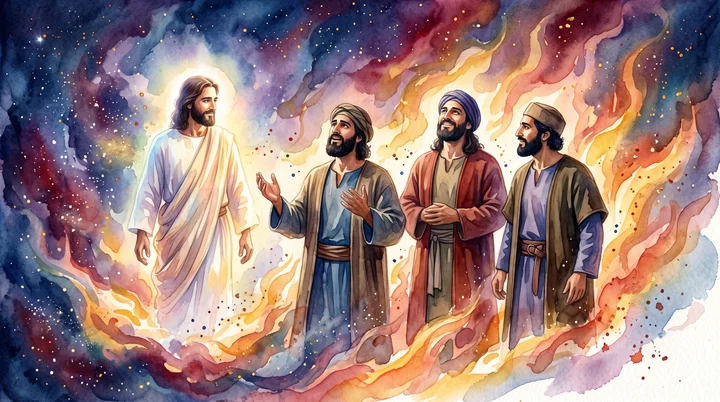
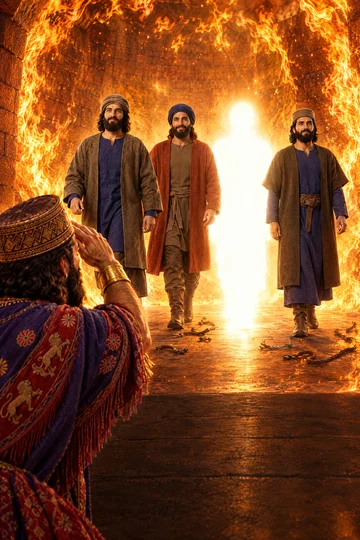
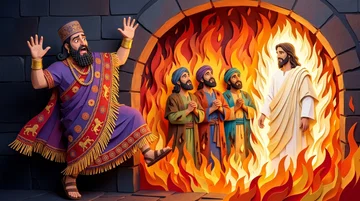
And the princes, governors, and captains, and the king’s counsellors, being gathered together, saw these men, upon whose bodies the fire had no power, nor was an hair of their head singed, neither were their coats changed, nor the smell of fire had passed on them.
Translations
And the princes, governors, and captains, and the king’s counsellors, being gathered together, saw these men, on whose bodies the fire had no power, nor was an hair of their head singed, neither were their coats changed, nor the smell of fire had passed on them.
And the princes, governors, and captains, and the king’s counsellors, being gathered together, saw these men, upon whose bodies the fire had no power, nor was an hair of their head singed, neither were their coats changed, nor the smell of fire had passed on them.
And the princes, governors, and captains, and the king’s counsellers, being gathered together, saw these men, upon whose bodies the fire had no power, nor was a hair of their head singed, neither were their coats changed, nor the smell of fire had passed on them.
And the princes, governors, and captains, and the king's counselors, being assembled, saw these men, upon whose bodies the fire had no power, nor was a hair of their head singed, neither were their coats changed, nor had the smell of fire passed upon them.
Revised Version, American Standard Version
And the satraps, the deputies, and the governors, and the king’s counsellors, being gathered together, saw these men, that the fire had no power upon their bodies, nor was the hair of their head singed, neither were their hosen changed, nor had the smell of fire passed on them.
and gathered together, the satraps, the prefects, and the governors, and the counsellors of the king, are seeing these men, that the fire hath no power over their bodies, and the hair of their head hath not been singed, and their coats have not changed, and the smell of fire hath not passed on them.
And the satraps, the prefects, and the governors, and the king's counsellors, being gathered together, saw these men, upon whose bodies the fire had had no power, nor was the hair of their head singed, neither were their hosen changed, nor had the smell of fire passed on them.
And—being gathered together—the satraps, the nobles, and the pashas and near friends of the king, saw these men, over whose bodies the fire had, no power, nor was, a hair of their head, singed, neither were, their trousers, disfigured,—nor had, the smell of fire, come upon them.
Berean Standard Bible, Majority Standard Bible
and when the satraps, prefects, governors, and royal advisers had gathered around, they saw that the fire had no effect on the bodies of these men. Not a hair of their heads was singed, their robes were unaffected, and there was no smell of fire on them.
The local governors, the deputies, and the governors, and the king’s counselors, being gathered together, saw these men, that the fire had no power on their bodies. The hair of their head wasn’t singed. Their pants weren’t changed. The smell of fire wasn’t even on them.
And the captains, the chiefs, and the rulers, and the king's wise men who had come together, saw these men, over whose bodies the fire had no power, and not a hair of their heads was burned, and their coats were not changed, and there was no smell of fire about them.
Then the nobles, princes and dukes, and the Kings counsellers came together to see these men, because the fire had no power ouer their bodies: for not an heare of their head was burnt, neither was their coates changed, nor any smelll of fire came vpon them.
Douay-Rheims (Challoner revision)
And the nobles, and the magistrates, and the judges, and the great men of the king being gathered together, considered these men, that the fire had no power on their bodies, and that not a hair of their head had been singed, nor their garments altered, nor the smell of the fire had passed on them.
Pictures
Cross-references 20 of 27
- Daniel 6:22-23
My God hath sent his angel, and hath shut the lions’ mouths, that they have not hurt me: forasmuch as before him innocency was found in me; and also before thee, O king, have I done no hurt.
Daniel is delivered unharmed from the lions’ den for his faithfulness to God.
- Daniel 3:18
But if not, be it known unto thee, O king, that we will not serve thy gods, nor worship the golden image which thou hast set up.
The three men refuse the king’s command to worship the image.
- Hebrews 11:34
Quenched the violence of fire, escaped the edge of the sword, out of weakness were made strong, waxed valiant in fight, turned to flight the armies of the aliens.
Faith quenched the violence of fire, preserving the men unharmed.
- Daniel 3:19
Then was Nebuchadnezzar full of fury, and the form of his visage was changed against Shadrach, Meshach, and Abed-nego: therefore he spake, and commanded that they should heat the furnace one seven times more than it was wont to be heated.
same furnace heated seven times hotter
- Isaiah 33:14-15
The sinners in Zion are afraid; fearfulness hath surprised the hypocrites. Who among us shall dwell with the devouring fire? who among us shall dwell with everlasting burnings?
The furnace shows the righteous unharmed by fire that devours the wicked.
- Daniel 3:1-6
Nebuchadnezzar the king made an image of gold, whose height was threescore cubits, and the breadth thereof six cubits: he set it up in the plain of Dura, in the province of Babylon.
The commanded worship of the golden image leads to the furnace trial.
- Isaiah 43:2
When thou passest through the waters, I will be with thee; and through the rivers, they shall not overflow thee: when thou walkest through the fire, thou shalt not be burned; neither shall the flame kindle upon thee.
God promises to preserve his people unharmed through fire.
- Exodus 3:2-3
And the angel of the LORD appeared unto him in a flame of fire out of the midst of a bush: and he looked, and, behold, the bush burned with fire, and the bush was not consumed.
Both texts show fire that does not consume what it surrounds.
- 1 Peter 4:12
Beloved, think it not strange concerning the fiery trial which is to try you, as though some strange thing happened unto you:
The fiery furnace illustrates the fiery trials believers face for faithfulness to God.
- Daniel 3:15
Now if ye be ready that at what time ye hear the sound of the cornet, flute, harp, sackbut, psaltery, and dulcimer, and all kinds of musick, ye fall down and worship the image which I have made; well: but if ye worship not, ye shall be cast the same hour into the midst of a burning fiery furnace; and who is that God that shall deliver you out of my hands?
The king’s challenge is answered by the men’s deliverance from the furnace.
- Daniel 3:5-6
That at what time ye hear the sound of the cornet, flute, harp, sackbut, psaltery, dulcimer, and all kinds of musick, ye fall down and worship the golden image that Nebuchadnezzar the king hath set up:
The decree demanded worship of the image and threatened the disobedient with the furnace.
- Daniel 3:22
Therefore because the king’s commandment was urgent, and the furnace exceeding hot, the flame of the fire slew those men that took up Shadrach, Meshach, and Abed-nego.
The fire killed the men who threw the Hebrews in but left the Hebrews unharmed.
- Exodus 20:4-5
Thou shalt not make unto thee any graven image, or any likeness of any thing that is in heaven above, or that is in the earth beneath, or that is in the water under the earth:
Their refusal to worship the image honors the commandment against idolatry.
- Acts 28:5
And he shook off the beast into the fire, and felt no harm.
Both texts describe God’s protection from harm by fire or a poisonous snake.
- Daniel 2:49
Then Daniel requested of the king, and he set Shadrach, Meshach, and Abed-nego, over the affairs of the province of Babylon: but Daniel sat in the gate of the king.
Abed-nego is identified as Daniel’s companion before his deliverance.
- 1 Corinthians 3:13
Every man’s work shall be made manifest: for the day shall declare it, because it shall be revealed by fire; and the fire shall try every man’s work of what sort it is.
both present fire as proving without destroying the righteous
- Exodus 24:17
And the sight of the glory of the LORD was like devouring fire on the top of the mount in the eyes of the children of Israel.
God’s glory appears as devouring fire, while the men remain unharmed by fire.
- Leviticus 10:1-2
And Nadab and Abihu, the sons of Aaron, took either of them his censer, and put fire therein, and put incense thereon, and offered strange fire before the LORD, which he commanded them not.
Fire from God’s presence consumes the unrighteous but leaves the faithful unharmed.
- 1 Kings 18:38
Then the fire of the LORD fell, and consumed the burnt sacrifice, and the wood, and the stones, and the dust, and licked up the water that was in the trench.
Divine fire consumes the offering, water, and stones.
- Psalms 34:7
The angel of the LORD encampeth round about them that fear him, and delivereth them.
God rescues those who fear him from danger.
Commentary
Each commentary is drawn from primary sources: the writings of Ellen G. White and Adventist pioneers and periodicals. Each commentary is separate. Its own words are not a quotation; follow the references to read the source passages.
Ellen G. White
56 sources
The verse shows three men coming out of a blazing furnace completely untouched, with no injury to their bodies, no singeing of hair, no change to clothing and not even the scent of smoke upon them, while only their bonds were burned away, all under the eyes of gathered rulers and a vast multitude.Ms 73, 1909, par. 12–14ST Sep 2, 1897Lt 126, 1910, par. 2–8Lt 132, 1901, par. 7–15PK 509.3–4 They were preserved because the Son of God Himself walked with them in the flames, taking away the fire's power to consume and fulfilling the promise that those who walk through the fire shall not be burned.Lt 90, 1897, par. 21–25Lt 132, 1901, par. 7–15STBk 121.2PK 511.1RH Apr 22, 1862 They had been cast in for refusing to worship the golden image, choosing obedience to God over life itself rather than making any concession to idolatry.Ms 73, 1909, par. 12–143MR 95.4STE 212.2–214.1RH Dec 24, 1908ED 254.2–3 Their deliverance publicly vindicated their loyalty, turned the king's wrath to praise, and spread the knowledge of the living God through the nations gathered at Babylon.BS 33.4ST Oct 19, 1882Lt 109a, 1898, par. 5–8Ms 168, 1898, par. 1–3Ms 47a, 1898, par. 2–5 The same steadfast purpose will be required to the close of the controversy between good and evil, when the forcing of false worship will again test those who keep God's commandments.STBk 121.2STA 121.2ST2 13.1PK 512.112MR 218.2–220.1
Complete Preservation Witnessed
Daniel 3:27 records a complete preservation in the furnace, for the fire had no power upon the bodies of the three men.Ms 73, 1909, par. 12–14ST Sep 2, 1897Lt 126, 1910, par. 2–8Lt 90, 1897, par. 21–25Lt 122, 1910, par. 7–9 Not a hair of their heads was singed, their coats were unchanged, and not even the smell of fire had passed upon them.Ms 73, 1909, par. 12–14ST Sep 2, 1897Lt 126, 1910, par. 2–8Lt 90, 1897, par. 21–25Lt 132, 1901, par. 7–15 Their bodies and their clothing alike were left untouched by the flames, with no harm, no scorching, no alteration, and no smoke upon them.ST Sep 2, 1897Lt 126, 1910, par. 2–8Lt 90, 1897, par. 21–25Lt 122, 1910, par. 7–9PK 509.3–4
What the fire did consume was their bonds alone, for their fetters were burned off while they themselves remained unharmed.Lt 132, 1901, par. 7–15PK 509.3–4
This unharmed condition was not hidden but was seen by the princes, governors, captains, and the king's counsellors being gathered together to examine them.Ms 73, 1909, par. 12–14ST Sep 2, 1897Lt 126, 1910, par. 2–8Lt 122, 1910, par. 7–9Lt 132, 1901, par. 7–15 They stood thus before a vast multitude, and their coming forth unhurt was a public evidence and testimony to a wonderful deliverance and to divine power.Ms 73, 1909, par. 12–14Lt 126, 1910, par. 2–8Lt 122, 1910, par. 7–9Lt 132, 1901, par. 7–15BS 33.4
Setting and Immediate Outcome
The three were cast into the furnace because they refused to worship the golden image, openly disobeying the king's command rather than surrender principle and become apostate from God.Ms 73, 1909, par. 12–143MR 95.4Ms 2b, 1895, par. 25–26 That image was a rival to the God of heaven, and their refusal to pay it homage or to disregard God for heathen worship brought persecution stirred up by idolaters to crush out the truth, when church and state united to force its worship.STE 212.2–214.1DA 28.312MR 218.2–220.1 At the king's remorseful summons, Ye servants of the most high God, come forth, they came out in obedience and stood unhurt before rulers and people.BS 33.4ST Oct 19, 1882 They stood thus before a vast multitude, with the princes, governors, captains and counsellors gathered to see them, a public proof of complete deliverance.Ms 73, 1909, par. 12–14BS 33.4ST Oct 19, 1882
This took place in the same year the youthful Hebrews entered the king's service, and what befell the three severely tested their integrity.BS 29.1 Before an idolatrous nation it proved the power and faithfulness of the God of Israel.BS 29.1 The public miracle produced a striking change in the minds of the people, the great golden image was forgotten, and the king published a decree that anyone speaking against their God should be put to death, because there is no other god that can deliver after this sort.BS 33.4ST Oct 19, 1882
Their loyalty was thereby vindicated, the king's wrath was turned to praise and thanksgiving to Jehovah, and divine power was made known in Babylon above earthly kings.13MR 60.1–61.2Lt 151, 1904, par. 6–8Lt 32, 1899, par. 6–11 Nebuchadnezzar was convinced that their God was the living God, superior in power above every other kingdom.Lt 109a, 1898, par. 5–8Ms 168, 1898, par. 1–313MR 60.1–61.2 Yet because he did not continue to walk in the light, he afterward lost the holy impression made upon his mind.13MR 60.1–61.2 The golden image set up on the plain of Dura represented Babylon and especially its king.Lt 109a, 1898, par. 5–8Ms 168, 1898, par. 1–3 The crisis grew out of Nebuchadnezzar reading the Scriptural interpretation of his dream concerning Babylon and other kingdoms in the light of his own idolatrous mind, teaching that all, whether king or subjects, must read dreams and providence in the light of the living oracles and not dreams in the light of human understanding, lest exalting Babylon end in its fall as at the hour of feasting and revelling.Lt 109a, 1898, par. 5–8
God thus brought His servants face to face with kings and rulers so that rulers and their people might receive the light, with even the greatest monarchs led by what they saw to proclaim the supremacy of the God whom His captives worshiped.DA 28.3 Through the representatives of the different nations invited to the dedication, the tidings of the wonderful deliverance were carried to many countries.PK 511.1 By their steadfast loyalty the knowledge of the true God was spread throughout the length and breadth of the Babylonian empire.Ms 2b, 1895, par. 25–26 In this the purpose for which He had permitted them to be carried captive to a heathen land was accomplished, and through the faithfulness of His children God was glorified in all the earth.PK 511.1Ms 2b, 1895, par. 25–26
Divine Presence in Flames
They were not forsaken in the fire, for One like the Son of God was with them, the Saviour in person as the Fourth walking with them in the flames.STBk 121.2STA 121.2PK 508.3ST2 13.1 In His presence the flames lost their power to consume, so the fire had no power over their bodies, not a hair of the head was singed, their coats were unchanged, and not even the smell of fire passed on them.Lt 90, 1897, par. 21–25Lt 132, 1901, par. 7–15PK 509.3–4PK 508.3 Only their fetters were burned while bodies and clothing were left unharmed, and their Saviour's presence guarded them through the trial.Lt 132, 1901, par. 7–15PK 509.3–4PK 508.3 Those who purpose to be true to principle come what may and refuse to turn aside from allegiance to truth, even when the furnace is heated seven times hotter than usual, are not abandoned when cast in for standing firm, but come forth completely untouched with no trace of fire upon them.STBk 121.2STA 121.2ST2 13.1LSEGW 329.2
God takes His stand with the oppressed and does not abandon those who belong to Him even in extreme danger.STBk 121.2PK 508.3PK 511.1 He rebukes all earthly powers that rebel against the authority of Heaven, upholding and delivering those who stand firm for truth in trial.ST2 13.1PK 511.1 Their preservation without harm, seen when the princes, governors, captains and counsellors gathered to behold them, was a declaration to the whole nation of Babylon of faith in the God they worshiped.Lt 132, 1901, par. 7–15PK 511.1 It was the honoring in the sight of all of their faith in the living Word, showing that the faithful under severe trial are not forsaken by God.STA 121.2PK 511.1LSEGW 329.2
The deliverance was the honoring of the promise that in walking through the fire they would not be burned nor would the flame kindle upon them.PK 511.1 God limits the power of the fire, so that the fire kindled by Satan cannot destroy or injure the trusting Christian.PK 511.1RH Apr 22, 1862 Jesus and angels watch over the believer, so that only the dross is consumed while the faithful are not consumed or hurt.RH Apr 22, 1862
Faith Sustained in Trial
Those who trust God's word, though utterly helpless in themselves, can stand against the power of the whole world, as Shadrach and his companions stood in the fire against Nebuchadnezzar on the throne.RH Dec 24, 1908ED 254.2–3RH Nov 11, 1915 Their deliverance witnesses to the power of God's word against human power and policy in support of evil.ED 254.2–3 They mark the world's true nobility and royal line in which the youth of today are called to take their places.ED 254.2–3
Living faith in the merits of the crucified Redeemer carries believers through affliction and trial, sustaining them in severe trial with the Fourth beside them in the furnace so that its fire leaves no mark upon them.RH Jan 27, 1916ST Apr 20, 18764T 212.1–3 They came out unharmed, with the fire having no power over their bodies, no hair singed, their coats unchanged, and not even the smell of fire or smoke upon them.RH Jan 27, 1916ST Apr 20, 1876 God has not promised His people exemption from trials, but what is far better, strength as the days require and grace sufficient made perfect in weakness. Anyone called to go through the fiery furnace for Christ's sake will have Jesus personally by their side just as He was with the faithful three in Babylon. Those who love their Redeemer rejoice at every opportunity to share His humiliation and reproach, and love for Him makes suffering for His sake sweet.
God does not forget His people in danger but can protect and comfort them even when imprisoned or threatened with death.Lt 49, 1886, par. 7–8GC 626.2–627.1 Unjust punishment for faithful obedience does not mean He has stopped reigning, for Jesus was with the three and the flames could not harm them.Lt 49, 1886, par. 7–8GC 626.2–627.1 The three are with Daniel a lived example of self-denial and self-sacrifice, showing that God's people can overcome inherited and cultivated habits and remain faithful under pressure.20MR 113.3–114.1Lt 73, 1896, par. 39–42 They were not enslaved by any hereditary or cultivated habits or tendencies, nor servants of circumstances, but ruled the animal passions and made all appetites and passions and circumstances and surroundings servants to the God-fearing man.Lt 73, 1896, par. 39–42 Their stand reveals an inwrought principle learned of the greatest Teacher that controls circumstances and passes like a plowshare through hereditary and cultivated habits and through all circumstances and surroundings.Lt 73, 1896, par. 39–42
Those with divine principles inwrought in the heart will not be intimidated to deny and betray the truth for favor or worldly honors or exalted position.Ms 201, 1898, par. 11 They count human reputation as nothingness, holding that to live is to obey the word of Christ and to die for the truth is gain, even when the Lord proves and tries His people by threat of the fiery furnace.Ms 201, 1898, par. 11 To impress idolaters with the power and greatness of the living God, His servants must reveal their own reverence for God and make it manifest that He is the only object of honor and worship.STE 212.2–214.1 These youth, imbued with the Holy Spirit, refused to pay homage to the golden image because it was a rival to the God of heaven, and declared to the whole nation by this preservation that He whom they worshiped was the only true and living God, a demonstration of faith that was the most eloquent presentation of their principles.STE 212.2–214.1 No consideration, not even the preservation of life itself, can induce the least concession to idolatry.STE 212.2–214.1
The verse gives ground to trust God when called to answer for faith before an imposing assembly of great men, for God is able to keep His faithful witnesses through death threatened by powerful enemies.SG4 275.3–276.3 It calls for anxiety not for self or ease but that truth be not exposed to insult, with readiness to die rather than let enemies triumph, leaning upon God as an eternal rock and taking hold of His strength without fear.SG4 275.3–276.3 The verse sets forth important principles regarding the working out of the Lord's purpose for the children of obedience and the children of disobedience.Lt 118, 1910, par. 2 The threat and opposition when command was given to worship the golden image manifested the loyalty and revealed the actuating principle of those who would not bow.Lt 118, 1910, par. 2Ms 15, 1896, par. 33–34
Prophetic Pattern for Last Days
Until the controversy between good and evil is ended there will be continual sharp contests requiring purpose to be true to principle come what may.STBk 121.2STA 121.2ST2 13.1Ms 61, 1890, par. 41Ms 40a, 1890, par. 101–102 The faithful refuse to turn aside from allegiance to truth even when the furnace is heated seven times hotter than usual.STBk 121.2ST2 13.1Ms 61, 1890, par. 41Ms 40a, 1890, par. 101–102Ms 40, 1890, par. 92–94 Those who stand firm in trial and are cast in are not forsaken, for the Fourth walks with them in the flames and they come forth completely untouched with no trace of fire upon them, without even its smell upon their clothing.STBk 121.2STA 121.2ST2 13.1Ms 61, 1890, par. 41Ms 40a, 1890, par. 101–102 The same purpose to be true to principle is needed now as the great contest continues to its close.ST2 13.1Ms 61, 1890, par. 41Ms 40, 1890, par. 92–94
The experience on the plain of Dura holds lessons for this day, when innocent servants will be given over to suffer humiliation and abuse at the hands of those inspired by Satan and filled with envy and religious bigotry.PK 512.1 Especially the wrath of man will be aroused against those who hallow the Sabbath of the fourth commandment, and at last a universal decree will denounce them as deserving of death.PK 512.1 When church and state united to force worship of the golden image, the three were preserved so the fire had no power over them, while the men who schemed to ensnare and sought to destroy them were themselves destroyed.12MR 218.2–220.1 The same pattern will repeat with the Sunday idol set up by human law in place of God's holy Sabbath, when men strive to turn God's people from their allegiance; those who make cruel enactments seeking to destroy Sabbath-keepers will be destroyed by the recoil of their own actions.12MR 218.2–220.1
A time may come when God's people must decide whether to obey God's commandments or comply with a human religious demand.Lt 35, 1895, par. 1–3 That conflict is not to be provoked by presumptuous defiance before such a decision is required.Lt 35, 1895, par. 1–3 God sustains those who face temptation without deliberately entering it, while those who choose to walk into temptation cannot count on divine aid to keep them from being overcome.ST Sep 2, 1897 The three were unharmed by the furnace because Jesus was with them in the flames.ST Sep 2, 1897
Their deliverance illustrates that when the Lord comes and the earth is cleansed by fire, the righteous who are united with Him will be untouched by the flames and will escape unscathed, just as the Son of God was with the Hebrews in the furnace.Ms 159, 1903, par. 15–19 Their preservation gave Luther confidence that God could protect him from violence amid his enemies' threats.4SP 120.1GW92 57.2–61.1GC88 145.1–146.11T 373.2–375.1 Though his life remained in God's hands, he stayed ready to die rather than surrender the truth.GW92 57.2–61.1 The fire did not harm their bodies or hair, alter their clothes, or even leave its smell on them, giving assurance that God can preserve those who trust Him when they face violence for faith.GW92 57.2–61.1GC88 145.1–146.1GC 146.1
The same divine preservation that kept the three alive in extreme heat kept John alive when cast into a cauldron of boiling oil.RH Sep 5, 1912AA 570.1–2 The Lord preserves the life of His faithful servant when men try to kill him by extreme heat.AA 570.1–2 This shows God's ability to keep faithful witnesses through death threatened by powerful enemies and to protect a faithful servant through an attempt to destroy him.RH Sep 5, 1912AA 570.1–2
Sources
Pioneers and periodicals
153 sources
The verse shows the three Hebrews coming out of the fiery furnace completely untouched, with no power of the flames upon their bodies, no hair singed, no clothing altered, and not even the smell of fire upon them, a deliverance openly seen and closely examined by the princes, governors, captains and counsellors gathered around.ST Jun 28, 1899RH Aug 20, 1908RH Apr 20, 1869RH Jul 14, 1904RH Oct 22, 1903 The only work of the fire was to burn off their bonds and set them free, because the Son of God himself was present with them in the flames to protect and uphold them.ST Jan 29, 1908ST Oct 13, 1909ST Oct 9, 1901ST Nov 8, 1905ST Jan 29, 1908 They had been cast in for refusing to bow to Nebuchadnezzar's golden image on the plain of Dura, choosing obedience to God rather than men when civil power commanded idol worship against conscience.ST May 21, 1912ST Jan 23, 1901ST Sep 9, 1889RH Mar 1, 1860ST Oct 3, 1895 That stand vindicated the right to worship according to conscience and established that government is ordained only to restrain evil in outward acts, not to coerce worship or take God's place.ST May 21, 1912ST Jan 23, 1901ST Jul 11, 1911ST Apr 23, 1912ST Mar 6, 1907 The same history will be repeated when God's people refuse to worship the image of the beast under a worldwide death decree, and God will interpose for them in the time of trouble as he did in the furnace, sheltering them through the final fire that consumes sin while the holy stand unscathed with the Son of God.RH Jul 14, 1904RH May 1, 1855ST Oct 5, 1882ST Dec 1, 1914ST Sep 26, 1911
Public Complete Deliverance
The verse records that the three men came out of the burning fiery furnace completely unharmed, with the fire having no power upon their bodies, no hair of their heads singed, no garments changed, and not even the smell of fire having passed upon them.ST Sep 2, 1897ST Jun 28, 1899RH Aug 20, 1908RH Apr 20, 1869ST Sep 6, 1899 Their preservation was complete in body, hair, clothing and smell, showing that God stood by faithful servants who choose obedience to his commandments even at the cost of death rather than disloyalty.ST Sep 2, 1897ST Jun 28, 1899RH Aug 20, 1908RH Apr 20, 1869ST Jul 27, 1904 Their unharmed condition was publicly seen by the assembled officials as visible proof that God had delivered them.ST Jun 28, 1899RH Aug 20, 1908RH Apr 20, 1869ST Sep 6, 1899ST Jul 27, 1904
The deliverance was vindicated in public when satraps, deputies, governors, captains, princes and the king's counsellors gathered together and saw for themselves that the fire had left no injury, proving the event real and not a distorted vision.RH Aug 20, 1908RH Jul 14, 1904RH Oct 22, 1903ST Jun 21, 1905RH Oct 8, 1903 The rulers who gathered to inspect could see that bodies and clothing were unchanged and that not even smoke could be smelled, and this visible proof helped make the true God known to a heathen king and his people and was carried beyond Babylon.RH Jul 14, 1904RH Oct 22, 1903ST Jun 21, 1905RH Oct 8, 1903ST Nov 5, 1894 The witnesses saw the men walking forth loose in the midst of the fire, which led the king who had put them in to call them servants of the most high God.RH Aug 20, 1908RH Jul 14, 1904RH May 1, 1900RH Aug 20, 1908ST May 19, 1914
The only effect of the fire was to destroy the bonds that held them and set them free, while the Angel of Jehovah, the Angel of the covenant, the Son of God, was with them in the flames and his presence protected them.ST Jan 29, 1908ST Oct 9, 1901RH May 1, 1900RH Aug 20, 1908ST May 19, 1914 The cords that bound them burned away but the furnace did not injure them, mocking the attempt to exercise unwarranted control over men who were first servants of God and second servants of the king.ST Jan 29, 1908ST Jan 29, 1908RH May 1, 1900RH Aug 20, 1908ST May 19, 1914 God preserved them completely because they were faithful, whole-hearted, free in Christ, filled with his purifying presence and separated from sin, for his presence as fire consumes sin and what is identified with sin but protects those separated from it.ST Jan 29, 1908ST Oct 9, 1901ST Jan 29, 1908
The close inspection by the rulers proved complete deliverance by sight, touch and smell.RH Aug 20, 1908RH Jul 14, 1904RH Oct 22, 1903RH Oct 8, 1903RH Aug 20, 1908 By sight they saw faces serene with innocence and radiant with joy, hair still neatly braided in Babylonian fashion and beards cut square.RH Aug 20, 1908 By touch they found clothing firm, flesh healthy, bodies unscathed and free from feverish fear, with Hebrew trousers unchanged.RH Aug 20, 1908 By smell they found morning perfumes still purely fragrant as for a feast, with no pitch, naphtha, stench or suffocating vapor clinging to them.RH Aug 20, 1908 The preservation was both material and spiritual, showing men who had kept themselves untainted by palace licentiousness passing untainted through the furnace, with loyalty untarnished and ready to serve the king again.RH Aug 20, 1908
By order of the king the furnace had been heated seven times, sevenfold, hotter than on ordinary occasions, yet the fire had no power over the faithful followers because Christ was present with them, and anywhere with Jesus is safe to go.ST Nov 8, 1905ST Jun 3, 1913RH Apr 20, 1869RH Feb 25, 1873RH Jul 14, 1904 The same fire that killed the men who cast them in left the three unharmed, showing that God's power controlled the fire and that he can act beyond the ordinary workings of nature.ST Nov 8, 1905ST Jun 3, 1913RH Apr 20, 1869RH Jul 14, 1904RH Aug 3, 1905 The same trial that brought harm to their enemies became protection and deliverance for them, when the fire consumed only the cords that bound them while bodies and garments remained untouched and free of even smell.ST Nov 8, 1905ST Jun 3, 1913RH Apr 20, 1869RH Jul 14, 1904RH Aug 3, 1905
The furnace account belongs about twenty to twenty-three years after the events of Daniel 2, during a period when Nebuchadnezzar's kingdom had rapidly grown in power and glory through military conquests, successful administration and extensive building projects.ST Jan 28, 1886RH Aug 6, 1908 The chapter is literal, infallible history of a true miracle and manifestation of mighty miraculous power, not myth, allegory or fancy, for the men were truly cast in and not merely near it.ST Jul 16, 1912ST Nov 25, 1889RH Jan 10, 1871RH May 13, 1909 The Greek-sounding names of musical instruments do not require a late date after Alexander's conquest of Palestine in 332 B.C., since Greek instruments, traders and culture were already in Babylon in Nebuchadnezzar's time and even in those lands in the eighth century B.C., just as names of Indian animals and an Indian tree reached Jerusalem under Solomon.ST Jan 11, 1916 The uncovered records of old Babylon, Assyria and Egypt fulfill the Word of God to which the verse belongs, confirming Scripture and silencing unbelief.ST Nov 25, 1889RH May 13, 1909 The inspired record that tells about Nebuchadnezzar is true and gives the correct record in Daniel 1, 2, 3 and 4 of his coming to see that God is just and right, that his own ways are evil, submitting to God and sending out his great conception of God's goodness and power, though his own words were not inspired, for in the Bible sense it is the word that is inspired, not the man.ST Jan 11, 1916ST Jul 16, 1912RH May 13, 1909 The literal deliverance on whose bodies the fire had no power belongs to one system with the New Testament with Christ as its product and perfection, and must stand or fall together with Paul's shipwreck deliverance and Peter's prison deliverance, so that to reject the furnace is to reject those New Testament deliverances; as part of the Book that regenerates men, changes the face of the world, brings hope and lights death's dark valley, every word is to be cherished and every promise proves a staff on life's journey, and to deny its miraculous truth is soul-destroying error denying the whole Bible, its mission, its work, its central figure Jesus Christ and every essential saving truth.ST Nov 25, 1889RH May 13, 1909
Divine Presence Protecting
The Greater One who went with them into the flames protected them while they stood faithful, and that presence freed them from bondage while the fire destroyed only the cords that held them.ST Jan 29, 1908ST Oct 13, 1909ST Oct 9, 1901 The one present was the Angel of Jehovah, the Angel of the covenant, the Son of God, the form of the Fourth, and by his presence and power bodies and clothing came out bearing no sign of fire.ST Jan 29, 1908ST Jan 29, 1908ST Aug 13, 1874 Because they were faithful and free from sin, whole-hearted and filled with God's purifying presence, God's presence preserved them completely, with bodies unharmed, hair and clothing untouched, and no smell of fire upon them.ST Oct 13, 1909ST Oct 9, 1901ST Jan 29, 1908
God's presence, described as fire, consumes sin and what is identified with sin but protects those separated from sin, so holy, righteous people can dwell in devouring fire unharmed and undisturbed while that fire consumes evil.ST Jan 29, 1908ST Sep 26, 1911 God's sinless children remain untouched in the midst of fire as the three men were untouched by the furnace, and they will dwell safely amid the devouring fire of His glory while the wicked perish.ST Sep 26, 1911ST Jun 27, 1911 God limits the power of fire so the faithful are not consumed or hurt by it, and the fire kindled by Satan likewise cannot destroy or injure the trusting Christian, because Jesus and angels watch over the believer so that only the dross is consumed.RH Apr 22, 1862ST Jun 27, 1911
Their survival in the fiery furnace was a miracle in which God restrained the ordinary effects of natural law, and the fire that destroyed the men who cast them in did not harm them, showing God can act beyond the ordinary workings of nature.ST Mar 24, 1914RH Jul 14, 1904ST Dec 9, 1913 That deliverance is rightly called a miracle, an interposition of divine power, and the same interposition that brought forth grass, herbs, trees, fish, birds, and man and created Adam made their preservation possible, just as it let Israel pass unharmed through the sea, kept Daniel safe a night among the lions, and kept Jonah unharmed three days in the stomach of the sea-monster.RH Aug 20, 1908ST Dec 9, 1913 Laws of God exist only for men, for to God they are His moment-by-moment will, a will of highest wisdom and love upon which men can securely count from its past expressions and therefore call law.RH Aug 20, 1908 A miracle does not contain more of the will of God than any other work of His, for all is wonder, and to make a man is at least as great a marvel as to raise a man from the dead, while the seed multiplying in the furrow is as marvelous as the bread multiplying in Christ's hands, so the furnace deliverance is not a greater manifestation of God's power than ordinary and ever-repeated processes but a different manifestation.RH Aug 20, 1908 God's power in redemption, like His power in creation, can accomplish what human judgment considers impossible, and this undiminished miraculous power gives reason to trust in God's power, love, and fatherly care.ST Apr 17, 1893AUST Jun 21, 1920
Faith in God enabled Shadrach, Meshach, and Abednego to face the flames without the fire harming them, for their trust in God robbed the fire of its power to burn and kept them from being burned.ST Jan 11, 1899ST Aug 22, 1878 That is the same faith in all ages as Enoch's translation, Noah's ark, Abraham's hope, and Daniel in the lions, a faithfulness that quenches the violence of fire.ST Sep 10, 1885ST Aug 22, 1878 They refused the king's command to worship his image because they would not disobey God even though they faced death, and their faithfulness did not depend on knowing they would be rescued, for they accepted the consequences and trusted Him whether He saved them or allowed them to die.ST Sep 10, 1885RH Dec 30, 1915 They would not give even the appearance of compliance when obedience to civil authority would mean disobeying God's commandment against idolatry, but honored God's law, and God honored them, whether by deliverance in this life or in the life to come.RH Oct 21, 1862RH Dec 30, 1915
Prayer was their shield, and after faithful prayer to God they were delivered from the fiery furnace when they refused to worship the golden image.ST Nov 11, 1886ST Sep 9, 1880 Prayer robbed the fiery furnace of its prey and quenched the flames, so the fire had no power upon their bodies, leaving bodies, hair, clothing, and even smell untouched, and this complete preservation is one of the wonders accomplished by the agency of prayer, which brings the almighty Spirit of the Eternal.ST Jan 29, 1908RH Aug 28, 1856ST Apr 29, 1913 Patient endurance under an unrighteous decree also quenches the violence of fire, for Daniel and his brethren had patiently suffered the privations of captivity away from their Canaan home and submitted without murmuring to the exactions of an unrighteous decree, and God delivered them so the fire had no power over their bodies.RH Oct 24, 1854 Their preservation is given as an example of suffering, affliction, and patience for all who obey God and are His.RH Oct 24, 1854
God did not remove them from the trial but came down and walked with them in it, preserving the three Hebrews in the furnace with no harm to bodies, no singed hair, no changed clothing, and no smell of fire upon them.RH Apr 18, 1871 God's people can pass through fierce affliction without being destroyed and will come out at deliverance with no trace of fire upon them, and affliction may break the bands imposed by Satan and worldly influences.ST Dec 2, 1880 Although individual believers may be killed, God preserves His people as a whole and raises others to take their place, and they endure affliction better than worldly prosperity.ST Dec 2, 1880 The same flame that killed the men who cast them in had no power over the three but only consumed the cords that bound them and limited their usefulness, leaving bodies unhurt, hair unsinged, clothing unchanged, and without even the smell of fire.RH Aug 3, 1905ST Mar 20, 1907 The same trial that brought harm to their enemies became protection and deliverance for them, for offenses and trials that injure one person prove a blessing to another, and whether a person is hurt by them depends on his attitude toward them.RH Aug 3, 1905ST Mar 20, 1907
God protects servants who serve Him faithfully and continually, delivering them so completely that fire does not harm the body, singe the hair, alter the clothes, or leave its smell upon them.RH Dec 12, 1907
Refusing Idol Worship
The three men were cast into the furnace because they refused Nebuchadnezzar's decree to fall down and worship the golden image on the plain of Dura.ST Sep 9, 1889RH Feb 20, 1900ST May 12, 1890 They chose obedience to God's command against image worship even when certain death stood before them rather than disloyalty to God.ST Jan 23, 1901ST Jul 27, 1904ST May 12, 1890 Their miraculous preservation, in which the fire had no power upon their bodies, hair, or clothing and left not even the smell of fire upon them, showed God's approval and vindication of that refusal and upheld their right and duty to worship according to faith despite the law.ST May 21, 1912ST Jan 23, 1901RH Feb 20, 1900ST Jul 27, 1904 A law called civil can still compel violation of conscience even when it does not expressly forbid worship of the true God.ST Sep 9, 1889ST May 12, 1890
The decree was not a merely civil statute for the good and stability of Babylon that could be obeyed as a civil ordinance without compromising faith.ST May 12, 1890 It was a religious requirement to honor a rival institution, and obedience to it would compromise loyalty to Jehovah.ST May 12, 1890ST Aug 29, 1895ST Aug 29, 1895 The claim that the decree left them free to worship any other god was false, because they could not worship idols and the true God at the same time and could not worship idols and keep the second commandment.ST May 12, 1890ST Dec 5, 1895 No one can bear the badge of two opposing powers or serve two masters, so no one can observe Sunday in deference to law or as a religious institution and at the same time keep the fourth commandment, and no one can hold the seal of God while receiving the mark of the beast.ST Dec 5, 1895 Their faithfulness under civilly enforced religious demands, refusing even an act that would appear to honor an idol because it violated conscience, provides the parallel for refusing to observe a rival Sabbath after remaining faithful to what God commanded.ST Aug 29, 1895ST Aug 29, 1895
Nebuchadnezzar erected the golden image as one grand patriotic demonstration to assure himself that his kingdom would be perpetuated.ST Jun 3, 1913ST Dec 3, 1912ST Feb 3, 1904 Though pleased with the dream God gave in reproduction of the dream given to the king, he rejected the interpretation revealed through Daniel that his kingdom would finally be overcome and superseded by another, and he set up the image to show those words false.ST Jun 3, 1913ST Dec 3, 1912 The chapter thus shows human patriotism placing faith in rulers and kingdoms rather than God and trying to deny the foretold course and end of earthly empires.ST Jun 3, 1913ST Dec 3, 1912 It was pride and exaltation of self in the spirit of Lucifer and Nimrod, putting man in the place of God and, having disconnected from God and lost divine power, enlisting the state to supply power and obtain hire, resulting in a legal creed enforced by religious persecution and testing the gods of Babylon against the Creator.ST Jun 3, 1913ST Dec 24, 1896 Their unscathed escape vindicated their loyalty and confirmed the truth of God's view of empire against the attempt to make Babylon's rule appear eternal, changing the king's word and making the deliverance a lesson to all kings and all combines forever for liberty and the rights of mankind.ST Feb 3, 1904
Their stand was principle, not policy, and moral courage, not reliance on civil law.RH Oct 21, 1862 It means choosing what is right rather than what is popular, fearing God who can destroy both body and soul rather than fearing man who can at worst destroy the body, and refusing to follow the multitude to do evil.RH Oct 21, 1862 When obedience to civil authority would mean disobeying God's commandment against idolatry, they would not give even the appearance of compliance but honored God's law, and God honored them whether by deliverance in this life or in the life to come.RH Oct 21, 1862RH Oct 21, 1862 It is better to be hurled into the furnace with the favor of God and a good conscience than to live in comfort with the flattery of kings, and Christians are to demonstrate the same uncompromising stand for truth against error in everyday living, with the same uncompellable loyalty to the Sabbath needing no Sunday law. Large numbers and masses signify nothing concerning religious truth, for religious truth has ever been with the minority on the plain of Dura while all Babylon was wrong despite its patriotic majority, and the right triumphs because God keeps watch over His own, His work wrought not by army-might nor by power but by His Spirit.ST Jun 25, 1912
Civil Power Limited
God sanctioned and vindicated the refusal of the three Hebrews to obey the king's command to worship a false god and an image, showing his approval and justification by miraculously protecting and preserving them and honoring their faith.ST May 21, 1912ST Jan 23, 1901ST Mar 6, 1907ST Feb 24, 1881 The officials saw that the fire had no power upon their bodies, did not harm body or clothes, did not singe hair, did not change clothing, and left not even the smell of fire or smoke upon them.ST May 21, 1912ST Jan 23, 1901ST Mar 6, 1907ST Feb 24, 1881 Their deliverance followed their obedience to God's command against worshiping images despite the law of the land, for they chose obedience to God rather than bowing to the king's image to save their lives.ST Jan 23, 1901ST Oct 30, 1901ST Feb 24, 1881 Their preservation shows that God justified obedience to himself over a contrary demand of the king when a human ruler claimed authority over worship, and it upheld the individual right to worship according to faith and conscience despite the law.ST May 21, 1912ST Mar 6, 1907ST Oct 30, 1901
Civil government is ordained of God as his servant only to restrain evil, prevent incivility, and regulate outward civil acts, never to take God's place, aid religion, direct and control worship, or coerce conscience in any way.ST Jul 11, 1911ST Apr 23, 1912ST Jul 1, 1903 Nebuchadnezzar tried to take God's place by directing worship and punishing those who would not obey his decree, and God humbled him and proud Babylon for that usurpation.ST Jul 11, 1911ST Dec 3, 1896ST Jul 1, 1903 The deliverance of the three men who refused the command to worship the golden image demonstrated that the government had exceeded its authority and that they were not blameworthy for refusing its religious command.ST Apr 14, 1898 Subjection ends at the limit of conscience, so God's children must not obey civil powers when those powers act contrary to God's will, and rulers who exceed that authority and touch conscience misuse the sword.ST Apr 23, 1912
Their refusal was treated as crime under the king's law and they were condemned as criminals for refusing the evil decree, but their disobedience was not sin because obeying that human law would have been sin against God.ST Jan 23, 1912ST Jun 11, 1912ST Jan 20, 1898ST Aug 6, 1896ST Jun 24, 1897 Bowing to the image would have been sin as a departure from God's principles of right, while refusing to bow was conduct without sin even though it was crime under civil law.ST Jan 20, 1898ST Aug 6, 1896ST Jun 24, 1897 Although human authorities treated the refusal as crime, God vindicated the men by bringing them unharmed from the furnace with fire having no power over them.ST Jun 11, 1912ST Jan 20, 1898 Those who persecuted them under the unjust command were guilty, and officials who execute unrighteous laws must give account to God.ST Jan 23, 1912ST Jun 11, 1912
The standing rule for all time is to obey civil government unless obedience would involve disobedience to God, and when human law conflicts with divine law God must be obeyed rather than men.RH Mar 1, 1860ST Oct 3, 1895RH Oct 21, 1862RH Sep 8, 1910 When obedience to civil authority would mean violating God's commandment against idolatry, not even the appearance of compliance is to be given, but God's law is to be honored and God will honor faithfulness whether by deliverance in this life or in the life to come.RH Oct 21, 1862RH Oct 21, 1862 Even if obedience to God brings a penalty, the penalty should be borne meekly without resisting the authorities, while seeking lawful change to the unjust law and trusting God for deliverance.RH Sep 8, 1910RH Oct 21, 1862 The three on the plain of Dura trusted God after they were cast into the furnace, and their example calls God's people to remain firm when human law conflicts with God's law.RH Oct 21, 1862RH Oct 21, 1862
The miraculous deliverance vindicated the rights of individual conscience and testified to Babylon and to all the world that civil power, though ordained by God, has no authority in the spiritual realm, and the story ought to be told in all lands.RH Aug 20, 1908RH Jul 14, 1904 That lesson establishes the principle of religious liberty in full force today, and it stands unchanged even though millions of martyrs have died without miraculous interposition.RH Aug 20, 1908 The reversal of the decree that all who would not worship according to the demands of the Babylonian system should be cast into the furnace rebukes the state for misusing authority to propagate a false system of religion by persecution.ST Nov 8, 1905 It belongs to the continual controversy between Christ and Satan, between Christianity and the Babylonian system, over the commandments of God and the testimony of Jesus, in which Christ was present with his followers though the furnace had been heated sevenfold hotter than ordinary.ST Nov 8, 1905 The same sanction that upheld the captives when the law of the state ran counter to God's precepts gives those who conscientiously observe the seventh-day Sabbath a divine right to oppose coercive Sunday legislation that presumes to tell what day is holy, what day is the Lord's day, or on what day to rest from work.ST Jan 23, 1901 True Christians have the same uncompellable loyalty to the Sabbath that the three had on the plain of Dura, so no Sunday law is needed and no earthly power can force its breaking, for their stand was principle not policy and moral courage not reliance on civil law. Large numbers signify nothing concerning religious truth, for truth has ever been with the minority and right triumphs because God keeps watch over his own, so the Sunday question is to be met not by army-might nor by power but by his Spirit while remaining law-abiding citizens when civil power does not take God's place.ST Jun 25, 1912RH Jul 14, 1904
Church and state flourish best when separate, for civil government should not interfere in any way with religion.ST Nov 28, 1892 Their union to enforce religion by law always leads to persecution for conscience' sake regardless of what church or state is involved, as proved when heathen religion was united to the Babylonian government.ST Jul 1, 1903ST Nov 28, 1892ST Dec 12, 1895 Religious tests and enforced religious observances only develop hypocrisy and work injustice.ST Nov 28, 1892 The furnace is an example of persecution justified as loyalty to the state, in which the men were punished because they defied the ruler's command and not solely because of their religion, like the Inquisition's claim.ST Oct 1, 1896
Last-Day Prophetic Parallel
The refusal to bow to the golden image under threat of death in the fiery furnace will be repeated precisely when God's people refuse to worship the image of the beast on pain of death.RH Jul 14, 1904RH May 1, 1855ST Oct 5, 1882 Babylon demanded worship as service and obedience to its law even when that law was contrary to God's law, and the beast always demands the same.ST Oct 7, 1913 In the last days the first day of the week, a common working day possessing no sanctity, is set up as that image was, and all nations and tongues and peoples are commanded under a worldwide decree to worship this spurious sabbath instituted to make of no account the day God established as the memorial of creation.ST May 6, 1897 Force is the last resort of every false religion, first employing attraction as Babylon employed music and outward show and then the furnace, as the Papacy has compelled obedience and will continue to do.ST May 6, 1897 Those who in obedience to the Word of God refuse will face trial and persecution, yet steadfast souls kept with eye single to the glory of God and held firm by the power of truth in allegiance to God will be enabled to remain loyal by the same spirit and dependence upon the power of God alone.ST May 6, 1897RH Jul 14, 1904
God has promised to interpose for His people in that crisis by direct deliverance as He did in the furnace, leaving fire with no power over body, hair, coats, or smell.RH Jul 14, 1904RH May 1, 1855ST Oct 5, 1882 That rescue illustrates Christ's appearance to deliver faithful commandment-keepers threatened with death, and shelters those who keep the commandments of God and the faith of Jesus when the decrees of the two-horned beast go forth in that fearful day.RH Jan 1, 1901RH Mar 28, 1854 Their deliverance will not come until they have been brought to extreme danger and until the time of trouble such as never was has fully opened upon the world.RH May 1, 1855ST Oct 5, 1882 The chapter applies literally to the present generation, for the whole earth will become a burning fiery furnace reserved for the day of judgment and destruction of ungodly men, and the God of Shadrach, Meshach, and Abednego alone is able to deliver from that universal conflagration, a deliverance first revealed as salvation from sin.RH Aug 27, 1908 When the image to the beast is made believers will face the same test, with this difference that then those who worship the image will perish in the fires of the last day.RH Aug 27, 1908
The furnace pictures the final burning day when the whole earth is converted into a lake of fire and becomes a molten sea under Jehovah's wrath.ST Sep 26, 1911ST Mar 18, 1913RH Oct 22, 1914 Those who through God's power have uprooted sin and cast it out from their souls, being joined to Christ and freed from sin, will stand unscathed and unharmed in the midst of the burnings of that day while the elements are on fire, and the Son of God will be with them just as He was with the Hebrews.ST Sep 26, 1911RH Oct 22, 1914 The city of God with all His children will rest upon that sea unharmed until the fire has utterly consumed sin and all identified with sin, borne upon the flaming sea as Noah's ark was borne upon the waters.ST Sep 26, 1911ST Aug 14, 1893 Sin and those in whom it has taken root and come to maturity cannot stand that test of fire but will come to ashes, for the fire's purpose is to consume the wicked and it will cease when that purpose is accomplished.ST Dec 1, 1914RH Oct 22, 1914RH Dec 8, 1868
The righteous can live unharmed in the devouring fire of God's glorious presence when He is with them, as the three men lived with the angel in the furnace with no power of fire upon their bodies, hair, or clothing.ST Jun 27, 1911ST Aug 23, 1899ST Mar 18, 1913 That same unveiled glory will appear at the great white throne, where the righteous will live in it just as they did in the furnace, while before that same glory the earth becomes a lake of fire in which the wicked perish.ST Mar 18, 1913 God is a devouring fire to sin and incorrigible sinners, destroying sin, the works marred by sin, and all who have identified themselves with sin, but to His own people in the midst of that fire He is a Saviour.ST Jun 18, 1896 Fire is God's touchstone for testing men and revealing the counterfeit, and the final test will be His visible presence as a consuming fire at the end of the thousand years when the world will be melted by fervent heat to form the lake of fire.ST Aug 14, 1893 Fire can no more harm the immortalized righteous then than it harmed the three Hebrews, for only the holy and righteous will be made immortal by faith and life-union with Christ, while God's sinless children dwell safely amid that glory and the wicked perish.ST Jun 27, 1911ST Aug 23, 1899
Jesus Christ Himself passed through the furnace in His obedient life and tragic death from Bethlehem to Calvary, where the faith of God and the love of God in Him were tried in fire.ST Apr 3, 1907 Satan with evil angels and wicked men pursued the Redeemer from the cradle to the tomb and made the furnace seven times hotter to make Him fail in revealing the faith and love of God to a lost rebellious world.ST Apr 3, 1907 He came out of the crucible unharmed without even the slightest taint upon the faith and love of His Father, His robe of character coming forth bright and shining with no trace of the fire upon it.ST Apr 3, 1907 This demonstrates to all the universe that no power can destroy a being filled and led by the faith and love of God shed abroad in the heart by the Holy Spirit.ST Apr 3, 1907 Jesus has overflowing abundance of this gold tried in the fire to fill all who open the heart to Him, and that faith and love are offered to His followers so they may overcome as He overcame.ST Apr 3, 1907
Gospel Witness Applied
The complete preservation, beyond the comprehension of the wise men, changed the sentiments of the people and made the true God known to a heathen king and throughout Babylon and Medo-Persia.RH Aug 22, 1907RH Oct 22, 1903ST Jun 21, 1905RH Apr 25, 1912RH Sep 11, 1900 The great king was forced to acknowledge that the God of the Hebrews is above all other gods and that a higher King ruled than he did.ST Jul 16, 1912ST Jun 21, 1905RH Apr 25, 1912 The gathered officials witnessed the deliverance with their own eyes, seeing bodies, hair and clothing unharmed without even the smell of smoke, and this visible proof carried that knowledge beyond Babylon by the king's following proclamation and by representatives to many countries.RH Oct 22, 1903ST Jun 21, 1905RH Sep 11, 1900 The threefold message including Daniel 3 presented the gospel of God's kingdom as righteousness by faith, so that those who accepted it could be saved from destruction.RH Aug 22, 1907
God chose this complete preservation as his means to make the gospel of the kingdom known in Babylon through human instruments witnessing with authority and power to its superhuman origin.RH Aug 27, 1908 The gospel of deliverance had to be presented in fact and not in theory by preachers who were themselves truly lost and then truly saved in actual experience.RH Aug 27, 1908 Their trust in yielding their bodies to the burning furnace did not come from any miraculous exhibition of the divine presence but from knowing God through his Word and works as able to save their souls from death, choosing loyalty even if it meant destruction of their bodies.RH Aug 27, 1908 By showing himself ruler over the most destructive element, speaking through the visible of the invisible, he proclaimed by deliverance of their bodies from fire his ability to deliver souls from sin and to translate from darkness into the kingdom of the Son of his love, summoning the multitude of heathen worshipers to forsake other gods and serve him.RH Aug 27, 1908RH Aug 27, 1908RH May 29, 1900 Their faithfulness in refusing the royal mandate was rewarded not with loss of life and position but with promotion to usefulness and trust in the province of Babylon, and the same faithfulness in continual service now will bring promotion in the kingdom of heaven.RH Aug 27, 1908ST Feb 17, 1909 The work was so wonderful that nothing more wonderful has happened since Christ, enough to strike the world with awe and preach righteousness with light direct from heaven, yet it converted only a few, proving even truth demonstrated with miracles does not convert the masses.RH Jul 1, 1873 It called people to trust and glorify God, remember his works, and keep his commands, revealing that the Most High rules over human kingdoms as part of the message about God's kingdom proclaimed to the world.RH May 29, 1900
Because the Son of God was with them in the fire, they came out at Nebuchadnezzar's remorseful call, Ye servants of the most high God, come forth, and stood unhurt before the vast multitude of rulers and people, examined by all his officers and found completely untouched with no injury to body or hair and no change or smell of fire on clothing.ST Oct 19, 1882ST Dec 16, 1897 This miracle produced a striking change in the minds of the people, the great golden image was forgotten, and the king blessed their God for sending his angel to deliver servants who trusted in him and gave up their bodies rather than serve or worship any other god.ST Oct 19, 1882ST Dec 16, 1897 He then published a decree that anyone speaking against their God should be put to death, because no other god can deliver after this sort.ST Oct 19, 1882RH Aug 18, 1863 That decree misused authority to threaten people into true worship, and he had no more right to compel that worship than to compel worship of the golden image.ST May 13, 1897 The affliction of God's people meant to exterminate them thus furthered his cause and led others to glorify God.RH Aug 18, 1863
The verse belongs to every believer threatened with death for going to church and religious meetings and doing duty to God, and God applies every word of it to the heart to give extraordinary strength.RH Oct 25, 1864 It means to go on in duty and leave the event to God, praying all the way for strength to suffer whatever befalls, with sure confidence that God will either take the faithful to heaven if suffered to be burnt to death or in some way deliver them even as he did the three children.RH Oct 25, 1864 It fills the soul with love for God so that one could lay down a thousand lives for him, hasten to meet suffering with rejoicing that the will of the Lord will be done, and give self to whatsoever God pleases.RH Oct 25, 1864 It magnifies God's mercy when persecutors are brought to their knees to wrestle with God in prayer for forgiveness and to seek him diligently.RH Oct 25, 1864
The verse illustrates the protection and care people can trust God to provide when they do their duty, teaching trust in God's word against worldly power when helpless in themselves.RH Dec 24, 1908RH Nov 11, 1915RH Jan 10, 1871 Their preservation demonstrates God's power to quench fire and gives an example of faith held fast through trial.RH May 12, 1910 The Spirit of God is able to take a faithful man through the furnace without harm, preserving those who trust always and dare to stand for the right instead of dodging responsibilities in unpleasant matters, and those who have suffered loss by avoiding duty should learn true faith from it.RH Oct 21, 1873 The same faith is needed by advent people venturing on God's truth despite ridicule and opposition in preparation for meeting the Saviour.RH Feb 15, 1912
God leads faithful followers into difficult places like the fiery furnace, a complication he permits where victory requires fasting and prayer and human deliverance is impossible, then brings honor and glory to his name and to them by using weak instruments of clay to triumph over human impossibility for their own salvation and that of many about them.RH Apr 24, 1900 He protects and saves his own even through severe trials, bringing those who hope in him through the furnace unharmed, yet certain deliverance might not bring the needed cure for sin, so he may seem to forsake his people that they loosen hold on earthly ties and die to sin and self.RH Feb 4, 1858RH Jul 8, 1902 Their casting in to exterminate them humbled Nebuchadnezzar and resulted in leading others to glorify God.RH Aug 18, 1863 Their ordeal is an example of God turning human wrath to his praise, showing even in extreme trial a bright side where praise rises from suffering and hope is found amid adversity.ST Jan 3, 1905RH Jun 3, 1862
Living faith in the merits of the crucified Redeemer carries people through affliction and trial, for the Fourth is with them in the furnace and its fire leaves no mark upon them.RH Jan 27, 1916ST Apr 20, 1876 Clothed with Christ's righteousness by faith, believers pass through fiery trials without losing spotless character.ST Under Christ's watchful care Christians endure and emerge purified, with dross consumed and lives reflecting Christ.RH Feb 21, 1871 The same Lord who preserved the three Hebrews preserved John when cast into boiling oil, showing he preserves faithful servants today.RH Sep 5, 1912ST May 19, 1914
Complete preservation through fire, with no power over the body, no singeing, no change, and not even smell remaining, pictures how the Bible lies unhurt and untouched after ages of long and obstinate resistance to the fire of keenest investigation.RH Dec 4, 1860 Not one of its pages is singed nor smell of fire passed upon it. That same fire has consumed the mythology of the Iliad, the husbandry of the Georgics, the historical truth of Livy, the fables of Shaster, the Talmud and the Koran, the artistic merit of many a popular poem, and the authority of many a work of philosophy and science.
The three Hebrew children were right when they would not bow to the image on the plain of Dura, which was an apotheosis of patriotism, while all Babylon was wrong despite its patriotic majority.ST Jun 25, 1912 Their preservation without harm proves large numbers signify nothing concerning religious truth, that religious truth has ever been with the minority, and that the right has triumphed, does triumph, and will triumph because God keeps watch over his own and gives eternal victory beyond dungeon, cross and grave through the Prince of Life.ST Jun 25, 1912 God's work is wrought not by army-might nor by power but by his Spirit.ST Jun 25, 1912 Majorities cannot rule in questions of conscience and votes cannot determine how to worship God, for one man with the Bible as the standard that will judge all may overrule a dozen nations, standing with Daniel and his companions, the early apostles, Jesus himself, and martyrs who overcame by the blood of the Lamb and the word of testimony.ST Oct 17, 1916 Their coming through without even smell on garments illustrates how God's people will come forth from the resurrection with no taint of sin remaining and no limitations of mortality, ready for incorruptible inheritance.
Those who held a spiritualist explanation taught the preservation was possible because the men were enveloped in a tissue of electricity by spirits, just as a medium could hold his finger in a kerosene lamp five minutes without even raising a blister.RH Feb 2, 1864 Those who held a traditional view of hell argued the human body can suffer in fire yet remain unburnt and undestroyed, with limbs cracking in heat like martyrs yet unburnt, like a man in hot oil pained yet undestroyed, proving at judgment body joins soul to make twin hells where soul aches forever and body palpitates in unison without being consumed.RH Aug 9, 1864
Their survival is the example three men in Alabama expected to imitate when they entered a blast furnace.ST Aug 26, 1889 The same language of fire having no power, bodies and clothing unharmed without smell, describes preservation from injury in earthquake, though the danger was not the fiery furnace.RH Jun 7, 1906 The hymn uses their deliverance as an image of passing through trial without harm and coming out with evidence of victory, and opposition recalled through that image leaves a stronger witness that the Jubilee is near.RH Jun 26, 1860RH Jun 19, 1856 People who courageously act to save souls may face danger and condemnation, yet their cause is just and merciful.ST Nov 12, 1885 Remaining among influences without being burned can mean remaining among Christian influences without becoming Christian.ST Oct 7, 1913 Severe danger where escape is no improvement, enduring criticism and ostracism for higher allegiance, and God's care preparing furnaces to perfect character rather than always exempting from trial, are also set forth by this image.RH Jun 26, 1860ST Nov 12, 1885ST Oct 7, 1913
The account shows cruel oppression of God's people under the Babylonian persecuting system through compulsory worship of false gods, under Babylon the first of the antagonistic world powers in prophecy.ST Jul 13, 1915ST Sep 8, 1914 It belongs to Daniel's view of God's rule over kingdoms and to Babylon's principle of putting man in God's place to obtain hire.ST Jul 13, 1915ST Sep 8, 1914 It shows God as the God who delivers, preserving faithful people so fire has no power over them, able and willing to deliver those who trust him including deliverance from sin, demonstrating preservation even when facing punishment for refusing an imposed religious demand.ST Oct 21, 1908RH Apr 10, 1916RH Aug 15, 1907 It gives a lesson for all classes of people, most emphatically for those living in the last days, and for youth to refuse to turn from duty.
Sources