Exodus 3:4
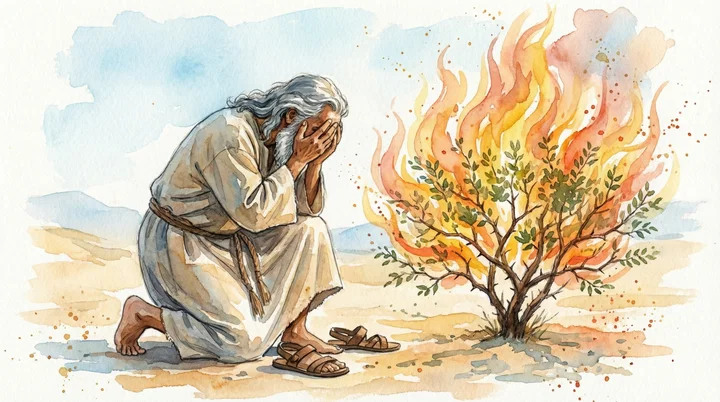
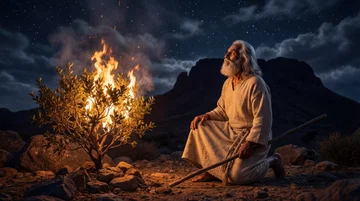
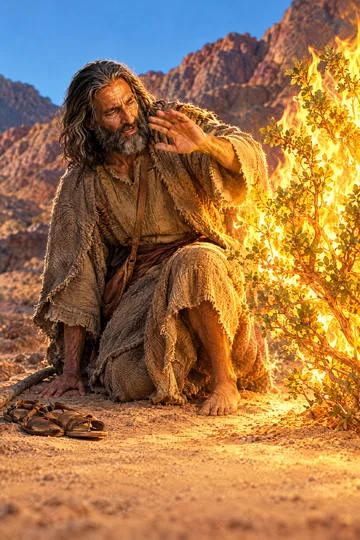
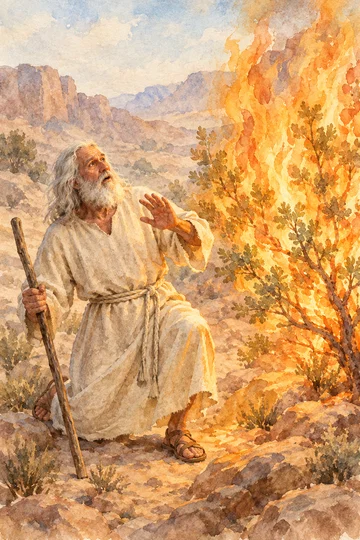
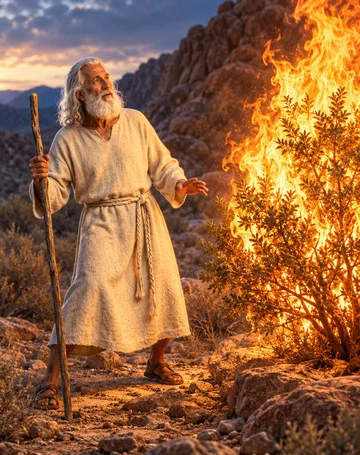
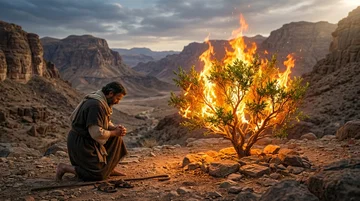
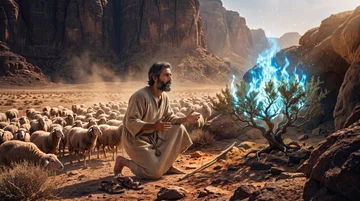
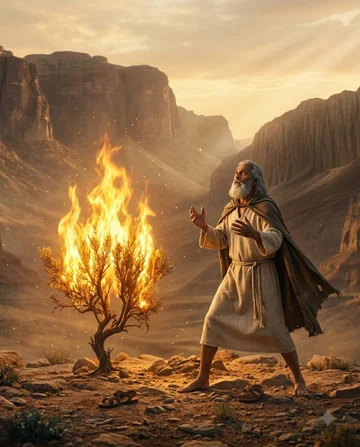
And when the LORD saw that he turned aside to see, God called unto him out of the midst of the bush, and said, Moses, Moses. And he said, Here am I.
Translations
And when the LORD saw that he turned aside to see, God called to him out of the middle of the bush, and said, Moses, Moses. And he said, Here am I.
King James Version, Revised Version
And when the LORD saw that he turned aside to see, God called unto him out of the midst of the bush, and said, Moses, Moses. And he said, Here am I.
And when the Lord saw that he turned aside to see, God called unto him out of the midst of the bush, and said, Moses, Moses. And he said, Here am I.
And when the LORD saw that he turned aside to see, God called to him out of the midst of the bush, and said, Moses, Moses. And he said, Here am I.
And when Jehovah saw that he turned aside to see, God called unto him out of the midst of the bush, and said, Moses, Moses. And he said, Here am I.
and Jehovah seeth that he hath turned aside to see, and God calleth unto him out of the midst of the bush, and saith, 'Moses, Moses;' and he saith, 'Here [am] I.'
And Jehovah saw that he turned aside to see, and God called to him out of the midst of the thorn-bush and said, Moses, Moses! And he said, Here am I.
And Yahweh saw, that he turned aside to see,—so God called unto him out of the midst of the thorn-bush, and said—Moses! Moses! And he said—Behold me!
Berean Standard Bible, Majority Standard Bible
When the LORD saw that he had gone over to look, God called out to him from within the bush, “ Moses, Moses!”“ Here I am,” he answered.
When the LORD saw that he came over to see, God called to him out of the middle of the bush, and said, “ Moses! Moses!”He said, “ Here I am.”
And when the Lord saw him turning to one side to see, God said his name out of the tree, crying, Moses, Moses. And he said, Here am I.
And when the Lord sawe that he turned aside to see, God called vnto him out of the middes of the bush, and said, Moses, Moses. And he answered, I am here.
Douay-Rheims (Challoner revision)
And when the Lord saw that he went forward to see, he called to him out of the midst of the bush, and said: Moses, Moses. And he answered: Here I am.
Pictures

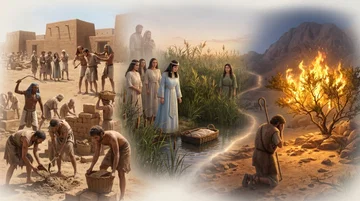
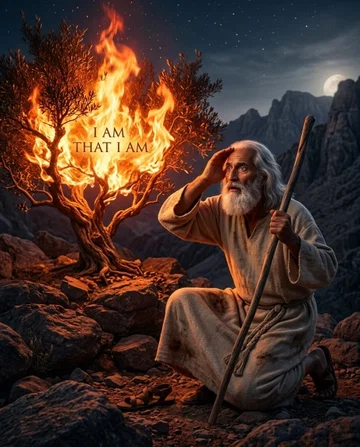
Cross-references 20 of 30
- Joshua 5:15
And the captain of the LORD’s host said unto Joshua, Loose thy shoe from off thy foot; for the place whereon thou standest is holy. And Joshua did so.
God’s presence makes the ground holy, and both encounters call for reverence.
- Exodus 3:10
Come now therefore, and I will send thee unto Pharaoh, that thou mayest bring forth my people the children of Israel out of Egypt.
God commissions Moses to bring Israel out of Egypt.
- Exodus 2:11-15
And it came to pass in those days, when Moses was grown, that he went out unto his brethren, and looked on their burdens: and he spied an Egyptian smiting an Hebrew, one of his brethren.
Moses’s premature attempt to deliver Israel preceded God’s later call.
- Judges 6:11-14
And there came an angel of the LORD, and sat under an oak which was in Ophrah, that pertained unto Joash the Abi-ezrite: and his son Gideon threshed wheat by the winepress, to hide it from the Midianites.
Both Moses and Gideon are called by God and commissioned to deliver Israel.
- Acts 7:22-25
And Moses was learned in all the wisdom of the Egyptians, and was mighty in words and in deeds.
Moses’s Egyptian learning and early confidence contrast with his later wilderness calling.
- Exodus 3:14
And God said unto Moses, I AM THAT I AM: and he said, Thus shalt thou say unto the children of Israel, I AM hath sent me unto you.
God reveals the I AM name during the encounter at the bush.
- Hebrews 11:27
By faith he forsook Egypt, not fearing the wrath of the king: for he endured, as seeing him who is invisible.
Moses endured by faith, seeing the invisible God who called him.
- Acts 9:3-6
And as he journeyed, he came near Damascus: and suddenly there shined round about him a light from heaven:
Both describe an unexpected encounter with God that redirects a person to his service.
- Acts 7:30-34
And when forty years were expired, there appeared to him in the wilderness of mount Sina an angel of the Lord in a flame of fire in a bush.
Stephen recounts God calling Moses from the bush.
- Acts 7:35
This Moses whom they refused, saying, Who made thee a ruler and a judge? the same did God send to be a ruler and a deliverer by the hand of the angel which appeared to him in the bush.
God sends Moses as Israel’s deliverer through the angel in the bush.
- Mark 12:26
And as touching the dead, that they rise: have ye not read in the book of Moses, how in the bush God spake unto him, saying, I am the God of Abraham, and the God of Isaac, and the God of Jacob?
God’s words at the bush are cited as evidence that the dead rise.
- 1 Kings 19:12
And after the earthquake a fire; but the LORD was not in the fire: and after the fire a still small voice.
Both describe God revealing himself through a quiet voice.
- Acts 7:37-38
This is that Moses, which said unto the children of Israel, A prophet shall the Lord your God raise up unto you of your brethren, like unto me; him shall ye hear.
Stephen identifies an Angel as speaking to Moses.
- Luke 20:37
Now that the dead are raised, even Moses shewed at the bush, when he calleth the Lord the God of Abraham, and the God of Isaac, and the God of Jacob.
God’s words at the bush affirm the resurrection of the dead.
- Exodus 3:11-12
And Moses said unto God, Who am I, that I should go unto Pharaoh, and that I should bring forth the children of Israel out of Egypt?
Moses responds to God’s call with a sense of inadequacy, and God promises to be with him.
- John 8:58
Jesus said unto them, Verily, verily, I say unto you, Before Abraham was, I am.
Both identify the speaker as the I AM who existed before Abraham.
- John 13:19
Now I tell you before it come, that, when it is come to pass, ye may believe that I am he.
Jesus uses the I AM name revealed from the burning bush.
- Exodus 19:18
And mount Sinai was altogether on a smoke, because the LORD descended upon it in fire: and the smoke thereof ascended as the smoke of a furnace, and the whole mount quaked greatly.
both show God's glory and presence on Horeb-Sinai
- Numbers 16:28
And Moses said, Hereby ye shall know that the LORD hath sent me to do all these works; for I have not done them of mine own mind.
Moses answers God’s call and acts under divine authority, not his own initiative.
- Genesis 3:9
And the LORD God called unto Adam, and said unto him, Where art thou?
God calls Adam in the garden.
Commentary
Each commentary is drawn from primary sources: the writings of Ellen G. White and Adventist pioneers and periodicals. Each commentary is separate. Its own words are not a quotation; follow the references to read the source passages.
Ellen G. White
26 sources
At Horeb, after forty years keeping Jethro's flock in Midian, Moses turned aside to examine why the bush burned without being consumed without at first recognizing God's presence in it, and God then called him by name from its midst and he answered that he was present and ready to attend.1SP 168.2–169.1PP 251.2–252.1Ms 142, 1897, par. 17–20SG3 186.1–187.1 The burning unconsumed bush was the token of the divine presence, and the voice from it was Jesus Christ the living God and Lawgiver, not a common angel, the same who guided Israel in fire and cloud.Ms 200, 1898, par. 15Ms 20, 1895, par. 21SP 347.3–348.2Ms 126, 1901, par. 4–6 The Infinite veiled the brightness of His glory in the humble bush and in darkness as His pavilion so fallen man could endure to look upon Him, foreshadowing the hiding of divine glory in human form at the incarnation.Ms 126, 1901, par. 4–617MR 30.1–2 Jehovah revealed Himself only when Moses had been emptied of self and trained through humble shepherding to humility, meekness, faith and tender care for straying sheep, fitting him to shepherd Israel.1SP 168.2–169.1SG3 186.1–187.1Ms 130, 1898, par. 4Lt 116, 1896, par. 7–10Ms 45, 1890, par. 11–13 He was commissioned to bring Israel out of Egypt not by warfare but by God's mighty power in signs and wonders, and his ready obedience in self-distrust and reverence transformed him from timid and slow of speech to eloquent, patient and competent for the work.1SP 168.2–169.1PP 251.2–252.1SG3 186.1–187.1MH 474.3–475.2ST Mar 31, 1881
Call at Horeb
The call took place in the desert at Horeb, the mountain of God, where Moses had led the flock of Jethro.1SP 168.2–169.1SG3 186.1–187.1 It came after forty years in Midian in retirement keeping sheep in humble duty.1SP 168.2–169.1SG3 186.1–187.1MH 474.3–475.2 It marked that the time had fully come for Moses to exchange his shepherd's staff, or crook, for the rod of God, the rod of authority.1SP 168.2–169.1SG3 186.1–187.1MH 474.3–475.2
When Moses turned aside to examine the sight, he went to see why the bush burned without being consumed.1SP 168.2–169.1PP 251.2–252.1Ms 142, 1897, par. 17–20SG3 186.1–187.1OEWP 14.1–16.2 At first he did not recognize God's presence in what he beheld.MH 436.2–3 When the Lord saw that he turned aside to see, God called to him by name out of the midst of the bush, saying Moses, Moses.1SP 168.2–169.1PP 251.2–252.1Ms 142, 1897, par. 17–20SG3 186.1–187.1OEWP 14.1–16.2 And he answered, Here am I, declaring himself present and ready to attend.1SP 168.2–169.1PP 251.2–252.1Ms 142, 1897, par. 17–20OEWP 14.1–16.2Ms 45, 1890, par. 11–13
God Revealed in Bush
The burning bush was a token of the divine presence, with God as a consuming fire dwelling in a humble, insignificant bush so that Moses could look upon the unseen God in representation and hear His voice speaking from its midst.Ms 200, 1898, par. 151SP 347.3–348.2 Moses knew the voice to be God because the bush burned yet was not consumed.Ms 200, 1898, par. 15 The voice calling to Moses out of the midst of the bush was the Lord Jesus Christ, the Light of the world and living God and Lawgiver, not a common angel.Ms 20, 1895, par. 21SP 347.3–348.2Ms 126, 1901, par. 4–6 He was the same one who spoke to Joshua as Captain of the host of the Lord, who conducted the Hebrews through the wilderness enshrouded in the pillar of fire by night and the pillar of cloud by day, and who later talked with Moses from the midst of the glory in the cloud that guided Israel and stood over the tabernacle as the dwelling place where God met with men after the fall.1SP 347.3–348.2Ms 126, 1901, par. 4–6 His presence is what made the place holy.1SP 347.3–348.2
The Infinite was present in the bush, but His glory was veiled so Moses could look upon it and live.17MR 30.1–2 In both the bush and the guiding cloud the brightness of God's presence was enshrouded in darkness He made His pavilion, so that Moses and the people could endure to look upon the cloud as seeing Him who is invisible.Ms 126, 1901, par. 4–617MR 30.1–2 This veiling was God's plan whereby He might approach fallen man.Ms 126, 1901, par. 4–6 The humble symbol in which Christ appeared thus foreshadowed the incarnation, when divine glory would be hidden in visible human form.17MR 30.1–2
The bush was given as a symbol for terrible conflict, showing what is true of all who believe in Him: His power works as a refining fire to consume the dross while the human agent is not consumed, and keeping His commandments shows knowing Him.Ms 200, 1898, par. 15 The bush burning without being consumed also pictures people in reverses, deprivation, affliction, illness and adversity, with God calling from its midst to show that the brightness of the presence of the Unseen is with sufferers to comfort and sustain them.MH 211.3–212.2 The verse shows that the Lord God of heaven is in communication with the fallen inhabitants of this world and is not regardless of earth and its concerns.Ms 142, 1897, par. 17–20 He bends toward earth and its inhabitants who are deceived and annoyed and deluded by satanic agencies, and He listens to every word that is uttered.Ms 142, 1897, par. 17–20 Through Moses, Jehovah was to be made known as superior to every false deity.Ms 20, 1895, par. 2
Commission and Preparation
Moses had been taken into the royal family of Egypt, given a thorough education, and fully qualified as a general to stand at the head of armies, yet he was not prepared to be entrusted with God's work.1SP 168.2–169.1SG3 186.1–187.19MR 62.1 He prematurely attempted to deliver Israel by force and warfare, slaying an Egyptian who was fighting with an Israelite and hiding him in the sand, thinking Israel would recognize him as their deliverer and hurrying to begin.SG3 186.1–187.1Ms 8a, 1891, par. 25–279MR 62.1 Seeing he was not ready, God sent him away for forty years among the rocks and mountains and desert as a keeper of sheep.SG3 186.1–187.1Ms 8a, 1891, par. 25–279MR 62.1 There the Lord sent angels to instruct him about the future, while he patiently sought and hunted for stray sheep and learned self-control and humility.1SP 168.2–169.1SG3 186.1–187.1Ms 8a, 1891, par. 25–279MR 62.1
In that wilderness school of adversity and poverty he was placed under mental and moral discipline and learned faith and meekness, patience, humility, trust and self-forgetfulness.1SP 168.2–169.1SG3 186.1–187.1MH 474.3–475.2CT 406.2Ms 45, 1890, par. 11–13 While shepherding literal sheep God was training him to become a tender, patient, loving and faithful spiritual shepherd, to care tenderly for His erring, straying sheep, even Israel.1SP 168.2–169.1SG3 186.1–187.1Ms 8a, 1891, par. 25–279MR 62.1 Only when he had been for forty years a faithful shepherd was he sent, proving that useful and honored workers in God's cause receive their training amid the humble duties of the most lowly positions in life.1SP 168.2–169.1SG3 186.1–187.1GW 332.3–333.1 Before the call he was directed by God to obtain experience in care-taking, in thoughtfulness, in tender solicitude for his flock, so that as a faithful shepherd he would be ready.GW 332.3–333.14T 442.1
Jehovah revealed Himself only when Moses was prepared in singleness of heart, having worked steadily upward toward the light with Jethro's help to gain a correct faith.Ms 130, 1898, par. 4Ms 45, 1890, par. 11–13 As he was emptied of self and learned to do God's will through years of shepherding and discipline, God was revealed to him.Lt 116, 1896, par. 7–10Ms 45, 1890, par. 11–13 Though Moses believed he might have forfeited the right to serve as God's instrument, God selected him after forty years of exile and discipline had prepared him for the work.Lt 116, 1896, par. 7–10Lt 77, 1902, par. 7–8 The Lord thus proves and tests and tries His servants in a manner surprising to human reasoning, because His thoughts and ways are higher than human thoughts and ways, to refine and purify them for service.Ms 130, 1898, par. 4Lt 116, 1896, par. 7–10Lt 77, 1902, par. 7–8
The call commissioned him to bring Israel out of Egypt, to deliver them from oppression and preserve them from their enemies, not by warfare as Moses had supposed, but by God's own mighty power, that the glory might be ascribed to God alone.1SP 168.2–169.1SG3 186.1–187.19MR 62.1 He was to exchange the shepherd's staff and crook for the rod of God and of authority, to be made powerful in signs and wonders and to leave his flock of sheep to take the leadership of Israel.1SP 168.2–169.1MH 474.3–475.2 This appointing to deliver Israel began the mission he later recognized as appointed by God.ST Mar 31, 1881Lt 116, 1896, par. 7–10PP 471.3–472.2 Moses met with God in communion at the bush, speaking with the Angel before hearing God's message to Pharaoh, and that communion belonged to forty years of communing with God in the mountain altitudes that prepared him to be God's instrument.ST Jul 27, 1915 That meeting with God and receiving of spiritual refreshing prepared him to carry God's message to Pharaoh, and proves that meeting with God must come before doing God's work.ST Jul 27, 1915
The call found him self-distrustful, slow of speech and timid, overwhelmed with a sense of his incapacity to be a mouthpiece for God.PP 251.2–252.1MH 474.3–475.2 His answer, Here am I, expressed his presence and readiness to attend to God.PP 251.2–252.1OEWP 14.1–16.2Ms 45, 1890, par. 11–13 He accepted the work putting his whole trust in the Lord, and his ready, willing obedience with the whole soul, listening for God's commands that he might obey them, called into exercise the best powers of his mind and gave vital energy and power to his soul.MH 474.3–475.24T 612.2–613.1Ms 45, 1890, par. 11–13 God's presence demanded reverence and humility, and God blessed his obedience so that he was transformed in character and daily life and became eloquent, hopeful, self-possessed, patient, self-reliant and competent for the greatest work ever given to man or entrusted to mortal man.PP 251.2–252.1MH 474.3–475.24T 612.2–613.1 His later usefulness depended not on human learning or self-confidence but on faith, humility and obedience to the Lord who called him, for Moses became great because he used his talents to do the work of God and increase of talents was then given him.MH 474.3–475.2OEWP 14.1–16.24T 612.2–613.1
Those who preach the truth need the same caretaking experience, for in order to lead souls to the life-giving fountain the preacher must first drink at the fountain himself, seeing the infinite sacrifice made by the Son of God to save fallen men and being imbued with undying love.GW 332.3–333.14T 442.1 Hard labor appointed by God must be done without murmuring, and a difficult and dangerous path must be followed in meekness with crying to God for strength, accepting with thankfulness the way of God's choosing.4T 442.14T 612.2–613.1 Even limited capacity in humble service is acceptable to God and does a work enduring as the sun for the worker and for those for whom he labors.4T 442.14T 612.2–613.1 In the valley of humiliation need is felt and God is depended on to guide the steps, so affliction with its disappointment and sorrow gives comparative safety, while prosperity and influence are most dangerous to spiritual life and most need prayer.MH 211.3–212.24T 442.1
Sources
Pioneers and periodicals
89 sources
When Moses was keeping the flock of Jethro at Horeb and turned aside to see why the bush burned without being burnt, the Lord saw it and called him twice by name out of the midst of the bush, and he answered, Here am I.ST Mar 24, 1887RH Dec 30, 1902ST Dec 21, 1888 The voice was God Himself appearing as the Angel of the Lord, Jesus Christ the divine I AM and mighty Messenger through whom the Father is revealed.ST Mar 24, 1887ST Aug 19, 1880ST Aug 14, 1901ST Mar 18, 1903 The call came at the end of forty years tending sheep in Midian, schooling that untaught Egypt's wisdom and emptied Moses of self-sufficiency until in humility and felt weakness he was ready to be sent.ST Jan 24, 1911ST Dec 25, 1901RH Mar 23, 1869 The ground where he stood became holy because God was present in the bush, for holiness comes not from the place itself but from Christ's living presence in it, even as He made the Sabbath holy by placing His presence in that day.ST Jun 20, 1916STST Apr 24, 1893ST Jul 15, 1908ST Jul 30, 1894 It was God's direct call appointing Moses deliverer to lead Israel out of Egyptian bondage, and the bush burning yet unconsumed represented His people and church preserved by His indwelling presence amid the fire of affliction and persecution.ST Dec 2, 1880RH Jan 20, 1916ST Dec 2, 1880RH Oct 24, 1912
Words and Historical Setting
When Moses turned aside to see why the bush burned without being burnt, the Lord saw it and called to him twice by name out of the midst of the bush, and Moses answered, Here am I.ST Feb 26, 1880ST Mar 24, 1887RH Dec 30, 1902ST Dec 21, 1888GSAM 198.3–199.1 The call came from within the bush where the divine presence was revealed, and it marked his commission as one who must approach with reverence and not presumption.ST Feb 26, 1880RH Dec 30, 1902GSAM 198.3–199.1 The miraculous bush and the voice from its midst gave unmistakable evidence that God had chosen him to lead Israel out of Egypt and would prepare the people to accept him as their leader under God.GSAM 198.3–199.1 This call came less than two years before the spies were sent to search Canaan.ST Apr 14, 1914
The setting was while Moses was keeping the flock of Jethro his father-in-law, the priest of Midian, and had led it to the back side of the desert to Horeb, the mountain of God, where the Angel of the Lord appeared in a flame of fire out of the midst of a bush.ST Mar 24, 1887ST Dec 21, 1888 Moses said he would turn aside to see this great sight why the bush was not burnt.ST Dec 21, 1888 The same speaker then warned Moses not to draw near and commanded him to remove his shoes because the ground was holy.ST Mar 24, 1887ST Dec 21, 1888 He declared Himself the God of his father and the God of Abraham, Isaac, and Jacob so that Moses hid his face from fear of looking upon God, and He declared His knowledge of Israel's affliction in Egypt, His readiness to deliver them, and His sending of Moses to Pharaoh to bring Israel out.ST Mar 24, 1887ST Dec 21, 1888
The event belongs to the history of Exodus 1-14 and to the period of Israel's oppression in Egypt before the deliverance.RH Apr 23, 1908RH Dec 17, 1861 Its general series of events has no direct mention in Egypt's public monuments because only successes and triumphs were registered and court historians omitted defeats such as a year of plagues and the Red Sea disaster.RH Apr 23, 1908 The account is affirmed as true history by Stephen's rehearsal of it in Acts 7.ST Apr 13, 1904 It stands with Jonah, Lot's wife, Elijah's ascension, Methuselah's age, and Daniel in the lions' den as literal truth whose denial rejects the inerrancy and infallibility of the Bible.ST Jun 14, 1899
God appeared in a bush that was humble, slender, and abject, not in the lofty cedar or spreading palm, to check human arrogance, matching His choice of the vine among trees, the lamb among beasts, and the dove among fowls; humility produces love and pride produces hate.RH Dec 17, 1857 The glory of God was made visible in Horeb's burning bush; before sin that same visible glory filled the whole earth so that every bush burned like Horeb's, it has now faded so beauty stands with barrenness and suffering, and its full return will come in the future restitution when glory overflows the earth.RH Jan 16, 1900 Moses in trembling awe hastened to remove his shoes, uncover his head, and hide his face before the voice that startled Horeb's heights and still declares Himself the God of Abraham, Isaac, Jacob, and the hearer.RH Oct 29, 1914 In that passing by, God Omnipotent permits fallen man to gaze for a moment on His loveliness.RH Oct 29, 1914
Speaker Who Called
The voice that called to Moses by name twice from the middle of the bush was God Himself as the Angel of the Lord who had appeared in a flame of fire out of the midst of the bush, also called the Lord and God.ST Mar 24, 1887ST Aug 19, 1880RH May 11, 1869 When Moses turned aside to look at the bush enveloped in flame yet not consumed, God saw his attention was arrested and called to him from its midst, then warned him not to approach nearer and commanded him to remove his shoes because the very spot where he stood was holy ground.ST Mar 24, 1887RH May 11, 1869 The same speaker declared Himself to be the God of his father, the God of Abraham, the God of Isaac, and the God of Jacob, causing Moses to hide his face because he was afraid to look upon God, and met him at the foot of Horeb to commission him to deliver Israel when He saw His people's oppression.ST Mar 24, 1887ST Aug 19, 1880RH May 11, 1869
That Angel in the bush is Jesus Christ, God the Son through whom the Father is revealed, God's mighty Messenger and Representative to the world.ST Aug 19, 1880ST Aug 14, 1901ST Mar 18, 1903 He is the divine I AM who existed before Abraham's day and led Israel out of Egypt, the divine deliverer who appeared to Moses and whom Stephen later saw at God's right hand.ST Aug 19, 1880ST Aug 19, 1880ST Mar 30, 1915
The speaker is Christ appearing as an Angel, identified as Michael, Israel's Protector and Commander of the angels.ST Jul 23, 1912 His taking the nature of angels was His first step downward to lift up the fallen race, taking the form of a servant to carry out His great purpose of giving Himself from the beginning. That step came before the next step of being made in the likeness of men and the final step of becoming obedient unto death on the cross. The God who called out of the midst of the burning bush was God the Son, not God the Father, for through all Bible times the Son acted in subjection as servant and representative of the Father, having given Himself from the foundation of the world.ST May 20, 1908 In all His manifestations either as the Angel of the covenant or as Jesus of Nazareth He remained in that capacity, and at the bush His object was not to reveal Himself but to reveal the Father.ST May 20, 1908
Those who held otherwise teach that the title God is applied to an angel who called himself Lord and in verse 6 styled himself the God of Abraham, Isaac and Jacob, as it is also applied to men. On that ground, they teach, being called God does not by itself prove being the very and eternal God Jehovah, and being called God cannot prove Christ is the very and eternal God. In like manner, those who grouped Him otherwise teach that the God who speaks to Moses from the bush is grouped with angels and other spiritual beings and has the same basic meaning as ministering spirits, spirit guides, or spirits.ST Jul 31, 1879
Training of Moses
God's call from the bush came at the end of forty years in Midian after Moses' flight from Egypt.ST Jan 24, 1911 Though educated in all the learning of the Egyptians and understanding that he was to be the deliverer of God's people, he attempted a self-sent mission forty years ahead of God when he saw the Egyptian ill-treating the Hebrew, and failed utterly.ST Jan 24, 1911RH Jun 12, 1913 That failure drove him into exile, where affliction prepared the way for God to reveal Himself to him in the burning bush and begin fitting him in Midian for his work.RH Aug 11, 1863RH Jun 12, 1913
For forty years more tending sheep in the deserts and mountains of Midian, alone with God and nature, he received schooling that untaught the wisdom of Egypt.ST Jan 24, 1911ST Mar 8, 1910ST Sep 24, 1896 There, caring for his flock by night and day, he had to learn man's littleness and God's greatness and the compassion and tenderness necessary to be a true shepherd to God's flock to Canaan.ST Jun 17, 1889 That long preparation fitted him with humility, patience, submission, compassion, tenderness, wisdom, earnest devotion, tender solicitude, and constant self-sacrifice to lead a people out of bondage into the land of freedom.RH Mar 23, 1869ST Mar 8, 1910ST Jun 17, 1889
At the beginning of those forty years he felt all-sufficient with his knowledge of warfare and Egyptian education and thought himself competent and sufficient to lead Israel from bondage.ST Jan 24, 1911RH Mar 23, 1869ST Jun 17, 1889 When God called him from the bush he felt utterly insufficient, unfit, weak, and selfish, having died to self and become dust and ashes in his own eyes.ST Jan 24, 1911RH Mar 23, 1869RH Sep 23, 1902 He had lost all self-sufficiency and sight of his own strength and great capacity, becoming humble as a child with poverty of spirit, and begged the Lord with sincerity and earnestness to send some other and more suitable and fitter person, which proves he had wisely improved his lowly schooling and was truly ready for the work.RH Mar 23, 1869RH Mar 23, 1869
The call marked his graduation and the appointed moment in God's chosen time, ending his life in exile and beginning God's work through him to deliver Israel from bondage.RH Feb 4, 1873ST Sep 24, 1896 His forty years in Midian had not been wasted, and God's assurance that He would be with him enabled him to consent when he felt unfit for the work.ST Dec 25, 1901ST Jun 15, 1904 God's thought for Israel was deeper and grander than Moses had conceived, yet after calling him God used him wonderfully in leading His people forward.RH Jun 12, 1913
The change revealed a grand, luminous character against the blackness of surrounding idolatry, standing second only to Jesus Christ whom he feebly typified.ST Mar 8, 1910 Through him God gave wonderful lessons to the world and the books that molded marvelous civilizations.ST Mar 8, 1910 He was sent on one of the greatest missions ever given to mortal man, to conquer Egypt and deliver Israel as Moses the man of God.ST Sep 24, 1896 Feeling insufficient for such a call brings God's rebuke, teaching that to whatever work God calls, dependence on Him will fit the worker for that work and supply all need.ST Jun 17, 1889
Meaning of Unconsumed Bush
The bush that burned without being consumed was Israel in Egypt, kept alive in the midst of affliction, for the harsh oppression that pressed upon the people was like fierce fire yet they flourished instead of being destroyed.ST Dec 2, 1880 In the same sense it is the church of God through all ages, which affliction and worldly influences may strain and break apart outwardly but cannot destroy, for though individual members may be killed God preserves His people and raises up others in their place until the time of deliverance, when they come forth from the fire unharmed.ST Dec 2, 1880 That preserving power was seen in the Waldensian church in the valleys of Piedmont, the burning bush in Christendom, enduring through centuries of decreed extirpation and military carnage while rejecting corrupt dogmas and holding the Bible as the only rule of faith and practice, and proving the power of the gospel to sustain individuals and communities in the deepest suffering.RH Oct 24, 1912
God Himself was in the midst of the burning bush, living and present with His people in the furnace of affliction, using its fire to purify rather than to destroy.RH Jan 13, 1874 The suffering of Israel in Egypt was consuming the dross of the people, while Moses' own long hardship in Midian had taught him his own littleness and God's greatness and shown him that his forty years had not been wasted and that he was now ready to be used.ST Jun 15, 1904RH Jan 13, 1874 The fiery appearance was God's presence made visible, a pattern of the divine presence that would afterward accompany Israel and a symbol of God's union with His people.RH Feb 10, 1910
The flaming yet unconsumed bush is also like the Bible, which has withstood time, corruption, banishment, persecution, ridicule, misrepresentation, opposition, and burning without sinking, and its unconsumed survival proves that He who spoke from the midst of the bush is its author.RH Jun 26, 1855 The Angel dwelling in the bush honors the just when they are hidden in obscurity, and the same presence that made the bush burn makes the place around the righteous burn and causes them to shine out again with round, clear light over a wider field, even as when hidden in the depths of a forest.RH Jul 24, 1856
Holiness by Divine Presence
The ground where Moses stood became holy ground because God was present there in the bush calling to him, and that presence made the place different from all other places.ST Jun 20, 1916RH Jan 19, 1905RH Feb 5, 1901 The ground where God manifested His presence to Moses was holy and had to be approached with reverence, and Moses answering, Here am I, trembling with awe and terror, shows that God's holy presence must be approached with reverence and not with presumption.ST Feb 26, 1880ST Jun 20, 1916ST May 8, 1901 Christ's presence at the burning bush sanctified the mountain and made the place holy ground.RH Feb 5, 1901ST Jul 30, 1894
The holy God dwells in consuming glory that destroys everything connected with sin, so that the ground around the burning bush was holy and Moses could not carelessly draw near without being quickly consumed by the glory of the divine presence.RH Dec 4, 1913 Holiness comes not from the place itself but from Christ being present in it, for it was His presence there calling from the midst of the bush that made the ground holy.ST Jul 15, 1908ST Jan 21, 1897 The blessing of God is never separated from the presence of God, for to bless is to put Himself, His own living presence, within, and His presence at the bush is what made the ground holy, just as His presence sanctified the tabernacle.ST Jul 15, 1908
In the same way Christ blessed the Sabbath and made it holy by placing His presence in that day for man in a special manner, making that day different from all other days.STST Apr 24, 1893RH Jan 19, 1905 Christ put His presence, His own divine Self, into the seventh day when He blessed and sanctified it, and His holy presence in the day is what makes it a holy day, for no place, no man, and no day are holy in any other sense.ST Jul 15, 1908ST Jan 21, 1897 The seventh day is likewise holy because God's presence was in it when He rested and was refreshed, illustrating that Christ's presence in the Sabbath makes the day holy.ST Apr 24, 1893ST Feb 7, 1900
God's hallowed Sabbath time should likewise be entered with reverence like the holy ground at the bush.ST May 8, 1901 To keep the Sabbath holy means to keep God's presence in the day, and to do that a person must be holy himself.ST Feb 6, 1901 Human power cannot do this; only God's power given through the gospel can make a person holy and enable him to keep the Sabbath in a way God accepts.ST Feb 6, 1901
Commission to Deliver Israel
Exodus 3:4 marks the beginning of God's direct, impressive call of Moses to become the deliverer and leader of Israel out of Egyptian bondage, belonging to the account of his call and mission to Egypt in Exodus 3 and 4.ST Mar 31, 1881RH Jan 20, 1916ST Jan 28, 1913ST Jan 20, 1909 After Moses turned aside to look at the burning bush, God called him from its midst and appointed him to that work.ST Mar 31, 1881RH Jan 20, 1916ST Jan 28, 1913 The call came when the hour and full time for Israel's deliverance had arrived, with Moses chosen as God's instrument to meet the crisis of oppression and lead Israel out with a mighty hand, though he would lead them only to the border of Canaan.RH Mar 23, 1869RH May 13, 1915RH Mar 23, 1869ST Mar 23, 1882RH Feb 2, 1911 Forty years before he had thought himself competent and attempted deliverance on his own only to fail utterly, but forty years of humble shepherd life in the desert near Sinai in communion with God taught him humility, patience, submission, poverty of spirit, and every grace until he died to self and became dust and ashes in his own eyes and begged the Lord to send some other fitter person, which proved he had wisely improved his lowly schooling and was truly ready.RH Mar 23, 1869RH Mar 23, 1869 His deep self-abasement revealed full knowledge of his own weakness, for he had lost all self-sufficiency and sight of his own strength and great capacity and was humble as a child, though he was the only man in the world with the natural ability and deep experience in the things of God required for the greatest task ever assigned to mortal man.RH Mar 23, 1869
From that point Moses acted not on his own authority but under God's direction, and the authority expressed through him is God's and therefore belongs to Christ as well.ST Jun 17, 1886 The call came without suggestion or influence from men, laying hold of conscience with an unyielding grip until surrender and obedience to the heavenly calling. Moses was not moved to leave his flock in the wilderness and devote the remainder of his life to the great Exodus by the counsel of Jethro his father-in-law or by the suffering condition of Israel in Egypt, but by the voice of God speaking from the burning bush. Unmistakable evidence was given on the spot in the miraculous bush and voice that he was not being misled, convincing him that God had chosen him to lead Israel out of Egypt and giving him a divine commission that would command his people's attention and prepare them to accept him as their leader under God.GSAM 198.3–199.1
God's purpose did not depend on Moses' agreement, for though he could continue making excuses and refuse to face the king, God would provide the means to fulfill His promise to Abraham.ST Mar 23, 1882 In every age God likewise raises up men and women and has them in training years before to meet crises and stand for the right when great principles are involved, with means and agencies coming into existence as His clock of time marks off the centuries and prophetic prediction reaches fulfillment, Providence never surprised by the unforeseen.RH Feb 2, 1911 God placed Himself under test to prove His word to His own servant by visible signs in order to satisfy Moses as a fallible man slow to accept it without such test, showing that God invites men to prove Him and is reasonable in insisting that human love be proved.ST May 1, 1901 After redeeming with a mighty hand a people unfitted by hundreds of years of slavery to comprehend His great salvation and the character He required, God used Moses as the one through whom He gave a great, multiple object-lesson of the plan of salvation.ST Feb 27, 1896 He called Moses from tending Jethro's flocks to lead Israel out of bondage, giving him instruction and the Spirit's wisdom and ability for the responsibility, instructing him to ask for free-will offerings to make a sanctuary that God might dwell among them, and showing him the divine pattern in the mount.ST Feb 27, 1896
Doctrine and Prophecy Taught
God's declaration at the bush that He is the God of Abraham and the God of Isaac and the God of Jacob proves that the dead will rise.ST Jul 7, 1887 The force of the proof rests on the patriarchs being dead and not living elsewhere, so that the words point to a future resurrection.ST Jul 7, 1887 That resurrection is still future, and those counted worthy to obtain it will die no more.ST Jul 7, 1887ST Jul 7, 1887 Israel already knew the true God at the time of the bush, so God's later making Himself known to them was a fuller revelation and not their first knowledge of Him.RH Feb 3, 1852 Where God manifests His immediate presence the very ground becomes holy, because His presence is the purest and holiest place in the universe.ST Apr 15, 1897 His presence purifies by abolishing and consuming what is impure and sinful.ST Apr 15, 1897 Applied to the second coming of Christ, His unveiled glorious presence will therefore mean utter destruction to those who have rejected Him and remain joined to sin.ST Apr 15, 1897
Christian Life Applied
God did not call at the outset but waited until Moses turned aside to look, nor did He place the burning bush directly in Moses' pathway, not because He was confined to that spot but to test obedience as all will be tested.RH Mar 5, 1861 When men stop to give heed to what He shows, He answers attention by revealing Himself with a definite program for the hour, as He then revealed Himself for the relief of His oppressed nation, so turning aside now to note what His word says brings knowledge of His present purpose and brings a message to the inquiring soul.ST Oct 21, 1930ST Oct 6, 1909 No matter if a person has professed the religion of Christ for years and has even been a teacher in Israel, he must yield to the mandates of God's law as far as light is brought out and walk in the light, or the little light he had in the past will become darkness, and how great that darkness, when all the righteousness he has done shall not be mentioned nor valued.RH Mar 5, 1861
Because Moses turned aside to commune with God he became God's messenger to Pharaoh and the deliverer of Israel from Egyptian bondage.RH Apr 4, 1912 Seeking the Lord by day or by night as Moses did brings similar experience, with prayers heard and answered when He is sought with the whole heart, bringing visits, victory over self and sin, and great things accomplished for God.RH Apr 4, 1912 Turning aside to see what the burning bush means is heeding the still small voice heard in distinct reproof as God calling in sweet mercy in tones of love, low but decisive, to come up to the work, instead of waiting to be wakened by Sinai blazing with forked lightnings, its very foundations shaken with thunders, and the trumpet sounding in sublime and awful peals.RH May 7, 1861 Moses was alone when God communed with him from the bush and appointed him deliverer, fulfilling the promise that the Father who seeth in secret rewardeth openly.ST Nov 24, 1887 Those who prevail in prayer when alone with God draw nearest to Him and receive the richest blessings from above both for themselves and for others, for the man who prevails in prayer is the man who is alone as he prays with God, as Moses was by himself beside the bush in the wilderness when God called to him.ST Nov 24, 1887ST Apr 24, 1893
Communion with God at the bush came before hearing the message to Pharaoh and belonged to forty years of communing with God in the mountain altitudes that prepared Moses to be God's instrument in delivering Israel.ST Jul 27, 1915 Meeting with God and receiving spiritual refreshing must come before doing God's work, and communion prepared him to carry God's message to Pharaoh.ST Jul 27, 1915 That vision of the invisible God became a lasting assurance of God's presence that sustained Moses through later trials, persecution, and rebellion.ST Sep 22, 1914 God chose Horeb, the mountain of God, and the Arabian wilderness as the place to call and commune with Moses, showing His usual way of communing with His servants in mountains and solitude, and that fellowship of the wilderness is what made Moses leader, not the wisdom of the Egyptians.RH Feb 4, 1904ST Sep 20, 1899 The voice of God is clearer where there is no babble of tongues to confuse it, and the holy bush and Horeb's stillness give a place of solitude where God can be found and reveal truth, whose strength prepares for work.RH Feb 4, 1904ST Jan 28, 1913 Communion there fitted Moses to lead Israel out, and Israel was later brought to that same mountain to learn the same lesson of human littleness and God's strength.ST Sep 10, 1902
The encounter came in common life and everyday work while Moses was faithfully occupied tending his father's flock and keeping sheep, and God led him by a secular incentive to the place where a blessing of an entirely different nature awaited him.RH Apr 8, 1909ST Oct 18, 1877RH Jun 18, 1872 The richest spiritual blessings often come in the honest and faithful performance of ordinary vocations, and the call came while actively engaged, not waiting idly for Providence to act, with ordinary work preceding the greater task of confronting a powerful king and leading Israel out of slavery.RH Apr 8, 1909ST Oct 18, 1877RH Jan 28, 1902 God meeting Moses in the burning bush in the wilderness illustrates that finding God and receiving honor may come through hardship rather than comfort.RH Oct 27, 1863 That encounter after the long sojourn in Midian prepared him to face Pharaoh without fear.ST Oct 29, 1902 Moses felt wonder and reverence when the Almighty spoke to him from the bush, and the same God speaks from field and bush and tree through the marvels of the world about us, requiring the seeing eye, the hearing ear, and the feeling heart, which are to be prayed for and taught to children so their finer sensibilities may be awakened and their lives blessed with enduring things.ST Nov 21, 1900
The bush burned and burned and yet was not consumed while Moses answered and hastened to remove his shoes in holy reverence, uncovering his head in sudden silent awe, trembling and hiding his face before the voice that startled Horeb's heights and still declares Himself the God of Abraham, Isaac, Jacob, and of the hearer.RH Oct 29, 1914 God Omnipotent passing by thus permits sinful, fallen man to gaze for one little moment on His loveliness, and the bush's flames and the voice of Horeb as God revealing Himself apply to the goodness of Christ reflected in a human life.RH Oct 29, 1914ST Feb 4, 1903 God is kind, watchful, and merciful in calling sinners and cold-hearted professors during all their sinning, slavish days, with His voice to be heard from the burning bush and the burning bush to be seen representing holiness to be longed for, though dull ears do not hear, dim eyes do not see, and insensate hearts do not long.ST Aug 6, 1912 In Christ Jesus that call summons each person out of the spiritual Egypt of darkness and idolatry, unbelief and superstition, stubbornness and rebellion, slavery and death, to set feet in the highway of light and true worship, faith and truth, meekness and loyalty, freedom and life.ST Aug 6, 1912 Even if the way leads through strange paths, persecution, loss of worldly goods, and a hostile wilderness, it ends for the faithful in the immortal blessedness of eternal reign with Christ.ST Aug 6, 1912
Sources