Exodus 32:30
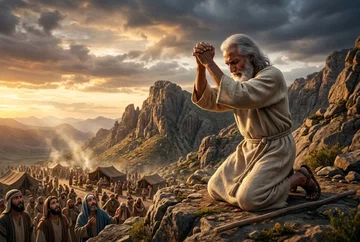
And it came to pass on the morrow, that Moses said unto the people, Ye have sinned a great sin: and now I will go up unto the LORD; peradventure I shall make an atonement for your sin.
Translations
And it came to pass on the morrow, that Moses said to the people, You have sinned a great sin: and now I will go up to the LORD; peradventure I shall make an atonement for your sin.
And it came to pass on the morrow, that Moses said unto the people, Ye have sinned a great sin: and now I will go up unto the LORD; peradventure I shall make an atonement for your sin.
And it came to pass on the morrow, that Moses said unto the people, Ye have sinned a great sin: and now I will go up unto the Lord; peradventure I shall make an atonement for your sin.
And it came to pass on the morrow, that Moses said to the people, Ye have sinned a great sin: and now I will go up to the LORD; it may be I shall make an atonement for your sin.
And it came to pass on the morrow, that Moses said unto the people, Ye have sinned a great sin: and now I will go up unto the LORD; peradventure I shall make atonement for your sin.
And it came to pass on the morrow, that Moses said unto the people, Ye have sinned a great sin: and now I will go up unto Jehovah; peradventure I shall make atonement for your sin.
And it cometh to pass, on the morrow, that Moses saith unto the people, 'Ye — ye have sinned a great sin, and now I go up unto Jehovah, if so be I atone for your sin.'
And it came to pass the next day, that Moses said to the people, Ye have sinned a great sin. And now I will go up to Jehovah: perhaps I shall make atonement for your sin.
And it came to pass, on the morrow, that Moses said unto the people, Ye, have sinned a great sin,—Now, therefore, I must go up unto Yahweh, Peradventure, I may make a propitiatory-covering for your sin.
Berean Standard Bible, Majority Standard Bible
The next day Moses said to the people, “ You have committed a great sin. Now I will go up to the LORD; perhaps I can make atonement for your sin.”
On the next day, Moses said to the people, “ You have sinned a great sin. Now I will go up to the LORD. Perhaps I shall make atonement for your sin.”
And on the day after, Moses said to the people, Great has been your sin: but I will go up to the Lord, and see if I may get forgiveness for your sin.
And when the morning came, Moses sayde vnto the people, Yee haue committed a grieuous crime: but now I wil goe vp to the Lord, if I may pacifie him for your sinne.
Douay-Rheims (Challoner revision)
And when the next day was come, Moses spoke to the people: You have sinned a very great sin: I will go up to the Lord, if by any means I may be able to entreat him for your crime.
Pictures

Cross-references 20 of 37
- Exodus 32:11-14
And Moses besought the LORD his God, and said, LORD, why doth thy wrath wax hot against thy people, which thou hast brought forth out of the land of Egypt with great power, and with a mighty hand?
Moses intercedes for Israel, and God relents from the threatened judgment.
- Exodus 32:1-6
And when the people saw that Moses delayed to come down out of the mount, the people gathered themselves together unto Aaron, and said unto him, Up, make us gods, which shall go before us; for as for this Moses, the man that brought us up out of the land of Egypt, we wot not what is become of him.
Israel worships the golden calf, the sin for which Moses seeks atonement.
- Exodus 33:14-15
And he said, My presence shall go with thee, and I will give thee rest.
Moses pleads for God to go with Israel, and God promises his presence and rest.
- Deuteronomy 9:20
And the LORD was very angry with Aaron to have destroyed him: and I prayed for Aaron also the same time.
Moses prayed for Aaron when God was angry with him, and Aaron was spared.
- Exodus 32:19
And it came to pass, as soon as he came nigh unto the camp, that he saw the calf, and the dancing: and Moses’ anger waxed hot, and he cast the tables out of his hands, and brake them beneath the mount.
Moses finds Israel worshiping the golden calf and breaks the tablets.
- Exodus 33:1-2
And the LORD said unto Moses, Depart, and go up hence, thou and the people which thou hast brought up out of the land of Egypt, unto the land which I sware unto Abraham, to Isaac, and to Jacob, saying, Unto thy seed will I give it:
God renews the land promise after Israel’s sin but initially withholds his presence.
- Exodus 32:26
Then Moses stood in the gate of the camp, and said, Who is on the LORD’s side? let him come unto me. And all the sons of Levi gathered themselves together unto him.
Moses’s call to stand with him precedes his appeal for Israel’s atonement.
- Psalms 106:19-20
They made a calf in Horeb, and worshipped the molten image.
Israel made and worshiped the calf at Horeb, exchanging God’s glory for its image.
- Deuteronomy 9:18
And I fell down before the LORD, as at the first, forty days and forty nights: I did neither eat bread, nor drink water, because of all your sins which ye sinned, in doing wickedly in the sight of the LORD, to provoke him to anger.
Moses fasts and pleads for Israel because of their sin.
- Exodus 32:10
Now therefore let me alone, that my wrath may wax hot against them, and that I may consume them: and I will make of thee a great nation.
God threatens to destroy Israel for its golden-calf sin, prompting Moses to intercede.
- Exodus 32:21-24
And Moses said unto Aaron, What did this people unto thee, that thou hast brought so great a sin upon them?
Moses confronts Aaron, who describes his part in the people’s great sin.
- 1 Timothy 2:5
For there is one God, and one mediator between God and men, the man Christ Jesus;
Moses’ intercession illustrates Christ’s mediation for sinners.
- Exodus 33:17
And the LORD said unto Moses, I will do this thing also that thou hast spoken: for thou hast found grace in my sight, and I know thee by name.
God grants Moses’ petition because he has found favor in God’s sight.
- Exodus 20:3-5
Thou shalt have no other gods before me.
Israel’s golden-calf worship violated God’s command against idols.
- Exodus 33:15-16
And he said unto him, If thy presence go not with me, carry us not up hence.
Moses seeks God’s presence with Israel after their sin and intercedes for them.
- Exodus 32:4
And he received them at their hand, and fashioned it with a graving tool, after he had made it a molten calf: and they said, These be thy gods, O Israel, which brought thee up out of the land of Egypt.
The people make the golden calf that Moses calls a great sin.
- Hebrews 9:12
Neither by the blood of goats and calves, but by his own blood he entered in once into the holy place, having obtained eternal redemption for us.
Christ obtains eternal redemption through his own blood, fulfilling Moses’ plea to make atonement for sin.
- Exodus 32:14
And the LORD repented of the evil which he thought to do unto his people.
God spares the people from total destruction.
- Deuteronomy 9:14
Let me alone, that I may destroy them, and blot out their name from under heaven: and I will make of thee a nation mightier and greater than they.
God threatens to destroy Israel after their sin, prompting Moses to intercede.
- Hebrews 7:25
Wherefore he is able also to save them to the uttermost that come unto God by him, seeing he ever liveth to make intercession for them.
Moses’ plea illustrates Christ’s mediation for sinners.
Commentary
Each commentary is drawn from primary sources: the writings of Ellen G. White and Adventist pioneers and periodicals. Each commentary is separate. Its own words are not a quotation; follow the references to read the source passages.
Ellen G. White
33 sources
On the morning after judgment had fallen and about three thousand idolaters lay dead, with terror upon the survivors who feared utter destruction, Moses plainly charged the people with the great sin of making gods of gold and worshiping the calf in breach of their newly made covenant, without excusing their guilt, and promised to go up to the Lord to seek atonement for them.3T 303.2–3Ms 66a, 1900, par. 14–19Ms 166, 1898, par. 9–15Ms 58, 1900, par. 26PP 315.2–3 To make that atonement he confessed their sin before God, pleaded earnestly for their forgiveness and restoration to favor, and offered that his own name be blotted out of God's book with theirs if they could not be pardoned.3T 303.2–3SG3 284.1–285.1Ms 13, 1906, par. 31 His offer unveiled deep love and pity, as mediator standing between Israel and burning anger and bearing their burden as though himself guilty, and it illustrates Christ's love and mediation, yet God did not permit Moses as He permitted Christ to bear the transgressor's guilt but declared the sinner himself answerable.SG3 284.1–285.1PP 326.1–31SP 252.1–2SG1 40.3 God answered that only he who sinned would be blotted out of His book, renewed the promise that His Angel would lead them to the promised place, yet warned their sin would be visited in the day of visitation by plague and cutting off of stubborn rebels while pardoning the humbled and repentant.3T 303.2–3Ms 13, 1906, par. 31RH Jul 29, 1873 The account stands as a lasting witness to idolatry's guilt and to God's justice and long-suffering mercy, demanding prompt judgment to save the many by punishing the few, and warning that guilt is removed only by sincere repentance that names sin as transgression of God's law with humility, turning, and obedience.Ms 52, 1898, par. 42–44Ms 2, 1904, par. 28–30Ms 117, 1909, par. 23–28
Context of the Great Sin
On the morrow after judgment on the idolaters Moses spoke to the people, when about three thousand had fallen by the sword of the Levites and the terror of the Lord was upon the survivors.Ms 166, 1898, par. 9–15SG3 283.1–2ST May 27, 1880 They feared they would all be destroyed, and at their earnest request he promised to go up to plead for them.SG3 284.1–285.1SG3 283.1–2ST May 27, 1880 His promise followed the punishment of those who persisted in rebellion and the opening for the rest to turn from idolatry, showing both compassion for the erring and desire for their restoration.Ms 66a, 1900, par. 14–19Ms 58, 1900, par. 23–25 He told them they had sinned a great sin in making gods of gold and that he would go up unto the LORD to make an atonement for their sin.SG3 284.1–285.1Ms 66a, 1900, par. 14–19Ms 166, 1898, par. 9–15
The great sin he named was Israel's making gods of gold and worshiping the golden calf while he was on Sinai, breaking allegiance with God and breaking the covenant so recently made.Ms 58, 1900, par. 26PP 315.2–3SG3 279.2–281.1 It was an apostasy at Sinai, whose account stands as a lasting witness to idolatry's guilt and punishment and to God's justice and long-suffering mercy.PP 335.1–2Ms 13, 1906Ms 156, 1905 The broken tables pictured that Israel had thus broken the covenant, and Moses was not reproved for breaking them.SG3 279.2–281.1 The sin was led by the mixed multitude, who were first in murmuring and impatience, and it grew because the waiting time was not used to meditate on the law that had been heard and to humble the heart.PP 315.2–3 The people became careless, inattentive and lawless, impatient to reach the land flowing with milk and honey, losing sight that the goodly land was promised only on condition of obedience.PP 315.2–3
Feeling helpless without Moses, on whom they had relied to sustain faith in an invisible being, they returned to Egyptian superstition.PP 315.2–3 At the suggestion of those who had practiced it in Egypt they desired an image to represent God and to go before them in Moses' place.PP 315.2–3 This broke God's command that gave no similitude of Himself and prohibited any material representation.PP 315.2–3 It rejected what He had given to establish faith in Him as the invisible, all-powerful Helper, the only true God — the mighty miracles in Egypt and at the Red Sea, the pillar of cloud and of fire to guide them, and the revelation of His glory on Sinai with the cloud of the Presence still before them — by representing the glory of the invisible God by the similitude of an ox.PP 315.2–3
Aaron's part was weakness and compliance, for he yielded to the people and made the calf while Moses was away.RP 45.1SG4 19.2 He allowed revelry and disregard for God's commands, and his first concession weakened his authority until the wrongdoing grew into idolatry that could not be stopped until decisive measures were taken.RP 45.1 Had he unswervingly maintained his own allegiance to God irrespective of consequences, cited the people to the perils of Sinai, and reminded them of their solemn covenant to obey God's law, the evil would have been checked.RH Feb 4, 1909 Instead his compliance with the desires of the people and the calm assurance with which he proceeded to carry out their plans emboldened them to go to greater lengths in sin than had before entered their minds.RH Feb 4, 1909
Moses plainly told the people they had committed a great sin, openly acknowledging the seriousness of their breach without excusing or lessening their guilt.3T 303.2–3RH Jul 29, 1873Ms 52, 1898, par. 42–44 He confronted them with their guilt in making gods of gold and promised to go up unto the LORD to seek to make an atonement for them.RH Jul 29, 1873Ms 52, 1898, par. 42–441SP 252.1–2 The LORD to whom he returned is Jesus Christ, who had pledged Himself for the propitiation for the sins of the world.Ms 166, 1898, par. 9–15 His going to the Lord to plead for atonement and forgiveness illustrates Christ's love and mediation for sinful humanity.1SP 252.1–2ST May 27, 1880
Moses' Intercession for Atonement
To make atonement Moses went up before God, confessed that the people had sinned a great sin in making gods of gold, and pleaded earnestly for their forgiveness and restoration to favor.3T 303.2–3Ms 13, 1906, par. 31PP 326.1–3RH Jul 29, 1873Ms 52, 1898, par. 42–44 He offered that if they could not be forgiven his own name be blotted out of God's book with theirs.3T 303.2–3SG3 284.1–285.1PP 326.1–3RH Jul 29, 1873Ms 52, 1898, par. 42–44 The offer unveiled deep love, compassion, and pity, for he could not endure to see God's wrath and judgments fall on those so graciously delivered and for whom he had wrought such wonders.SG3 284.1–285.1PP 326.1–3Ms 166, 1898, par. 9–15 He knew the dreadful fate of those dropped from God's book, yet he was willing to have his name blotted out with erring Israel rather than endure seeing the fullness of God's wrath come upon them and see them destroyed.SG3 284.1–285.1Ms 166, 1898, par. 9–15SG1 40.3EW 132.2
He served as mediator standing between Israel and God's burning anger over unbelief, murmurings, and grievous sins.SG1 40.3EW 132.2 He carried their burden and felt remorse as though he himself were guilty.4T 531.3–532.1GW92 33.1–34.3ST Jan 29, 1902 He feared that without God's presence Israel would become hardened, fall to its enemies, and bring dishonor on God's name, and he pleaded for God to go with them and continue guiding them and restoring favor to them.4T 531.3–532.1ST Jan 29, 1902
His willingness to plead and to be blotted out illustrates Christ's love and mediation for the sinful race.SG3 284.1–285.1PP 326.1–31SP 252.1–2ST May 27, 1880 Yet God did not permit Moses as He permitted Christ to bear the guilt of the transgressor.PP 326.1–3 God refused to let Moses suffer for the sins of the backsliding people, for the righteous shall not suffer for the guilt of the sinner, and declared that whoever sinned against Him would be answerable and blotted out of His book.SG3 284.1–285.1PP 326.1–3ST May 27, 1880
His special intercession also saved Aaron, with whom God was very angry because of his sin in the idolatry.Ms 92, 1900, par. 22–251SP 248.2–249.1SG3 279.2–281.1 God would have destroyed Aaron for his failure to resist the people's idolatry and make him liable to death, but Moses pleaded for him and secured mercy for him.Ms 92, 1900, par. 22–251SP 248.2–249.1SG3 279.2–281.1
God's Answer and Warning
God answered Moses that only the one who had sinned against Him would be blotted out of His book, not the righteous with the guilty.SG3 284.1–285.1Ms 13, 1906, par. 31PP 326.1–3ST May 27, 1880 He renewed the promise that His Angel would go before Moses and lead the people to the promised place, granting the intercession for them to go onward.3T 303.2–3RH Jul 29, 1873Ms 52, 1898, par. 42–44Ms 2, 1904, par. 28–30 Yet He warned that their sin would still be punished and visited upon them in the day of visitation.Ms 13, 1906, par. 31RH Jul 29, 1873Ms 52, 1898, par. 42–44Ms 2, 1904, par. 28–30 He showed His displeasure by plague and by cutting off those who stubbornly persisted in rebellion, while mercifully pardoning the humbled and repentant.3T 303.2–3RH Jul 29, 1873ST May 27, 1880PP 335.1–2 If those spared truly repent with lasting repentance and serve and honor God with obedience thereafter, that sin will be blotted out and no more remembered against them.3T 303.2–3RH Jul 29, 1873Ms 52, 1898, par. 42–44 But if when tempted they follow the same course, show no strength to resist, repeat their evil work, and murmur and complain, those sins will be placed to their account as unforgiven.Ms 52, 1898, par. 42–44
The book is the heavenly record, the book of records in heaven, where every name is recorded and acts, sins, and obedience are faithfully written, whether good or evil.SG3 284.1–285.1PP 326.1–3ST May 27, 1880 It includes the book of life containing the names of all who have ever entered the service of God.PP 326.1–3 When anyone commits sins too grievous for the Lord to pardon, the name is erased and the person is devoted to destruction.SG3 284.1–285.1ST May 27, 1880 If any depart from Him and by stubborn persistence in sin become finally hardened against the Holy Spirit, their names will in the Judgment be blotted from the book of life.PP 326.1–3
The sin was treason against a King who had loaded Israel with benefits and whose authority they had voluntarily pledged to obey, and that the divine government might be maintained justice must be visited upon the traitors. Even there mercy was displayed in maintaining the law while granting freedom of choice and opportunity for repentance to all, so that only those who persisted in rebellion were cut off. Love no less than justice demanded prompt judgment, because God is guardian as well as sovereign of His people and cuts off those determined upon rebellion that they may not lead others to ruin. Unless punishment had been speedily visited, the same results seen after sparing Cain and among the antediluvians would have followed again, with the earth becoming as corrupt as in the days of Noah and evils greater than resulted from sparing Cain. It was mercy that thousands should suffer to prevent the necessity of visiting judgment upon millions, that to save the many He must punish the few.
As the people had cast off allegiance they had forfeited divine protection and were exposed to their enemies, so prompt punishment was necessary for the good of Israel and as a lesson to all succeeding generations that crime should be promptly punished. It was also mercy to the sinners themselves to cut them short in their evil course, lest the same rebellious spirit break out in hatred and strife and destroy one another, so that swift and terrible punishment was in love to the world, in love to Israel, and even to the transgressors.
The account stands as a lasting witness to idolatry's guilt and punishment and to God's justice and long-suffering mercy.PP 335.1–2 Israel's experience is a warning to God's people in every age not to repeat their transgression.Ms 2, 1904, par. 28–30ST May 27, 1880 Sacrifices and offerings cannot remove guilt without sincere repentance of heart.ST May 27, 1880 Sin must be named as transgression of God's law, and genuine repentance requires humility and clear evidence of turning from sin, with the truly penitent called to separate from evil and with obedience to God's law.Ms 52, 1898, par. 42–44ST May 27, 1880 In such crisis after great sin, when God still gives promise notwithstanding perversity, everyone must acknowledge the Lord God of hosts, refusing to harden the heart against Him and instead humbling the heart before Him.Ms 117, 1909, par. 23–28 That experience of broken ranks and missing numbers for repeated offenses against the Angel who was leading them should have made a deep impression never to be effaced, inspiring faith and ending all ingratitude in light of deliverance from Egypt, and should have been redeemed by faithful obedience instead of overlooking past blessings when tested and failing to take the lesson to heart.3T 342.1
Sources
Pioneers and periodicals
48 sources
On the morrow after Israel worshiped the golden calf at Sinai, Moses told the people they had sinned a great sin and that he would go up unto the Lord in hope that atonement might be made for them.RH Jul 29, 1873ST Sep 9, 1880ST Jun 19, 1884ST Apr 1, 1889RH Mar 17, 1863 That great sin was treason against God in breaking the first commandment and the covenant just promised, substituting an image of inert metal for the worship of God while calling it God.ST Jul 16, 1902RH Nov 13, 1856RH Jan 12, 1911RH May 25, 1876 He did not excuse their guilt but confessed their making of gods of gold, pleaded persistently for forty days and nights without bread or water, and offered to be blotted from God's book if they were not forgiven.RH Jul 29, 1873ST Apr 1, 1889ST Feb 15, 1905RH Jun 28, 1864RH Jun 14, 1906 God heard so far as not to destroy all the people, sparing those who repented and renewing His promise that His presence would go with them and give them rest, while those persisting in rebellion were cut off by sword and plague.RH Jul 29, 1873RH Nov 13, 1856RH Jan 7, 1862ST Aug 16, 1910 In this crisis Moses acts as mediator like Jesus, breathing the Spirit of his great Antitype in willingness to give his life, showing pardon comes only through Christ as substitute under the new covenant and not by human obedience, and must be received with sincere repentance that names sin as transgression of God's law.ST May 27, 1880RH Feb 19, 1861ST Jun 16, 1914ST Jun 16, 1914
Setting at Sinai
The verse belongs to the account of Israel's worship of the golden calf at the foot of Sinai while Moses was on the mountain to receive the law, after their deliverance from Egypt with a mighty hand and witness of God's power.RH Oct 8, 1872 The people were camped at the foot during his long absence, and with Aaron's help made an image of inert metal to take the Creator's place as leader to the promised land, expecting it to guide and provide for them.ST Mar 31, 1909 It was a human invention attempting to alter true religion.RH Oct 8, 1872 The verse is Moses calling that idolatry a great sin and saying he will go to the Lord to seek atonement, belonging to their punishment and his plea for them; afterward he returns, the covenant is renewed, and God writes the commandments again on stone.ST Jan 31, 1911
The book is "going out," opening with the family of Israel grown more and mightier than the Egyptians in bitter bondage and oppression, and relating in detail their great deliverance and how they became a nation with thorough organization, efficient leadership, a complete code of laws, and an established form of worship.RH Jan 20, 1916 The verse belongs to the life of Moses from his rescue from Egyptian malice in infancy through his experiences as the chosen leader of Israel.RH Jan 20, 1916 It comes on the morrow after the sin, after Moses broke the first tablets and the leading idolaters were slain, and before God commanded a second set of tablets to be made.RH Apr 28, 1874 It was committed within forty days of God speaking to them at Sinai and of Israel covenanting at Horeb to obey God's voice, in sight of the pillar of cloud and fire.ST Jan 27, 1909RH Jan 8, 1857ST Jul 10, 1901
Their rapid apostasy in less than forty days after solemnly promising obedience shows that fear and compulsion do not make people serve God; love does.ST Jan 27, 1909ST Jul 10, 1901 If they had received God's law into their hearts as well as on the stone tablets, they would not have turned back to Egypt or worshiped the calf.ST Jan 27, 1909 This happened when Moses was out of sight and the people could not trust God, having assented to God's law and covenanted to keep it only a short time before, but the law had no power over them because it was not in their hearts and was weak through the flesh.ST Sep 17, 1902 Where the Spirit of Christ is in the heart the law is written there and has power to control action, which Israel lacked, leading to their great sin and need for atonement.ST Sep 17, 1902 The calf was the representative of the Egyptian sun-god Apis, set up so soon after the awful and glorious display at Sinai, where God's anger is revealed and Moses makes his wonderful plea.ST Jul 10, 1901ST Jan 29, 1908
At Sinai the carnality of Israel longed for the old Egyptian nature worship of the sun-god Apis.ST Jul 16, 1902 Aaron, though standing as God's representative before the people, was afraid to deny their demand to make them a god, complied with their desires, and helped make the image.RH Feb 4, 1909ST Sep 17, 1902 If he had unswervingly maintained his own allegiance to God, cited the people to the perils of Sinai, and reminded them of their solemn covenant to obey God's law, the evil would have been checked.RH Feb 4, 1909 Instead the calm assurance with which he proceeded to carry out their plans emboldened them to go to greater lengths in sin than had before entered their minds, in contrast to Moses who stood firmly against it and warns against apostasy and weak leadership.RH Feb 4, 1909RH Mar 5, 1908 Hundreds of years of slavery had left them unfitted to comprehend God's great salvation and the character He required. Moses' offer to seek atonement points to the need for a great multiple object-lesson by various forms and rites to teach the whole plan of salvation, for which God instructed free-will offerings for building Him a sanctuary that He might dwell among them, marvelously beautiful by specially endowed workmen after the divine pattern given in the mount.
Nature of the Great Sin
The great sin was the breaking of the first commandment soon after Israel had covenanted to obey God, a grave breach of the conditional covenant they had just promised to keep.RH Nov 13, 1856RH Jan 12, 1911 It was treason against a King who had loaded Israel with benefits and whose authority they had voluntarily pledged to obey. That breach made clear they could not rely on their own obedience nor expect pardon through that covenant, but needed forgiveness and a Saviour provided through the new covenant.RH Jan 12, 1911 Their rescue through intercession did not cancel the conditions of the covenant nor make the promises to literal Israel unconditional.RH Nov 13, 1856
The sin was substituting something else for the worship of God while calling it God, making an image and worshiping it in His place.ST Jul 16, 1902RH May 25, 1876 The golden calf could not serve as a substitute for the God of Israel.RH May 25, 1876 It was not a devout conception of God as a person but worship of the carnality of the human heart, deifying lust and carnality and putting that false god in the place of Jehovah while calling its worship the worship of the true God.ST Jul 16, 1902
At Sinai the carnality of Israel longed for the old Egyptian nature worship of the sun-god Apis with its sensuousness and licentiousness, and the golden calf was the apotheosis of low, lustful nature worship.ST Jul 16, 1902 The people sat down to eat and drink in gluttony and rose up to wanton, naked, lewd orgies while calling this sun-god feast a feast to Jehovah.ST Jul 16, 1902 That was an awful backsliding and awful blasphemy needing atonement.ST Jul 16, 1902
The episode shows religious fickleness, extolling Jehovah one day and turning to the calf or Baal the next.RH Apr 28, 1863 It was committed within forty days of God speaking at Sinai and in sight of the pillar of cloud and fire, and shows that losing sight of God leads people to turn to idols.ST Sep 12, 1895ST Jan 27, 1909 Their turning back shows that fear and compulsion do not make people serve God, but love does, for if they had received God's law into their hearts as well as on the stone tablets they would not have turned back to Egypt or worshiped the calf.ST Jan 27, 1909 They are to seek divine help to cleanse the heart of such false gods.ST Sep 12, 1895
The people had assented to God's law and covenanted to keep it only a short time before, when Moses was out of sight and they could not trust God, but the law had no power over them because it was not in their hearts and was weak through the flesh.ST Sep 17, 1902 Where the Spirit of Christ is in the heart the law is written there and has power to control action, which Israel lacked, leading to their great sin and need for atonement.ST Sep 17, 1902 Their worship after deliverance from Egypt and witnessing God's power, while Moses was on the mountain to receive the law, was a human invention attempting to alter true religion.RH Oct 8, 1872 The golden calf as a human invention brought idolatry, disaster, and death, in contrast to the brazen serpent appointed by God which, seen through faith, brought forgiveness, healing, and life while pointing to the world's Redeemer.ST Jun 6, 1916
The worship of the golden calf remained a great sin even though the people and their high priest took part in it, proving numbers do not make worship right.ST Jun 25, 1912 Moses and a few others stood apart from the majority, showing religious truth is not decided by how many accept it.ST Jun 25, 1912 The same return to calf worship takes place when a people give themselves to money power, monopolizing trusts, conquest, colonial expansion and lust for empire. With that spirit they make a new commandment by changing Thou shalt not steal to mean Thou shalt not steal upon a small scale, locking up the petty offender while enthroning grand larceny.
Moses Seeking Atonement
Moses plainly told the people on the morrow that they had sinned a great sin and that he would go up unto the Lord to seek atonement for them, without excusing or lessening their guilt.RH Jul 29, 1873ST Sep 9, 1880RH Mar 17, 1863 His stern reproof was not anger but true love seeking their salvation, in contrast to yielding compliance with their wishes.ST Apr 1, 1889 He did not remain silent when apostasy broke out, but acted against the evil among them.RH Jun 14, 1906
He spoke only of hope, with peradventure, that atonement might be made.ST Sep 9, 1880 His going up came after punishment had already been inflicted, after three thousand had fallen for the making of the calf.ST Jun 19, 1884RH Mar 17, 1863 His first prayer had been heard so far as God did not destroy all the people, yet God remained displeased and about three thousand men fell that day.RH Jun 28, 1864
He then made a second intercession, returning to the Lord to confess that the people had made gods of gold, to ask forgiveness, and to offer to be blotted out of God's book if they were not forgiven.RH Jun 28, 1864 He pleaded persistently for forty days and nights, eating no bread and drinking no water, the desire of his soul swallowing up all else.ST Apr 1, 1889 He pleaded God's mercy, goodness, love and promises, breathing willingness to give his very life.ST Apr 1, 1889
When God declared He would destroy them and make a nation of Moses, Moses would not have it so but pleaded to save His people and vindicate His name and promises, counting loss of his own eternal life better than failure to save that people.ST Feb 15, 1905 His love for the people and willingness to suffer for them overcame every reason to withhold his plea.ST Jun 19, 1884 He returned to the guilty people as their mediator, and the threatened judgment was held back so that their deadly fear was changed to hope.
He bore their burden so deeply that he felt remorse as though he himself were guilty, pleading for God to restore favor to them and to continue guiding them by His presence.ST Jan 29, 1902 Their outward obedience was still driven by fear, and they lacked the strength that divine love gives. His prayer stands with Abraham interceding for Lot, Jacob wrestling till daybreak, Elijah opening and shutting heaven, the psalms as communion and petition, and Christ spending whole nights in wilderness and mountain, as proof that those who have moved the world toward God were men of prayer and that thorough preparation for evangelistic work is wrought by prayer.RH Feb 5, 1914
God's Answer and Mercy
God had purposed to destroy the people for breaking the covenant so soon after making it, but relented and spared them through intercession, restoring them through a mediator and sparing those who repented.RH Nov 13, 1856RH Jan 7, 1862 That sparing did not cancel the conditions of the covenant nor make the promises to literal Israel unconditional.RH Nov 13, 1856 At first in wrath He refused to go with them to the land promised to Abraham, Isaac, and Jacob, yet He renewed the promise that His Angel would lead them, and at last promised that His own presence would go with them and give them rest.RH Jul 29, 1873ST Nov 4, 1886RH Mar 3, 1853 Through intercession the people repented and humbled themselves, were forgiven, and He could dwell among them again.RH Jul 29, 1873ST Aug 16, 1910
The answer given was that whoever had sinned would be blotted out of the book.ST May 27, 1880RH Aug 19, 1852 The book is the heavenly record of every name with sins and obedience, and the names of those who will not be pardoned are erased unto destruction.ST May 27, 1880 Displeasure was also shown by plague upon the guilty.ST May 27, 1880 After the rebellious were punished the people feared they would all be destroyed, and the promise was made to go up and intercede for them.ST May 27, 1880
Under the theocracy punishment came swiftly and severely, yet mercy then was no less than now.ST Jan 2, 1901 Justice had to visit such treason against a benefited King to maintain divine government, while mercy upheld the law with freedom of choice and opportunity for repentance so that only those persisting in rebellion were cut off. Love no less than justice demanded the judgment, for as guardian as well as sovereign He cuts off determined rebels lest they lead others to ruin. Without speedy punishment the sparing of Cain and the course of the antediluvians would have been repeated until the earth became as corrupt as in the days of Noah, with evils greater than came from sparing Cain. It was mercy that thousands should suffer to save the many and prevent judgment upon millions, and because casting off allegiance had forfeited divine protection and exposed them to enemies, prompt punishment was required for the good of Israel and as a lesson to succeeding generations. It was mercy even to the transgressors to cut short their evil course, lest the same rebellious spirit break out in hatred and strife and they destroy one another, so that swift and terrible punishment was in love to the world, to Israel, and to the transgressors themselves.
Continued obedience was necessary for the sin to be blotted out.RH Jul 29, 1873 The truly penitent were called to separate from the congregation while plea was made for forgiveness and restoration to favor.ST May 27, 1880 The threatened judgment was held back and deadly fear was changed to hope, yet outward obedience still remained driven by fear and lacked the strength that divine love gives.ST May 27, 1880
Christ Covenant and Sanctuary
In this crisis Moses stands as mediator for guilty Israel, naming the calf-worship a great sin and going before the Lord in hope of making atonement for them.ST May 27, 1880RH Feb 19, 1861 He pleads for forgiveness and even asks to be blotted out of God's book rather than have the people cut off, breathing the Spirit of his great Antitype in willingness to give his own life.ST May 27, 1880RH Feb 19, 1861 That intercession illustrates the love and mediation of Christ for sinners, who offered Himself and gave His life as a ransom and propitiation.ST May 27, 1880RH Feb 19, 1861 He is speaking to Jesus Christ, who gave Himself as a propitiation for the sins of the world. Yet God does not let Moses bear the guilty people's punishment, for each person who sins against God is answerable for that sin.ST May 27, 1880
The book from which Moses asks to be blotted is the heavenly record of every person's name, sins, and obedience, whose names where pardon is refused are erased unto destruction.ST May 27, 1880 His plea for pardon is a plea that pardon be offered through God's kingdom of grace, and the request is granted so that pardon through Christ is offered to all Israel that day.ST Jun 16, 1914ST Jun 16, 1914 Those who accept pardon through Christ as their substitute are saved, while those who refuse it face the death penalty.ST Jun 16, 1914ST Jun 16, 1914 Through this atonement the law is reestablished in the hearts of believing Israel.ST Jun 16, 1914ST Jun 16, 1914
That reestablishing shows Israel's grave breach of the covenant they had promised to keep had proved they could not rely on their own obedience nor expect pardon through that old covenant.ST Jun 16, 1914ST Jun 16, 1914RH Jan 12, 1911 They needed forgiveness and a Saviour, provided through the new covenant.RH Jan 12, 1911 After deliverance from Egyptian bondage with a mighty hand, hundreds of years of slavery had left them unfitted to comprehend God's great salvation and the character He required, so Moses' offer to seek atonement for their great sin points to the need for a great multiple object-lesson which by various forms and rites would teach the whole plan of salvation. For that reason God instructs Moses to ask free-will offerings of the children of Israel for building, and to make Him a sanctuary that He might dwell among them, a marvelously beautiful structure built by specially endowed workmen after the divine pattern given to Moses in the mount. The verse thus stands as an example of Israel's sin and the need for atonement, the remedy for sin to which the sanctuary services pointed.ST Mar 10, 1898
Making and worshiping the golden calf was a great sin of idolatry breaking God's law, and the same idolatry remains sin in the New Testament.RH Oct 3, 1865 This proves sin is the same in both Testaments and the ten commandments defining it are not done away.RH Oct 3, 1865
Calls to Repentance and Faithfulness
Sacrifices and offerings cannot take away guilt without sincere repentance of heart, for sin must be named as transgression of God's law with humility and clear evidence of turning from it.ST May 27, 1880 Moses called the truly penitent to separate from the congregation while he pleaded for God to forgive and restore them to favor, relying on divine mercy despite the greatness of their sin.ST May 27, 1880 Israel's earnest plea for pardon and restoration was sincere and not mere outward form, showing that true repentance follows the breaking of God's law and that sinners need forgiveness and renewed divine favor.ST May 27, 1880ST Jun 3, 1880
The same requirement of thorough repentance, humility, and obedience to God's law binds God's people in every age.ST May 27, 1880 It warns against becoming careless or indifferent as if exact fulfillment of God's requirements makes no great difference, especially supposing it matters not whether to keep as Sabbath the day God plainly specified or to substitute a day of man's invention, since in the judgment all will be judged by the standard of God's Word.RH Dec 2, 1909 True love is not yielding compliance to people's wishes but sternly reproving great sin out of love rather than anger for their salvation.ST Apr 1, 1889 Moses as servant faithful in all God's house served God and not man, seeking God's glory with God's cause and the salvation of the called people dearer than self, and when God declared He would destroy the people and make a nation of Moses he would not have it so but pleaded to save them and vindicate God's name and promises, counting loss of his own eternal life better than failure to save them.ST Apr 1, 1889ST Feb 15, 1905
He rebuked poor, rebellious, foolish Israel and then went up to meet the Lord to make atonement, pleading persistently forty days and nights without bread or water with the desire of his soul swallowing up all else, pleading God's mercy, goodness, love, and promises, and his prayer was heard.ST Apr 1, 1889 The episode warns against apostasy and weak leadership, for Aaron's policy led the people into sin while Moses stood firmly against it.RH Mar 5, 1908 It shows the need and importance of a leader appointed by God, so that Israel's sin during Moses' absence does not prove a mistake in appointing him.RH Mar 7, 1907
Israel's worship of the calf remained a great sin though the people and their high priest took part in it, for numbers do not make worship right, and Moses with a few others standing apart from the majority shows religious truth is not decided by how many accept it.ST Jun 25, 1912 The experience belongs together as the giving of the law from Sinai, Israel's apostasy, and Moses' intercession in their behalf, manifesting God's mercy and compassion in long-suffering kindness whose measure is seen in the gift of Christ.RH Dec 2, 1909 Losing sight of God leads people to turn to idols, and divine help is needed to cleanse the heart of such false gods.ST Sep 12, 1895RH Dec 2, 1909
The call therefore is to follow on to know the Lord, to come to God as little children to receive His choicest blessings, and to come to the Saviour just as they are without first making themselves better.RH Dec 2, 1909 It is to show self-denial and self-sacrifice in Christ's service and the fruits of pure and undefiled religion instead of worthless profession, to seek the Lord with all the heart for conversion, and to prepare in earnest for the coming of the Saviour in the clouds of heaven before Satan's power is so manifest that present advantages can no longer be enjoyed.RH Dec 2, 1909 Moses telling the people of their great sin and going to the Lord in hope of making atonement stands as the pattern of that return from idolatry to pardon and restoration.ST Sep 12, 1895RH Dec 2, 1909RH Aug 25, 1874
Sources