Exodus 34:5
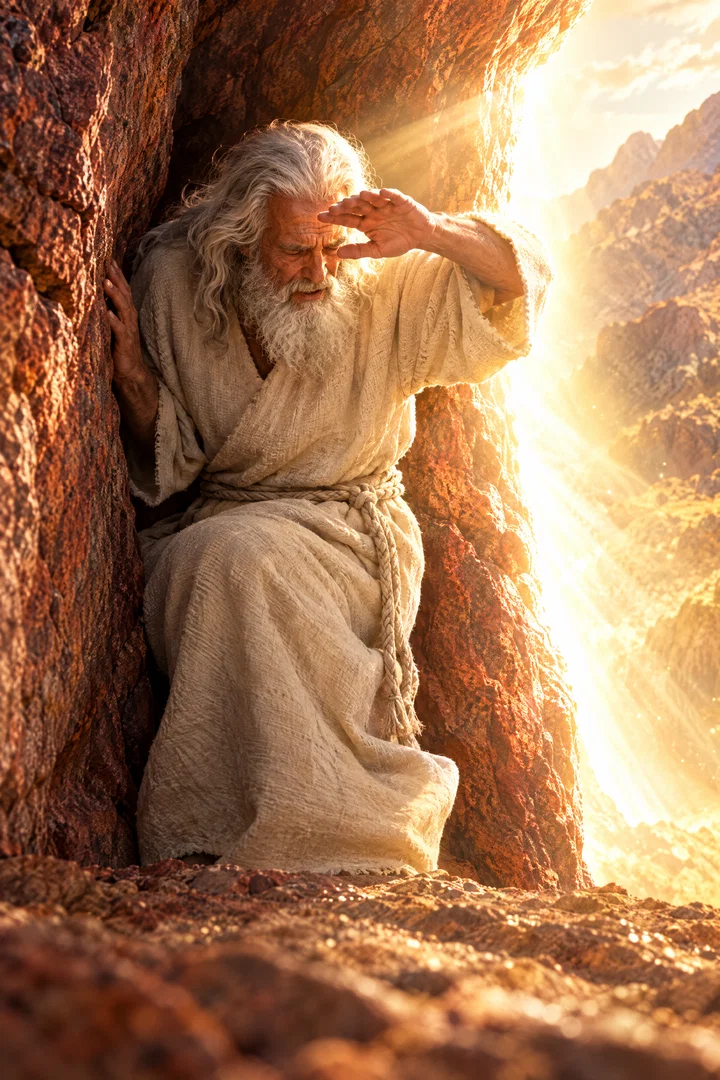
And the LORD descended in the cloud, and stood with him there, and proclaimed the name of the LORD.
Translations
American King James Version, King James Version, Webster Bible, Revised Version
And the LORD descended in the cloud, and stood with him there, and proclaimed the name of the LORD.
And the Lord descended in the cloud, and stood with him there, and proclaimed the name of the Lord.
And Jehovah descended in the cloud, and stood with him there, and proclaimed the name of Jehovah.
And Jehovah cometh down in a cloud, and stationeth Himself with him there, and calleth in the Name of Jehovah,
And Jehovah came down in the cloud, and stood beside him there, and proclaimed the name of Jehovah.
And Yahweh descended in the cloud, and took his station with him there,—and proclaimed himself by the name Yahweh.
Berean Standard Bible, Majority Standard Bible
And the LORD descended in a cloud, stood with him there, and proclaimed His name, the LORD.
The LORD descended in the cloud, and stood with him there, and proclaimed the LORD’s name.
And the Lord came down in the cloud and took his place by the side of Moses, and Moses gave worship to the name of the Lord.
And the Lord descended in the cloude, and stoode with him there, and proclaimed the name of the Lord.
Douay-Rheims (Challoner revision)
And when the Lord was come down in a cloud, Moses stood with him, calling upon the name of the Lord.
Pictures
Cross-references 20 of 34
- Exodus 33:18-19
And he said, I beseech thee, shew me thy glory.
God reveals his glory through his goodness and proclaimed name.
- Exodus 33:19
And he said, I will make all my goodness pass before thee, and I will proclaim the name of the LORD before thee; and will be gracious to whom I will be gracious, and will shew mercy on whom I will shew mercy.
The Lord fulfills his promise to proclaim his name and show Moses his goodness.
- 2 Corinthians 3:7
But if the ministration of death, written and engraven in stones, was glorious, so that the children of Israel could not stedfastly behold the face of Moses for the glory of his countenance; which glory was to be done away:
Paul recalls the glory on Moses’ face after the Sinai encounter.
- Exodus 34:28
And he was there with the LORD forty days and forty nights; he did neither eat bread, nor drink water. And he wrote upon the tables the words of the covenant, the ten commandments.
Moses writes the covenant words after forty days with the LORD.
- Exodus 34:29
And it came to pass, when Moses came down from mount Sinai with the two tables of testimony in Moses’ hand, when he came down from the mount, that Moses wist not that the skin of his face shone while he talked with him.
glory reflected in Moses
- Exodus 34:10-14
And he said, Behold, I make a covenant: before all thy people I will do marvels, such as have not been done in all the earth, nor in any nation: and all the people among which thou art shall see the work of the LORD: for it is a terrible thing that I will do with thee.
The Lord makes a covenant and commands Israel to reject idolatry and worship him alone.
- Exodus 33:22
And it shall come to pass, while my glory passeth by, that I will put thee in a clift of the rock, and will cover thee with my hand while I pass by:
gives the cleft of the rock setting
- Exodus 3:14
And God said unto Moses, I AM THAT I AM: and he said, Thus shalt thou say unto the children of Israel, I AM hath sent me unto you.
God’s proclamation of his name expands the self-existent “I AM.”
- Psalms 99:6
Moses and Aaron among his priests, and Samuel among them that call upon his name; they called upon the LORD, and he answered them.
Moses is named among those who called on the Lord and represents the old-covenant priesthood.
- Exodus 34:1
And the LORD said unto Moses, Hew thee two tables of stone like unto the first: and I will write upon these tables the words that were in the first tables, which thou brakest.
The second stone tables are prepared before the LORD descends.
- Psalms 68:17
The chariots of God are twenty thousand, even thousands of angels: the Lord is among them, as in Sinai, in the holy place.
God is present at Sinai among the angels.
- Exodus 33:15
And he said unto him, If thy presence go not with me, carry us not up hence.
Moses pleads for God’s presence to accompany him.
- Deuteronomy 33:2
And he said, The LORD came from Sinai, and rose up from Seir unto them; he shined forth from mount Paran, and he came with ten thousands of saints: from his right hand went a fiery law for them.
testifies God was personally at Sinai
- Judges 5:5
The mountains melted from before the LORD, even that Sinai from before the LORD God of Israel.
testifies God was personally at Sinai
- Exodus 3:15
And God said moreover unto Moses, Thus shalt thou say unto the children of Israel, The LORD God of your fathers, the God of Abraham, the God of Isaac, and the God of Jacob, hath sent me unto you: this is my name for ever, and this is my memorial unto all generations.
same forever name declared in full
- Exodus 34:30
And when Aaron and all the children of Israel saw Moses, behold, the skin of his face shone; and they were afraid to come nigh him.
The Israelites were afraid to come near Moses when his face shone.
- Exodus 32:1-6
And when the people saw that Moses delayed to come down out of the mount, the people gathered themselves together unto Aaron, and said unto him, Up, make us gods, which shall go before us; for as for this Moses, the man that brought us up out of the land of Egypt, we wot not what is become of him.
Describes Israel’s golden-calf worship, which the account connects with Exodus 34.
- Exodus 34:33
And till Moses had done speaking with them, he put a vail on his face.
Moses puts on veil
- Exodus 34:27
And the LORD said unto Moses, Write thou these words: for after the tenor of these words I have made a covenant with thee and with Israel.
words Moses told to write after descent
- 2 Corinthians 3:13
And not as Moses, which put a vail over his face, that the children of Israel could not stedfastly look to the end of that which is abolished:
Moses’ veil hid the passing glory from Israel.
Commentary
Each commentary is drawn from primary sources: the writings of Ellen G. White and Adventist pioneers and periodicals. Each commentary is separate. Its own words are not a quotation; follow the references to read the source passages.
Ellen G. White
23 sources
On the summit of Sinai in the morning Moses stood alone with the tables of stone he had hewn, and the Lord came down in the cloud and stood close beside him in communion and announced His name before him.Lt 72, 1908, par. 9–13Ms 4, 1896, par. 4–7Ms 21, 1891, par. 13–16PP 329.4–330.1
The name thus proclaimed is His character, merciful and gracious, patient and longsuffering, abundant in goodness and truth, forgiving iniquity and transgression and sin, yet just and by no means clearing the guilty.SG3 290.2–291.21SP 257.1–2Lt 72, 1908, par. 9–13Ms 110, 1893, par. 4–5Lt 81, 1894, par. 8–9
That character is His glory, giving the true light on the Father against the charge that He is exacting, harsh and merely condemnatory, and it was afterward fully declared and lived out by Christ.Ms 31, 1911, par. 2–5Ms 21, 1891, par. 13–169MR 295.5–296.4Ms 32, 1889, par. 6–918MR 331.1–3
At the revelation Moses hastened to bow and worship and to plead that the Lord would go among stiffnecked Israel, pardon their sin and take them for His inheritance, and his prayer was granted with renewed favor.SG3 290.2–291.2Ms 52, 1898, par. 49–52Ms 31, 1911, par. 2–5
The proclamation is given as the heritage of God's children that they may receive that love into themselves and repeat it to the world in family, dealing and daily association, bringing the atmosphere of heaven instead of misrepresenting Him.Ms 119, 1898, par. 8–10Lt 81, 1894, par. 8–9
Setting and Meeting
The meeting took place in the morning on the summit of Mount Sinai.Lt 72, 1908, par. 9–13PP 329.4–330.1 Moses had hewed two tables of stone like the first, and at the command he rose early and went up alone with the two tables in his hand, with no man seen on the mount and no flocks or herds feeding before it.Lt 72, 1908, par. 9–13PP 329.4–330.1 He remained in the mount forty days and nights alone, with no man permitted to go up with him or to approach the mount during his absence, and he was miraculously sustained all that time as at the first.PP 329.4–330.1 The Lord wrote upon the tables the words of the covenant, the ten commandments.PP 329.4–330.1
The Lord descended in the cloud to the top of the mount and stood with Moses there and proclaimed the name of the Lord.Lt 72, 1908, par. 9–13Ms 21, 1891, par. 13–169MR 295.5–296.4Ms 32, 1889, par. 6–9PP 329.4–330.1 This was the answer to Moses' pleading to see His glory and for the Lord to go before him, meeting him in the cloud, talking with man and coming very near to those who will be moved by His Spirit.Ms 4, 1896, par. 4–7Ms 21, 1891, par. 13–169MR 295.5–296.4Ms 117, 1909, par. 29–33Ms 32, 1889, par. 6–9 Moses had lived in close communion, held fast to the promises, gained assurance and grown bold to ask greater things, and the Lord put him hidden in the cleft of the rock and declared His character before him in close communion.Ms 4, 1896, par. 4–7Ms 21, 1891, par. 13–169MR 295.5–296.4Ms 32, 1889, par. 6–9PP 329.4–330.1 That long communion came before Moses carried out his work for God including executing justice on the idolaters.PP 329.4–330.1
During that long communion the face of Moses reflected the glory of the divine presence.PP 329.4–330.1 When he descended from the mountain it shone with dazzling light unknown to himself.PP 329.4–330.1 Aaron and the people in their conscious guilt were afraid to come near him, and in compassion for their fear he put a veil upon his face thereafter whenever he returned to the camp from communion with God, holding out to them the pledge of God's reconciliation and restored favor.PP 329.4–330.1
Name Reveals God's Character
The name proclaimed on the mount is explained by the declaration that follows it, which reveals who the Lord is by revealing His character.SG3 290.2–291.21SP 257.1–2Lt 72, 1908, par. 9–13Ms 13, 1906, par. 42–43 That character is merciful and gracious, patient and longsuffering, abundant in goodness and truth, forgiving sin, yet just toward guilt and by no means clearing the guilty.SG3 290.2–291.21SP 257.1–2Ms 110, 1893, par. 4–5Ms 13, 1906, par. 42–43 The Lord's name therefore expresses His character, and that name is the heritage of those called by the Father's name.
In its fuller form the proclamation keeps mercy for thousands and forgives iniquity and transgression and sin.Lt 81, 1894, par. 8–9Ms 31, 1911, par. 2–5Ms 50, 1894, par. 9–129MR 295.5–296.45MR 32.1–3 Yet by no means does it clear the guilty, but allows iniquity to have consequences across generations by visiting the iniquity of the fathers upon the children to the third and fourth generation.Ms 110, 1893, par. 4–5Lt 81, 1894, par. 8–9Ms 31, 1911, par. 2–5Ms 50, 1894, par. 9–129MR 295.5–296.4 Mercy and forgiveness and justice belong together in the one revelation of what God is like.Ms 110, 1893, par. 4–5Ms 13, 1906, par. 42–43Lt 81, 1894, par. 8–9Ms 31, 1911, par. 2–5Ms 50, 1894, par. 9–12
The glory shown to Moses is this character, and in it are to be seen wondrous things in God's law.Ms 21, 1891, par. 13–169MR 295.5–296.4 There law condemning sin and gospel revealing Christ are blended, so that Jesus Christ is the glory of the law.9MR 295.5–296.4 As Moses beheld God's character as His glory, so the glory of Christ is beheld by beholding His character, enabling people to see Christ as the law's glory.Ms 21, 1891, par. 13–169MR 295.5–296.4
That proclamation gives the correct light on the Father against Satan's misrepresentation and charges.Ms 31, 1911, par. 2–5Ms 32, 1889, par. 6–918MR 331.1–3 Against the false picture that God is exacting, overbearing, harsh and condemnatory, only justice visiting transgression without mercy, it declares Him good, loving, compassionate, gracious and merciful, pardoning the sinner who confesses sin.Ms 31, 1911, par. 2–5Ms 32, 1889, par. 6–918MR 331.1–3 Against the charge that He is the author of suffering, misery and death, it reveals a Father to be trusted.Ms 31, 1911, par. 2–5
That same character of the Father was afterward declared and represented by Christ.Lt 81, 1894, par. 8–9Ms 31, 1911, par. 2–5Ms 32, 1889, par. 6–918MR 331.1–3 Through Him all communication between God and men has come since the Fall, when He clothed divinity with humanity to sympathize with men and to restore buried truth about God.Ms 32, 1889, par. 6–9 In Him was revealed the highest, purest, holiest elements of human nature, as Father and tender Shepherd, as husband to the widow and father to the fatherless, and Jesus came to this earth to declare that same name and reveal the Father to the world.Lt 81, 1894, par. 8–9Ms 31, 1911, par. 2–5Ms 32, 1889, par. 6–9 The proclamation of the name of the Lord is thus a decided representation of what God is like in richness of goodness, mercy and compassion, the very love circulating in the character of God.Ms 50, 1894, par. 9–12
Worship and Representation
The unveiling of divine character filled Moses with joy, and he made haste to bow his head toward the earth and worship.SG3 290.2–291.2Ms 52, 1898, par. 49–52Ms 31, 1911, par. 2–5PP 329.1–3 From that worship he pleaded that if he had found grace the Lord would go among stiffnecked Israel, pardon their iniquity and sin, and take them for His inheritance and people.SG3 290.2–291.2Ms 31, 1911, par. 2–5PP 329.1–3 God granted that prayer with renewed favor and with promise of mighty works for Israel.Ms 31, 1911, par. 2–5PP 329.1–3
The declaration assures repentant sinners that God will forgive them and look on them with favor.Lt 81, 1894, par. 8–9Ms 66a, 1900, par. 6–7 He is a present help in every time of need.Lt 81, 1894, par. 8–9Ms 66a, 1900, par. 6–7 This same revelation taught David that God is merciful and good even when His ways are mysterious, giving confidence to trust promises and remember works.Ms 4, 1896, par. 4–7 God's teaching, patience, greatness, mercy, promises and wonders are not limited to Israel but may be claimed by all who need them.Lt 81, 1894, par. 8–9Ms 4, 1896, par. 4–7
The revelation was given to equip Israel to represent God's character to the world.Ms 119, 1898, par. 8–10Ms 50, 1894, par. 9–125MR 32.1–3 That calling remains the heritage of God's children and God's people today, who are called by the Father's name and are to represent and repeat that character to the world.Ms 48, 1900, par. 5–7Ms 50, 1894, par. 9–125MR 32.1–3 The very love circulating in the character of God is to be imparted to the children of God and reproduced in them, in their families and dealings with others and association with fellow men, bringing the atmosphere of heaven.Ms 48, 1900, par. 5–7Ms 50, 1894, par. 9–125MR 32.1–3 Israel misrepresented Him by pride, stubbornness, and using Scripture to justify error, injustice and sin.Ms 119, 1898, par. 8–10 True religion reflecting this revelation produces love and never cold iron hard-heartedness, high-handed oppression, neglect of the needy and suffering, or gathering all to glorify self regardless of others.Lt 81, 1894, par. 8–9
To maintain connection with God, professing Christians must act like Christians and must study this account.Lt 72, 1908, par. 9–13 There is need of entire consecration to God and then proving Him.Ms 117, 1909, par. 29–33 This meeting belongs with other mount experiences where beholding God's glory gives moral power for duty.ST Jul 27, 1915 It teaches the need for continual fresh revelation, daily advance, and set-apart prayer in order to know God to represent Him in all work for the people, to be changed from glory to glory and made holy.ST Jul 27, 191520MR 244.4 That communion came before Moses carried out his work for God and prepared him for that hard work, including executing justice on the idolaters.ST Jul 27, 1915
Sources
Pioneers and periodicals
56 sources
After Israel's sin with the golden calf and Moses' intercession, Moses went up Mount Sinai alone early in the morning with two new tables of stone for a second forty days of communion, and God descended in the cloud and stood with him there to make all His goodness pass before him in answer to his prayer to see God's glory.RH Jul 7, 1910ST Jun 3, 1897ST Jan 31, 1911 To proclaim the name of the Lord is to make known His true character, for His name is what He is and His glory is His goodness and love.ST Jun 3, 1897ST Apr 23, 1894 The character then declared is merciful and gracious, long-suffering and patient, abundant in goodness and truth, keeping mercy for thousands and forgiving iniquity and transgression and sin while by no means clearing the guilty.ST Nov 17, 1898RH Jul 7, 1910ST Jun 3, 1897 The ten precepts are a transcript of that name in harmony with His law, and that Father's name is the seal placed on the minds of the 144,000 and reproduced in the lives of those made new creatures in Christ.ST Apr 20, 1904ST Sep 22, 1898ST Mar 27, 1901 Christ came to earth to represent the Father in that true character against Satan's false representation of God as arbitrary and delighting to condemn, and those who keep that goodness, mercy, and love in sustained contemplation are changed from glory to glory into His likeness.ST Nov 18, 1889ST Jan 22, 1894ST Sep 4, 1893
Setting in Exodus
Exodus 34:5 belongs after Israel sinned by worshiping the golden calf and Moses interceded for the people, to the renewal of the tables of stone and the renewed confirmation of the covenant binding the ransomed people to Jehovah.ST Dec 11, 1901ST Jan 29, 1908 Moses broke the first tables of the law as a symbol of Israel's transgression after coming down to find Israel in shameless idolatry turning the glory of God into the likeness of a four-footed beast, then pleaded for the people, saw their punishment, and returned to God.ST Jan 31, 1911 Under God's direction he prepared another set of tables on which God wrote His holy law and the commandments a second time, and caused His glory to be reflected in Moses.ST Jan 29, 1908ST Jan 31, 1911RH Aug 21, 1856 It belongs to the account in Exodus 32 to 34 that follows Moses spending forty days with God receiving the Ten Words on tables of stone and instruction for the sanctuary, and afterward Moses came down with a shining face and told Israel what the Lord had spoken on Sinai.ST Jan 31, 1911RH Aug 21, 1856
It records a second meeting with God lasting forty days and forty nights like the first, spent by Moses asking God not to destroy the people for their sin.ST Jan 31, 1911RH Aug 21, 1856RH Dec 31, 1861 It took place on Mount Sinai early in the morning after Moses hewed two tables of stone like the first and carried them up as commanded, so that he might behold the majesty of the infinite Law-giver.RH Dec 31, 1861RH Dec 31, 1861 Moses prepared the two tables and carried them alone to the summit of Sinai, with no other man to go up with him or be seen throughout the mount, where the ten commandments were to be written again as on the broken tables.ST Jun 3, 1880RH Dec 31, 1861 Moses went up in obedience with the two tables in his hand as the Lord commanded, the Lord descended in a cloud and stood with him there and proclaimed the name of the Lord and passed by before him, and there made a covenant with Moses and with all Israel as recorded in Exodus 34:10-26.ST Jun 3, 1880RH Dec 31, 1861RH Dec 9, 1852
It fulfills the promise to show Moses God's glory by proclaiming the name of the LORD, in answer to Moses' earnest prayer to behold the divine glory.RH Jul 7, 1910ST Jun 3, 1897ST Sep 8, 1898ST Feb 23, 1915 When Moses asked to see God's glory, the answer was that all God's goodness would pass before him in the proclamation of the divine name, for glory means goodness and name means character.ST Jun 3, 1897ST Sep 8, 1898RH Feb 12, 1901 Hidden in the cleft of the rock and shielded by God's hand, Moses was permitted to witness a manifestation of God's presence greater than any ever before granted to man.ST Jun 3, 1880 He beheld the glory of the Lord on Mount Sinai and hastened to bow his head toward the earth and worship.ST Jun 3, 1880RH Dec 31, 1861RH Dec 9, 1852 The Lord descending in the cloud and standing with Moses there was the revealing of what He is, not only that He is, saying in more words what was first said in I AM THAT I AM, expressing self-existence in The Lord, The Lord God and character in all the rest of the words that follow.ST Jun 3, 1897ST Sep 8, 1898RH Feb 12, 1901
It shows the personal descent of God upon Mount Sinai in the cloud to stand with Moses there, belonging to the Sinai narrative in Exodus 19, 20, and 24-34 that records the sublime event of God being there in person with His angels.RH Dec 24, 1861 It falls within the account of Israel's wilderness tabernacle in Exodus 25-40, the sanctuary whose worship centered on the holy of holies, where God's law rested beneath the mercy seat.ST Jun 19, 1907 It stands in the chronological order from Exodus 19 until the tabernacle was set up, within Exodus 33-40, which follows the events of Exodus 19-32 and the instruction concerning the sanctuary in Exodus 25-31 given to Moses in the mount, and which records the building and setting up of the sanctuary that immediately followed that instruction.ST Dec 10, 1896 It belongs to the book of Exodus, which means going out and refers to the departure of Israel from Egypt, divided into history in chapters 1 to 18, laws in chapters 20 to 24, and worship in chapters 25 to 50, telling the detailed story of Israel's great deliverance from bitter bondage and oppression after growing more and mightier than the Egyptians, showing how they became a nation with thorough organization, efficient leadership, a complete code of laws, and an established form of worship.RH Jan 20, 1916 It belongs to the life of Moses as the chosen leader of Israel, from his rescue from Egyptian malice in infancy through all his wonderful experiences leading Israel.RH Jan 20, 1916
That presence frames three acts: in Exodus 16 God gave the Sabbath to Israel, in Exodus 19 God gave Himself to Israel by espousing them as a holy nation to Himself, and in Exodus 20 God gave His law to Israel.RH Dec 24, 1861 The claim that Exodus 34 contains a second Decalogue distinct from the one in Exodus 20 is disputed, since it is difficult to find a Decalogue in Exodus 34.ST After forty days and nights of communion Moses came down carrying the two stone tablets, his face shining with glory from the Lord's presence, and he veiled it while speaking to the people.ST Jun 5, 1879ST Oct 16, 1884ST Jan 31, 1911 His face shone with reflected glory so brightly that the Israelites were afraid and fled.ST Jun 5, 1879ST Oct 16, 1884ST Aug 13, 1874 After being in God's presence, Moses' face shone with a glory that was passing away, the event Paul discusses in 2 Corinthians 3.ST Oct 16, 1884ST Jul 14, 1914 Before Moses carried out his work for God and before he executed justice on the idolaters, he received this revelation of divine glory while hidden in the cleft of the rock, teaching that beholding God's glory gives moral power for duty.ST Jan 31, 1911
Name and Glory
To proclaim the name of the LORD is to make known His true character, so that His children remember what He is like whenever they hear His name.ST Nov 17, 1898ST Jun 3, 1897ST Jan 22, 1894 His name is His character, expressing what He is and not merely that He is.ST Jun 3, 1897ST Jan 22, 1894ST Dec 1, 1914 That name as declared in the words that follow is merciful and gracious, patient, abundant in goodness and truth and rich in loving-kindness, keeping mercy for thousands, forgiving iniquity and transgression and sin, and by no means clearing the guilty.ST Nov 17, 1898ST Jun 3, 1897ST Jan 22, 1894 To gather in that name is therefore to come believing that He is and that He rewards those who diligently seek Him, with the mind impressed that He has appointed to be present to bestow the mercy, grace, long-suffering, goodness, truth and forgiveness implied in His name, so that life and power are realized in prayer.ST Dec 1, 1914
His glory is His goodness and love, and His name is His character, so the descent in the cloud and standing with Moses to proclaim the name is a revelation of what God is like and of who He truly is.ST Jun 3, 1897ST Apr 23, 1894ST Sep 8, 1898ST Oct 10, 1895ST Feb 23, 1915 It fulfilled the promise to show Moses His glory by proclaiming His name, for when Moses asked to see God's glory the answer was that all His goodness would pass before him in the proclamation of the divine name.ST Jun 3, 1897ST Sep 8, 1898ST Oct 10, 1895ST Feb 23, 1915 That glory and character of goodness will be seen in its full beauty when the King appears, and His love will fill the earth.ST Sep 4, 1893 His name I AM, Jehovah, expresses that character, which is righteous in all His ways and holy in all His works.ST Jun 3, 1897
The proclamation begun here says in more words what was first said in I AM THAT I AM, expressing self-existence in The Lord, The Lord God and expressing character in all the rest of the words that follow.ST Nov 17, 1898RH Feb 12, 1901 The name proclaimed is Jehovah, Jehovah, eternal and unchanging.ST Nov 17, 1898ST Nov 7, 1906 God designed His name to bring to mind His true character rather than being only a title by which minds grasp the idea of a Supreme Being, just as the name of a good man becomes synonymous with uprightness, integrity and honesty and the name of an evil man with evil.ST Nov 17, 1898
The first thing declared in the name is mercy, meaning full of mercy as a disposition to treat an offender better than he deserves.ST Nov 17, 1898 It is shown in His always being willing, yes anxious, to receive back into favor all who have sinned against Him many times as soon as they turn to Him by repentance.ST Nov 17, 1898
Character Proclaimed
The name proclaimed is unfolded in the words that immediately follow as merciful and gracious, long-suffering and patient, abundant in goodness and truth and rich in loving-kindness, keeping mercy for thousands, forgiving iniquity and transgression and sin, and by no means clearing the guilty, including visiting the iniquity of the fathers upon the children to the third and fourth generation.ST Nov 17, 1898RH Jul 7, 1910ST Jun 3, 1897 That declaration is a setting forth of character — mercy, grace, patience, goodness, truth, forgiveness, and justice — and those qualities are the principles embodied and taught by Christ.RH Jul 7, 1910ST Jun 3, 1897ST Jan 22, 1894
That character is infinitely holy so that unconfessed and cherished sin cannot be overlooked, yet infinitely merciful and compassionate, full of compassion and graciousness, slow to anger, and plenteous in mercy and truth.ST Sep 8, 1898ST Jul 24, 1901ST Oct 3, 1895ST May 22, 1901RH Feb 11, 1915 It is infinite love, infinite power ruled by infinitely wise love, in which the moral element of love is the perfection and glory of God, and everything done for man is done in love.ST Sep 8, 1898ST Jul 24, 1901 His mercy does not diminish or set aside His justice.ST Oct 3, 1895ST May 22, 1901RH Feb 11, 1915
God's character must be vindicated before the universe through the display of both justice and mercy as He deals with human sin and provides forgiveness, with His name and glory upheld in dealing with humanity and providing forgiveness.RH Jan 29, 1901ST Oct 3, 1895 Salvation of the penitent who may live and condemnation of those who persist in sin both accord with His eternal law and nature, neither being a matter of policy or stratagem to gain supremacy over evil.ST Oct 3, 1895 Love and long-suffering mercy have always governed His dealing with His people and now temper Christ's priestly ministry for the sins of the world, yet did not remove judgment, for under those very attributes willful sinners were still cut off.RH Jan 29, 1901ST May 22, 1901
His name is a pledge that He freely and fully forgives those who turn to Him.ST Dec 11, 1901RH Aug 5, 1902RH Apr 1, 1902ST Nov 7, 1906ST May 28, 1894 This revelation, given after Israel's sin with the golden calf and intercession for the people, brings peace and joy to people who had been under condemnation.ST Dec 11, 1901RH Aug 5, 1902 His goodness is eternal and is the sinner's hope, to be received by believing Him and trusting in Him, and He forgives sin and recreates those who submit to Him, forming a character like His own and giving ground for confidence that He will forgive those who sincerely seek pardon.RH Apr 1, 1902ST Nov 7, 1906ST May 28, 1894
This character gives the repentant sinner reason to trust God and receive pardon, for He can be just while justifying the person who believes in Jesus.ST Jun 18, 1912RH Feb 11, 1915 Forgiveness is just when the sinner repents, confesses guilt, and accepts by faith Christ's sinless, vicarious sacrifice.ST Jun 18, 1912RH Feb 11, 1915
Law Covenant and Seal
The proclaimed name is an epitome of God's name, which is His character, and the ten precepts called the ten words are a transcript of that name or character, so that as God is so is Christ His Son.ST Apr 20, 1904ST Mar 27, 1901 That proclamation reveals His character in strict harmony with His law, declaring that He is merciful and forgives the repentant transgressor.ST Mar 27, 1901 Mercy is inherent in the law because the law is a transcript of God's character and its principles require forgiveness when the sinner repents.ST Mar 27, 1901 The verse confirms that God exercises mercy in agreement with His law toward those inclined to obedience, pointing repentant sinners to Himself as Author of the law and only source of authority to appeal to for mercy.ST Mar 27, 1901 Acquaintance with Him leads to peace and harmony with His law.RH Sep 9, 1902 People serve God through love, not fear or compulsion, and receiving His law in the heart would have kept Israel from turning back to Egypt and worshiping the golden calf.ST Jan 27, 1909
That character is the Father's name and the seal of God placed on the 144,000, impressed on the minds of the sealed company and expressed in their lives.ST Sep 22, 1898ST To have God's name in the mind is to have His character.ST That character is revealed in the person of Jesus Christ and is received by becoming a new creature in Christ.ST Sep 22, 1898ST It can be known so as to be reproduced in human lives only by seeing it revealed in flesh like human flesh.ST Sep 22, 1898 Christ, knowing and possessing His Father's character, was made flesh full of grace and truth and came in the likeness of sinful flesh to manifest that name, proving that even with sinful flesh it is possible to possess and reveal the character of God.ST Sep 22, 1898
The Sabbath is the sign and memorial of that name and of His creative power to be seen upon the new creature, and to be ashamed of the sign and fail to keep the Sabbath is to deny the Father's name.ST To be baptized into that name is to be immersed into this character and to possess His righteousness, holiness, mercy, compassion, forgiveness, and goodness.ST Jun 3, 1897ST Sep 8, 1898 To be baptized into that name is to receive His mercy, compassion, forgiveness, and goodness and to be made righteous.ST Jun 3, 1897 Jesus came in His Father's name, having the Father's righteousness and glory in Himself, imparting that glory to the disciples and declaring that name to them.ST Jun 3, 1897 As He was kept by the power of God's righteousness in Him He prays that His disciples be kept in the Father's name, which God desires to put upon all.ST Jun 3, 1897
To gather together in His name is to come believing that He is and that He is a rewarder of those who diligently seek Him, with the mind impressed that He has an appointment to be present to bestow the mercy, grace, long-suffering, goodness, truth, and forgiveness implied in His name, so that life and power are realized in the house of prayer.ST Dec 1, 1914 Failure to receive comes from not claiming that privilege.ST Dec 1, 1914 A name declares character, for the proclamation of the Lord's name there is a revelation of God's character, and that character is known by faith.ST Dec 8, 1909 Asking in Christ's name therefore means asking in harmony with that revealed character, which is asking in faith and according to God's will, and prayer so offered will surely be answered.ST Dec 8, 1909
Christ and Believers
The descent in the cloud to proclaim the name answers the false charge that God is an arbitrary judge eager to bring judgments upon men and delighting to condemn and punish evildoers, a clothing of God with the adversary's own attributes.ST Nov 18, 1889 Christ came to earth to represent the Father in His true character as there revealed, displaying the Father's goodness and mercy and love before this world and the universe of heaven where the war with rebellion had to be fought out.ST Nov 18, 1889
The name then explained as mercy, grace, patience, goodness, truth, forgiveness, and justice supplies the principles Christ embodied and taught to His followers.ST Jan 22, 1894 That character is perfectly expressed in Christ and is formed within believers as they become partakers of the divine nature.ST Jan 21, 1897 His love and gospel reflect those same qualities of goodness, mercy, patience, grace, and forgiveness, speaking pardon to the repentant sinner. Christ, knowing and possessing His Father's character, was made flesh full of grace and truth and came in the likeness of sinful flesh to manifest that name, proving that even with sinful flesh it is possible to possess and reveal God's character.ST Sep 22, 1898
Those who fear the Lord think upon these attributes of mercy, graciousness, patience, abundance in goodness and truth, forgiveness, and justice, and sustained attention to them shapes action and life to become like what is contemplated.RH Jul 7, 1910 Overcomers receive God's name as their own, as the pattern they behold and reflect. People may now know God, receive His righteousness by faith, and bear the beauty of the Lord, whose full beauty will be seen when the King appears.ST Sep 4, 1893 He forgives sin and recreates those who submit to Him, forming a character like His own.ST Nov 7, 1906 Such change from glory to glory unto holiness requires continual fresh revelation, daily advance, and set-apart prayer.ST Jul 27, 1915
The verse reveals the God whom people are to trust, making known mercy, graciousness, patience, goodness, willingness to forgive, abundance in goodness and truth, forgiveness of sin, and justice toward the guilty.ST Apr 9, 1894ST Feb 24, 1898 His name thus made known means He is holy, righteous, just, faithful, good, true, kind, merciful, pitiful, patient, long-suffering, gentle, yet strong, powerful, mighty, and wise.ST Mar 11, 1903 It is a person's privilege to know Him as there revealed, to learn by personal experience and acquaintance that all it declares of Him is true, and to glory in understanding and knowing Him.ST Mar 11, 1903 These truths are too high for a mind darkened by sin to grasp unaided.ST Feb 24, 1898
The mercy declared there shows that love and long-suffering mercy have always governed God's dealing with His people and now temper Christ's priestly ministry for the sins of the world.ST May 22, 1901 That mercy did not remove judgment, for under those very attributes willful sinners were still cut off.ST May 22, 1901 The proclamation reveals God's character in connection with His presence above the mercy seat.ST Nov 12, 1912 The mercy seat, with the cloud of glory and its covering cherubim, is a shadow of God's throne, where He reveals Himself as merciful, gracious, patient, and abundant in goodness and truth.ST Nov 12, 1912
To declare His glory among the Gentiles is to proclaim the message of His love and compassion of mercy and goodness.ST Dec 3, 1896 That message must be hurried to all nations because the time for preaching the gospel as a witness before the end is almost completed.ST Dec 3, 1896
The veil covered the intense brightness of Moses' countenance, which Israel could not look upon while he spoke to them.ST Jan 17, 1884 It also concealed the greater reality typified by Israel's institutions, which the people were not prepared to comprehend.ST Jan 17, 1884
Sources