Ezra 1:8
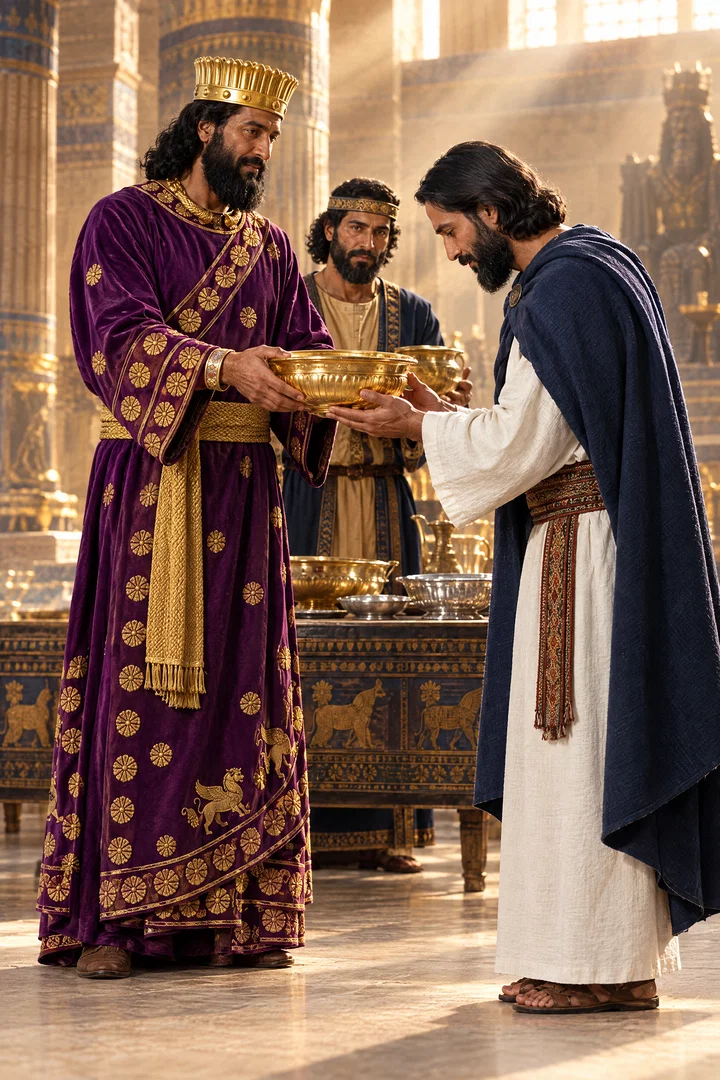
Even those did Cyrus king of Persia bring forth by the hand of Mithredath the treasurer, and numbered them unto Sheshbazzar, the prince of Judah.
Translations
American King James Version, Webster Bible
Even those did Cyrus king of Persia bring forth by the hand of Mithredath the treasurer, and numbered them to Sheshbazzar, the prince of Judah.
Even those did Cyrus king of Persia bring forth by the hand of Mithredath the treasurer, and numbered them unto Sheshbazzar, the prince of Judah.
KJV Cambridge Paragraph Bible, Revised Version, American Standard Version
even those did Cyrus king of Persia bring forth by the hand of Mithredath the treasurer, and numbered them unto Sheshbazzar, the prince of Judah.
yea, Cyrus king of Persia bringeth them out by the hand of Mithredath the treasurer, and numbereth them to Sheshbazzar the prince of Judah.
And Cyrus king of Persia brought them forth by the hand of Mithredath the treasurer, who counted them out to Sheshbazzar the prince of Judah.
yea Cyrus king of Persia brought them forth, by the hand of Mithredath the treasurer,—and numbered them unto Sheshbazzar, a leader of Judah.
Berean Standard Bible, Majority Standard Bible
Cyrus king of Persia had them brought out by the hand of Mithredath the treasurer, who counted them out to Sheshbazzar the prince of Judah.
even those, Cyrus king of Persia brought out by the hand of Mithredath the treasurer, and counted them out to Sheshbazzar the prince of Judah.
Even these Cyrus made Mithredath, the keeper of his wealth, get out, and he gave them, after numbering them, to Sheshbazzar, the ruler of Judah.
Euen them did Cyrus King of Persia bring forth by the hand of Mithredath the treasurer, and counted them vnto Sheshbazzar the Prince of Iudah.
Douay-Rheims (Challoner revision)
Now Cyrus king of Persia brought them forth by the hand of Mithridates the son of Gazabar, and numbered them to Sassabasar the prince of Juda.
Pictures
Cross-references 20 of 21
- Isaiah 44:28
That saith of Cyrus, He is my shepherd, and shall perform all my pleasure: even saying to Jerusalem, Thou shalt be built; and to the temple, Thy foundation shall be laid.
Cyrus is named as the one who would carry out Jerusalem’s and the temple’s restoration.
- Ezra 6:14
And the elders of the Jews builded, and they prospered through the prophesying of Haggai the prophet and Zechariah the son of Iddo. And they builded, and finished it, according to the commandment of the God of Israel, and according to the commandment of Cyrus, and Darius, and Artaxerxes king of Persia.
Successive Persian decrees carried out God’s command to rebuild the temple.
- Isaiah 45:13
I have raised him up in righteousness, and I will direct all his ways: he shall build my city, and he shall let go my captives, not for price nor reward, saith the LORD of hosts.
Cyrus is named as the agent who restores Jerusalem and releases its captives.
- 2 Chronicles 36:22-23
Now in the first year of Cyrus king of Persia, that the word of the LORD spoken by the mouth of Jeremiah might be accomplished, the LORD stirred up the spirit of Cyrus king of Persia, that he made a proclamation throughout all his kingdom, and put it also in writing, saying,
Cyrus’s decree authorizes the Jews’ return and the temple’s rebuilding.
- Jeremiah 25:11-12
And this whole land shall be a desolation, and an astonishment; and these nations shall serve the king of Babylon seventy years.
Cyrus’s decree marks the end of the foretold seventy-year captivity and the return from exile.
- Ezra 6:3-5
In the first year of Cyrus the king the same Cyrus the king made a decree concerning the house of God at Jerusalem, Let the house be builded, the place where they offered sacrifices, and let the foundations thereof be strongly laid; the height thereof threescore cubits, and the breadth thereof threescore cubits;
Darius’s decree confirms Cyrus’s order to rebuild the temple and return its vessels.
- Jeremiah 29:10
For thus saith the LORD, That after seventy years be accomplished at Babylon I will visit you, and perform my good word toward you, in causing you to return to this place.
The return under Cyrus fulfilled the promised end of exile after seventy years.
- Isaiah 45:1
Thus saith the LORD to his anointed, to Cyrus, whose right hand I have holden, to subdue nations before him; and I will loose the loins of kings, to open before him the two leaved gates; and the gates shall not be shut;
Names Cyrus and foretells his role in carrying out God’s purpose.
- Ezra 1:1-4
Now in the first year of Cyrus king of Persia, that the word of the LORD by the mouth of Jeremiah might be fulfilled, the LORD stirred up the spirit of Cyrus king of Persia, that he made a proclamation throughout all his kingdom, and put it also in writing, saying,
Cyrus’s decree permits the Jews to return and rebuild the temple.
- Ezra 5:14
And the vessels also of gold and silver of the house of God, which Nebuchadnezzar took out of the temple that was in Jerusalem, and brought them into the temple of Babylon, those did Cyrus the king take out of the temple of Babylon, and they were delivered unto one, whose name was Sheshbazzar, whom he had made governor;
Cyrus restores the temple vessels to Sheshbazzar, Judah’s prince and governor.
- 2 Kings 24:13
And he carried out thence all the treasures of the house of the LORD, and the treasures of the king’s house, and cut in pieces all the vessels of gold which Solomon king of Israel had made in the temple of the LORD, as the LORD had said.
Both describe temple treasures carried away to Babylon.
- Ezra 2:64-70
The whole congregation together was forty and two thousand three hundred and threescore,
Gives the number and circumstances of those who returned from captivity.
- Ezra 4:1-5
Now when the adversaries of Judah and Benjamin heard that the children of the captivity builded the temple unto the LORD God of Israel;
Opposition hindered the temple work begun under Cyrus’s decree.
- Isaiah 45:4
For Jacob my servant’s sake, and Israel mine elect, I have even called thee by thy name: I have surnamed thee, though thou hast not known me.
Cyrus is named in prophecy and later issues the decree.
- 2 Chronicles 36:7
Nebuchadnezzar also carried of the vessels of the house of the LORD to Babylon, and put them in his temple at Babylon.
Nebuchadnezzar carried temple vessels to Babylon.
- Ezra 5:16
Then came the same Sheshbazzar, and laid the foundation of the house of God which is in Jerusalem: and since that time even until now hath it been in building, and yet it is not finished.
both describe temple foundation still in building
- 2 Chronicles 36:18
And all the vessels of the house of God, great and small, and the treasures of the house of the LORD, and the treasures of the king, and of his princes; all these he brought to Babylon.
Nebuchadnezzar took the temple vessels to Babylon.
- Daniel 1:2
And the Lord gave Jehoiakim king of Judah into his hand, with part of the vessels of the house of God: which he carried into the land of Shinar to the house of his god; and he brought the vessels into the treasure house of his god.
Temple vessels were taken to Babylon and later returned under Cyrus.
- Ezra 5:17
Now therefore, if it seem good to the king, let there be search made in the king’s treasure house, which is there at Babylon, whether it be so, that a decree was made of Cyrus the king to build this house of God at Jerusalem, and let the king send his pleasure to us concerning this matter.
Darius orders a search for Cyrus’s decree to rebuild the temple.
- Daniel 5:2-3
Belshazzar, whiles he tasted the wine, commanded to bring the golden and silver vessels which his father Nebuchadnezzar had taken out of the temple which was in Jerusalem; that the king, and his princes, his wives, and his concubines, might drink therein.
Returned temple vessels may have been used at Belshazzar’s feast.
Commentary
Each commentary is drawn from primary sources: the writings of Ellen G. White and Adventist pioneers and periodicals. Each commentary is separate. Its own words are not a quotation; follow the references to read the source passages.
Ellen G. White
2 sources
The vessels were those that had been taken from the temple at Jerusalem and stored in the temples of the gods of Babylon.RH Mar 28, 1907 Cyrus had them brought out by the hand of Mithredath, his treasurer, who counted them out and numbered them unto Sheshbazzar.PK 559.1RH Mar 28, 1907 Sheshbazzar was the prince of Judah who received them on behalf of the returning exiles.RH Mar 28, 1907 They were entrusted to him for the exiles to carry back to Jerusalem for use in the temple to be rebuilt.PK 559.1RH Mar 28, 1907
Sources
Pioneers and periodicals
35 sources
Cyrus king of Persia had the temple vessels brought out by the hand of Mithredath his treasurer, who counted them and delivered them to Sheshbazzar the prince of Judah for the return to Jerusalem.ST Dec 19, 1892RH Feb 7, 1907 They were the vessels Nebuchadnezzar had taken from the house of the Lord and stored in Babylon, restored under Cyrus's proclamation in his first year after seventy years of captivity permitting the Jews to go up and rebuild the temple.RH Mar 28, 1907ST Jan 13, 1888ST Apr 12, 1883ST Aug 9, 1899 That permission concerned the temple and its rebuilding and did not command the restoration of Jerusalem as a city, so it alone is not the going forth of the commandment in Daniel 9, whose starting-point is the completed commandment in the decree of Artaxerxes in 457 B.C.RH Mar 10, 1874ST Nov 13, 1879ST Oct 22, 1874ST Jan 20, 1904 The careful bringing out, counting, and entrusting of the vessels shows God's faithfulness and mercy in moving earthly kingdoms to free His people, foreshadowing Christ the Leader going forth with a multitude of captives out of spiritual Babylon to lay the foundation of the spiritual temple.ST Sep 6, 1899ST Mar 13, 1893ST Jan 22, 1880ST Apr 30, 1896
The Vessels Restored
Cyrus king of Persia had the temple vessels brought out by the hand of Mithredath the treasurer, who counted them and delivered them to Sheshbazzar, the prince or leader of Judah, for the return to Jerusalem.ST Dec 19, 1892RH Feb 7, 1907ST Mar 13, 1893RH Jan 20, 1853 The act was done under Cyrus's supervision through his treasurer, with the vessels taken from Babylon's store and entrusted and numbered over for the returning exiles and for use in rebuilding God's temple.ST Dec 19, 1892RH Feb 7, 1907RH Jan 20, 1853ST May 17, 1877 The vessels were those Nebuchadnezzar had removed from the house of the Lord at Jerusalem and stored in Babylon, in Babylon's store and in the temples of Babylon's gods.RH Mar 28, 1907ST Aug 9, 1899
The transfer was part of Cyrus's proclamation in his very first year, issued throughout all his kingdom and put in writing, permitting the Jews to return to Jerusalem and rebuild the temple and inviting God's people to go up.ST Jan 13, 1888ST Apr 12, 1883RH Mar 10, 1874ST Jun 2, 1909 He declared that the Lord God of heaven had given him all the kingdoms of the earth and had charged him to build Him a house at Jerusalem in Judah.ST Jan 13, 1888 The return took place after seventy years in Babylon, ending the captivity that began when Nebuchadnezzar first came against Jerusalem in 606 B.C.ST May 24, 1883RH Jul 9, 1908ST Jan 22, 1880 World rule had passed to Medo-Persia when Cyrus captured Babylon in 538 B.C., and the proclamation belongs to the first year of his sole rule in 536 B.C.RH Jul 9, 1908ST Mar 13, 1893ST Jan 20, 1904
The decree was broad enough to reach all Israel, including the ten tribes in Assyria as well as the two, though only 49,897 people returned, whose list follows with the account of the return.RH Sep 4, 1856ST May 7, 1912ST Jun 2, 1909 Sheshbazzar, the prince of Judah to whom the vessels were numbered, is Zerubbabel, who laid the temple's foundation.ST Apr 12, 1883RH May 1, 1900 Mithredath was Cyrus's treasurer, and his name means dedicated to the sun-god.RH May 1, 1900ST Aug 9, 1899
The numbered list in the verse and those following it names the sacred vessels brought back but does not name the ark or the other larger sanctuary furniture.RH Sep 18, 1856RH Dec 31, 1901 That absence proves the ark was not carried to Babylon, for if taken it would have returned with the other objects and been mentioned by name.RH Sep 18, 1856RH Dec 31, 1901 The verse belongs to the history of the temple rebuilding addressed by Haggai, whose time was about fifteen years after the foundations were laid.ST Aug 23, 1899 It belongs also to the Bible narrative whose Babylonian setting in the days of Ezra and Nehemiah is confirmed by discoveries in ancient lands around Israel.ST Mar 10, 1909
The Decree in Prophecy
The decree followed Daniel's elevation to prime minister when the Medes and Persians took Babylon, after he showed Cyrus the prophecy of Isaiah that called him by name and made known to him the true God.ST Jan 13, 1888 In this Cyrus fulfilled the word that he would build God's city and let His captives go, not for price nor reward.ST Jan 13, 1888
Cyrus's decree gave permission to rebuild the temple and formed the first part of a three-part commandment to restore Jerusalem, completed through the later decrees of Darius and Artaxerxes, which together are one commandment according to Ezra 6:14.ST Mar 11, 1889ST Feb 17, 1898ST Jan 20, 1904ST Jan 20, 1904 Its features were embraced and completed by the decree of Darius in Ezra 6 and the decree of Artaxerxes in Ezra 7. The command was not complete until Artaxerxes issued his decree in 457 B.C., so the prophetic period is dated from that final decree.ST Jan 20, 1904ST Jan 20, 1904
The permission concerned the temple and its rebuilding, with provision for returning the sacred treasures and resources for the work.RH Mar 10, 1874ST Nov 13, 1879ST Oct 22, 1874ST Aug 8, 1878ST May 17, 1877 It did not command the restoration of Jerusalem as a city, its walls, its ancient privileges, or the Jewish state and its secular government, which pertained especially to the later decree of Artaxerxes.RH Mar 10, 1874ST Oct 22, 1874ST Aug 8, 1878ST May 17, 1877ST Feb 17, 1898 Therefore Cyrus's decree by itself does not contain all the specifications of the commandment to restore and to build Jerusalem in Daniel 9, and it is not the going forth of the commandment that begins the seven weeks and threescore and two weeks unto Messiah the Prince.ST Nov 13, 1879ST Jan 11, 1883ST Oct 22, 1874 His action began the temple's restoration, while the later decree of Artaxerxes supplied the commandment to restore the city that marks the beginning of Daniel's prophetic period.ST Nov 13, 1879ST Oct 22, 1874
The temple was begun under Cyrus's decree, not in 457 B.C., for the year 457 marks the later commandment to restore and build Jerusalem.ST Nov 24, 1909ST Jan 20, 1904ST Jan 20, 1904 The decree of Artaxerxes in that year bears all the specifications and completes the commandment. The prophetic period is therefore dated from that final decree of Artaxerxes in 457 B.C. as the starting-point of the seventy weeks and the twenty-three hundred days.ST Oct 22, 1874ST Jan 20, 1904ST Jan 20, 1904
Teaching and Foreshadowing
Cyrus had the temple vessels brought out under the supervision of Mithredath his treasurer, who counted them and entrusted them to Sheshbazzar the leader and prince of Judah for the return to Jerusalem, and this careful bringing out, counting, and entrusting shows his care and fairness in restoring the sacred vessels taken from the Jerusalem temple.ST Dec 19, 1892ST Dec 19, 1892 It was an act of liberality and justice toward the Lord's house in returning what had been taken from it.ST Dec 19, 1892ST Dec 19, 1892 Cyrus personally released the sacred vessels that had been carried from Jerusalem to Babylon.RH Jan 20, 1853ST May 3, 1910 Their return encouraged those undertaking the restoration of the temple and its worship, and provided vessels for use in the rebuilt house of God.RH Jan 20, 1853ST May 3, 1910
The Persian court supplied resources for the return and for the rebuilding of the Lord's house.ST Mar 6, 1893 In doing so it recognized the Jews as God's people and helped carry out the command of the God of heaven, for the Persians are described as monotheists, like the Jews.ST Mar 6, 1893 The return from captivity illustrates God's faithfulness and mercy and His compassion toward His people.ST Sep 6, 1899ST Mar 13, 1893 It belongs to the decree of Cyrus and the return from Babylonian captivity in 536 B.C., showing His rule over earthly kingdoms in moving Cyrus to grant the restoration at the end of the seventy years of captivity.ST Mar 13, 1893ST Jan 22, 1880 It also illustrates His desire to free people from the captivity of sin.ST Sep 6, 1899
Mithredath's name means dedicated to the sun-god, yet even objects and servants associated with false gods were made to serve God's purpose in the counting and delivering of the vessels to Judah's prince.ST Aug 9, 1899 Some of those vessels may have been used at Belshazzar's feast after Nebuchadnezzar had taken them from Jerusalem.ST Aug 9, 1899 Their return illustrates that when God's people yielded to Him, He could bring even their enemies to be at peace with them.ST Aug 9, 1899
The golden vessels of the former temple had been locked for a time in the temple of Bel, then were brought forth under the decree of Cyrus and restored to the new temple when Zion's captives were led back and its foundation was laid.ST Apr 30, 1896 This foreshadows Christ the Leader and Deliverer going forth with a multitude of captives out of spiritual Babylon and laying the foundation of the spiritual temple that shall never be overthrown.ST Apr 30, 1896 The restored vessels mean the vessels unto honor meet for the Master's use.ST Apr 30, 1896 They are all who were anointed by the grace of God coming unto Christ to serve in the new temple.ST Apr 30, 1896
Sources