Genesis 8:20
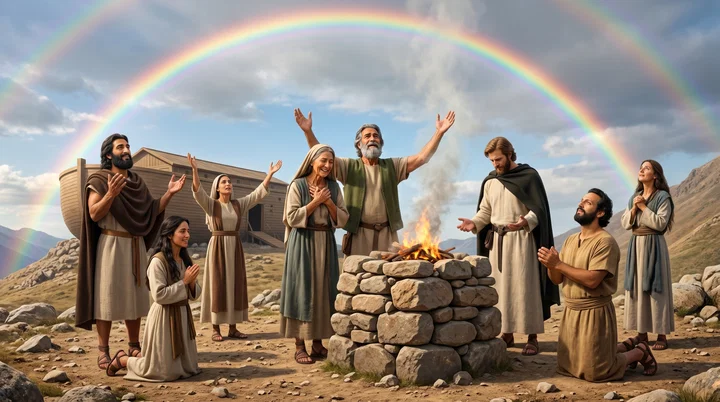
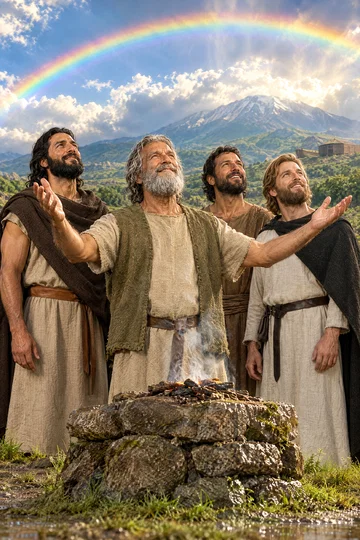
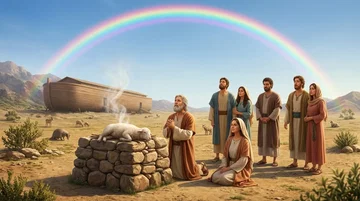
And Noah builded an altar unto the LORD; and took of every clean beast, and of every clean fowl, and offered burnt offerings on the altar.
Translations
And Noah built an altar to the LORD; and took of every clean beast, and of every clean fowl, and offered burnt offerings on the altar.
King James Version, Revised Version
And Noah builded an altar unto the LORD; and took of every clean beast, and of every clean fowl, and offered burnt offerings on the altar.
And Noah builded an altar unto the Lord; and took of every clean beast, and of every clean fowl, and offered burnt offerings on the altar.
And Noah built an altar to the LORD, and took of every clean beast, and of every clean fowl, and offered burnt-offerings on the altar.
And Noah builded an altar unto Jehovah, and took of every clean beast, and of every clean bird, and offered burnt-offerings on the altar.
And Noah buildeth an altar to Jehovah, and taketh of every clean beast, and of every clean fowl, and causeth burnt-offerings to ascend on the altar;
And Noah built an altar to Jehovah; and took of every clean animal, and of all clean fowl, and offered up burnt-offerings on the altar.
And Noah builded an altar to Yahweh,—and took of all the clean beasts and of all the clean birds, and caused ascending Sacrifices to go up on the altar.
Berean Standard Bible, Majority Standard Bible
Then Noah built an altar to the LORD. And taking from every kind of clean animal and clean bird, he offered burnt offerings on the altar.
Noah built an altar to the LORD, and took of every clean animal, and of every clean bird, and offered burnt offerings on the altar.
And Noah made an altar to the Lord, and from every clean beast and bird he made burned offerings on the altar.
Then Noah built an altar to the Lord and tooke of euery cleane beast, and of euery cleane foule, and offered burnt offerings vpon the altar.
Douay-Rheims (Challoner revision)
And Noe built an altar unto the Lord: and taking of all cattle and fowls that were clean, offered holocausts upon the altar.
Pictures
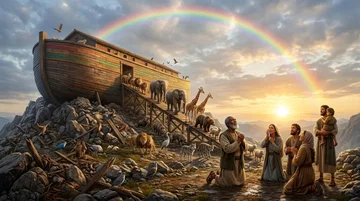
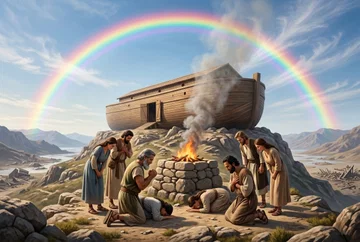
Cross-references 20 of 31
- Genesis 7:2-3
Of every clean beast thou shalt take to thee by sevens, the male and his female: and of beasts that are not clean by two, the male and his female.
Seven pairs of clean animals and birds made the offering possible.
- Genesis 4:4
And Abel, he also brought of the firstlings of his flock and of the fat thereof. And the LORD had respect unto Abel and to his offering:
Abel’s accepted animal offering is an earlier sacrifice and a pattern for Noah’s.
- Genesis 12:7-8
And the LORD appeared unto Abram, and said, Unto thy seed will I give this land: and there builded he an altar unto the LORD, who appeared unto him.
Both accounts describe patriarchs building altars and worshiping the Lord.
- Genesis 9:12-17
And God said, This is the token of the covenant which I make between me and you and every living creature that is with you, for perpetual generations:
After Noah’s sacrifice, God establishes a covenant with humanity, signified by the rainbow.
- Leviticus 11
And the LORD spake unto Moses and to Aaron, saying unto them,
The Mosaic law continues the distinction between clean and unclean animals.
- Hebrews 10:1-4
For the law having a shadow of good things to come, and not the very image of the things, can never with those sacrifices which they offered year by year continually make the comers thereunto perfect.
Repeated animal sacrifices were shadows, unable to take away sins, pointing to Christ’s greater sacrifice.
- Genesis 7:17-24
And the flood was forty days upon the earth; and the waters increased, and bare up the ark, and it was lift up above the earth.
The flood tradition links to the same biblical account as Genesis 8.
- Ephesians 5:2
And walk in love, as Christ also hath loved us, and hath given himself for us an offering and a sacrifice to God for a sweetsmelling savour.
Christ’s self-offering is a sweet-smelling savor to God, echoing the accepted sacrifice.
- Hebrews 11:7
By faith Noah, being warned of God of things not seen as yet, moved with fear, prepared an ark to the saving of his house; by the which he condemned the world, and became heir of the righteousness which is by faith.
Noah’s faith led him to obey God and be delivered from the flood.
- Genesis 9:3
Every moving thing that liveth shall be meat for you; even as the green herb have I given you all things.
It grants animals as food, understood in light of the clean-animal distinction.
- John 1:29
The next day John seeth Jesus coming unto him, and saith, Behold the Lamb of God, which taketh away the sin of the world.
Jesus is the Lamb who takes away sin, foreshadowed by Noah’s offering.
- Genesis 7:8
Of clean beasts, and of beasts that are not clean, and of fowls, and of every thing that creepeth upon the earth,
It also describes the distinction before the Jewish age.
- 1 Peter 1:19
But with the precious blood of Christ, as of a lamb without blemish and without spot:
Christ’s spotless blood fulfills the clean-animal sacrifices.
- Genesis 6:8
But Noah found grace in the eyes of the LORD.
Noah’s grace-grounded deliverance leads to worship.
- Genesis 9:1
And God blessed Noah and his sons, and said unto them, Be fruitful, and multiply, and replenish the earth.
God blesses Noah and his family after the offering, telling them to multiply and fill the earth.
- Genesis 22:13
And Abraham lifted up his eyes, and looked, and behold behind him a ram caught in a thicket by his horns: and Abraham went and took the ram, and offered him up for a burnt offering in the stead of his son.
Both offer a burnt offering, and the ram substitutes for Isaac.
- Job 1:5
And it was so, when the days of their feasting were gone about, that Job sent and sanctified them, and rose up early in the morning, and offered burnt offerings according to the number of them all: for Job said, It may be that my sons have sinned, and cursed God in their hearts. Thus did Job continually.
Job, like Noah, offered burnt offerings to God.
- Genesis 12:7
And the LORD appeared unto Abram, and said, Unto thy seed will I give this land: and there builded he an altar unto the LORD, who appeared unto him.
Abraham builds an altar unto the Lord, as Noah did.
- Genesis 13:18
Then Abram removed his tent, and came and dwelt in the plain of Mamre, which is in Hebron, and built there an altar unto the LORD.
Abram also built an altar unto the LORD.
- Genesis 6:5-7
And GOD saw that the wickedness of man was great in the earth, and that every imagination of the thoughts of his heart was only evil continually.
Human wickedness leads God to decide to send the flood.
Commentary
Each commentary is drawn from primary sources: the writings of Ellen G. White and Adventist pioneers and periodicals. Each commentary is separate. Its own words are not a quotation; follow the references to read the source passages.
Ellen G. White
5 sources
The account containing this verse is an inspired record of real events, in which Noah was a literal person and the flood was a fact of history.ST Sep 8, 1881 That flood was a judgment brought upon the earth because of increasing sin.5T 601.1 After being preserved through it, Noah built an altar to the Lord and offered burnt offerings from every clean beast and every clean fowl.1SP 76.2SG3 73.12MR 132.5–133.2
Those offerings expressed both gratitude to God for preservation and faith in Christ as the great sacrifice.1SP 76.2SG3 73.1 God accepted the offering as a sweet savor and blessed Noah and his family.1SP 76.2SG3 73.1 The days of Noah prefigure the age just before Christ appears in the clouds of heaven.ST Sep 8, 1881
The altar and worship here prove God had a church as far back as the days of Noah and Abraham.2MR 132.5–133.2 Returning tithes and offerings to God is the Bible plan ordained from the first and a duty enjoined upon believers in all ages of the world.2MR 132.5–133.2 Tithes and offerings are God's means to carry forward His work on the earth and to impress on man that God is the giver of all blessings, requiring a portion of His bestowed gifts to be returned to Him.2MR 132.5–133.2 The requirement is not compulsion; as with God's holy Sabbath time, man must obey from a willing heart and not rob God by using for himself the time and portion the Lord has claimed as His.2MR 132.5–133.2 The first response to God's mercy and love should be grateful thanks and humble worship.1SP 76.2SG3 73.1
Sources
Pioneers and periodicals
70 sources
Coming forth from the ark after the Flood, Noah's first act was to build an altar to the Lord and offer burnt offerings of one of every kind of clean beast and clean fowl.RH Jan 27, 1910RH Oct 18, 1853RH Aug 17, 1876ST Oct 25, 1905RH Mar 20, 1856 The offering was tangible gratitude for preservation and deliverance, expressing faith and reverence and hope in redemption through the coming Redeemer.ST Jan 22, 1880ST Aug 4, 1898RH Nov 15, 1870ST Jan 22, 1880 The choice of clean victims pointed to the spotless purity of Christ, the innocent substitute whose death and blood would make complete redemption for every penitent sinner.ST Oct 25, 1905RH Oct 31, 1854ST Sep 9, 1913ST Apr 2, 1912 That only clean animals were offered proves the clean and unclean distinction existed from the earliest ages, long before the Jewish age and the formal giving of the law at Sinai.ST Sep 30, 1886RH Aug 17, 1876 God accepted the costly sacrifice with pleasure as a sweet savor, declaring He would not again curse the ground or destroy the earth by a flood but would continue the seasons while the earth remains, and Noah stands ever after as the example that God's children should honor Him with substance and thank-offerings.RH Jan 27, 1910RH May 22, 1866RH Nov 15, 1870
Flood Setting Described
Genesis 8:20 belongs to the account of the Deluge spanning Genesis 6–9 and describes Noah immediately after going forth from the ark in the events following the Flood.ST Aug 9, 1905ST It belongs to the record of the universal Deluge given in Genesis 6 to 8, an event remembered in traditions found among tribes and nations all over the world.ST Dec 29, 1909 It belongs to the account of the flood’s end, when the waters subsided and the earth became beautiful again, an example of events occurring at an appointed time.ST Oct 7, 1880
It stands in the first ten chapters of Genesis that give an epitome of 1,656 years of the world’s history before the great universal Deluge, within the section covering God’s covenant with Noah and the beginning of nations.RH Dec 30, 1915 It shows God’s salvation as typical of Christ, and shows the earth coming forth from the Flood to begin another age in God’s purpose.ST May 7, 1894 The race grew worse until God destroyed the earth because of its iniquity, and only eight souls were saved, which made it look as if Satan had triumphed and God’s plan to people the earth was defeated.ST May 7, 1894 Faith laid hold of the promise, Satan’s cohorts were destroyed, the faithful were saved, and the earth emerged from seeming defeat to start again.ST May 7, 1894 It belongs to the account of the flood within the history of the human race from creation to the end, connected with the six-day creation, the first pair, the fall, the physical, moral and mental dwindling of the race, food and health.RH Nov 3, 1863 It stands at the opening of a new age after the Deluge, and that new age was preceded by the most terrible convulsion on record.ST Sep 28, 1904 This shows that God marks the opening of ages with grand and awful displays in nature, like the volcanic action, thunder, lightning and quaking at the opening of the Jewish age, the star, solar obscuration and earthquake at the first coming of Jesus, and the thunder, lightning, hail and unparalleled earthquake that will precede and accompany His last advent to judge the world and change all things.ST Sep 28, 1904
The Flood was a great and universal deluge in which the former wicked and profligate generation of men was all destroyed by abundant water because of persistent transgression of God’s law.ST Sep 25, 1901RH Nov 5, 1861 Noah alone was left for a second generation on account of his prudence and piety, preserved with his wife and children in a great ark, so that only Noah’s family of eight was saved by the obedience of faith in the word of God.ST Sep 25, 1901ST Apr 1, 1913RH Nov 5, 1861 All of Cain’s posterity perished in the Flood, so the mark put upon Cain did not continue in any living race.ST Apr 1, 1913 Swine and horses and lions and serpents and all other creatures came in pairs into the ark and were received without hurt, living together in peace by divine instinct as long as the water prevailed.RH Nov 5, 1861 This judgment was a type of the final destruction of the wicked, and the ark was a type of Christ, while the condition of the people before the Flood is typical of the conditions when Christ shall come to judgment.ST Sep 25, 1901
Noah carried the day through the Flood and preserved the seven-day week observed in the ark.ST From the beginning those who feared God remembered the Sabbath-day to keep it holy, proving the Sabbath was instituted at the creation of the world and observed continuously onward.RH Feb 24, 1863 Noah’s offering of sacrifice to God after leaving the ark demonstrates that he was in communication with God and had not forgotten His commandments, and God’s acceptance of the sacrifice is evidence that Noah had not willfully neglected God’s law.ST Sep 22, 1881 The sacrifice does not by itself show that the day Noah left the ark was the Sabbath, because sacrifices were offered on other days as well as on the Sabbath.ST Sep 22, 1881
Altar Sacrifice Detailed
Noah's first act after coming forth from the ark upon the emerged earth was to build an altar unto the Lord and offer burnt offerings upon it.RH Jan 27, 1910ST Oct 25, 1905RH Mar 20, 1856RH Jan 23, 1855 That altar is the earliest intimation of a dedicated altar for worship.RH Jan 27, 1910 By that offering he consecrated the post-Flood world.RH Mar 20, 1856
Before any sanctuary and established order of priesthood, family or tribal heads performed such rites, and Noah acted as patriarchal head and father-priest.RH Aug 31, 1911RH Aug 3, 1916 He built the altar and offered burnt offerings on behalf of his family, calling upon the Lord with his household.RH Aug 31, 1911RH Feb 13, 1879RH May 8, 1856RH Sep 12, 1871 His act is thus an example of family worship and family prayer and of serving God in the household.RH Feb 13, 1879RH May 8, 1856RH Sep 12, 1871
What he took was of every clean beast and of every clean fowl, one of every kind of clean creature saved from the Flood, offered as burnt offerings from clean animals and birds.RH Jan 27, 1910RH Oct 18, 1853RH Aug 17, 1876 Such sacrifice was possible because clean kinds had entered the ark by sevens, seven pairs or fourteen of each, while unclean kinds had entered only in pairs.ST Jul 21, 1898ST Apr 8, 1875ST Jul 15, 1908ST Feb 11, 1889 At least a pair of each sort was needed to preserve seed alive, and the additional clean animals made provision both for sacrifice on the altar immediately after leaving the ark and for food afterward.ST Jul 21, 1898RH Mar 10, 1868ST Jul 15, 1908ST Feb 11, 1889
History Vindicated Universally
Genesis 8:20 records true, inspired Mosaic history of a real universal catastrophe, rigidly accurate in detail and not to be discarded as unhistorical, legendary, mythical, or imagination.ST Dec 7, 1915RH Aug 23, 1906ST Jan 25, 1905ST Nov 13, 1893 The deluge such as is recorded in Genesis 6-9 actually took place in the history of the human race, and denial that there ever was any such thing is unbelief driven by fear of being called ignorant by persons of ordinary education and students of science.RH Aug 23, 1906ST Nov 13, 1893ST Nov 18, 1880 Rejecting the supernatural flood story as untrue means rejecting the book of Genesis, whose first ten chapters belong to the Bible's record of actual events and not to stories to be set aside when evolutionary ideas are accepted.RH Aug 23, 1906ST Jan 25, 1905ST Nov 18, 1880
Moses's history of the Deluge, though ridiculed by opposers of revelation more than any other part of that history, is a fact that happened in the world and is attested better than any other fact by both natural and civil history.RH Oct 29, 1861ST Sep 9, 1930ST Oct 7, 1930 It throws light on rocky mountain ranges, buried forests, beds of coal, stores of oil, internal fires, earthquakes, and volcanoes, for the Flood was a terrible historical upheaval that buried great ancient forests, birds, animals, and men.RH Oct 29, 1861ST Sep 9, 1930ST Oct 7, 1930 Archaeological discoveries corroborate the Bible narrative, and discoveries in ancient lands adjoining Israel and having dealings with Israel confirm it including the Deluge, whose testimony is far clearer and more consistent than very incomplete, uncertain and fragmentary records and should not be set aside for them.ST Sep 9, 1930ST Oct 7, 1930ST Mar 10, 1909 Christ's comparison of His coming to the days of Noah, affirming that the flood destroyed the people except those saved in the ark, confirms the historical truth of that narrative against interpreting the age of the earth in terms of long geological periods and against the theory of evolution resting on unproved hypotheses.ST Nov 18, 1880ST Mar 9, 1888ST Oct 7, 1930
The account preserves the primeval tradition from when the human race occupied a common home and held a common faith in its purest form, least colored by extravagance and nearest to the original, while all civilized nations of antiquity carry the same common tradition in different dresses.ST Dec 7, 1915ST Dec 29, 1909ST Jan 25, 1905 The universal Deluge given in Genesis 6 to 8 is an event remembered in traditions found among tribes and nations all over the world, remembered by the early peoples of the world shortly before the ancient peoples dispersed and established civilizations in different regions.ST Dec 7, 1915ST Dec 29, 1909ST Jan 25, 1905ST Jan 18, 1905 Its historical accuracy is confirmed by ancient literature, traditions around the world, and voices out of the tombs of thirty centuries, vindicating it against criticism that this portion of Genesis is impossible and pure imagination.ST Dec 7, 1915ST Sep 9, 1930 Among the Karen are preserved forms resembling the Bible's accounts of the creation, the fall, and the flood, taken as evidence that they had once known Jehovah.ST Jan 25, 1905RH Aug 10, 1905
The verse is not a story copied from Babylonian sources but is inspired by the Creator of the universe.ST Dec 7, 1915STST Mar 10, 1909 A Babylonian flood account also tells of sacrifices on landing, but portrays the gods as swarming around the offering, reflecting a corrupted, polytheistic version of the story.ST Dec 7, 1915 Babylonian legends claiming 432,000 years before the Deluge during which only ten kings ruled are utterly preposterous beside the Bible's Deluge narrative.ST Dec 7, 1915ST Mar 10, 1909 The account of the Deluge is one of the great events that runs through the Bible and shows God's dealings with the Seed against the enemy's attempts to thwart God's plan.ST Dec 7, 1915ST
Thankful Worship Offered
After preservation and deliverance through the Flood, Noah expressed gratitude to God and faith in Christ by building an altar unto the Lord and worshiping Him with burnt offerings from every clean beast and every clean fowl.ST Mar 6, 1879ST Jan 22, 1880ST Aug 4, 1898RH May 22, 1866 The offering was a costly thank-offering for preserving mercy, amounting to one of every clean kind and a seventh of his valuable stock, given when those animals were needed to repopulate the earth.ST Jan 22, 1880RH Nov 15, 1870ST Jan 22, 1880 It answered deliverance, mercies and blessings with grateful thanks and humble worship, teaching that every display of God's mercy and love should be met in the same way.ST Mar 6, 1879ST Jan 22, 1880 Noah's sacrifice thus stands as an example of thankful giving for the righteous ever after.RH Nov 15, 1870
The gratitude was tangible through property, not by words, prayer or a meeting alone, expressing thanks for deliverance and other blessings by offerings.ST Jan 22, 1880ST Jan 22, 1880ST Jan 22, 1880 It demonstrated faith, reverence, hope in redemption, and willingness to sacrifice despite scarce resources, when useful animals and other property were scarce and valuable and brought no outward benefit to others.RH Nov 15, 1870ST Jan 22, 1880 The costly act consumed one-seventh of his property, yet God was pleased with it and approved it as honoring Him.RH Nov 15, 1870
God accepted the offering with pleasure as a sweet savor and blessed Noah and his family.ST Mar 6, 1879ST Oct 25, 1905RH May 22, 1866 He declared He would not again curse the ground for man's sake, but that regular seasons and cycles of life would continue while the earth remained, and He was pleased to make a covenant never again to destroy the earth by a flood.RH May 22, 1866 Acceptance of the sacrifice shows Noah was in communication with God and had not willfully neglected His law and commandments, following His appointed way.ST Oct 25, 1905ST Sep 22, 1881
Christ Sacrifice Foreshadowed
Noah's burnt offering followed God's appointed way of sacrifice, expressing faith and hope in redemption through the Lamb of God.ST Oct 25, 1905ST Apr 2, 1912ST Aug 2, 1910 Like Abel's sacrifice, it kept alive the faith that salvation would come through a coming Redeemer.ST Apr 2, 1912ST Aug 2, 1910 It expressed faith in God's power to save and pointed forward to Jesus Christ, the sinless Lamb whose death would redeem humanity.ST Oct 25, 1905ST Apr 2, 1912
The choice of clean victims pointed to the spotless purity of Christ whom they foreshadowed.RH Oct 31, 1854 They represented the innocent substitute bearing the punishment due the guilty, shadows of Christ whose sacrifice would be the complete offering for every penitent sinner.RH Oct 31, 1854ST The perfection required in the victim, the manner of its offering, and the death and blood of the innocent taught about Jesus and were calculated to lead the believer to understand and appreciate God's gift of what He loved most, His own Son, Heaven's most valued treasure freely given for man's redemption.ST Sep 9, 1913 Through them Noah saw Christ as the sacrifice of infinite love.ST
The sacrifice belonged to the ceremonial system of offerings practiced from Abel after the fall, before its directions were fully written, with altars and sacrifices already in use in the earliest patriarchal ages.ST May 6, 1875ST Mar 20, 1879ST Sep 9, 1913 It existed because humanity had transgressed the moral law.ST Mar 20, 1879ST Sep 9, 1913 Like baptism and the Lord's Supper afterward, the offering brought to mind the guilt of sins that could only be forgiven through faith in the blood of Christ, pointing to the remedy while the moral law stands as safeguard against sin, having a shadow of good things to come with a yearly remembrance of sins, since the blood of bulls and of goats cannot take away sins.ST Sep 9, 1913 Had man never broken the moral law there would have been no lost sinners to save, no need of a Saviour to bleed and die, and consequently no sacrificial law to prefigure His death.ST Sep 9, 1913
The judgment by water was a type of the final destruction of the wicked, and the ark was a type of Christ.ST Sep 25, 1901 Christ is the Ark of safety for all who enter, giving rest to His people.ST The condition of the people before the Flood is typical of the conditions when Christ shall come to judgment, and the days of Noah prefigure the age before Christ appears in the clouds of heaven.ST Sep 8, 1881ST Sep 25, 1901 Noah especially foreshadowed particulars of Christ's life, His birth, death and resurrection.ST Dec 11, 1928 His experience illustrates that God's warning and God's truth for each age must be accepted and obeyed by separating from the world and entering the place of safety, since sincerity or professed faith cannot save those who reject it.RH Aug 4, 1903
The earth coming forth from the Flood to begin another age looked as if Satan had triumphed and God's plan to people the earth was defeated, for the race grew worse until God destroyed it for iniquity and only eight souls were saved.ST May 7, 1894 Faith laid hold of the promise, Satan's cohorts were destroyed, the faithful were saved, and the earth emerged from seeming defeat to start again.ST May 7, 1894 God marks the openings of ages with grand and awful displays in nature, as that new age was preceded by the most terrible convulsion on record, like the volcanic action, thunder, lightning and quaking at the opening of the Jewish age, the star, solar obscuration and earthquake at the first coming of Jesus, and the thunder, lightning, hail and unparalleled earthquake that will precede and accompany His last advent to judge the world and change all things.ST Sep 28, 1904 As Sodom needed Lot to show events appalling in nature and eternal in consequence and Nineveh needed Jonah, so prophecy now shows the steps between Christ's sufferings at Calvary and His glory and coronation at the marriage supper of the Lamb.RH Jun 8, 1911
God's salvation set forth in the first ten chapters of Genesis, which give an epitome of 1,656 years of the world's history before the great universal Deluge, is typical of Christ. The offering signified the completeness of the redemption to come for humanity and the natural world, and God accepted it with pleasure.ST Oct 25, 1905
Clean Distinction Predates Law
Noah distinguished clean beasts and clean fowls and offered burnt offerings of clean animals only, proving the clean-unclean distinction existed from the earliest ages before the Jewish age and before the Levitical law and its formal giving at Sinai.ST Sep 30, 1886RH Aug 17, 1876ST Jun 24, 1886ST Dec 17, 1902 The clean-unclean law afterward given in the Mosaic code already existed in patriarchal times, so not all so-called Mosaic laws originated with Moses.ST Dec 17, 1902 His offering from clean beasts and clean birds shows sacrifices were practiced before the law was formally given at Sinai.RH Aug 17, 1876
He knew which animals were clean through instruction from God beyond the brief account of the early ages.RH Aug 17, 1876RH Mar 20, 1856 That knowledge required divine teaching not fully recorded in the short early record, and his consecration of the post-Flood world by this choice shows he understood the distinction.RH Mar 20, 1856 His altar and burnt offering from clean animals and birds is evidence that he knew about sin.RH Oct 18, 1853
The distinction was not created by an arbitrary ceremonial rule but reflected the animals' nature and their fitness or unfitness for food. Fourteen of each clean kind were saved in the ark to provide both for sacrifice on the altar and for food afterward, while only enough unclean were saved to propagate their species.ST Feb 11, 1889 The clean beasts offered in sacrifice are those best fitted by nature and habits to furnish food for man, and they are the animals meant by the later permission to eat flesh, given not because flesh was the best food but because the Flood had destroyed vegetable life.ST Feb 11, 1889 The principles by which beasts were adjudged clean and unclean are more fully revealed in Leviticus 11 and Deuteronomy 14 and still apply.ST Feb 11, 1889
Covenant Mercy Promised
Noah's building of an altar and offering upon it one of every kind of clean beast saved from the flood came immediately after his coming forth from the ark.RH Jan 27, 1910RH May 22, 1866 The result of that act was God's promise to care for the needs of all Noah's descendants.RH Jan 27, 1910 God was pleased with the sacrifices and entered into covenant with Noah and his descendants never again to destroy the earth by a flood, pledging never again to drown the world.ST Feb 15, 1883 The Lord received the offering as a sweet savor and declared He would not again curse the ground for man's sake, but that regular seasons and cycles of life would continue while the earth remained.RH May 22, 1866
The sacrifice was followed by the rainbow as God's covenant with humanity.RH Jan 23, 1855 That covenant opened a new probation for the fallen race.RH Jan 23, 1855 Noah's family coming forth stands as a people instructed in divine truth after the flood.ST Feb 15, 1883
Generous Giving Exemplified
Noah's first gift after the Flood was costly and tangible, one of each kind from the seven clean beasts and clean fowls, a seventh of his valuable stock offered as a burnt offering in thanks for deliverance, mercy and blessing beyond what words alone could convey.ST Jan 22, 1880RH Nov 15, 1870ST Jan 22, 1880 Those clean animals were among his most valuable remaining property and were needed to repopulate the earth, yet he sacrificed them when useful animals and other property were scarce and valuable after the flood.ST Jan 22, 1880RH Jul 14, 1874 Provisions were running low and the soaked earth could yield little immediate food, so the offering was made despite urgent need and left only ashes with no outward benefit to others.RH Jul 14, 1874RH Nov 15, 1870 In earthly terms the result was only ashes, but the act expressed gratitude, faith, reverence and willingness to sacrifice.RH Nov 15, 1870RH Nov 15, 1870
God was pleased with the offering, received it with Heaven's smile, and approved it as honoring Him.RH Nov 15, 1870RH Nov 15, 1870 That same unchanged God still counts as precious the sacrifices made to honor Him and those made for the needy and for the gospel. Noah therefore stands as an example of thankful giving and of the spirit of sacrifice for his descendants and for the righteous ever after.RH Nov 15, 1870 God's children everywhere should do the same in remembering God with substance, and God will bless those who thus remember Him.ST Aug 4, 1898
Perishable earthly goods are not to be hoarded but used in His cause, turned into lasting heavenly treasure that helps bring others to salvation.RH Nov 15, 1870 His example teaches placing all upon the altar in view of the Lord's coming.RH Jan 7, 1904 The duty of giving thank-offerings and tangible gifts of property in this way is not limited to the Jewish people but continues as a principle for Christians.ST Aug 4, 1898
Sources