Genesis 13:18
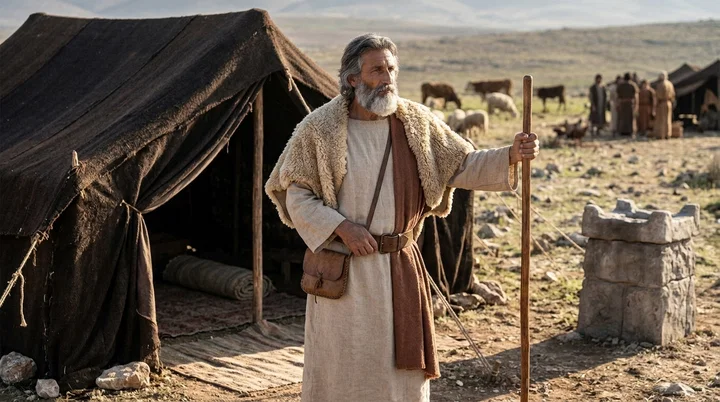
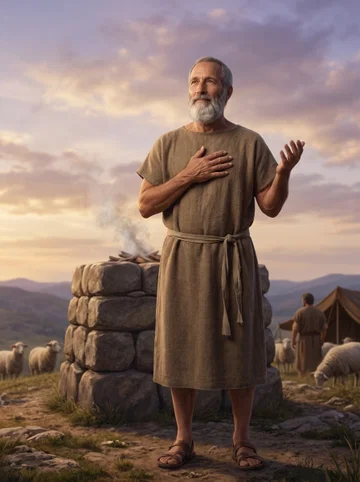
Then Abram removed his tent, and came and dwelt in the plain of Mamre, which is in Hebron, and built there an altar unto the LORD.
Translations
Then Abram removed his tent, and came and dwelled in the plain of Mamre, which is in Hebron, and built there an altar to the LORD.
Then Abram removed his tent, and came and dwelt in the plain of Mamre, which is in Hebron, and built there an altar unto the LORD.
Then Abram removed his tent, and came and dwelt in the plain of Mamre, which is in Hebron, and built there an altar unto the Lord.
Then Abram removed his tent, and came and dwelt in the plain of Mamre, which is in Hebron, and built there an altar to the LORD.
And Abram moved his tent, and came and dwelt by the oaks of Mamre, which are in Hebron, and built there an altar unto the LORD.
And Abram moved his tent, and came and dwelt by the oaks of Mamre, which are in Hebron, and built there an altar unto Jehovah.
And Abram tenteth, and cometh, and dwelleth among the oaks of Mamre, which [are] in Hebron, and buildeth there an altar to Jehovah.
Then Abram moved [ his] tents, and came and dwelt by the oaks of Mamre, which are in Hebron. And he built there an altar to Jehovah.
So Abram moved his tent and came in and dwelt among the oaks of Mamre, which were in Hebron,—and built there an altar to Yahweh.
Berean Standard Bible, Majority Standard Bible
So Abram moved his tent and went to live near the Oaks of Mamre at Hebron, where he built an altar to the LORD.
Abram moved his tent, and came and lived by the oaks of Mamre, which are in Hebron, and built an altar there to the LORD.
And Abram, moving his tent, came and made his living-place by the holy tree of Mamre, which is in Hebron, and made an altar there to the Lord.
Then Abram remoued his tent, and came and dwelled in the plaine of Mamre, which is in Hebron, and builded there an altar vnto ye Lord.
Douay-Rheims (Challoner revision)
So Abram removing his tent came and dwelt by the vale of Mambre, which is in Hebron: and he built there an altar to the Lord.
Pictures
Cross-references 20 of 21
- Genesis 12:7-8
And the LORD appeared unto Abram, and said, Unto thy seed will I give this land: and there builded he an altar unto the LORD, who appeared unto him.
Abram builds altars to the Lord at new places while moving through Canaan.
- Genesis 12:1-4
Now the LORD had said unto Abram, Get thee out of thy country, and from thy kindred, and from thy father’s house, unto a land that I will shew thee:
God calls Abram to leave his country and kindred and begins his journey into the promised land.
- Genesis 13:4
Unto the place of the altar, which he had made there at the first: and there Abram called on the name of the LORD.
Abram returns to his altar and calls on the Lord, continuing his altar worship.
- Hebrews 11:8-10
By faith Abraham, when he was called to go out into a place which he should after receive for an inheritance, obeyed; and he went out, not knowing whither he went.
Describes Abraham’s journey and life as a sojourner.
- Genesis 26:25
And he builded an altar there, and called upon the name of the LORD, and pitched his tent there: and there Isaac’s servants digged a well.
Isaac builds an altar and calls on the Lord after settling, as Abram did.
- Genesis 33:20
And he erected there an altar, and called it El-elohe-Israel.
Jacob builds an altar after settling, continuing the patriarchal pattern.
- Romans 4:13
For the promise, that he should be the heir of the world, was not to Abraham, or to his seed, through the law, but through the righteousness of faith.
Abraham’s promise was an inheritance of the world through faith.
- Genesis 13:8-9
And Abram said unto Lot, Let there be no strife, I pray thee, between me and thee, and between my herdmen and thy herdmen; for we be brethren.
Abram’s offer to separate without strife illustrates his conciliatory character.
- Genesis 17:8
And I will give unto thee, and to thy seed after thee, the land wherein thou art a stranger, all the land of Canaan, for an everlasting possession; and I will be their God.
The covenant repeats the promise to Abraham of the land of Canaan.
- Genesis 14:13-16
And there came one that had escaped, and told Abram the Hebrew; for he dwelt in the plain of Mamre the Amorite, brother of Eshcol, and brother of Aner: and these were confederate with Abram.
Abraham’s victory follows his dwelling in Mamre.
- Genesis 18:4
Let a little water, I pray you, be fetched, and wash your feet, and rest yourselves under the tree:
Identifies the oaks of Mamre where Abraham pitched his tent.
- Genesis 13:12
Abram dwelled in the land of Canaan, and Lot dwelled in the cities of the plain, and pitched his tent toward Sodom.
Lot pitches his tent toward Sodom, unlike Abram’s dwelling on the plain.
- Genesis 8:20
And Noah builded an altar unto the LORD; and took of every clean beast, and of every clean fowl, and offered burnt offerings on the altar.
Both build an altar unto the LORD.
- Genesis 35:3
And let us arise, and go up to Beth-el; and I will make there an altar unto God, who answered me in the day of my distress, and was with me in the way which I went.
Both texts describe building an altar to God.
- Acts 7:2-6
And he said, Men, brethren, and fathers, hearken; The God of glory appeared unto our father Abraham, when he was in Mesopotamia, before he dwelt in Charran,
Stephen says Abraham received no inheritance in the land during his life.
- Genesis 35:7
And he built there an altar, and called the place El-beth-el: because there God appeared unto him, when he fled from the face of his brother.
Jacob builds an altar to God at Bethel.
- Genesis 15:18
In the same day the LORD made a covenant with Abram, saying, Unto thy seed have I given this land, from the river of Egypt unto the great river, the river Euphrates:
The land promised to Abram is bounded from Egypt to the Euphrates.
- Genesis 12:5
And Abram took Sarai his wife, and Lot his brother’s son, and all their substance that they had gathered, and the souls that they had gotten in Haran; and they went forth to go into the land of Canaan; and into the land of Canaan they came.
Abram’s household and the people gathered in Haran accompany him to Canaan.
- Genesis 22:17-18
That in blessing I will bless thee, and in multiplying I will multiply thy seed as the stars of the heaven, and as the sand which is upon the sea shore; and thy seed shall possess the gate of his enemies;
The promise to Abraham includes a blessing through his seed.
- Galatians 3:29
And if ye be Christ’s, then are ye Abraham’s seed, and heirs according to the promise.
Those who belong to Christ are Abraham’s seed and heirs of the promise.
Commentary
Each commentary is drawn from primary sources: the writings of Ellen G. White and Adventist pioneers and periodicals. Each commentary is separate. Its own words are not a quotation; follow the references to read the source passages.
Ellen G. White
4 sources
After his separation from Lot, Abram moved to Hebron and pitched his tent on the plain of Mamre among its oaks.PP 133.27T 44.2 In that removal he left to Lot the perilous luxury of the vale of Sodom, choosing for himself the upland setting and the simple patriarchal life.PP 133.2 To provide for his large household he moved from place to place.Ms 19, 1886, par. 3
Wherever he settled he erected an altar beside his tent to worship the living God.PP 133.27T 44.2Ms 26, 1894, par. 14–15Ms 19, 1886, par. 3 His worship traveled with him, for when he moved the altar remained behind as a witness to the Canaanites, and when he settled again he repaired the altar and worshiped.7T 44.2 That altar stood wherever he went as a living public testimony, and even the roving Canaanites recognized it as such.Ms 26, 1894, par. 14–15
By worshiping God at each stopping place he taught his family to love and fear Him.Ms 19, 1886, par. 3 His example teaches that worship should be visible and that every household should establish its own practice of worship.Ms 26, 1894, par. 14–15
Sources
Pioneers and periodicals
27 sources
After Abram gave Lot first choice of the land and they separated, he left Bethel and settled by the oaks of Mamre at Hebron, where the Lord promised him all the land he could see to him and his seed forever and told him to walk through it.ST Jul 31, 1901ST Jul 31, 1901ST Aug 28, 1901RH Jan 27, 1910ST May 7, 1902 There he again built an altar to the Lord, making worship the outward center of his camp and showing his faith.ST Jul 31, 1901ST May 7, 1902 That promise to Abraham and his seed was the promise of the kingdom with the Promised Seed in view, embracing not only Canaan but the whole earth made new, making Abraham heir of the world through the righteousness of faith.RH May 27, 1915ST Feb 1, 1899ST Dec 20, 1910ST Nov 11, 1930ST Jan 28, 1903 He did not receive it as an everlasting possession in his lifetime, but lived in it as a stranger and pilgrim looking forward in faith to the new earth.RH Feb 25, 1858ST Nov 11, 1930ST Jan 28, 1903 His tent and altar marked a separated life of calling on God, in contrast to Lot pitching toward Sodom for business and personal inclination with no altar or recorded worship.ST Jul 1, 1880ST Jul 1, 1880 Wherever he pitched his tent he prayed and offered sacrifice, proclaiming the true God and drawing others from idolatry, and his altar taught the same plan later shown in the tabernacle, the restoration of fallen humanity through the Son of God in the flesh and His mediatorship.ST Jul 26, 1910ST May 7, 1902RH May 8, 1856RH Dec 7, 1905ST May 7, 1902
Setting and Move
After Abram gave Lot first choice of the land, the two separated and the Lord promised Abram all the land he could see to him and his seed forever.ST Jul 31, 1901ST Jul 31, 1901ST Aug 28, 1901RH Jan 27, 1910 That promise included innumerable posterity and the command to walk through the land.ST Jul 31, 1901ST Jul 31, 1901ST Aug 28, 1901 Abram then removed his tent and came and dwelt by the oaks, or plain, of Mamre in Hebron and built there an altar unto the Lord.ST Jul 31, 1901ST Jul 31, 1901ST Aug 28, 1901RH Jan 27, 1910ST Sep 25, 1901 Building such an altar was a leading feature of his camp at Mamre in Hebron.ST Jul 31, 1901RH Jan 27, 1910 His peaceable choice to let Lot choose first surrendered personal preference, and his trust in God's promise kept him from selfishness and grasping for worldly advantage.ST Aug 28, 1901ST Sep 25, 1901
He had moved from Bethel to make this settlement among the oaks of Mamre.ST Jul 31, 1901RH Jan 27, 1910 The dwelling at Mamre near Hebron was temporary.ST Jul 31, 1901RH Jan 27, 1910ST May 7, 1902 The place is described both as plain and as oaks of Mamre, lying in or near Hebron.ST Jul 31, 1901ST Aug 28, 1901RH Jan 27, 1910ST May 7, 1902 The chapter stands before Abram's victory over the five kings and the vision of God's promise, and without that intervening victory account the introduction to the promise is abrupt and hard to understand.ST Aug 7, 1901 The verse falls within the larger Genesis story cited to explain Abraham's attempt to secure an heir through Hagar.ST Sep 28, 1915 That attempt was human scheming contrary to God's promise, and it led to bondage and trouble.ST Sep 28, 1915
Promise of Inheritance
The settling at Mamre in Hebron with the building of the altar belongs to God's progressive dealings with Abram as the father of the faithful.RH May 27, 1915ST Feb 1, 1899ST Dec 20, 1910 It belongs to the promise of the land to Abraham and his seed, understood as the promise of the kingdom with the Promised Seed in view.RH May 27, 1915ST Feb 1, 1899ST Dec 20, 1910 That promise is not limited to the country where Abraham lived but embraces the whole earth.RH May 27, 1915ST Nov 11, 1930ST Jan 28, 1903 It is the promise of a rehabilitated earth comprehending the whole world, making Abraham heir of the world through the righteousness of faith.RH May 27, 1915ST Nov 11, 1930ST Jan 28, 1903
Abraham settled at Mamre in Hebron and built an altar there, but he did not receive the promised land as an everlasting possession during his lifetime.RH Feb 25, 1858ST Nov 11, 1930ST Jan 28, 1903 He lived in it as a stranger and pilgrim while looking forward in faith to the inheritance of the new earth.RH Feb 25, 1858ST Nov 11, 1930ST Jan 28, 1903 The verse therefore belongs to the setting of Abraham receiving that promise, not to his taking lasting possession of Canaan.RH Feb 25, 1858ST Nov 11, 1930ST Jan 28, 1903
The altar stood at Mamre near Hebron, and the portion of Canaan where he built it and received the promise later fell to Judah by lot, the tribe from which the Saviour was to descend.ST Apr 28, 1914ST Apr 28, 1914 This was also the portion where he was called to offer Isaac.ST Apr 28, 1914ST Apr 28, 1914 It is the region associated with the city of Melchizedek, Salem, later called Jebus and Jerusalem, and with the place where the Lord met Abram and made the promise after separating from Lot.ST Apr 28, 1914ST Apr 28, 1914
The setting shows growing trust in God and God's providential care.ST Dec 20, 1910ST Sep 25, 1901ST Jun 15, 1904 After earlier reliance on his own plans Abram learned to trust the promise, and in settling at Hebron and building the altar he again showed his faith.ST Dec 20, 1910ST Jun 15, 1904 The Lord's promise of the land and an innumerable posterity follows Abram's peaceable choice to give Lot first choice of the land, surrendering personal preference.ST Dec 20, 1910ST Aug 28, 1901ST Sep 25, 1901 That trust in God's promise kept him from being selfish or grasping for worldly advantage in an unselfish choice.ST Dec 20, 1910ST Aug 28, 1901ST Sep 25, 1901
Altar Worship and Witness
Building an altar to the Lord was a leading feature of his camp at Mamre in Hebron after Lot separated from him.ST Jul 31, 1901 In settling at Hebron and building the altar he again showed his faith. The altar was the outward center of patriarchal worship, and with its services it taught the same truth later set out more fully in the tabernacle.ST May 7, 1902
That truth was God's plan to dwell among humanity through His Son, and to restore fallen humanity through the Son of God in the flesh and His mediatorship, set out afterward in greater detail through the tabernacle and its services.ST May 7, 1902ST May 7, 1902 Abram worshiped God by building altars, and the offerings imply knowledge of sin, since offerings would not have been made without that knowledge.RH Oct 18, 1853 He himself attended to the offerings at the altar he erected.RH Feb 3, 1910 His offering of sacrifices at the permanent stopping places of his pilgrimage shows that sacrificial worship existed before Moses and was not first introduced at Sinai.ST Sep 17, 1902
Wherever he pitched his tent he worshiped the true God, and the altar was part of his missionary witness, proclaiming the gospel through worship and holy life and drawing people out of idolatry to serve God.ST Jul 26, 1910 His settling at Mamre in Hebron and building an altar to the Lord is an example of family worship and of calling upon God on arriving at a new place.RH May 8, 1856 His practice of building altars wherever he sojourned exemplifies regular worship and prayer.ST Aug 3, 1904 His living in a tent at Mamre as he moved from place to place was in God's order, so that the people of the land could receive the light and knowledge of the true God.RH Dec 7, 1905
His tent and altar on the plain of Mamre mark a life of worship and calling on God and of cultivating the divine Spirit, in contrast to Lot's move toward Sodom for business with no altar or recorded worship.ST Jul 1, 1880 The tent and altar represent a separated life with God, unlike Lot's life in Sodom, and that separation from Sodom made Abraham able to do it good.ST Jul 1, 1880 The verse stands opposite Lot dwelling in the cities, showing the difference between following the leading of the Spirit of God in the country by the oaks in Canaan and following personal inclination amid the gaiety and trafficking of the cities.
City life is justifiable to put forth labor for souls and to bring the message of salvation that saves from the judgment of the great day of God. Lot chose the city for other reasons, and in twenty years won not even ten souls. He lost part of his family in the flames, lost his wife on the way to safety, and suffered the disgrace and spiritual apathy of his daughters.
Sources