Genesis 14:19
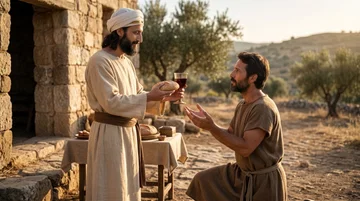
And he blessed him, and said, Blessed be Abram of the most high God, possessor of heaven and earth:
Translations
American King James Version, King James Version, KJV Cambridge Paragraph Bible, Webster Bible
And he blessed him, and said, Blessed be Abram of the most high God, possessor of heaven and earth:
Revised Version, American Standard Version
And he blessed him, and said, Blessed be Abram of God Most High, possessor of heaven and earth:
and he blesseth him, and saith, 'Blessed [is] Abram to God Most High, possessing heaven and earth;
And he blessed him, and said, Blessed be Abram of the Most High God, possessor of heavens and earth.
So he blessed him and said,—Blessed be Abram of GOD Most High, possessor of [the] heavens and earth;
Berean Standard Bible, Majority Standard Bible
and he blessed Abram and said:
“ Blessed be Abram by God Most High,
Creator of heaven and earth,He blessed him, and said, “ Blessed be Abram of God Most High, possessor of heaven and earth.
And blessing him, said, May the blessing of the Most High God, maker of heaven and earth, be on Abram:
Therefore he blessed him, saying, Blessed art thou, Abram, of God most high possessour of heauen and earth,
Douay-Rheims (Challoner revision)
Blessed him, and said: Blessed be Abram by the most high God, who created heaven and earth.
Pictures
Cross-references 20 of 34
- Hebrews 7:1-3
For this Melchisedec, king of Salem, priest of the most high God, who met Abraham returning from the slaughter of the kings, and blessed him;
Identifies Melchizedek as the king-priest who blessed Abraham.
- Hebrews 7:6-7
But he whose descent is not counted from them received tithes of Abraham, and blessed him that had the promises.
Melchizedek blessed Abraham, showing that the one who blesses is greater.
- Hebrews 7:17
For he testifieth, Thou art a priest for ever after the order of Melchisedec.
Applies the Melchizedek priesthood to Christ.
- Psalms 110:4
The LORD hath sworn, and will not repent, Thou art a priest for ever after the order of Melchizedek.
Declares the Messiah a priest forever after Melchizedek’s order.
- Hebrews 7:3
Without father, without mother, without descent, having neither beginning of days, nor end of life; but made like unto the Son of God; abideth a priest continually.
Melchizedek is made like the Son of God and abides as priest continually.
- Hebrews 7:4
Now consider how great this man was, unto whom even the patriarch Abraham gave the tenth of the spoils.
Abraham gave Melchizedek a tenth of the spoils, demonstrating his greatness.
- Hebrews 7:9-10
And as I may so say, Levi also, who receiveth tithes, payed tithes in Abraham.
Levi is counted as paying tithes to Melchizedek through Abraham.
- Hebrews 7:8
And here men that die receive tithes; but there he receiveth them, of whom it is witnessed that he liveth.
Tithes received by Melchisedec point to the living Christ as their receiver.
- Hebrews 5:6
As he saith also in another place, Thou art a priest for ever after the order of Melchisedec.
Christ is called a priest after Melchizedek’s order.
- Galatians 3:8
And the scripture, foreseeing that God would justify the heathen through faith, preached before the gospel unto Abraham, saying, In thee shall all nations be blessed.
Abraham’s blessing anticipates blessing for all nations through faith.
- Galatians 3:29
And if ye be Christ’s, then are ye Abraham’s seed, and heirs according to the promise.
Those who belong to Christ are Abraham’s seed and heirs according to the promise.
- Hebrews 6:20
Whither the forerunner is for us entered, even Jesus, made an high priest for ever after the order of Melchisedec.
Christ is a priest forever after Melchizedek’s order.
- Hebrews 7:2
To whom also Abraham gave a tenth part of all; first being by interpretation King of righteousness, and after that also King of Salem, which is, King of peace;
Cited with Genesis to support Abraham’s tithe to the priest.
- Psalms 110:1
The LORD said unto my Lord, Sit thou at my right hand, until I make thine enemies thy footstool.
Melchizedek’s priest-king role is linked to Christ.
- John 8:39
They answered and said unto him, Abraham is our father. Jesus saith unto them, If ye were Abraham’s children, ye would do the works of Abraham.
Abraham’s children do the works of Abraham.
- Hebrews 7:21
( For those priests were made without an oath; but this with an oath by him that said unto him, The Lord sware and will not repent, Thou art a priest for ever after the order of Melchisedec:)
God’s oath establishes Christ as a priest forever in Melchizedek’s order.
- Hebrews 7:6
But he whose descent is not counted from them received tithes of Abraham, and blessed him that had the promises.
Melchizedek received tithes from Abraham despite having no recorded descent.
- Hebrews 7:11
If therefore perfection were by the Levitical priesthood, ( for under it the people received the law,) what further need was there that another priest should rise after the order of Melchisedec, and not be called after the order of Aaron?
Contrasts Christ’s priesthood with Aaron’s priesthood.
- Galatians 3:7
Know ye therefore that they which are of faith, the same are the children of Abraham.
People of faith are identified as Abraham’s children.
- Genesis 28:20-22
And Jacob vowed a vow, saying, If God will be with me, and will keep me in this way that I go, and will give me bread to eat, and raiment to put on,
Jacob's tithe joins Abraham's tithe example
Commentary
Each commentary is drawn from primary sources: the writings of Ellen G. White and Adventist pioneers and periodicals. Each commentary is separate. Its own words are not a quotation; follow the references to read the source passages.
Ellen G. White
15 sources
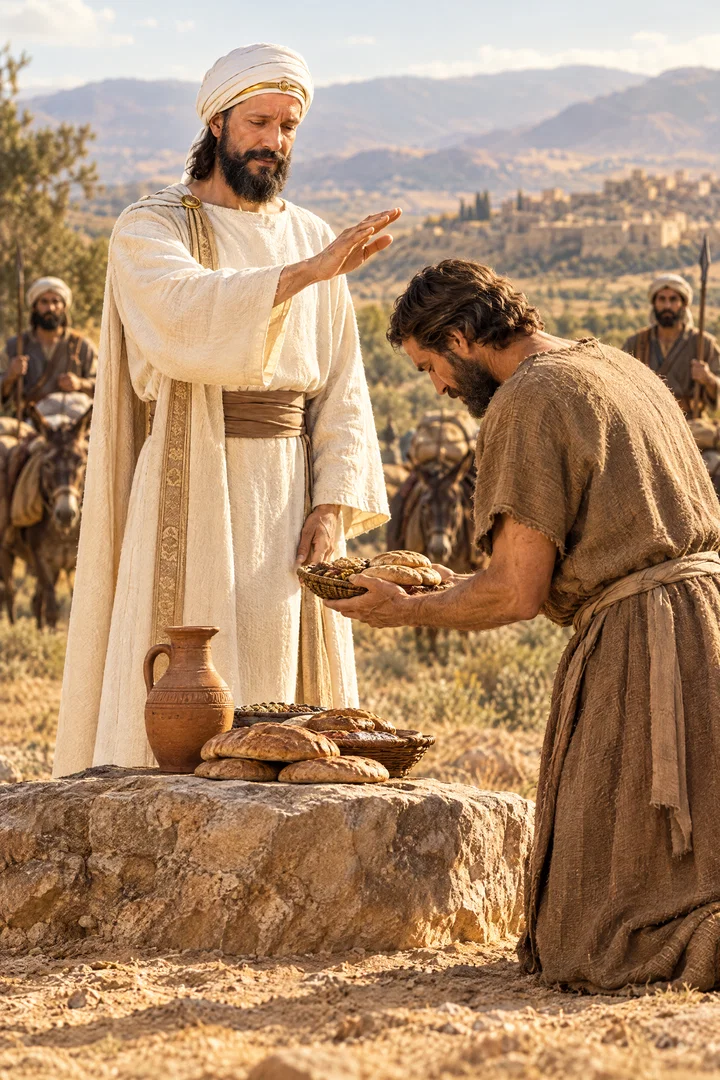
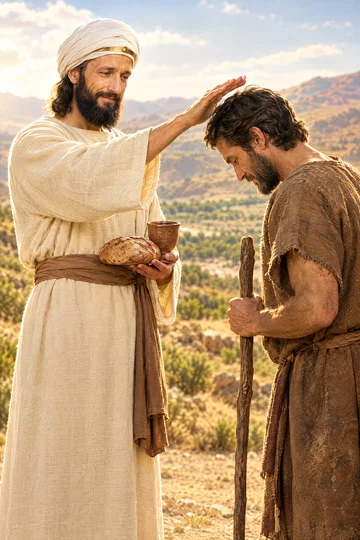
Melchizedek, priest of the Most High God at Salem, blessed Abram as he returned victorious from rescuing Lot and the captives and recovering the people and goods taken by his enemies.Lt 158, 1896, par. 2–3PP 157.2–3PP 134.3–135.1PP 136.1–3PP 703.1 The blessing acknowledged Abram as belonging to the Most High God, giving thanks to God as the source of his strength and deliverance and naming Him possessor of heaven and earth.Lt 158, 1896, par. 2–3PP 157.2–3ST Apr 29, 1875 To call God possessor of heaven and earth means all creation belongs to Him and He is the giver of every blessing to humanity.PP 135.2ST Feb 7, 18842MR 132.5–133.2 In that setting Abram gave Melchizedek tithes of all he possessed, showing that returning a tenth for religious purposes was practiced before the Mosaic system began and remains the duty of believers under the Melchizedek priesthood.Lt 158, 1896, par. 2–3RH Aug 25, 1874ST Apr 29, 1875Lt 44, 1876, par. 5–62MR 132.5–133.2 Because God owns all things, Abraham also refused to enrich himself with Sodom's goods so God alone would have the glory, teaching that giving material goods without laying the whole self on God's altar cannot receive His approval and blessing.PP 135.2ST Feb 7, 1884PP 134.3–135.13T 57.1
Blessing After Abram's Victory
The blessing was spoken as Abram was returning after rescuing Lot and the captives and recovering the people and goods taken by his enemies in victory over the Elamites.Lt 158, 1896, par. 2–3PP 157.2–3PP 134.3–135.1 It belonged to the account in which Melchizedek was priest of the Most High God and Abram gave him tithes of all.Lt 158, 1896, par. 2–3 The victory itself was due to God, who had promised to bless Abraham.PP 134.3–135.1
Melchizedek who blessed Abram was priest of the Most High God.PP 136.1–3PP 703.1 He lived at Salem, the place that later became Jerusalem.PP 703.1 He was God's appointed witness, representing the Lord Jesus Christ in person to reveal heaven's truth and preserve God's law.Lt 190, 1905, par. 2
The blessing blessed Abram as servant of and belonging to the Most High God, possessor of heaven and earth.Lt 158, 1896, par. 2–3ST Apr 29, 1875PP 368.2 It acknowledged Jehovah as the source of Abram's strength and victory.PP 157.2–3 It gave thanks to God as the one who brought deliverance through him, naming God as possessor of heaven and earth.PP 136.1–3
Through that victory God's power was made known to the people of Sodom.PP 157.2–3 Through Abraham's integrity, unselfishness, courage and kindness God was also made known to the peoples among whom Abraham lived, including the inhabitants of Sodom.PP 368.2
Because his victory was due to God who had promised to bless him, Abraham acknowledged God's ownership and authority.PP 135.2PP 134.3–135.1 He invoked the title Lord under oath and refused to keep Sodom's goods for himself.ST Feb 7, 1884 He would not let anyone claim to have made him rich, and he would not become rich through another's property, giving God the glory.PP 135.2ST Feb 7, 1884
Ownership and Faithful Giving
God is set forth as the Most High, the possessor of heaven and earth, which means that all creation belongs to Him.PP 135.2ST Feb 7, 18842MR 132.5–133.2 He is the giver of humanity's blessings, and believers are to willingly return tithes and offerings to Him in response.2MR 132.5–133.2 Abraham's acknowledgment of that ownership and authority underlay his refusal to keep the recovered goods for himself, for he would not let anyone claim to have made him rich but gave God the glory for the blessing God had promised him.PP 135.2 Invoking this title of the Lord under oath, he refused to take any of Sodom's goods so that he would not become rich through another's property.ST Feb 7, 1884
In this setting Abram gave Melchizedek, priest of the Most High God, tithes of all, a tenth of all he possessed.Lt 158, 1896, par. 2–3RH Aug 25, 18743T 393.1–394.3ST Apr 29, 1875Lt 44, 1876, par. 5–6 That act was giving for religious purposes in response to God's requirements and blessings.RH Aug 25, 1874 Giving a tenth in this way was practiced before Moses' tithing system was established and did not begin with the Mosaic system.RH Aug 25, 1874ST Apr 29, 1875 The tithe question thus reaches back to Abraham's time as precedent.Lt 158, 1896, par. 2–32MR 132.5–133.2 Giving tithes is a duty that applies also to believers living under the Melchizedek priesthood.Lt 44, 1876, par. 5–6
Because all things belong to God as Possessor of heaven and earth, giving Him material goods while withholding oneself is not enough to receive His approval and blessing.3T 57.1 His people must lay their whole selves on His altar.3T 57.1
Sources
Pioneers and periodicals
103 sources
The verse records Melchizedek, king of Salem and priest of the Most High God, blessing Abram on his return from defeating the kings and rescuing Lot.ST Aug 13, 1885RH Apr 1, 1915ST Sep 9, 1880
The blessing declares Abram blessed by, belonging to, and serving the supreme God who is true owner and proprietor of heaven and earth and all in them.ST Aug 13, 1885ST Sep 2, 1889RH Feb 20, 1913RH Jan 21, 1909RH Sep 30, 1902
Because the less is blessed by the greater, Melchizedek was greater than Abram in priestly and kingly office, and as priest-king he was a type and express representative of Christ, not Christ himself.ST Oct 4, 1883RH Mar 3, 1904ST Dec 2, 1889ST Dec 9, 1889
It is the first recorded paying of tithes, with Abram giving a tenth of all to God's priest as a well-understood duty taught from the beginning, long before Moses and Levi.ST Sep 2, 1889ST Jan 24, 1906ST Jan 22, 1880ST Jul 4, 1911RH Mar 11, 1873
Since Christ is priest forever after the order of Melchizedek, Abraham as father of believers binds Christians under the same priesthood to pay tithes to the living High Priest, while owning God as their portion and refusing to be enriched by earthly kings.RH Nov 18, 1915AUST Jun 14, 1920RH Jan 9, 1900RH Nov 4, 1873
Historical Setting and Wording
Melchizedek blessed Abram on Abram's return from defeating the kings, after rescuing Lot and recovering people and goods, meeting him in the king's dale while returning toward Hebron.ST Aug 13, 1885RH Apr 1, 1915ST Sep 9, 1880ST Jan 22, 1880RH Mar 3, 1904 The blessing came as Abram returned from rescuing Lot and affirmed that God had delivered Abram's enemies into his hand, and Abram's tithe of the spoils recognized God's ownership.RH Apr 1, 1915RH Mar 3, 1904ST Feb 16, 1915 The very first thing Abraham did was give the Lord's priest a tenth part of everything, giving the tenth before returning the remaining spoils to the king of Sodom.ST Sep 9, 1880ST Jan 22, 1880ST Feb 16, 1915 Genesis 14, including this verse, is genuine history, not fable, parable, or myth.ST Dec 14, 1915ST Dec 14, 1915ST May 3, 1910ST Jul 16, 1896 Its war of four kings against five, its lists of kings, and its people including Melchizedek are real, with chronology consistent with contemporaneous dynasties once thought to have ruled one after another.ST Dec 14, 1915ST Dec 14, 1915ST Nov 23, 1904ST May 3, 1910ST Jul 16, 1896
The chapter's historicity is abundantly confirmed by archaeology.ST Jan 2, 1912ST May 20, 1913 Tablets found within thirty years in the Chamber of Records by the banks of the Euphrates tell the same story of the invasion of Palestine in Abraham's time and corroborate Genesis in minute detail, vindicating its statements by inscriptions on sandstone and marble and putting confidence in the book as a historical record beyond question.RH Jul 9, 1914 Cuneiform records corroborate details such as Babylon's divided kingdoms, Elamite supremacy, and rulers' claims in the West, including the alliance of Arioch of Ellasar with Elam.RH Jul 9, 1914ST Dec 14, 1915 Chedorlaomer was the Elamite Kudur-lagamer ruling twelve years over the plain to near Egypt, and Amraphel is identified as Hammurabi, with ancient records and historical inscription used as evidence that the biblical account is confirmed.ST May 20, 1913RH May 13, 1909 The blessing declares Abram blessed by, belonging to, and a servant of the Most High God, possessor of heaven and earth.ST Aug 13, 1885ST Sep 2, 1889RH Feb 20, 1913AUST Jun 14, 1920ST Sep 5, 1895 It identifies God as owner of all things and frames Abraham's recovered goods as belonging ultimately to God, so that Abraham gives the Lord's tenth before returning the remaining goods to their claimants.RH Feb 20, 1913RH Apr 1, 1915 The blessing follows Abram's victory over his enemies, which the next verse credits to God.RH Apr 1, 1915ST Sep 5, 1895
Salem is peace and the old name of Jerusalem, though its location is uncertain and it may have been south of Jerusalem.RH Dec 1, 1910 Melchizedek met Abram near Sodom in the king's dale, bringing bread and wine to refresh and strengthen Abram and his men returned weary from a long and dangerous journey, showing compassion and care for those in need.RH Jul 19, 1870RH May 22, 1913RH Dec 1, 1910 Abram's rescue of the captives also brought the people of Sodom into contact with him, giving them access to the light of truth.RH Jul 19, 1870ST Oct 24, 1895ST Sep 1, 1898 Together with Abraham, Melchizedek held up the light of the Gospel among the people of Sodom and Gomorrah, giving the cities evidence of God's power from which they and Lot should have learned.ST Oct 24, 1895ST Sep 1, 1898 The meeting included the king of Sodom in a religious service using Melchizedek's bread and wine in its ceremonies.RH Dec 29, 1904 Abram's tithe included property by right belonging to Gentile tribes of Palestine.RH Dec 29, 1904
Abram gave the tenth on all without first deducting campaign expenses and before returning the nine-tenths to owners, keeping nothing for himself, not even a thread to a shoe-latchet for taxes or for feeding himself or his household, except what the young men who went with him ate out of the nine-tenths.RH Feb 20, 1913ST Sep 9, 1880ST Apr 25, 1906 Reports of letters using the name of Melchizedek found in Egypt do not change the record given in Genesis 14, since nothing shows those letters are from the Melchizedek of Genesis 14.ST Oct 8, 1912
Melchizedek's Identity and Blessing
Melchizedek was king of Salem and priest of the Most High God, joining kingship and priesthood in one person as priest-king, prince, and leader of his people in worship under God's earthly government.ST Aug 8, 1916RH Sep 7, 1869ST Oct 21, 1889ST Dec 10, 1912 He lived in Abraham's time and met him to bless him, and the blessing identifies God as possessor of heaven and earth and Abraham as blessed by Him.ST Aug 8, 1916RH May 18, 1869RH Sep 7, 1869ST Oct 21, 1889ST Dec 10, 1912 The blessing came before Abraham gave him a tenth of everything, showing the tithe paid to the Lord's priest and recognized representative.ST Aug 8, 1916RH May 18, 1869ST Dec 10, 1912
His name means king of righteousness and Salem means peace, fitting titles for his rule as king of righteousness and king of peace.ST Dec 17, 1912ST Dec 2, 1889ST Jun 25, 1896ST Jun 3, 1913 Those titles make him a fitting type of Christ, who is righteousness and peace and the great High Priest, both King and Priest forever.ST Dec 2, 1889ST Jun 25, 1896ST Jun 3, 1913 As priest-king he blessed Abram as a servant of the Most High God, possessor of heaven and earth.ST Dec 17, 1912
Because without contradiction the less is blessed by the better, Melchizedek's blessing of Abram proves he was greater than Abram in rank and office.RH Mar 3, 1904ST Dec 9, 1889ST Aug 26, 1913RH Jul 9, 1901 Though Abraham was father of all the Jewish tribes and therefore greater than Levi, and though Abraham himself was a priest empowered to offer sacrifices as were all the patriarchs, he was inferior to Melchizedek. Receiving tithes from Abraham together with blessing him establishes the superiority of the Melchizedek priesthood over Abraham and over the Levitical priesthood.ST Dec 9, 1889 The blessing therefore supports the greatness of the priesthood associated with him and shows him greater than Abraham's descendants including Levi.RH Mar 3, 1904ST Dec 9, 1889
He was superior though Abram was holder of the promises of God and the greatest man of his time and the promised father of a great nation.ST Aug 26, 1913 Great as Abraham was in God's sight, Abraham paid him homage and received his blessing.ST Dec 17, 1912 Those who hold that Melchizedek was greater only in his office as priest and king teach that Abraham as stranger and pilgrim, not a king, was otherwise not inferior to Melchizedek.RH Sep 7, 1869ST Dec 9, 1889
He acted as God's voice in the world, representative of God and of Christ, and Abram accepted his blessing and honored him in recognition of his divine office.RH Jan 9, 1900ST Apr 28, 1914ST Aug 30, 1905RH Jul 9, 1901 As king of Salem and priest of God Most High he represented the Son of promise through whom all the world would be blessed.ST Apr 28, 1914 In blessing Abraham he acted as representative of Christ, who is both king and priest, while he himself was not Christ.RH Jul 9, 1901
The Genesis record gives no account of his ancestry, birth, death, beginning or end of priesthood, predecessor or successor.RH Sep 7, 1869RH Mar 20, 1856RH Jul 7, 1874 This silence is deliberate and significant, carrying meaning by the Holy Spirit's choice of what to include and omit, so that lack of information about descent, beginning, and end teaches a fundamental truth drawn out in Hebrews.RH Sep 7, 1869RH Sep 28, 1905 The record presents only a segment of a priesthood of the same order as Christ's everlasting priesthood. By design Genesis says no more than that he was king of Salem and priest of the Most High God, leaving parentage and identity beyond that unknown.RH Mar 20, 1856RH Jul 7, 1874
Without father, without mother, without descent, and having neither beginning of days nor end of life is Hebraic language for unknown or unreckoned genealogy, not lack of human parents or lack of beginning and end.RH Sep 7, 1869RH Mar 20, 1856ST Oct 21, 1889 In contrast to Aaron and his sons whose genealogy had to be carefully preserved to hold office, the omission lets him represent an endless priesthood.RH Mar 20, 1856 He has no recorded predecessor or successor, and his office does not depend on descent or end through death, making him like the Son of God whose priesthood in the heavenly sanctuary is not by lineal descent and does not cease by death.RH Mar 20, 1856RH Jul 7, 1874 As a full-grown father-priest directly from God with no human father or mother and no beginning of days, he exemplifies the endless life essential to the priesthood after his order.
On his identity, the weight of teaching holds that he was a real man just as Abraham was.RH Mar 20, 1856RH Jul 7, 1874RH Jul 9, 1901 Those who hold the visitor view teach that he was a visitor from another world and head of another world even as Adam was designed to be head of this world, visiting this world for a time in God's plan and placed on earth temporarily as a type of Jesus Christ.ST Dec 17, 1912ST Nov 29, 1910 In that line it is taught that he may have been such a priest-king from another world who later became the Melchizedek of this world and received his priesthood through God's oath.ST Nov 29, 1910 Those who hold the title view teach that Melchizedek is a title meaning king of righteousness, borne by every priest in that order of priest-kings who were both priest and king, so the one who met Abraham was one bearer, an intelligent man and full-grown father-priest directly from God, not a local king personally named Melchizedek but a temporary visitor bearing that title, with king of peace describing him.ST Aug 30, 1905ST Nov 15, 1905 Proposed identifications as Shem, Christ, the Holy Spirit, or a Canaanite living at Salem are left unsettled.ST Nov 15, 1905ST Jul 31, 1879
Type of Christ's Priesthood
Melchizedek was a type, figure and express representative of Christ, not Christ himself, while Christ is the antitype, the true king of righteousness and peace and great High Priest, the two standing as distinct individuals of the same order.ST Oct 4, 1883ST Dec 2, 1889ST Apr 12, 1905ST Jun 25, 1896ST Oct 4, 1883 Abraham saw Christ represented in Melchizedek, whose name meaning king of righteousness and whose rule as king of Salem meaning peace, joined to his priesthood of the Most High God, made him a fitting type of Him who is righteousness and peace.ST Oct 4, 1883ST Dec 2, 1889ST Jun 25, 1896ST Jan 29, 1894 The Genesis account of the blessing after the defeat of Chedorlaomer, together with Hebrews 7, presents the full Old Testament record of him as pointing to Christ, and Abraham paid him tithes and accepted his blessing in recognition of his divine office.ST Dec 2, 1889ST Apr 12, 1905ST Jan 29, 1894ST Apr 28, 1914 His union of priesthood with kingship makes him a higher and fuller type than Aaron, who had no kingship, so that without Melchizedek the type of Christ's kingly priesthood would have been limited and incomplete.ST Dec 9, 1889
As both priest and king he prefigures Christ's joint priest-king office in rule with the Father upon the throne of the universe, the promised and coming Priest-King who builds God's temple, rules as king, and appears for the salvation of God's people.RH Jun 29, 1916ST Aug 29, 1878RH Feb 15, 1870ST Sep 6, 1910ST Sep 6, 1910 That priest-king office continues until the Father makes His enemies His footstool, when Christ delivers up the kingdom He shared with the Father that God may be all in all, ending His reign upon the Father's throne to take His own throne as David's heir.ST Aug 29, 1878 The tithing system belonged to the Melchizedek order of priesthood, which ran from Adam to Moses and again from the first advent of Christ onward, and did not originate or terminate with the Mosaic economy and the Aaronic or Levitical priesthood.ST Sep 9, 1880ST Dec 10, 1912ST Feb 16, 1915ST Mar 27, 1893 It came before the Levitical order and is superior to it because Christ is made priest forever after the order of Melchizedek, in a royal and everlasting priesthood extending beyond the service for sin, applying across all times and conditions while the Aaronic priesthood served a sinful world in putting away sin.ST Dec 10, 1912ST Oct 25, 1905ST Jul 15, 1908
The ancient record gives no account of his ancestry, birth, death, beginning or end of priesthood, predecessor or successor, presenting only a segment of a priesthood of the same order as Christ's everlasting priesthood.RH Mar 20, 1856RH Jul 7, 1874 His being without father, without mother, without descent, having neither beginning of days nor end of life is Hebraic language for unknown or unreckoned genealogy, in contrast to Aaron and his sons whose lineage had to be carefully preserved to hold office.RH Mar 20, 1856 So made like unto the Son of God, his office not by lineal descent and not ceasing by death illustrates the endless life essential to that order, whose priesthood has no predecessor and no successor, and whose sons and daughters are made kings and priests forever.RH Mar 20, 1856ST Jul 15, 1908RH Jul 7, 1874 The encounter points to the Son of God's incarnation and mediatorship in the flesh, an early lesson and revelation of the priest-king later set out more fully in the tabernacle and its services and true temple.ST May 7, 1902ST May 7, 1902
Together with Abraham he held up the light of the Gospel among Sodom and Gomorrah, and the victory gave the cities evidence of Abraham and God's power from which they and Lot should have learned.ST Oct 24, 1895ST Sep 1, 1898 The blessing identifies the blessed as belonging to the Most High God, possessor of heaven and earth, and stands within God's providential dealings with Abraham's family as the chosen line through which the Seed would come, Melchizedek representing the Son of promise through whom all the world would be blessed.STST Sep 1, 1898ST Apr 28, 1914 The blessing after the return from battle is approval of Abraham's defensive fight, showing he acted in God's will so that fighting to defend others did not make him a murderer or violate God's law.RH Oct 14, 1862 The meeting with a priest of the Most High God after battle also shows worship existed before it was organized as a regular system for Israel.
Tithing Before the Law
The blessing belongs to the first biblical account and first recorded instance of paying tithes, when Abram on his return from battle gave a tenth of all, of the spoils, to Melchizedek as the Lord's priest and recognized representative.ST Sep 2, 1889ST Jul 4, 1911ST Nov 4, 1886ST Jul 2, 1885 This blessing identifies Abram as blessed by the Most High God, possessor of heaven and earth, and stands in the account where God had blessed him with the recovery of Lot and much spoil.ST Sep 2, 1889RH Feb 24, 1916 The act was the spontaneous practice of an already recognized duty and not a new or unprecedented custom.ST Jan 24, 1906ST Jan 22, 1880RH Mar 11, 1873 Tithing had been taught from the fall and from the beginning and was well understood among God's people, requiring prior instruction and carrying the force of God's law, as prayer is understood without recorded origin.ST Jan 22, 1880RH Mar 11, 1873ST Jan 28, 1889ST Jan 3, 1905ST Sep 9, 1889
Tithing was therefore practiced before Moses, before the Jewish nation and the Mosaic economy, and before the Aaronic and Levitical priesthoods, in connection with the Melchizedek priesthood.RH Mar 31, 1903ST Aug 8, 1916RH Mar 9, 1905RH Oct 24, 1912 It did not originate with the Hebrews or with the laws of Moses, and it did not terminate at the cross with laws peculiar to the Jewish dispensation.RH Mar 31, 1903ST Sep 9, 1880 The tithing system originated with and belonged to the Melchizedek order, which ran from Adam to Moses and again from the first advent of Christ onward.ST Sep 9, 1880 On that occasion Abraham paid the tenth on all and kept nothing for himself, not even a thread to a shoe-latchet for taxes or for feeding himself or his household, except what the young men who went with him ate out of the nine-tenths.ST Sep 9, 1880
The tithe was the Lord's tenth of everything, given first before Abram decided the spoils or returned the nine-tenths to owners and claimants.ST Sep 2, 1889ST Jan 24, 1906RH Feb 20, 1913RH Jan 21, 1909 Abram recognized that the spoils were not his own but belonged to the king of Sodom, and as steward of what he held he gave the Lord's representative one-tenth, treating the tithe as belonging to God.ST Jan 24, 1906RH Feb 20, 1913 The blessing affirmed that God had delivered Abram's enemies into his hand, and the tithe acknowledged God's ownership and claim and man's stewardship, with gratitude for providence in sunshine, rain, fields, flocks, and increase.RH Apr 1, 1915RH Jan 21, 1909RH Mar 3, 1904 As Hebrews 7:1-2, 7 shows, the one who blesses is greater than the one blessed, and Abram's tithe of the spoil recognizes the Lord's claim to it.RH Mar 3, 1904
The tithe was due to God, not given to meet Melchizedek's need, and was paid to God's priest for God's service and the support of those wholly devoted to His work and of gospel ministers.RH Apr 1, 1915ST Jan 22, 1880RH Jul 2, 1901ST Apr 26, 1905ST Jan 28, 1875 With no civil ruler present to take it for government, it proves the tithe is for religious and benevolent purposes and not for civil government.ST Jan 22, 1880 As Melchizedek is a true representative of Christ, who is priest after the order of Melchizedek, Christ has a claim on tithes for the maintenance of His ministers and the furtherance of the work of salvation, and blessing follows faithful giving.RH Jul 2, 1901ST Apr 26, 1905ST May 1, 1879 Patriarchal worship was thus supported by regular, specified offerings including tithe, and when God established Israel's sanctuary service He did not create a new obligation or support system but transferred the tithe to the Levitical priesthood for their service.RH Jun 6, 1912RH Jan 9, 1913 Levi, though not yet born and still in Abraham's loins, is counted as having paid tithes in Abraham.RH Jun 9, 1903 The same account shows theft punished as sin in Abraham's day, proving the law forbidding theft was already in force long before Moses.
Ownership and Present Obligation
The blessing names God as Most High, possessor of heaven and earth, which means He is supreme owner and true proprietor of the world and all in it.RH Feb 20, 1913RH Sep 30, 1902 He owns the earth and its fullness, the silver and gold and cattle, the fields, flocks and herds, and He is the source of every blessing to His creatures, sending sunshine and rain for seedtime and harvest.RH Jan 21, 1909ST Dec 10, 1912RH Mar 9, 1905 Everything possessed is of His creation, men are stewards of His goods, and gratitude is due to Him for the good gifts of His providence.RH Sep 30, 1902RH Mar 9, 1905 Abraham's recovered goods belonged ultimately to God, and by giving Melchizedek the Lord's tenth before returning the rest to their claimants he acknowledged that ownership and claim.RH Feb 20, 1913RH Jan 21, 1909RH Sep 30, 1902
Because Christ is made priest forever after the order of Melchizedek, believers now live under the Melchizedek order and the requirements of that priesthood including tithing are still in force in the Christian dispensation.ST Nov 5, 1896ST Dec 10, 1912 That priesthood came before the Levitical order and is superior to it, proved greater than Abraham and greater than Levi because without contradiction the less is blessed of the better, though Abraham was father of the Jewish tribes, holder of the promises, himself a priest as the patriarchs were, and greater than Levi.RH Nov 18, 1915RH Jan 9, 1900 Abraham paid a faithful tithe to Melchizedek as God's voice in the world and as priest of the Most High, recognizing that priesthood by his gift after receiving its blessing.RH Nov 18, 1915RH Jan 9, 1900 Abraham is a type of all the faithful and father of those who are his children by faith, so his example binds Christians living under the same priesthood to do the works of Abraham by paying a faithful tithe to Christ, the living High Priest who receives them, for the support of those who give their lives for the advancement of His kingdom, just as Levitical priests lived of the temple and gospel workers live of the gospel.RH Nov 18, 1915ST Nov 5, 1896ST Dec 10, 1912 The account shows tithing was understood and practiced among God's people in early times and indicates kings and their people were under obligation to pay tithes, an obligation that applies to people and rulers today.ST Nov 5, 1896
Tithe-giving was already practiced by the patriarchs long before the Mosaic law, a duty understood from the beginning without any recorded origin or first command, like prayer.ST Oct 21, 1880ST May 1, 1879 Though not named in the Ten Commandments it was of universal obligation and equal obligation with prayer, and its willful violation deserved condemnation just as surely as breaking any or all of the Ten Commandments.ST Oct 21, 1880RH Mar 11, 1873 Tithing is a solemn obligation laid by the Lord upon His people as early as the days of Abraham, not a scheme devised by men, binding every believer of present truth without exception whether church member or not, to be taken hold of cheerfully so there may be means in hand to support those who give their whole time to preaching and building up the cause.ST May 1, 1879RH Mar 11, 1873 It did not originate with the laws of Moses and therefore did not terminate at the cross with the laws peculiar to the Jewish dispensation, there is nothing shadowy about it, it remains obligatory even in the smallest particulars, and neglect of it is robbing God to whom a tenth of increase belongs.ST May 1, 1879RH Mar 11, 1873
Giving to God was practiced long before the system was formally given through Moses, and giving is voluntary, with regular giving meant to bring people closer to their Creator, foster love for others, counter selfishness, and strengthen generosity.ST Mar 18, 1886ST Apr 26, 1905 Faithful tithe-paying honors Christ as King of kings and Lord of lords, and blessing follows faithful giving in support of the priesthood and ministry.RH Sep 17, 1908ST Apr 26, 1905 The surrounding account belongs to God's progressive dealings with Abram, including lessons in faith and God's providential care and favor toward one who chooses unselfishly.ST Mar 18, 1886ST Dec 20, 1910ST Apr 26, 1905
Melchizedek blessed Abram as one belonging to the Most High God, and in the surrounding account Abram rescued Lot with 318 servants, defeated the king who had taken Sodom and Lot captive, brought back all the goods and people, gave a tithe of the captured goods and spoils, and refused to keep any for himself; these actions show courage, faithfulness to God, liberality, and unselfishness.AUST Jun 14, 1920RH Nov 4, 1873RH May 26, 1863 Melchizedek met him bringing forth bread and wine, and Abram answered the blessing by giving tithes of all and by refusing the king of Sodom's offer to keep the goods for himself, swearing by the Lord the Most High God possessor of heaven and earth that he would not take from a thread even to a shoe-latchet lest the king say he had made Abram rich.ST Feb 7, 1884RH Nov 4, 1873RH May 26, 1863 The title means God owns heaven and earth and was Abram's portion, so no earthly king could make him richer; content with what he had, Abram could not be bought and waited for the city that hath foundations, whose builder and maker is God.ST Feb 7, 1884AUST Jun 14, 1920RH Nov 4, 1873
Sources