Genesis 16:3
And Sarai Abram’s wife took Hagar her maid the Egyptian, after Abram had dwelt ten years in the land of Canaan, and gave her to her husband Abram to be his wife.
Translations
And Sarai Abram’s wife took Hagar her maid the Egyptian, after Abram had dwelled ten years in the land of Canaan, and gave her to her husband Abram to be his wife.
King James Version, KJV Cambridge Paragraph Bible
And Sarai Abram’s wife took Hagar her maid the Egyptian, after Abram had dwelt ten years in the land of Canaan, and gave her to her husband Abram to be his wife.
And Sarai, Abram's wife, took Hagar her maid, the Egyptian, after Abram had dwelt ten years in the land of Canaan, and gave her to her husband Abram to be his wife.
And Sarai Abram’s wife took Hagar the Egyptian, her handmaid, after Abram had dwelt ten years in the land of Canaan, and gave her to Abram her husband to be his wife.
And Sarai, Abram’s wife, took Hagar the Egyptian, her handmaid, after Abram had dwelt ten years in the land of Canaan, and gave her to Abram her husband to be his wife.
And Sarai, Abram's wife, taketh Hagar the Egyptian, her handmaid, at the end of the tenth year of Abram's dwelling in the land of Canaan, and giveth her to Abram her husband, to him for a wife,
And Sarai Abram's wife took Hagar, the Egyptian, her maidservant, at the end of ten years that Abram had dwelt in the land of Canaan, and gave her to her husband Abram, as his wife.
So Sarai, Abram’s wife, took Hagar the Egyptian. her handmaid, at the end of ten years of Abram’s dwelling in the land of Canaan, and gave her to Abram her husband, to be to him as a wife.
Berean Standard Bible, Majority Standard Bible
So after he had lived in Canaan for ten years, his wife Sarai took her Egyptian maidservant Hagar and gave her to Abram to be his wife.
Sarai, Abram’s wife, took Hagar the Egyptian, her servant, after Abram had lived ten years in the land of Canaan, and gave her to Abram her husband to be his wife.
So after Abram had been living for ten years in the land of Canaan, Sarai took Hagar, her Egyptian servant, and gave her to Abram for his wife.
Then Sarai Abrams wife tooke Hagar her maide the Egyptian, after Abram had dwelled ten yeere in the land of Canaan, and gaue her to her husband Abram for his wife.
Douay-Rheims (Challoner revision)
She took Agar the Egyptian her handmaid, ten years after they first dwelt in the land of Chanaan, and gave her to her husband to wife.
Pictures
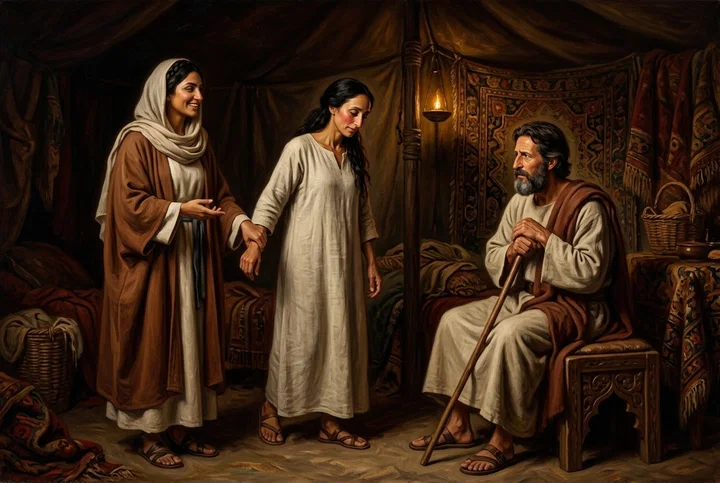
Cross-references 20 of 30
- Galatians 4:22-24
For it is written, that Abraham had two sons, the one by a bondmaid, the other by a freewoman.
Hagar and Sarah illustrate the two covenants, with Hagar representing bondage.
- Genesis 15:2-5
And Abram said, Lord GOD, what wilt thou give me, seeing I go childless, and the steward of my house is this Eliezer of Damascus?
God promised Abram an heir from his own line, but Abram and Sarai tried to hasten the promise through Hagar.
- Genesis 21:9-10
And Sarah saw the son of Hagar the Egyptian, which she had born unto Abraham, mocking.
Hagar’s son mocks Isaac, leading Sarah to demand their expulsion.
- Genesis 21:1-3
And the LORD visited Sarah as he had said, and the LORD did unto Sarah as he had spoken.
God fulfills his promise through Sarah’s birth of Isaac, contrasting human contrivance with divine fulfillment.
- Genesis 17:19
And God said, Sarah thy wife shall bear thee a son indeed; and thou shalt call his name Isaac: and I will establish my covenant with him for an everlasting covenant, and with his seed after him.
God specifies that Sarah will bear the promised covenant son, Isaac.
- Galatians 4:24
Which things are an allegory: for these are the two covenants; the one from the mount Sinai, which gendereth to bondage, which is Agar.
Hagar represents the Sinai covenant that brings bondage.
- Genesis 12:1-3
Now the LORD had said unto Abram, Get thee out of thy country, and from thy kindred, and from thy father’s house, unto a land that I will shew thee:
God promises Abram descendants and blessing through his seed.
- Genesis 25:6
But unto the sons of the concubines, which Abraham had, Abraham gave gifts, and sent them away from Isaac his son, while he yet lived, eastward, unto the east country.
Both describe patriarchs’ marriages involving secondary wives and their children.
- Genesis 15:5-6
And he brought him forth abroad, and said, Look now toward heaven, and tell the stars, if thou be able to number them: and he said unto him, So shall thy seed be.
Abram believed God’s promise of numerous descendants, counted to him as righteousness.
- Genesis 22:16-18
And said, By myself have I sworn, saith the LORD, for because thou hast done this thing, and hast not withheld thy son, thine only son:
After Abraham obeys, God renews the promise to multiply his descendants and bless the nations through them.
- Genesis 30
And when Rachel saw that she bare Jacob no children, Rachel envied her sister; and said unto Jacob, Give me children, or else I die.
Both depict unhappiness and conflict arising from patriarchal polygamy.
- Hebrews 11:11
Through faith also Sara herself received strength to conceive seed, and was delivered of a child when she was past age, because she judged him faithful who had promised.
Sarah later receives strength to conceive by judging God faithful.
- Genesis 16:8-9
And he said, Hagar, Sarai’s maid, whence camest thou? and whither wilt thou go? And she said, I flee from the face of my mistress Sarai.
The angel meets Hagar after she flees and tells her to return and submit to Sarai.
- Genesis 13:16
And I will make thy seed as the dust of the earth: so that if a man can number the dust of the earth, then shall thy seed also be numbered.
The promised descendants contrast with Abraham and Sarah’s effort to secure an heir.
- Genesis 16:15
And Hagar bare Abram a son: and Abram called his son’s name, which Hagar bare, Ishmael.
Hagar bears Abram a son through Sarai’s plan.
- Genesis 16:11
And the angel of the LORD said unto her, Behold, thou art with child, and shalt bear a son, and shalt call his name Ishmael; because the LORD hath heard thy affliction.
Ishmael is born of Hagar and represents the old covenant’s children.
- Genesis 21:13
And also of the son of the bondwoman will I make a nation, because he is thy seed.
Identifies Ishmael as Abraham’s son and descendant.
- Genesis 21:9
And Sarah saw the son of Hagar the Egyptian, which she had born unto Abraham, mocking.
Ishmael mocked Isaac, the child of promise.
- Genesis 16:13
And she called the name of the LORD that spake unto her, Thou God seest me: for she said, Have I also here looked after him that seeth me?
Hagar names the God who saw her.
- Genesis 17:15
And God said unto Abraham, As for Sarai thy wife, thou shalt not call her name Sarai, but Sarah shall her name be.
Sarah is identified as Abraham’s wife.
Commentary
Each commentary is drawn from primary sources: the writings of Ellen G. White and Adventist pioneers and periodicals. Each commentary is separate. Its own words are not a quotation; follow the references to read the source passages.
Ellen G. White
15 sources
Sarai herself gave her Egyptian maid Hagar to Abram as an additional wife after they had lived ten years in Canaan.1SP 95.2–3ST Mar 27, 1879PP 145.1 Though they believed God had promised Abram a son, they could not believe that aged Sarah would bear him, so they tried by human judgment to bring about the promise in their own time and way instead of waiting in trusting faith for God to fulfill it.1SP 95.2–3ST Mar 27, 1879SG3 101.1–2Ms 8c, 1891, par. 13Lt 47, 1891, par. 3–5 In doing so Abram departed from God's order from the beginning of one wife for one man and fell into the common post-Flood custom of plurality of wives, which was sin and contrary to God's will and never sanctioned by Him in a single instance.PP 145.1ST Mar 27, 18791SP 93.2–94.1SG3 103.2–104.2 God had meant the delay to prove Abram's firm faith and reliance on His unlimited power, but Abram failed to endure that test and showed lack of perfect trust.1SP 95.2–3ST Mar 27, 1879SG3 101.1–2 That self-directed effort brought much unhappiness, jealousy and conflict upon Abram and Sarah and lasting harm to his household and future generations through Ishmael and his descendants.1SP 95.2–3ST Mar 27, 1879PP 145.1Lt 47, 1891, par. 3–5PP 173.5
Unbelief Behind the Union
Sarai herself devised the plan and by special entreaty and request gave Hagar her Egyptian maid to Abram to be his wife.1SP 95.2–3ST Mar 27, 1879SG3 101.1–2PP 145.1 Abram and Sarai believed God had promised them a son, yet they could not believe that Sarai in her old age would bear that son.1SP 95.2–3ST Mar 27, 1879SG3 101.1–2PP 145.1 Instead of waiting in confiding faith for God to fulfill His promise in His own time and way, they tried by human judgment to bring it about according to their own ideas and arrangement.1SP 95.2–3Ms 8c, 1891, par. 13Lt 47, 1891, par. 3–52MR 336.1 It was Sarai's thought that through Hagar the promise could be fulfilled, and in hearkening to her voice they carried out their own plan rather than waiting upon Him.1SP 95.2–3Ms 8c, 1891, par. 13Lt 47, 1891, par. 3–52MR 336.1
Abram took Hagar because he distrusted God's power to fulfill the promise through Sarah and thought it might be fulfilled through Hagar's child.1SP 95.2–3SG3 103.2–104.2 For that reason he refused to send Hagar away, holding to her in hope that through her the promised son would come.1SP 95.2–3 God had intended the long delay after Abram had dwelt ten years in Canaan to prove Abram's firm faith and reliance upon His promises and unlimited power.1SP 95.2–3 But Abram failed to endure that test, showing lack of faith and perfect trust.1SP 95.2–3ST Mar 27, 1879SG3 101.1–2PP 147.1
That taking of Hagar was an act of distrust, one of the failures by which his faith was kept from being perfect before he faced the later test.1SP 101.2SG3 108.2PP 147.2–148.1 His later faithfulness in obeying God's command concerning Isaac made amends and made up for that failure of trust.1SP 101.2SG3 108.2
Violation of Marriage Order
Genesis 16:3 records Abram taking Hagar as an additional or secondary wife, in departure from God's order established in the beginning when one wife was given to Adam for one man.PP 145.1ST Mar 27, 18791SP 93.2–94.1 Though a righteous man, Abram in this fell into the common post-Flood custom of plurality of wives and polygamy, and the act was no less sin for being common and widely accepted.PP 145.1ST Mar 27, 18791SP 93.2–94.1 That taking was sin and contrary to God's will, never sanctioned by God in a single instance, because God never designed plurality of wives and knew it would destroy man's happiness.ST Mar 27, 18791SP 93.2–94.1SG3 103.2–104.2 God did not sanction this arrangement for bringing about the promised seed.SG3 103.2–104.2
The marriage violated the sacredness of marriage, for Sarah was Abram's only true wife and no other person was entitled to share her rights as wife and mother.PP 147.1 The rights and happiness of the marriage relation are to be guarded and respected, even at great sacrifice.PP 147.1SG3 103.2–104.2
Sorrowful Consequences and Warning
The taking of Hagar brought much unhappiness upon both Abraham and Sarah through jealousy, complaints, perplexity and conflict in the home.1SP 95.2–3ST Mar 27, 1879SG3 101.1–2SG3 103.2–104.2 It was an unhappy marriage that greatly marred Abraham's peace.ST Mar 27, 18791SP 93.2–94.1SG3 103.2–104.2 The rights and happiness of the marriage relation were to be guarded even at great sacrifice, yet this union violated them.SG3 103.2–104.2
The harm reached beyond the household to future generations.PP 145.1 The birth of Ishmael from that marriage brought the righteous seed into contact with ungodly influences.PP 173.5 It produced descendants who became a people opposed to God and counteracted His plans, the full consequences of which Abraham did not foresee when he took Hagar.Lt 47, 1891, par. 3–5
Such restless effort to arrange the fulfillment of God's promise by human judgment instead of waiting for Him in His own time and way leads to sorrow, misery, anguish and sin.Ms 8c, 1891, par. 13Lt 47, 1891, par. 3–52MR 336.1
Sources
Pioneers and periodicals
68 sources
After Abram had dwelt ten years in the land of Canaan, Sarai his wife took Hagar her Egyptian maid and gave her to Abram to be his wife.RH Jun 5, 1900ST Nov 21, 1900ST Sep 28, 1915 Sarai devised the plan and Abram yielded to it in unbelief and impatience, seeking the promised heir by a human scheme through the flesh instead of waiting on God's promise alone.RH Jul 3, 1900ST Apr 11, 1900ST Sep 8, 1898RH Jun 5, 1900ST Sep 23, 1913 The taking of Hagar was wrong and outside God's order, introducing polygamy in violation of the marriage institution of one man and one woman.ST Mar 27, 1879ST Feb 28, 1906RH Feb 3, 1852RH Jun 4, 1867RH Mar 16, 1869 The shorter way gained nothing but brought rivalry, unhappiness and lasting trouble upon the household and their descendants, while God afterward fulfilled His promise in His own way.ST Mar 27, 1879RH Jul 3, 1900RH Nov 30, 1916ST Oct 1, 1902 Hagar the bondwoman and Sarah the freewoman are the two mothers representing the two covenants, Ishmael born by human effort representing bondage under works of the law from Mount Sinai, and Isaac born by God's power representing freedom by promise through faith, so the whole human scheme must be cast out and renounced for dependence wholly on God's covenant.RH May 29, 1900ST Dec 16, 1897ST Mar 1, 1905ST Sep 28, 1915ST Apr 29, 1908
Historical Setting and Details
After Abram had dwelt ten years in the land of Canaan, Sarai Abram's wife took Hagar her Egyptian maid, handmaid, bondmaid and slave girl, and gave her to her husband Abram to be his wife.RH Jun 5, 1900ST Nov 21, 1900ST Sep 28, 1915ST Aug 8, 1878ST May 18, 1882 This taking of Hagar into his family as a wife introduced polygamy and plural marriage into his household.ST Aug 8, 1878RH Nov 30, 1916 The verse belongs to the history from B.C. 2247 to B.C. 1872, to Abraham's sojourn and trials of faith after God's call.ST Jan 2, 1912ST Dec 20, 1910 That sojourn was marked by constant and remarkable evidences of God's overruling providence and by progressive dealings in which repeated lessons moved him toward trust, showing he did not come at once to fullness of faith.ST Jan 2, 1912ST Dec 20, 1910
The verse follows Abram's journey in the south and sojourn in Egypt, his return to the altar between Bethel and Ai, and his unselfish parting with Lot who chose Sodom and the plain of Jordan.ST Jan 29, 1894 It follows the promise of land and seed as innumerable as the dust of the earth, the rescue of Lot, and the meeting with Melchizedek king of Salem and priest of God to whom Abram paid tithes.ST Jan 29, 1894 It follows the renewal of the promise of literal seed from his own body, the covenant of the land, and belief counted for righteousness.ST Jan 29, 1894ST Feb 12, 1894 It belongs to the account of the birth of Ishmael, Sarai's jealousy, and the sending away of Hagar and her son, after God had corrected the thought that a trusted servant would be heir by declaring the heir would come from Abraham's own body.ST Jan 29, 1894ST Feb 12, 1894
The verse belongs to Abram's life of faith under God's promise and covenant, connected with what follows in Genesis 17.ST It belongs to God's providential dealings with Abraham's family, whose chosen place was to carry forward the promised Seed.ST It belongs to the family history behind the distinction between mere descent from Abraham, among whom Ishmael son of Hagar is later named, and eligibility for the promises.RH Jan 16, 1872 The verse supplies the history behind Paul's contrast between the son through the handmaid and the son through the freewoman.RH May 29, 1900ST Nov 21, 1900 Study of the two covenants must therefore begin here together with Genesis 15, Genesis 17, and Genesis 21:1-21, with Hagar the bondwoman and Sarah the freewoman as the two mothers of the two sons representing the children of the two covenants, and the word Hagar serves as an outline heading recalling this experience of doubt.RH May 29, 1900ST Aug 9, 1905
Unbelief and Human Effort
Sarai herself devised the plan to give Hagar her Egyptian maid to Abram as wife after ten years dwelling in Canaan, and Abram yielded to her suggestion, urging and foolish plea and entered polygamy in staggering faith.RH Jul 3, 1900ST Aug 30, 1877GSAM 42.2ST May 17, 1899 The proposal was hers, the agreement his, and the later casting out of Hagar and Ishmael after the birth of Isaac, the lawful son, confirmed whose initiative it had been.ST Aug 30, 1877GSAM 42.2
They acted from unbelief, distrust, doubt and imperfect faith that God would fulfill His promise of an heir through Sarah, concluding it was humanly impossible and unlawful to expect it.ST Apr 11, 1900ST Sep 8, 1898RH Jun 5, 1900ST Sarah was childless and old, reckoned to be prevented by God from bearing, and after ten years of waiting they grew weary, impatient and anxious to hasten fulfillment.ST Mar 27, 1879ST Sep 8, 1898RH Jun 5, 1900ST Dec 16, 1897 Abraham had answered Amen to the promise of a son of his own flesh and bone, yet could not see how it could come in God's way with implicit confidence, and Sarah proposed Hagar the slave girl as the vehicle to keep God's promise from failing.ST Mar 27, 1879ST Sep 8, 1898STST Aug 30, 1877 Abraham's agreement failed the test of reliance on God's power, marred the patriarch's life with astonishing weakness, and brought unhappiness on them both.ST Mar 27, 1879ST Aug 30, 1877 God corrected the scheme by declaring Sarah herself would bear a son, showing fulfillment would come by His power and not by human devices.ST
The arrangement was a human, fleshly scheme to hasten and help out the promise and to do for themselves what God had promised to do, seeking the promised seed through the flesh instead of dependence on promise alone.RH Jul 3, 1900ST Apr 11, 1900ST Sep 23, 1913ST Mar 1, 1905 It followed the custom of heathen neighbors and the popular practice of polygamy rather than God's plan of one man and one woman, and it brought rivalry, lasting trouble and great misfortune while God afterward fulfilled His word in His own way.ST Mar 1, 1905RH Nov 30, 1916RH Mar 16, 1869 It was temporary lack of faith and human weakness attempting in its own way what God had promised, producing bondage rather than promised freedom and showing the danger of yielding to surrounding custom instead of trusting promise.ST Sep 23, 1913ST Mar 1, 1905RH Mar 16, 1869
There was never any need for this side arrangement, for God had promised Abraham only one son, and Hagar and Ishmael brought in on the side through unbelief and distrust never had any recognition at all in that promise. If the covenant confirmed by oath had been trusted, Abraham would have had already in Christ the righteousness of God, His everlasting salvation and the promised inheritance, but unbelief hid those blessings and power and made way for a human scheme in place of God's covenant, just as Israel's unbelief made way for the covenant at Sinai.RH Jun 12, 1900 As there was no need for two sons, so there was no need for two covenants.
The plan brought forth Ishmael, the son of the bondwoman born after the flesh through human effort and scheming, whom Abram came to regard as the promised heir.RH Jul 3, 1900ST Apr 11, 1900ST Sep 28, 1915ST He was not the free-born promised heir, for Hagar as handmaid and slave could bear only a child of bondage representing all who trust in their own works, in contrast to Isaac the child of the freewoman born contrary to human order by God's power and promise.ST Apr 11, 1900ST Sep 28, 1915 Sarah herself later conceived through faith, proving the human plan was not God's plan and led only to bondage and trouble.RH Jun 5, 1900ST Sep 28, 1915
By a unique and unusual arrangement Sarai surrendered Hagar so that Ishmael was born to Abraham as heir, a contrivance to meet a seeming failure on the Lord's part that did not fulfill the promise nor meet the situation at all.ST Jan 24, 1900 If Isaac had not afterward appeared when Abraham was a hundred and Sarah ninety, Ishmael then thirteen would have succeeded to his father's titles and inheritance.ST Jan 24, 1900 When Isaac was born the bond of heirship as it pertained to Ishmael was broken through his folly at the feast for Isaac and his casting out, leaving Hagar and her son in bondage indeed from a comparatively exalted position.ST Jan 24, 1900GSAM 42.2
The taking of Hagar was wrong, outside God's order, disobedience, transgression, concubinage and sin, a mistake and real moral failure never sanctioned by God in a single instance because departure from the beginning order of one wife given to Adam would destroy happiness and in Abraham's case greatly marred his peace with an unhappy marriage.ST Mar 27, 1879ST Feb 28, 1906RH Jun 4, 1867ST Apr 11, 1906ST Feb 4, 1903 God accepted Abraham despite it and not because of it, for deep below the mistake his heart was true to God even in tests dearer than life, but acceptance did not mean approval.ST Apr 11, 1906ST Feb 4, 1903 That Sarah's later advice concerning Hagar was approved by God does not make her earlier wrong choice right, for once wrong is always wrong.RH Jun 4, 1867
Troubled Consequences and Mercy
The arrangement gained Abraham nothing and proved unsatisfactory from the very first step.RH Jul 3, 1900 Once Hagar conceived she despised Sarai, and Sarai, though the plan had been her own invention, turned in reproach upon Abram.RH Jul 3, 1900 Sarai then dealt so harshly with Hagar that Hagar fled, and peace did not return even after the Lord directed Hagar to return and submit.RH Jul 3, 1900
The impatient experiment to bring about the promised son by a shorter way of their own devising brought great misfortune and heartache instead of help.RH Nov 30, 1916ST Jun 15, 1904 It brought unhappiness upon both Abraham and Sarah, marred Abraham's peace, and filled the household with rivalry, bickering, jealousy, family trouble and difficulty, trials and cares, and years of trouble.ST Mar 27, 1879ST Mar 27, 1879ST Jun 15, 1904 It brought bondage and hindered God's work on earth, and it produced lasting enmity between the descendants of Ishmael and those of Isaac, while God afterward fulfilled His promise in His own way and time through Isaac born according to His plan.RH Nov 30, 1916ST Oct 1, 1902
It was a contrivance to meet a seeming failure on the Lord's part, yet it did not fulfill the promise nor meet the situation at all.ST Jan 24, 1900 Abraham's choice in following the popular practice of polygamy and the custom of heathen neighbors, rather than God's plan of one man and one woman for each family, brought rivalry and lasting trouble to his household.RH Mar 16, 1869 The outcome shows the danger of yielding to the customs of the surrounding world instead of trusting God's promise.RH Mar 16, 1869
In the process Hagar was made an innocent victim, made to suffer for unbelief in another and given by it a lasting place in history she would not otherwise have had.ST Sep 8, 1898 When she later believed she had been driven into the wilderness to die, God saw her, supplied her need, and showed He had not forgotten her.ST Nov 8, 1899 That divine seeing was comfort and rescue, not merely warning against sin.ST Nov 8, 1899
Two Covenants Allegory
Sarai's giving of Hagar to Abram is where the subject of the two covenants begins, and that study must begin here together with Genesis 15, Genesis 17, and Genesis 21:1-21, for Hagar the bondwoman and Sarah the freewoman are the two mothers of Abraham's two sons who represent the children of the two covenants, with Hagar representing the covenant from Mount Sinai and the old covenant.RH May 29, 1900ST Dec 16, 1897ST Apr 29, 1908 Hagar became Abram's wife through Sarai's weary human plan to bring about God's work after waiting for the promise, and Ishmael born through this natural scheme without any promise represents that old covenant and bondage, since human planning and effort cannot make a child of promise or bring glory to God.ST Dec 16, 1897ST Apr 29, 1908RH Jul 24, 1900 The human plan that brought Hagar in and brought forth Ishmael pictures the covenant from Sinai which genders to bondage, entered through swerving from the clear promise into dependence on the flesh through distrust and unbelief.RH Jul 3, 1900RH Jul 24, 1900 These two mothers and their sons are also used in Galatians 4 as an allegory of the typical and antitypical systems, and of literal Israel and true Israel, Jews and Gentiles as representatives of the Lord and His work in two special periods.ST Jan 24, 1900
Ishmael was produced by doubting that God's promise of a son would be fulfilled without human help, an act of unbelief and attempt to bring it about by the power of the flesh, and therefore produced bondage rather than promised freedom.ST Mar 1, 1905ST Sep 28, 1915ST Apr 29, 1908 Because Hagar was a handmaid and slave, the child she bore was a child of bondage representing all who trust in their own works, in contrast to Isaac the child of the freewoman born contrary to human order by the power and promise of God.ST Sep 28, 1915ST Nov 21, 1900ST Mar 9, 1915 Sarai's arrangement was Abraham's effort at her urging after ten years in Canaan to supplement God's promise, a fleshly plan standing for salvation sought through human works, and because Hagar was a bondservant her son was a bondman and not the free-born promised heir, so the attempt gained Abraham nothing.ST Nov 21, 1900ST Apr 11, 1900ST Mar 9, 1915 The account thus illustrates that righteousness and inheritance come by God's promise, not by human effort under the law, with Isaac representing freedom and those brought in solely through the promise and power of Christ by faith, while Ishmael represents bondage and those seeking salvation through human works, human promises, and self-effort.ST Sep 28, 1915ST Nov 21, 1900ST Apr 11, 1900
Hagar was an Egyptian slave, and her giving to Abraham could bring forth children only to bondage, because children of a slave woman are always slaves even when the father is a freeman, so Ishmael was born after the flesh unto bondage and was not the promised heir.ST Mar 22, 1899 God had already shown this when Abraham wished his servant Eliezer to be his heir, telling him his heir would not be a bond-servant even though born in his house, but a free-born son born of a freewoman.ST Mar 22, 1899
Human scheming to gain the promised seed when Sarai gave Hagar to Abram types the covenant that bears children to bondage, and her child types those brought into the nominal fold of Christ through human schemes to save themselves.ST Mar 19, 1912RH Jun 12, 1900 All endeavoring to save themselves by any scheme of man are in bondage they can never break themselves, and all they save or convert to such a system are also children of bondage, represented by earthly Jerusalem in bondage with her children for rejecting God and following her own way.ST Mar 19, 1912 This stands opposite Sarah the freewoman who represents God's order and the heavenly Jerusalem created and existing by the promise of God, so those brought in solely through the promise and power of the Lord Jesus Christ by faith are free children of Sarah and Abraham, children of promise like Isaac.ST Mar 19, 1912 Sarai's giving of Hagar was not keeping God's covenant but a human scheme through distrust and unbelief that produced only the child of the bondwoman born after the flesh, having only the mind of the flesh which cannot be subject to the law of God and cannot fulfill the promise.RH Jun 12, 1900
There was never any need for Sarai to give Hagar to Abram, because God had promised Abraham only one son, and Hagar and Ishmael were brought into the family on the side through unbelief and distrust and never had any recognition at all in God's promise to give Abraham a son.RH Jun 12, 1900 Just as there was no need for two sons, there was no need for two covenants, for the covenant at Sinai was brought in on the side in the same way through unbelief and distrust of God and never had any recognition at all in God's promise of salvation to mankind.RH Jun 12, 1900 If Abraham and Sarah had trusted the promise confirmed by oath they would have had all that any person could ever have, the righteousness of God, His everlasting salvation, and the inheritance promised to Abraham, and this all in Christ, but their unbelief hid the blessings and power already given in the covenant with Abraham and made way for a human scheme in place of God's covenant, just as Israel's unbelief made way for a covenant at Sinai by trusting in themselves to earn righteousness and the inheritance by obeying.RH Jun 12, 1900RH Jun 12, 1900 Israel's entering into that covenant corresponded to bringing in Hagar and could no more keep God's covenant than Sarai's scheme did.RH Jun 12, 1900
Just as Hagar and Ishmael the bondwoman and her son had to be cast out, the whole scheme that brought them in had to be utterly renounced and abandoned, and so the covenant from Sinai and all that brought it in had to be cast out and utterly repudiated, with return to dependence wholly and alone on God's original covenant with Abraham for all that it promises.ST Nov 21, 1900RH Jul 3, 1900
Marriage Polygamy and Slavery
The verse records Sarai giving Hagar to Abram as a wife after he had lived ten years in Canaan, and by yielding to that suggestion to take his wife's maid as a wife Abram introduced polygamy and plural marriage into his household.ST Aug 8, 1878ST Sep 10, 1894ST May 27, 1908ST May 17, 1899 It was an instance of polygamy entered to gain an heir, bringing trouble and great unhappiness into Abraham's family, and it was evil and wrong even though long tolerated among God's people.RH Mar 1, 1870ST May 27, 1908 The practice is explained as Oriental and patriarchal polygamy, in which the family was the real unit of protection and patriarchs from Abraham onward desired many sons for strength and safety against a common foe.ST Mar 27, 1907ST Jun 8, 1904 In doing this he staggered in faith, though he later staggered not at God's promise.ST May 17, 1899
This taking of Hagar as an additional wife was a departure from God's order established in the beginning when one wife was given to Adam, and a fall into the common post-Flood and popular practice of plurality of wives rather than God's plan of one man and one woman for each family.ST Mar 27, 1879RH Mar 16, 1869ST Oct 16, 1879 Marriage was instituted before the fall as a sacred, indissoluble union of one man and one woman, guarded by the seventh commandment, and God never sanctioned departure from it in a single instance because He knew it would destroy man's happiness.ST Mar 27, 1879RH Feb 3, 1852ST Oct 16, 1879 In Abraham's case it was sin contrary to God's will, producing rivalry, lasting trouble, and an unhappy marriage that greatly marred his peace, showing the danger of yielding to surrounding custom instead of trusting God's promise when perplexed about the promised heir because Sarah was childless.ST Mar 27, 1879RH Mar 16, 1869 Such patriarchal violation of the marriage institution did not cancel or lessen its sacred character, just as violations of the Sabbath do not diminish its sacredness.RH Feb 3, 1852RH Nov 8, 1853ST Jun 10, 1875ST May 18, 1882RH Jan 21, 1875 The verse is also used to show the Sabbath was in existence, binding, and kept at least a month before the old covenant made at Horeb, so obligation to the Sabbath did not originate with that covenant.RH Apr 2, 1872
Hagar was a legitimate but second-class wife, not the first wife whose children inherited the property, and plural marriage of this kind brought harm rather than good.ST May 27, 1908 The later women in such households had different status and esteem, treated more like concubines, and their children were counted as belonging to the first wife, providing the biblical parallel for households with a first wife and later women chosen by the husband.ST May 27, 1908ST Mar 27, 1907ST Jun 8, 1904 Her becoming wife did not mean Sarah ceased to be wife, for Sarah remained Abram's wife, so Sarah cannot be treated as desolate on the ground that Hagar alone had a husband.RH Aug 2, 1870 Polygamy was wrong in God's sight then as now, a faithless blunder, mistake, and indiscreet action done under seeming necessity, whose direct family difficulties, trials, cares, and unhappiness prove ancient saints were subject to the same moral demands as later times and do not make the practice acceptable.RH Mar 1, 1870ST Dec 7, 1904RH Jul 4, 1865ST Oct 16, 1879
God suffered this practice, which Abraham in ignorance did not clearly see was wrong, and accepted and blessed him in spite of it and not because of it to lead him to greater light.ST Sep 10, 1894ST May 27, 1908ST Apr 11, 1906ST Dec 7, 1904 Abraham was counted upright and saved notwithstanding polygamy, not because of it, because he was one of the best of men, right at heart, perfect toward God, true to God in every test even involving sacrifices dearer than life, set on doing His will, and bitterly repented of this incident which was not the object of his life.ST Sep 10, 1894ST Dec 7, 1904ST Feb 4, 1903 Blessing in error no more makes error genuine than innocently passing a counterfeit bill makes it genuine, and God accepts sincere Sunday keepers in spite of their error in the same way He accepted Abraham in spite of polygamy.ST Sep 10, 1894 The transactions in the case of Hagar recorded in Genesis 16:1-9 are counted among the other circumstances proving Abraham was a slaveholder.RH Mar 10, 1863
Faith Patience and Obedience
Genesis 16:3 belongs to Abraham's doubt and to his sojourn and trials of faith after God's call, marked by constant evidences of God's overruling providence, and it shows he did not come at once to fullness of faith but learned the lesson over and over.ST Jan 2, 1912ST Aug 9, 1905 It was an act of human weakness and temporary lack of faith, attempting to do for himself in his own way what God had promised to do for him.ST Sep 23, 1913 In yielding to the suggestion to take Hagar his wife's maid as wife he staggered in faith, though afterward he staggered not at the promise, and this failure of faith through polygamy marred the patriarch's life.ST Aug 30, 1877ST May 17, 1899 He could not see how the promise of seed from his own body could be fulfilled in God's way and lacked implicit confidence in God, and when urged by Sarah he was led astray by her plea and relied on his own device instead of trusting God to fulfill the promise.ST Aug 30, 1877 This tests whether readers are children of Abraham.ST Jan 2, 1912
Growing impatient while waiting for the promised son, he relied on human strength and wisdom to accomplish what only God could do.ST Apr 28, 1914ST Jul 22, 1908 He acted not intending to sin, but because he had not yet learned to wait patiently for God's time, trying to devise a way for God to fulfill His promise because Sarah could not see how offspring could come through her.ST Apr 28, 1914ST Jun 15, 1904 That mistake brought years of trouble, bickering, jealousy and heartache to the family.ST Jun 15, 1904 Taking Hagar was distrust, and if he had waited patiently for God to fulfill the promise in His own time and way instead of trying to bring it about himself, he would not have faced the later severe test involving Isaac.ST Apr 1, 1875 His attempt before the birth of Isaac, the son of promise, made his faith more severely tested.ST Jul 9, 1894
The verse exposes trusting God for the promised child while reserving the doing to self, permitting God to will without letting Him execute. It lays bare a deceitful legal heart that surrenders only part of the will, and teaches that both willing and doing must be surrendered to God. The Hagar plan stands as imperfect, mixed faith that believed God yet believed human works and wisdom must have part in fulfilling the promise that his seed would be as the stars, after God had already corrected the thought that a trusted servant would be heir.ST Feb 12, 1894 God corrected him again that the seed was not to come through the maidservant but that Sarah his wife should bear the child of promise, and Abraham believed the Lord.ST Feb 12, 1894 This stands in contrast to his later prompt, unhesitating obedience in offering Isaac, which showed perfected simple faith in God's wisdom above human wisdom.ST Feb 12, 1894
His error was later canceled through grace when God gave him opportunity to redeem himself by commanding the far more terrible and trying test of offering Isaac, the very son of promise over which he had stumbled, as a burnt sacrifice.ST Aug 30, 1877RH Apr 8, 1875 That severe trial required obedient work to perfect his faith, and through it he attained remarkable faith.ST Aug 30, 1877RH Apr 8, 1875
Sources