Genesis 20:15
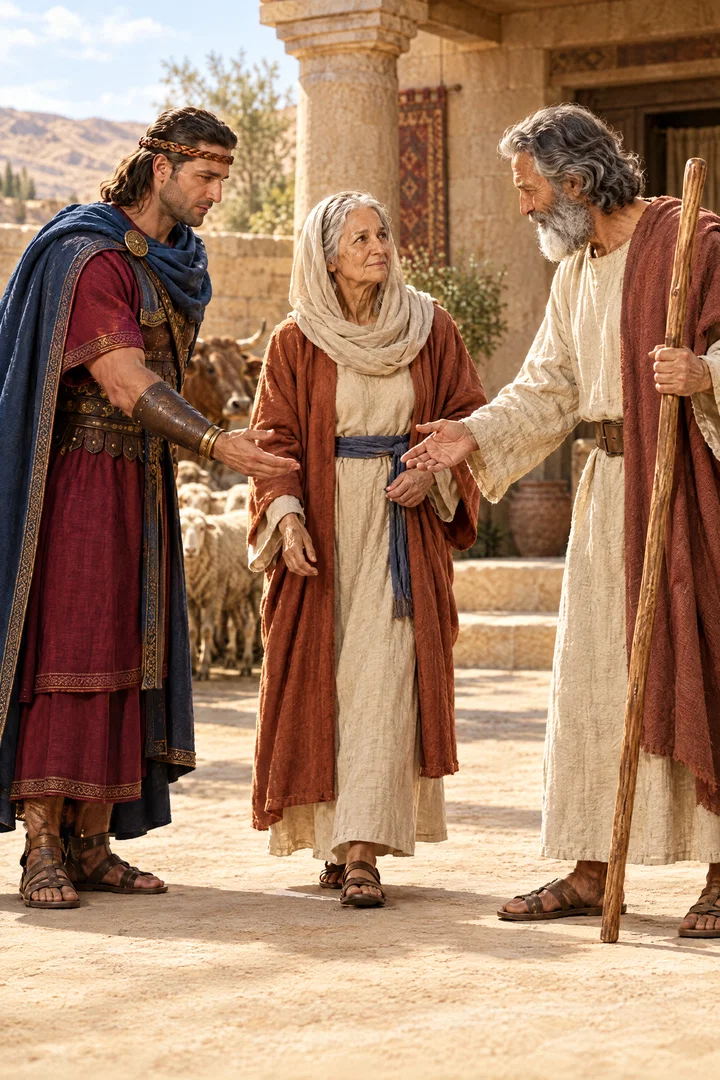
And Abimelech said, Behold, my land is before thee: dwell where it pleaseth thee.
Translations
And Abimelech said, Behold, my land is before you: dwell where it pleases you.
King James Version, KJV Cambridge Paragraph Bible, Webster Bible, Revised Version, American Standard Version
And Abimelech said, Behold, my land is before thee: dwell where it pleaseth thee.
and Abimelech saith, 'Lo, my land [is] before thee, where it is good in thine eyes, dwell;'
And Abimelech said, Behold, my land is before thee: dwell where it is good in thine eyes.
And Abimelech, said, Lo! my land is before thee,—wherever it may seem good in thine eyes, dwell.
Berean Standard Bible, Majority Standard Bible
And Abimelech said, “ Look, my land is before you. Settle wherever you please.”
Abimelech said, “ Behold, my land is before you. Dwell where it pleases you.”
And Abimelech said, See, all my land is before you; take whatever place seems good to you.
And Abimelech saide, Beholde, my land is before thee: dwell where it pleaseth thee.
Douay-Rheims (Challoner revision)
And said: The land is before you, dwell wheresoever it shall please thee.
Pictures
Cross-references
- Genesis 12:18-19
And Pharaoh called Abram, and said, What is this that thou hast done unto me? why didst thou not tell me that she was thy wife?
Abraham again presents Sarah as his sister, and Pharaoh recognizes she is his wife.
- Genesis 20:3-7
But God came to Abimelech in a dream by night, and said to him, Behold, thou art but a dead man, for the woman which thou hast taken; for she is a man’s wife.
God warns Abimelech about taking another man’s wife and explains the offense.
- Genesis 21:22-34
And it came to pass at that time, that Abimelech and Phichol the chief captain of his host spake unto Abraham, saying, God is with thee in all that thou doest:
Continues their dealings and covenant.
- Genesis 26:9-11
And Abimelech called Isaac, and said, Behold, of a surety she is thy wife: and how saidst thou, She is my sister? And Isaac said unto him, Because I said, Lest I die for her.
Abimelech rebukes Isaac for falsely presenting his wife as his sister.
Commentary
Each commentary is drawn from primary sources: the writings of Ellen G. White and Adventist pioneers and periodicals. Each commentary is separate. Its own words are not a quotation; follow the references to read the source passages.
Pioneers and periodicals
11 sources
Abimelech, king of Gerar, offered and welcomed Abraham to dwell and settle wherever he pleased in his land, as part of the relations between them.RH Aug 17, 1876RH Mar 5, 1857ST Dec 17, 1902ST Sep 8, 1898RH Mar 18, 1915 The verse belongs to the account of Abraham's sojourn among the Philistines, as his household continued its pilgrim journey and received the king's goodwill.ST Jan 2, 1912ST Feb 12, 1894RH Mar 18, 1915 Apart from this setting, one account gives no specific explanation of the verse itself.ST Feb 12, 1894
It belongs to the second time Abraham deceptively said Sarah was his sister.AUST Jun 14, 1920ST Mar 10, 1887 That deception showed Abraham's faith was not yet perfect but imperfect through unbelief, lacking trusting faith in God's protecting care.AUST Jun 14, 1920ST Mar 10, 1887 He did not come at once to fullness of faith but needed the lesson over and over.ST Jan 2, 1912
The account, standing within Genesis 12 to 26, shows God's overruling providence and providential care and interest among people in His dealings with Abraham and the family of Abraham as the chosen progenitor of the Seed, as part of the story of God's dealing with the Seed.ST Jan 2, 1912ST Dec 20, 1910ST Abimelech knew the true God and knew the prohibition against adultery through God's direct instruction to him.RH Aug 17, 1876ST Feb 12, 1894 The Philistines are presented as having a higher regard for morality than other nations of Palestine.ST Feb 12, 1894
The chapter is evidence that people knew the principles of God's moral law before Moses.RH Mar 5, 1857 This included the command against falsehood, since God condemned lying in Genesis 20:13-17, showing that command existed before the law was given at Sinai.ST Dec 17, 1902
Sources