Genesis 21:15
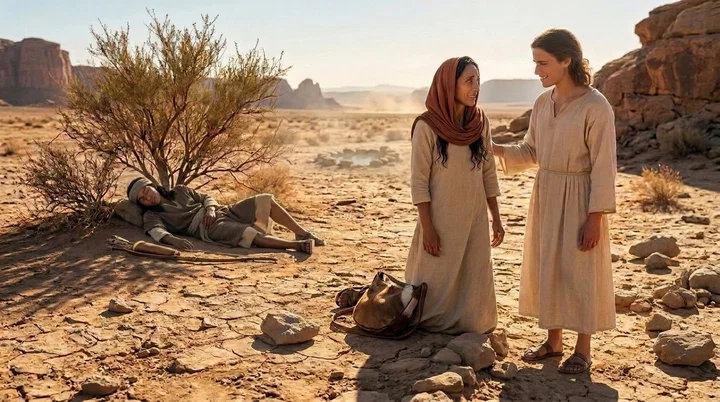
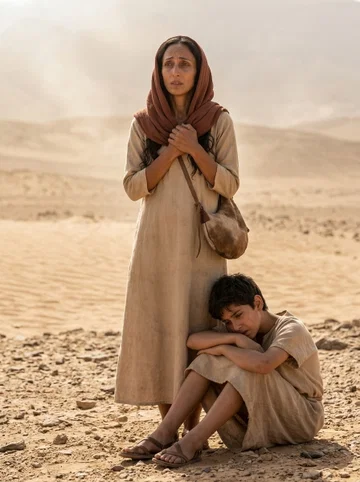
And the water was spent in the bottle, and she cast the child under one of the shrubs.
Translations
American King James Version, King James Version, KJV Cambridge Paragraph Bible, Webster Bible
And the water was spent in the bottle, and she cast the child under one of the shrubs.
Revised Version, American Standard Version
And the water in the bottle was spent, and she cast the child under one of the shrubs.
and the water is consumed from the bottle, and she placeth the lad under one of the shrubs.
And the water was exhausted from the flask; and she cast the child under one of the shrubs,
And the water out of the skin was spent,—so she cast the child under one of the shrubs;
Berean Standard Bible, Majority Standard Bible
When the water in the skin was gone, she left the boy under one of the bushes.
The water in the container was spent, and she put the child under one of the shrubs.
And when all the water in the skin was used up, she put the child down under a tree.
And when the water of the bottell was spent, she cast the childe vnder a certaine tree.
Douay-Rheims (Challoner revision)
And when the water in the bottle was spent, she cast the boy under one of the trees that were there.
Pictures
Cross-references
- Galatians 4:22-31
For it is written, that Abraham had two sons, the one by a bondmaid, the other by a freewoman.
Hagar and Ishmael represent bondage, while Sarah and Isaac represent freedom under the two covenants.
- Genesis 16:11-12
And the angel of the LORD said unto her, Behold, thou art with child, and shalt bear a son, and shalt call his name Ishmael; because the LORD hath heard thy affliction.
Hagar’s affliction and Ishmael’s birth connect to the later hardship of Hagar and her son.
- Genesis 21:9-10
And Sarah saw the son of Hagar the Egyptian, which she had born unto Abraham, mocking.
Sarah's demand led to Hagar and Ishmael's departure.
- Genesis 17:18
And Abraham said unto God, O that Ishmael might live before thee!
Abraham pleads that Ishmael may live before God.
- Genesis 21:11
And the thing was very grievous in Abraham’s sight because of his son.
Abraham grieved at the demand to send Ishmael away.
- Genesis 16:16
And Abram was fourscore and six years old, when Hagar bare Ishmael to Abram.
Ishmael’s birth date helps establish his age in Genesis 21.
- Genesis 17:25
And Ishmael his son was thirteen years old, when he was circumcised in the flesh of his foreskin.
Records Ishmael’s age at circumcision, helping estimate his age.
- Genesis 15:2-4
And Abram said, Lord GOD, what wilt thou give me, seeing I go childless, and the steward of my house is this Eliezer of Damascus?
Abraham’s response to God’s promise precedes the plan that led to Ishmael’s birth.
- Genesis 21:1-7
And the LORD visited Sarah as he had said, and the LORD did unto Sarah as he had spoken.
The passage places Sodom’s destruction shortly before Isaac’s birth.
Commentary
Each commentary is drawn from primary sources: the writings of Ellen G. White and Adventist pioneers and periodicals. Each commentary is separate. Its own words are not a quotation; follow the references to read the source passages.
Pioneers and periodicals
17 sources
The verse describes the moment in the wilderness after Hagar and Ishmael were sent away when their water was exhausted and they were left in desperate distress, with Ishmael grown weak and faint so that Hagar placed him in the shade under one of the desert shrubs and withdrew so she would not watch him die.STST Dec 20, 1910RH Oct 13, 1859ST Feb 12, 1894 They had been sent out with little water while traveling toward an encampment that was to become hers, and she had evidently lost her way.ST Feb 12, 1894ST Sep 8, 1898ST Nov 15, 1910 Though he is called a child, he was about eighteen or twenty years old, child being a relative term measured against the customary length of human life at that time, which must have been as high as one hundred and fifty years.ST Apr 8, 1875RH Jan 18, 1870ST Mar 4, 1880RH Dec 16, 1873 The surrounding account is one of God's mercy and compassion for a lonely mother and her thirsty child, whose life was spared when God showed Hagar a well, freeing them from bondage without sending them back to it.RH Oct 13, 1859ST Feb 12, 1894ST Sep 8, 1898ST Oct 1, 1896 The event belongs to God's providential dealings with Abraham's family, whose promised Seed was to come through Isaac, the miraculous child of promise, while Ishmael the son of the bondwoman represents those who trust in their own works and teaches the truths of the two covenants and the two peoples.RH Jul 5, 1915STST Sep 28, 1915ST Jan 24, 1900
Wilderness Setting and Rescue
The verse takes place in the wilderness after Hagar and Ishmael were sent away, when the water in the bottle was exhausted and they were left in desperate distress.STST Dec 20, 1910ST Feb 12, 1894ST Sep 8, 1898ST Oct 1, 1896 Ishmael had grown weak and faint and exhausted from thirst and hardship.STST Dec 20, 1910ST Sep 8, 1898ST Oct 1, 1896 Hagar cast or placed him under one of the desert shrubs, in its shade, and then moved away so she would not have to watch him die.STRH Oct 13, 1859ST Feb 12, 1894ST Sep 8, 1898ST Oct 1, 1896
They had been sent into the wilderness with little water.ST Feb 12, 1894ST Sep 8, 1898 Hagar was traveling toward an encampment that was to become hers but evidently lost her way.ST Nov 15, 1910 Abraham's act of sending Hagar and Ishmael away was a test of his faith and obedience.ST Sep 8, 1898
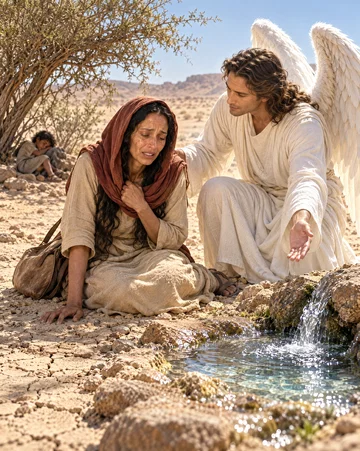
The surrounding account is one of God's mercy and compassion for a lonely mother and her thirsty child.ST Feb 12, 1894ST Sep 8, 1898ST Oct 1, 1896 The child's life was spared when God showed Hagar a well.ST Sep 8, 1898 The surrounding account presents Hagar and her son as freed from bondage and succored by the angel of the Lord, who does not send them back to bondage.RH Oct 13, 1859
Meaning of the Child
Despite the wording that calls Ishmael a child, the chronology and the circumstances show he was about eighteen or twenty years old.ST Apr 8, 1875RH Jan 18, 1870ST Mar 4, 1880RH Dec 16, 1873 The use of child there is not limited to early childhood but describes someone much older when measured against the lifespan customary in that age.ST Apr 8, 1875RH Jan 18, 1870ST Mar 4, 1880 Child is a relative term measured against the customary and average length of human life at the time.ST Apr 8, 1875ST Mar 4, 1880RH Dec 16, 1873 That average length must have been as high as one hundred and fifty years.RH Dec 16, 1873
By the same rule, a person one hundred years old is properly called a child when the average lifespan is upwards of nine hundred years, as it was before the Flood.RH Jan 18, 1870RH Dec 16, 1873 Just as people are called children at five or six when life expectancy is about thirty, so a hundred-year-old could be called a child when the antediluvians lived on average more than nine hundred years.RH Jan 18, 1870RH Dec 16, 1873 Such a person one hundred years old would still be morally accountable and subject to judgment.RH Jan 18, 1870
Covenant and Moral Lessons
Genesis 21:15 falls within God's providential dealings with Abraham's family, whose line was chosen to carry forward the promised Seed.ST The account of Abraham's two sons, Ishmael and Isaac, to which the verse belongs, places the promise and the line through which the Seed would come through Isaac, the miraculous child of promise.RH Jul 5, 1915
The chapter containing the verse stands as an example of the unhappiness caused by polygamy in Abraham's family.RH Mar 1, 1870 Ishmael's birth through Hagar followed human scheming rather than God's promise, and the story to which the verse belongs shows the trouble and bondage that followed that scheme.ST Sep 28, 1915 Ishmael, the child of the handmaid, represents those who trust in their own works.ST Sep 28, 1915
The verse belongs to the history of Ishmael, son of the bondwoman Hagar, and Isaac, son of the freewoman Sarah, which teaches truths about the two covenants.ST Jan 24, 1900 That same history teaches about the typical and antitypical systems, and about the two peoples, literal Israel and true Israel, Jews and Gentiles, as representatives of the Lord and His work in two special periods of its development in the earth.ST Jan 24, 1900
Sources