Genesis 21:16
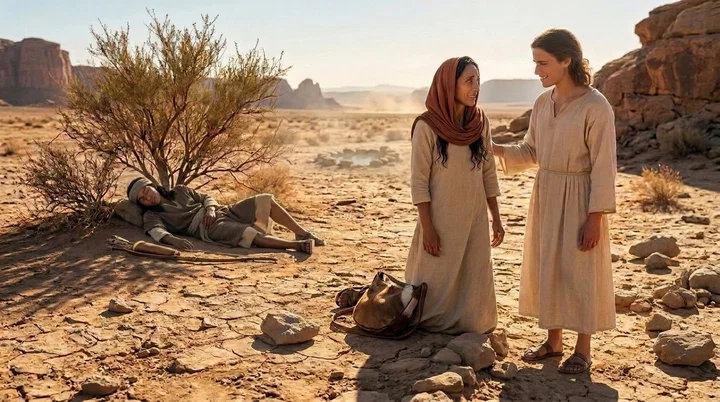
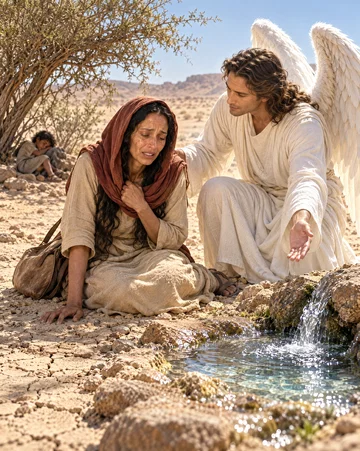
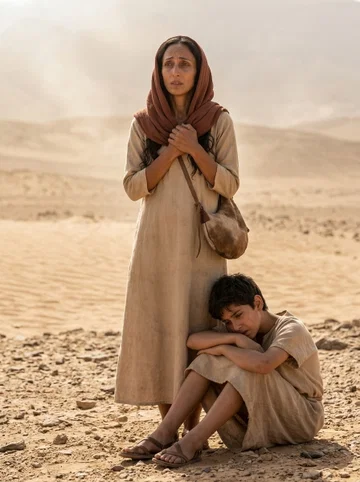
And she went, and sat her down over against him a good way off, as it were a bowshot: for she said, Let me not see the death of the child. And she sat over against him, and lift up her voice, and wept.
Translations
And she went, and sat her down over against him a good way off, as it were a bow shot: for she said, Let me not see the death of the child. And she sat over against him, and lift up her voice, and wept.
King James Version, KJV Cambridge Paragraph Bible
And she went, and sat her down over against him a good way off, as it were a bowshot: for she said, Let me not see the death of the child. And she sat over against him, and lift up her voice, and wept.
And she went, and sat her down over against him, a good way off, as it were a bow-shot: for she said, Let me not see the death of the child. And she sat over against him, and raised her voice, and wept.
And she went, and sat her down over against him a good way off, as it were a bowshot: for she said, Let me not look upon the death of the child. And she sat over against him, and lift up her voice, and wept.
And she went, and sat her down over against him a good way off, as it were a bowshot: for she said, Let me not look upon the death of the child. And she sat over against him, and lifted up her voice, and wept.
And she goeth and sitteth by herself over-against, afar off, about a bow-shot, for she said, 'Let me not look on the death of the lad;' and she sitteth over-against, and lifteth up her voice, and weepeth.
and she went and sat down over against [ him], a bow-shot off; for she said, Let me not behold the death of the child. And she sat over against [ him], and lifted up her voice and wept.
and went and sat her down over against him at a distance like as of such as draw the bow, for she said Let me not look upon the death of the child,—So she sat down over against him, and the boy lifted up his voice, and wept
Berean Standard Bible, Majority Standard Bible
Then she went off and sat down nearby, about a bowshot away, for she said, “ I cannot bear to watch the boy die!” And as she sat nearby, she lifted up her voice and wept.
She went and sat down opposite him, a good way off, about a bow shot away. For she said, “Don’t let me see the death of the child.” She sat opposite him, and lifted up her voice, and wept.
And she went some distance away, about an arrow flight, and seating herself on the earth, she gave way to bitter weeping, saying, Let me not see the death of my child.
Then she went and sate her ouer against him a farre off about a bowe shoote: for she said, I will not see the death of the child. and she sate downe ouer against him, and lift vp her voyce and wept.
Douay-Rheims (Challoner revision)
And she went her way, and sat over against him a great way off as far as a bow can carry, for she said: I will not see the boy die: and sitting over against, she lifted up her voice and wept.
Pictures
Cross-references
- Galatians 4:22-31
For it is written, that Abraham had two sons, the one by a bondmaid, the other by a freewoman.
Hagar and Sarah’s sons illustrate the two covenants and their heirs.
- Genesis 16:1-6
Now Sarai Abram’s wife bare him no children: and she had an handmaid, an Egyptian, whose name was Hagar.
Hagar’s place in Abraham’s household leads to family conflict.
- Genesis 16:11-12
And the angel of the LORD said unto her, Behold, thou art with child, and shalt bear a son, and shalt call his name Ishmael; because the LORD hath heard thy affliction.
Ishmael’s later life fulfills the prophecy given at his birth.
- Hebrews 11:17-19
By faith Abraham, when he was tried, offered up Isaac: and he that had received the promises offered up his only begotten son,
Abraham’s faith and obedience are shown in the test involving Isaac.
- Genesis 22:9-10
And they came to the place which God had told him of; and Abraham built an altar there, and laid the wood in order, and bound Isaac his son, and laid him on the altar upon the wood.
The child’s death recalls Abraham’s intended sacrifice of Isaac.
- James 2:21-23
Was not Abraham our father justified by works, when he had offered Isaac his son upon the altar?
Abraham’s obedience demonstrates his faith.
- Genesis 15:2-4
And Abram said, Lord GOD, what wilt thou give me, seeing I go childless, and the steward of my house is this Eliezer of Damascus?
God promised Abraham an heir before Ishmael’s birth.
Commentary
Each commentary is drawn from primary sources: the writings of Ellen G. White and Adventist pioneers and periodicals. Each commentary is separate. Its own words are not a quotation; follow the references to read the source passages.
Pioneers and periodicals
18 sources
Hagar laid Ishmael under a shrub and sat down opposite him about a bowshot away because she could not bear to watch him die, and sitting there she lifted up her voice and wept aloud in grief and distress.STST Feb 12, 1894ST Sep 8, 1898 The boy was exhausted and near death from thirst for lack of water.ST Sep 8, 1898ST Oct 1, 1896RH Sep 11, 1913 The scene belongs to God's providential dealings with Abraham's chosen family through whom the promised Seed would come, with Isaac as the miraculous child of promise through whom the Seed would come rather than through Ishmael.RH Jul 5, 1915ST Hagar and Ishmael's birth through human planning rather than God's promise led to bondage and trouble, and they represent those who rely on their own works instead of God's promise, yet the account goes on to show they were freed from bondage and the angel of the Lord succored them rather than returning them to it.ST Sep 28, 1915RH Oct 13, 1859 Even in their sending away, God compassionately remembered and cared for the lonely, distressed mother and her son in the wilderness and showed them mercy.ST Feb 12, 1894ST Oct 1, 1896
Setting and Plain Meaning
Hagar laid Ishmael beneath a shrub and withdrew to sit facing him a short distance off, about a bowshot away, because she could not endure to watch him die, and sitting there opposite him she raised her voice and wept aloud in grief and distress.STST Feb 12, 1894ST Sep 8, 1898ST Jan 24, 1900RH Oct 1, 1901 The boy was exhausted and near death from thirst, perishing for lack of water.ST Sep 8, 1898ST Oct 1, 1896RH Sep 11, 1913
The scene belongs to the account of Abraham sending Hagar and Ishmael away at Sarah's word, a separation that tested his faith and obedience.ST Sep 8, 1898 It falls on Hagar's journey with Ishmael after leaving Abraham's encampment, when she was on her way to another encampment meant to become her own but had evidently lost her way.ST Nov 15, 1910
The verse calls Ishmael a child though by chronology and circumstances he was about eighteen or twenty years old.RH Jan 18, 1870ST Apr 8, 1875ST Mar 4, 1880RH Dec 16, 1873 This shows that child is a relative term measured by the average length of life, which was then much greater than now, about one hundred and fifty years.RH Jan 18, 1870ST Apr 8, 1875RH Dec 16, 1873 By the same proportion a person a hundred years old could properly be called a child when people commonly lived more than nine hundred years.RH Jan 18, 1870ST Apr 8, 1875ST Mar 4, 1880RH Dec 16, 1873 Persons of that age so called remain morally accountable, so their cases come into the judgment, and if unrepentant they come up in the second resurrection among the throng outside the holy city and suffer the second death when the curse of God falls just before the new heavens and new earth.RH Jan 18, 1870ST Mar 4, 1880RH Dec 16, 1873
Doctrine and Application
The verse belongs to God's providential dealings with Abraham's family as the chosen family through whom the promised Seed would come.RH Jul 5, 1915ST Within that providence Isaac was the miraculous child of promise, and he was the son through whom the promised Seed would come rather than Ishmael.RH Jul 5, 1915ST Hagar and Ishmael's story began with a birth through human planning rather than God's promise, and that course led to bondage and trouble.ST Sep 28, 1915RH Oct 13, 1859 In this Hagar and her child represent those who rely on their own works instead of God's promise.ST Sep 28, 1915 Yet after they were sent away they were freed from bondage, and the angel of the Lord succored them rather than returning them to it.ST Sep 28, 1915RH Oct 13, 1859
Their expulsion, with Hagar sitting at a distance from Ishmael and weeping because she feared seeing him die, broke Ishmael's claim to Abraham's heirship and inheritance.ST Jan 24, 1900 The distress in which she sat apart and wept over the child's expected death illustrates the great unhappiness caused by polygamy in Abraham's family.RH Mar 1, 1870 At the same time the scene shows Hagar alone in distress after being sent away, grieving because she feared her child would die, and sitting a short distance from him and weeping.ST Feb 12, 1894ST Oct 1, 1896 In that wilderness condition God compassionately remembered and cared for the lonely mother and her thirsty son and showed them mercy.ST Feb 12, 1894ST Oct 1, 1896
Hagar wept in fear that her son would die for lack of water, yet a well was nearby and she did not see it.RH Sep 11, 1913 Her distress shows that worry does not solve the need.RH Sep 11, 1913 It also illustrates that worry can hide the help already available.RH Sep 11, 1913
Sources