Genesis 24:16
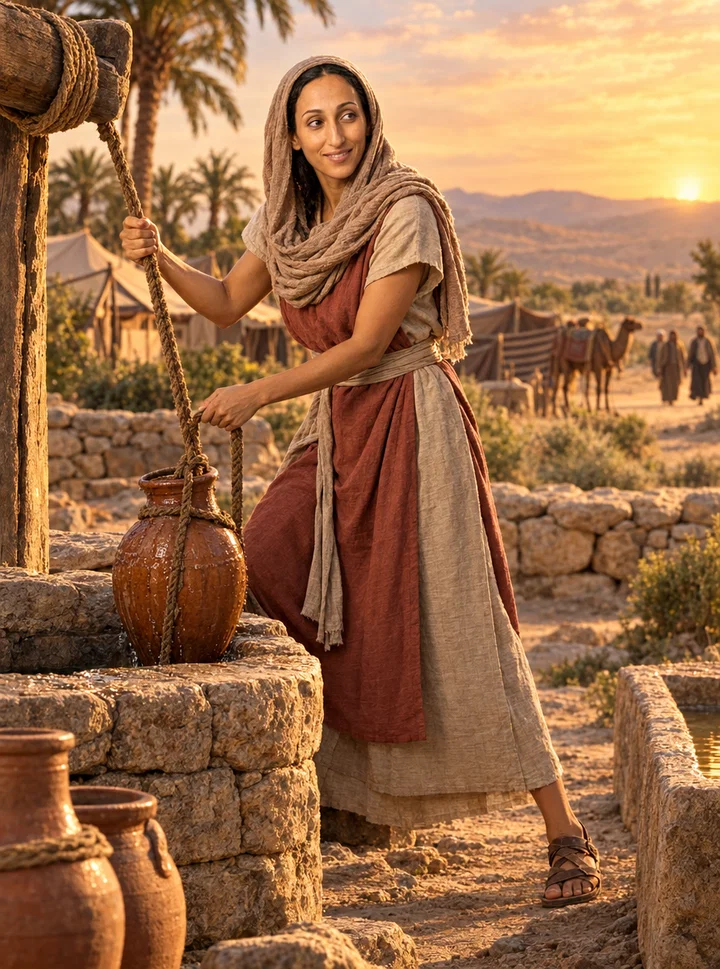
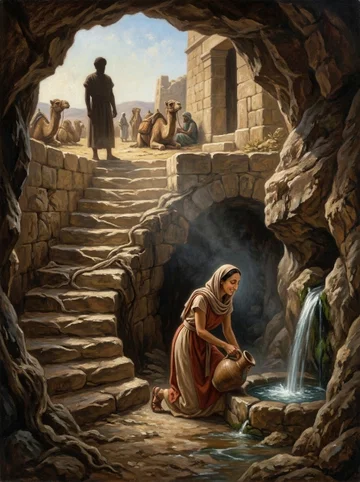
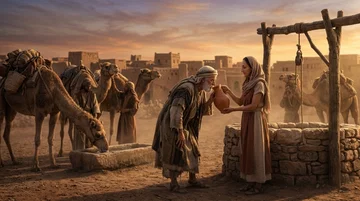
And the damsel was very fair to look upon, a virgin, neither had any man known her: and she went down to the well, and filled her pitcher, and came up.
Translations
And the damsel was very fair to look on, a virgin, neither had any man known her: and she went down to the well, and filled her pitcher, and came up.
King James Version, KJV Cambridge Paragraph Bible, Webster Bible
And the damsel was very fair to look upon, a virgin, neither had any man known her: and she went down to the well, and filled her pitcher, and came up.
Revised Version, American Standard Version
And the damsel was very fair to look upon, a virgin, neither had any man known her: and she went down to the fountain, and filled her pitcher, and came up.
and the young person [is] of very good appearance, a virgin, and a man hath not known her; and she goeth down to the fountain, and filleth her pitcher, and cometh up.
And the maiden was very fair in countenance; a virgin, and no man had known her. And she went down to the well, and filled her pitcher, and came up.
Now the young woman! was of very pleasing appearance, a virgin whom, no man, had known,—and she went down unto the fountain, and filled her pitcher and came up.
Berean Standard Bible, Majority Standard Bible
Now the girl was very beautiful, a virgin who had not had relations with any man. She went down to the spring, filled her jar, and came up again.
The young lady was very beautiful to look at, a virgin. No man had known her. She went down to the spring, filled her pitcher, and came up.
She was a very beautiful girl, a virgin, who had never been touched by a man: and she went down to the spring to get water in her vessel.
(And the maide was very faire to looke vpon, a virgine and vnknowen of man) and she went downe to the well, and filled her pitcher, and came vp.
Douay-Rheims (Challoner revision)
An exceeding comely maid, and a most beautiful virgin, and not known to man: and she went down to the spring, and filled her pitcher and was coming back.
Pictures
Cross-references
- Genesis 24:67
And Isaac brought her into his mother Sarah’s tent, and took Rebekah, and she became his wife; and he loved her: and Isaac was comforted after his mother’s death.
Rebekah becomes Isaac’s wife, and he loves her.
- Genesis 24:49-52
And now if ye will deal kindly and truly with my master, tell me: and if not, tell me; that I may turn to the right hand, or to the left.
The servant reports the signs of God’s guidance, Rebekah is given to Isaac, and the servant worships.
- Genesis 24:12
And he said, O LORD God of my master Abraham, I pray thee, send me good speed this day, and shew kindness unto my master Abraham.
Eliezer prays for success and a sign at the well.
- Genesis 24:3-4
And I will make thee swear by the LORD, the God of heaven, and the God of the earth, that thou shalt not take a wife unto my son of the daughters of the Canaanites, among whom I dwell:
Abraham directs the servant to find Isaac a wife among his kindred, not the Canaanites.
- Genesis 25:20
And Isaac was forty years old when he took Rebekah to wife, the daughter of Bethuel the Syrian of Padan-aram, the sister to Laban the Syrian.
It gives Isaac’s age when he married Rebekah.
- Genesis 29:1-10
Then Jacob went on his journey, and came into the land of the people of the east.
Both scenes describe an arrival at a well and invite comparison across generations.
- Genesis 24:7
The LORD God of heaven, which took me from my father’s house, and from the land of my kindred, and which spake unto me, and that sware unto me, saying, Unto thy seed will I give this land; he shall send his angel before thee, and thou shalt take a wife unto my son from thence.
Abraham trusts God to send an angel ahead and guide the search.
- Genesis 27:46
And Rebekah said to Isaac, I am weary of my life because of the daughters of Heth: if Jacob take a wife of the daughters of Heth, such as these which are of the daughters of the land, what good shall my life do me?
Rebekah fears Jacob will marry women of the land.
Commentary
Each commentary is drawn from primary sources: the writings of Ellen G. White and Adventist pioneers and periodicals. Each commentary is separate. Its own words are not a quotation; follow the references to read the source passages.
Ellen G. White
8 sources
The verse belongs to the account of finding a wife for Isaac among Abraham's kindred in Mesopotamia, when Abraham's servant meets Rebekah at the well while seeking a wife for Isaac.PP 171.31SP 102.1 It describes Rebekah as very beautiful and a virgin, who went down to the well, filled her pitcher, and came up.PP 172.2SG3 112.3 Her beauty drew the servant's notice, while her ready kindness in offering water to him and his camels revealed a kind heart and an active, energetic nature.PP 172.2 Her courteous conduct and the events at the well were the sign and evidence the servant had prayed for, showing him that Rebekah was the woman God had selected for Isaac.PP 172.21SP 102.1 The choice sought a woman willing to leave her home and join Isaac in maintaining the worship of the living God.PP 171.3
At forty, Isaac submitted to his father's judgment and trusted an experienced, God-fearing servant to choose his wife, believing God would direct the choice.CE 228.1–230.1SG3 112.1–2 The account of Isaac's marriage is held up as an example for children and young people who fear God and profess to fear God to seek God's direction and to respect, involve, and yield to parental judgment in choosing a spouse.SG3 112.3SG3 112.1–21SP 104.3 The verse belongs to the record of Abraham educating Isaac to love a life of noble obedience, teaching that parents should command their households after them, instruct children to yield to and respect parental authority, and accept responsibility to guide their children's affections toward suitable companions, since Satan largely controls the affections of the young, and Abraham's course rebukes parents who think affections should not be guided or restrained.ST Apr 10, 1879 The wise, God-guided marriage that followed brought love and comfort, showing the value of parental guidance and the counsel of older, experienced people in choosing a lifelong companion.CE 228.1–230.1
Sources
Pioneers and periodicals
15 sources
The verse describes Rebekah as exceptionally beautiful and a virgin whom no man had known, going down to the well where women came to fill their jars, filling her pitcher and coming up.RH Jul 25, 1912ST May 19, 1898 It belongs to the account of Abraham sending his pious, faithful servant to Mesopotamia, to Padan-Aram, to obtain a wife for Isaac from the godly line so the promised family would be preserved from corruption, with the Lord leading him until Rebekah was found and returned with him.ST Dec 20, 1910ST Jan 9, 1912ST Aug 3, 1915ST Feb 19, 1894 Her coming to the well at that time and doing what he had asked for a sign appeared ordinary, but God directed the circumstances, and her appearance and offer to draw water was the answer to the servant's earnest prayer for guidance in this practical task.RH Jul 25, 1912RH Jan 30, 1872ST Jan 14, 1886ST Sep 5, 1900 The account teaches that ordinary, temporal needs may be brought to God in prayer, with trust that He hears and grants requests when it is for good, and with grateful acknowledgment of His mercy.ST Jan 14, 1886 It records Abraham's course in educating Isaac to noble obedience under parental judgment and guidance, showing that choosing a marriage companion is not a matter of impulse or of self alone, that children are to honor parents in deference to their wishes, and that parents are to command their households and guide the affections of their children toward suitable companions.ST Apr 10, 1879ST Jul 9, 1874
Setting and Description
The verse stands in the account of Abraham sending his tried servant to Mesopotamia, to Padan-Aram, to obtain a wife for Isaac from the godly line so that the promised family would be preserved from religious corruption.ST Dec 20, 1910ST Aug 3, 1915ST Feb 19, 1894 On that journey Rebekah was found and returned with the servant, making the mission successful.ST Dec 20, 1910ST Feb 19, 1894 The well where she was found was a customary gathering place where women came to fill their jars, and the verse describes her going down to the well, filling her pitcher, and coming up to draw water.RH Jul 25, 1912ST May 19, 1898 She is presented as very fair to look upon, exceptionally beautiful, and a virgin whom no man had known.RH Jul 25, 1912ST Sep 5, 1900 Her ready courtesy at the well shows a kind heart and an active, energetic nature.
The account is one of God's special providence and providential dealings over Abraham's family as the family of the chosen progenitor through whom the promised Seed would come.ST Dec 20, 1910ST Jan 9, 1912ST It belongs to the continuing Genesis account of the family through which the Seed was to come, at the point where the promises given to Abraham extend to Isaac, and it is to be read with the Promised Seed ever in mind.ST Dec 20, 1910STST Jan 14, 1913 Abraham's trusted servant in the account is pious, unselfish, and faithful, and the Lord led him on his journey.ST Jan 9, 1912 The verse marks the point when Abraham, the father of the faithful, came fully to trust God, as the final step in God's progressive dealings with him from his call onward.ST Dec 20, 1910
The servant's arrival in Padan-Aram occurred about one hundred years before Jacob's arrival there, and the two arrivals are to be compared.ST Oct 6, 1898 The Rebekah account in Genesis 24-25 is grouped with Jacob and Esau and presses the question of how highly the heavenly birthright is prized.
Providence and Prayer
Rebekah's coming to the well, meeting Abraham's servant, and doing what he had asked for a sign appeared to be an ordinary event, but God directed the circumstances, bringing her to the well at that time and guiding what she did.RH Jan 30, 1872 She was very beautiful and a virgin, going down to the well, filling her pitcher, and coming back up, and her appearance there with her ready courtesy in offering to draw water for the camels was the answer to Eliezer's prayer for guidance.RH Jul 25, 1912ST Sep 5, 1900RH Aug 1, 1871 That offer was the sign the servant had asked God to provide, for he had prayed and Rebekah appeared, and he recognized God's hand in the events leading him to her.RH Jul 25, 1912ST Sep 5, 1900RH Aug 1, 1871 Her kind and energetic readiness at the well belonged to that answered prayer and its appointed token.RH Jul 25, 1912
The servant prayed earnestly for guidance in the practical task of finding a wife for Isaac, watched how events unfolded, recognized God's direction, and gratefully acknowledged His mercy.ST Jan 14, 1886 The account therefore teaches that people may bring ordinary, temporal needs to God in prayer, trust that He hears them, and expect Him to grant their requests when doing so is for their good.ST Jan 14, 1886
Marriage and Obedience
The record to which the verse belongs is the course Abraham pursued in educating Isaac to love a life of noble obedience, with the marriage arranged under Abraham's judgment and guidance, and Isaac's respect for his father and deference to his wishes reflecting that training in obedience.ST Apr 10, 1879 That deference in leaving his marriage to his father's wishes was obedience to the fifth commandment to honor parents, proving that commandment was already binding and obeyed by God's servants long before Sinai.ST Jul 9, 1874 Choosing a marriage companion is therefore not to be treated as a matter of impulse or of self alone, while loving parental guidance has the children's welfare in view. Parents are to command their households after them, instruct their children to yield to and respect parental authority, and feel responsibility to guide the affections of their children toward persons judged to be suitable companions for sons and daughters.ST Apr 10, 1879 Satan controls the affections of the young to a great extent, so Abraham's course rebukes parents who feel that the affections should not be guided or restrained.ST Apr 10, 1879
Sources