Translations
American King James Version, King James Version, KJV Cambridge Paragraph Bible, Webster Bible
And he said, Behold now, I am old, I know not the day of my death:
Revised Version, American Standard Version
And he said, Behold now, I am old, I know not the day of my death.
And he saith, 'Lo, I pray thee, I have become aged, I have not known the day of my death;
And he said, Behold now, I am become old; I know not the day of my death.
And he said, Behold, I pray thee, I am old,—I know not the day of my death.
Berean Standard Bible, Majority Standard Bible
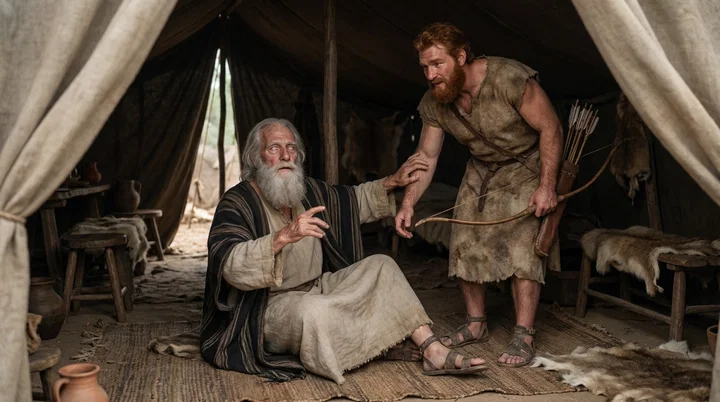
“ Look,” said Isaac, “ I am now old, and I do not know the day of my death.
He said, “ See now, I am old. I don’t know the day of my death.
And he said, See now, I am old, and my death may take place at any time:
Then he sayd, Beholde, I am nowe olde, and knowe not the day of my death:
Douay-Rheims (Challoner revision)
And his father said to him: Thou seest that I am old, and know not the day of my death.
Pictures
Cross-references
- Genesis 25:23
And the LORD said unto her, Two nations are in thy womb, and two manner of people shall be separated from thy bowels; and the one people shall be stronger than the other people; and the elder shall serve the younger.
The promise that the elder would serve the younger shaped the blessing Jacob sought.
- Genesis 25:31-34
And Jacob said, Sell me this day thy birthright.
Esau sold his birthright to Jacob before Isaac arranged to bless him.
- Genesis 28:13-15
And, behold, the LORD stood above it, and said, I am the LORD God of Abraham thy father, and the God of Isaac: the land whereon thou liest, to thee will I give it, and to thy seed;
God renewed his promise and blessing to Jacob after he fled from home.
- Hebrews 12:16-17
Lest there be any fornicator, or profane person, as Esau, who for one morsel of meat sold his birthright.
Esau sold his birthright and was later rejected when he sought the blessing.
- Genesis 27:35-36
And he said, Thy brother came with subtilty, and hath taken away thy blessing.
Jacob used deceit to obtain Isaac’s blessing.
- Hebrews 11:20
By faith Isaac blessed Jacob and Esau concerning things to come.
Isaac’s blessing of his sons was an act of faith.
- Genesis 25:28
And Isaac loved Esau, because he did eat of his venison: but Rebekah loved Jacob.
Explains Isaac’s preference for Esau in the blessing story.
Commentary
Each commentary is drawn from primary sources: the writings of Ellen G. White and Adventist pioneers and periodicals. Each commentary is separate. Its own words are not a quotation; follow the references to read the source passages.
Ellen G. White
12 sources
Isaac is over a hundred years old, infirm with age, with dim and blind sight, declaring he does not know the day of his death and believing his death is near.ST Apr 17, 18791SP 106.2SG3 115.1SG3 114.1PP 179.3 Feeling urgency from that uncertainty, he decides to bestow the firstborn's blessing at once without delay upon his elder son Esau.ST Apr 17, 18791SP 106.2SG3 114.1PP 179.3 He calls Esau privately and asks him to prepare venison and food for him first, in keeping with the custom of making a feast on such an occasion.ST Apr 17, 18791SP 106.2SG3 114.1
In so deciding he favors his favorite son Esau and goes contrary to God's known purpose that the elder should serve the younger, intending to give the final and irrevocable benediction to his firstborn.ST Apr 17, 1879 That secret plan to bless Esau creates the urgency and occasion for Rebekah and Jacob to act on the promise about the elder serving the younger by using stratagem and deceiving Isaac to obtain for Jacob what God had promised.ST Apr 17, 1879SG3 114.1 The blessing is associated with the firstborn, but its benefits ultimately depend on God, who can grant prosperity or adversity according to conduct, so that Jacob would be blessed if he loved and feared God even without the privileges usually given to the firstborn.SG3 115.1
The deception by which Jacob obtains the blessing and birthright intended for Esau is sin and wrong — marked by partiality, hypocrisy, and deceptive reasoning to gain advantage — done despite knowing God's promise and showing lack of faith that God could fulfill His purpose.SG3 115.1Ms 139, 1899, par. 17–21Lt 7, 1896, par. 1–4ST Jan 29, 1880 God did not prompt it, and Rebekah and Jacob should have trusted God to fulfill His purposes in His own way and time, since He was fully able to provide for Jacob without fraud and will not work with such devising and rivalry.SG3 115.1Ms 139, 1899, par. 17–21 That wrong brought distress, gave Satan a claim to destroy Jacob, required repentance, and forced Jacob to flee for his life from Esau's anger and threat.SG3 133.2GC88 616.1–2ST Jan 29, 1880ST Feb 13, 1901PP 201.3–202.2
Jacob did repent of the fraud beforehand and learned that God is merciful, and when wrestling in distress he pointed back to that repentance and cast himself on mercy and pleaded for deliverance, so God heard his later prayer and mercifully saved and preserved his life from Esau.SG3 133.2PP 201.3–202.2 Without that prior repentance God could not and would not have heard him, so repentance and the blotting out of sin by the atoning blood of Christ, leaving no concealed wrongs, must come beforehand in order to have confidence to plead with God for deliverance when faith, perseverance, and confidence are tested.SG3 133.2PP 201.3–202.2 The same spirit of deception and rivalry must be put away, with commandment-keeping people cleansing mind and heart from conniving at evil, underhand dealing, and desire to gain advantage over brethren in any business deal, since such unholy work hurts and finally ruins the soul.Ms 139, 1899, par. 17–21 It is the same kind of wrong practiced when men handle others as machinery, bind their freedom, and grasp all they can irrespective of agreements and of the wrong to those disappointed.Lt 7, 1896, par. 1–4
Sources
Pioneers and periodicals
42 sources
Isaac is far advanced in years, past a hundred, with the infirmities of age upon him and his sight dim and failing, and he feels his death may come at any time though he does not know its day.ST Jul 31, 1901ST Sep 22, 1898STST Mar 31, 1881 That sense of nearness to death moves him to settle his house at once by bestowing the final blessing, so he privately calls his favored son Esau to prepare the savory venison he loves, acting from partiality and appetite contrary to the word that the elder should serve the younger.ST Apr 17, 1879ST Sep 22, 1898STST Mar 31, 1881RH Nov 30, 1916 Rebekah and Jacob, fearing the promise will fail, take matters into their own hands and seek to secure it by human craft, with Jacob personating Esau through trickery and dissimulation in lack of faith that God can fulfill His purpose in His own time and way.STRH Nov 16, 1916ST Feb 17, 1914RH Nov 30, 1916ST Oct 1, 1902 The blessing at stake is great, carrying the double portion, family rulership and priesthood with spiritual and temporal good, and even a part in bringing Christ and salvation, which Jacob valued and Esau lightly esteemed and sold for a meal when hungry.ST May 17, 1910STST Mar 31, 1881RH Dec 30, 1915ST Feb 26, 1894 The fraud brings hatred and threats from Esau, hasty flight, lasting division and separation from home and mother, and long chastisement in which Jacob is himself deceived and afflicted until deep repentance, wrestling and humiliation ripen him for faith and a bright end.ST Jan 3, 1911ST Jan 9, 1912RH Mar 30, 1869RH Nov 30, 1916RH Apr 8, 1875
Isaac's Age and Setting
Isaac is old and advanced in years, more than one hundred years old, with the infirmities of age upon him and his sight grown dim and failing and blind.ST Apr 17, 1879ST Jul 31, 1901ST Sep 22, 1898STST Sep 22, 1898 He knows he is old but does not know the day of his death, while believing his death is near and may come at any time.ST Feb 24, 1887ST Mar 31, 1881ST Oct 4, 1905 His sense of approaching death creates urgency to arrange the duties of his household, consecrate the heir of the sacred covenant, and bestow the blessing at once before he dies.ST Apr 17, 1879ST Feb 24, 1887ST Sep 22, 1898ST Mar 31, 1881 That urgency explains his request that food be brought so he could give the blessing, marking the aged sense that death was near and the blessing must be given.ST Sep 22, 1898ST Mar 31, 1881ST Jul 27, 1904
In accordance with the custom of making a feast upon such occasions, he privately calls his favored son Esau and asks him to prepare venison such as he likes so he can receive the final and irrevocable blessing.ST Apr 17, 1879STST Oct 1, 1902 He tells Esau when old and blind to prepare him a dinner of venison, feeling his death near without knowing its day and calling Esau to prepare to receive the blessing.ST Apr 17, 1879STST Oct 1, 1902 Isaac favors Esau not for superior merit but from partiality and appetite, because Esau is a cunning hunter whose savory venison dishes appeal to him, while Rebekah favors the other twin, the handsome Jacob who stays by her side.ST Apr 17, 1879ST
His determination to give the firstborn's blessing to Esau goes contrary to the will of God and the word given to Rebekah that the elder should serve the younger, although he has been made acquainted with God's purpose that it belongs to Jacob.ST Apr 17, 1879ST Jul 31, 1901RH Nov 30, 1916ST Feb 26, 1894 God had promised it to Jacob, and intended the blessing together with the birthright for Jacob because Jacob had the superior character, to give them to him in his own way.ST Apr 17, 1879ST Jul 31, 1901RH Nov 30, 1916ST Feb 26, 1894
Blessing and Birthright at Stake
The birthright and blessing at stake included a double share of the family property, rulership in the family, and the priesthood.ST May 17, 1910 They included spiritual blessings and manifold temporal blessings.RH Dec 30, 1915 In this case they also involved being the ancestor through whom Christ would come and thus having a part in the salvation of the human race.ST May 17, 1910 That inheritance was of worth to Jacob and his posterity, including a home in the kingdom of God.RH Dec 30, 1915
Jacob valued these privileges, while Esau traded them for temporary gratification.ST May 17, 1910 Jacob had ambition to receive the spiritual blessings of the birthright.RH Dec 30, 1915 Esau lightly esteemed them, though they were of worth to Jacob and his posterity.RH Dec 30, 1915 He foolishly sold his birthright without appreciating it, when faint and hungry, for a mess of pottage.STST Oct 4, 1905ST Jul 27, 1904 He was appetite-loving, while Jacob was the more pious.ST Oct 4, 1905
Jacob had already purchased the claim to the blessing, and God approved and sanctified its transfer to him.ST Mar 31, 1881 The blessing with the birthright was intended by God for Jacob because Jacob had the superior character, and God intended to give them to him in his own way and not through deception.ST Feb 26, 1894 Although Esau later wanted to inherit the blessing Isaac intended for him, he could not undo his deliberate sale of the birthright.ST Mar 30, 1888 His seeking when he sought to inherit that blessing was rejected.ST Mar 30, 1888ST Feb 23, 1915 Isaac's words of blessing upon Jacob and Esau in this setting of his old age were prophetic.ST Sep 22, 1898
Deception Through Unbelief
Jacob obtained by fraud the father's blessing designed for his brother Esau, personating Esau to deceive his blind father with his mother's connivance, artifice, trickery, and dissimulation.ST Jan 3, 1911ST Feb 28, 1906ST Apr 1, 1897RH Mar 30, 1869RH Aug 17, 1869 That fraud and disobedience made Esau the firstborn take second place and forced Jacob to flee because of his brother's hatred, and though done by a good man his guile gives no permission for others to imitate his vice.ST Jan 3, 1911ST Feb 28, 1906RH Mar 30, 1869RH Aug 17, 1869 When old and blind Isaac told Esau to prepare a dinner of venison such as he liked so he could receive his blessing, Rebekah overheard the request and feared the Lord's promise that the elder should serve the younger would be frustrated.ST Feb 17, 1914ST Oct 1, 1902 She supposed she must do something to secure it and took events into her own hands rather than trusting God, a failure of faith that gave the occasion for human work of deception.ST Feb 17, 1914ST Oct 1, 1902
Rebekah and Jacob tried to secure the promised blessing through their own scheme, attempting to supplement God's promise by craft and to fulfill God's word by wrong means.STRH Nov 16, 1916RH Nov 30, 1916ST Oct 1, 1902 Isaac was at an advanced age, conscious he might die at an unknown time and expecting soon to die, and was determined to give Esau the birthright blessing contrary to the word the Lord had given Rebekah before the birth of Esau and Jacob; his intent led Rebekah and Jacob to practice deception upon him.STRH Nov 16, 1916RH Nov 30, 1916 Rebekah, eager for the promised blessing to be fulfilled, did not trust God to act in His time and arranged the deception, Jacob's hesitation gave way to his mother's counsel, and both suffered self-reproach and condemnation.STRH Nov 16, 1916RH Nov 30, 1916 That attempt to fulfill God's word by wrong means showed lack of faith and brought hardship, disastrous division, hatred, flight for life, long separation, lasting enmity between Esau's descendants and Israel, and left Jacob long in the habit of trying to gain promised blessings for himself by trickery and deceit.STRH Nov 30, 1916ST Oct 1, 1902
Jacob's course in this conspiracy displayed the overreaching, mercenary, covetous, selfish character meant by the name Jacob, supplanter, and his ambition to receive the spiritual blessings led him to join his mother in plotting with suffering and retribution following through God's providence.ST Jan 9, 1912ST Apr 1, 1897RH Dec 30, 1915 The birthright blessing at stake included spiritual blessings and manifold temporal blessings, though lightly esteemed by Esau it was of worth to Jacob and his posterity, including a home in the kingdom of God, involving the choice of obedience to God, denying sinful worldly pleasures, and wrestling with God until sinful scheming and supplanting are forgiven in answer to humble confession and seeking for pardon.RH Dec 30, 1915 In coveting Esau's birthright and blessing for temporal rather than spiritual ends and taking an unrighteous course to secure them, Jacob coveted in transgression of the tenth commandment long before Sinai, showing the law forbidding coveting was already in force.ST Oct 4, 1905 Because covetousness is idolatry, that act also transgressed the first and second commandments, and his deceit left him exiled, lonely, and remorseful.ST Oct 4, 1905
Jacob greatly erred and acted shamefully and dishonorably in taking his case into his own hands instead of waiting for God's own time, although God had promised him the birthright and would have fulfilled that promise in time in a more honorable manner.ST Jul 31, 1884ST Jan 29, 1880RH Apr 8, 1875 His failure to wait showed a lack of faith that God could fulfill His purpose in His own time and way, and his sin in taking the blessing through deception despite knowing God's promise brought distress, suffering, and flight from home and from Esau's anger.ST Jul 31, 1884ST Jan 29, 1880RH Apr 8, 1875 To develop thorough repentance and perfect trust in Jacob and to remit his shameful error, God subjected him to a number of perplexing trials, the greatest being his wrestling with the angel, which placed him among the heroes of faith.RH Apr 8, 1875 Isaac's belief that he was near death and his use of that expectation as the occasion to arrange his blessing for Esau does not make his favoritism or the deception that follows right; Rebekah and Jacob should have trusted God to fulfill His purpose in His own time and way, and Jacob's wrongdoing as a good man does not give others permission to imitate his vice.ST Feb 24, 1887RH Aug 17, 1869
Jacob's siding with his mother in deceiving Isaac to gain the blessing when Isaac was old and did not know the day of his death was sympathy cast on the wrong side, for he that gathers not with Christ scatters abroad.RH Jan 7, 1873 Its influence did not end with the deed but lived on, obliging Jacob to flee for his life to a stranger's land and nearly proving his ruin and the ruin of his family and his substance in after years.RH Jan 7, 1873 It shows that a wrong act leaves lasting destroying influence and eternal loss even if the doer is afterward saved through pardoning love.RH Jan 7, 1873
Consequences and Discipline
The selling of the birthright when faint and hungry for a mess of pottage and the stealing of the blessing by fraud and deceit together provoked the appetite-loving Esau to hatred, wrath, vengeance, and plotting to kill the more pious Jacob.ST Jan 3, 1911ST Oct 4, 1905ST Apr 6, 1888ST Jul 27, 1904 The firstborn was thus given second place, and Jacob was forced to flee in haste for his life from his home and dear mother to a strange country and distant Padan-aram.ST Jan 3, 1911ST Oct 4, 1905ST Jul 27, 1904ST Feb 26, 1894 Isaac's sense that he was old and blind and that death was near and must be met with the blessing, and his determination to give it to Esau contrary to the word that the elder should serve the younger, set the scene for that flight, for Jacob gained the blessing despite his deception and then had to leave toward Padan-aram.RH Nov 30, 1916ST Feb 26, 1894ST Jul 27, 1904
That human attempt to secure the promised blessing by a scheme of personating Esau and supplementing God's promise by craft showed lack of faith and brought hardship, disastrous division, hatred, flight, long separation, and lasting enmity between Esau's descendants and Israel.STST Oct 1, 1902 It opened a mournful story of favoritism in the home leading to deceit and double-dealing at sad cost, with lasting separation between mother and son.STRH Jul 4, 1865 Rebekah was deprived of her son's companionship in her old age and did not live to see her favorite son return, and Jacob left her never to see her again, while both suffered self-reproach and condemnation and bitter repentance.RH Nov 16, 1916RH Nov 30, 1916ST Jul 27, 1904RH Jul 4, 1865
Jacob's deception brought severe suffering, checkered and unsatisfactory experiences, and retribution through God's providence as God's chastisement in long-continued afflictions and perplexing trials.ST Jan 9, 1912RH Mar 30, 1869RH Apr 8, 1875ST Jul 21, 1881 He was deceived by Laban and deceived by his sons about Joseph, and his failure to wait for God's own time brought suffering and flight from home.ST Jul 31, 1884RH Mar 30, 1869 That sin put a great gulf between Jacob and heaven, leaving him forsaken and despairing under a guilty conscience, exiled, lonely, remorseful, and coveting the blessing for temporal rather than spiritual ends.ST Oct 4, 1905ST Jul 27, 1904 A sense of wrongdoing, deep remorse and penitence, utter loneliness, loss of self-confidence, and fear that the God of his fathers had utterly forsaken him drove him to weeping, humiliation, confession of sin, and pleading for evidence that he was not cast off.ST Jul 27, 1904ST Feb 26, 1894
The chastisement worked deep and thorough repentance, self-reproach and condemnation, bitter repentance, and penitence, with long wrestling with the angel who pressed his sin upon him until he was brought to deepest humility.RH Nov 16, 1916RH Nov 30, 1916ST Jul 21, 1881ST Feb 26, 1894RH Jul 4, 1865 To develop thorough repentance and perfect trust and to remit his shameful error, God subjected him to these trials, the greatest being the wrestling, which placed him among the heroes of faith.RH Apr 8, 1875ST Jul 21, 1881 When he went down into Egypt his afflictions were closed forever and the rod was withdrawn, and his sojourn ripened him for the kingdom of God so his life ended in heavenly brightness.ST Jul 21, 1881 His sin followed him even though he was forgiven, showing that God may grant mercy and eternal life while allowing earthly consequences, and that a wrong act leaves lasting destroying influence and eternal loss even if the doer is afterward saved through pardoning love, nearly proving his ruin and the ruin of his family and substance and obliging him to flee for his life to a stranger's land.RH Mar 30, 1869RH Jan 7, 1873
His experience became part of his painful review of wrongdoing and of God's mercy and help, and the flight after deceiving his father over the family birthright and blessing forms the background to his later vow to God.ST Nov 20, 1879ST Sep 6, 1883 He was left long in the habit of trying to gain promised blessings for himself by trickery and deceit.RH Nov 30, 1916 That sinful scheming and supplanting is forgiven in answer to humble confession and seeking for pardon through wrestling with God, involving the choice of obedience to God and denying sinful worldly pleasures.RH Dec 30, 1915RH Nov 30, 1916
Doctrine Prophecy and Application
Genesis 27:1-40 presents Jacob as a type of people who seek the Lord's blessing through fraud and deceit.ST Nov 18, 1897 His taking of Esau's blessing represents religionists who pursue worldly position and temporal rewards by expediency, sacrifice principle, and ally themselves with the world and the State, only to be disappointed.ST Nov 18, 1897 Isaac's awareness that he is old and does not know when he will die, together with his failing sight that leaves him unable to recognize Jacob when blessing him instead of Esau, illustrates that human sight and knowledge can fail, while the Lord always knows His own and nothing can hide them from Him.RH Nov 4, 1858
The account of Rebekah's artifice and Jacob's deception in taking the blessing raises questions about Old Testament morality and the conduct of its best men.RH Jul 4, 1865 Rebekah's error brought her grief and separation from her son, and Jacob's deception led to penitence and long wrestling with the angel who pressed his sin upon him until he was brought to deepest humility, and that outcome removes stumbling and shows the way was narrow then as now, that spirituality in worship was required then as now to please God, and that God is unchangeable and His dealings with men are right.RH Jul 4, 1865 Jacob's deception in obtaining the birthright and blessing, the sin for which he later repented, shows the need to confess and turn from sin before the time of trouble, so that no unconfessed wrong remains to overwhelm faith or stand against God's people when they plead for deliverance.RH Nov 14, 1912 Isaac's old age set the occasion for Jacob to be led into error and exile through the influence of his mother, proving accountability for the influence exerted upon the conduct of others and that many will be lost through the negligence or misconduct of others and none can evade the consequences of causing others to do wrong.ST Apr 12, 1883
Sources