Genesis 37:27
Come, and let us sell him to the Ishmeelites, and let not our hand be upon him; for he is our brother and our flesh. And his brethren were content.
Translations
Come, and let us sell him to the Ishmeelites, and let not our hand be on him; for he is our brother and our flesh. And his brothers were content.
King James Version, KJV Cambridge Paragraph Bible
Come, and let us sell him to the Ishmeelites, and let not our hand be upon him; for he is our brother and our flesh. And his brethren were content.
Come, and let us sell him to the Ishmaelites, and let not our hand be upon him; for he is our brother, our flesh: and his brethren were content.
Revised Version, American Standard Version
Come, and let us sell him to the Ishmaelites, and let not our hand be upon him; for he is our brother, our flesh. And his brethren hearkened unto him.
Come, and we sell him to the Ishmaelites, and our hands are not on him, for he [is] our brother — our flesh;' and his brethren hearken.
Come and let us sell him to the Ishmaelites; but let not our hand be upon him; for he is our brother, our flesh. And his brethren hearkened [ to him].
Come and let us sell him to the Ishmaelites; but let not, our own hand, be upon him, for our own brother, our own flesh, is he And his brethren hearkened.
Berean Standard Bible, Majority Standard Bible
Come, let us sell him to the Ishmaelites and not lay a hand on him; for he is our brother, our own flesh.” And they agreed.
Come, and let’s sell him to the Ishmaelites, and not let our hand be on him; for he is our brother, our flesh.” His brothers listened to him.
Let us give him to these Ishmaelites for a price, and let us not put violent hands on him, for he is our brother, our flesh. And his brothers gave ear to him.
Come and let vs sell him to the Ishmeelites, and let not our handes be vpon him: for he is our brother and our flesh: and his brethren obeyed.
Douay-Rheims (Challoner revision)
It is better that he be sold to the Ismaelites, and that our hands be not defiled: for he is our brother and our flesh. His brethren agreed to his words.
Pictures
Cross-references
- Genesis 50:20
But as for you, ye thought evil against me; but God meant it unto good, to bring to pass, as it is this day, to save much people alive.
God turned the brothers’ evil sale of Joseph toward good.
- Acts 7:9
And the patriarchs, moved with envy, sold Joseph into Egypt: but God was with him,
Envy moved Joseph’s brothers to sell him into Egypt.
- Genesis 37:18-20
And when they saw him afar off, even before he came near unto them, they conspired against him to slay him.
Joseph’s brothers conspire to kill him, but their plot is overruled for good.
- Genesis 42:6
And Joseph was the governor over the land, and he it was that sold to all the people of the land: and Joseph’s brethren came, and bowed down themselves before him with their faces to the earth.
Joseph’s brothers bow before him, fulfilling his dreams and the dominion they tried to prevent.
- Genesis 45:5
Now therefore be not grieved, nor angry with yourselves, that ye sold me hither: for God did send me before you to preserve life.
Joseph later says God sent him ahead to preserve life.
- Matthew 27:18
For he knew that for envy they had delivered him.
Joseph and Christ were both handed over through envy.
- Genesis 41:56-57
And the famine was over all the face of the earth: and Joseph opened all the storehouses, and sold unto the Egyptians; and the famine waxed sore in the land of Egypt.
Famine later brings Jacob’s family to Egypt, where Joseph has gone ahead.
- Genesis 41:40-43
Thou shalt be over my house, and according unto thy word shall all my people be ruled: only in the throne will I be greater than thou.
Joseph is elevated to authority in Egypt.
- Genesis 37:21-22
And Reuben heard it, and he delivered him out of their hands; and said, Let us not kill him.
Reuben intervenes to prevent Joseph's death.
- Genesis 37:23
And it came to pass, when Joseph was come unto his brethren, that they stript Joseph out of his coat, his coat of many colours that was on him;
coat stripped before sale
- Genesis 45:8
So now it was not you that sent me hither, but God: and he hath made me a father to Pharaoh, and lord of all his house, and a ruler throughout all the land of Egypt.
Joseph says God, rather than his brothers, brought him to Egypt and raised him to authority.
- Genesis 37:3-4
Now Israel loved Joseph more than all his children, because he was the son of his old age: and he made him a coat of many colours.
Jacob’s favoritism toward Joseph bred his brothers’ envious hatred.
- Matthew 26:15
And said unto them, What will ye give me, and I will deliver him unto you? And they covenanted with him for thirty pieces of silver.
Both were sold by their own for money.
- Genesis 37:5-11
And Joseph dreamed a dream, and he told it his brethren: and they hated him yet the more.
Joseph’s dreams stirred his brothers’ envy.
- Genesis 39:9
There is none greater in this house than I; neither hath he kept back any thing from me but thee, because thou art his wife: how then can I do this great wickedness, and sin against God?
Joseph refuses adultery as a great wickedness and a sin against God.
- Genesis 39:4-6
And Joseph found grace in his sight, and he served him: and he made him overseer over his house, and all that he had he put into his hand.
Joseph later becomes a trusted manager in Egypt.
- Genesis 37:2
These are the generations of Jacob. Joseph, being seventeen years old, was feeding the flock with his brethren; and the lad was with the sons of Bilhah, and with the sons of Zilpah, his father’s wives: and Joseph brought unto his father their evil report.
Joseph’s report of wrongdoing enraged his brothers.
- Genesis 42:24
And he turned himself about from them, and wept; and returned to them again, and communed with them, and took from them Simeon, and bound him before their eyes.
to identify chief instigator of crime
- Genesis 44:18-34
Then Judah came near unto him, and said, Oh my lord, let thy servant, I pray thee, speak a word in my lord’s ears, and let not thine anger burn against thy servant: for thou art even as Pharaoh.
Judah’s appeal for Benjamin is identified as part of the same story.
Commentary
Each commentary is drawn from primary sources: the writings of Ellen G. White and Adventist pioneers and periodicals. Each commentary is separate. Its own words are not a quotation; follow the references to read the source passages.
Ellen G. White
9 sources
After thrusting Joseph into a dark pit, his brothers were eating when they saw a company of Ishmaelites approaching.ST Dec 18, 1879
Judah, beginning to regret what had been done, proposed selling Joseph to the Ishmaelites for money, for a small sum, rather than killing him or leaving him to perish in the pit, arguing that he was their brother and their own flesh and that in this way Joseph could be removed entirely from them.1SP 129.1ST Dec 18, 1879PP 211.3–4PP 213.1–2SG3 174.2–176.1
They chose sale over murder both because he was their brother and because they wanted to stop his dreams and his rise to power, to prevent his becoming greater than themselves and to put his dreams where they could no longer trouble them and could never be fulfilled.ST Feb 5, 1880SG3 174.2–176.1
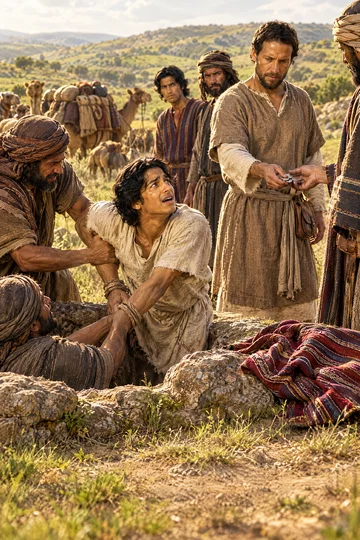
All the brothers agreed and were content with Judah's proposal, drew Joseph up out of the pit, and heartlessly sold him as a slave despite his desperate pleas for compassion.1SP 129.1ST Dec 18, 1879PP 211.3–4PP 213.1–21SP 129.2
Though some felt pity, fear of the others kept them silent; they hardened their hearts, thinking they had gone too far to turn back and fearing Joseph would tell their father how they had treated him.1SP 129.2
Their appeal to kinship spared Joseph from immediate death but still betrayed him into slavery and took him from his home.1SP 129.1PP 211.3–4PP 213.1–2
Simeon and Levi were the most guilty of the brothers in the crime of selling Joseph, and their violence against Joseph together with the Shechemites is connected with Jacob's prophecy that they would be divided and scattered among Israel.PP 235.5–6
God overruled the very course they took to prevent his greatness to bring about what they meant should never happen: by being sold into Egypt Joseph gained dominion over them and became a savior to his father's family, yet that good outcome did not lessen the guilt of the brothers and their crime remained culpable.ST Feb 5, 1880SG3 174.2–176.1
The sale illustrates Christ, who was sold to His bitterest enemies by one of His own disciples.SG3 174.2–176.1
As part of Joseph's story, the verse shows one who was virtuous and marked by goodness and strength of purpose yet was maligned, persecuted, and treated like a criminal, whose suffering for doing right did not mean God had forsaken him, for God gave him signal victories.Lt 10, 1879, par. 4–9
Sources
Pioneers and periodicals
48 sources
Judah proposed selling Joseph to the Ishmaelite traders for profit rather than killing him with their own hands or leaving him to perish in the pit, pleading that he was their brother and their flesh, and his brethren agreed to the plan.ST Mar 17, 1887ST Apr 2, 1894ST Oct 27, 1898ST Oct 27, 1898ST Oct 2, 1901 The choice grew out of envy ripening into hatred and murderous intent over their father's favoritism, the costly coat, the evil report, and the dreams of exaltation, so that even Judah's plea for a more humane course was selfish to have Joseph removed lest he rule over them.ST Jan 3, 1911ST Oct 27, 1898STST Oct 2, 1901ST Oct 2, 1901 God overruled their anger, ambition and jealousy to bring about His own purpose, making what was meant to prevent Joseph's exaltation the first step toward his rulership in Egypt and his becoming a savior of his family and preserver of life in famine.ST Feb 5, 1880ST Jun 11, 1894ST Jan 16, 1912ST Jan 21, 1913ST Nov 29, 1905 That overruling goodness did not lessen their guilt, for in selling their frightened and pleading brother they betrayed the love and protection he had a right to expect as kin.ST Feb 5, 1880ST Jan 22, 1880ST Apr 2, 1894 Through envy the brethren's sale of the righteous Joseph prefigured Christ delivered to death through envy, after the pattern of Cain and of him born after the flesh persecuting him born after the Spirit, warning all to suppress every rising of envy, hatred and malice.ST Dec 25, 1901RH Jun 8, 1916ST Nov 29, 1905ST Apr 20, 1888RH Jan 9, 1855
Words and Setting
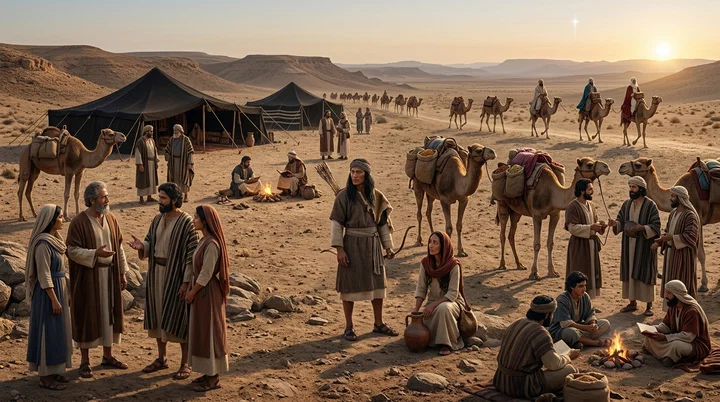
Judah proposed to his brothers that they sell Joseph to the Ishmaelite caravan passing from Gilead toward Egypt instead of killing him, urging that they let not their own hand be upon him and shed no blood because he was their brother and their own flesh, and his brethren hearkened and were content and agreed to the plan.ST Mar 17, 1887ST Apr 2, 1894ST Oct 27, 1898ST Oct 2, 1901ST Apr 2, 1894 The proposal came after the conspiracy to kill him and Reuben's entreaty to cast him into the pit, while the brothers were eating bread after thrusting Joseph into the dark pit and saw the company approaching.ST Dec 18, 1879ST Oct 27, 1898 Judah, beginning to regret what had been done, suggested sale for money as better than leaving Joseph to perish or starve in the pit, so that he would be removed entirely from them.ST Dec 18, 1879ST Oct 27, 1898ST Oct 2, 1901
The sale was carried out at Dothan, where the brothers were pasturing their flocks and herds, by drawing Joseph up out of the empty pit with no water in it.ST Mar 17, 1887ST Apr 20, 1888ST Aug 25, 1898ST Oct 19, 1904 He was sold to Ishmaelite or Midianite traders for twenty pieces of silver, who took him as a slave toward Egypt.ST Mar 17, 1887ST Apr 20, 1888 That journey to Egypt took place more than nine hundred years before the events at Dothan involving Elisha. The caravan's route from Gilead to Egypt made the sale and the journey possible.ST Aug 25, 1898
The verse means a deliberate choice of sale for profit instead of murder and concealment of blood.ST Oct 27, 1898 The brothers readily accepted it because they instinctively shrank from killing Joseph or leaving him to starve in the pit.ST Oct 2, 1901 The Ishmaelites to whom he was sold were slave-trafficking merchants, willing to buy Joseph though he was their own kin.ST Feb 20, 1901 They are described as wild, roving desert tribes who live by merchandise and robbery and deal harshly with others.ST Feb 20, 1901
The verse belongs to the Genesis story that carries Hebrew history from Mesopotamia to Egypt.ST Nov 20, 1884 The whole color of that story agrees with Egypt at that time, as illustrated by monuments and by pictures and accounts of slaves with Hebrew features working at brick-making as the Hebrews worked.ST Nov 20, 1884 Pithom, one of the two store cities the children of Israel built, was found bearing the name of Pithom on an inscription, with chief buildings of great brick storehouses without windows or doors for preserving grain for use in war or famine, while Egyptian annals fail for history because kings do not report their disasters, yet their pictures and stories and sacred books illustrate the habits and customs and the land and people of the Nile behind the Bible accounts.ST Nov 20, 1884 The same Joseph narrative in Genesis 37 also appears in the Koran as an expanded story rather than the simple Scripture narrative.RH Jan 11, 1912
Motives and Guilt
The choice to sell Joseph rather than kill him grew out of hatred and jealousy fed by Jacob's favoritism and partiality, by the rivalries of his households through having more than one wife, by Joseph's evil report of his brothers, by his father's love shown in the costly coat, and by his dreams of the sheaves and of the sun, moon, and stars.ST Jan 3, 1911ST Oct 27, 1898ST That envy grew from corrupt hearts and not because Joseph had done wrong, for he is presented as having no recorded evil and as living in the fear of God, loved more by his father because he was more worthy of that love.ST Apr 20, 1888 Their jealousy brought a sad experience and unhappiness within the family, and Joseph was taken to Egypt, where his integrity and purity later brought hardship and discipline before God raised him to power.ST Jan 3, 1911ST Aug 1, 1916
Envy in the brothers grew into hatred and finally to murder, for envy is pain felt at superior excellence or happiness, hatred is the offspring of envy, and malice is the offspring of hatred.ST Mar 17, 1887RH Jan 9, 1855 It is a cruel trait that can lead the sinful heart to violence, turning first hatred and then action against Joseph to get rid of him.ST Dec 25, 1901 These malignant dispositions grow by imperceptible degrees until escape is impossible.RH Jan 9, 1855 Their conduct is set down as the fruit of envy.
Joseph was more obedient than his brethren to his father's righteous teachings, treasuring his instructions and with integrity of heart loving to obey God and fearing the Lord.ST Mar 17, 1887 Because his hatred of sin was such that he could not endure to see his brethren sinning against God, he was grieved at their wrong conduct, meekly entreated them to pursue a righteous course and leave off their wicked acts, and laid the matter before his father hoping his authority might reform them.ST Mar 17, 1887 That exposure of their wrongs embittered and enraged them against him, and having observed their father's strong love for Joseph they envied him.ST Mar 17, 1887 His hostility from them followed the same pattern as Cain's, for the wicked persecute the righteous because their own works are evil and their brother's are righteous, proving that he that is born after the flesh persecutes him that is born after the Spirit.RH Jun 8, 1916ST Apr 20, 1888
Judah's appeal to brotherhood and flesh as a plea for apparent mercy proposed sparing Joseph's life by selling him into slavery as a more humane alternative to killing him.ST Oct 2, 1901ST Apr 2, 1894 The claim that he was their brother did not make the deed innocent, because murderous envy was already in their hearts and they had marked him for death.ST Oct 2, 1901 The appeal to leniency concealed envy and served to ease a guilty conscience.ST Oct 2, 1901 The choice still came from envy and selfishness to have Joseph removed permanently so he could not rule over them.ST Oct 2, 1901ST Apr 2, 1894
Despite his pleading for his life, Joseph was heartlessly sold while frightened and heartbroken, suffering anguish without success as his brothers finished their meal.ST Jun 11, 1894ST Feb 18, 1913 He was taken away from home, marking the beginning of his suffering in Egypt without knowing it would serve God's wise purpose.ST Feb 18, 1913 The act caused Jacob mourning for days, weeks, months, and years, and those long years of sorrow were only part of the fruits of their hatred.
The verse is one step in a downward course from envy to hatred to a scheme of murder to deceit to fearful expectation of wrath, a crime against Joseph that had a chief instigator.ST Oct 27, 1898 The trait that moved the brethren was envy, verifying that where envying and strife is there is confusion and every evil work, and envy is a work of the flesh with adultery, hatred, murders and such like, whose doers shall not inherit the kingdom of God.ST Apr 20, 1888 Their sin-blinded minds had fallen far from appreciating God, and sin perverted their judgment and led them to sell him and brought the family into Egypt.RH Nov 17, 1904 In agreeing to sell rather than shed his blood, even while using kinship as a reason not to lay hands on him, they betrayed the love and protection Joseph had a right to expect from his brothers as brother and kin.
Providence Overruling Evil
The sale instead of murder shows human anger, ambition and jealousy plotted against God's providence, yet God overrules evil for good and guides a person to his intended end even by a winding and difficult route.ST Jun 11, 1894ST Jan 16, 1912RH Jan 19, 1860 What was plotted and planned in hatred against a fellow man is turned to that man's best good and to good for God's people, and Judah's proposal to spare life by selling into slavery, made from envy and selfishness to remove Joseph so he could not rule over them, unknowingly helped bring about the very outcome they feared.ST Nov 29, 1905ST Apr 2, 1894ST Nov 29, 1905 Joseph could not see the outcome when he pleaded for his life and was taken toward Egypt.ST Jun 11, 1894ST Nov 29, 1905
What the brothers did to prevent exaltation and stop the dreams became the stepping-stone to that very thing they desired to prevent, laying the first stone of the steps that led him up and up until he became ruler in Egypt.ST Nov 29, 1905ST Nov 29, 1905 The selling was not good fortune but part of the great scheme for Joseph's life, for there are no fortunate or unfortunate incidents in God's plan, and Joseph had faith in God that all would come out right in the end in God's own good time.ST Nov 29, 1905 God overruled the sale for Joseph's good, giving him blessings far beyond his expectations, just as happened with Moses in bondage.RH Feb 12, 1857
Being sold into Egypt led to Joseph's dominion over his brothers and his becoming a savior to his family and a means of blessing, taken ahead of his family to later provide food and save lives during famine and the seven lean years.ST Feb 5, 1880 The Lord was preparing him to preserve the holy Seed, keeping the boy through prison to become a ruler and to preserve the lives of God's people, which set the background for Jacob's household moving to Egypt during famine.ST Jan 21, 1913RH Nov 19, 1908 Taken away from home while his brothers finished their meal, frightened and heartbroken and pleading without success, he did not know that being taken to Egypt would serve God's wise purpose and mark the beginning of suffering under God's care later used in a great deliverance.ST Feb 18, 1913
God's use of the deed for good did not lessen guilt and culpability, for the crime remained culpable.ST Feb 5, 1880 Their later sorrow over their past wrong course showed they recognized their cruelty to him as sin, and they feared they themselves would suffer slavery as punishment.ST Jan 22, 1880 God guided and saved Joseph in his youth, preserving his life through being sold by angelic guard, proving that God keeps children and youth who make Him their friend and trust Him in time of trouble.RH Nov 24, 1874 His integrity and purity in Egypt later brought hardship and discipline before God raised him to power, growing out of the hatred and jealousy caused by Jacob's favoritism and rivalries between his families.ST Jan 3, 1911
The sale to Ishmaelite merchants changed the course of the plans Joseph had made for his future.RH Jan 27, 1916 His exile later became a means of preserving the children of Israel during the seven lean years, as Roger Williams's exile became consequential for the New England settlements.RH Jul 30, 1908 Joseph also became the means of saving the soul of the man who sold him.RH Feb 12, 1857
Type and Scriptural Connections
Joseph sold by his brothers through envy foreshadowed Christ delivered to death through envy by his own brethren.ST Dec 25, 1901RH Jan 9, 1855 The envy that moved them is pain felt at the sight of superior excellence or happiness, with hatred as the offspring of envy and malice as the offspring of hatred, growing by imperceptible degrees until escape becomes impossible.RH Jan 9, 1855 A still greater example of the same envy, hatred and malice is the Jews delivering Jesus Christ, in whom all excellence met, to be crucified.RH Jan 9, 1855 The lesson is to suppress every rising of envy, hatred and malice and instead to seek righteousness and seek meekness so there may be hiding in the day of the Lord's anger.RH Jan 9, 1855
The hostility of the brothers followed the same pattern as Cain's, for they opposed a brother whose works were righteous while their own were evil.ST Apr 20, 1888 It proves that he that is born after the flesh persecutes him that is born after the Spirit, and that the wicked persecute the righteous because their own works are evil and their brother's are righteous.RH Jun 8, 1916 Joseph feared God and has no recorded evil, and his being sold sprang from envy grown out of corrupt hearts rather than from any wrong he had done.RH Jun 8, 1916ST Apr 20, 1888 His father loved him more than his brothers because he was more worthy of that love.ST Apr 20, 1888
Though rejected by his brothers and removed from their midst as an unwanted man, Joseph was later entrusted with a divine mission and became a means of blessing.ST Nov 22, 1899 Despite that rejection God afterward made him a ruler in Egypt and a saviour of life.ST Nov 22, 1899ST Jul 21, 1909
The trait that moved the brethren was envy, the cruel trait that can lead the sinful heart to violence.ST Dec 25, 1901ST Apr 20, 1888 The verse means the wicked plot against the just, when after casting Joseph into an empty pit with no water they disposed of him by selling him to the Ishmaelites for twenty pieces of silver by which he was brought into Egypt.ST Apr 20, 1888 It verifies that where envying and strife is there is confusion and every evil work.ST Apr 20, 1888 Envy is a work of the flesh along with adultery, hatred, murders and such like, and they which do such things shall not inherit the kingdom of God.ST Apr 20, 1888
Doctrine and Life Application
The selling proposed here stands alone in the patriarchal records as the only selling of a human being found there.RH Oct 1, 1861 The brothers bitterly reprobated it and soon repented of it, which shows the deed was condemned as wrong rather than sanctioned.RH Oct 1, 1861 Servants are frequently bought but never sold, and that contrast proves patriarchal servants were free men and women and not chattel slaves, so chattel slavery was not an institution of patriarchal society.RH Oct 1, 1861
The experiences of Joseph contain underlying principles designed to guide dealings with the various contingencies of life.ST Nov 29, 1905 Those practical lessons are to be learned strikingly and familiarly for the good of the soul and for counseling others who pass through similar difficulties, with the Bible as the trustworthy guidebook to the very end.ST Nov 29, 1905 What the brothers did in hatred, casting him into the pit and selling him to prevent his exaltation, became the stepping-stone to the very thing they desired to prevent, laying the first stone of the steps that led him up and up until he became ruler in Egypt.ST Nov 29, 1905 Anyone harboring ill-feelings or wicked designs should therefore pause and reflect that God may turn what is plotted and planned in hatred against a fellow man to that man's best good.ST Nov 29, 1905
Envy is pain felt at the sight of superior excellence or happiness, hatred is the offspring of envy, and malice is the offspring of hatred.RH Jan 9, 1855 The conduct of the brethren in selling Joseph is a striking example of these malignant dispositions growing by imperceptible degrees until escape is impossible, and a still greater example of the same envy, hatred and malice is the delivering of Jesus Christ, in whom all excellence met, to be crucified.RH Jan 9, 1855 The lesson is to suppress every rising of envy, hatred and malice, and rather to seek righteousness and seek meekness that there may be hiding in the day of the Lord's anger.RH Jan 9, 1855 The selling was not good fortune but part of the great scheme for Joseph's life, for there are no fortunate or unfortunate incidents in God's plan, and Joseph had faith that all would come out right in the end in God's own good time.ST Nov 29, 1905
Reuben's part in the cruel treatment shows the weakness of those who fail firmly to take their stand for right when opportunity offers.ST Nov 29, 1905 If he had shown firmness in protesting against it he might have shared the fate of Joseph and had part with him in the glorious vindication of right and principle afterwards brought to light.ST Nov 29, 1905 Joseph did not complain when his father sent him on an errand despite knowing of his brothers' ill feeling, and his helpfulness as a child continued into later trustworthy service in Egypt and eventual leadership.ST Apr 29, 1908 The boy Joseph was a child used by God, for though envied by his brethren and sold into Egypt he was kept through prison to become a ruler and to preserve the lives of God's people.ST Apr 29, 1908RH Nov 19, 1908
The story of Joseph is wholesome and nutritious food for the mind and soul, part of the word of God filled with the principles of life and light and health.RH Jun 12, 1900 It strengthens instead of stimulating craving desires and perverted appetites.RH Jun 12, 1900 A pampered mental and moral appetite rejects it as too tame and tasteless, too dry and uninteresting, preferring cheap trashy literature seasoned with moral pepper and spiritual mustard.RH Jun 12, 1900
Sources