Genesis 37:24
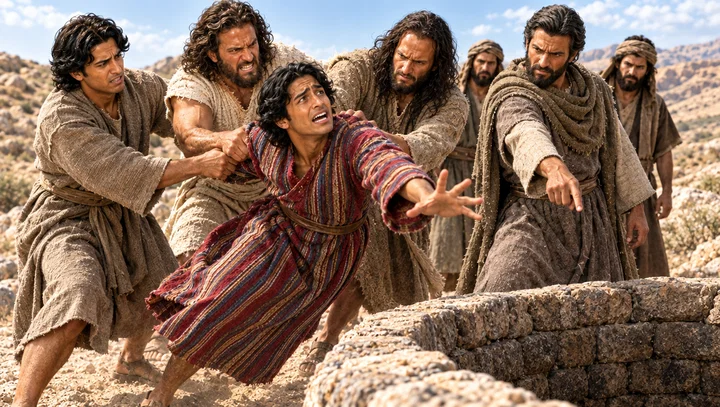
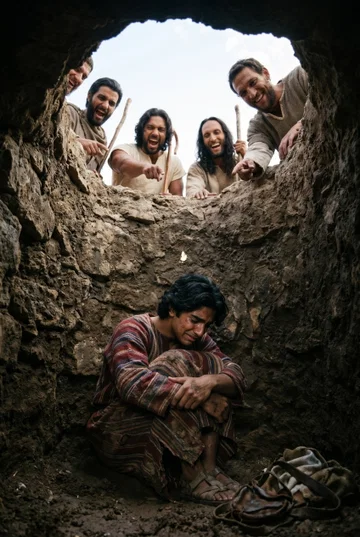
And they took him, and cast him into a pit: and the pit was empty, there was no water in it.
Translations
American King James Version, King James Version
And they took him, and cast him into a pit: and the pit was empty, there was no water in it.
and they took him, and cast him into a pit: and the pit was empty, there was no water in it.
And they took him, and cast him into a pit: and the pit was empty; there was no water in it.
Revised Version, American Standard Version
and they took him, and cast him into the pit: and the pit was empty, there was no water in it.
and take him and cast him into the pit, and the pit [is] empty, there is no water in it.
and they took him and cast him into the pit; now the pit was empty — there was no water in it.
and took him, and cast him into the pit, but the pit, was empty, there was in it no water.
Berean Standard Bible, Majority Standard Bible
and they took him and threw him into the pit. Now the pit was empty, with no water in it.
and they took him, and threw him into the pit. The pit was empty. There was no water in it.
And they took him and put him in the hole: now the hole had no water in it.
And they tooke him, and cast him into a pit, and the pit was emptie, without water in it.
Douay-Rheims (Challoner revision)
And cast him into an old pit, where there was no water.
Pictures
Cross-references
- Genesis 50:20
But as for you, ye thought evil against me; but God meant it unto good, to bring to pass, as it is this day, to save much people alive.
Joseph says God turned his brothers’ evil intent toward good and saving many lives.
- Genesis 37:28
Then there passed by Midianites merchantmen; and they drew and lifted up Joseph out of the pit, and sold Joseph to the Ishmeelites for twenty pieces of silver: and they brought Joseph into Egypt.
Joseph is lifted from the pit and sold into Egypt.
- Acts 7:9
And the patriarchs, moved with envy, sold Joseph into Egypt: but God was with him,
Envy moved Joseph’s brothers to sell him into Egypt.
- Genesis 37:11
And his brethren envied him; but his father observed the saying.
Envy over Joseph’s dreams led his brothers to plot against him.
- Genesis 37:4
And when his brethren saw that their father loved him more than all his brethren, they hated him, and could not speak peaceably unto him.
Jacob’s preference for Joseph stirred his brothers’ hatred.
- Amos 6:6
That drink wine in bowls, and anoint themselves with the chief ointments: but they are not grieved for the affliction of Joseph.
Both texts show indifference to Joseph’s affliction.
- Genesis 37:20
Come now therefore, and let us slay him, and cast him into some pit, and we will say, Some evil beast hath devoured him: and we shall see what will become of his dreams.
The brothers’ plot to cast Joseph into a pit unknowingly served God’s purpose.
- Genesis 42:21-22
And they said one to another, We are verily guilty concerning our brother, in that we saw the anguish of his soul, when he besought us, and we would not hear; therefore is this distress come upon us.
The brothers connect their present distress with their cruelty to Joseph.
- Genesis 42:6
And Joseph was the governor over the land, and he it was that sold to all the people of the land: and Joseph’s brethren came, and bowed down themselves before him with their faces to the earth.
Joseph’s brothers bow before him, fulfilling his dreams despite casting him into a pit.
- Genesis 37:17-18
And the man said, They are departed hence; for I heard them say, Let us go to Dothan. And Joseph went after his brethren, and found them in Dothan.
Joseph follows his brothers to Dothan, where they see him coming.
- Jeremiah 38:6
Then took they Jeremiah, and cast him into the dungeon of Malchiah the son of Hammelech, that was in the court of the prison: and they let down Jeremiah with cords. And in the dungeon there was no water, but mire: so Jeremiah sunk in the mire.
Jeremiah was cast into a waterless pit for his integrity.
- Genesis 41:40-41
Thou shalt be over my house, and according unto thy word shall all my people be ruled: only in the throne will I be greater than thou.
Joseph rises from suffering to rule over Egypt.
Commentary
Each commentary is drawn from primary sources: the writings of Ellen G. White and Adventist pioneers and periodicals. Each commentary is separate. Its own words are not a quotation; follow the references to read the source passages.
Ellen G. White
9 sources
The pit at Dothan into which Joseph was cast was empty, with no water in it, a deep and dark pit with no way for him to escape, and this casting was part of the events that led to his being taken toward Egypt as a slave.1SP 129.1SG3 141.1–2ST Dec 18, 1879PP 211.2PP 213.1–2 He had arrived glad and joyful at finding his brothers, though weary and hungry from his journey, but instead of welcome he was met with scorn, abuse and terrifying looks.SG3 141.1–2ST Dec 18, 1879SG3 140.2 He was immediately seized and stripped of his hated coat amid taunting remarks, and he expected to be killed at once.ST Dec 18, 1879
Helpless in the hands of pitiless men who were deaf to anguish, he entreated for his life to no avail.ST Dec 18, 1879 Even as he pleaded he was thinking of his home and father and the parting blessing, and of his father's sorrow and his murderers' guilt.ST Dec 18, 1879 He was thrust into the pit and left there without food or rest to perish from hunger by a lingering, slow death of starvation, while his brothers sat down to eat their meal.1SP 129.1SG3 141.1–2ST Dec 18, 1879PP 211.2SG3 140.2
Though virtuous and strong in purpose, he was maligned, persecuted and treated as a criminal.Lt 10, 1879, par. 4–9 Yet he was under the eye of God, and his cries of distress reached God's throne.ST Dec 18, 1879 His suffering did not mean God had forsaken him, and God brought signal victories from it.ST Dec 18, 1879Lt 10, 1879, par. 4–9
Judah was troubled by the brothers' cruelty and Joseph's helplessness and regretted the deed, thinking he would die slowly there of starvation.1SP 129.1SG3 141.1–2ST Dec 18, 1879SG3 140.2 He proposed selling him for money as better than leaving him to perish, since he was their own flesh and could be removed entirely from them.ST Dec 18, 1879 The brothers then drew him up out of the pit and heartlessly sold him as a slave.1SP 129.1ST Dec 18, 1879SG3 140.2PP 213.1–2
The brothers had first intended to kill him and then sold him to prevent his rise and becoming greater than themselves, to be rid of his dreams and make their fulfillment impossible.ST Feb 5, 1880SG3 174.2–176.1 God overruled the very course they took to bring about what they meant never should happen, that Joseph should have dominion and authority over them.ST Feb 5, 1880SG3 174.2–176.1 By being sold into Egypt he became savior to his father's family, yet God's control of events for His own glory and the good of man did not lessen their guilt.ST Feb 5, 1880SG3 174.2–176.1
Joseph's experience illustrates Christ: as Joseph's enemies sought to prevent his authority but his being sold made him the redeemer of his family, so Christ's enemies sought to prevent His authority but His death made Him the Redeemer of mankind.ST Feb 5, 1880SG3 174.2–176.1 Christ came to His own and His own received Him not, and He was sold to His bitterest enemies by one of His own disciples.SG3 174.2–176.1 His murder by them made Him Redeemer of mankind, Savior of the fallen race and ruler over the whole world, while their crime remained heinous even as God brought good through it.ST Feb 5, 1880SG3 174.2–176.1
Sources
Pioneers and periodicals
43 sources
After stripping him of his coat of many colors his brothers threw Joseph alive into an empty pit with no water, one of the covered rock-cut cisterns of that country from which escape without help was impossible, leaving him helpless and trapped to a lingering death.ST Mar 17, 1887ST Oct 27, 1898ST Oct 27, 1898ST Oct 2, 1901 Reuben had urged this course to shed no blood and spare him from being killed at the moment, intending to rescue him secretly and send him home to his father, while the rest agreed to let him die there rather than kill him directly and then heartlessly sat down to eat.ST Mar 17, 1887ST Oct 27, 1898ST Oct 27, 1898ST Apr 2, 1894ST Oct 2, 1901 The deed shows envy grown into hatred and finally into murder, springing from Jacob's unwise favoritism toward the son of his old age and from Joseph's dreams of pre-eminence and his faithful reproof of their wrongdoing, though he himself had done nothing wrong to bring on their hatred.ST Mar 17, 1887ST Jan 3, 1911ST Oct 2, 1901ST Apr 20, 1888 God overruled their wrath and jealousy to accomplish His own purpose, making the pit the first stepping-stone that led Joseph upward until he became ruler in Egypt and savior of his family in famine, though this overruling did not lessen their guilt.ST Feb 5, 1880ST Jan 16, 1912ST Nov 29, 1905RH Nov 19, 1908ST May 11, 1876 In this Joseph is a type of Christ, whom His brethren likewise delivered to death through envy, and whose rejection became the means of His becoming the Redeemer of mankind.ST Feb 5, 1880ST Dec 25, 1901RH Jan 9, 1855
Pit, Place and Action
After stripping Joseph of his coat of many colors, his brothers cast him into a pit that was empty with no water in it.ST Oct 27, 1898ST Oct 27, 1898ST Oct 2, 1901 He was left there helpless and trapped, hungry and exposed to a lingering death.ST Mar 17, 1887ST Oct 2, 1901 The pit was the first step in the brothers' attempt to remove him.ST Apr 2, 1894
The dry pit was one of the covered cisterns common in that country, cut from rock or dug in earth and plastered, with only an opening in the top.ST Oct 2, 1901 Confined in such a place, escape without help was impossible.ST Oct 2, 1901
Reuben had urged putting Joseph into the pit in the wilderness to shed no blood, and his proposal spared Joseph from being killed at that moment.ST Mar 17, 1887ST Oct 27, 1898ST Oct 27, 1898ST Oct 2, 1901 Reuben intended to deliver him by taking him out secretly and restoring him and sending him home to his father.ST Mar 17, 1887ST Oct 27, 1898ST Oct 27, 1898ST Oct 2, 1901ST Oct 2, 1901
The brothers had agreed to throw him in alive and let him die there rather than kill him directly.ST Oct 2, 1901 Then they heartlessly sat down to eat while he was trapped there, showing their satisfaction at the prospect of being rid of him.ST Apr 2, 1894ST Oct 2, 1901ST Apr 2, 1894
The deed was done at Dothan, where the brothers were tending their flocks.ST Aug 25, 1898ST Oct 19, 1904 Dothan's valley was suitable for grazing, so the brothers could see Joseph coming from a distance, and it lay on the caravan route from Gilead to Egypt.ST Aug 25, 1898 The place was still called Joseph's Pit.ST Aug 25, 1898
There Joseph was afterward drawn up out of the pit and heartlessly sold as a slave and taken toward Egypt.ST Dec 18, 1879 The buyers were Midianite traders and Ishmaelite traders, who carried him to Egypt more than nine hundred years before Elisha's time.ST Oct 19, 1904 This began the path that eventually led Joseph to provide food for his brothers and preserve their lives during famine.
Judah, regretting leaving Joseph to perish, proposed sale for money as better than leaving him to perish.ST Dec 18, 1879 His reason was that Joseph was their own flesh and by sale could be removed entirely from them.ST Dec 18, 1879
Envy Into Hatred
The casting into the pit shows envy grown into hatred and finally into murder.ST Mar 17, 1887 That hatred turned into persecution when the brothers seized him, and the persecuting act was its bitter fruit. Envy is pain felt at the sight of superior excellence or happiness, hatred is the offspring of envy, and malice is the offspring of hatred.RH Jan 9, 1855 Those malignant dispositions grow by imperceptible degrees until men are engulfed beyond escape.RH Jan 9, 1855 The brethren went downward from envy to hatred to a scheme of murder to deceit to a fearful expectation of wrath to be visited upon them.ST Oct 27, 1898
That downward course was a crime against Joseph led by a chief instigator.ST Oct 27, 1898 It develops the divine plan concerning the children of Israel foretold for a sojourn in a strange land.ST Oct 27, 1898 Their envy and hatred grew from Jacob's loving but unwise favoritism that made Joseph, the son of his favorite wife and the child of his old age, the petted child with too little affection shown to the other sons.ST Jan 3, 1911STST Oct 2, 1901 It grew also from the jealousies between Jacob's wives and between their families, showing the evils of plurality of wives.ST Jan 3, 1911ST The whole is set down as the crime among Jacob's sons linked to Jacob's mistakes and to the family's partiality, jealousy, envy, and low moral standards.ST
Their envy grew further from Joseph's dreams of future pre-eminence and from his reports of their wrongdoing.ST Jan 3, 1911ST Oct 2, 1901 Those dreams were later fulfilled when his brethren unknowingly and humbly bowed before him in Egypt.ST Jan 3, 1911 Yet Joseph did nothing wrong to bring on the hatred, and tale-bearing did not cause the discord.ST Apr 20, 1888 He is one of the few Bible characters concerning whom no evil is recorded, loved more by his father because he was more worthy of love, not born without faults but having the fear of God before his eyes.ST Apr 20, 1888 Envy grows only in a corrupt heart, out of men's own wicked hearts, and the same thing moved them that moved Cain to kill Abel, that their own works were evil while his were righteous.ST Apr 20, 1888
The brothers first attempted to slay him and then sold him as a slave into Egypt.ST Jan 3, 1911ST Nov 29, 1905ST Nov 29, 1905 They cast him into the pit out of hatred to prevent the very advancement they feared.ST Nov 29, 1905ST Nov 29, 1905 That act became the first stone of the steps that led him up until he became ruler in Egypt, a stepping-stone to what they desired to prevent.ST Nov 29, 1905ST Nov 29, 1905 Their cruel treatment caused their father to mourn for days, weeks, months and years, with those long years of sorrow being only part of what their hatred produced.
Joseph's Innocence and Suffering
Joseph was more obedient than his brothers to his father's righteous teachings, treasuring his instructions and loving to obey God with integrity of heart.ST Mar 17, 1887RH Oct 9, 1900 He was truthful, noble, spirited, dared to do right, and had the fear of God before his eyes.ST Apr 20, 1888RH Oct 9, 1900 He is one of the few Bible characters concerning whom no evil is recorded, though he was not born without faults.ST Apr 20, 1888 His father loved him more than the rest because he was more worthy of love.ST Apr 20, 1888 As a young, homesick lad and innocent dreamer he hungered for the brotherly love that was his by right but was withheld by his brothers and given only by his aged father.
His hatred of sin was such that he could not endure to see his brethren sinning against God, so he was grieved at their wrong conduct, meekly entreated them to pursue a righteous course and leave off their wicked acts, and laid the matter before his father hoping his father's authority would reform them.ST Mar 17, 1887 His goodness and his exposure of their wrongs only embittered and enraged them against him, and seeing their father's strong love for him made them envious.ST Mar 17, 1887 Though older and stronger and bound by age and strength to be his guardians, they envied and hated him and greeted him cruelly with Behold, this dreamer cometh.ST Mar 17, 1887 He made a long journey from Hebron to Shechem to visit his brothers and bring them a message from home, wandering lost and bewildered in the fields to find them, hoping their stony hearts would be melted. He arrived glad and joyful at finding them only to meet scorn, abuse and terrifying looks, being immediately seized and stripped of his hated coat with taunting remarks, expecting to be killed at once.ST Dec 18, 1879
Helpless in the hands of pitiless men, he thought of his home and father and the parting blessing and of his father's sorrow and his murderers' guilt.ST Dec 18, 1879 He entreated, wept, and cried for mercy for his life to no avail, pleading while thrown into the empty pit with no water, while they were deaf to anguish and ignored him.ST Dec 18, 1879ST Jun 11, 1894ST Apr 2, 1894 Yet he was under the eye of God with his cries of distress reaching God's throne.ST Dec 18, 1879 He was frightened and heartbroken when thrust into the dark pit, and by treachery was consigned to years of bondage and imprisonment, suffering cruelly despite his willingness to serve his family.ST Feb 18, 1913ST Apr 29, 1908
His path toward honor began with this hardship in the empty pit before later reaching the palace.ST Feb 28, 1884 As a boy and child used of God he was guided and saved by God in his youth and not forsaken in affliction.ST Feb 18, 1913RH Nov 19, 1908RH Nov 24, 1874 God remained with him through his affliction and later brought deliverance and joy from his deepest sorrow.ST Feb 18, 1913
God's Overruling Providence
The pit belongs to the history that proves whatever God has intended a person for He can be safely trusted to bring him to, for He may lead round about but He will guide right.RH Jan 19, 1860ST Nov 29, 1905 There are no fortunate or unfortunate incidents in God's plan, and the cruel casting into the pit was part of His great plan for Joseph's life.ST Nov 29, 1905 Joseph could not see the purpose as he went through it, yet he had faith in God that all would come out right in the end in God's own good time.ST Nov 29, 1905
The pit was the first step in the brothers' attempt to remove Joseph after stripping off his coat, leaving him there while they sat down to eat and he pleaded for his life.ST Jun 11, 1894ST Apr 2, 1894 Their envy had hardened their hearts and their plotting against God's providence was evil, yet their actions unknowingly helped bring about God's purpose for him and God would ultimately overrule it for good.ST Jun 11, 1894ST Apr 2, 1894 God overrules human wrath, ambition, and jealousy to accomplish His purposes, and Joseph's early suffering was part of the outworking of His providence for the faithful.ST Jan 16, 1912 What men plot and plan in hatred against their fellows He turns to the victims' best good, making the pit a stepping-stone and laying the first stone of the steps that led Joseph up and up until he became ruler in Egypt, so that the act meant to prevent the very advancement they feared became the stepping-stone to it.ST Nov 29, 1905ST Nov 29, 1905 His experience shows that trials can become blessings, for God lifted him from that pit to become a ruler over a mighty nation and made his name an enduring glory.ST May 11, 1876
The brothers' wicked act became the means of God's gradual leading of Joseph toward his appointed work in Egypt, beginning the path that led through betrayal and sale as a slave and being taken toward Egypt to providing food for his brothers and preserving their lives during famine.ST Nov 29, 1905ST Jul 21, 1909 Though intending to kill him and then selling him instead, they ultimately brought about his authority over them and his becoming a savior to his family and a blessing through a divine mission, by which as a boy used of God he preceded his family into Egypt and preserved the lives of God's people.ST Feb 5, 1880RH Nov 19, 1908ST Nov 23, 1904ST Nov 22, 1899 God's overruling of events did not lessen their guilt, and their crime remained heinous even as God brought good through it, just as the enemies of Christ sought to prevent His authority but His death made Him the Redeemer of mankind.ST Feb 5, 1880 The brothers later remembered their cruel treatment with sorrow and guilt, and feared their own suffering as slaves might be punishment for what they had done to him.ST Jan 22, 1880
God remained with Joseph in affliction and was not forsaking him when frightened and heartbroken in the pit, afterward bringing deliverance and joy from his deepest sorrow.ST Feb 18, 1913ST Nov 29, 1905 The act develops the divine plan concerning the children of Israel foretold for a sojourn in a strange land, even as it marked the downward steps of the brethren from envy to hatred to a scheme of murder to deceit to a fearful expectation of wrath to be visited upon them under a chief instigator.ST Oct 27, 1898 Reuben's part shows the weakness of those who fail firmly to take their stand for right when opportunity offers, because he did not firmly protest the cruelty, and if he had stood firm he might have shared Joseph's fate and also shared in the glorious vindication of right and principle afterward brought to light in him.ST Nov 29, 1905
Christ and Scripture Connections
Joseph was beloved by his father, hated by his brothers, and sold into bondage, and envy is the lesson of his story. His early life turned on his brothers' envy, which led to his sale as a slave to the Ishmaelites. They cast him into the empty pit with no water as part of their betrayal, moved by envy to sell him into Egypt.ST Dec 25, 1901 In this he is a type of Christ, whose brethren delivered Him to death through envy just as Joseph's brothers betrayed him from envy and sold him into Egypt.ST Dec 25, 1901
His brothers tried to prevent his rise by intending to kill him and then selling him instead, yet their deed led at last to his authority over them and his becoming a savior to his family.ST Feb 5, 1880 God's overruling of events to bring good through it did not lessen their guilt.ST Feb 5, 1880 So it is with Christ: His enemies sought to prevent His authority, but His death made Him the Redeemer of mankind, while their crime remained heinous even as God brought good through it.ST Feb 5, 1880 The seizing of Joseph and casting him into the pit displays envy, hatred, and malice growing by imperceptible degrees until men are engulfed beyond escape.RH Jan 9, 1855 Envy is pain felt at the sight of superior excellence or happiness, hatred is the offspring of envy, and malice is the offspring of hatred.RH Jan 9, 1855 That display stands alongside the still more striking display of the same envy, hatred, and malice by the Jews toward Jesus Christ, in whom all excellence met.RH Jan 9, 1855
The wayward and envious sons of Jacob persecuted Joseph, who feared God, when they cast him into the pit.RH Jun 8, 1916 This demonstrates the principle that he that is born after the flesh persecutes him that is born after the Spirit, and that the wicked persecute the righteous because the righteous are good.RH Jun 8, 1916ST Apr 20, 1888 Joseph did nothing wrong to bring on the hatred, and tale-bearing did not cause the discord; he is one of the few Bible characters concerning whom no evil is recorded.ST Apr 20, 1888 His father loved him more than the rest because he was more worthy of love, yet though not born without faults he had the fear of God before his eyes.ST Apr 20, 1888 His brothers thought of killing him and afterward sold him from envy that grew out of their own wicked hearts, for envy grows only in a corrupt heart.ST Apr 20, 1888 The same thing moved them that moved Cain to kill Abel, that their own works were evil while his were righteous.ST Apr 20, 1888
The verse is to be read keeping ever in mind the Promised Seed and the channels through which that Seed should come.ST The whole color of the Genesis story agrees admirably with Egypt at this time.ST Nov 20, 1884 Pictures and accounts show slaves with Hebrew features making bricks as the Hebrews made them.ST Nov 20, 1884 The newly found city Pithom bears its name on an inscription, with great brick store-houses without windows or doors for keeping grain for war or famine, matching the store cities the children of Israel built.ST Nov 20, 1884 No record of Bible miracles on the Egyptian monuments is to be expected, because kings do not report their disasters.ST Nov 20, 1884 Egyptians left little history but much light on habits and customs and on the land and people of the Nile in pictures and stories and pious books.ST Nov 20, 1884
Warnings and Encouragement
Envy is the lesson of Joseph's story, and his being seized and put into an empty pit without water illustrates the misery and harm jealousy can bring within a family.ST Aug 1, 1916 The malignant dispositions grew by imperceptible degrees until men are engulfed beyond escape, for envy is pain felt at superior excellence or happiness, hatred is its offspring, and malice is the offspring of hatred.RH Jan 9, 1855 The lesson is to suppress every rising of envy, hatred and malice, and instead to seek righteousness and seek meekness in order to be hid in the day of the Lord's anger.RH Jan 9, 1855 No one should harbor ill feelings or wicked designs against another, since what men plot in hatred against their fellows God turns to the victims' best good.ST Nov 29, 1905
Joseph came as a young, homesick lad and innocent dreamer hungry for the brotherly love that was his by right but was withheld by his brothers and given only by his aged father. He made a long journey from Hebron to Shechem to visit his brothers and bring them a message from home, wandering lost and bewildered in the fields to find them, hoping their stony hearts would be melted. His brothers, older and stronger and bound to be his guardians, envied and hated him, greeted him cruelly with Behold, this dreamer cometh, and by treachery consigned him to years of bondage and imprisonment. Their cruelty condemns every failure to manifest to one's own family the love and appreciation that are their rightful heritage.
His experience shows that trials can become blessings, for God lifted him from that pit to become a ruler over a mighty nation and made his name an enduring glory.ST May 11, 1876 He was truthful, obedient, noble, spirited, and dared to do right, and his story should be read by every fireside.RH Oct 9, 1900
Sources