Genesis 44:15
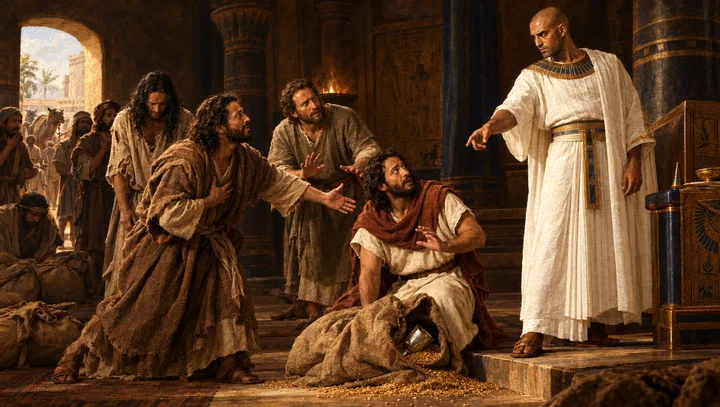
And Joseph said unto them, What deed is this that ye have done? wot ye not that such a man as I can certainly divine?
Translations
And Joseph said to them, What deed is this that you have done? know you not that such a man as I can certainly divine?
King James Version, KJV Cambridge Paragraph Bible
And Joseph said unto them, What deed is this that ye have done? wot ye not that such a man as I can certainly divine?
And Joseph said to them, What deed is this that ye have done? knew ye not that such a man as I can certainly divine?
Revised Version, American Standard Version
And Joseph said unto them, What deed is this that ye have done? know ye not that such a man as I can indeed divine?
and Joseph saith to them, 'What [is] this deed that ye have done? have ye not known that a man like me doth diligently observe?'
And Joseph said to them, What deed is this which ye have done? Did ye not know that such a man as I can certainly divine?
And Joseph said to them, What is this deed which ye have done? Know ye not that such a man as I, can even divine?
Berean Standard Bible, Majority Standard Bible
“ What is this deed you have done?” Joseph declared. “ Do you not know that a man like me can surely divine the truth?”
Joseph said to them, “ What deed is this that you have done? Don’t you know that such a man as I can indeed do divination?”
And Joseph said, What is this thing which you have done? had you no thought that such a man as I would have power to see what is secret?
Then Ioseph sayd vnto them, What acte is this, which ye haue done? know ye not that such a man as I, can deuine and prophecie?
Douay-Rheims (Challoner revision)
And he said to them: Why would you do so? know you not that there is no one like me in the science of divining.
Pictures
Cross-references
- Genesis 37:5-11
And Joseph dreamed a dream, and he told it his brethren: and they hated him yet the more.
Joseph’s brothers’ bowing fulfills the dreams that provoked their envy.
- Genesis 45:1-5
Then Joseph could not refrain himself before all them that stood by him; and he cried, Cause every man to go out from me. And there stood no man with him, while Joseph made himself known unto his brethren.
Joseph’s test leads to self-revelation and forgiveness.
- Genesis 43:8-9
And Judah said unto Israel his father, Send the lad with me, and we will arise and go; that we may live, and not die, both we, and thou, and also our little ones.
Judah recalls pledging himself as surety for Benjamin.
- Genesis 41:54-56
And the seven years of dearth began to come, according as Joseph had said: and the dearth was in all lands; but in all the land of Egypt there was bread.
The famine brought Joseph’s brothers to Egypt to buy grain.
- Genesis 42:6-9
And Joseph was the governor over the land, and he it was that sold to all the people of the land: and Joseph’s brethren came, and bowed down themselves before him with their faces to the earth.
The brothers bowed before Joseph, who recognized them but was not recognized by them.
- Genesis 37:26-28
And Judah said unto his brethren, What profit is it if we slay our brother, and conceal his blood?
Judah admits the brothers’ guilt in selling Joseph into slavery.
Commentary
Each commentary is drawn from primary sources: the writings of Ellen G. White and Adventist pioneers and periodicals. Each commentary is separate. Its own words are not a quotation; follow the references to read the source passages.
Ellen G. White
6 sources
The verse belongs to Joseph's testing of his brothers after they came to Egypt for grain.PP 224.3–225.1 In that testing he accused them of being spies in order to test their character and to learn about their family.PP 224.3–225.1 The confrontation comes after the cup is found in Benjamin's sack, when Joseph asks what deed they have done.SG3 163.2–164.11SP 148.2–149.1PP 229.1–5ST Mar 31, 1887ST Jan 29, 1880 He then asks whether they did not know that a man such as he in his position could certainly divine.SG3 163.2–164.11SP 148.2–149.1PP 229.1–5ST Mar 31, 1887ST Jan 29, 1880
He questions them in this way to draw out an acknowledgment of their past wrongdoing and sin.SG3 163.2–164.11SP 148.2–149.1PP 229.1–5ST Mar 31, 1887ST Jan 29, 1880 His purpose is also to reveal their true feelings.SG3 163.2–164.11SP 148.2–149.1PP 229.1–5ST Jan 29, 1880 He never claimed actual power of divination.SG3 163.2–164.11SP 148.2–149.1PP 229.1–5ST Mar 31, 1887ST Jan 29, 1880 He only allowed them to think and believe that he could read the secret acts of their lives and uncover hidden deeds.SG3 163.2–164.11SP 148.2–149.1PP 229.1–5ST Mar 31, 1887ST Jan 29, 1880
Sources
Pioneers and periodicals
12 sources
Joseph confronted his brothers after his silver cup was found in Benjamin's sack, charging them as a ruler who could surely uncover such a deed.ST Mar 31, 1887ST Jan 29, 1880ST Nov 24, 1898STST Aug 21, 1884 He spoke as if he could divine in order to press the accusation and test them, though he possessed no such power but only let them think he did.ST Mar 31, 1887ST Nov 24, 1898ST Nov 24, 1898 The test was meant to reveal whether they still bore the envy they had once held toward him and to draw from them confession of their past wrong.ST Mar 31, 1887ST Apr 16, 1894ST Nov 24, 1898ST Nov 24, 1898 Their humbled response, with Judah offering himself for Benjamin, showed hearts softened by affliction into greater love for one another.ST Apr 16, 1894 The brothers' readiness to accept death or bondage for theft shows how gravely stealing was regarded even before the law was given at Sinai.RH Aug 17, 1876
Brothers Tested in Egypt
The verse belongs to Joseph's dealings with his brothers in Egypt, where they bow before him without recognizing him, and in that unknowing homage the dreams that had stirred their envy are fulfilled.ST Jan 3, 1911 It continues the story of the great famine that possessed the land and Joseph's reunion with his father's family, following his early life, his brothers' envy, his sale as a slave, his sojourn in Egypt, and God's wondrously good dealings with him. In that sequence it stands just before Judah's plea for Benjamin in Genesis 44:18-34.
It belongs to Joseph's plan to test his brothers by hiding his silver cup in Benjamin's sack, to see what they would do in regard to Benjamin and whether they still held the same envy and jealousy toward him that they had held toward Joseph.ST Apr 16, 1894 The brothers were so confident in the integrity of each one that they offered death or lifelong servitude for the one found with it, yet the cup was found in Benjamin's sack.ST Apr 16, 1894 Then the brethren returned, and Judah made his plea and offering of himself in Benjamin's behalf.ST Apr 16, 1894 Their years of affliction had softened their hearts, leading them to greater humility and love for one another.ST Apr 16, 1894
The verse gives Joseph's rebuke and confrontation after the cup was found in Benjamin's sack, as part of the story of Joseph.STST Aug 21, 1884 In it he speaks as though he could divine, using that claim to intensify the accusation and to test his brothers.STST Aug 21, 1884
Divination Claim Explained
Joseph met his brothers with a sharp question about what they had done, declaring that a man in his high place could certainly uncover such a deed.ST Mar 31, 1887ST Jan 29, 1880ST Nov 24, 1898 The challenge centered on the missing cup, with the claim that he could divine even its whereabouts.ST Mar 31, 1887ST Nov 24, 1898 It was a direct confrontation over their supposed theft, framed as something no ruler like him would fail to detect.ST Mar 31, 1887ST Jan 29, 1880
He possessed no real power of divination and had never claimed it for himself.ST Mar 31, 1887ST Jan 29, 1880ST Nov 24, 1898ST Nov 24, 1898ST Nov 24, 1898 What he did was pretend to have it and allow his brothers to go on believing that he could use it.ST Mar 31, 1887ST Jan 29, 1880ST Nov 24, 1898ST Nov 24, 1898ST Nov 24, 1898
He let them think he could read the secrets of their lives and bring hidden deeds to light.ST Mar 31, 1887ST Nov 24, 1898ST Nov 24, 1898ST Nov 24, 1898 The purpose was to press them toward owning their sin and confessing the wrong of their past.ST Mar 31, 1887ST Jan 29, 1880ST Nov 24, 1898ST Nov 24, 1898ST Nov 24, 1898 In that way their true feelings would be exposed and their acknowledgment of guilt drawn out.ST Mar 31, 1887ST Jan 29, 1880
Law and Providence Lessons
The exchange over the silver cup shows that the brothers knew stealing was wrong.RH Aug 17, 1876 Their readiness to accept death for the one found with it, or lifelong bondage for the rest, underscores how serious an offense they considered theft to be.RH Aug 17, 1876 Their pointing to the money they had brought back after finding it in their sacks further reflects a desire to avoid even the appearance of covetousness.RH Aug 17, 1876 That theft was reckoned a heinous offense in Joseph's day proves the law against stealing was already in force before Moses.
The history surrounding the rebuke displays God's providential care for Joseph's relatives.ST Jan 23, 1912 What the family had meant for harm was turned to work for their good and to preserve them alive.ST Jan 23, 1912 It stands as proof that God can lead His people by a difficult and indirect course to the purpose He intends for them.RH Jan 19, 1860
Sources