Exodus 12:21
Then Moses called for all the elders of Israel, and said unto them, Draw out and take you a lamb according to your families, and kill the passover.
Translations
Then Moses called for all the elders of Israel, and said to them, Draw out and take you a lamb according to your families, and kill the passover.
King James Version, KJV Cambridge Paragraph Bible
Then Moses called for all the elders of Israel, and said unto them, Draw out and take you a lamb according to your families, and kill the passover.
Then Moses called for all the elders of Israel, and said to them, Draw out, and take you a lamb, according to your families, and kill the passover.
Revised Version, American Standard Version
Then Moses called for all the elders of Israel, and said unto them, Draw out, and take you lambs according to your families, and kill the passover.
And Moses calleth for all the elders of Israel, and saith unto them, 'Draw out and take for yourselves [from] the flock, for your families, and slaughter the passover-sacrifice;
And Moses called all the elders of Israel, and said to them, Seize and take yourselves lambs for your families, and kill the passover.
So then Moses called for all the elders of Israel, and said unto them,—Proceed and take for yourselves one of the flock according to your families, and slay the passover.
Berean Standard Bible, Majority Standard Bible
Then Moses summoned all the elders of Israel and told them, “ Go at once and select for yourselves a lamb for each family, and slaughter the Passover lamb.
Then Moses called for all the elders of Israel, and said to them, “ Draw out, and take lambs according to your families, and kill the Passover.
Then Moses sent for the chiefs of Israel, and said to them, See that lambs are marked out for yourselves and your families, and let the Passover lamb be put to death.
Then Moses called all the Elders of Israel, and saide vnto them, Choose out and take you for euerie of your housholdes a lambe, and kill the Passeouer.
Douay-Rheims (Challoner revision)
And Moses called all the ancients of the children of Israel, and said to them: Go take a lamb by your families, and sacrifice the Phase.
Pictures
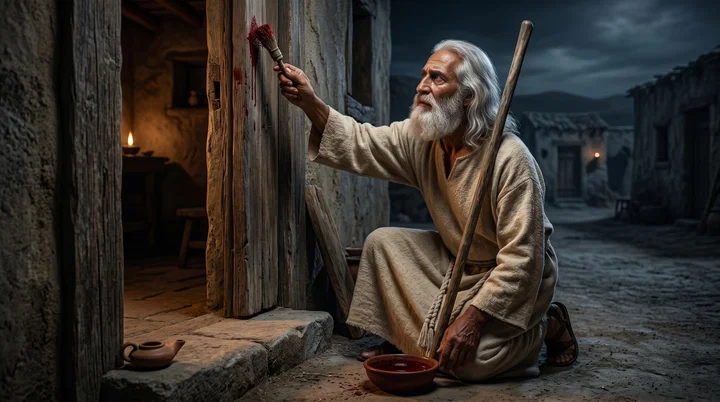
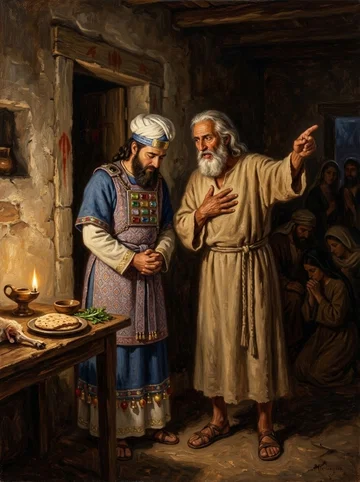
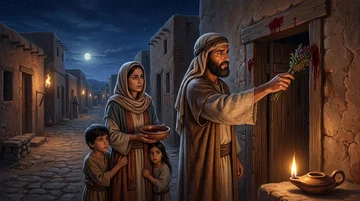
Cross-references 20 of 49
- 1 Corinthians 5:7
Purge out therefore the old leaven, that ye may be a new lump, as ye are unleavened. For even Christ our passover is sacrificed for us:
Christ is identified as the Passover lamb foreshadowed by the sacrificed lamb.
- Exodus 12:13
And the blood shall be to you for a token upon the houses where ye are: and when I see the blood, I will pass over you, and the plague shall not be upon you to destroy you, when I smite the land of Egypt.
The lamb’s blood marked homes spared from the destroying plague.
- Exodus 12:8
And they shall eat the flesh in that night, roast with fire, and unleavened bread; and with bitter herbs they shall eat it.
The Passover lamb is eaten with unleavened bread and bitter herbs.
- Exodus 13:14
And it shall be when thy son asketh thee in time to come, saying, What is this? that thou shalt say unto him, By strength of hand the LORD brought us out from Egypt, from the house of bondage:
It recalls the Lord bringing Israel out of Egypt.
- John 1:29
The next day John seeth Jesus coming unto him, and saith, Behold the Lamb of God, which taketh away the sin of the world.
The Passover lamb represented Christ, the Lamb who takes away sin.
- Deuteronomy 16:1-7
Observe the month of Abib, and keep the passover unto the LORD thy God: for in the month of Abib the LORD thy God brought thee forth out of Egypt by night.
Gives instructions for preparing and observing the Passover.
- Exodus 12:26-27
And it shall come to pass, when your children shall say unto you, What mean ye by this service?
Children ask about the Passover service, and parents explain its remembrance of deliverance from Egypt.
- Exodus 11:4-6
And Moses said, Thus saith the LORD, About midnight will I go out into the midst of Egypt:
last plague announced when Passover instituted
- Luke 22:20
Likewise also the cup after supper, saying, This cup is the new testament in my blood, which is shed for you.
The Passover lamb and the cup memorialize Christ’s death, with the cup representing his blood.
- Matthew 26:26-28
And as they were eating, Jesus took bread, and blessed it, and brake it, and gave it to the disciples, and said, Take, eat; this is my body.
Christ’s supper parallels Moses’ Passover as a new institution.
- 1 Peter 1:19
But with the precious blood of Christ, as of a lamb without blemish and without spot:
Christ’s precious blood is compared to a spotless lamb.
- Exodus 12:6
And ye shall keep it up until the fourteenth day of the same month: and the whole assembly of the congregation of Israel shall kill it in the evening.
The lamb is kept until the appointed evening, when the congregation kills it.
- Leviticus 23:5-6
In the fourteenth day of the first month at even is the LORD’s passover.
It distinguishes Passover on the fourteenth from the feast of unleavened bread beginning on the fifteenth.
- Exodus 12:7
And they shall take of the blood, and strike it on the two side posts and on the upper door post of the houses, wherein they shall eat it.
Blood was put on the doorposts during the Passover.
- Exodus 12:28
And the children of Israel went away, and did as the LORD had commanded Moses and Aaron, so did they.
Israel obeys the Passover command before Egypt’s firstborn are struck.
- Exodus 12:42
It is a night to be much observed unto the LORD for bringing them out from the land of Egypt: this is that night of the LORD to be observed of all the children of Israel in their generations.
The Passover night commemorates Israel’s deliverance from Egypt.
- Exodus 12:11
And thus shall ye eat it; with your loins girded, your shoes on your feet, and your staff in your hand; and ye shall eat it in haste: it is the LORD’s passover.
lamb eaten in haste
- John 19:1
Then Pilate therefore took Jesus, and scourged him.
places death of Lamb of God on that day
- Exodus 13:3
And Moses said unto the people, Remember this day, in which ye came out from Egypt, out of the house of bondage; for by strength of hand the LORD brought you out from this place: there shall no leavened bread be eaten.
Israel is told to remember its deliverance from Egypt.
- Numbers 28:17
And in the fifteenth day of this month is the feast: seven days shall unleavened bread be eaten.
It identifies the fifteenth as the feast’s first day.
Commentary
Each commentary is drawn from primary sources: the writings of Ellen G. White and Adventist pioneers and periodicals. Each commentary is separate. Its own words are not a quotation; follow the references to read the source passages.
Ellen G. White
20 sources
On the night of the last and most terrible plague Moses called all the elders and commanded every household, alone or joined with others, to take a lamb or young goat without defect and kill it as the Passover, then roast it with unleavened bread and bitter herbs and eat it dressed for travel in haste and watchfulness.PP 274.1–2Ms 41, 1902, par. 8–1017MR 350.2–351.1 They were to gather their children and cattle apart from the Egyptians into their own houses, mark the side and upper posts of the doorway with its blood, and remain inside until morning, so that at midnight when the destroyer struck the firstborn the blood-marked houses would be passed over and spared.PP 274.1–2Ms 54, 1903, par. 3–7Ms 41, 1902, par. 8–10 The slain lamb is the appointed sign of the death of the Son of God for sin, and its blood on the door is the sign of the cleansing and sheltering blood of Christ that protects the believing sinner from the wrath to come upon the impenitent world.1RED 30.1PP 279.3MH 403.3COS 106.6–7 The death of the lamb alone was not enough unless its blood was applied, so each person must by obedient action show faith by personally receiving the benefit of Christ's atoning sacrifice.SG3 223.11RED 30.1PP 277.1 The gathering of the children into the houses makes the Passover a lasting lesson that parents who love God must keep their children within the home and covenant, separate from sin and worldly companionship and trained in God's law, lest they perish with the unbelieving when judgment falls.Ms 54, 1903, par. 3–7Ms 41, 1902, par. 8–10Ms 100, 1902, par. 26–27MH 403.35T 505.2
The Passover Night
The command institutes the solemn ordinance of the Passover on the night of the last plague upon Egypt, which was more severe than any before it.1SP 217.2SG3 244.2 Moses made known the nature and effect of that coming judgment to Pharaoh and to the people of Egypt as well as to the Israelites.1SP 217.2SG3 244.2 That night was terrible to the Egyptians and glorious to the people of God.1SP 217.2SG3 244.2 The ordinance was instituted while the king and his idolatrous priests still opposed Moses to the last, even though the Egyptian people desired that the Hebrews be permitted to leave Egypt.1SP 217.2SG3 244.2
It came after the plagues of locusts and of oppressive darkness that made breathing difficult, while Israel had light and pure air in their dwellings.SG3 244.2 Before the judgment on the firstborn, God gave directions through Moses to preserve Israel from it and to prepare their departure from Egypt.PP 274.1–2 That deliverance was accomplished despite Pharaoh's opposition and made it possible for the people to keep God's law, which had been given in Eden, before they were brought to Sinai to hear God proclaim it.8T 197.4–198.1
Moses called for all the elders and commanded every family, alone or joined with others, to draw out and take a lamb or young goat without defect according to families and kill the Passover.PP 274.1–2Ms 41, 1902, par. 8–1017MR 350.2–351.18MR 2.3–3.35T 505.2 Preparation for departure was swift and secret, with families gathered together.PP 279.3 The father as priest of the household roasts the flesh with fire and prepares unleavened bread and bitter herbs, sprinkles the blood upon the doorpost, and then joins his family inside the dwelling.PP 274.1–2PP 279.3 They eat that night dressed for travel with belt fastened, shoes on, and staff in hand, eating in haste and silence while praying and watching in awe, the heart of every firstborn from strong man to little child throbbing with dread as fathers and mothers hold their loved firstborn thinking of the stroke to fall that night.PP 274.1–2PP 279.3
They were to separate themselves and their children and cattle from the Egyptians and gather them into their own houses, even bringing cattle in from the fields.Ms 100, 1902, par. 26–27SG3 223.1 They were to place the blood with hyssop on the two side posts and the upper post of the doorway, on lintel and sideposts.PP 274.1–2Ms 54, 1903, par. 3–7Ms 41, 1902, par. 8–10Ms 100, 1902, par. 26–27 No one was to go out of the house until morning, but to abide within that protection.Ms 54, 1903, par. 3–7Ms 41, 1902, par. 8–10Ms 100, 1902, par. 26–27 When the Lord went through Egypt at midnight to strike all the firstborn of man and beast and to judge all the gods of Egypt, He would see the blood-marked door and pass over it and not let the destroyer enter to smite them.PP 274.1–2Ms 54, 1903, par. 3–7Ms 41, 1902, par. 8–10Ms 100, 1902, par. 26–27 So no dwelling of Israel with the token of blood was visited, and the children of obedient families gathered within the circle of the home were spared, while those without the sign, even Israelites found in the houses of the Egyptians, would fall by the hand of the destroying angel and suffer with the Egyptians.Ms 54, 1903, par. 3–7Ms 41, 1902, par. 8–1017MR 350.2–351.1SG3 223.1
Egyptians who were led by the signs and wonders to acknowledge that the God of the Hebrews was the only true God, and convinced that their gods had no power to save or destroy, entreated to come with their families into the houses of the Israelites that fearful night.SG3 223.1 They pledged to choose the God of Israel as their God and decided to leave Egypt and go with Israel to worship Him, and were welcomed by the Israelites into their houses.SG3 223.1 The lamb, unleavened bread, bitter herbs, sprinkled blood, death-dealing angel, and departure were to be remembered in an annual solemn, vivid ceremony and night assembly, kept with girded loins, shoes on feet, and staff in hand for a hasty meal, rehearsed in solemn silence.ED 42.2ST Nov 2, 1915 It called the Hebrews to remember their deliverance and God's works, mercy, and loving-kindness, with the experiences of the past recounted on the journey and in the feast through story, songs, commandments, nature, and kindly association, stirring the imagination, impressing the heart, and fixing the memory of deliverance forever in child and youth.ED 42.2ST Nov 2, 1915
The Lamb's Meaning
The slaying of the Passover lamb was a symbol of the death of the Son of God, and the people were to associate the killing of the lamb with the future death of Christ.1RED 30.1COS 106.6–7PP 277.1 The sacrificial lamb represents Christ, the Lamb of God, who frees His people from sin.COS 106.6–7PP 277.1 The lesson of the lamb being killed was about Christ's death for the sins of the world.COS 106.6–7
The blood marking the doorposts was the symbol of the blood of Christ, which cleanses the believing sinner from sin.1RED 30.1 That blood shelters him from the wrath of God to come upon the impenitent and unbelieving world, as the wrath of God fell upon the Egyptians.1RED 30.1 It gave a token of assured protection, and all were to abide within that protection.PP 279.3MH 403.3 The protection was made possible through Christ's redeeming blood, and the blood on the doors was the sign of a Saviour's protection, so that no dwelling of Israel was visited by the death-dealing angel and the destroyer did not enter.PP 279.3MH 403.3
The lamb's death alone was not enough, for its blood had to be applied to the doorposts.PP 277.1 Just so Christ's merits must be applied to each person.PP 277.1 This requires believing that Christ died for oneself and personally receiving the benefit of His atoning sacrifice.PP 277.1
The provision God made for salvation benefits no one without obedient action.SG3 223.11RED 30.1 Israel had a work to perform on their part to prove them and to show their faith by their works in the great deliverance God was bringing about for them.SG3 223.11RED 30.1 Each must do the work God leaves him to do and by his acts manifest faith in the provision, carrying out what God requires.1RED 30.1
When Christ, the Lamb of God, died for the sins of the world, the lamb no longer needed to be slain as a representation of His death.COS 106.6–7 By rejecting Christ and putting Him to death, the Jews rejected the meaning that gave the Passover feast its value.COS 106.6–7 So its continued observance by them became an empty form.COS 106.6–7
Gathering The Children
Before the last terrible judgment of the death of the firstborn, the children of Israel were to be gathered into their own houses apart from the Egyptians, and that gathering made the Passover an object-lesson at the birth of the nation to impress all hearts.Ms 54, 1903, par. 3–7MH 403.35T 505.2 The direction came through Moses and the elders to fathers and mothers to take a lamb for each family and kill the Passover, to put its blood with hyssop on the lintel and two side posts, and to let no one go out until morning so that the Lord would pass over the blood-marked door and not let the destroyer enter to smite them when He passed through to smite Egypt.Ms 54, 1903, par. 3–7MH 403.3 Homes where parents were faithful to gather their little ones within the circle of the home were passed over and no judgment fell on their children.Ms 54, 1903, par. 3–7 The command teaches that parents who love and fear God today are responsible to keep their children within the circle of the home and under the bond of the covenant and within sacred influences.Ms 54, 1903, par. 3–7MH 403.38MR 3.4
That keeping within the houses means that in this time of peril parents are to keep their children separate and distinct from the world, from sin and sinners, from the society of worldlings and from the practices of transgressors of God's law.Ms 100, 1902, par. 26–27SG3 223.15T 505.2TEPD 17.1 They are to keep them with those connected with God, to respect and obey God's Word themselves, and to teach them that the commandments of God mean much more than is realized and not let them imitate the practices of transgressors.Ms 100, 1902, par. 26–27TEPD 17.1 All civil, religious, and social arrangements are to be ordered to preserve children from harmful companionship.MH 403.3 If any Israelites had been found in the houses of the Egyptians that night they would have fallen by the hand of the destroying angel, for the blood on the door was the sign that they were God's people and anyone who failed to obey would suffer with the Egyptians.Ms 41, 1902, par. 8–10SG3 223.1
Parents are to understand and seek the Lord's will for themselves and their children and to give them an education based on a scriptural foundation line upon line and grounded in Scripture.Ms 54, 1903, par. 3–78MR 3.4 They are to make them familiar from their earliest years with the precepts and principles of God's law and to keep them under scriptural influence, not sending them to public schools.Ms 54, 1903, par. 3–7MH 403.3 Safety from judgment depends on obeying God's instruction to separate, applied to God's people moving out of the cities to live in small companies by themselves so they will not share the disaster of the last-day plagues poured out on those who show contempt for God's law.Ms 41, 1902, par. 8–10
Those who are thus separated from sin and sinners receive a mark on the forehead, while those found in the homes of the Egyptians would perish with unconsecrated idolaters when the destroying angel brings death to both young and old.5T 505.2TEPD 17.1 Letting children drift into worldly companionship chosen by natural inclination lets the enemy take them out of parental hands, erects barriers to hold them away from Christ, and binds them with the world because it pleases their carnal minds.TEPD 17.1 Children indulged in their own way in selfishness, idolatry, and unrighteousness will be unfit for heaven and fit for the last plagues, and unless parents arouse and do their appointed work they will perish with their children.5T 505.2TEPD 17.1
The feast of the Passover was to be kept for an ordinance so that when children inquired what the service meant parents would relate their wonderful preservation when the destroying angel went forth by night to slay the firstborn of man and beast but passed over their houses and not one with the token of blood upon the doorposts was slain.SG3 223.1 It was given as a grateful memorial to preserve to children the remembrance of God's care for His people, and the people bowed their heads and worshiped.SG3 223.1 The lamb, unleavened bread, bitter herbs, the account of the sprinkled blood and the death-dealing angel, and the departure were to be remembered in a solemn, vivid ceremony and night assembly, rehearsed in solemn silence to stir the imagination and impress the heart.SG3 223.1ED 42.2ST Nov 2, 1915 The experiences of the past were to be recounted to the children on the journey and in the feast through story, songs, commandments, nature, and kindly association, to fix the memory of deliverance forever in child and youth.ST Nov 2, 1915
Sources
Pioneers and periodicals
86 sources
Moses gathered the elders of Israel and charged them to select a lamb for each household and slaughter it as the Passover on the night of deliverance from Egypt.RH Jan 16, 1913ST Dec 11, 1901ST May 22, 1907 The lamb was to be killed between the evenings, its blood put with hyssop on the lintel and side posts, its flesh roasted and eaten that night with unleavened bread and bitter herbs while all remained inside until morning.RH Jan 16, 1913ST Dec 11, 1901ST Jan 21, 1889RH Jan 7, 1862 It was ordained as a lasting memorial of that night when the destroyer slew the firstborn of Egypt but passed over the blood-marked houses and spared Israel.ST May 22, 1907RH Jan 14, 1862RH Apr 7, 1851RH Jan 7, 1862ST Sep 13, 1877 The slain lamb and its sheltering blood pointed to Christ the true Passover, whose death on the same day and whose cleansing blood shields believing sinners from judgment and wrath.RH Jan 14, 1862ST Oct 25, 1905ST Jun 3, 1897 Safety came not by personal righteousness but by trusting obedience in applying the appointed blood, a pattern of faith and final deliverance under God's seal.RH Sep 8, 1904ST Dec 11, 1901ST Jan 21, 1889ST May 8, 1879ST Jun 25, 1912
Setting in Exodus Story
Exodus 12:21 belongs to God's call to the kingdoms of earth given three and one-half millenniums ago when Egypt ruled the world as the greatest of all kingdoms in might and power and skill and wisdom in statecraft.ST Nov 14, 1906 Its river fertilized the land by annual overflow and was deified as one of its gods, and the sun joined with the river in producing food and was worshiped, with kings receiving title as representative of the sun-god upon the throne of men.ST Nov 14, 1906 Israel were then the few descendants of the nomadic patriarch Abraham who sought supplies from Egypt's granaries, and one of the same people, the captive slave Joseph, taught Pharaoh to store grain in plenteous years to become rich in time of famine and instituted a land-law with easy combined rental and taxes.ST Nov 14, 1906 While he was prime minister and as long as his memory was honored and his laws governed, Egypt prospered and those who lived in Egypt knew no oppression.ST Nov 14, 1906
The verse stands in Exodus 11-13, whose central subjects are the last plague, the Passover, and the going out of Egypt.ST Jan 25, 1910 It is part of the ordinance for the Passover given in close connection with the tenth plague, the death of the firstborn, and the hurried departure of Israel from Egypt recorded in Exodus 11 to 13:16, when the firstborn are claimed as the Lord's. It belongs to the mainly historical first division of the book covering Exodus 1-18. It belongs to the account of the plagues in Exodus 9 to 12 and stands immediately before the first Passover, the guidance by fire and by cloud, the crossing of the Red Sea, and the song of triumph in Exodus 13 to 15.RH Jan 20, 1916 It belongs to the account in Exodus 6-12 of the ten plagues upon Egypt and God's merciful deliverance of His children.ST Jan 20, 1909
The verse belongs to the narrative of Exodus 5-12 which records the controversy in Egypt over Israel's right to worship the true God and keep His commandments, particularly the Sabbath, coming to a crisis.RH Mar 25, 1909 The oppression was not merely physical bondage but denial of worship, and Pharaoh refused to let Israel go until his land was laid waste by terrible plagues and the angel of death visited every family so that there was not a house where there was not one dead.RH Mar 25, 1909 Then the power of the oppressor was broken and the people were delivered only by the direct intervention and miraculous power of God.RH Mar 25, 1909 The command to prepare the Passover came as God was bringing the Israelites out of servitude, not as approval of their enslavement.RH Oct 1, 1861 Through that deliverance God demonstrated His wisdom, love, power, and right to rule, and showed Israel its obligation to obey Him.ST Mar 7, 1906
The verse is included in the account of God's religious system confronting Egypt, a contest in which both systems were supported by miracles.RH Mar 11, 1915 The power working through Moses in Egypt was not in Moses himself but in God's Word and message spoken through him, with the command to kill the Passover, the turning of the rivers into blood, and the smiting of the land with plague through Exodus 7 to 12 wrought by that Word.ST Apr 4, 1911 During the Exodus Jehovah demonstrated through the plagues that He was above the gods of Egypt and that they were nothing in His sight.ST Nov 1, 1899 The ten plagues humbled that proud nation to the dust and utterly annihilated the supposed power of its many gods.ST Nov 27, 1901 The sparing of the firstborn of believing Israel while not one firstborn escaped in homes rejecting mercy, together with the opening of the Red Sea, the sweetening of Marah, bread from heaven, and water from the flinty rock, gave each Israelite thrilling personal experience of the living God that made the title the Lord thy God which brought thee out of Egypt out of bondage surpassingly impressive.ST Nov 27, 1901
The events in the first fourteen chapters of Exodus were not to be expected in Egyptian monuments because public monuments recorded successes and triumphs.RH Apr 23, 1908 The exodus which Moses directly supervised is stated no less positively than the creation account, so the two stand on equal footing as truthful history.ST Jul 28, 1881 The rest of the Old Testament treats the deliverance through the killing of the Passover lamb and the instituted sacrifice and rites as true history and builds priesthood, sacrifices, covenants, promises, and the whole system of laws upon it as God's work, and the New Testament fully confirms it as real history on which the work of redemption depends for truth and propriety.ST May 8, 1879 The treasure city Rameses named in Exodus 12 was built by Rameses II and bore his name, and Rameses II reigned sixty-seven years from 1564 to 1497 B.C., ending within six years of the exodus, and he is the Pharaoh of the oppression.ST Aug 9, 1910 The slaying of the firstborn came after burdens in brickmaking and building, in the time of the store cities built with bricks made with and without straw and of Meneptah II, whose son's tomb was left unfinished.ST Dec 14, 1915
Israel's departure from Egypt occurred in 1491 B.C., as indicated by the chapter's margin.ST Jan 28, 1886 That departure from bondage was accompanied by darkness, plague, and storm.ST Sep 28, 1904 The first day of unleavened bread in Egypt stands at the end of the whole span of weeks and years counted from Genesis 1 and from the Creator's rest-day in Eden to the exodus.ST Jun 12, 1879 Exodus 12:1-51 records the exodus with the institution of unleavened bread, standing one month before Israel's coming into the wilderness of Sin on the fifteenth day of the second month, where the second day of unleavened bread serves as the starting point for numbering fifty days.ST Apr 24, 1879 The narrative concerns the wanderings from Egypt to Canaan by way of the Sinai peninsula and vicinity of Mount Sinai.ST May 13, 1880 The Passover account stands connected with Pharaoh's free will, the time of the plagues, and the borrowing from the Egyptians.ST Feb 21, 1911
The deliverance from Egypt illustrates the conflict between good and evil and the plan of salvation.RH Apr 13, 1905 It is a theme of Bible history reaching from Adam to David that carries new significance and beauties and lessons in the scriptural record. Exodus 12:21 belongs simply to the account of that deliverance.
Passover Command and Keeping
Moses called for all the elders of Israel and charged them to draw out and take a lamb according to families and kill the Passover.RH Jan 16, 1913ST Dec 11, 1901ST Jan 21, 1889ST Mar 4, 1903 The lamb was to be killed between the two evenings, between three and six o'clock, its blood applied with a bunch of hyssop to the lintel and the two side posts of the door, and its flesh eaten that night with bitter herbs.RH Jan 16, 1913ST Dec 11, 1901 The blood on the doorway marked the homes to be spared when judgment struck Egypt, and the household was to remain inside until morning.ST Dec 11, 1901ST Jan 21, 1889 This command was the final trial of faith after every offer of mercy had failed and forbearance could do no more, leaving only sin to receive its wages and God's people to be delivered, and Israel was saved not by personal righteousness but through faith in the way the Lord provided after crying in distress and being heard.ST Dec 11, 1901
The first Passover was held at Rameses in Egypt on the night Israel was led out of bondage.ST May 22, 1907 On the eve in Goshen as darkness gathered the families gathered together, the lamb was slain, the flesh roasted, unleavened bread and bitter herbs prepared, the blood sprinkled on the doorposts, and the people watched and prayed in awe.ST Dec 7, 1904 Many households kept it incomplete because members were absent as prisoners in Egypt, yet the families bowed in prayer for their restoration in assurance that God would bring the absent ones again.ST Dec 7, 1904 The Passover took its name from the angel passing over the blood-marked houses and sparing their firstborn.ST May 22, 1907
The first paschal lamb was killed and eaten that very night before deliverance and departure, with no part allowed to remain till morning.RH Jun 24, 1873ST Oct 7, 1930 It was eaten on the night after the fourteenth day of the month, on the first night of the seven-day feast of unleavened bread.RH Jun 24, 1873RH Dec 10, 1867 Afterward the institution would be a memorial for future generations at a definite arranged time requiring proper preparation.ST Oct 7, 1930RH Dec 10, 1867 Eating the Passover refers specifically to eating this lamb, and the day called the preparation of the Passover involved preparations for that meal.RH Jun 24, 1873
The law required each family to roast the lamb on the evening after the fourteenth day of the first month.RH Jan 7, 1862 The preparation took place on the fourteenth of Abib, with each family slaying its lamb in the evening and eating it during the night or early part of the fifteenth.ST May 12, 1898 Regular observance was to begin after entering the promised land, so the Passover was observed only once during the wilderness years.RH Jan 7, 1862 Nothing leavened or fermented was permitted at that sacred memorial feast under the heaviest penalty known.ST Oct 8, 1894
The command to eat implied both to eat and to drink, so drink was optional, but the seven-day festival made drink a necessity left to circumstances and common sense with the absolute rule that it could not be leavened, proving the cup called fruit of the vine was unfermented.ST Oct 8, 1894 The chapter is the first complete account establishing the Passover as a new institution, giving God's command with how it should be celebrated, when and by whom, and its purpose.RH Mar 9, 1905 It gives the origin directly and explicitly as Genesis 2 gives the Sabbath's origin, in contrast to Exodus 16 which refers to the Sabbath familiarly as already existing.RH Mar 14, 1865
The verse belongs to the first form of the Passover as instituted in Egypt and kept in the wilderness on the journey to Palestine.ST Feb 22, 1899 The later temple celebration was materially changed, with added injunctions in Deuteronomy and Numbers not in Exodus 12-13 that could hardly be carried out in the wilderness.ST Feb 22, 1899 The original instructions did not enjoin wine though wine was later used, nor require the Hallel of Psalms 113-118 with the first two sung at the beginning and the rest at the close as at Christ's last Passover.ST Feb 22, 1899 The directions in Exodus 12 governed the preparation of the Passover Jesus ate with His disciples before His suffering, so they must have slain and eaten the Passover lamb, and Christ and His disciples as consistent Israelites obeyed those Mosaic requirements when He instituted His Supper.ST Sep 20, 1910ST Oct 8, 1894
The killing of the Passover lamb belongs to the entire system of religious service God instituted with order to lead Israel out of Egyptian confusion, bring them nearer Himself, and make them a mighty people and a praise.ST Aug 18, 1881 That system was one grand yearly series of forms to be kept exactly without the least departure, proving God is not the author of confusion but of order and has not changed.ST Aug 18, 1881 The instruction makes the month Abib the beginning of the Jewish civil year distinct from the sacred sanctuary year, placing the Day of Atonement on the tenth day of the seventh month by civil reckoning while making it the last day of the sacred year as the closing summing up of sanctuary offerings.ST Jun 18, 1912
The command to take and kill the lamb proves at most the arrangement for that one Passover year, not that the weekly Sabbath began on a fixed monthly date or the week began with the year. The holy days of the feast were not necessarily on the weekly Sabbath, changes in month or year did not break the week, weeks stayed full seven-day weeks without a defective closing week, and different weekdays fell on different month dates. The argument for a shifting Sabbath confuses yearly Sabbaths which could fall on different weekdays with weekly Sabbaths.ST Apr 3, 1907 Exodus 12 gives the explicit record of the institution of the Passover and, with the feast-day sabbaths, of its repeal, showing how plainly God records making or revising an institution, so any revision or repeal of the Sabbath would have equally plain information.ST Apr 13, 1915 The Passover and its feast are called perpetual, but that does not mean observance must continue forever because their appointed period can expire.RH Apr 15, 1873
Memorial of Egyptian Deliverance
The Passover takes its name from the angel of the Lord passing over the houses of the Hebrews on the night the firstborn in every Egyptian family was slain, being named for passing over houses marked with blood and sparing their firstborn.ST May 22, 1907RH Jan 14, 1862 It was ordained in commemoration of the deliverance from Egyptian bondage, beginning with the slaying of the paschal lamb on the fourteenth day of the first month and extending through seven days in which nothing but unleavened bread was to be eaten.RH Jan 14, 1862 The first keeping stood at Rameses in Egypt on the night Israel was led out of bondage, when Moses told Israel's elders to prepare and kill the Passover lamb, and its preparation with the lamb slain and blood placed on the doorposts so the Lord would pass over their houses when He struck Egypt's firstborn commemorated this deliverance.ST May 22, 1907RH Apr 7, 1851
God gave the Passover as a fitting memorial to keep Israel's deliverance from Egypt fresh in thought, recalling that God passed over the Israelites when He struck the Egyptians.RH Jan 7, 1862ST Sep 13, 1877 Each observance preserved in strong remembrance the night God brought deliverance through judgment when Egypt's firstborn were doomed to die and the destroying angel passed over Israelite dwellings.ST Sep 13, 1877 It stands with the Feast of Unleavened Bread as one of two plain memorials of that work of Heaven, and its preparation commemorated this deliverance, serving especially as a memorial of the judgment striking Egypt's firstborn while passing over Israelite homes.RH Apr 7, 1851ST Sep 13, 1877RH Nov 15, 1853 Moses told the elders to select and slaughter a lamb for each family for this memorial of God's deliverance of Israel from Egypt.RH Nov 15, 1853
That Passover memorial is sufficient and fitting for that deliverance, with its memorial office plainly declared and described, and it leaves no place for taking the Sabbath from its proper office to make it also a memorial of that deliverance.RH Dec 17, 1857 The Passover provided a fitting memorial of Israel's deliverance from slavery in Egypt, unlike the weekly Sabbath, which did not originate in the Exodus and was not designed to remember an annual deliverance.ST May 31, 1905RH Jan 7, 1862 Exodus 12 contains memorials of Israel's deliverance from Egypt, including the Passover, in contrast to the claim that the Sabbath was instituted as a memorial of that deliverance.RH Nov 13, 1860 Moses appointed the Passover night to be observed as the memorial of coming out of Egypt, not the weekly Sabbath.RH Apr 30, 1872
The Passover, rather than a change of the Sabbath, is the memorial of Israel's deliverance from Egypt.RH Nov 7, 1871 That deliverance already had its appointed memorial, so Moses does not in Deuteronomy 5 present Sabbath-keeping as a memorial of that event, for the Sabbath stands on creation and on the rest of servants already required in the commandment itself.RH Nov 15, 1853 The Passover commemorated Israel's deliverance from Egypt and served as a shadow of something good to be done for the human race, and unlike the Sabbath it was eaten at night and marked the night of deliverance.ST Aug 13, 1885
The Passover looked back to Israel's deliverance from Egypt and forward to the sacrifice of Christ.RH Feb 2, 1911 It was connected with Israel's deliverance from Egypt, which served as a type of deliverance from the bondage of sin and this world to the heavenly Canaan.ST Mar 18, 1889 That deliverance began the setting in which God taught Israel the plan of salvation through the sanctuary and its rites, when Moses instructed the elders to select and kill the Passover lamb. The Passover brings triumph over earthly foes, and it points to the final redemption when the redeemed sing not only the song of Moses for redemption from earthly foes but also the song of the Lamb for redemption from all sin.ST Jan 30, 1912
Israel in Egypt still observed God's ordinances, keeping circumcision as required for eating the Passover and standing ready to eat it, which proves they worshiped God and remembered His past dealings and had not forgotten Him.RH Sep 24, 1872 The people killed the Passover lamb, and God's angel of destruction passed by their blood-marked doors, protecting them as they left Egypt.RH Nov 21, 1854 The Passover lamb was a memorial of Israel's deliverance from Egyptian bondage and a type of Christ, the Passover sacrifice, and its preparation and killing commemorated that deliverance.ST Apr 23, 1896RH May 27, 1875
Christ the True Passover
The safety of Israel on that night depended on the blood of the lamb alone, and that sacrifice pointed forward to Christ the Antitype.ST Oct 25, 1905 The lamb taken for each family and killed as the Passover represented Christ, whose sacrifice delivers from sin.ST Jun 3, 1897 The solemn lamb killed for each family represents Christ, and therefore calls for personal self-examination whether sins are washed away and whether one is ready if God's decision should come tonight or death should visit.ST
The blood on the doorposts pointed to the blood of Jesus, whose saving power — not the visible liquid itself — brings forgiveness and protection from judgment.RH Sep 8, 1904 God passes over the transgressions of those covered by that blood, so they are not cut off, and this deliverance points to the final pardon of sin and to the experience of the remnant at the close of probation.ST Apr 13, 1904 The slain lamb symbolized the death of Christ, and the blood on the doorposts symbolized the blood of Christ which cleanses believing sinners and shelters them from the wrath of God. That provision benefits those who act in faith by carrying out what God requires.
The lamb was slain on the fourteenth day of the first month in commemoration of deliverance from Egyptian bondage, with seven days following in which nothing but unleavened bread was eaten.RH Jan 14, 1862 Its death was a type of the death of Christ as the Lamb of God, which occurred on that same day.ST Aug 13, 1874RH Mar 31, 1874 Its great antitype was reached when Christ our Passover was sacrificed for us.RH Jan 14, 1862 The annual lamb thus both commemorated deliverance when the angel passed over the houses in Egypt and served as a type of Christ the Lamb of God and the true Passover.ST May 12, 1898 The death of Christ fulfilled that Passover type, and the Lord's Supper thereafter commemorated that event.ST May 12, 1898
The institution of the Passover in Egypt involving the destroying angel pictures Christ our Passover crucified, with great principles centering at the resurrection of the Saviour as living Gospel truth.ST Apr 5, 1899 Together with the sacrifices and types, the Angel of Jehovah, the types of the tabernacle, the high priest, the election of Abram, the shepherd-king and the promises to David, it must be grasped to meet the difficulties in the life of Christ.RH Nov 8, 1906 So understood it points to Jesus of Nazareth as the fulfillment of Moses and the prophets, the true Christ in contrast with false Christs, with nothing in His outward form as the carpenter's son to show an unspiritual observer that He was the incarnate Son of God.RH Nov 8, 1906 Moses in instituting the Passover for Israel becomes a type of Christ, who in superior degree instituted the Lord's Supper, showing Christ to be the prophet like Moses as law-giver, prophet, worker of miracles, king, and priest after the order of Melchisedec.RH Feb 19, 1861
Saved by Faith Under Blood
Israel was not spared because of personal righteousness but through faith in the way the Lord provided after crying to Him in distress and being heard, and the direction to take a lamb for each family and kill the Passover was the final trial of that faith after every offer of mercy had failed and forbearance could do no more, leaving only sin to receive its wages and God's people to be delivered.ST Dec 11, 1901 The blood was to be applied with hyssop to the lintel and the two side posts and the household was to remain inside until morning, so that when the Lord passed through to smite the Egyptians He would see the blood, pass over the door, and not allow the destroyer to enter to smite them.ST Dec 11, 1901ST Jan 21, 1889 The Passover was an act of faith in which the Israelites were protected from the destroyer because they trusted the promise represented by the blood on the doorposts, and the blood pointed to Jesus' blood whose saving power, not the visible liquid itself, brings forgiveness and protection from judgment.RH Sep 8, 1904ST Jan 21, 1889
The lamb's blood was a sign of safety from the destroying angel and by faith a type of Christ's saving blood, to be applied to each household rather than left for another to do, and where the blood is seen the angel who destroys the firstborn passes by and the firstborn inside is safe.RH Jan 16, 1913RH Oct 16, 1900 The service was to be explained to children so they could understand its meaning and personally trust the protection it signified.RH Oct 16, 1900 The blood touched on the door means the Lord touches the door of the heart of all who willingly heed His knocking, and the destroying angel acknowledges the sign so its inmates are safe.RH Jan 16, 1913 The flesh of the lamb was to be eaten that night with bitter herbs, which memorialize bitter servitude in Egypt and loved ones who would not leave Egypt for life but chose the darkness of the world, a bitter memory that remains even when the heart overflows with love for the One who gave all to save.RH Jan 16, 1913
God used an angel to carry out the judgment on Egypt while the blood on the doorposts kept the destroyer from entering Israelite homes. The Egyptians were destroyed because they had chosen sin and sided with oppression, induced by Satan to sin, though a divine angel was commissioned to carry out the punishment. Only the firstborn of believing Israel were spared while not one firstborn escaped the destroyer in the homes of those who rejected mercy.ST Nov 27, 1901 Israelite households on the night Egypt's firstborn were slain received protection as they trusted and obeyed.ST Apr 13, 1904ST Jun 25, 1912 That deliverance with the lamb's blood on the doorposts points to forgiveness and the blotting out of sin through the blood of Christ our Passover, by which God passes over the transgressions of those covered so they are not cut off, and points also to the final pardon of sin and to the experience of God's remnant at the close of probation.ST Apr 13, 1904
The same law given to Israel was for every other person of whatever race or nationality, not for Israel alone, for Israel as the chosen people were to extend the knowledge of God throughout the earth as a light to surrounding nations, their course revealing to all what it means to be a member of God's government and people.ST Jun 13, 1906 The Passover was of divine appointment commanded by God and full of meaning to children of faith.ST Dec 9, 1897 It is not transfigured, illumined, or glorified by Easter, which is of merely human appointment, pagan in origin from Eostre the Saxon goddess of spring, with not one precept of Scripture requiring it, just as Sunday is without precept as a memorial of the resurrection, and to exalt such human institutions above God's explicit appointment is apostasy.ST Dec 9, 1897
Type of Final Deliverance
The literal going out from Egypt to Canaan is a type of the deliverance of God's people from the dark Egypt of this earth, and the literal plagues visited upon Egypt are a type of the last plagues recorded in Revelation 16.ST The plagues of Egypt shadow forth the seven last plagues, which will be as real and literal as the plagues of Egypt were.RH Dec 23, 1851RH Mar 23, 1852 As the plagues of Egypt came just before the deliverance of Israel, so the seven last plagues will be poured out just before the final deliverance of the saints.RH Dec 23, 1851 Those Egyptian plagues serve as an illustration of the real and literal plagues described in Revelation.RH Dec 23, 1851RH Mar 23, 1852
The ten plagues in Exodus 12 stand as a precedent for seven terrible plagues that will fall upon the world before deliverance.ST Oct 28, 1930 Those future plagues are God's wrath without mercy, and forgiveness of sin will no longer be granted once they begin.ST Oct 28, 1930 The killing of the Passover lamb and the marking of Israelite houses with its blood, so that they were spared when the destroying angel passed over to slay the firstborn of the Egyptians, is a pattern for the sealing of the servants of God before the four winds of war and trouble are allowed to blow.ST May 8, 1879 The seal of God is a distinguishing religious mark that exempts those who have it from the judgments of God falling on the wicked around them.ST May 8, 1879
That seal is found in the fourth commandment requiring observance of the seventh day as the Sabbath, which puts a mark of peculiarity on its keeper distinct from a Christendom beguiled into keeping the first day.ST May 8, 1879 It is carried forward as a work of Sabbath reform in charge of the angel ascending from the east.ST May 8, 1879 Israel's experience during the plagues in Egypt connects with the future experience of God's people during the plagues, when they will remain on earth through the first six plagues but the seal of God will protect them.ST Jul 18, 1878
Household Duty and Application
Exodus 12:21 places the father as priest of the household in taking a lamb according to the family and killing the passover, and if the father is dead the eldest living son is to perform the solemn sprinkling of the blood on the doorposts with hyssop.RH Jul 25, 1907 The direction is full of significance for parents and children now as a symbol of the work to be done in every family, for parents are to gather their children into the home and present Christ before them as their passover.RH Jul 25, 1907 The father is to dedicate every inmate of his home to God in the work represented by the passover feast.RH Jul 25, 1907 The blood on the lintel and side posts, so that the Lord passes over and does not suffer the destroyer to enter to smite the house, means placing the mark of God and the seal of God upon the household in this day of probation and privilege through the conversion of the children.RH Jul 25, 1907 This solemn duty is perilous to leave in the hands of others, of trustworthy servants, or of the minister, and must be done by the father himself.RH Jul 25, 1907
The Passover service was to be explained to children so they could understand its meaning and personally trust in the protection it signified.RH Oct 16, 1900 The blood had to be applied to each household, not left for someone else to do, for the lamb's blood was a sign of safety from the destroying angel and, by faith, a type of Christ's saving blood.RH Oct 16, 1900 The rite was for education, with the experiences of the past recounted to Hebrew children on the journey and in the feast.ST Nov 2, 1915 It was a night assembly kept with girded loins, shoes on feet, and staff in hand for a hasty meal of lamb, unleavened bread, and bitter herbs, while in solemn silence the story of the sprinkled blood, the death-dealing angel, and the grand march from the land of bondage was rehearsed.ST Nov 2, 1915 With songs, commandments, nature, and kindly association, it was fitted to stir the imagination, impress the heart, and fix the memory of deliverance forever in child and youth.ST Nov 2, 1915
The solemn lamb killed for each family represents Christ, and therefore calls for personal self-examination about whether sins are washed away.ST It presses the question whether one is ready if God's decision on the case should come tonight or if death should visit.ST That observance of taking and killing the lamb according to families was a matter of indifference for Christians, something over which there should have been no controversy, a principle with broader application.ST Dec 9, 1897
Sources